化工进展 ›› 2025, Vol. 44 ›› Issue (3): 1253-1262.DOI: 10.16085/j.issn.1000-6613.2024-0416
萃取精馏分离丙酮-正庚烷的模拟与控制
孔洁( ), 李沅欣, 孙兰义()
- 中国石油大学(华东) 化学化工学院重质油国家重点实验室,山东 青岛 266580
-
收稿日期:2024-03-13修回日期:2024-04-02出版日期:2025-03-25发布日期:2025-04-16 -
通讯作者:孙兰义 -
作者简介:孔洁(1998—),女,博士研究生,研究方向为化工过程强化。E-mail:kj15763713539@163.com。 -
基金资助:国家自然科学基金(22278437)
Simulation and control of acetone/n-heptane separation by extractive distillation
KONG Jie(), LI Yuanxin, SUN Lanyi()
- State Key Laboratory of Heavy Oil Processing, College of Chemistry and Chemical Engineering, China University of Petroleum (East China), Qingdao 266580, Shandong, China
-
Received:2024-03-13Revised:2024-04-02Online:2025-03-25Published:2025-04-16 -
Contact:SUN Lanyi

摘要:
以1-氯丁烷为中间沸点夹带剂,分别使用侧线萃取精馏流程和内循环萃取精馏流程分离了丙酮-正庚烷共沸物。以年总费用、二氧化碳排放量和热力学效率为评价指标,使用多目标遗传算法分别对两流程进行了优化,获取了最佳设备参数与操作参数。优化结果表明,与侧线萃取精馏流程相比,内循环萃取精馏流程降低了9.77%的年总费用,11.95%的二氧化碳排放量,提高了1.47%的热力学效率。对侧线萃取精馏和内循环萃取精馏分离丙酮-正庚烷共沸物的动态特性进行了研究,构建了合理的控制方案。添加进料流量扰动和进料组成扰动后,两流程的产品均可恢复至设定值附近。使用绝对偏差积分对两流程的控制效果进行了量化,结果显示内循环萃取精馏流程具有更好的动态可控性。
中图分类号:
引用本文
孔洁, 李沅欣, 孙兰义. 萃取精馏分离丙酮-正庚烷的模拟与控制[J]. 化工进展, 2025, 44(3): 1253-1262.
KONG Jie, LI Yuanxin, SUN Lanyi. Simulation and control of acetone/n-heptane separation by extractive distillation[J]. Chemical Industry and Engineering Progress, 2025, 44(3): 1253-1262.
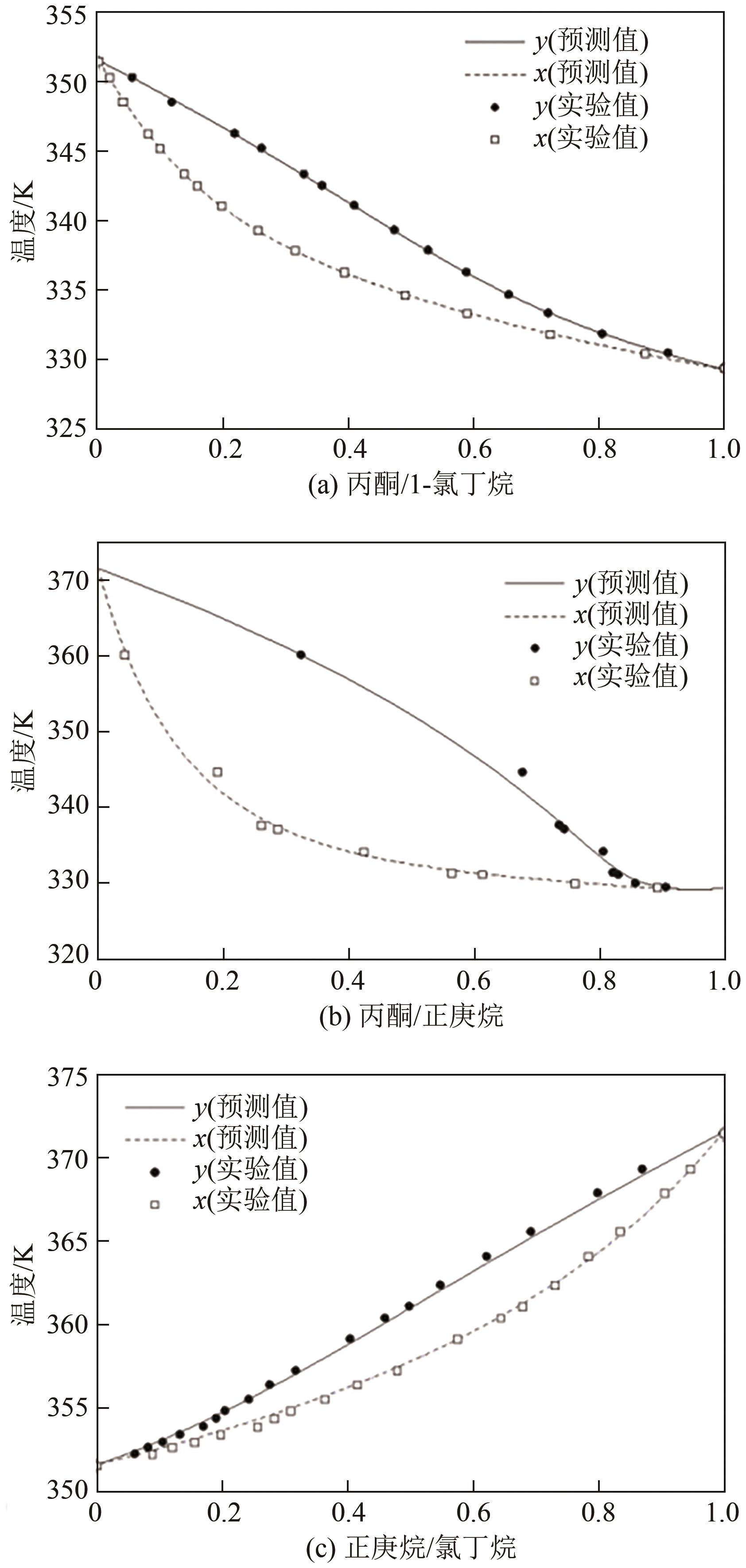
图1 预测数据与实验数据对比
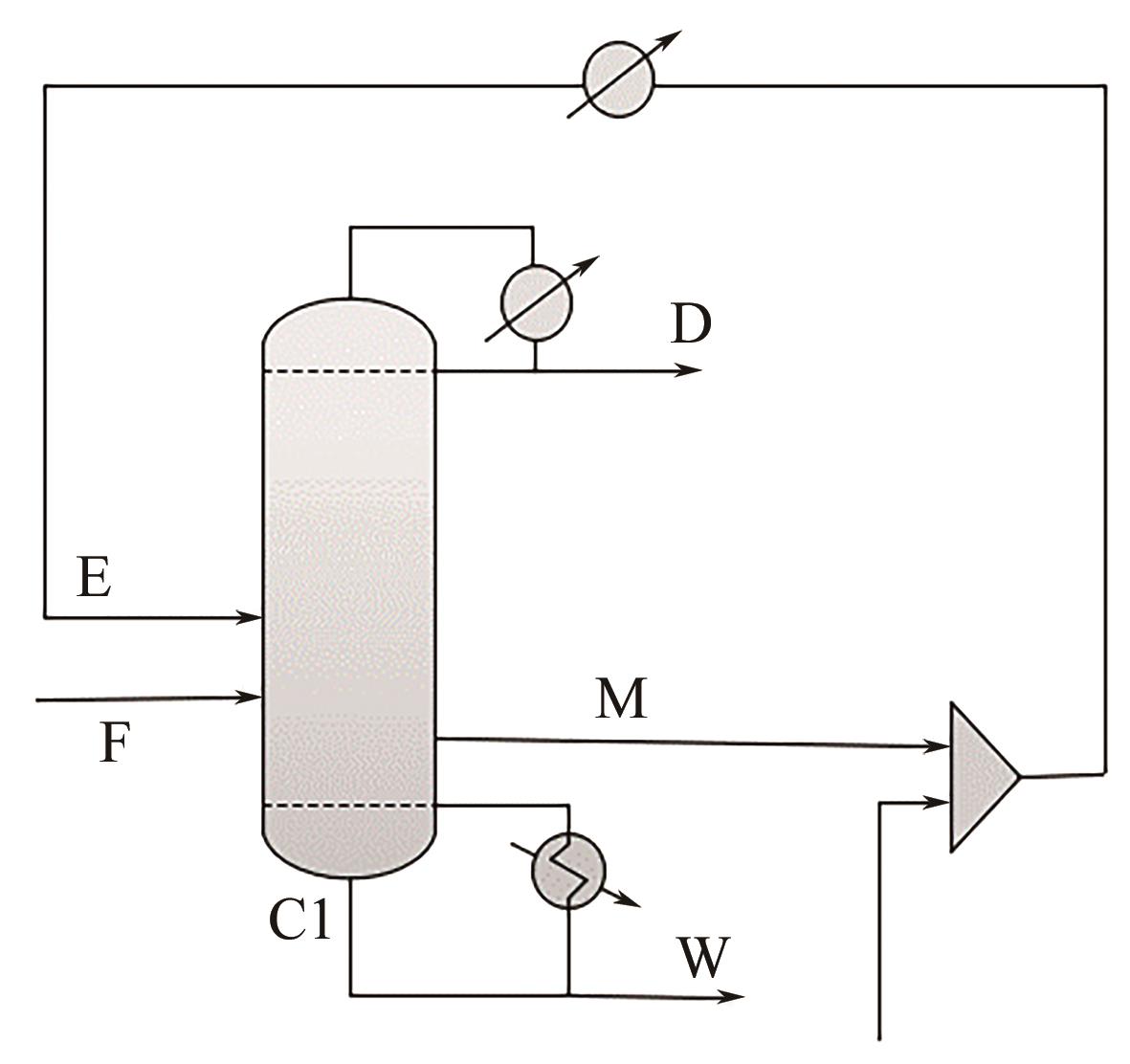
图2 SSED过程流程D—塔顶采出流股;E—萃取剂进料流股;F—原料进料流股;M—侧线采出流股;W—塔釜采出流股
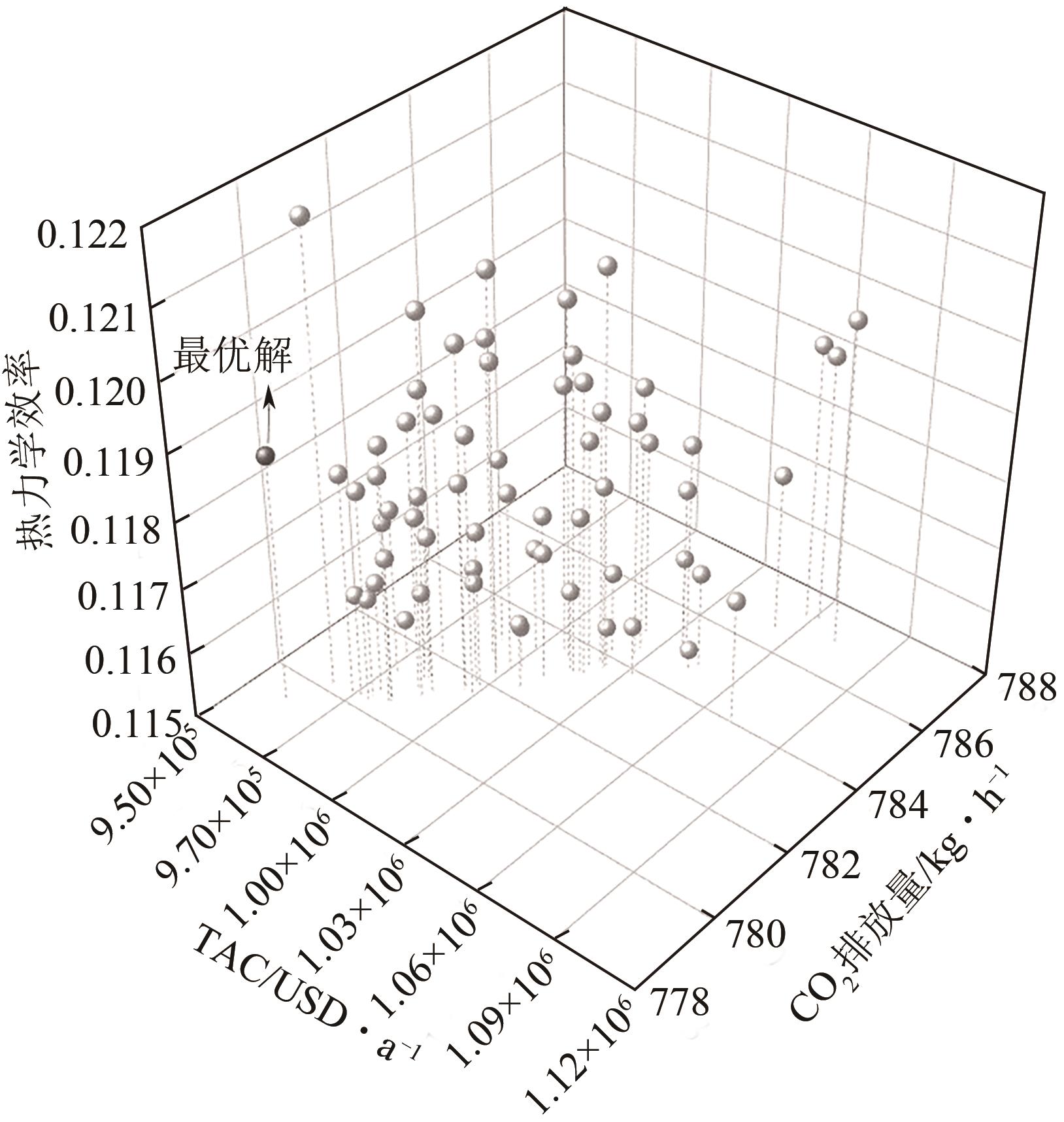
图3 SSED过程的多目标优化结果
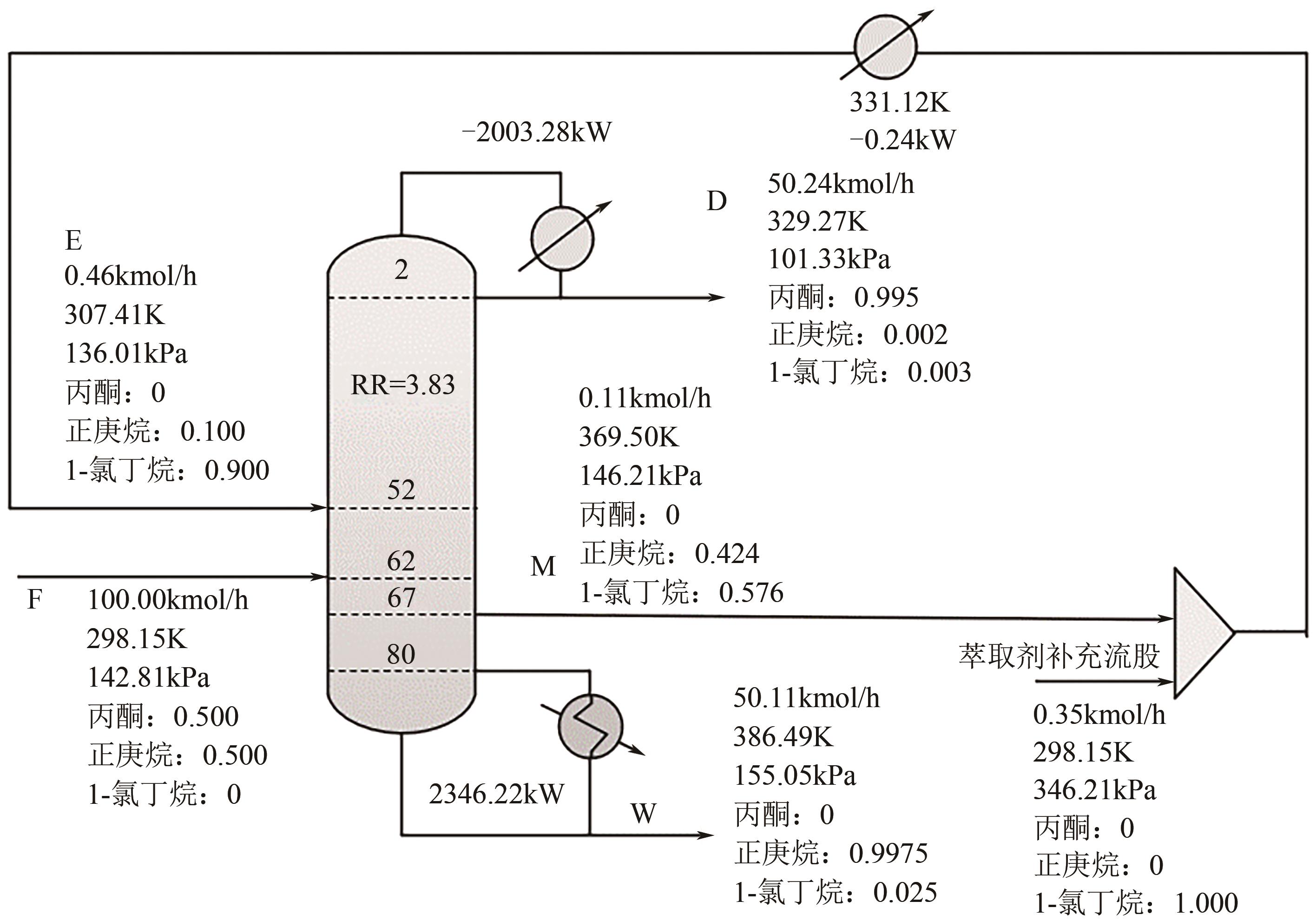
图4 多目标优化后的SSED过程流程
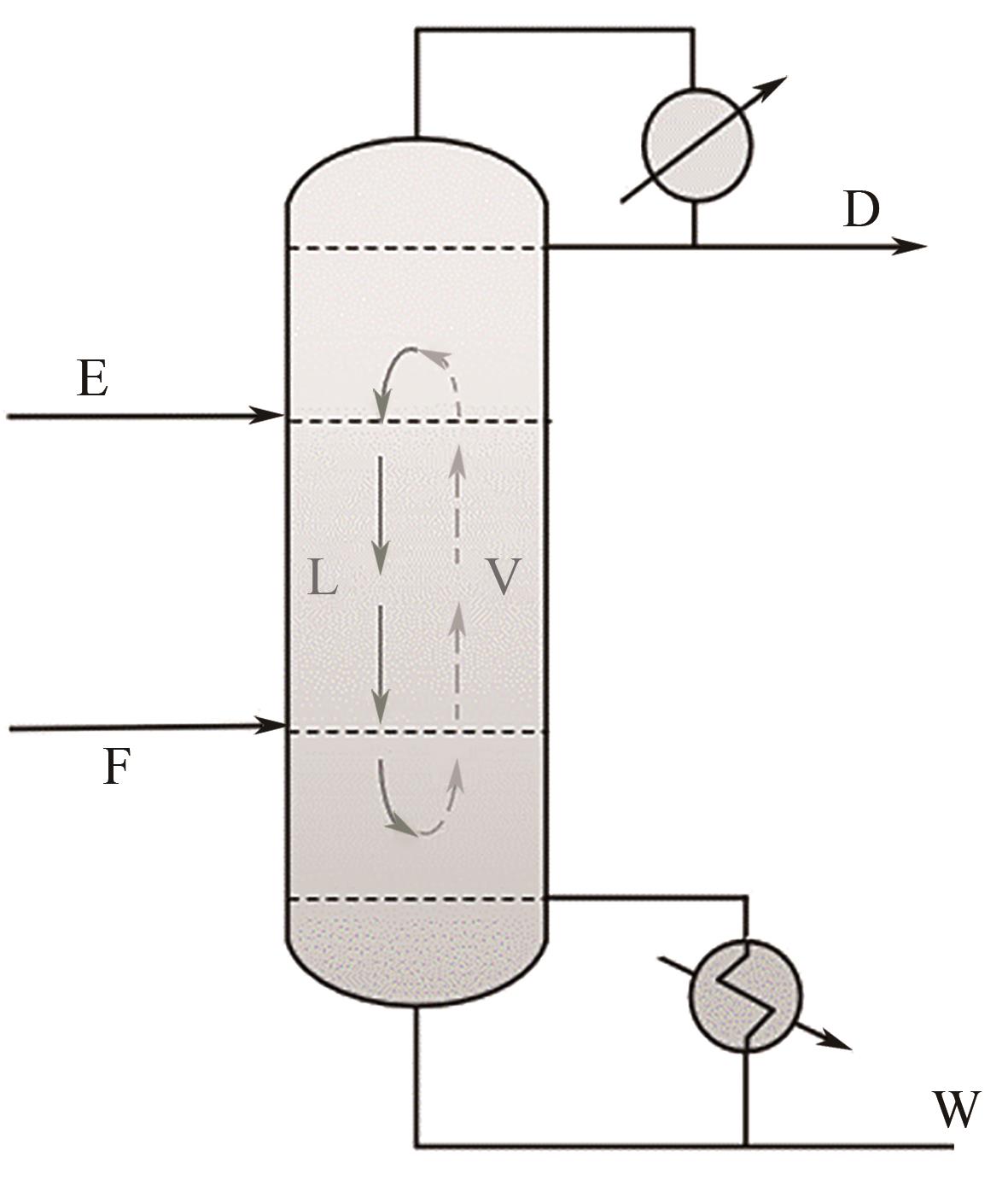
图5 ICED过程示意图
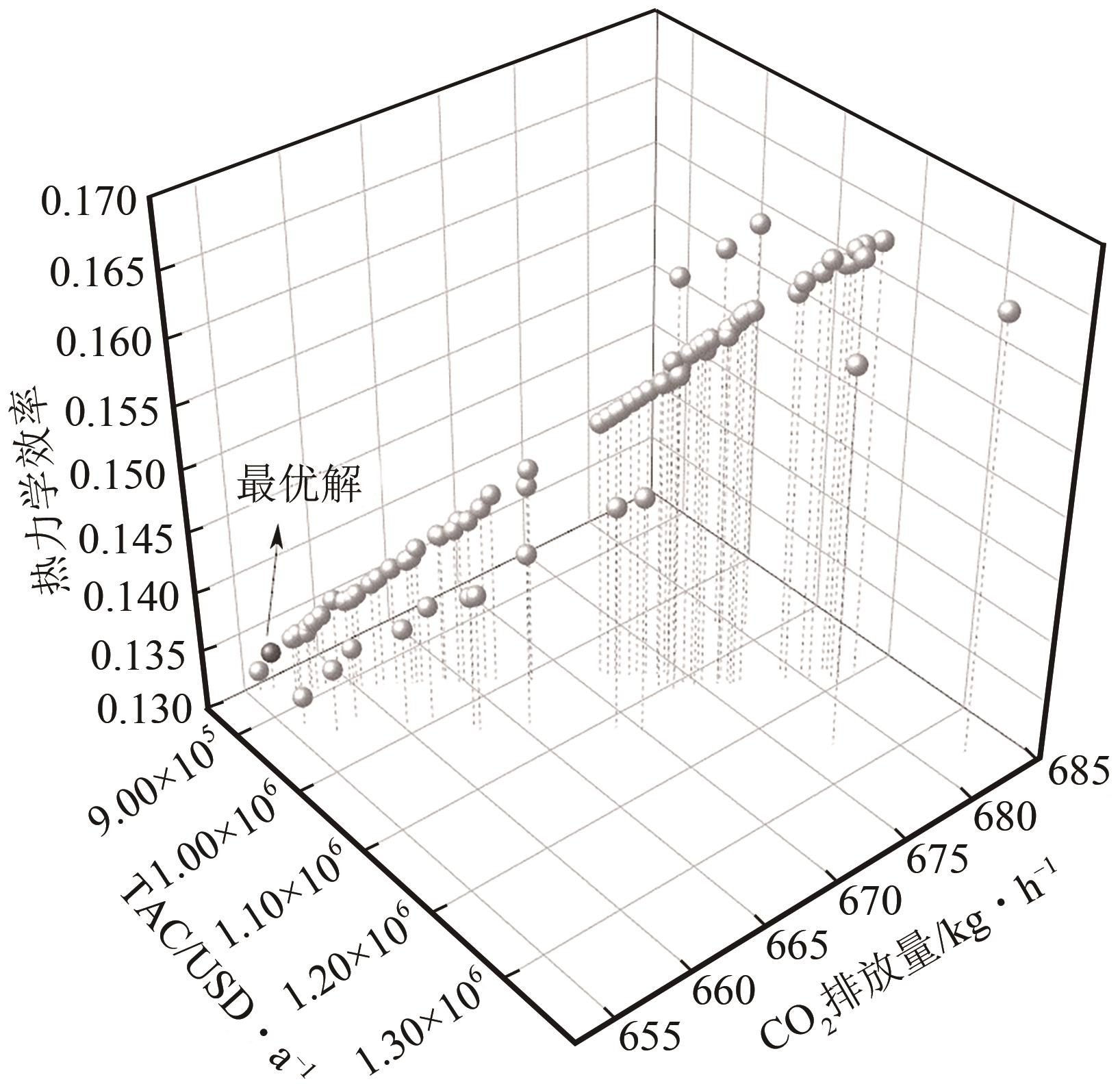
图6 ICED过程的多目标优化结果
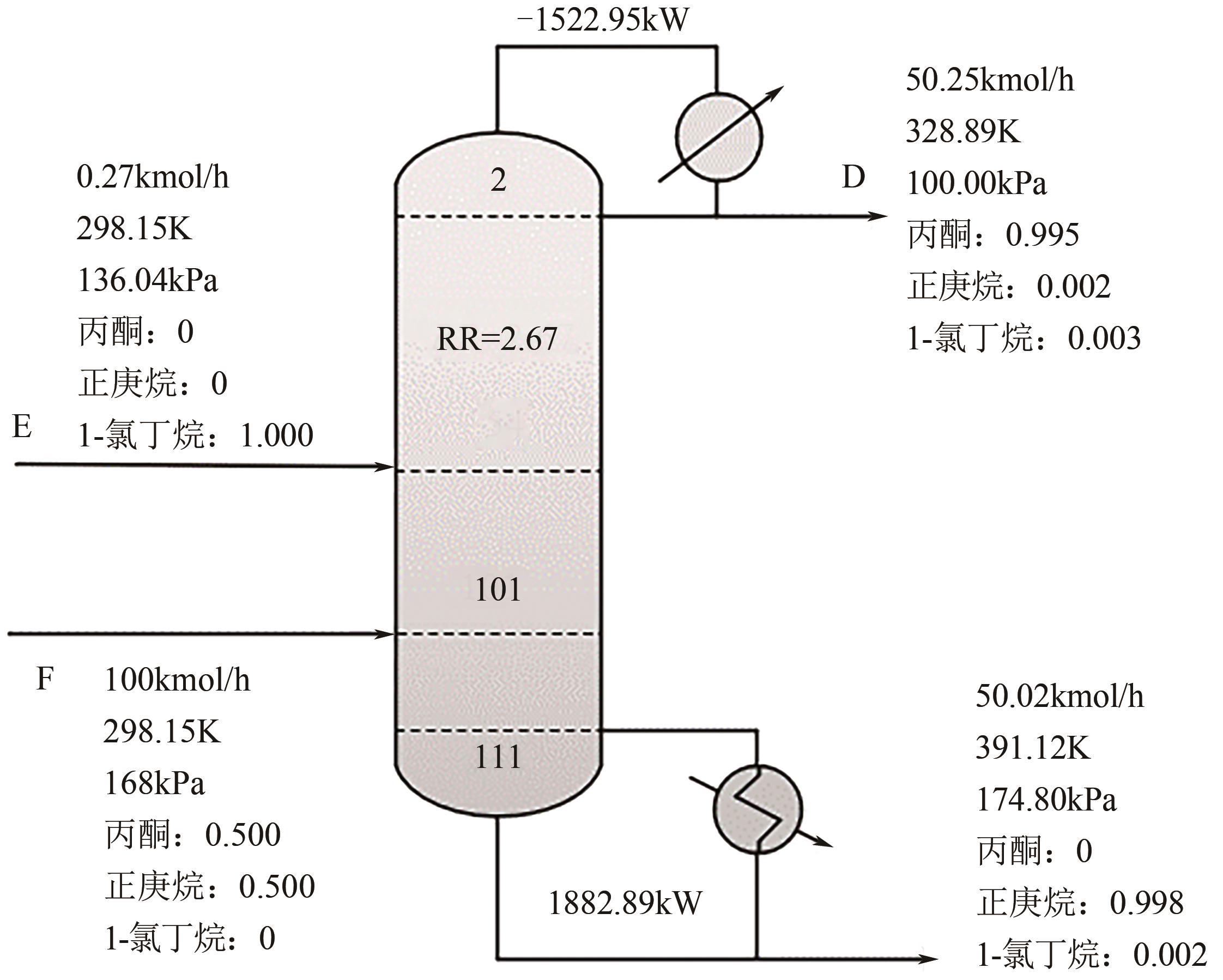
图7 多目标优化后的ICED过程流程
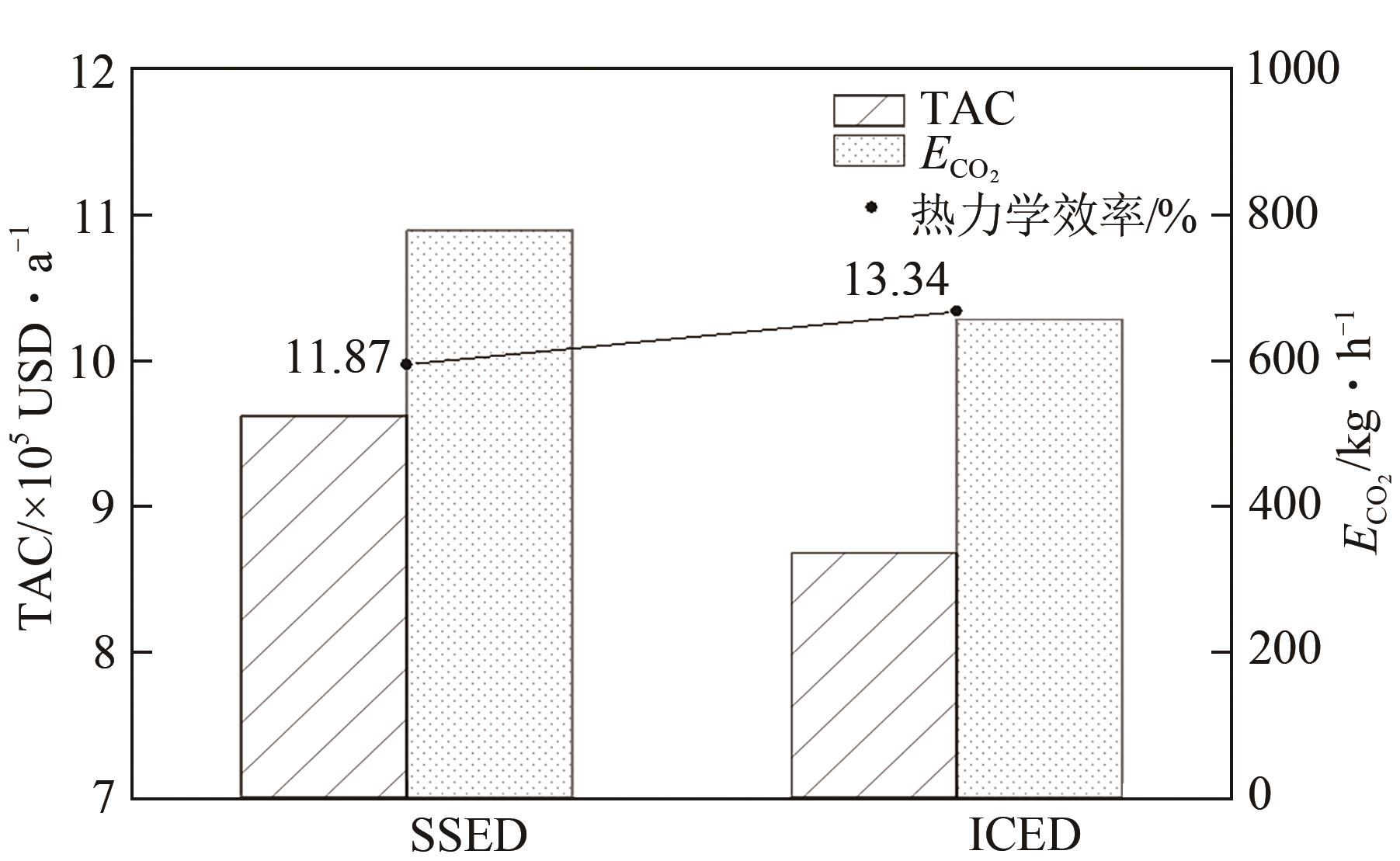
图8 两种工艺TAC、ECO2以及热力学效率对比
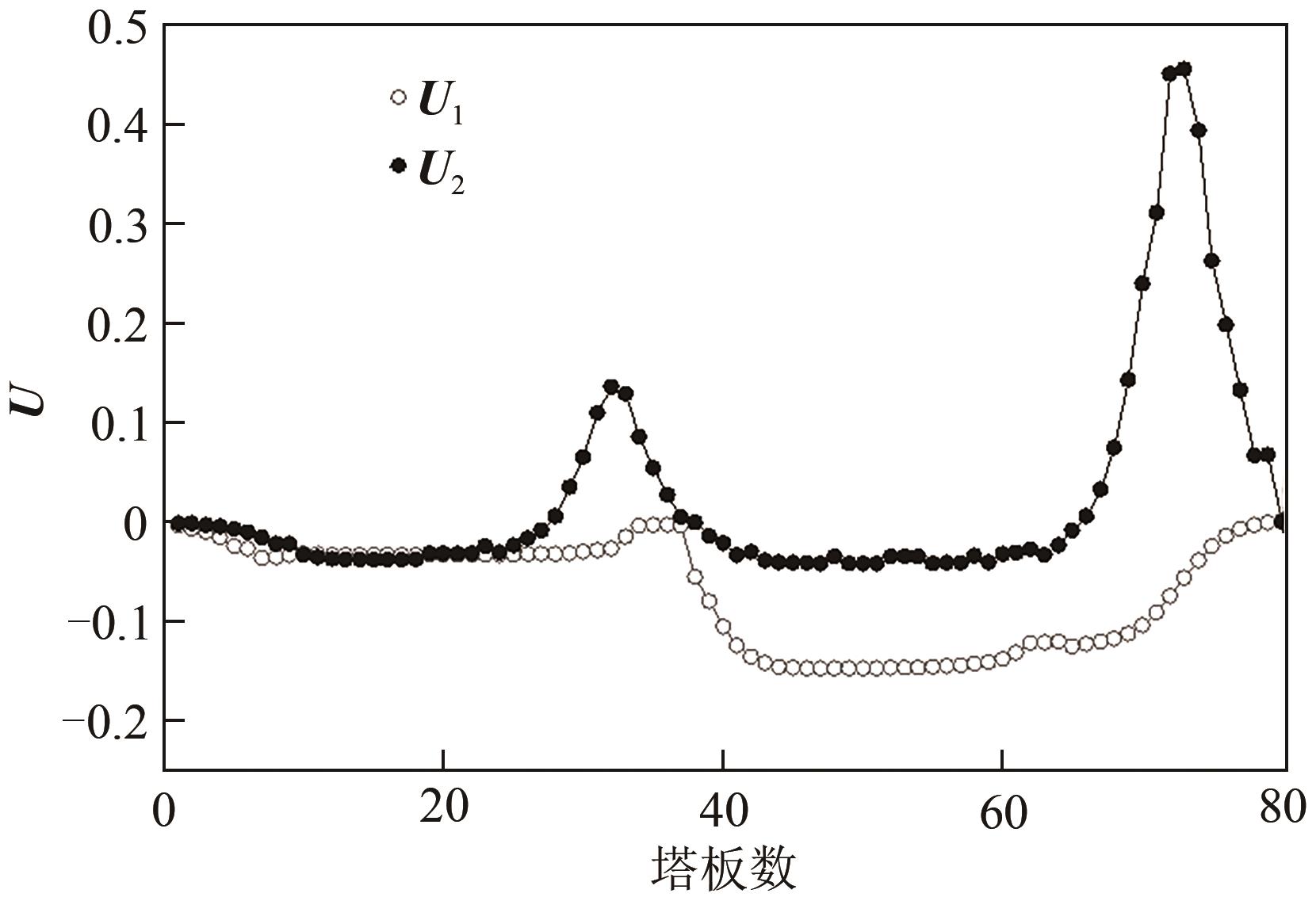
图9 SSED流程温度灵敏板选择
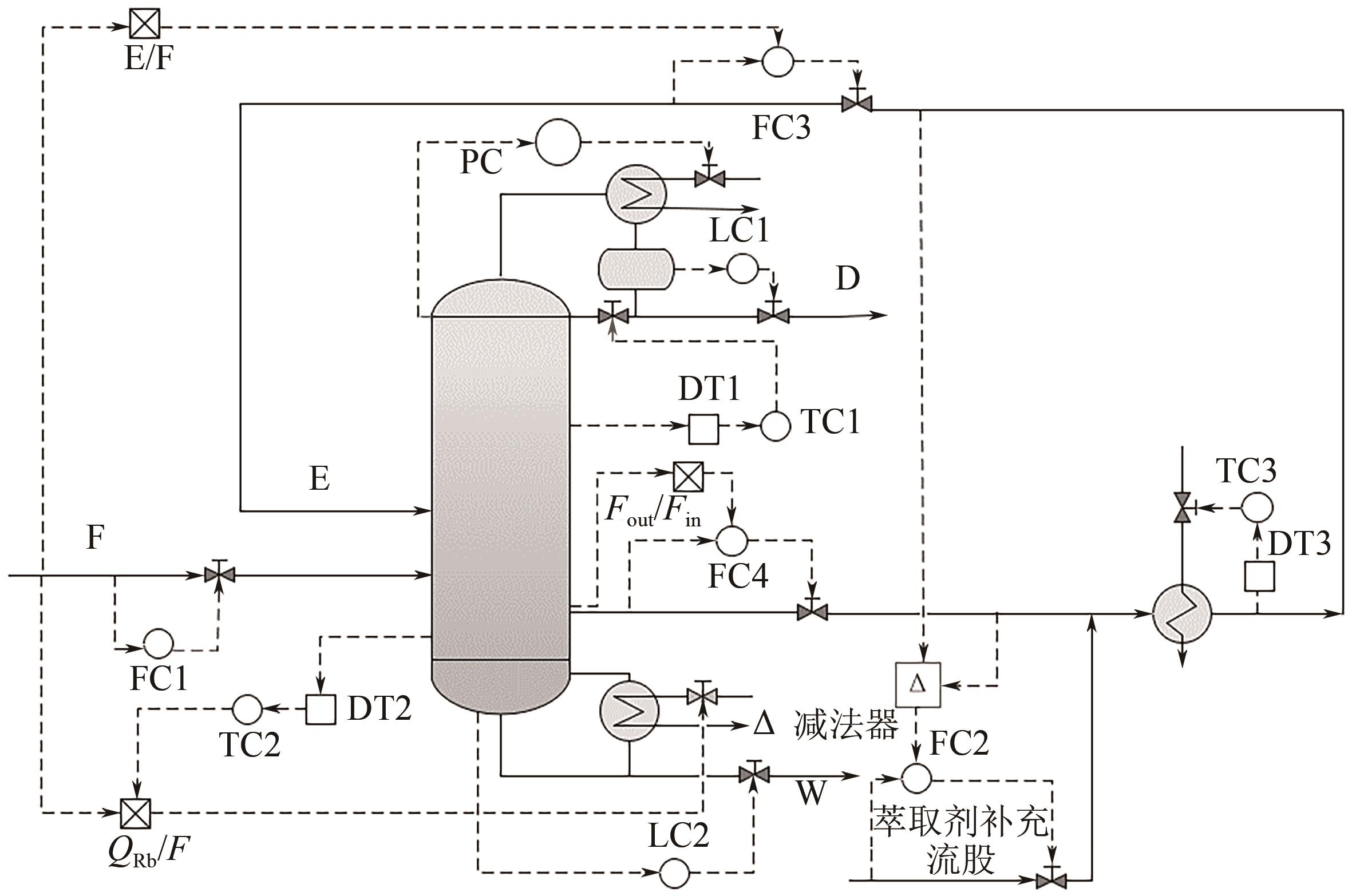
图10 SSED流程控制方案Fout—生塔板上液体流股;Fin—采出液体流股;QRb—再沸器负荷
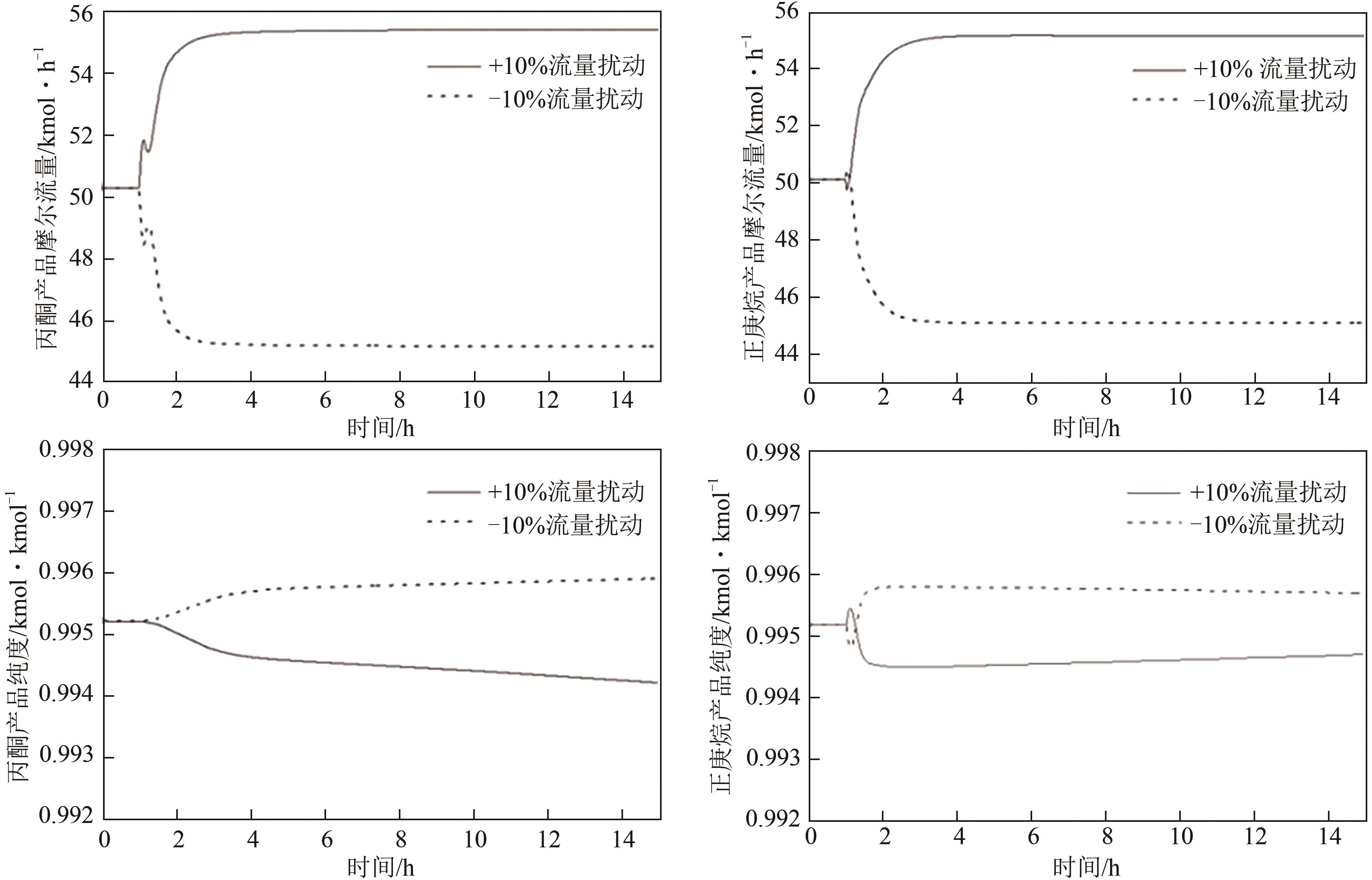
图11 SSED流程动态响应曲线
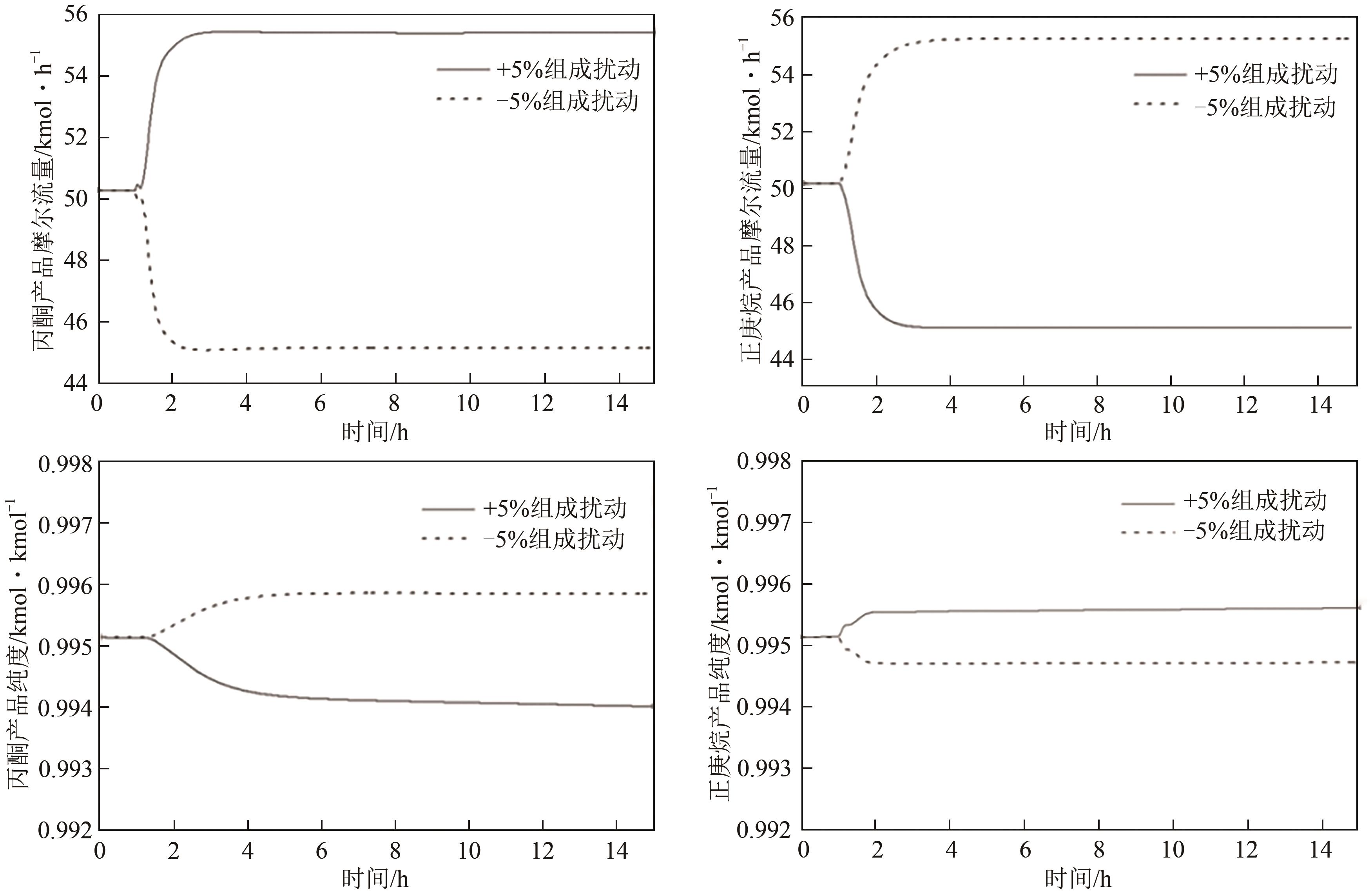
图11 SSED流程动态响应曲线(续)
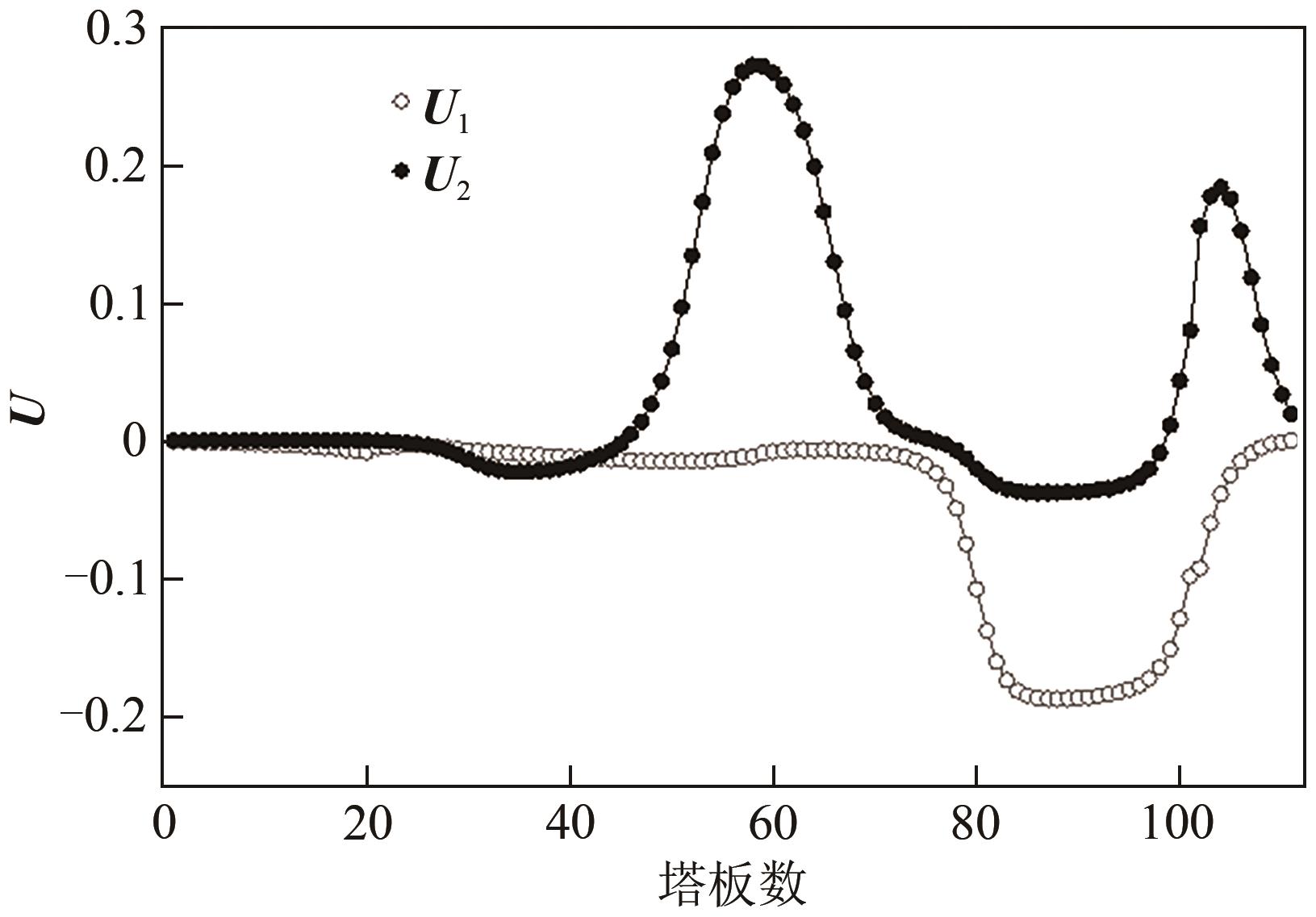
图12 ICED流程温度灵敏板选择
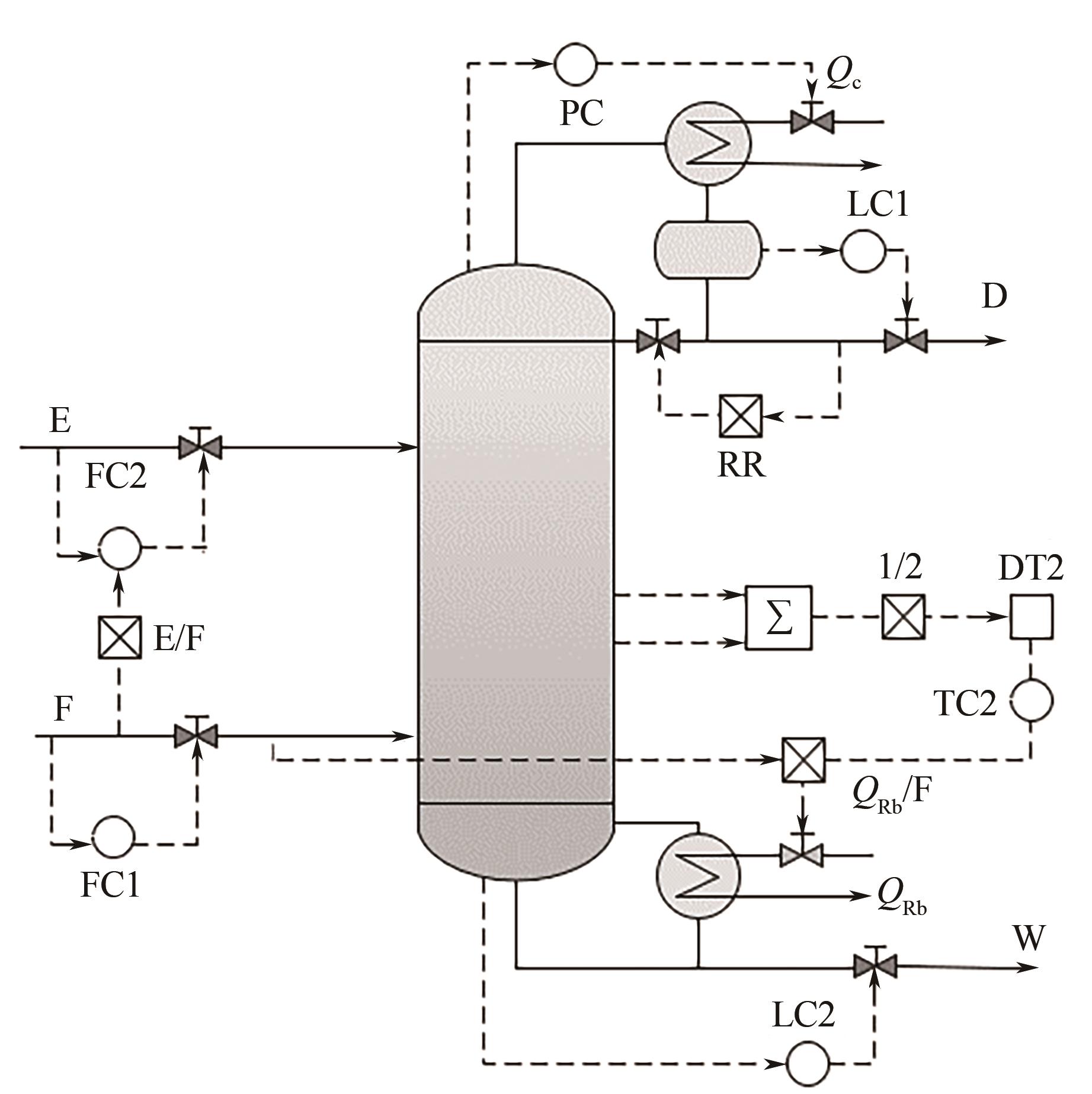
图13 ICED流程控制方案Qc—冷凝器负荷
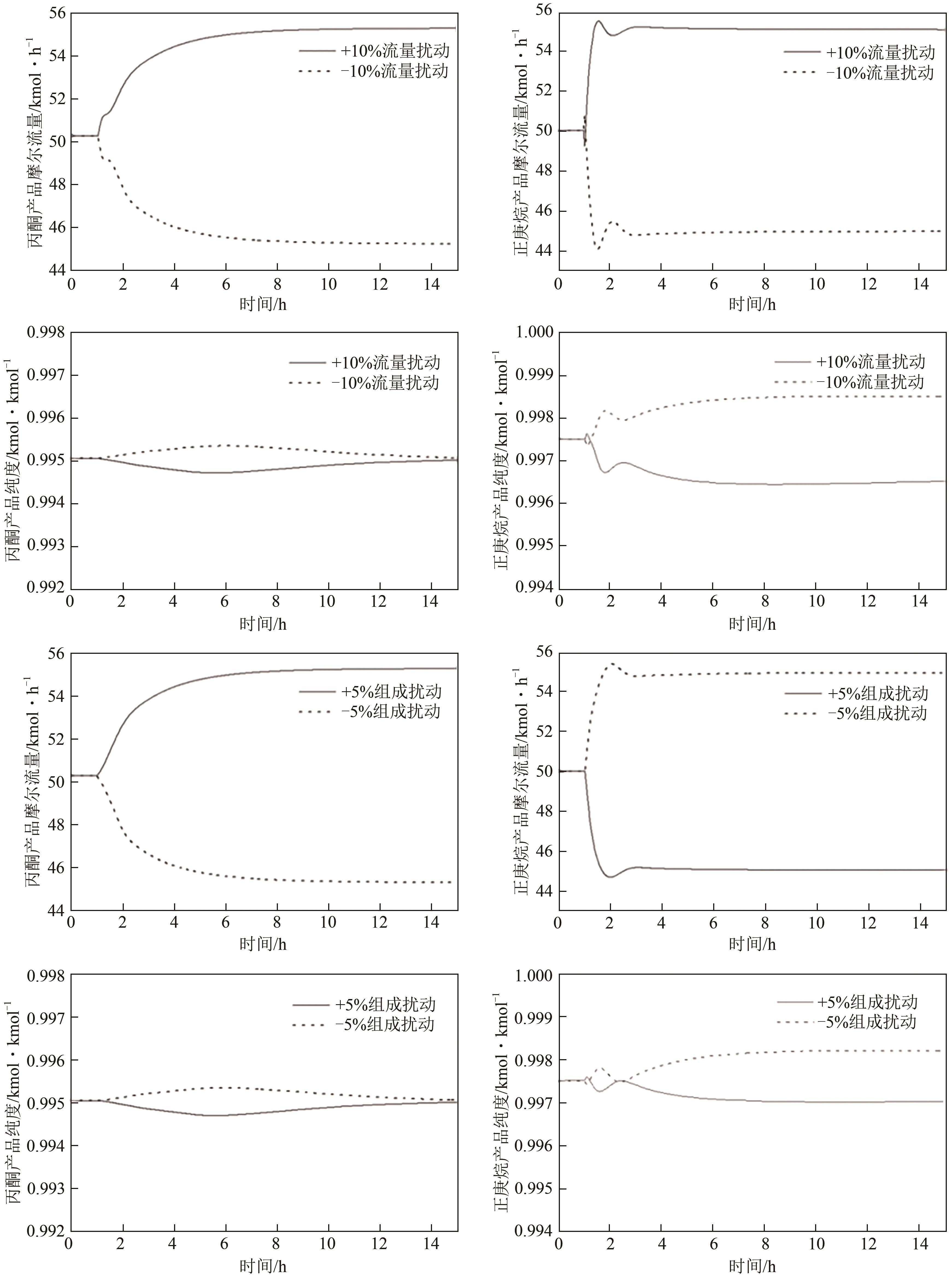
图14 ICED流程动态响应曲线
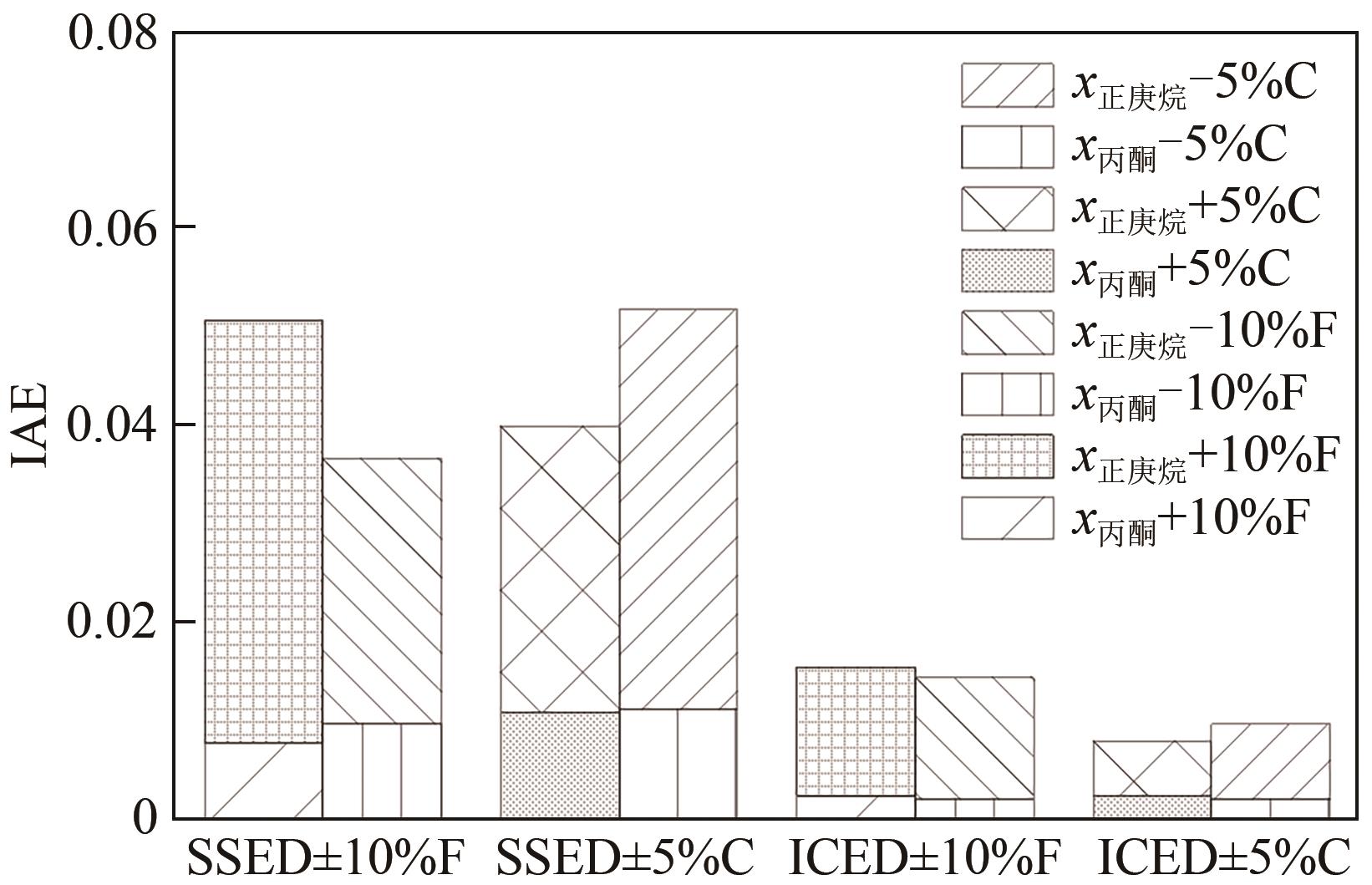
图15 ICED与SSED流程控制结果对比C—进料流量扰动;F—进料组成扰动
| 1 | TIMOFEEVA Maria N, PRIKHOD’KO Sergey A, MAKAROVA Kristina N, et al. Iron-containing materials as catalysts for the synthesis of 1,5-benzodiazepine from 1,2-phenylenediamine and acetone[J]. Reaction Kinetics, Mechanisms and Catalysis, 2017, 121(2): 689-699. |
| 2 | ZHU Zhaoyou, BAI Wenting, QI Pengchao, et al. Liquid liquid equilibrium data for the separation of acetone from n-heptane using four imidazolium-based ionic liquids[J]. Journal of Chemical & Engineering Data, 2019, 64(3): 1202-1208. |
| 3 | MAROTEAUX Fadila, VAGLIECO Bianca Maria, MANCARUSO Ezio. N-heptane ignition delay time with temperature criterion for HCCI combustion[J]. Fuel, 2018, 225: 483-489. |
| 4 | FENG Mang, WANG Ningfei, LI Junwei, et al. Study on unsteady evaporation of n-heptane droplet in a heated tube[J]. International Journal of Heat and Mass Transfer, 2018, 122: 539-556. |
| 5 | 张鸾, 朱宏吉, 白鹏. 共沸精馏分离乙醇-异丙醇[J]. 化工进展, 2012, 31(10): 2187-2190. |
| ZHANG Luan, ZHU Hongji, BAI Peng. Separation of ethanol-isopropanol binary mixture by azeotropic distillation[J]. Chemical Industry and Engineering Progress, 2012, 31(10): 2187-2190. | |
| 6 | TOTH Andras Jozsef, SZILAGYI Botond, HAAZ Eniko, et al. Enhanced separation of maximum boiling azeotropic mixtures with extractive heterogeneous-azeotropic distillation[J]. Chemical Engineering Research and Design, 2019, 147: 55-62. |
| 7 | 向晟, 王超, 庄钰, 等. 变压精馏分离乙酸甲酯-甲醇-乙酸乙酯体系的设计与控制[J]. 化工进展, 2022, 41(8): 4065-4076. |
| XIANG Sheng, WANG Chao, ZHUANG Yu, et al. Design and control of pressure-swing distillation for separating methyl acetate-methanol-ethyl acetate azeotropic system[J]. Chemical Industry and Engineering Progress, 2022, 41(8): 4065-4076. | |
| 8 | WANG Chao, GUANG Chao, CUI Yue, et al. Separation of a ternary mixture with multiple azeotropes via pressure-swing distillation[J]. Journal of Chemical Technology & Biotechnology, 2019, 94(6): 2023-2033. |
| 9 | TAVAN Yadollah, HOSSEINI Seyyed Hossein. A novel integrated process to break the ethanol/water azeotrope using reactive distillation – Part Ⅰ: Parametric study[J]. Separation and Purification Technology, 2013, 118: 455-462. |
| 10 | TONG Liwei, CHEN Lifang, YE Yinmei, et al. Analysis of intensification mechanism of auxiliary reaction on reactive distillation: Methyl acetate hydrolysis process as example[J]. Chemical Engineering Science, 2014, 106: 190-197. |
| 11 | 王玉春, 张志浩, 高源, 等. DMC-甲醇-水三元混合物的萃取精馏分离工艺[J]. 化工进展, 2021, 40(8): 4196-4204. |
| WANG Yuchun, ZHANG Zhihao, GAO Yuan, et al. Extractive distillation separation process of DMC-methanol-water ternary mixture[J]. Chemical Industry and Engineering Progress, 2021, 40(8): 4196-4204. | |
| 12 | WANG Chao, ZHUANG Yu, LIU Linlin, et al. Design and control of a novel side-stream extractive distillation column for separating methanol-toluene binary azeotrope with intermediate boiling entrainer[J]. Separation and Purification Technology, 2020, 239: 116581. |
| 13 | HUANG Jianghui, ZHANG Qingjun, LIU Chunjiang, et al. Optimal design of the ternary azeotrope separation process assisted by reactive-extractive distillation for ethyl acetate/isopropanol/water[J]. Separation and Purification Technology, 2023, 306: 122708. |
| 14 | WANG Chao, ZHUANG Yu, LIU Linlin, et al. Design and comparison of energy-saving double column and triple column reactive-extractive hybrid distillation processes for ternary multi-azeotrope dehydration[J]. Separation and Purification Technology, 2021, 259: 118211. |
| 15 | DAI Yasen, ZHOU Xiangyu, CHU Xiaojun, et al. Effect of entrainer thermodynamic properties on the separation of ternary mixtures containing two minimum boiling azeotropes by extractive distillation[J]. Industrial & Engineering Chemistry Research, 2022, 61(41): 15273-15288. |
| 16 | GE Xiaolong, ZHANG Ran, LIU Pengfei, et al. Optimization and control of extractive distillation for formic acid-water separation with maximum-boiling azeotrope[J]. Computers & Chemical Engineering, 2023, 169: 108075. |
| 17 | 叶青, 黄路, 陆叶倩, 等. 异丙醚-异丙醇-水三元共沸物的分离[J]. 化工进展, 2011, 30(7): 1435-1439. |
| YE Qing, HUANG Lu, LU Yeqian, et al. Batch extractive distillation for separation of ether-isopropanol-water azeotropic system[J]. Chemical Industry and Engineering Progress, 2011, 30(7): 1435-1439. | |
| 18 | JIAN Xue, LI Jinlong, YE Qing, et al. Economic and environmental assessment of a novel integrated three-column extractive distillation process for recycling organics from wastewater[J]. Industrial & Engineering Chemistry Research, 2023, 62(26): 10204-10220. |
| 19 | WANG Yinglong, BU Guangle, GENG Xueli, et al. Design optimization and operating pressure effects in the separation of acetonitrile/methanol/water mixture by ternary extractive distillation[J]. Journal of Cleaner Production, 2019, 218: 212-224. |
| 20 | GUO Chao, WANG Fuqiang, XING Jiafu, et al. Thermodynamic and economic comparison of extractive distillation sequences for separating methanol/dimethyl carbonate/water azeotropic mixtures[J]. Separation and Purification Technology, 2022, 282: 120150. |
| 21 | LI Guoxuan, LIU Shengli, YU Gangqiang, et al. Extractive distillation using ionic liquids-based mixed solvents combined with dividing wall column[J]. Separation and Purification Technology, 2021, 269: 118713. |
| 22 | WANG Chao, ZHUANG Yu, DONG Yachao, et al. Dynamic controllability comparison of different side-stream extractive distillation processes with intermediate boiling entrainer[J]. Separation and Purification Technology, 2022, 286: 120475. |
| 23 | WANG Chao, ZHUANG Yu, LIU Linlin, et al. Heat pump assisted extractive distillation sequences with intermediate-boiling entrainer[J]. Applied Thermal Engineering, 2021, 186: 116511. |
| 24 | ZHANG Tao, LI Ao, XU Xin, et al. Separation of azeotropic mixture (acetone + n-heptane) by extractive distillation with intermediate and heavy boiling entrainers: Vapour-liquid equilibrium measurements and correlation[J]. The Journal of Chemical Thermodynamics, 2021, 152: 106284. |
| 25 | GAO Xiaoxin, YANG Yi, CHEN Mengyuan, et al. Novel heat pump reactive distillation and dividing-wall column reactive distillation processes for synthesizing isopropyl acetate to save TAC and reduce CO2 emissions[J]. Chemical Engineering and Processing, 2022, 171: 108746. |
| 26 | YANG Ao, KONG Zongyang, SUNARSO Jaka. Design and optimisation of novel hybrid side-stream reactive-extractive distillation for recovery of isopropyl alcohol and ethyl acetate from wastewater[J]. Chemical Engineering Journal, 2023, 451: 138563. |
| 27 | 张伟静, 张雷. 隔壁塔萃取精馏分离丙酸甲酯-甲醇的模拟与优化[J]. 现代化工, 2021, 41(S1): 315-318. |
| ZHANG Weijing, ZHANG Lei. Simulation and optimization of separation of methyl propionate-methanol by extractive distillation in dividing wall column[J]. Modern Chemical Industry, 2021, 41(S1): 315-318. | |
| 28 | ZHAO Qing, SHEN Yuanyuan, LI Yanan, et al. Process design and optimization of the efficient production of butyl acrylate by reactive azeotropic distillation/pervaporation using different feed ratios[J]. Journal of Cleaner Production, 2022, 344: 131102. |
| 29 | GUANG Chao, SHI Xiaojing, ZHANG Zhishan, et al. Comparison of heterogeneous azeotropic and pressure-swing distillations for separating the diisopropylether/isopropanol/water mixtures[J]. Chemical Engineering Research and Design, 2019, 143: 249-260. |
| 30 | OLUJIC Z, SUN L, GADALLA M, et al. Enhancing thermodynamic efficiency of energy intensive distillation columns via internal heat integration[J]. Chemical and Biochemical Engineering Quarterly, 2008, 22(4): 383-392. |
| 31 | WANG Chao, ZHUANG Yu, LIU Linlin, et al. Control of energy-efficient extractive distillation configurations for separating the methanol/toluene azeotrope with intermediate-boiling entrainer[J]. Chemical Engineering and Processing - Process Intensification, 2020, 149: 107862. |
| 32 | LUYBEN William L. Improved design of an extractive distillation system with an intermediate-boiling solvent[J]. Separation and Purification Technology, 2015, 156: 336-347. |
| 33 | WANG Chao, ZHUANG Yu, LIU Linlin, et al. Design and comparison of conventional and side-stream extractive distillation sequences for separating the methanol-toluene binary azeotrope with intermediate boiling entrainer[J]. Computers & Chemical Engineering, 2020, 143: 107115. |
| 34 | YUE Ruiming, LU Kun, XU Lianghua, et al. Design and control of a novel single-column extractive distillation with internally circulated intermediate boiling entrainer[J]. Separation and Purification Technology, 2023, 309: 123041. |
| [1] | 陈坚红, 张开基, 陈庆乐, 杨帅, 方伟. 石化火炬气回收方法多目标优化计算分析[J]. 化工进展, 2025, 44(3): 1218-1227. |
| [2] | 王思懿, 许建良, 代正华, 武国义, 王辅臣. 多晶硅还原炉气相沉积反应数值模拟[J]. 化工进展, 2025, 44(2): 706-716. |
| [3] | 韩英娜, 李丽, 张林子, 安金泽, 李文秀, 张弢. 离子液体萃取精馏分离甲醇-乙腈共沸物[J]. 化工进展, 2025, 44(2): 660-668. |
| [4] | 胡盼盼, 肖梦瑶, 王娜, 史吉平, 刘莉. 多酶协同预处理厨余垃圾技术优化[J]. 化工进展, 2025, 44(2): 1138-1146. |
| [5] | 熊思恒, 黄冬梅, 肖媛, 黄晓璜, 易智康, 崔国民. 一种新的连续非结构模型同步优化质量交换网络[J]. 化工进展, 2025, 44(2): 635-645. |
| [6] | 孙悦鹏, 孙延吉, 潘艳秋, 王成宇. 基于BO-LSTM的低温甲醇洗净化气CO2含量预测[J]. 化工进展, 2025, 44(2): 688-697. |
| [7] | 李灏, 孙昱楠, 李健, 陶俊宇, 程占军, 颜蓓蓓, 陈冠益. 陈腐垃圾与原生垃圾共气化特性[J]. 化工进展, 2025, 44(1): 525-537. |
| [8] | 李鑫, 王维, 张羽, 谢湫钰, 袁昊. 分离乙酸乙酯+乙醇+水体系:离子液体筛选、汽液相平衡和过程模拟[J]. 化工进展, 2025, 44(1): 75-85. |
| [9] | 朱汝凯, 程潇, 刘金亚, 吴慧英. 针翅式多孔倾斜射流微通道流动传热特性与多目标优化[J]. 化工进展, 2025, 44(1): 86-99. |
| [10] | 苏宣合, 蒙仕达, 柯杰坤, 卢苇. 基于分子交换流的多级气体分离系统性能与能耗分析[J]. 化工进展, 2025, 44(1): 109-120. |
| [11] | 肖媛, 陈怡, 刘思琪, 崔国民. 基于广义换热网络的质量交换网络质能比拟及全局优化[J]. 化工进展, 2025, 44(1): 121-134. |
| [12] | 乔磊, 张亚新, 魏博, 冉文燊, 马金荣, 王峰. 氧热法气流床电石反应器烧嘴布置参数及操作参数优化[J]. 化工进展, 2025, 44(1): 145-157. |
| [13] | 杨俊辉, 袁君, 张继达, 王金海, 乔红斌, 蔡振义, 马中成. 新型蓄热体结构设计及性能分析[J]. 化工进展, 2024, 43(S1): 282-294. |
| [14] | 周渝, 夏太阳, 韦奇, 唐甜, 田磊. 微通道耦合反渗透膜串联处理甲醇制烯烃废水工艺优化[J]. 化工进展, 2024, 43(S1): 43-51. |
| [15] | 陈王觅, 席北斗, 李鸣晓, 叶美瀛, 侯佳奇, 于承泽, 魏域芳, 孟繁华. 热解系统碳排放削减技术研究进展[J]. 化工进展, 2024, 43(S1): 479-503. |
| 阅读次数 | ||||||
|
全文 |
|
|||||
|
摘要 |
|
|||||