化工进展 ›› 2025, Vol. 44 ›› Issue (7): 4126-4143.DOI: 10.16085/j.issn.1000-6613.2024-0908
• 资源与环境化工 • 上一篇
室内气态污染物测定方法及其影响因素研究进展
张阳1,2,3( ), 胡鹏博1,2,3, 冯驰1,2,3()
- 1.重庆大学建筑城规学院,重庆 400045
2.重庆大学山地城镇建设与新技术教育部重点实验室,重庆 400045
3.重庆大学安全节能环保土木工程先进新材料川渝共建重点实验室,重庆 400045
-
收稿日期:2024-06-05修回日期:2024-08-22出版日期:2025-07-25发布日期:2025-08-04 -
通讯作者:冯驰 -
作者简介:张阳(2001—),女,硕士研究生,研究方向为室内空气品质。E-mail:2451764849@qq.com。 -
基金资助:国家博士后创新人才支持计划(BX20230448);重庆市高等教育教学改革研究项目-重点项目(232016);中央高校基本科研业务费项目(2024CDJXY014)
Research progress on measurement methods and impact factors of indoor gaseous pollutants
ZHANG Yang1,2,3(), HU Pengbo1,2,3, FENG Chi1,2,3()
- 1.School of Architecture and Urban Planning, Chongqing University, Chongqing 400045, China
2.Key Laboratory of New Technology for Construction of Cities in Mountain Area, Ministry of Education, Chongqing University, Chongqing 400045, China
3.Sichuan -Chongqing Joint Lab of Advanced Eco-Materials with Safety and Energy Efficiency for Civil Engineering, Chongqing University, Chongqing 400045, China
-
Received:2024-06-05Revised:2024-08-22Online:2025-07-25Published:2025-08-04 -
Contact:FENG Chi

摘要:
室内甲醛、苯等气态污染物浓度超标、危害人体健康的问题日益严重。为实现室内空气高效净化,首先需要测定各污染物的存在特征。当前研究通常采用单一标准方法测定一种污染物的策略(例如使用分光光度法测定二氧化硫),并发展增加采样预处理、调整吸收溶液组分等方法提高测定准确性。然而,由于不同测定方法原理限制(例如分光光度法完全依靠样品吸光度的变化)、室内环境复杂多变(例如多污染物共存或特殊高温高湿环境等),单一标准测定方法通常难以实现较宽浓度范围内精确测定,并且常出现不同方法测定结果相差较大等问题,导致难以相互比对并为空气净化提供准确依据。针对上述问题,本文归纳了5类常用室内气态污染物测定方法并对相应优缺点进行了分析:①分光光度法简便准确,应用范围广,但稳定性差;②色谱法高效灵敏,具有一定的抗干扰性,但操作技术要求高;③传感器法便携易读,但重复性较差;④化学发光法等标准规范方法能实现实时检测,线性范围广,但抗干扰性差;⑤以电子鼻为代表的新型测定方法能够实现快速检测,但操作复杂、成本较高。同时,本文针对测定过程中的各类影响因素进行了归纳分析,发现测定温度和操作过程是造成误差的主要原因:高温下气态污染物与试剂加速反应导致显色不完全,测试人员不规范操作会导致测定结果不完整。本文总结了适用于不同存在特征下室内气态污染物的测定方法,归纳了各方法的优缺点、检出限/定量限和适用场景等特点,并且在测定操作层面给出了具体的影响因素及其相应的改进措施,可为最终选择合适的测定方法以提高室内气态污染物测定精度提供重要参考。
中图分类号:
引用本文
张阳, 胡鹏博, 冯驰. 室内气态污染物测定方法及其影响因素研究进展[J]. 化工进展, 2025, 44(7): 4126-4143.
ZHANG Yang, HU Pengbo, FENG Chi. Research progress on measurement methods and impact factors of indoor gaseous pollutants[J]. Chemical Industry and Engineering Progress, 2025, 44(7): 4126-4143.
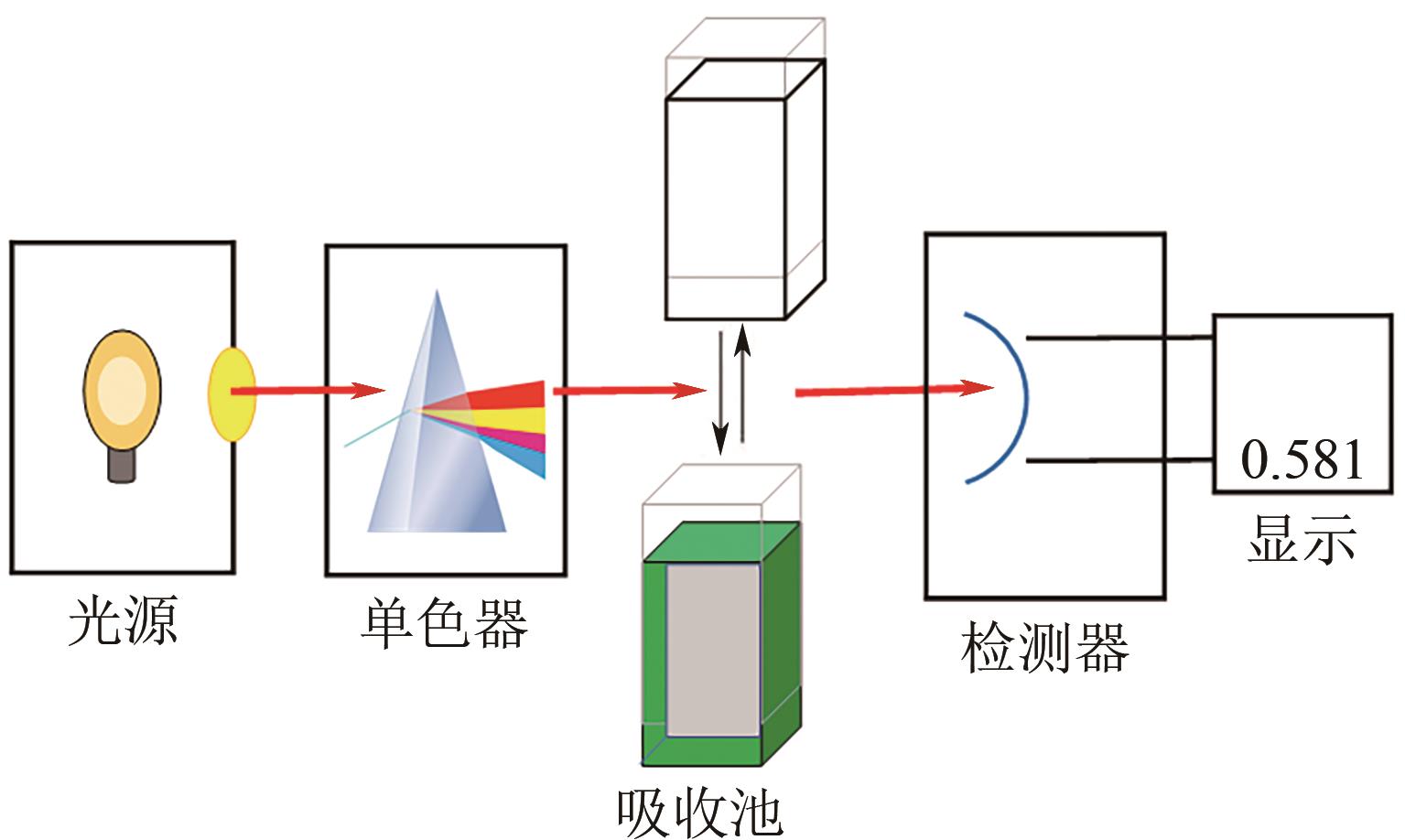
图1 分光光度法的原理
| 污染物种类 | 试剂种类 | 优点 | 缺点 |
|---|---|---|---|
| 甲醛 | AHMT[ | 抗干扰性强,稳定性好 | 溶液配制烦琐 |
| 乙酰丙酮[ | 稳定性好 | 准确度较差 | |
| 酚试剂[ | 灵敏度高,检出限低 | 稳定性差 | |
| 臭氧 | 靛蓝二磺酸钠[ | 选择性、准确度和灵敏度较好 | 抗干扰性差 |
| 二氧化硫 | 甲醛缓冲溶液吸收-副玫瑰苯胺[ | 灵敏度高、选择性好 | 试验要求极其严格 |
| 二氧化氮 | 盐酸萘乙二胺[ | 稳定性好,准确度高 | 毒性较高 |
| 氨 | 靛酚蓝试剂[ | 显色稳定,干扰性小 | 操作要求严格 |
| 纳氏试剂[ | 操作较简单,成本低 | 易受醛类和硫化物的干扰 |
表1 不同试剂分光光度法测定室内气态污染物的对比分析
| 污染物种类 | 试剂种类 | 优点 | 缺点 |
|---|---|---|---|
| 甲醛 | AHMT[ | 抗干扰性强,稳定性好 | 溶液配制烦琐 |
| 乙酰丙酮[ | 稳定性好 | 准确度较差 | |
| 酚试剂[ | 灵敏度高,检出限低 | 稳定性差 | |
| 臭氧 | 靛蓝二磺酸钠[ | 选择性、准确度和灵敏度较好 | 抗干扰性差 |
| 二氧化硫 | 甲醛缓冲溶液吸收-副玫瑰苯胺[ | 灵敏度高、选择性好 | 试验要求极其严格 |
| 二氧化氮 | 盐酸萘乙二胺[ | 稳定性好,准确度高 | 毒性较高 |
| 氨 | 靛酚蓝试剂[ | 显色稳定,干扰性小 | 操作要求严格 |
| 纳氏试剂[ | 操作较简单,成本低 | 易受醛类和硫化物的干扰 |
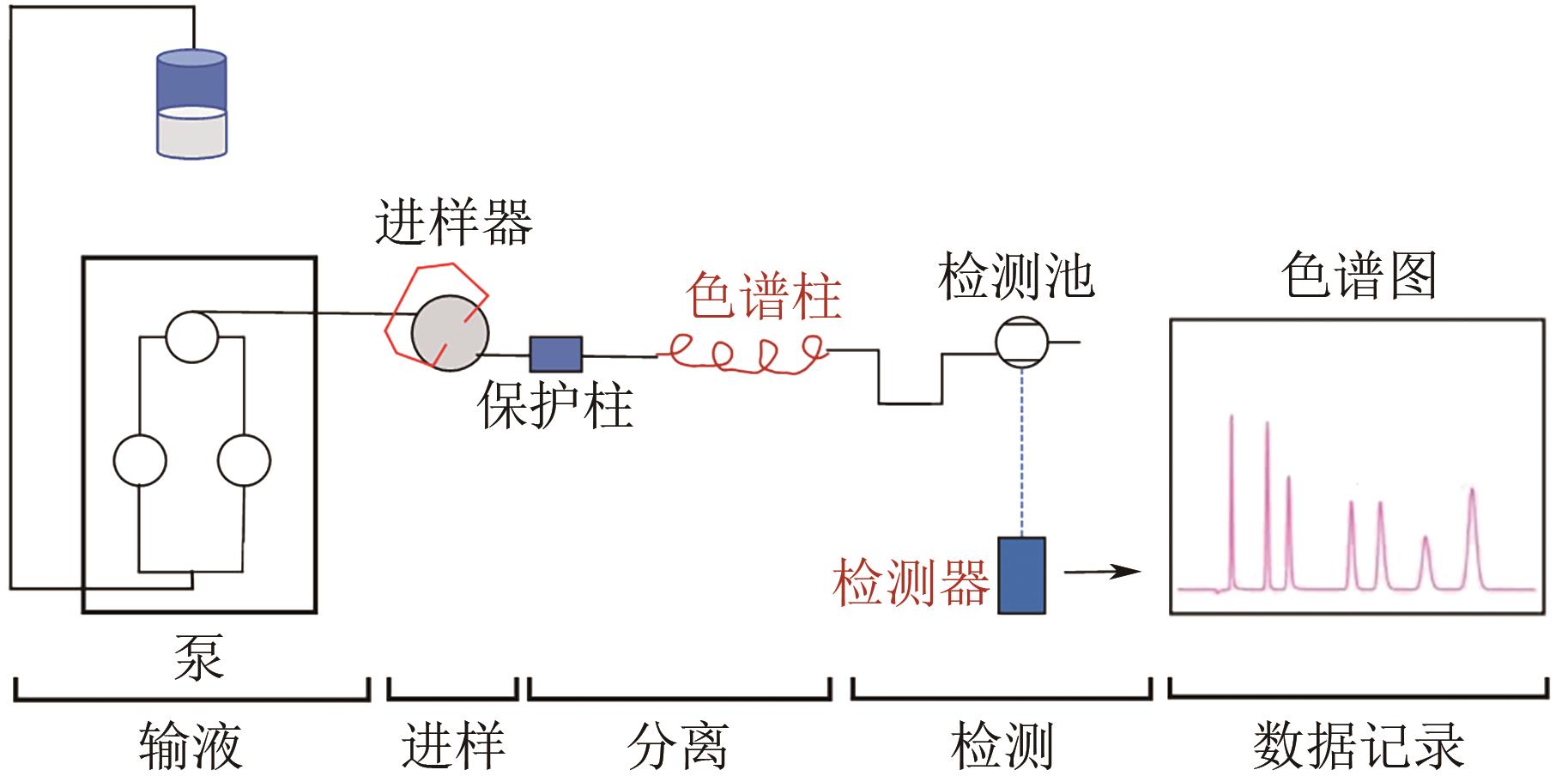
图2 色谱法测定流程
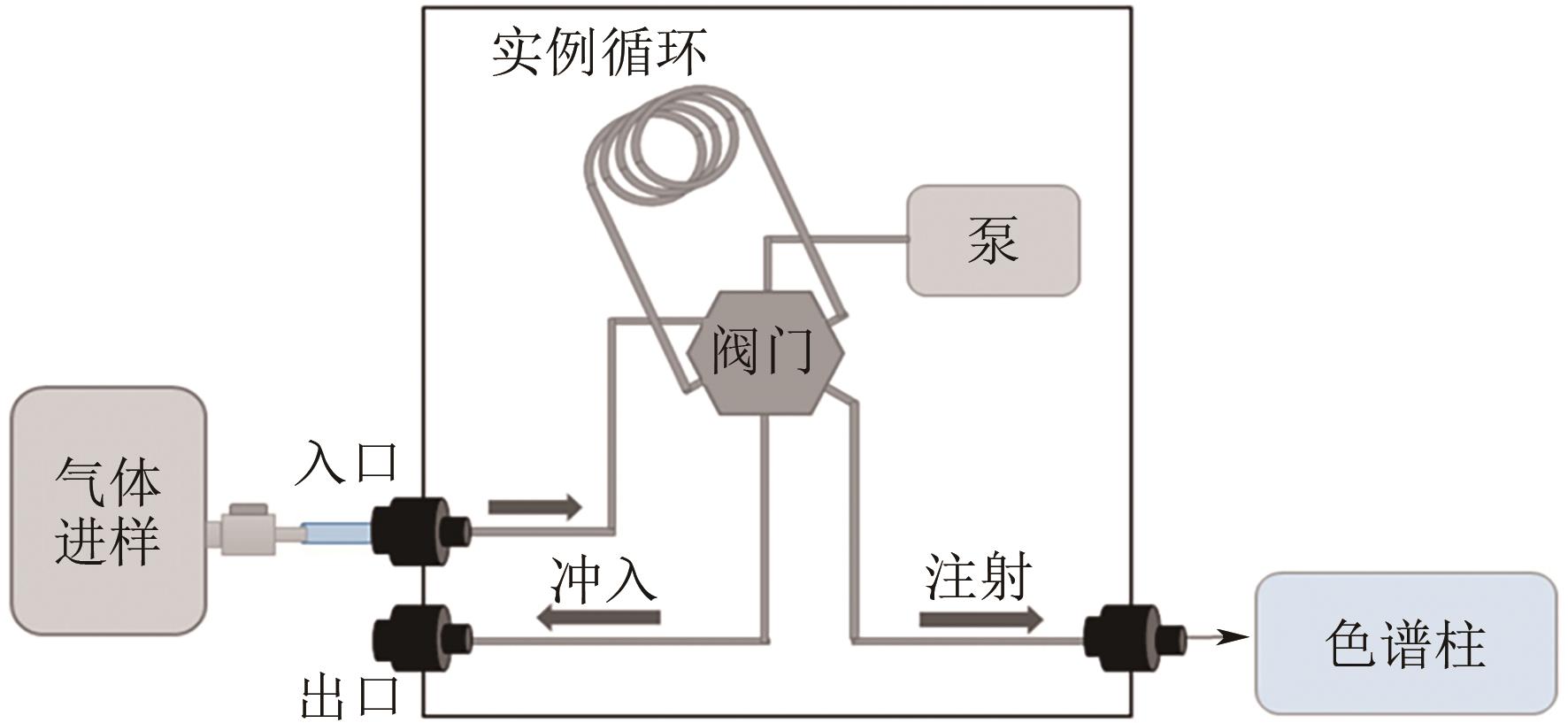
图3 GC/BID的大容量注射(LVI)系统[44]
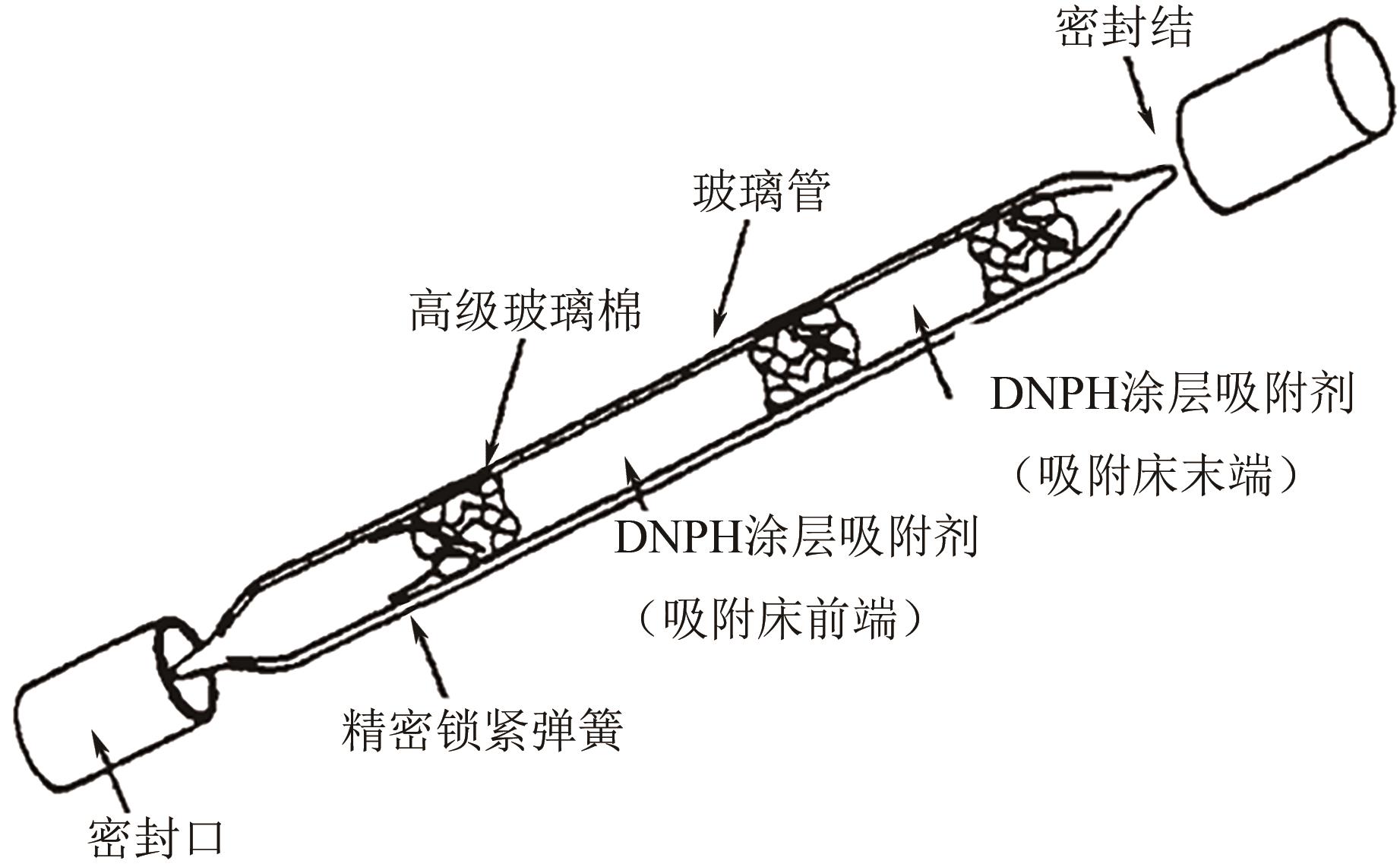
图4 DNPH涂层硅胶管[48]
| 色谱法 | 污染物种类 | 优点 | 缺点 |
|---|---|---|---|
| GC法[ | 同分异构体等 | 高精度、高选择性 | 部分化合物难以分离 |
| LC法[ | (非)极性有机化合物 | 分析范围广 | 测定时间长,易受干扰 |
| IC法[ | 氨、二氧化硫、氮氧化物等 | 预处理效率高,线性关系好 | 成本高,操作要求高 |
表2 两种色谱法测定室内气态污染物的对比分析
| 色谱法 | 污染物种类 | 优点 | 缺点 |
|---|---|---|---|
| GC法[ | 同分异构体等 | 高精度、高选择性 | 部分化合物难以分离 |
| LC法[ | (非)极性有机化合物 | 分析范围广 | 测定时间长,易受干扰 |
| IC法[ | 氨、二氧化硫、氮氧化物等 | 预处理效率高,线性关系好 | 成本高,操作要求高 |
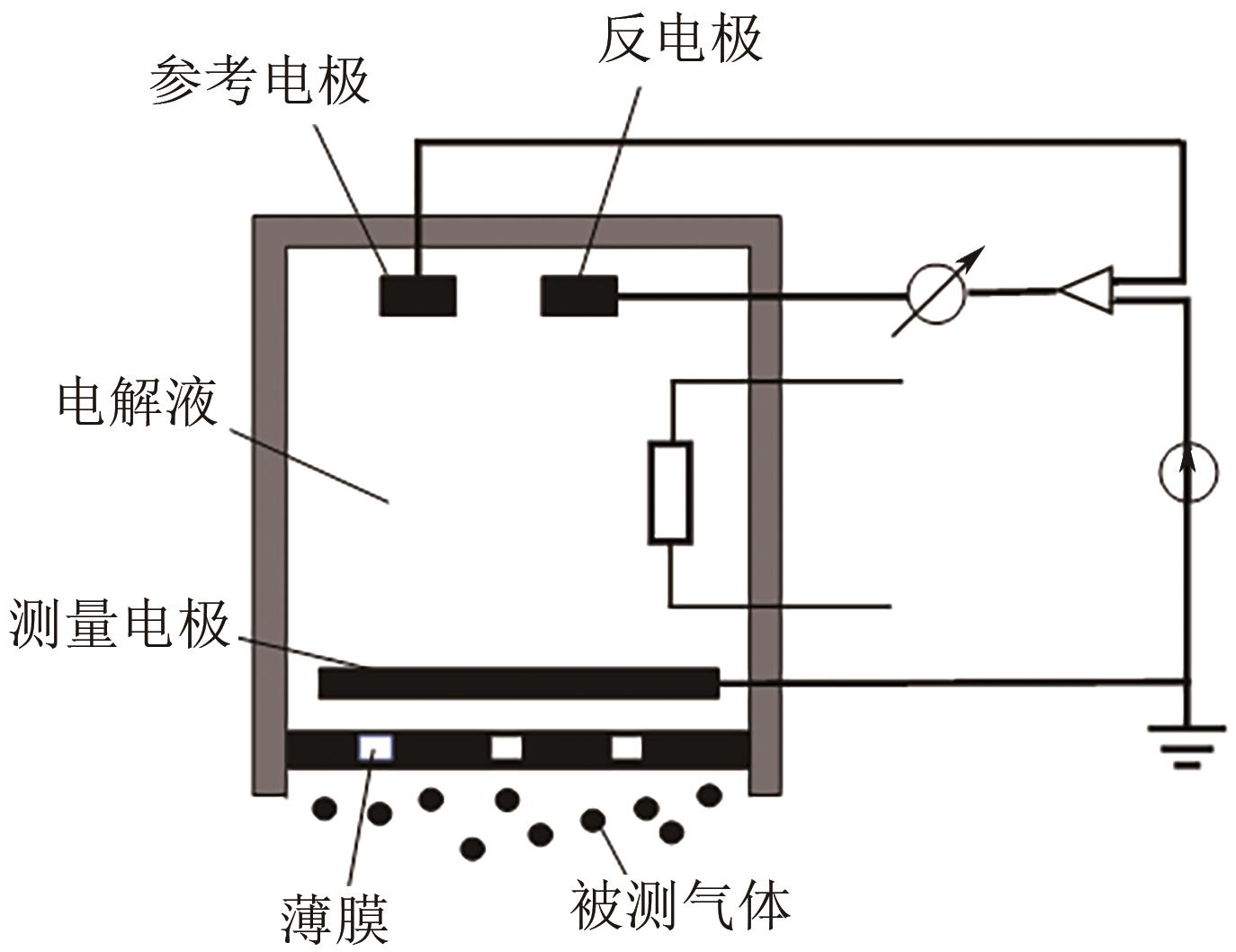
图5 电化学传感器的构造原理
| 传感器种类 | 原理 | 优点 | 缺点 |
|---|---|---|---|
| 色度传感器[ | 不同颜色波段受光比例差异 | 准确度较高 | 价格昂贵 |
| 电化学传感器[ | 被测气体与电流大小成正比 | 低功耗,分辨率高 | 使用寿命短 |
| 便携式检测仪[ | 同上 | 操作简单 | 准确度低,复现性差 |
表3 不同类型的传感器原理及其优缺点分析
| 传感器种类 | 原理 | 优点 | 缺点 |
|---|---|---|---|
| 色度传感器[ | 不同颜色波段受光比例差异 | 准确度较高 | 价格昂贵 |
| 电化学传感器[ | 被测气体与电流大小成正比 | 低功耗,分辨率高 | 使用寿命短 |
| 便携式检测仪[ | 同上 | 操作简单 | 准确度低,复现性差 |
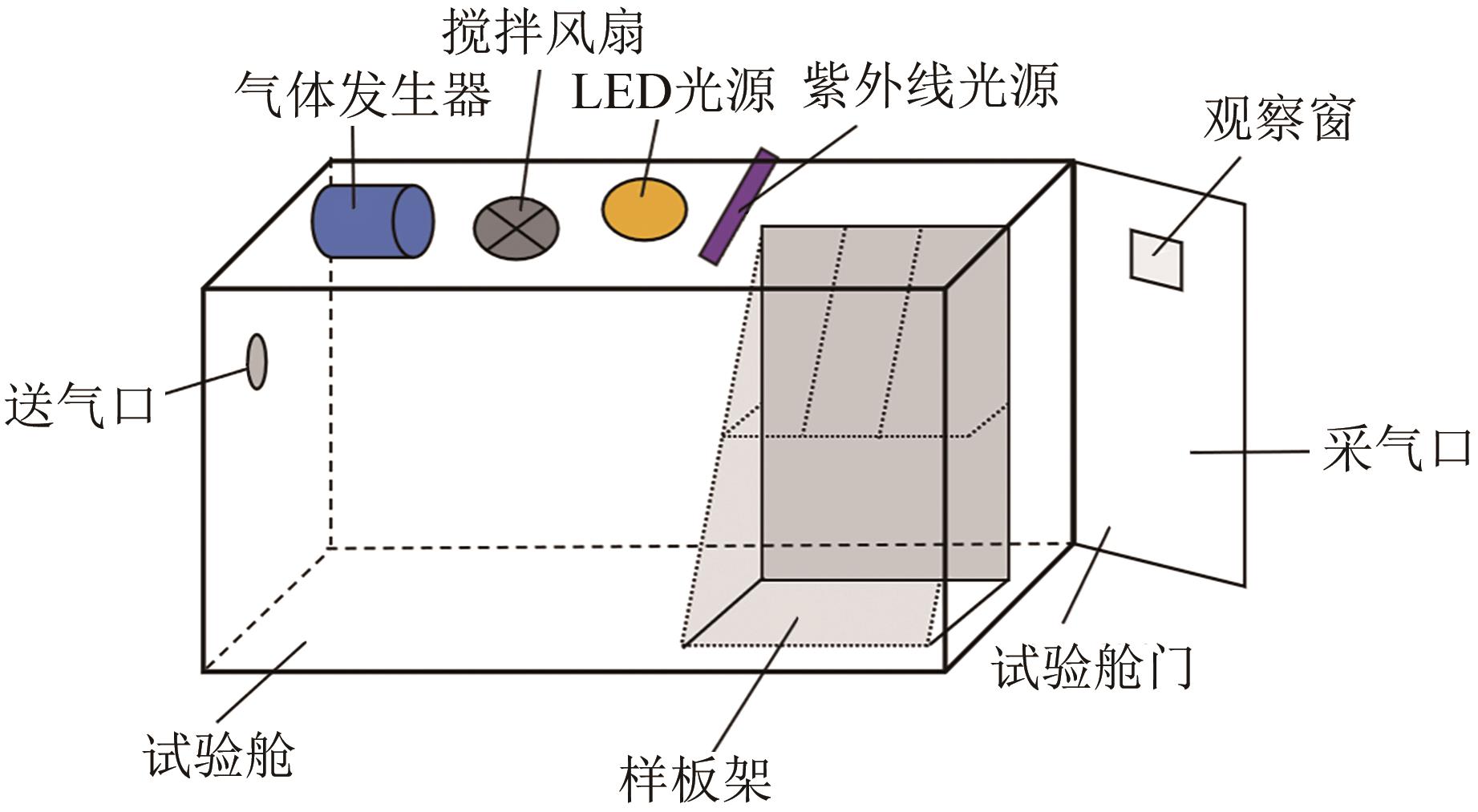
图6 测试舱结构[87]
| 测定方法 | 污染物种类 | 优点 | 缺点 |
|---|---|---|---|
| 紫外光度法 | 臭氧[ | 操作简便,灵敏度高 | 受到其他气体干扰 |
| 改进Saltzman法 | 二氧化氮[ | 成本低廉,操作简便,灵敏度高 | 稳定性较差,无法实时自动监测 |
| 化学发光法 | 氮氧化物[ | 实时监测,线性范围广 | 测定成本大,抗干扰性差 |
| 不分光红外分析法 | 一氧化碳、二氧化碳[ | 高选择性、高灵敏度和强稳定性 | 预处理复杂,需定期校准 |
| 离子选择电极法 | 氨[ | 操作简便,灵敏度高 | 稳定性差,需定期校准 |
| 环境测试舱法 | 均适用[ | 重复性好,可自行控制变量 | 费用高昂 |
| HPLC法 | 甲醛等[ | 准确度高,适用范围广 | 操作复杂,受到羟基化合物干扰 |
表4 常见室内气态污染物的其他常规测定方法及其特点分析
| 测定方法 | 污染物种类 | 优点 | 缺点 |
|---|---|---|---|
| 紫外光度法 | 臭氧[ | 操作简便,灵敏度高 | 受到其他气体干扰 |
| 改进Saltzman法 | 二氧化氮[ | 成本低廉,操作简便,灵敏度高 | 稳定性较差,无法实时自动监测 |
| 化学发光法 | 氮氧化物[ | 实时监测,线性范围广 | 测定成本大,抗干扰性差 |
| 不分光红外分析法 | 一氧化碳、二氧化碳[ | 高选择性、高灵敏度和强稳定性 | 预处理复杂,需定期校准 |
| 离子选择电极法 | 氨[ | 操作简便,灵敏度高 | 稳定性差,需定期校准 |
| 环境测试舱法 | 均适用[ | 重复性好,可自行控制变量 | 费用高昂 |
| HPLC法 | 甲醛等[ | 准确度高,适用范围广 | 操作复杂,受到羟基化合物干扰 |
| 编号 | 国内标准规范方法 | 国际标准规范方法 | 对应的测定方法/过程 | 差异 |
|---|---|---|---|---|
| 1 | GB/T 18204.2—2014公共场所卫生检验方法第2部分:化学污染物 | ISO 16000-6通过在吸附管上主动取样、热脱附和使用MS或MS FID的气相色谱法测定室内和试验空气中的有机化合物(VVOC、VOC、SVOC) | 气相色谱法 | 国内标准侧重于方法的采样、分析步骤和结果处理的参数推荐值(包括相关公式);国际标准着重强调吸附剂管/吸附剂等的采样和储存 |
| ISO 16000-6: 2012室内空气 通过在泰纳克斯TA吸收剂上活性取样、热解吸和MS或MS/FID气相色谱法测定室内和试验室空气中挥发性有机化合物的含量 | ||||
| NF X43-510-2-2003室内、环境和工作场所空气 用吸附管/热解吸/毛细管气相色谱法对挥发性有机化合物进行取样及分析 第2部分:扩散取样 | ||||
| 2 | JC/T 1074—2008室内空气净化功能涂覆材料净化性能 | ISO 16000-25: 2012室内空气 第25部分:建筑产品半挥发性有机化合物的排放测定 微室法 | 环境测试舱法 | 国内标准关注测试材料的净化效率和净化持久性;国际标准则侧重模拟不同大小舱体中甲醛的净化效率 |
| ISO 16000-9: 2008室内空气 第9部分:建筑产品和家具释放挥发性有机化合物的测定 释放试验室法 | ||||
| NF X43-404-9: 2006室内空气 第9部分:建筑产品和家具释放挥发性有机化合物的测定 试验室排放法 | ||||
| ISO 16000-10: 2006室内空气 第9部分:建筑产品和家具释放挥发性有机化合物的测定 释放试验容器法 | ||||
| 3 | GB/T 18883—2022室内空气质量标准 | NF X43-510-1: 2001室内空气、环境空气和工作场所空气 用吸附管/热解吸/毛细管气相色谱法对挥发性有机化合物进行的取样和分析 第1部分:泵抽吸取样 | 空气样品采样 | 国内标准利用采样管被动收集样品;国际标准则灵活采用不同类型的采样方法(如主动采样、泵抽吸取样) |
| ISO 16000-4: 2012室内空气 第4部分:甲醛的测定 分散取样法 | ||||
| ISO 16000-3: 2013室内空气 第3部分:室内空气和试验室空气中甲醛和其他羰基化合物含量的测定 主动抽样法 | ||||
| 4 | HJ 590—2010环境空气 臭氧的测定 紫外光度法 | ISO 13964: 1999空气质量 环境空气中臭氧含量测定 紫外分光光度法 | 紫外光度法 | 国内标准强调臭氧的瞬时测定和连续自动监测;国际标准则侧重于测定方法的标准统一化 |
| 5 | GB/T 15435—1995环境空气 二氧化氮的测定 Saltzman法 | ISO 6768: 1985环境空气 二氧化氮含量浓度的测定 改进的格里斯-萨尔茨曼(Griess-Saltzman) 法 | 改进Saltzman法 | 较于国内标准,国际标准的浓度测定范围更广,但不适用于个人呼吸区采样 |
| 6 | JJG 801—2004化学发光法氮氧化物分析仪 | ISO 7996: 1985环境空气 氮氧化物质量浓度的测定 化学发光法 | 氮氧化物测定 | 两者均强调对环境空气中多种氮氧化物进行连续自动监测,但国内标准进一步探究NO2-NO的转换效率 |
| HJ167室内空气质量监测技术规范 | ||||
| 7 | GB/T 14669-1993空气质量 氨的测定 离子选择电极法 | ISO 16000室内空气 | 氨测定 | 国内标准推荐采用分光光度法和离子选择电极法;国际标准推荐采用高效液相色谱法和传感器技术 |
| HJ 534-2009环境空气 氨的测定 次氯酸钠-水杨酸分光光度法 | ||||
| HJ 533-2009环境空气和废气 氨的测定 纳氏试剂分光光度法 | ||||
| 8 | GB/T18883—2022室内空气质量标准 | ISO 12884: 2000环境空气 总(气相和颗粒物相)多环芳烃的测定 吸附剂吸收色质联机法 | 多环芳香烃测定 | 通常采用吸附-热解吸-气相色谱法进行测定;相较于国内标准,国际标准补充了提取PAH并浓缩提取物的步骤 |
| ISO 16362: 2006环境空气 高效液相色谱分析法测定粒相多环芳香烃 | ||||
| 9 | HJ 654—2013环境空气气态污染物(SO2、NO2、O3、CO)连续自动监测系统技术要求及检测方法 | BS DD CEN/TS 15675: 2007空气质量 固定源排放的测量 EN ISO/IEC 17025: 2005定期测量的应用 | 室内空气自动监测 | 国内标准采取连续自动监测系统技术;国际标准是对固定源排放的定期测量 |
| JJF 1907—2021环境空气在线监测气体分析仪校准规范 |
表5 国内外相关的室内污染物标准和通用测试方法总结[77,84,91,98,101,106-108]
| 编号 | 国内标准规范方法 | 国际标准规范方法 | 对应的测定方法/过程 | 差异 |
|---|---|---|---|---|
| 1 | GB/T 18204.2—2014公共场所卫生检验方法第2部分:化学污染物 | ISO 16000-6通过在吸附管上主动取样、热脱附和使用MS或MS FID的气相色谱法测定室内和试验空气中的有机化合物(VVOC、VOC、SVOC) | 气相色谱法 | 国内标准侧重于方法的采样、分析步骤和结果处理的参数推荐值(包括相关公式);国际标准着重强调吸附剂管/吸附剂等的采样和储存 |
| ISO 16000-6: 2012室内空气 通过在泰纳克斯TA吸收剂上活性取样、热解吸和MS或MS/FID气相色谱法测定室内和试验室空气中挥发性有机化合物的含量 | ||||
| NF X43-510-2-2003室内、环境和工作场所空气 用吸附管/热解吸/毛细管气相色谱法对挥发性有机化合物进行取样及分析 第2部分:扩散取样 | ||||
| 2 | JC/T 1074—2008室内空气净化功能涂覆材料净化性能 | ISO 16000-25: 2012室内空气 第25部分:建筑产品半挥发性有机化合物的排放测定 微室法 | 环境测试舱法 | 国内标准关注测试材料的净化效率和净化持久性;国际标准则侧重模拟不同大小舱体中甲醛的净化效率 |
| ISO 16000-9: 2008室内空气 第9部分:建筑产品和家具释放挥发性有机化合物的测定 释放试验室法 | ||||
| NF X43-404-9: 2006室内空气 第9部分:建筑产品和家具释放挥发性有机化合物的测定 试验室排放法 | ||||
| ISO 16000-10: 2006室内空气 第9部分:建筑产品和家具释放挥发性有机化合物的测定 释放试验容器法 | ||||
| 3 | GB/T 18883—2022室内空气质量标准 | NF X43-510-1: 2001室内空气、环境空气和工作场所空气 用吸附管/热解吸/毛细管气相色谱法对挥发性有机化合物进行的取样和分析 第1部分:泵抽吸取样 | 空气样品采样 | 国内标准利用采样管被动收集样品;国际标准则灵活采用不同类型的采样方法(如主动采样、泵抽吸取样) |
| ISO 16000-4: 2012室内空气 第4部分:甲醛的测定 分散取样法 | ||||
| ISO 16000-3: 2013室内空气 第3部分:室内空气和试验室空气中甲醛和其他羰基化合物含量的测定 主动抽样法 | ||||
| 4 | HJ 590—2010环境空气 臭氧的测定 紫外光度法 | ISO 13964: 1999空气质量 环境空气中臭氧含量测定 紫外分光光度法 | 紫外光度法 | 国内标准强调臭氧的瞬时测定和连续自动监测;国际标准则侧重于测定方法的标准统一化 |
| 5 | GB/T 15435—1995环境空气 二氧化氮的测定 Saltzman法 | ISO 6768: 1985环境空气 二氧化氮含量浓度的测定 改进的格里斯-萨尔茨曼(Griess-Saltzman) 法 | 改进Saltzman法 | 较于国内标准,国际标准的浓度测定范围更广,但不适用于个人呼吸区采样 |
| 6 | JJG 801—2004化学发光法氮氧化物分析仪 | ISO 7996: 1985环境空气 氮氧化物质量浓度的测定 化学发光法 | 氮氧化物测定 | 两者均强调对环境空气中多种氮氧化物进行连续自动监测,但国内标准进一步探究NO2-NO的转换效率 |
| HJ167室内空气质量监测技术规范 | ||||
| 7 | GB/T 14669-1993空气质量 氨的测定 离子选择电极法 | ISO 16000室内空气 | 氨测定 | 国内标准推荐采用分光光度法和离子选择电极法;国际标准推荐采用高效液相色谱法和传感器技术 |
| HJ 534-2009环境空气 氨的测定 次氯酸钠-水杨酸分光光度法 | ||||
| HJ 533-2009环境空气和废气 氨的测定 纳氏试剂分光光度法 | ||||
| 8 | GB/T18883—2022室内空气质量标准 | ISO 12884: 2000环境空气 总(气相和颗粒物相)多环芳烃的测定 吸附剂吸收色质联机法 | 多环芳香烃测定 | 通常采用吸附-热解吸-气相色谱法进行测定;相较于国内标准,国际标准补充了提取PAH并浓缩提取物的步骤 |
| ISO 16362: 2006环境空气 高效液相色谱分析法测定粒相多环芳香烃 | ||||
| 9 | HJ 654—2013环境空气气态污染物(SO2、NO2、O3、CO)连续自动监测系统技术要求及检测方法 | BS DD CEN/TS 15675: 2007空气质量 固定源排放的测量 EN ISO/IEC 17025: 2005定期测量的应用 | 室内空气自动监测 | 国内标准采取连续自动监测系统技术;国际标准是对固定源排放的定期测量 |
| JJF 1907—2021环境空气在线监测气体分析仪校准规范 |
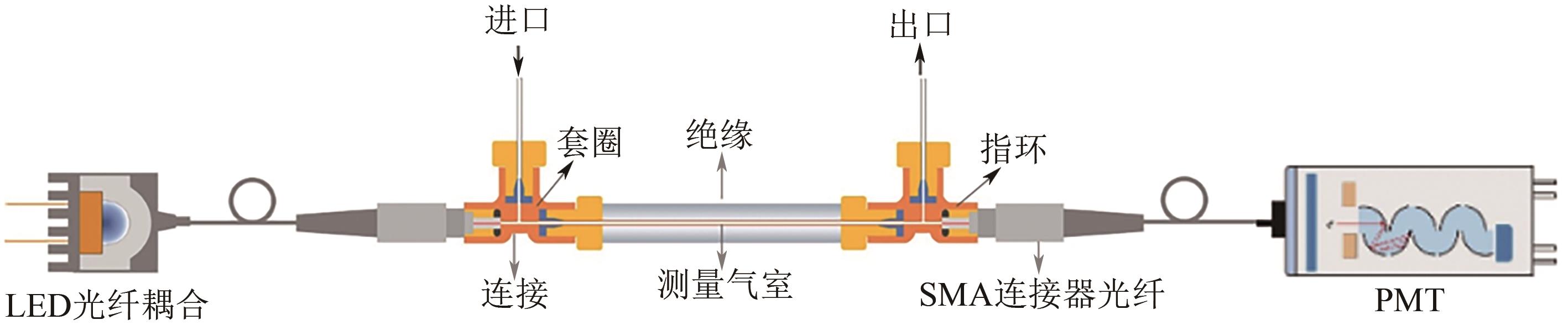
图7 深紫外吸收分光光度计装置[124]
| 方法 | 原理 | 适用情形 | 检出限 | 优点 | 缺点 |
|---|---|---|---|---|---|
| 分光光度法 | 朗伯比耳定律 | 特定吸收光谱化合物 | 大多10-9级 | 操作简单、数据准确 | 显色不稳定,稳定性差 |
| 色谱法 | 分配系数差异 | 同系物等混合物 | 可至10-12级 | 高效灵敏,抗干扰性强 | 成本高,操作技术要求严格 |
| 传感器法 | 分子扩散原理 | 环境稳定日常监测 | 10-9级 | 简单易读 | 重现性差,稳定性差 |
| 标准规范方法 | 分子能级跃迁等原理 | — | 多为10-9级 | 快速检测 | 抗干扰性较差 |
| 新型测定方法 | — | — | 部分10-6级 | 实时监测 | 操作复杂,价格昂贵 |
表6 室内气态污染物的测定方法对比分析
| 方法 | 原理 | 适用情形 | 检出限 | 优点 | 缺点 |
|---|---|---|---|---|---|
| 分光光度法 | 朗伯比耳定律 | 特定吸收光谱化合物 | 大多10-9级 | 操作简单、数据准确 | 显色不稳定,稳定性差 |
| 色谱法 | 分配系数差异 | 同系物等混合物 | 可至10-12级 | 高效灵敏,抗干扰性强 | 成本高,操作技术要求严格 |
| 传感器法 | 分子扩散原理 | 环境稳定日常监测 | 10-9级 | 简单易读 | 重现性差,稳定性差 |
| 标准规范方法 | 分子能级跃迁等原理 | — | 多为10-9级 | 快速检测 | 抗干扰性较差 |
| 新型测定方法 | — | — | 部分10-6级 | 实时监测 | 操作复杂,价格昂贵 |
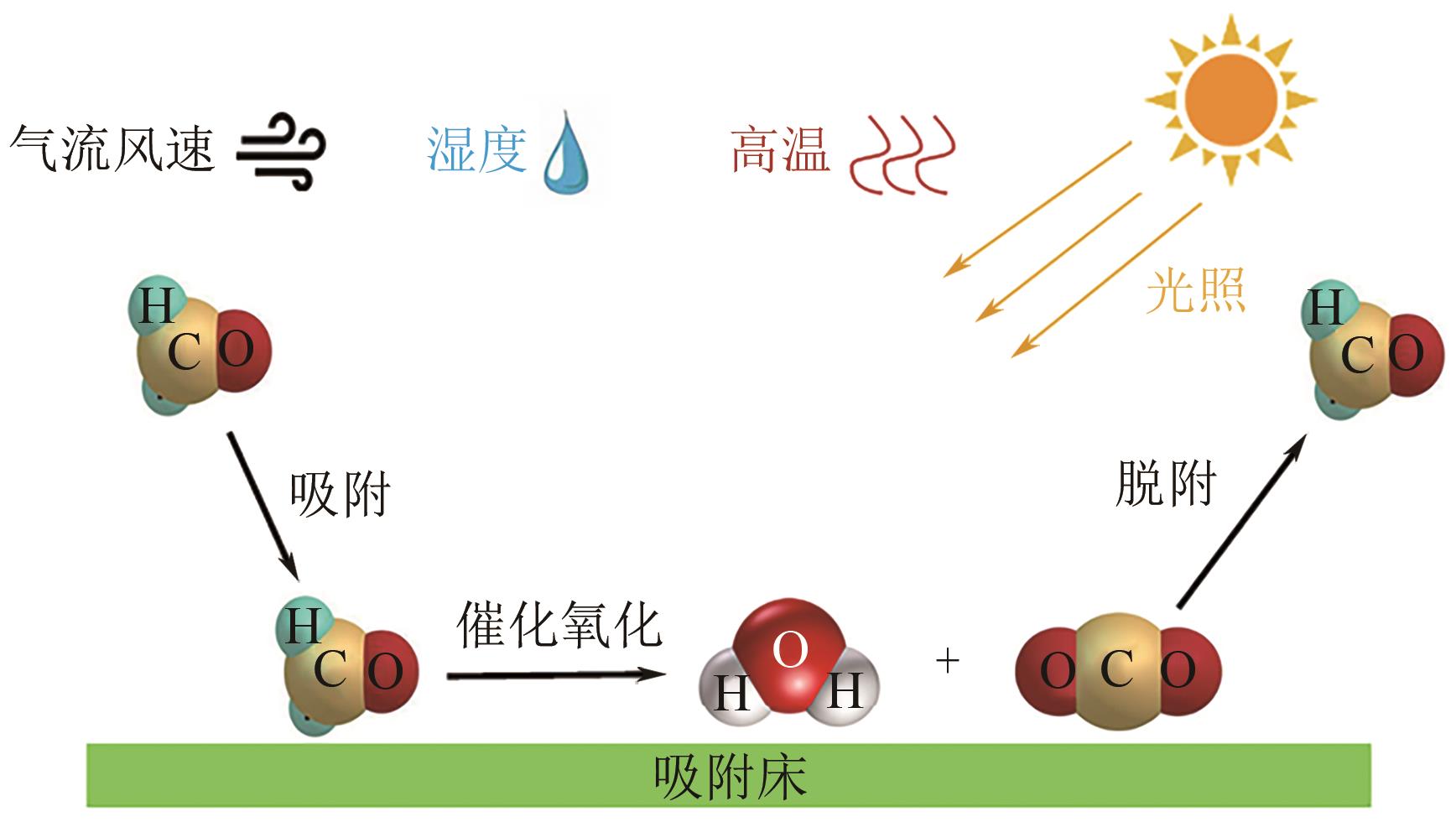
图8 室内气态污染物测定的环境因素影响
| 环境因素 | 原理 | 具体影响 | 改进措施 |
|---|---|---|---|
| 温度 | 分子热运动 | 高温显色,不稳定,易脱附,测定值偏高 | 恒温室试验 |
| 湿度 | 水与污染物反应 | 影响污染物释放,标准曲线斜率偏高 | 使用加湿器等 |
| 空气流速 | 气体分子流动 | 影响污染物扩散和吸收效率 | 适当通风等 |
| 光照 | 光的吸收反射 | 样品变质,显色异常 | 避光处理等 |
表7 室内气态污染物测定的环境因素分析
| 环境因素 | 原理 | 具体影响 | 改进措施 |
|---|---|---|---|
| 温度 | 分子热运动 | 高温显色,不稳定,易脱附,测定值偏高 | 恒温室试验 |
| 湿度 | 水与污染物反应 | 影响污染物释放,标准曲线斜率偏高 | 使用加湿器等 |
| 空气流速 | 气体分子流动 | 影响污染物扩散和吸收效率 | 适当通风等 |
| 光照 | 光的吸收反射 | 样品变质,显色异常 | 避光处理等 |
| 目标污染物 | 测定方法 | 采样时间/min | 采样流量/L·min-1 | 注意事项 |
|---|---|---|---|---|
| 甲醛 | AHMT分光光度法 | ≥45 | 0.4 | — |
| 酚试剂分光光度法 | 0.2 | MnSO4滤纸预处理 | ||
| 高效液相色谱法 | 1 | 管前串联臭氧去除 | ||
| 活性/主动/激活采样法(国际) | — | — | 提前仪器校准 | |
| 散布性采样器-溶剂解吸-高性能液体色谱法(HPLC)(国际) | 甲醛含量0.01~1mg/m3,采样周期为24~72h | 空气相对湿度≤80%,气流速度<0.02m/s | ||
| 小型腔室测定法(国际) | — | — | 仪器校准,控温控湿 | |
| 臭氧 | 靛蓝二磺酸钠分光光度法 | ≥45 | 0.4 | 避光处理 |
| 紫外光度法 | — | 仪器校准 | ||
| 二氧化硫 | 甲醛溶液吸收-盐酸副玫瑰苯胺分光光度法 | ≥45 | 0.5 | 专业人员操作 |
一氧化碳 二氧化碳 | 不分光红外分析法 | ≥45 | — | — |
| 氨 | 靛酚蓝分光光度法 | ≥45 | 0.4 | 苯氨、H2S干扰 |
| 纳氏试剂分光光度法 | 1 | 苯氨、H2S干扰 | ||
| 离子选择电极法 | 0.5 | — | ||
| 二氧化氮 | 改进Saltzman法 | ≥45 | 0.4 | 波长540~545nm |
| 化学分光法 | — | — | ||
| 苯、甲苯、二甲苯 | 固体吸附-热解吸-气相色谱法 | 120 | 0.1 | 解吸温度250℃,解吸时间15min |
| 活性炭吸附-二硫化碳解吸-气相色谱法 | 60 | 0.4 | — | |
| 便携式气相色谱法 | 1 | 0.06 | 用于初筛 | |
| TVOC | 固体吸附-热解吸-气相色谱质谱法 | 45 | 0.1 | 解吸温度220℃,解吸时间15min |
| 活性取样-热吸解-MS/FID气相色谱法(国际) | — | — | 适用于微量VOC测定 | |
| 吸附性建筑材料评估性能试验法(国际) | — | 0.01~0.1 | 恒温恒湿 | |
| 环境测试舱法(国际) | — | — | 仪器校准,控温控湿 | |
表8 室内常见气态污染物测定方法的推荐参数范围[77,84,98,101,106-108]
| 目标污染物 | 测定方法 | 采样时间/min | 采样流量/L·min-1 | 注意事项 |
|---|---|---|---|---|
| 甲醛 | AHMT分光光度法 | ≥45 | 0.4 | — |
| 酚试剂分光光度法 | 0.2 | MnSO4滤纸预处理 | ||
| 高效液相色谱法 | 1 | 管前串联臭氧去除 | ||
| 活性/主动/激活采样法(国际) | — | — | 提前仪器校准 | |
| 散布性采样器-溶剂解吸-高性能液体色谱法(HPLC)(国际) | 甲醛含量0.01~1mg/m3,采样周期为24~72h | 空气相对湿度≤80%,气流速度<0.02m/s | ||
| 小型腔室测定法(国际) | — | — | 仪器校准,控温控湿 | |
| 臭氧 | 靛蓝二磺酸钠分光光度法 | ≥45 | 0.4 | 避光处理 |
| 紫外光度法 | — | 仪器校准 | ||
| 二氧化硫 | 甲醛溶液吸收-盐酸副玫瑰苯胺分光光度法 | ≥45 | 0.5 | 专业人员操作 |
一氧化碳 二氧化碳 | 不分光红外分析法 | ≥45 | — | — |
| 氨 | 靛酚蓝分光光度法 | ≥45 | 0.4 | 苯氨、H2S干扰 |
| 纳氏试剂分光光度法 | 1 | 苯氨、H2S干扰 | ||
| 离子选择电极法 | 0.5 | — | ||
| 二氧化氮 | 改进Saltzman法 | ≥45 | 0.4 | 波长540~545nm |
| 化学分光法 | — | — | ||
| 苯、甲苯、二甲苯 | 固体吸附-热解吸-气相色谱法 | 120 | 0.1 | 解吸温度250℃,解吸时间15min |
| 活性炭吸附-二硫化碳解吸-气相色谱法 | 60 | 0.4 | — | |
| 便携式气相色谱法 | 1 | 0.06 | 用于初筛 | |
| TVOC | 固体吸附-热解吸-气相色谱质谱法 | 45 | 0.1 | 解吸温度220℃,解吸时间15min |
| 活性取样-热吸解-MS/FID气相色谱法(国际) | — | — | 适用于微量VOC测定 | |
| 吸附性建筑材料评估性能试验法(国际) | — | 0.01~0.1 | 恒温恒湿 | |
| 环境测试舱法(国际) | — | — | 仪器校准,控温控湿 | |
| [11] | LIN Qianyun. The influence factors of testing of sulfur dioxide in air by formaldehyde buffer solution absorption-pararosaniline spectrophotometry method[J]. Fujian Construction Science & Technology, 2018(6): 43-44. |
| [12] | 陈晓红, 华友友, 金米聪. 空气中甲醛测定方法研究进展[J]. 中国卫生检验杂志, 2022, 32(4): 508-512. |
| CHEN Xiaohong, HUA Youyou, JIN Micong. Research progress on determination methods of formaldehyde in air[J]. Chinese Journal of Health Laboratory Technology, 2022, 32(4): 508-512. | |
| [13] | 陈瑜. 民用建筑工程室内空气中常见污染物的检测方法[J]. 科技信息(科学教研), 2008(11): 258, 238. |
| CHEN Yu. Detection method of common pollutants in indoor air of civil construction engineering[J]. Science & Technology Information, 2008(11): 258, 238. | |
| [14] | 戴志英, 郭新颖, 顾心逸. 三种不同方法测定室内空气中甲醛含量的比较[J]. 计量与测试技术, 2021, 48(11): 56-58. |
| DAI Zhiying, GUO Xinying, GU Xinyi. Comparison of three different methods for determining the formaldehyde content in indoor air[J]. Metrology & Measurement Technique, 2021, 48(11): 56-58. | |
| [15] | 单作刚. 室内空气污染物检测分析[J]. 检验检疫学刊, 2019, 29(5): 65-66. |
| SHAN Zuogang. Detection and analysis of indoor air pollutant[J]. Journal of Inspection and Quarantine, 2019, 29(5): 65-66. | |
| [16] | 梁亚丽, 阿丽莉, 马琳, 等. AHMT分光光度法测定室内空气中甲醛的试验条件优化[J]. 河南科学, 2021, 39(3): 373-378. |
| LIANG Yali, Lili A, MA Lin, et al. Optimization of experimental conditions for determination of formaldehyde in indoor air by AHMT spectrophotometry[J]. Henan Science, 2021, 39(3): 373-378. | |
| [17] | 徐辅明, 卞伟鸣. AHMT法测定室内空气甲醛含量及不确定度评价[J]. 中国标准化, 2023(12): 143-146. |
| XU Fuming, BIAN Weiming. Uncertainty evaluation of formaldehyde content in indoor air using AHMT method[J]. China Standardization, 2023(12): 143-146. | |
| [18] | 陈炎, 孙东红, 李舒, 等. 乙酰丙酮荧光分光光度法测定环境空气中的微量甲醛[J]. 中国环境监测, 2000, 16(4): 30-32. |
| CHEN Yan, SUN Donghong, LI Shu, et al. Determining the trace formaldehyde in air by acetylaceptone fluorephotometry[J]. Environmental Monitoring in China, 2000, 16(4): 30-32. | |
| [19] | 章贞阳, 杜希. 乙酰丙酮分光光度法测定工业环境中的甲醛[J]. 化工时刊, 2023, 37(2): 21-25. |
| ZHANG Zhenyang, DU Xi. Determination of formaldehyde in industrial environments by acetylacetone spectrophotometry[J]. Chemical Industry Times, 2023, 37(2): 21-25. | |
| [20] | 邵小娟, 李开熹. 酚试剂分光光度法测定室内空气中甲醛的影响因素研究[J]. 清洗世界, 2019, 35(2): 38-39. |
| SHAO Xiaojuan, LI Kaixi. Study on the influencing factors of phenol reagent spectrophotometric determination of formaldehyde in indoor air[J]. Cleaning World, 2019, 35(2): 38-39. | |
| [21] | 汤辉辉. 酚试剂分光光度法测定室内空气中甲醛的实验及控制技术[J]. 科学技术创新, 2023(21): 68-71. |
| TANG Huihui. Experimental and control techniques for determination of formaldehyde in indoor air by phenol reagent spectrophotometry[J]. Scientific and Technological Innovation, 2023(21): 68-71. | |
| [22] | 严灵羽, 覃艳琳, 谢逸轩, 等. 基于中国知网室内甲醛检测研究的文献计量学分析[J]. 广州化工, 2023, 51(3): 136-138, 159. |
| YAN Lingyu, QIN Yanlin, XIE Yixuan, et al. Bibliometric analysis based on CNKI indoor formaldehyde detection[J]. Guangzhou Chemical Industry, 2023, 51(3): 136-138, 159. | |
| [23] | 贾婧姝. AHMT与酚试剂法测定室内空气中甲醛及其干扰物的对比研究[J]. 环境科学与管理, 2022, 47(4): 143-148. |
| JIA Jingshu. Comparative study on detecting formaldehyde and its interferents in indoor air by AHMT and MBTH methods[J]. Environmental Science and Management, 2022, 47(4): 143-148. | |
| [24] | 于波, 孔庆媛, 李辉. 三种甲醛定量分析方法的比较研究[J]. 中国人造板, 2011, 18(7): 24-27. |
| YU Bo, KONG Qingyuan, LI Hui. Comparative study on three stoichiometric analysis methods of formaldehyde[J]. China Wood-Based Panels, 2011, 18(7): 24-27. | |
| [25] | 张博维, 雷泽众, 陈刚. 两种测定室内空气中甲醛含量的方法比较[J]. 云南化工, 2022, 49(11): 70-73. |
| ZHANG Bowei, LEI Zezhong, CHEN Gang. Comparison of two methods for determination of formaldehyde in indoor air[J]. Yunnan Chemical Technology, 2022, 49(11): 70-73. | |
| [26] | 吕勃熠, 赵淑岚. 工作场所空气中臭氧的靛蓝二磺酸钠分光光度测定法[J]. 环境与健康杂志, 2020, 37(2): 186-187. |
| Boyi LYU, ZHAO Shulan. Sodium indigo disulfonate spectrophotometric method for the determination of ozone in workplace air[J]. Journal of Environment and Health, 2020, 37(2): 186-187. | |
| [27] | 孟淑华. 空气污染物中臭氧的监测与防治措施分析[J]. 山西化工, 2023, 43(2): 183-184, 189. |
| MENG Shuhua. Monitoring and control measures of ozone in air pollutants[J]. Shanxi Chemical Industry, 2023, 43(2): 183-184, 189. | |
| [28] | 杨丽香, 孙润泰, 杨慧芳. 采用靛蓝二磺酸钠分光光度法测定环境空气中的臭氧(O3)[J]. 中国卫生检验杂志, 2007, 17(6): 1029-1030. |
| YANG Lixiang, SUN Runtai, YANG Huifang. Application of indigo disulfonic acid sodium spectrophotometry for determination of ozone in ambient air[J]. Chinese Journal of Health Laboratory Technology, 2007, 17(6): 1029-1030. | |
| [29] | 张佳颖. 公共场所与环境监测中臭氧检测方法的比较和优化[J]. 中国城乡企业卫生, 2020, 35(12): 224-226. |
| ZHANG Jiaying. Comparison and optimization of ozone detection methods in public places and environmental monitoring[J]. Chinese Journal of Urban and Rural Enterprise Hygiene, 2020, 35(12): 224-226. | |
| [30] | 章婷婷. 靛蓝二磺酸钠分光光度法测定空气中臭氧浓度的不确定度评定[J]. 环保科技, 2021, 27(2): 40-43. |
| ZHANG Tingting. Evaluation of uncertainty in determination of ozone concentration in air by indigo disulfonate sodium spectrophotometry[J]. Environmental Protection and Technology, 2021, 27(2): 40-43. | |
| [31] | 贾艳. 甲醛缓冲溶液吸收-盐酸副玫瑰苯胺分光光度法测定大气中二氧化硫要注意的问题[J]. 环境科学导刊, 2009, 28(1): 81-82. |
| JIA Yan. Points highlighted in sulfur dioxide monitoring by hydrochloric para-rosaniline spectrophotometry with formaldehyde as buffer solution[J]. Environmental Science Survey, 2009, 28(1): 81-82. | |
| [32] | 李冬林. 定电位电解法和甲醛缓冲溶液吸收——盐酸副玫瑰苯胺分光光度法测定固定污染源废气中SO2的比较分析[J]. 广东化工, 2020, 47(21): 131-133. |
| LI Donglin. Comparison and analysis about determination of SO2 in stationary source waste gas by fixed potential by electrolysis method & formaldehyde absorbing-pararosaniline hydrochloride spectrophotometry[J]. Guangdong Chemical Industry, 2020, 47(21): 131-133. | |
| [33] | 温雪娟. 甲醛缓冲溶液吸收-盐酸副玫瑰苯胺分光光度法测定空气中二氧化硫几点探讨[J]. 资源节约与环保, 2016(8): 21. |
| WEN Xuejuan. Discussion on the determination of sulfur dioxide in the air by formaldehyde buffer solution absorption hydrochloric acid para rosaniline spectrophotometry[J]. Resources Economization & Environmental Protection, 2016(8): 21. | |
| [34] | 胡秋霞. 浅议分光光度法测定空气中的二氧化氮[J]. 化工管理, 2017(10): 57-58. |
| HU Qiuxia. Discussion on determination of nitrogen dioxide in the air of spectrophotometry[J]. Chemical Enterprise Management, 2017(10): 57-58. | |
| [35] | 孙展. 大气中二氧化氮含量的测定方法阐述[J]. 环境与发展, 2020, 32(11): 89-90. |
| SUN Zhan. Determination of nitrogen dioxide in the atmosphere[J]. Environment and Development, 2020, 32(11): 89-90. | |
| [36] | 童群, 金丹娟, 王洁屏, 等. 吹扫捕集-气相色谱法测定室内环境空气中甲醛[J]. 化学工程师, 2022, 36(11): 28-30. |
| TONG Qun, JIN Danjuan, WANG Jieping, et al. Determination of formaldehyde in indoor air by blow trap-GC[J]. Chemical Engineer, 2022, 36(11): 28-30. | |
| [37] | 吴雨彤, 吴海, 马浩淼, 等. 大气中二氧化氮含量的测定方法[J]. 化学分析计量, 2019, 28(5): 123-127. |
| WU Yutong, WU Hai, MA Haomiao, et al. Method for determination of nitrogen dioxide in the atmosphere[J]. Chemical Analysis and Meterage, 2019, 28(5): 123-127. | |
| [38] | 陈晓东, 李宇超, 曲俊伟. 氨的浓度对次氯酸钠-水杨酸分光光度法显色的影响[J]. 绿色科技, 2018, 20(10): 104-105. |
| CHEN Xiaodong, LI Yuchao, QU Junwei. The influence of ammonia concentration on the color development of sodium hypochlorite salicylic acid spectrophotometry[J]. Journal of Green Science and Technology, 2018, 20(10): 104-105. | |
| [39] | 林永强. 浅谈室内空气污染物的检测及其影响因素[J]. 环境科学导刊, 2014, 33(4): 98-100. |
| LIN Yongqiang. Determination and influencing factors of indoor air monitoring[J]. Environmental Science Survey, 2014, 33(4): 98-100. | |
| [40] | 朱丹, 徐嘉. 纳氏试剂分光光度法测定环境空气与废气中氨的探讨[J]. 轻工标准与质量, 2020(5): 97-99. |
| ZHU Dan, XU Jia. Discussion on the determination of ammonia in ambient air and exhaust gas by Nessler’s reagent spectrophotometry[J]. Standard & Quality of Light Industry, 2020(5): 97-99. | |
| [41] | 邹奎. 靛酚蓝分光光度法测定室内空气氨含量的影响因素分析[J]. 福建建设科技, 2021(2): 41-42. |
| ZOU Kui. Analysis of influencing factors for determination of ammonia content in indoor air by indophenol blue spectrophotometry[J]. Fujian Construction Science & Technology, 2021(2): 41-42. | |
| [42] | KAIKITI Chrystalla, STYLIANOU Marinos, AGAPIOU Agapios. TD-GC/MS analysis of indoor air pollutants (VOCs, PM) in hair salons[J]. Chemosphere, 2022, 294: 133691. |
| [43] | KIM Hyuntae, KIM Taewoo, LEE Sihwan. A study on the measurement of unregulated pollutants in Korean residential environments[J]. Buildings, 2022, 12(2): 243. |
| [44] | YOO Mi-Ji, Sang-Hee JO, KIM Ki-Hyun. An advanced technique for rapid and accurate monitoring of gaseous formaldehyde using large-volume injection interfaced with gas chromatograph/barrier discharge ionization detector (LVI/GC/BID)[J]. Microchemical Journal, 2019, 147: 806-812. |
| [45] | MOURA Pedro Catalão, VASSILENKO Valentina. Gas chromatography-ion mobility spectrometry as a tool for quick detection of hazardous volatile organic compounds in indoor and ambient air: A university campus case study[J]. European Journal of Mass Spectrometry, 2022, 28(5/6): 113-126. |
| [46] | 卢嘉棋. 快速溶剂萃取-高效液相色谱法测定室内空气中多环芳烃[J]. 广州化工, 2023, 51(11): 129-131. |
| LU Jiaqi. Determination of 16 PAHs in indoor air by accelerated solvent extraction and HPLC[J]. Guangzhou Chemical Industry, 2023, 51(11): 129-131. | |
| [47] | 范智超, 王斐, 和莹, 等. 环境空气中多种羰基化合物的测定[J]. 环境监测管理与技术, 2018, 30(2): 43-45. |
| FAN Zhichao, WANG Fei, HE Ying, et al. Simultaneous determination of multiple carbonyl compounds in ambient air[J]. The Administration and Technique of Environmental Monitoring, 2018, 30(2): 43-45. | |
| [48] | SANDNER Frank, DOTT Wolfgang, HOLLANDER Juliane. Sensitive indoor air monitoring of formaldehyde and other carbonyl compounds using the 2,4-dinitrophenylhydrazine method[J]. International Journal of Hygiene and Environmental Health, 2001, 203(3): 275-279. |
| [49] | ZHAO Yonggang, ZHANG Yun, WANG Fenglian, et al. A new LC-MS/MS method for fast determination of formaldehyde in the air of public places[J]. Analytical Methods, 2017, 9(29): 4234-4239. |
| [50] | 李红华, 尹江伟, 吴礼康, 等. 工作场所空气中氨的离子色谱测定方法[J]. 实用预防医学, 2015, 22(12): 1517-1521. |
| LI Honghua, YIN Jiangwei, WU Likang, et al. Determination of ammonia in the air of workplace by ion chromatography[J]. Practical Preventive Medicine, 2015, 22(12): 1517-1521. | |
| [51] | 吴川, 杨展鸿, 戎伟丰, 等. 固体吸附管采样-离子色谱法测定工作场所空气中二氧化硫[J]. 中国职业医学, 2018, 45(1): 95-98. |
| WU Chuan, YANG Zhanhong, RONG Weifeng, et al. Detecting sulfur dioxide in workplace air by ion chromatography coupled with solid adsorption tube sampling[J]. China Occupational Medicine, 2018, 45(1): 95-98. | |
| [52] | 郭艳芬. 离子色谱法测定工作场所空气中的NO和NO2含量[J]. 江苏预防医学, 2016, 27(1): 103-105. |
| GUO Yanfen. Determination of NO and NO2 content in workplace air by ion chromatography[J]. Jiangsu Journal of Preventive Medicine, 2016, 27(1): 103-105. | |
| [53] | 童金钊, 林川, 胡仁志, 等. 二氧化氮和有机硝酸酯测量技术研究进展[J]. 大气与环境光学学报, 2024, 19(3): 265-291. |
| TONG Jinzhao, LIN Chuan, HU Renzhi, et al. Progress of detection technology of nitrogen dioxide and organic nitrates[J]. Journal of Atmospheric and Environmental Optics, 2024, 19(3): 265-291. | |
| [54] | DUAN Yingming, AO Ya, HUANG Liling, et al. Rapid sampling and determination of low molecular weight polycyclic aromatic hydrocarbons (PAHs) in air by a needle trap device coupled with gas chromatography-mass spectrometry (GC-MS)[J]. Analytical Letters, 2023, 56(17): 2764-2776. |
| [55] | EVEN Morgane, JURITSCH Elevtheria, RICHTER Matthias. Measurement of very volatile organic compounds (VVOCs) in indoor air by sorbent-based active sampling: Identifying the gaps towards standardisation[J]. TrAC Trends in Analytical Chemistry, 2021, 140: 116265. |
| [56] | EVEN Morgane, JURITSCH Elevtheria, RICHTER Matthias. Selection of gas standards, gas chromatography column and adsorbents for the measurement of very volatile organic compounds (C1—C6) in indoor air[J]. Analytica Chimica Acta, 2023, 1238: 340561. |
| [57] | Kento SEI, WANG Qi, TOKUMURA Masahiro, et al. Accurate and ultrasensitive determination of 72 parent and halogenated polycyclic aromatic hydrocarbons in a variety of environmental samples via gas chromatography-triple quadrupole mass spectrometry[J]. Chemosphere, 2021, 271: 129535. |
| [58] | SONNETTE Alexandre, DELHOMME Olivier, ALLEMAN Laurent Y, et al. A versatile method for the quantification of 100 SVOCs from various families: Application to indoor air, dust and bioaccessibility evaluation[J]. Microchemical Journal, 2021, 169: 106574. |
| [59] | Jose RUIZ-JIMENEZ, RASKALA Sanni, TANSKANEN Ville, et al. Evaluation of VOCs from fungal strains, building insulation materials and indoor air by solid phase microextraction arrow, thermal desorption-gas chromatography-mass spectrometry and machine learning approaches[J]. Environmental Research, 2023, 224: 115494. |
| [60] | Axel MÜLLER, GOEDECKE Caroline, EISENTRAUT Paul, et al. Microplastic analysis using chemical extraction followed by LC-UV analysis: A straightforward approach to determine PET content in environmental samples[J]. Environmental Sciences Europe, 2020, 32(1): 85. |
| [61] | 费婷. 离子色谱法在公共卫生检测中的应用[J]. 黑龙江环境通报, 2024, 37(6): 1-3. |
| [1] | SEOW Wei Jie, HU Wei, VERMEULEN Roel, et al. Household air pollution and lung cancer in China: A review of studies in Xuanwei[J]. Chinese Journal of Cancer, 2014, 33(10): 471-475. |
| [2] | HU Shih-Cheng, SHIUE Angus, CHANG Shumei, et al. Removal of carbon dioxide in the indoor environment with sorption-type air filters[J]. International Journal of Low-Carbon Technologies, 2017, 12(3): 330-334. |
| [3] | MONTALUISA-MANTILLA María Sol, Pedro GARCÍA-ENCINA, LEBRERO Raquel, et al. Botanical filters for the abatement of indoor air pollutants[J]. Chemosphere, 2023, 345: 140483. |
| [4] | ZHAO Bin, SHI Shanshan, JI John S. The WHO Air Quality Guidelines 2021 promote great challenge for indoor air[J]. Science of the Total Environment, 2022, 827: 154376. |
| [5] | VERA Teresa, VILLANUEVA F, WIMMEROVÁ L, et al. An overview of methodologies for the determination of volatile organic compounds in indoor air[J]. Applied Spectroscopy Reviews, 2022, 57(8): 625-674. |
| [6] | XIE Shuai, SUUBERG Eric. Adsorption of trichloroethylene on common indoor materials studied using a combined inverse gas chromatography and frequency response technique[J]. Journal of Chromatography A, 2022, 1669: 462926. |
| [7] | CHEN S, SHI W K, YONG J Y, et al. Numerical study on a structured packed adsorption bed for indoor direct air capture[J]. Energy, 2023, 282: 128801. |
| [8] | DANNEMILLER K C, MURPHY J S, DIXON S L, et al. Formaldehyde concentrations in household air of asthma patients determined using colorimetric detector tubes[J]. Indoor Air, 2013, 23(4): 285-294. |
| [9] | VEENAAS Cathrin, RIPSZAM Matyas, HAGLUND Peter. Analysis of volatile organic compounds in indoor environments using thermal desorption with comprehensive two-dimensional gas chromatography and high-resolution time-of-flight mass spectrometry[J]. Journal of Separation Science, 2020, 43(8): 1489-1498. |
| [10] | 韩长龙, 韩宝武, 夏亮. 酚试剂分光光度法与乙酰丙酮分光光度法测定室内环境空气中的甲醛含量对比[J]. 节能与环保, 2020(6): 58-59. |
| HAN Changlong, HAN Baowu, XIA Liang. The comparison between the MBTH and Acetylacetone spectrophotometric methods in determination of formaldehyde in indoor air[J]. Energy Conservation & Environmental Protection, 2020(6): 58-59. | |
| [11] | 林倩芸. 甲醛缓冲溶液吸收-副玫瑰苯胺分光光度法测定空气中二氧化硫的影响因素[J]. 福建建设科技, 2018(6): 43-44. |
| [61] | FEI Ting. Application of ion chromatography in public health detection[J]. Heilongjiang Environmental Journal, 2024, 37(6): 1-3. |
| [62] | 杨建军, 高海萍, 尹仕伟, 等. 离子色谱法在职业卫生检测中的应用研究进展[J]. 职业与健康, 2021, 37(14): 1999-2003. |
| YANG Jianjun, GAO Haiping, YIN Shiwei, et al. Research progress on application of ion chromatography in occupational health detection[J]. Occupation and Health, 2021, 37(14): 1999-2003. | |
| [63] | 尹江伟, 李红华, 吴礼康, 等. 工作场所空气中氨国家标准检验方法研究[J]. 实用预防医学, 2016, 23(5): 548-551. |
| YIN Jiangwei, LI Honghua, WU Likang, et al. Studies on national standard method for ammonia determination in air of workplaces[J]. Practical Preventive Medicine, 2016, 23(5): 548-551. | |
| [64] | 赵丹丹. 离子色谱法在职业卫生检测中的应用[J]. 化工管理, 2021(3): 113-114. |
| ZHAO Dandan. Application of ion chromatography in occupational health detection[J]. Chemical Engineering Management, 2021(3): 113-114. | |
| [65] | LUCY Charles A, HARRISON Christopher R. Chemiluminescence nitrogen detection in ion chromatography for the determination of nitrogen-containing anions[J]. Journal of Chromatography A, 2001, 920(1/2): 135-141. |
| [66] | PARK Jae Jung, KIM Yongsoo, LEE Chanmin, et al. Colorimetric visualization using polymeric core-shell nanoparticles: Enhanced sensitivity for formaldehyde gas sensors[J]. Polymers, 2020, 12(5): 998. |
| [67] | SRIVASTAVA Ruchi, VERMA Abhishek, JAIN V K. Low cost, disposable colorimetric sensor for quantitative detection of ammonia gas[J]. 16th International Workshop on Physics of Semiconductor Devices, 2012, 8549: 85491A. |
| [68] | LAKKIS Sari, YOUNES Rafic, GHANDOUR Mazen, et al. New optical gas sensor for gas concentration measurement using digital image processing[J]. Sensors and Actuators B: Chemical, 2015, 207: 321-329. |
| [69] | Carlos MARTÍNEZ-AQUINO, COSTERO Ana M, GIL Salvador, et al. Resorcinol functionalized gold nanoparticles for formaldehyde colorimetric detection[J]. Nanomaterials, 2019, 9(2): 302. |
| [70] | GRIGOROIU Alexandru, MIHAILESCU Carmen-Marinela, SAVIN Mihaela, et al. Facile electrodeposition-based chemosensors using PANI and C-hybrid nanomaterials for the selective detection of ammonia and nitrogen dioxide at room temperature[J]. Chemosensors, 2023, 11(2): 132. |
| [71] | LEE Jihyun, MIN Hyegi, CHOE Yong-Sahm, et al. Highly sensitive and selective detection of benzene, toluene, xylene, and formaldehyde using Au-coated SnO2 nanorod arrays for indoor air quality monitoring[J]. Sensors and Actuators B: Chemical, 2023, 394: 134359. |
| [72] | WONGWIRIYAPAN W, HONDA S I, KONISHI H,et al.Ultrasensitive ozone detection using single-walled carbon nanotube networks[J].Japanese Journal of Applied Physics, 2006, 45(4S):3669-3671. |
| [73] | 张立成, 王宾, 宋建华, 等. 一款现场检测仪测定室内空气中甲醛浓度的适用性研究[J]. 科技创新导报, 2017, 14(8): 114-115. |
| ZHANG Licheng, WANG Bin, SONG Jianhua, et al. Study on the applicability of an on-site detection instrument for measuring formaldehyde concentration in indoor air[J]. Science and Technology Innovation Herald, 2017, 14(8): 114-115. | |
| [74] | 国家质量监督校验检疫总局. 化学发光法氮氧化物分析仪: [S]. 北京: 中国质检出版社, 2004. |
| General Administration of Quality Supervision, Inspection and Quarantine of the People’s Republic of China. Verification regulation of chemiluminescent NO/NOxanalyzers: [S]. Beijing: China Quality Press, 2004. | |
| [75] | 况彩菱, 曾立民, 陈仕意, 等. 基于腔衰减相移光谱法的二氧化氮分析仪的设计与应用[J]. 环境科学学报, 2020, 40(8): 2970-2976. |
| KUANG Cailing, ZENG Limin, CHEN Shiyi, et al. The design and application of an online nitrogen dioxide analyzer based on cavity attenuated phase shift spectroscopy[J]. Acta Scientiae Circumstantiae, 2020, 40(8): 2970-2976. | |
| [76] | 国家市场监督管理总局. 环境空气在线监测气体分析仪校准规范: [S]. 北京: 中国标准出版社, 2021. |
| State Administration for Market Regulation. Calibration specification for ambient air online monitoring instruments: [S]. Beijing: Standards Press of China, 2021. | |
| [77] | 国家质量监督检验检疫总局, 中国国家标准化管理委员会. 公共场所卫生检验方法 第2部分: 化学污染物: [S]. 北京: 中国标准出版社, 2014. |
| General Administration of Quality Supervision, Inspection and Quarantine of the People’s Republic of China, Standardization Administration of the People’s Republic of China. Examination methods for public places: Part 2: Chemical pollutants: [S]. Beijing: Standards Press of China, 2014. | |
| [78] | KANEKIYO Yasumasa, MITANI You, SUDA Miho, et al. Development of formaldehyde gas sensor that exhibits distinct color changes[J]. Sensors and Materials, 2020, 32(3): 1101. |
| [79] | PANNEK C, SCHMITT K, WÖLLENSTEIN J. Colorimetric materials for gas selective sensing in low-power applications[C]// 2015 Transducers—2015 18th International Conference on Solid-State Sensors, Actuators and Microsystems (TRANSDUCERS). June 21-25, 2015, Anchorage, AK, USA, IEEE, 2015: 1452-1455. |
| [80] | PANNEK C, VETTER T, OPPMANN M, et al. Highly sensitive reflection based colorimetric gas sensor to detect CO in realistic fire scenarios[J]. Sensors and Actuators B: Chemical, 2020, 306: 127572. |
| [81] | ACHMANN S, HERMANN M, HILBRIG F, et al. Direct detection of formaldehyde in air by a novel NAD+- and glutathione-independent formaldehyde dehydrogenase-based biosensor[J]. Talanta, 2008, 75(3): 786-791. |
| [82] | AL-OKBY Mohammed Faeik Ruzaij, NEUBERT Sebastian, RODDELKOPF Thomas, et al. Evaluating of IAQ-index and TVOC parameter-based sensors for hazardous gases detection and alarming systems[J]. Sensors, 2022, 22(4): 1473. |
| [83] | HAN Dan, LIU Zhihua, LIU Lulu, et al. Room temperature and anti-humidity NH3 detection based on GaN nanorods/Ti3C2T x MXene composite gas sensor[J]. Sensors and Actuators B: Chemical, 2023, 393: 134319. |
| [84] | 国家市场监督管理总局, 国家标准化管理委员会. 室内空气质量标准: [S]. 北京: 中国标准出版社, 2022. |
| State Administration for Market Regulation, Standardization Administration of the People’s Republic of China. Standards for indoor air quality: [S]. Beijing: Standards Press of China, 2022. | |
| [85] | CHENG Cao, ZHANG Hongyan, LI Fan, et al. High performance ammonia gas detection based on TiO2/WO3·H2O heterojunction sensor[J]. Materials Chemistry and Physics, 2021, 273: 125098. |
| [86] | NORIZAN M N, SITI ZULAIKHA N D, NORHANA A B, et al. Carbon nanotubes-based sensor for ammonia gas detection—An overview[J]. Polimery, 2021, 66(3): 175-186. |
| [87] | International Organization for Standardization. Indoor air — Part 9: Determination of the emission of volatile organic compounds from samples of building products and furnishing — Emission test chamber method: [S]. International Standard, 2024. |
| [88] | International Organization for Standardization. Indoor air — Part 6: Determination of organic compounds (VVOC, VOC, SVOC) in indoor and test chamber air by active sampling on sorbent tubes, thermal desorption and gas chromatography using MS or MS FID: [S]. International Standard, 2021. |
| [89] | International Organization for Standardization. Indoor air — Part 4: Determination of formaldehyde diffusive sampling method: [S]. International Standard, 2011. |
| [90] | International Organization for Standardization. Indoor air — Part 24: Performance test for evaluating the reduction of volatile organic compound concentrations by sorptive building materials: [S]. International Standard, 2018. |
| [91] | International Organization for Standardization. Indoor air—Part 3: Determination of formaldehyde and other carbonyl compounds in indoor air and test chamber air—Active sampling method: [S]. International Standard, 2022. |
| [92] | 中华人民共和国环境保护部. 环境空气 臭氧的测定 紫外光度法: [S]. 北京: 中国环境科学出版社, 2010. |
| Ministry of Environmental Protection of the People’s Republic of China. Ambient air—Determination of ozone—Ultraviolet photometric method: [S]. Beijing: China Environmental Science Press, 2010. | |
| [93] | 王玉平, 李晶, 王娟, 等. 环境空气 氮氧化物的测定 Saltzman法[J]. 中国环境监测, 1995, 11(6): 2-4. |
| WANG Yuping, LI Jing, WANG Juan, et al. Determination of nitrogen oxides in ambient air by Saltzman method[J]. Environmental Monitoring in China, 1995, 11(6): 2-4. | |
| [94] | 王玉平, 李晶, 杜萍萍, 等. Saltzman法和改进的Saltzman法比较[J]. 环境保护科学, 1995, 21(2): 36-38. |
| WANG Yuping, LI Jing, DU Pingping, et al. Comparison between Saltzman method and improved Saltzman method[J]. Environmental Protection Science, 1995, 21(2): 36-38. | |
| [95] | International Organization for Standardization. Ambient air—Determination of the mass concentration of ozone—Chemiluminescence method: [S]. International Standard, 1993. |
| [96] | 肖军, 韩素玉, 相海恩, 等. 不分光红外分析法测量空气中一氧化碳浓度的不确定度评定模型示范[J]. 轻工标准与质量, 2018(3): 47-48. |
| XIAO Jun, HAN Suyu, XIANG Hai’en, et al. Demonstration of uncertainty evaluation model for measuring carbon monoxide concentration in air using non dispersive infrared analysis method[J]. Standard & Quality of Light Industry, 2018(3): 47-48. | |
| [97] | 姚浔平, 陆蓓蓓, 蒋丽. 不分光红外分析法测定空气中CO2不确定度分析[J]. 中国卫生检验杂志, 2017, 27(16): 2427. |
| YAO Xunping, LU Beibei, JIANG Li. Uncertainty analysis of non dispersive infrared analysis method for measuring CO2 in air[J]. Chinese Journal of Health Laboratory Technology, 2017, 27(16): 2427. | |
| [98] | 国家环境保护总局, 国家技术监督局. 空气质量 氨的测定 离子选择电极法: [S]. 北京: 中国标准出版社, 1994. |
| State Environmental Protection Administration of the People’s Republic of China, National Bureau of Technical Supervision. Air quality—Determination of ammonia—Ion selective electrode method: [S]. Beijing: Standards Press of China, 1994. | |
| [99] | International Standardization Organization. Indoor air—Sampling strategy for formaldehyde: [S]. Japan: Japanese Industrial Standards Committee, 2015. |
| [100] | British Standards Institution. Ambient air—Standard method for the measurement of the concentration of ozone by ultraviolet photometry: [S]. Britain: British Standards Institute, 2012. |
| [101] | 国家环境保护局, 国家技术监督局. 环境空气 二氧化氮的测定 Saltzman法: [S]. 北京: 中国标准出版社, 1995. |
| State Bureau of Environmental Protection of the People’s Republic of China, State Bureau of Quality and Technical Supervision of the People’s Republic of China. Ambient air—Determination of nitrogen dioxide—Saltzman method: [S]. Beijing: Standards Press of China, 1995. | |
| [102] | 中华人民共和国卫生部. 居住区大气中二氧化氮检验标准方法 改进的Saltzman法: [S]. 北京: 中国标准出版社, 1991. |
| Ministry of Health of the People’s Republic of China. Standard method for examination of nitrogen dioxide in air of residential areas—Modified Saltzman method: [S]. Beijing: Standards Press of China, 1991. | |
| [103] | 国家质量监督检验检疫总局. 化学发光法氮氧化物分析仪检定规程: [S]. 北京: 中国计量出版社, 2005. |
| General Administration of Quality Supervision, Inspection and Quarantine of the People’s Republic of China. Verification regulation of chemiluminescent NO/NOxanalyzers: [S]. Beijing: China Metrology Publishing House, 2005. | |
| [104] | Association Francaise de Normalisation. Air pollution — Measurement of nitrogen oxides by chemiluminescence: [S]. France: Association Francaise de Normalisation, 1983. |
| [105] | 中华人民共和国环境保护部. 环境空气 氮氧化物(一氧化氮和二氧化氮)的测定 盐酸萘乙二胺分光光度法: [S]. 北京: 中国环境科学出版社, 2009. |
| Ministry of Environmental Protection of the People’s Republic of China. Ambient air—Determination of nitrogen oxides-N-(1-naphthyl)ethylene diamine dihydrochloride spectrophotometric method: [S]. Beijing: China Environmental Science Press, 2009. | |
| [106] | 中华人民共和国环境保护部. 环境空气气态污染物(SO2、NO2、O3、CO)连续自动检测系统技术要求及检测方法: [S]. 北京: 中国环境出版社, 2013. |
| Ministry of Environmental Protection of the People’s Republic of China. Specifications and test procedures for ambient air quality continuous automated monitoring system for SO2, NO2, O3and CO: [S]. Beijing: China Environmental Press, 2013. | |
| [107] | International Organization for Standardization. Air quality—Definition and determination of performance characteristics of an automatic measuring system: [S]. International Standard, 2006. |
| [108] | International Organization for Standardization. Air quality—Determination of ozone in ambient air Ultraviolet photometric method: [S]. International Standard, 1998. |
| [109] | FATHY Alaa, Martine GNAMBODOE-CAPOCHICHI, SABRY Yasser M, et al. Potential of a miniature spectral analyzer for district-scale monitoring of multiple gaseous air pollutants[J]. Sensors, 2023, 23(14): 6343. |
| [110] | YUAN Chenyao, PU Jiayan, FU Donglei, et al. UV-vis spectroscopic detection of formaldehyde and its analogs: A convenient and sensitive methodology[J]. Journal of Hazardous Materials, 2022, 438: 129457. |
| [111] | 李丹凤, 成昭. 基于二氧化硫检测荧光探针的设计合成及应用[J]. 化工科技, 2023, 31(6): 37-41. |
| LI Danfeng, CHENG Zhao. Design synthesis and application of fluorescent probes based on sulfur dioxide detection[J]. Science & Technology in Chemical Industry, 2023, 31(6): 37-41. | |
| [112] | 李豪. 新型二氧化硫荧光探针的设计与生物应用[D]. 南宁: 广西大学, 2023. |
| LI Hao. Design and biological application of novel sulfur dioxide fluorescent probes[D]. Nanning: Guangxi University, 2023. | |
| [113] | GE Hongwei, LIU Guoqiang, YIN Ranhao, et al.An aldimine condensation reaction based fluorescence enhancement probe for detection of gaseous formaldehyde[J]. Microchemical Journal, 2020, 156: 104793. |
| [114] | HAN Shaohui, YUE Xiuxiu, WANG Jingpei, et al. A novel near-infrared ratiometric fluorescent probe for SO2 detection with a large emission shift[J]. New Journal of Chemistry, 2020, 44(11): 4554-4557. |
| [115] | HE Longwei, YANG Xueling, LIU Yong, et al. A ratiometric fluorescent formaldehyde probe for bioimaging applications[J]. Chemical Communications, 2016, 52(21): 4029-4032. |
| [116] | SHAO Yuanyuan, SONG Chenchen, YUE Zeyi, et al. Rapid sampling and determination of phthalate esters in indoor air using needle trap device[J]. Microchemical Journal, 2022, 179: 107553. |
| [117] | YANG Qingqing, TIAN Qinqin, JI Nan, et al. A novel fluorescent probe for the detection of sulfur dioxide derivatives and its application in biological imaging[J]. New Journal of Chemistry, 2022, 46(4): 1483-1488. |
| [118] | DE FRANÇA SOUZA Pedro Augusto, NETO José Lozano Araújo, CARDOSO Arnaldo Alves. A simple technique based on digital images for determination of nitrogen dioxide in ambient air[J]. Water, Air, and Soil Pollution, 2021, 232(2): 72. |
| [119] | LIN Weiying, LONG Lingliang, CHEN Bingbing, et al. A ratiometric fluorescent probe for hypochlorite based on a deoximation reaction[J]. Chemistry, 2009, 15(10): 2305-2309. |
| [120] | LUONG Jim, YANG Xiuhan, HUA Yujuan, et al. Gas chromatography with in situ catalytic hydrogenolysis and flame ionization detection for the direct measurement of formaldehyde and acetaldehyde in challenging matrices[J]. Analytical Chemistry, 2018, 90(23): 13855-13859. |
| [121] | MOUFID Mohammed, BOUCHIKHI Benachir, TIEBE Carlo, et al. Assessment of outdoor odor emissions from polluted sites using simultaneous thermal desorption-gas chromatography-mass spectrometry (TD-GC-MS), electronic nose in conjunction with advanced multivariate statistical approaches[J]. Atmospheric Environment, 2021, 256: 118449. |
| [122] | QU Chen, LIU Zhu, LIU Jinhua, et al. Rapid determination of chemical concentration and odor concentration of paint-emitted pollutants using an electronic nose[J]. Building and Environment, 2023, 227: 109783. |
| [123] | QI Wenjing, WU Di, ZHAO Jianming, et al. Fluorescent silica nanoparticle-based probe for the detection of ozone via fluorescence resonance energy transfer[J]. Analyst, 2013, 138(21): 6305-6308. |
| [124] | KHAN Sulaiman, NEWPORT David, LE CALVÉ Stéphane. Low-volume PEEK gas cell for BTEX detection using portable deep-UV absorption spectrophotometry[J]. Spectrochimica Acta Part A: Molecular and Biomolecular Spectroscopy, 2020, 243: 118727. |
| [125] | CHI Chenchen, CHEN Weidong, GUO Min, et al. Law and features of TVOC and formaldehyde pollution in urban indoor air[J]. Atmospheric Environment, 2016, 132: 85-90. |
| [126] | 崔转青. 探讨温度对室内空气中甲醛测定结果的影响[J]. 山西化工, 2022, 42(1): 75-76. |
| CUI Zhuanqing. The effect of temperature on the determination of formaldehyde in indoor air[J]. Shanxi Chemical Industry, 2022, 42(1): 75-76. | |
| [127] | 刘丽娟. 纳氏试剂分光光度法测定空气中氨影响因素的研究[J]. 山西能源与节能, 2006(4): 40-41. |
| LIU Lijuan. Study on the influencing factors of ammonia determination in air by Nessler’s reagent spectrophotometry[J]. Shanxi Energy and Conservation, 2006(4): 40-41. | |
| [128] | 王晓旭, 钱明媛, 张晓波. 离子液体—热脱附—气相色谱/质谱法测定室内空气中半挥发性有机物的研究[J]. 环境污染与防治, 2021, 43(1): 73-78. |
| WANG Xiaoxu, QIAN Mingyuan, ZHANG Xiaobo. Determination of semi volatile organic compounds in indoor air by ionic liquid-TD-GC/MS[J]. Environmental Pollution & Control, 2021, 43(1): 73-78. | |
| [129] | International Organization for Standardization. Air quality—Handling of temperature, pressure and humidity data: [S]. International Standard, 1994. |
| [130] | 王朝杰, 李倩. 气相色谱法同时检测室内空气中TVOC和苯系物的研究与探索[J]. 广州化工, 2023, 51(14): 114-116. |
| WANG Chaojie, LI Qian. Research and discussion on simultaneous determination of total volatile organic compounds and benzene seriesin in indoor air by gas chromatography[J]. Guangzhou Chemical Industry, 2023, 51(14): 114-116. | |
| [131] | BAYSAL Ertan, UZUN Umut Can, ERTAŞ Fatma Nil, et al. Development of a new needle trap-based method for the determination of some volatile organic compounds in the indoor environment[J]. Chemosphere, 2021, 277: 130251. |
| [132] | 彭雷. 盐酸萘乙二胺分光光度法测定大气中二氧化氮的浓度[J]. 化学工程师, 2011, 25(4): 31-32. |
| PENG Lei. Method of determining the concentration of nitrogen dioxide in the atmosphere using N-(1-naphthy1)-ethylenediamine dihydrochloride spectrophotometric method[J]. Chemical Engineer, 2011, 25(4): 31-32. | |
| [133] | SILVA Cleyton Martins DA, SICILIANO Bruno, DANTAS Guilherme, et al. An improvement of method TO-15A, aided by heart-cutting multidimensional gas chromatography, for the analysis of C2—C12 hydrocarbons in atmospheric samples[J]. Microchemical Journal, 2022, 183: 108008. |
| [134] | International Organization for Standardization. Air quality—Guidelines for estimating measurement uncertainty: [S]. International Standard, 2007. |
| [135] | 杜智旭, 张朔瑶, 杨雅涵, 等. 气相色谱法测定室内空气中TVOC的不确定度评估[J]. 化学研究与应用, 2022, 34(10): 2455-2460. |
| DU Zhixu, ZHANG Shuoyao, YANG Yahan, et al. Uncertainty evaluation of indoor TVOC by gas chromatography[J]. Chemical Research and Application, 2022, 34(10): 2455-2460. |
| [1] | 刘君, 胥志祥, 朱春游, 岳中秋, 潘学军. 典型环境微塑料的微生物降解途径及分子机制[J]. 化工进展, 2024, 43(7): 4059-4071. |
| [2] | 龚德成, 沈倩, 朱贤青, 黄云, 夏奡, 张敬苗, 朱恂, 廖强. 微藻超临界水气化制取富氢合成气的研究进展[J]. 化工进展, 2024, 43(7): 3709-3728. |
| [3] | 曹景沛, 姚乃瑜, 庞新博, 赵小燕, 赵静平, 蔡士杰, 徐敏, 冯晓博, 伊凤娇. 煤热解研究进展及其发展历程[J]. 化工进展, 2024, 43(7): 3620-3636. |
| [4] | 齐亚兵, 吴子波, 杨清翠. Pickering乳液制备及稳定性研究进展[J]. 化工进展, 2024, 43(4): 2017-2030. |
| [5] | 高文芳, 王嘉庆, 王忠强, 王增, 王兆龙, 崔晗, 曾献举, 王高捍, 吕龙义, 孙峙. 我国废旧动力电池回收利用国家及地方政策现状分析[J]. 化工进展, 2024, 43(10): 5820-5836. |
| [6] | 陈翔宇, 卞春林, 肖本益. 温度分级厌氧消化工艺的研究进展[J]. 化工进展, 2023, 42(9): 4872-4881. |
| [7] | 许中硕, 周盼盼, 王宇晖, 黄威, 宋新山. 硫铁矿介导的自养反硝化研究进展[J]. 化工进展, 2023, 42(9): 4863-4871. |
| [8] | 杨子育, 朱玲, 王文龙, 于超凡, 桑义敏. 阴燃法处理含油污泥的研究及应用进展[J]. 化工进展, 2023, 42(7): 3760-3769. |
| [9] | 朱紫旋, 陈俊江, 张星星, 李祥, 刘文如, 吴鹏. 基于短程反硝化厌氧氨氧化新型污水生物脱氮工艺的研究进展[J]. 化工进展, 2023, 42(4): 2091-2100. |
| [10] | 周红阳, 周逸寰, 张连秀, 梁鼎成, 解强. VOCs在活性炭中的堆积:形成机制及影响因素[J]. 化工进展, 2023, 42(11): 5969-5980. |
| [11] | 武诗宇, 杜志平, 申婧, 李剑锋, 程芳琴, 赵华章. 生物电芬顿系统在废水处理中的研究进展[J]. 化工进展, 2023, 42(11): 5929-5942. |
| [12] | 苏景振, 詹健. 生物炭对水环境中微塑料的去除研究进展[J]. 化工进展, 2023, 42(10): 5445-5458. |
| [13] | 郭之晗, 徐云翔, 李天皓, 黄子川, 刘文如, 沈耀良. 好氧颗粒污泥长期稳定运行研究进展[J]. 化工进展, 2022, 41(5): 2686-2697. |
| [14] | 陈诗雨, 许志成, 杨婧, 徐浩, 延卫. 微生物燃料电池在废水处理中的研究进展[J]. 化工进展, 2022, 41(2): 951-963. |
| [15] | 潘柔杏, 于庆君, 唐晓龙, 易红宏, 高凤雨, 赵顺征, 周远松, 刘媛媛. 被动NOx吸附剂在柴油车冷启动排放控制中的研究进展[J]. 化工进展, 2022, 41(1): 400-417. |
| 阅读次数 | ||||||
|
全文 |
|
|||||
|
摘要 |
|
|||||