化工进展 ›› 2025, Vol. 44 ›› Issue (7): 4050-4060.DOI: 10.16085/j.issn.1000-6613.2024-0736
• 材料科学与技术 • 上一篇
海水基MoS2/SiC二元纳米流体摩擦学特性
李翔( ), 吴张永(), 蒋佳骏, 朱启晨, 龚湫
- 昆明理工大学机电工程学院,云南 昆明 650500
-
收稿日期:2024-05-06修回日期:2024-06-11出版日期:2025-07-25发布日期:2025-08-04 -
通讯作者:吴张永 -
作者简介:李翔(2002—),男,硕士研究生,研究方向为流体传动与控制。E-mail:2817617424@qq.com。 -
基金资助:国家自然科学基金(51165012)
Tribological properties of seawater-based MoS2/SiC binary nanofluids
LI Xiang(), WU Zhangyong(), JIANG Jiajun, ZHU Qichen, GONG Qiu
- Faculty of Mechanical and Electrical Engineering, Kunming University of Science and Technology, Kunming 650500, Yunnan, China
-
Received:2024-05-06Revised:2024-06-11Online:2025-07-25Published:2025-08-04 -
Contact:WU Zhangyong

摘要:
为解决海水液压传动介质存在的腐蚀和抗磨减摩性差等问题,向海水基载液中分散纳米材料改善其理化性质。以海水为基础液,硅烷偶联剂(KH550)表面改性SiC纳米颗粒和MoS2纳米片为分散相,制备海水基SiC、MoS2以及MoS2/SiC二元纳米流体,采用场发扫描电镜和红外光谱分析纳米材料微观结构及改性情况,通过直接观察法和失重法评估纳米流体的分散稳定性及腐蚀速率,从多角度对纳米流体的摩擦学特性进行研究,并探究其润滑机理。结果表明:在KH550修饰后,选择羧甲基纤维素钠(CMC-Na)作为表面活性剂,MoS2与SiC质量比为1∶2的纳米流体表现出最优的分散稳定性;SiC和MoS2的加入能在铜片表面形成保护膜,降低海水的腐蚀速率;摩擦磨损实验数据表明,MoS2与SiC质量比为1∶2的纳米流体平均摩擦系数最优为0.119,且瞬时摩擦系数平滑,测试钢球表面磨痕直径为1.88mm,质量磨损率为0.0223g/(N·cm2),相较于一元MoS2和SiC纳米流体分别降低了22.9%和69.7%;通过XPS对磨痕表面元素化学状态分析,表明MoS2与SiC协同参与磨痕表面的摩擦反应,在摩擦基底形成复合润滑膜,具有高效协同润滑作用。
中图分类号:
引用本文
李翔, 吴张永, 蒋佳骏, 朱启晨, 龚湫. 海水基MoS2/SiC二元纳米流体摩擦学特性[J]. 化工进展, 2025, 44(7): 4050-4060.
LI Xiang, WU Zhangyong, JIANG Jiajun, ZHU Qichen, GONG Qiu. Tribological properties of seawater-based MoS2/SiC binary nanofluids[J]. Chemical Industry and Engineering Progress, 2025, 44(7): 4050-4060.
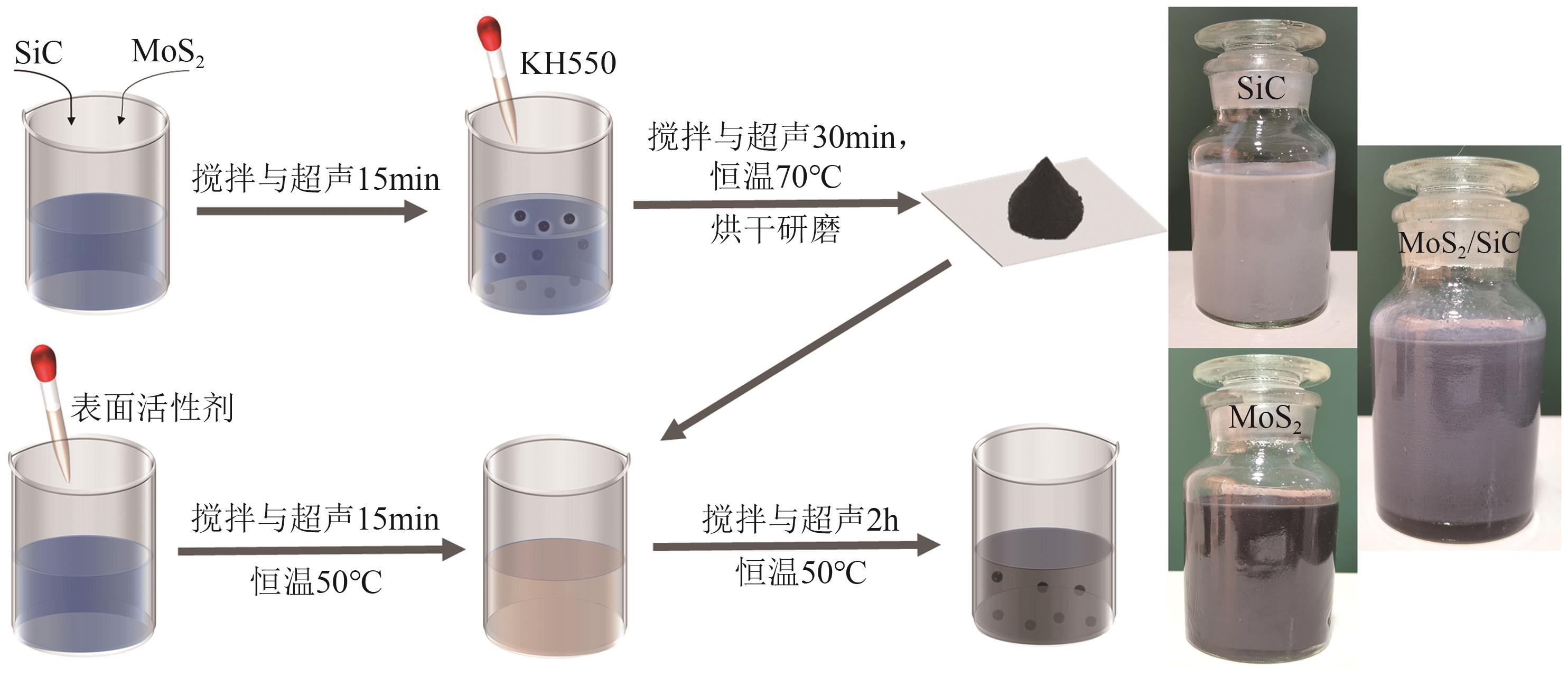
图1 纳米流体的制备
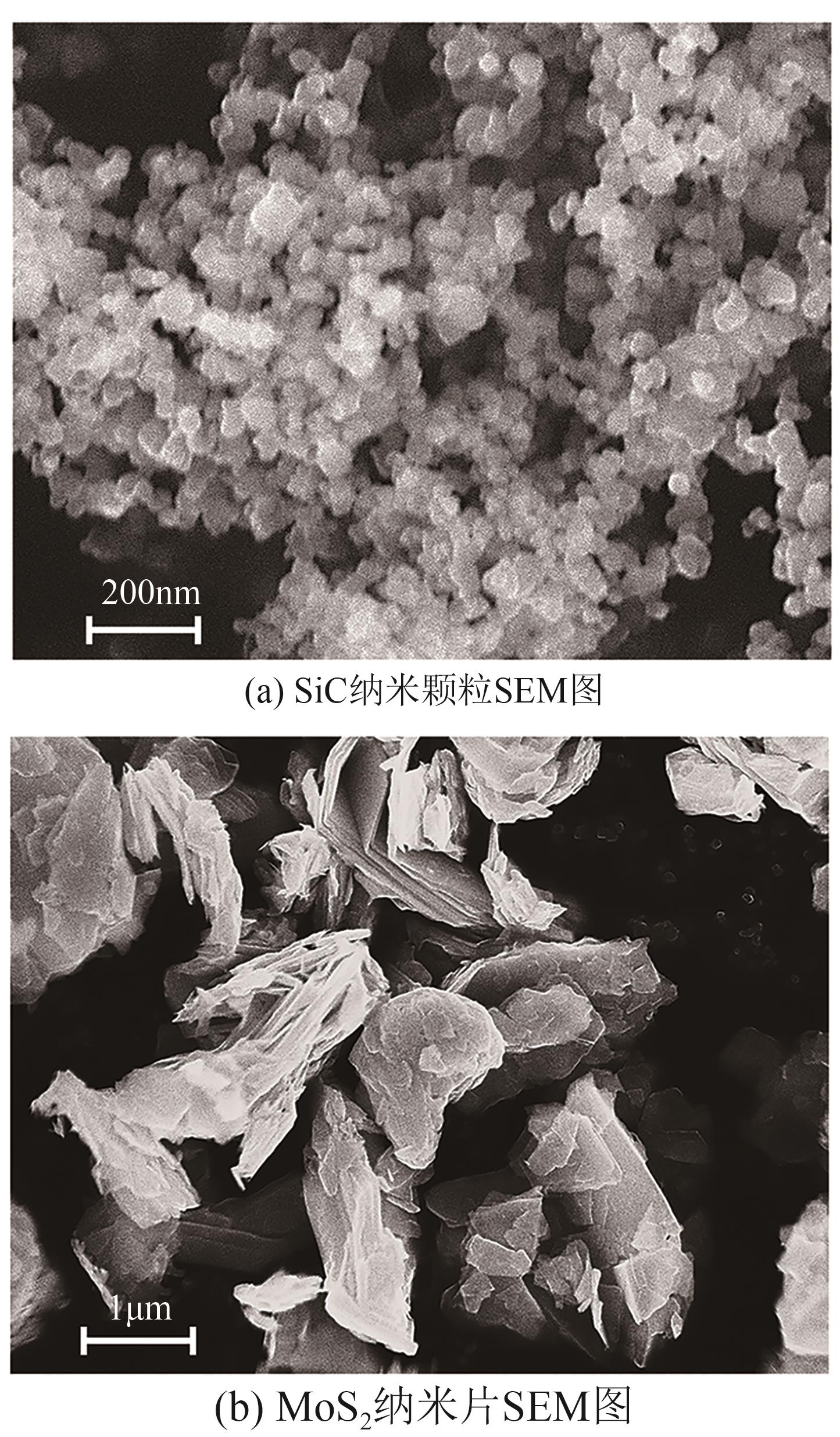
图2 纳米材料SEM图
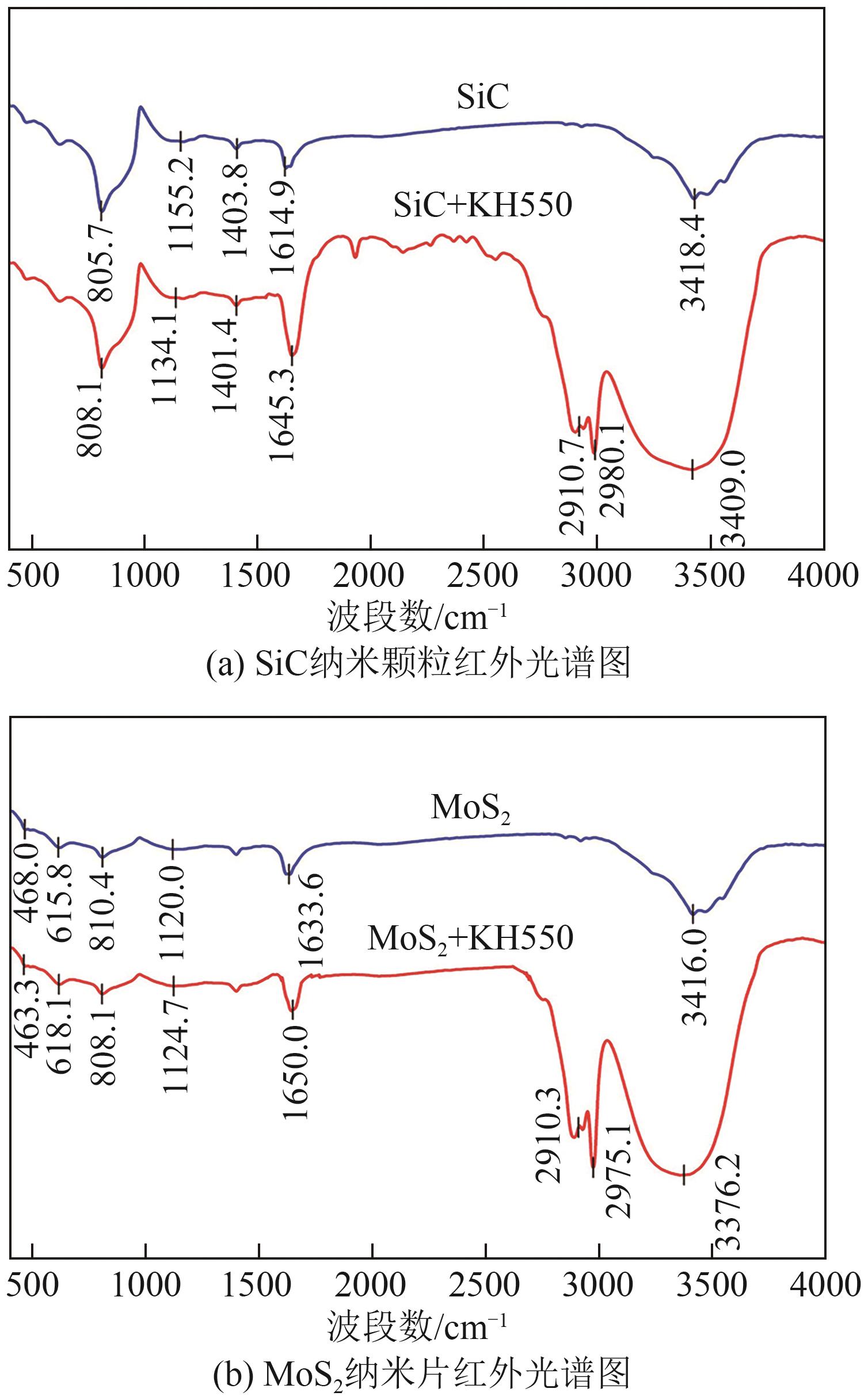
图3 纳米材料及其改性前后红外光谱图
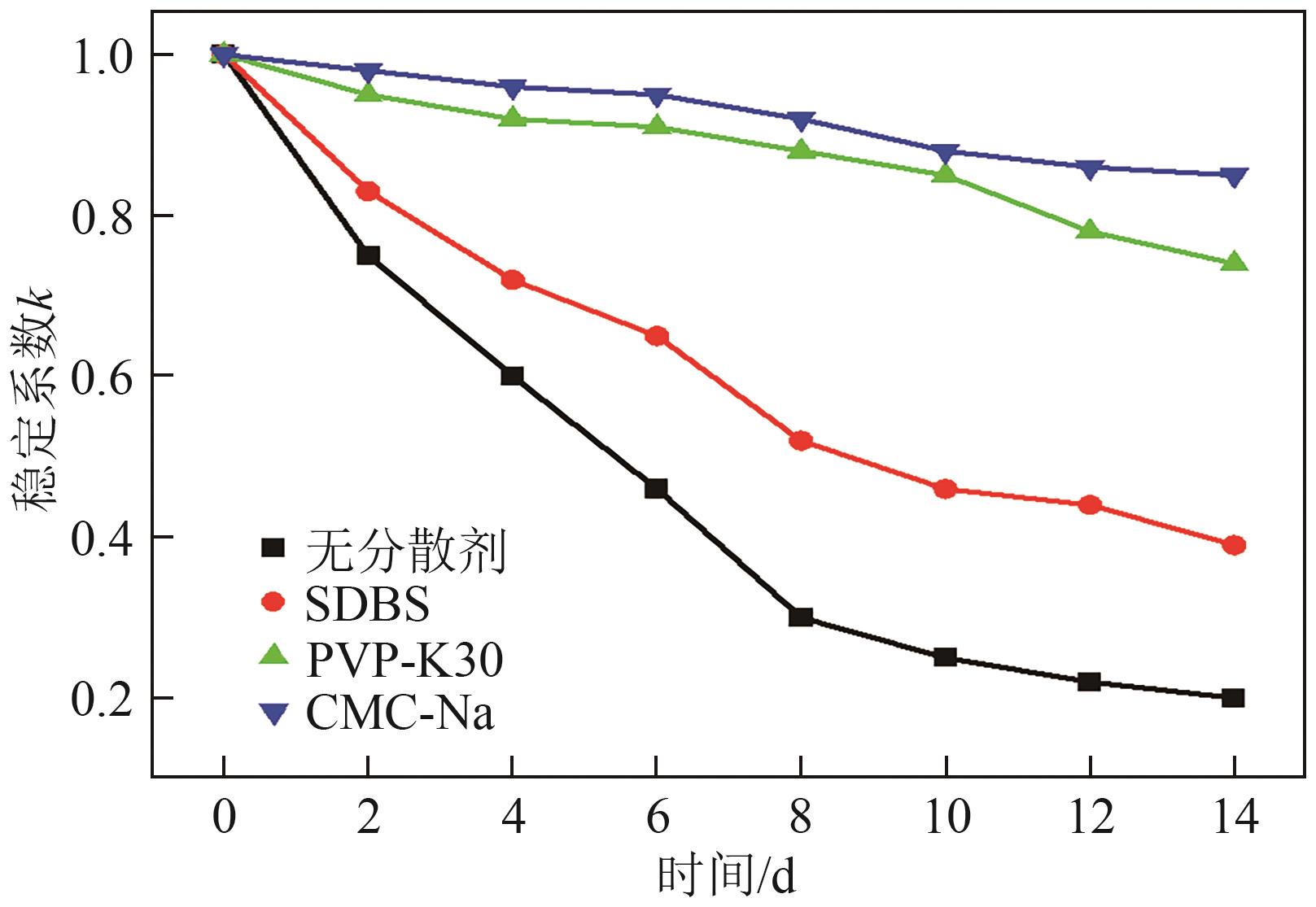
图4 不同表面活性剂的二元纳米流体稳定系数(14天)

图5 不同质量比的纳米流体稳定系数(14天)
| 纳米流体 | 摩擦测试前 | 摩擦测试后 | 幅度/% | 超声搅拌1h | 超声搅拌2h |
|---|---|---|---|---|---|
| MoS2 | 0.69 | 0.58 | -15.9% | 0.62 | 0.66 |
| SiC | 0.82 | 0.79 | -3.66% | 0.8 | 0.82 |
| 2∶1 | 0.84 | 0.81 | -3.57% | 0.82 | 0.83 |
| 1∶1 | 0.91 | 0.87 | -4.4% | 0.9 | 0.9 |
| 1∶2 | 0.93 | 0.89 | -4.3% | 0.91 | 0.92 |
表1 纳米流体的稳定系数(10天)
| 纳米流体 | 摩擦测试前 | 摩擦测试后 | 幅度/% | 超声搅拌1h | 超声搅拌2h |
|---|---|---|---|---|---|
| MoS2 | 0.69 | 0.58 | -15.9% | 0.62 | 0.66 |
| SiC | 0.82 | 0.79 | -3.66% | 0.8 | 0.82 |
| 2∶1 | 0.84 | 0.81 | -3.57% | 0.82 | 0.83 |
| 1∶1 | 0.91 | 0.87 | -4.4% | 0.9 | 0.9 |
| 1∶2 | 0.93 | 0.89 | -4.3% | 0.91 | 0.92 |
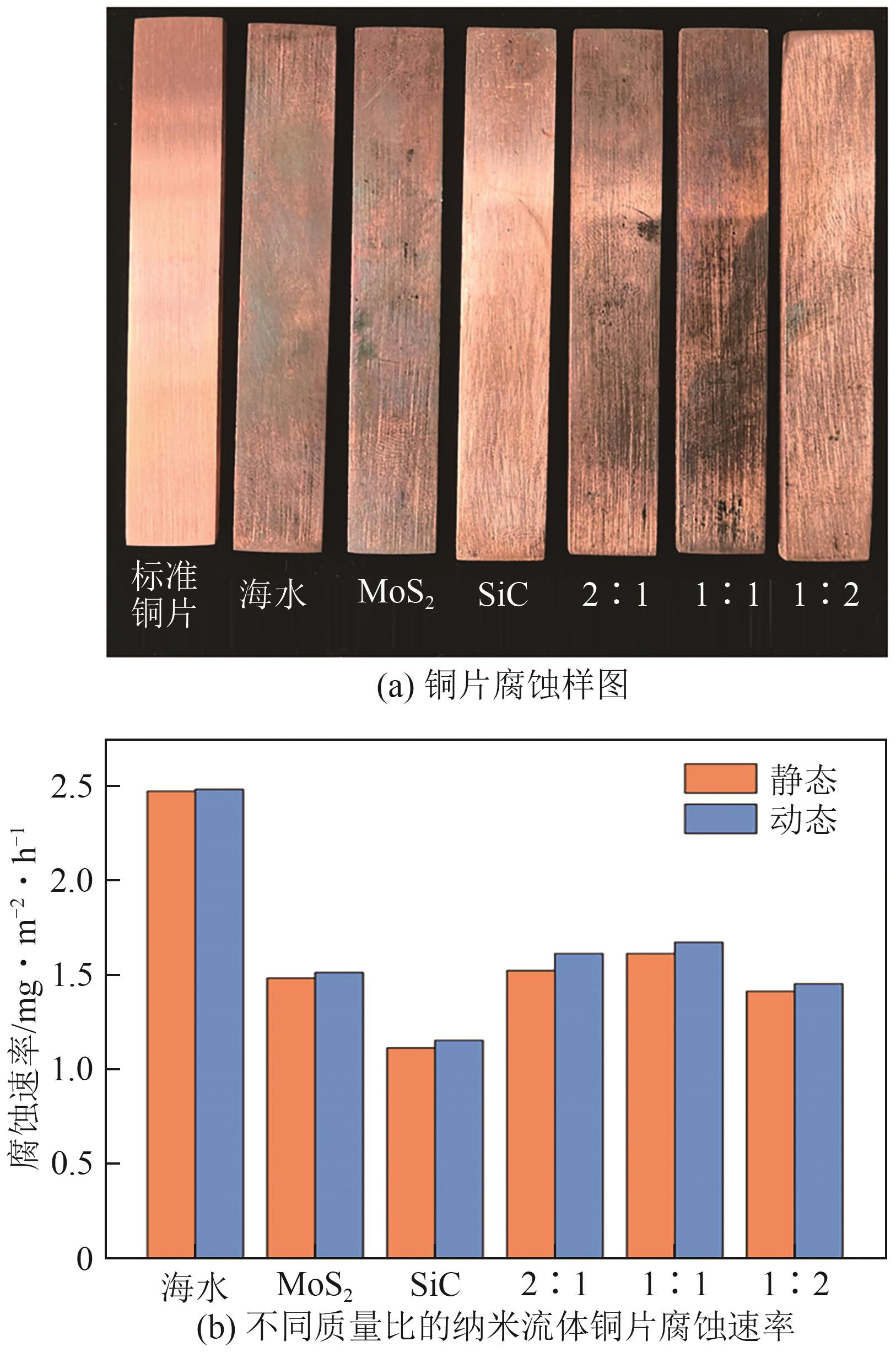
图6 质量比对纳米流体铜片腐蚀速率的影响
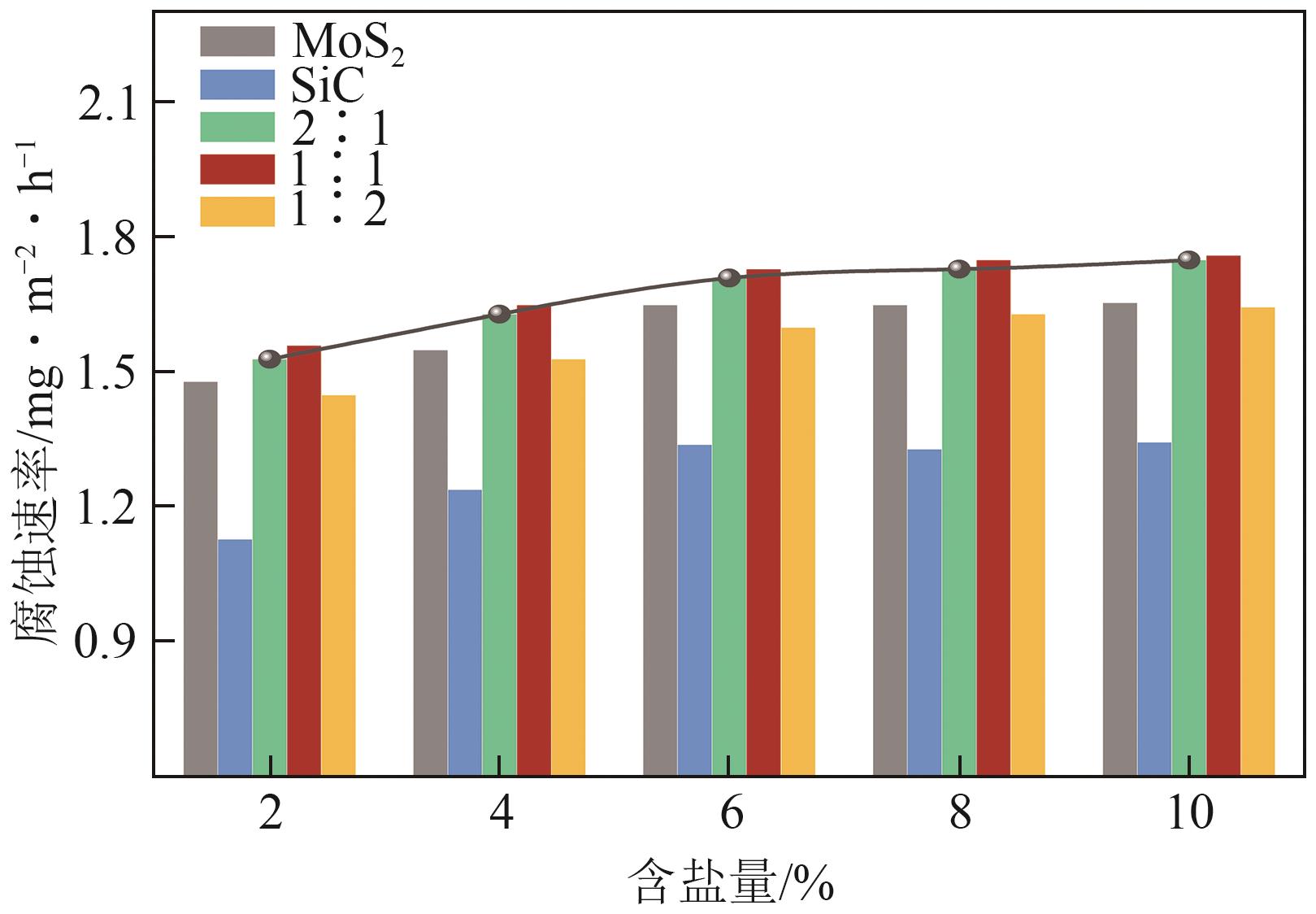
图7 不同含盐量的纳米流体铜片腐蚀速率
| 流体类别 | 平均摩擦系数 |
|---|---|
| SiC | 0.154 |
| MoS2 | 0.122 |
| 2∶1 | 0.143 |
| 1∶1 | 0.135 |
| 1∶2 | 0.119 |
表2 不同质量比纳米流体平均摩擦系数
| 流体类别 | 平均摩擦系数 |
|---|---|
| SiC | 0.154 |
| MoS2 | 0.122 |
| 2∶1 | 0.143 |
| 1∶1 | 0.135 |
| 1∶2 | 0.119 |
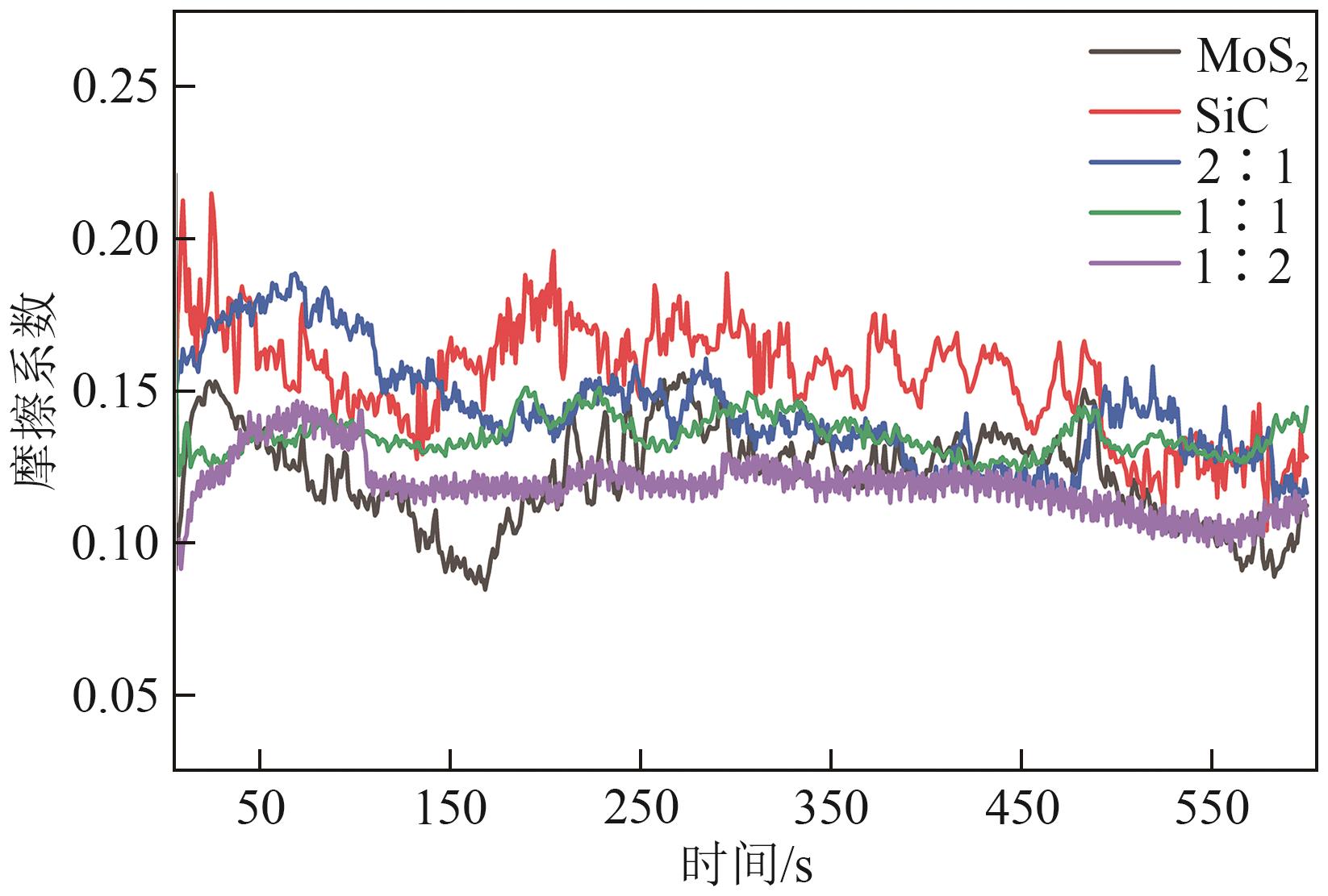
图8 不同质量比纳米流体摩擦系数
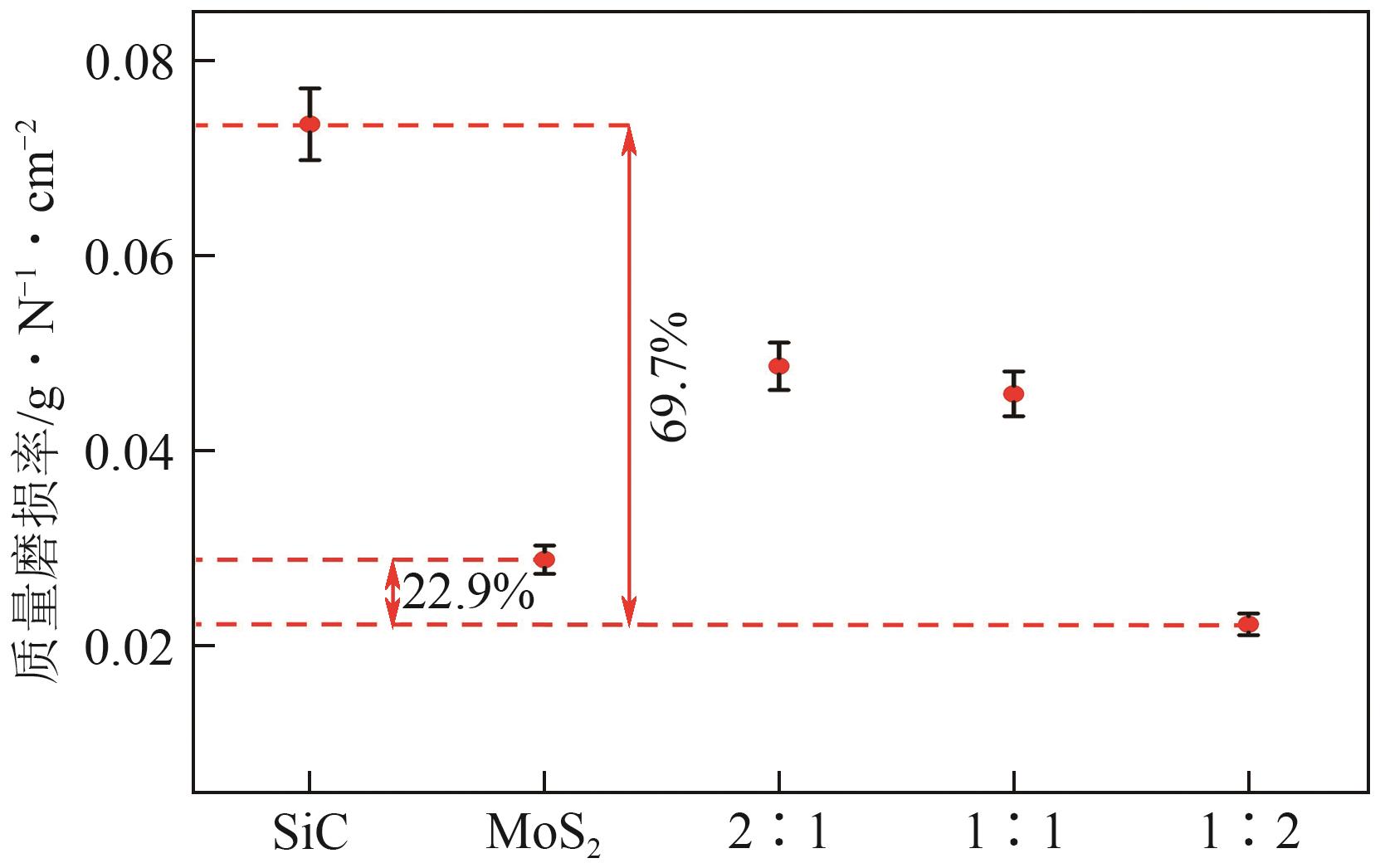
图9 不同质量比的纳米流体质量磨损率

图10 不同纳米流体磨痕二维轮廓
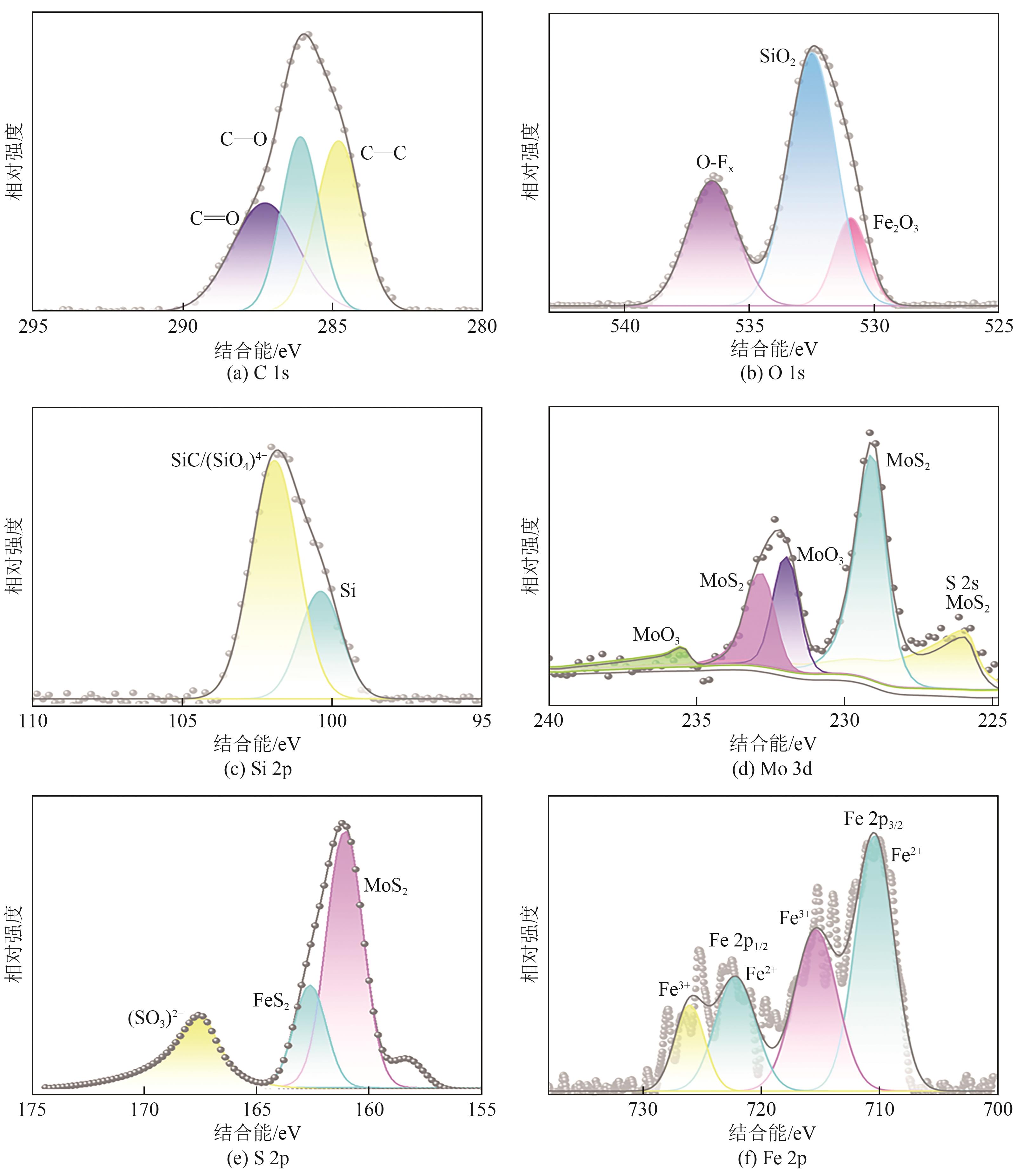
图11 钢球磨痕表面XPS分析
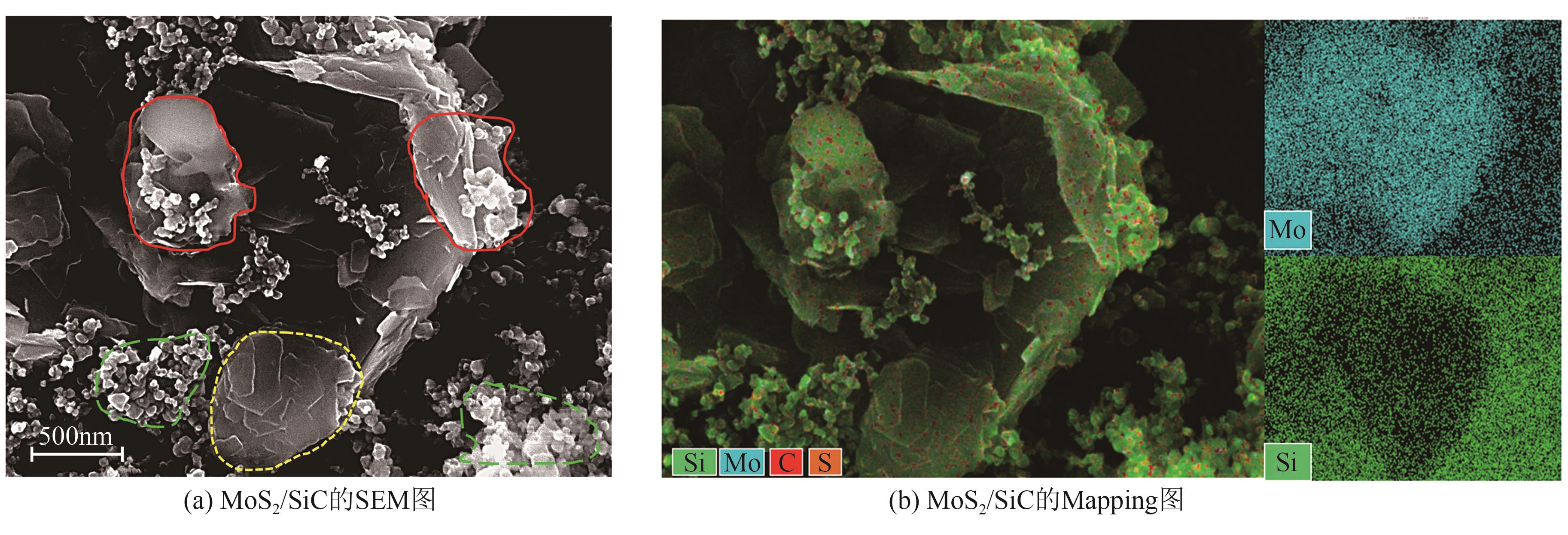
图12 MoS2/SiC纳米材料的SEM和Mapping图
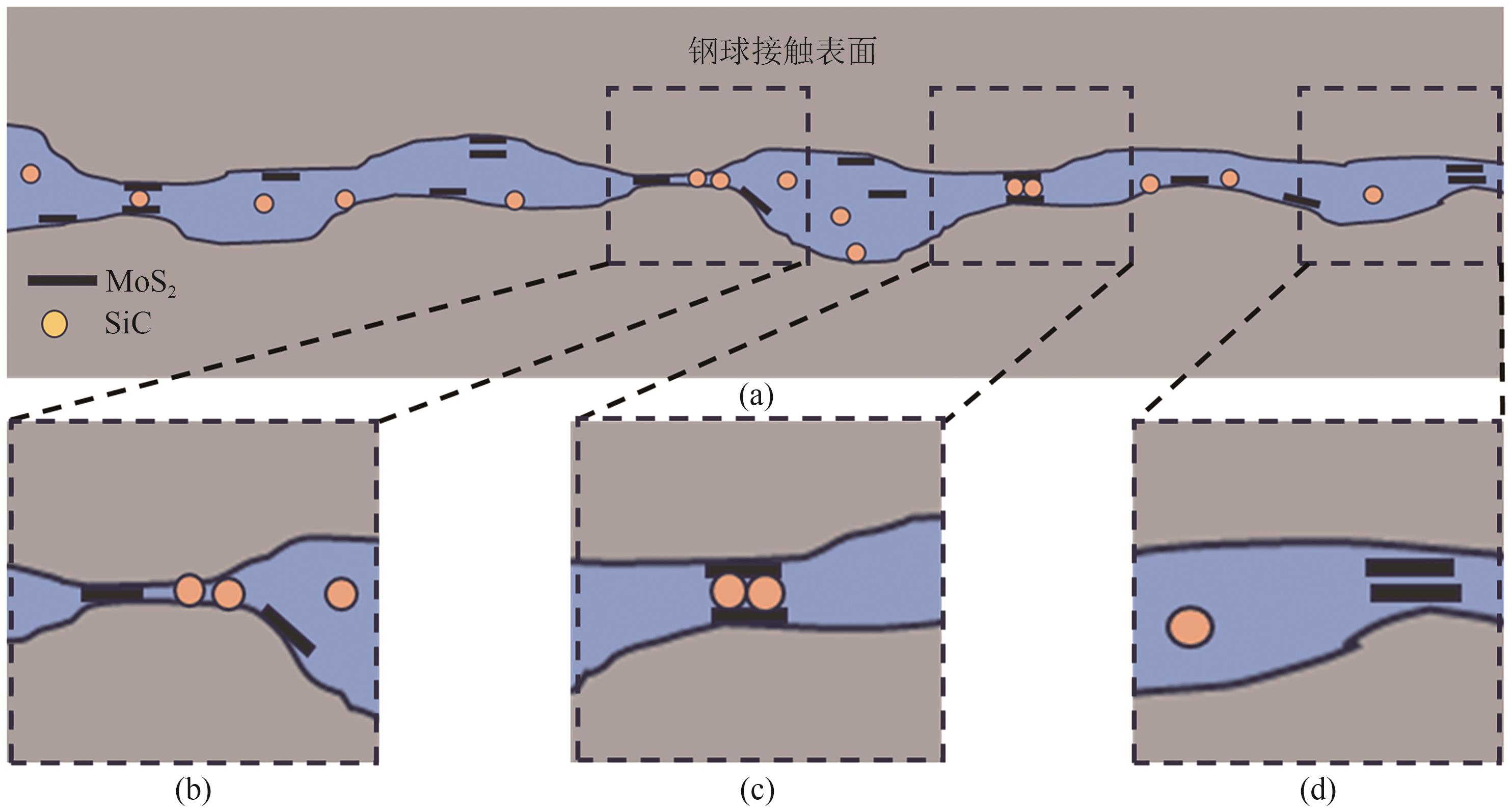
图13 MoS2/SiC纳米流体润滑机理
| [1] | 毋少峰. 仿生非光滑表面配流副润滑承载机理数值模拟及摩擦磨损实验研究[D]. 秦皇岛: 燕山大学, 2017. |
| WU Shaofeng. Simulation research on Lubrication-bearing mechanism and experiment study on friction-wear for port pair with bionic non-smooth surface[D]. Qinhuangdao: Yanshan University, 2017. | |
| [2] | 杨华勇, 周华, 路甬祥. 水液压技术的研究现状与发展趋势[J]. 中国机械工程, 2000, 11(12): 1430-1433. |
| YANG Huayong, ZHOU Hua, LU Yongxiang. Research achievements and developing trends of water hydraulics[J]. China Mechanical Engineering, 2000, 11(12): 1430-1433. | |
| [3] | KOU Baofu, LI Zhenshun, ZHANG Zhang, et al. Friction and wear properties of hydraulic components with ceramic/steel-to-steel pairs[J]. Journal of Mechanical Science and Technology, 2021, 35(8): 3375-3388. |
| [4] | WANG Zhiqiang, CAO Jiangtao, REN Xiaoguang, et al. Comparative study of the tribological properties of CFRPEEK, stainless and carbon steel in high water-based fluid[J]. Tribology Transactions, 2023, 66(5): 895-905. |
| [5] | KIM GwangSeok, KIM BomSok, LEE SangYul. High-speed wear behaviors of CrSiN coatings for the industrial applications of water hydraulics[J]. Surface and Coatings Technology, 2005, 200(5/6): 1814-1818. |
| [6] | MAJDIČ F, VELKAVRH I, KALIN M. Improving the performance of a proportional 4/3 water-hydraulic valve by using a diamond-like-carbon coating[J]. Wear, 2013, 297(1/2): 1016-1024. |
| [7] | CHOI Stephen. Nanofluids: A new field of scientific research and innovative applications[J]. Heat Transfer Engineering, 2008, 29(5): 429-431. |
| [8] | SUN Jianlin, MENG Yanan, ZHANG Boming. Tribological behaviors and lubrication mechanism of water-based MoO3 nanofluid during cold rolling process[J]. Journal of Manufacturing Processes, 2021, 61: 518-526. |
| [9] | THAKUR Archana, MANNA Alakesh, SAMIR Sushant. Multi-response optimization of turning parameters during machining of EN-24 steel with SiC nanofluids based minimum quantity lubrication[J]. Silicon, 2020, 12(1): 71-85. |
| [10] | JIANG Jiajun, MENG Xian, MU Kunyang, et al. Preparation of liquid metal-based SiC/graphene binary hybrid nanofluid and its basic properties as hydraulic transmission medium[J]. Tribology Letters, 2024, 72(1): 33. |
| [11] | 彭锐涛, 童佳威, 赵林峰, 等. 水基MWCNTs/MoS2复合纳米流体的摩擦学性能研究[J]. 摩擦学学报, 2021, 41(5): 690-699. |
| PENG Ruitao, TONG Jiawei, ZHAO Linfeng, et al. Preparation and tribological properties of water-based CNTs/MoS2 composite nanofluid[J]. Tribology, 2021, 41(5): 690-699. | |
| [12] | PENG Ruitao, ZHU Xixi, ZHOU Minzi, et al. Preparation and tribological properties of hybrid nanofluid of BNNs and SiC modified by plasma[J]. Tribology International, 2024, 191: 109168. |
| [13] | 巴召文, 黄国威, 乔旦, 等. 石墨烯/二硫化钼复合纳米添加剂的制备及摩擦学性能研究[J]. 摩擦学学报, 2019, 39(2): 140-149. |
| BA Zhaowen, HUANG Guowei, QIAO Dan, et al. Preparation and tribological performance of RGO/MoS2 as composite nano-additives[J]. Tribology, 2019, 39(2): 140-149. | |
| [14] | KONG Linghui, SUN Jianlin, BAO Yueyue. Preparation, characterization and tribological mechanism of nanofluids[J]. RSC Advances, 2017, 7(21): 12599-12609. |
| [15] | WANG Jin, LI Guolong, LI Tan, et al. Effect of various surfactants on stability and thermophysical properties of nanofluids[J]. Journal of Thermal Analysis and Calorimetry, 2021, 143(6): 4057-4070. |
| [16] | LIANG Tuo, HOU Jirui, XI Jiaxin. Mechanisms of nanofluid based modification MoS2 nanosheet for enhanced oil recovery in terms of interfacial tension, wettability alteration and emulsion stability[J]. Journal of Dispersion Science and Technology, 2023, 44(1): 26-37. |
| [17] | 朱启晨, 吴张永, 王志强, 等. 低温下硅油基纳米磁流体沉降稳定性与黏度特性[J]. 化工进展, 2023, 42(10): 5101-5110. |
| ZHU Qichen, WU Zhangyong, WANG Zhiqiang, et al. Sedimentation stability and viscosity properties of silicone oil-based magnetic nanofluid at low temperature[J]. Chemical Industry and Engineering Progress, 2023, 42(10): 5101-5110. | |
| [18] | HABIBI Ali, HEIDARI Mohammad A, Hamoud AL-HADRAMI, et al. Effect of nanofluid treatment on water sensitive formation to investigate water shock phenomenon, an experimental study[J]. Journal of Dispersion Science and Technology, 2014, 35(7): 889-897. |
| [19] | XU Lianman, LI Yajing, DU Linlin, et al. Study on the effect of SDBS and SDS on deep coal seam water injection[J]. Science of the Total Environment, 2023, 856: 158930. |
| [20] | 蒋佳骏, 吴张永, 朱启晨. 水基Ni0.5Zn0.5Fe2O4-SiC二元混合磁流体的稳定性、流变性、热物性与低速润滑性[J]. 材料导报, 2023, 37(20): 44-51. |
| JIANG Jiajun, WU Zhangyong, ZHU Qichen. Stability, rheological properties, thermal properties and low-speed lubricity of water-based Ni0.5Zn0.5Fe2O4-SiC binary hybrid magnetic fluid[J]. Materials Reports, 2023, 37(20): 44-51. | |
| [21] | 王肇庆, 苏惠惠. 斯托克斯粘滞阻力公式的简化推导[J]. 电子科技大学学报, 1997, 26(S1): 261-264. |
| WANG Zhaoqing, SU Huihui. Simple derivation of stokes resistance formula [J]. Journal of University of Electronic Science and Technology of China, 1997, 26(S1): 261-264. | |
| [22] | ZHOU Qi, HUANG Jingxia, WANG Jinqing, et al. Preparation of a reduced graphene oxide/zirconia nanocomposite and its application as a novel lubricant oil additive[J]. RSC Advances, 2015, 5(111): 91802-91812. |
| [23] | WITHARANA Sanjeeva, CHEN Haisheng, DING Yulong. Stability of nanofluids in quiescent and shear flow fields[J]. Nanoscale Research Letters, 2011, 6(1): 231. |
| [24] | XIE Siyu, ZHANG Yi, SONG Yanfang, et al. Comparison of the corrosion behavior of brass in TiO2 and Al2O3 nanofluids[J]. Nanomaterials, 2020, 10(6): 1046. |
| [25] | PAREKH Kinnari, JAUHARI Smita, R-V UPADHYAY. Mechanism of acid corrosion inhibition using magnetic nanofluid[J]. Advances in Natural Sciences: Nanoscience and Nanotechnology, 2016, 7(4): 045007. |
| [26] | DENG Qing, ZHANG Po, LI Xiaozhi, et al. Effect of seawater salinity on the fretting corrosion behavior of nickel-aluminum bronze (NAB) alloy[J]. Tribology International, 2024, 193: 109357. |
| [27] | WANG Guorui, DAI Zhaohe, WANG Yanlei, et al. Measuring interlayer shear stress in bilayer graphene[J]. Physical Review Letters, 2017, 119(3): 036101. |
| [28] | XIE Mengxin, PAN Bingli, LIU Hongyu, et al. One-step synthesis of carbon sphere@ 1 T-MoS2 towards superior antiwear and lubricity[J]. Tribology International, 2022, 176: 107927. |
| [29] | MOUSAVI Seyed Borhan, ZEINALI HERIS Saeed, Patrice ESTELLÉ. Viscosity, tribological and physicochemical features of ZnO and MoS2 diesel oil-based nanofluids: An experimental study[J]. Fuel, 2021, 293: 120481. |
| [30] | MENG Yanan, SUN Jianlin, HE Jiaqi, et al. Interfacial interaction induced synergistic lubricating performance of MoS2 and SiO2 composite nanofluid[J]. Colloids and Surfaces A: Physicochemical and Engineering Aspects, 2021, 626: 126999. |
| [31] | XUE Fan, CHENG Zhilin. Investigation of tribological behavior of MOFs/g-C3N4 nanocomposite for insight into effect of flake-on-sheet and ball-on-sheet nanostructure[J]. Tribology International, 2024, 195: 109654. |
| [32] | CHEN Xiangnan, WANG Xiaohui, FANG De. A review on C1s XPS-spectra for some kinds of carbon materials[J]. Fullerenes, Nanotubes and Carbon Nanostructures, 2020, 28(12): 1048-1058. |
| [33] | DEOKAR G, VIGNAUD D, ARENAL R, et al. Synthesis and characterization of MoS2 nanosheets[J]. Nanotechnology, 2016, 27(7): 075604. |
| [34] | KONG Yingchao, DONG Jiwei, LIU Zan, et al. In situ study of structure-activity relationship between structure and tribological properties of bulk layered materials by four-ball friction tester[J]. ACS Omega, 2020, 5(24): 14212-14220. |
| [35] | RAWAT Sooraj Singh, HARSHA A P, KHATRI Om P. Synergistic effect of binary systems of nanostructured MoS2/SiO2 and GO/SiO2 as additives to coconut oil-derived grease: Enhancement of physicochemical and lubrication properties[J]. Lubrication Science, 2021, 33(5): 290-307. |
| [36] | BAI Yanyan, CHEN Qiang, LANG Xujin, et al. Dispersion stability and tribological behavior of nanocomposite supramolecular gel lubricants and molecular dynamic simulation[J]. Tribology International, 2024, 191: 109150. |
| [1] | 李凯, 魏鹤琳, 尹志凡, 左夏华, 于晓宇, 尹宏远, 杨卫民, 阎华, 安瑛. 基于GA-BP神经网络模型预测水基炭黑-胶原蛋白纳米流体热导率和黏度[J]. 化工进展, 2024, 43(7): 4138-4147. |
| [2] | 武西宁, 张宁, 秦佳敏, 徐龙, 魏朝阳, 马晓迅. 低冷量下强化CO2吸收的甲醇基纳米流体性能[J]. 化工进展, 2024, 43(5): 2811-2822. |
| [3] | 李凯, 魏鹤琳, 左夏华, 杨卫民, 阎华, 安瑛. 水基炭黑-胶原蛋白纳米流体制备及稳定性实验[J]. 化工进展, 2024, 43(4): 1944-1952. |
| [4] | 张岱凌, 丁玉梅, 左夏华, 黎昊为, 杨卫民, 阎华, 安瑛. 废弃墨粉纳米流体的光热特性[J]. 化工进展, 2023, 42(9): 4791-4798. |
| [5] | 向硕, 卢鹏, 石伟年, 杨鑫, 何燕, 朱立业, 孔祥微. 二维WS2纳米片的规模化可控制备及其摩擦学性能[J]. 化工进展, 2023, 42(9): 4783-4790. |
| [6] | 娄宝辉, 吴贤豪, 张驰, 陈臻, 冯向东. 纳米流体用于二氧化碳吸收分离研究进展[J]. 化工进展, 2023, 42(7): 3802-3815. |
| [7] | 郭文杰, 翟玉玲, 陈文哲, 申鑫, 邢明. Al2O3-CuO/水混合纳米流体对流传热性能及热经济性分析[J]. 化工进展, 2023, 42(5): 2315-2324. |
| [8] | 王超, 王宗勇, 张伟, 韩旭, 刘磊, 付启慧. 射流冲击纳米流体对半圆形螺旋通道传热特性的影响[J]. 化工进展, 2023, 42(12): 6207-6217. |
| [9] | 蒋佳骏, 吴张永, 朱启晨, 蔡昌礼, 朱家军, 王志强. In-Bi-Sn基Si3N4/GNFs混合纳米流体的流变性和润滑性[J]. 化工进展, 2023, 42(12): 6197-6206. |
| [10] | 陈文哲, 王霜, 翟玉玲, 李舟航. 颗粒团聚状态对纳米流体热导率的影响[J]. 化工进展, 2023, 42(11): 5700-5706. |
| [11] | 陆诗建, 刘玲, 刘滋武, 郭伯文, 俞徐林, 梁艳, 赵东亚, 朱全民. AEP-DPA-CuO相变纳米流体吸收CO2稳定性[J]. 化工进展, 2022, 41(8): 4555-4561. |
| [12] | 李佩珊, 张梦辰, 李铭杰, 郑文镳, 刘敏超, 谢高艺, 徐晓龙, 刘长宇, 郏建波. 基于二维材料膜构筑纳米流体通道的研究进展[J]. 化工进展, 2022, 41(7): 3745-3757. |
| [13] | 李钰璨, 胡定华, 刘锦辉. 氧化铝纳米流体液滴瞬态蒸发速率的演化特性分析[J]. 化工进展, 2022, 41(7): 3493-3501. |
| [14] | 林清宇, 王祝, 冯振飞, 凌彪, 陈镇. 扭带结构影响管内传热与熵产的研究进展[J]. 化工进展, 2022, 41(11): 5709-5721. |
| [15] | 王英梅, 牛爱丽, 张兆慧, 展静, 张学民. 二氧化碳水合物快速生成方法研究进展[J]. 化工进展, 2021, 40(S2): 117-125. |
| 阅读次数 | ||||||
|
全文 |
|
|||||
|
摘要 |
|
|||||