化工进展 ›› 2025, Vol. 44 ›› Issue (6): 3630-3641.DOI: 10.16085/j.issn.1000-6613.2024-0676
• 资源与环境化工 • 上一篇
群体感应调节对废水生物处理工艺影响的研究进展
张千1,2( ), 秦树敏1, 杨晨曦1, 杜泽宇2, 唐清平1, 杨周洪1, 江佳骏1, 冯尧1, 万娟1, 李伟2()
- 1.重庆理工大学化学化工学院,重庆 400050
2.重庆市畜牧科学院,重庆 400050
-
收稿日期:2024-04-23修回日期:2024-11-22出版日期:2025-06-25发布日期:2025-07-09 -
通讯作者:李伟 -
作者简介:张千(1986—),男,副教授,研究方向为水处理。E-mail:zhangqianswu2005@cqut.edu.cn。 -
基金资助:重庆市科研机构绩效激励引导专项(cstc2022jxj180014);重庆理工大学研究生教育高质量发展项目(gzlcx20233172)
Research progress on the impact of quorum sensing regulation on wastewater biological treatment processes
ZHANG Qian1,2(), QIN Shumin1, YANG Chenxi1, DUO Zeyu2, TANG Qingping1, YANG Zhouhong1, JIANG Jiajun1, FENG Yao1, WAN Juan1, LI Wei2()
- 1.College of Chemistry and Chemical Engineering, Chongqing University of Technology, Chongqing 400050, China
2.Chongqing Academy of Animal Sciences, Chongqing 400050, China
-
Received:2024-04-23Revised:2024-11-22Online:2025-06-25Published:2025-07-09 -
Contact:LI Wei

摘要:
群体感应(quorum sensing,QS)是一种细胞间的通信机制,通过自诱导物(autoinducer,AI)的产生和响应,实现对细胞群体密度的调控,进而调节基因表达。在生物处理工艺中,QS对于微生物群落的功能和结构具有显著影响。本文综述了QS的三种主要信号分子类型:酰基高丝氨酸内酯(acyl-homoserine lactones,AHLs)、自诱导肽(autoinducing peptides,AIPs)和自诱导物-2(autoinducer-2,AI-2),并探讨了它们在QS机制中的作用。此外,本文还系统地综述了QS增强和抑制的方法,以及QS在生物处理领域中的应用,包括活性污泥、生物膜工艺、颗粒污泥工艺和菌藻共生技术以及膜生物反应器。尽管QS在生物处理工艺中的应用取得了一定的进展,但该领域仍面临诸多挑战和未解决的问题。例如,多种信号分子的产生增加了理解QS机制的复杂性;QS调控生物处理的研究大多还停留在实验室阶段,尚未大规模用于实际污水处理中。因此,深入研究QS在生物处理中的调节机制对于开发新的废水生物处理策略、提高废水处理效率具有重要意义。
中图分类号:
引用本文
张千, 秦树敏, 杨晨曦, 杜泽宇, 唐清平, 杨周洪, 江佳骏, 冯尧, 万娟, 李伟. 群体感应调节对废水生物处理工艺影响的研究进展[J]. 化工进展, 2025, 44(6): 3630-3641.
ZHANG Qian, QIN Shumin, YANG Chenxi, DUO Zeyu, TANG Qingping, YANG Zhouhong, JIANG Jiajun, FENG Yao, WAN Juan, LI Wei. Research progress on the impact of quorum sensing regulation on wastewater biological treatment processes[J]. Chemical Industry and Engineering Progress, 2025, 44(6): 3630-3641.
| 信号分子 | 简称 | 结构式 | 合成系统 | 功能 | 参考文献 |
|---|---|---|---|---|---|
| N-酰基高丝氨酸内酯 | AHL | 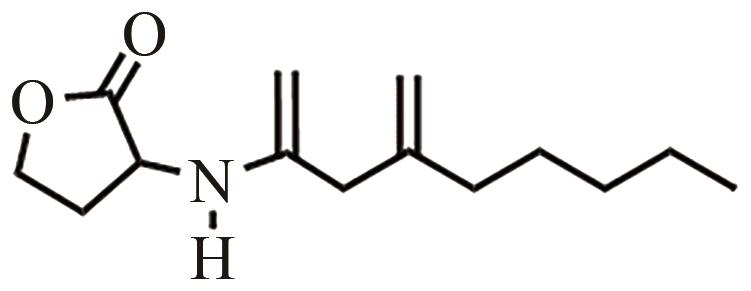 | Luxl/LuxR系统 | 1. 种内交流 2. 生物膜形成 3. EPS产生 4. 细菌活性 | [ |
| 自诱导肽 | AIP | 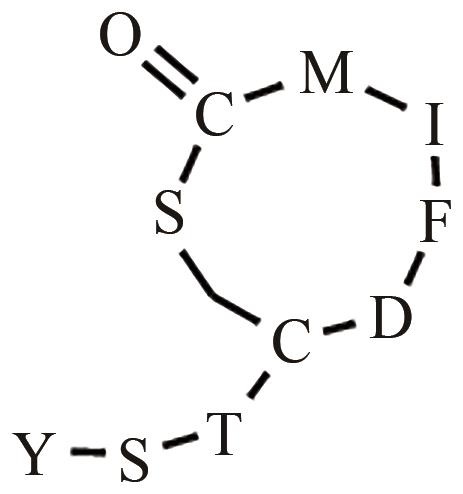 | 激酶受体的激活 | 1. 细胞间通信 2. 毒力和抗菌化合物 | [ |
| 自诱导物-2 | AI-2 | 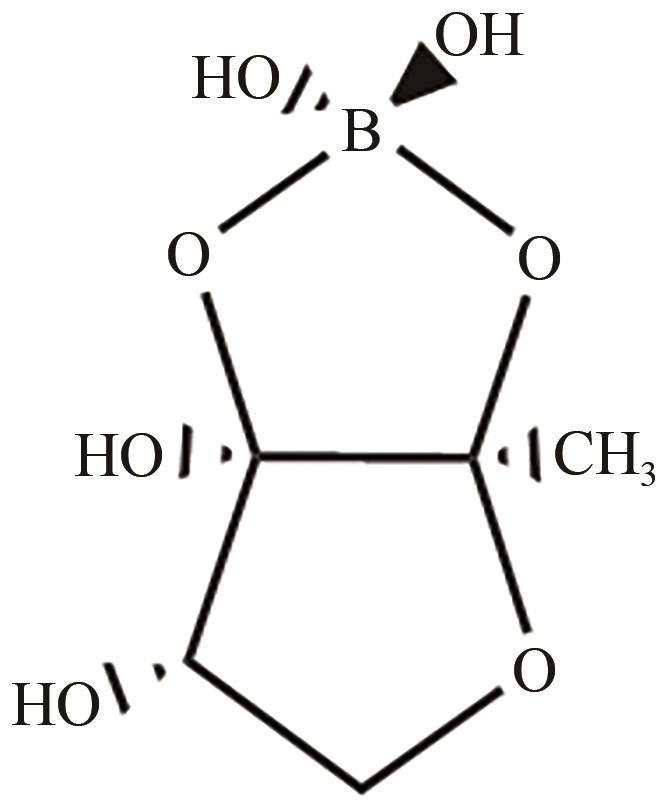 | luxS基因 | 1. 种间相互作用 2. 生物膜形成 3. 致病因子和毒素 4. 生物发光 5. 群集运动 | [ |
| 假单胞菌喹诺酮信号 | PQS | 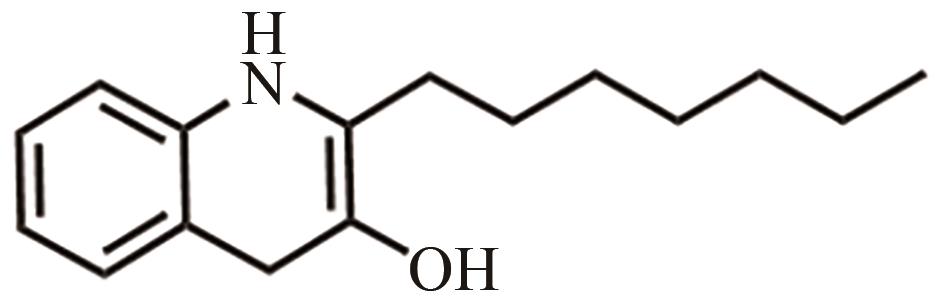 | 监管体系4Q | 1. 多种毒力因子 2. 生物膜形成 3. 控制C4-HSL生产 4. 调价反硝化作用 5. 规范铁的运输系统 | [ |
| 可扩散性信号分子 | DSF | 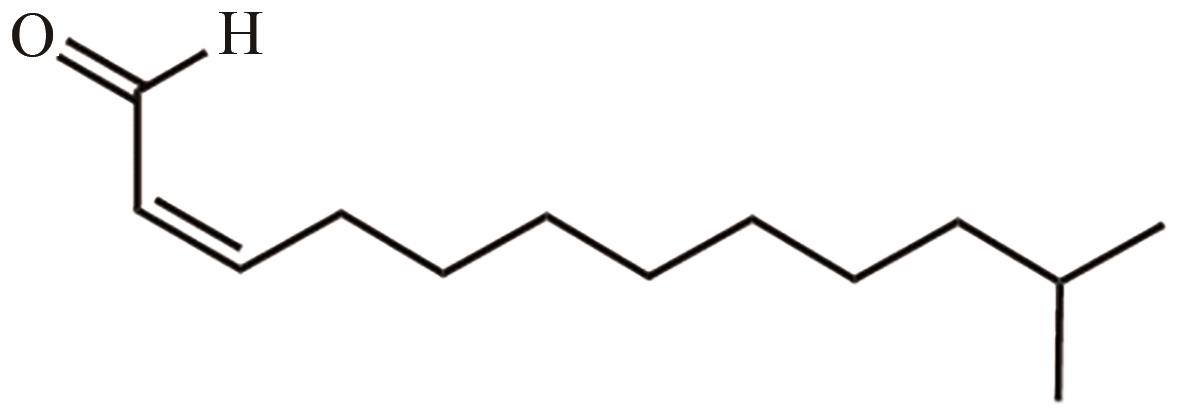 | RpfF基因簇(rpfB, rpfF和rpfGHC) | 1. 胞外酶的产生 2. DSF的存在导致细菌分散,缺乏导致EPS产生、聚集及生物膜形成 3. 控制环二GMP的合成 | [ |
表1 几种常见的信号分子
| 信号分子 | 简称 | 结构式 | 合成系统 | 功能 | 参考文献 |
|---|---|---|---|---|---|
| N-酰基高丝氨酸内酯 | AHL | | Luxl/LuxR系统 | 1. 种内交流 2. 生物膜形成 3. EPS产生 4. 细菌活性 | [ |
| 自诱导肽 | AIP | | 激酶受体的激活 | 1. 细胞间通信 2. 毒力和抗菌化合物 | [ |
| 自诱导物-2 | AI-2 | | luxS基因 | 1. 种间相互作用 2. 生物膜形成 3. 致病因子和毒素 4. 生物发光 5. 群集运动 | [ |
| 假单胞菌喹诺酮信号 | PQS | | 监管体系4Q | 1. 多种毒力因子 2. 生物膜形成 3. 控制C4-HSL生产 4. 调价反硝化作用 5. 规范铁的运输系统 | [ |
| 可扩散性信号分子 | DSF | | RpfF基因簇(rpfB, rpfF和rpfGHC) | 1. 胞外酶的产生 2. DSF的存在导致细菌分散,缺乏导致EPS产生、聚集及生物膜形成 3. 控制环二GMP的合成 | [ |
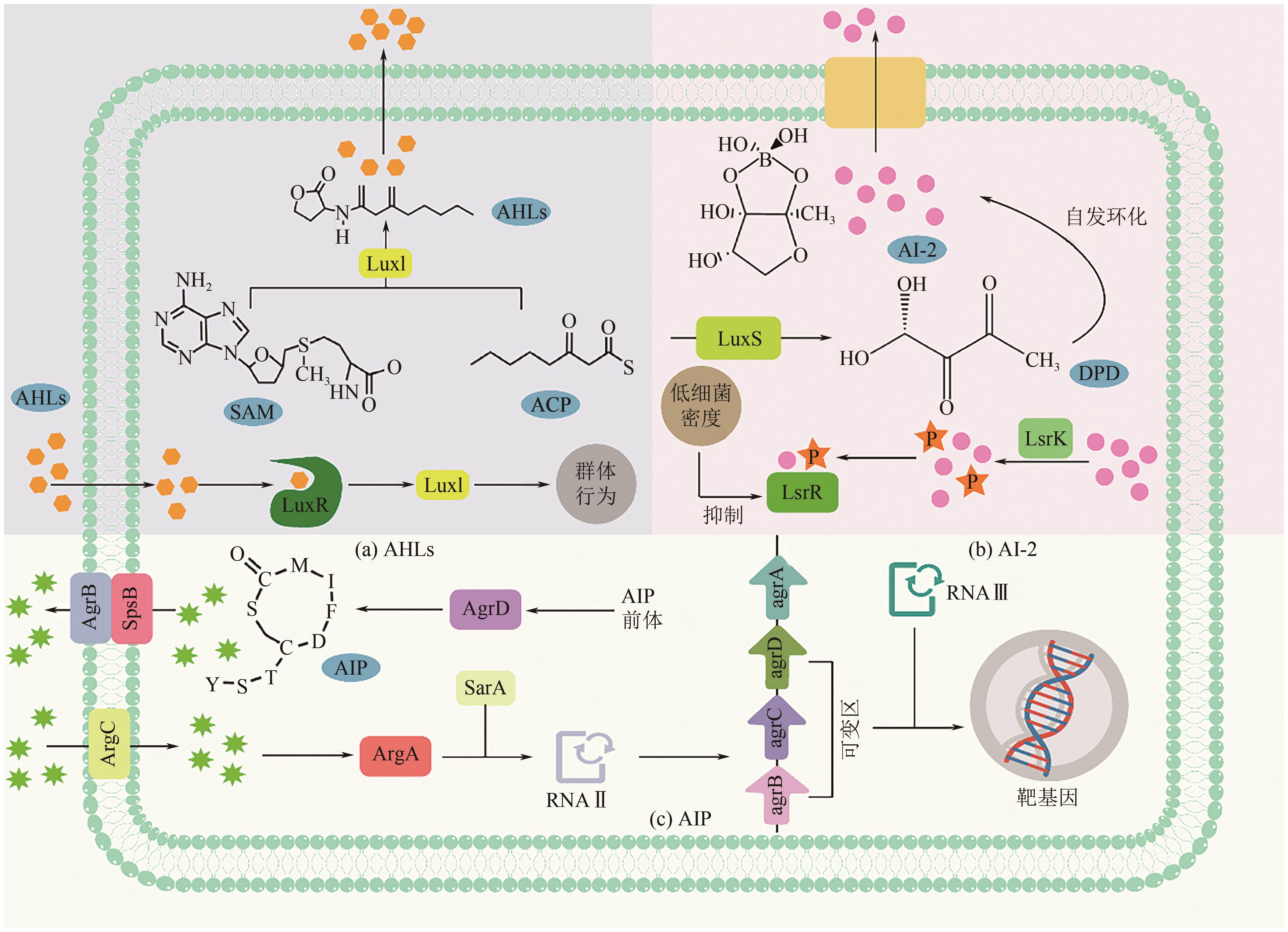
图1 典型的QS信号通路[19]
| 反应器 | 废水类型 | 接种物 | 信号分子类型 | 参考文献 |
|---|---|---|---|---|
| RBC | 芥末茎废水 | 污泥 | — | [ |
| MBBR | 高氨氮废水 | 污泥 | C6-HSL C8-HSL | [ |
| MBBR | 市政污水 | Sphingomonas rubra BH3T 污泥 | C4-HSL C6-HSL C10-HSL C12-HSL C14-HSL | [ |
| 生物转盘反应器(RBC) | 市政污水 | 污泥 | — | [ |
| SBBR | 市政污水 | 污泥 | C10-HSL C12-HSL AI-2 | [ |
| SBBR | 市政污水 | AOB NOB 污泥 | 3-oxo-C10-HSL C8-HSL C10-HSL C12-HSL | [ |
| 曝气生物滤池(BAF) | 合成废水 | 污泥 | C6-HSL C8-HSL C10-HSL C12-HSL | [ |
表2 QS调控生物膜工艺的研究
| 反应器 | 废水类型 | 接种物 | 信号分子类型 | 参考文献 |
|---|---|---|---|---|
| RBC | 芥末茎废水 | 污泥 | — | [ |
| MBBR | 高氨氮废水 | 污泥 | C6-HSL C8-HSL | [ |
| MBBR | 市政污水 | Sphingomonas rubra BH3T 污泥 | C4-HSL C6-HSL C10-HSL C12-HSL C14-HSL | [ |
| 生物转盘反应器(RBC) | 市政污水 | 污泥 | — | [ |
| SBBR | 市政污水 | 污泥 | C10-HSL C12-HSL AI-2 | [ |
| SBBR | 市政污水 | AOB NOB 污泥 | 3-oxo-C10-HSL C8-HSL C10-HSL C12-HSL | [ |
| 曝气生物滤池(BAF) | 合成废水 | 污泥 | C6-HSL C8-HSL C10-HSL C12-HSL | [ |
| 藻 | 菌 | 信号分子 | 参考文献 |
|---|---|---|---|
| Bacillariophyta Chlorophyta | Zoogloea Thauera | C6-HSL C8-HSL | [ |
| Chlorella sp. | 3-oxo-C12-HSL 3-Hydroxy-C8-HSL | [ | |
| Prorocentrum donghaiense, Chattonella marina等 | Rhodobacteraceae | C6-HSL, C8-HSL, 3-oxo-C6-HSL, 3-oxo-C8-HSL, 3-oxo-C10-HSL | [ |
| Amphiroa fragilissima | Acinetobacter sp. strain ATCC 49139等 | [ | |
| Saccharina latissima | Pseudomonas sp.等 | AI-2, AHL | [ |
表3 QS在菌藻共生技术中的应用
| 藻 | 菌 | 信号分子 | 参考文献 |
|---|---|---|---|
| Bacillariophyta Chlorophyta | Zoogloea Thauera | C6-HSL C8-HSL | [ |
| Chlorella sp. | 3-oxo-C12-HSL 3-Hydroxy-C8-HSL | [ | |
| Prorocentrum donghaiense, Chattonella marina等 | Rhodobacteraceae | C6-HSL, C8-HSL, 3-oxo-C6-HSL, 3-oxo-C8-HSL, 3-oxo-C10-HSL | [ |
| Amphiroa fragilissima | Acinetobacter sp. strain ATCC 49139等 | [ | |
| Saccharina latissima | Pseudomonas sp.等 | AI-2, AHL | [ |
| 类型 | 细菌 | 信号类型 | 处理工艺 | 废水类型 | 参考文献 |
|---|---|---|---|---|---|
| 群体感应 | Sphingomonas paucimobilis | 活性污泥工艺 | 市政或工业废水 | [ | |
| Burkholderia multivorans 17616 | C8-HSL C6-HSL | 市政或工业废水 | [ | ||
| Burkholderia cenocepacia | |||||
| Aeromonas | AHL, AI-2 | [ | |||
| A. hydrophila | C4-HSL, C6-HSL, AI-2 | 活性污泥工艺 | 市政污水 | [ | |
| Pseudomona aeruginosa PAO | C10-HSL | [ | |||
| Xanthomonas sp. | DSF | 活性污泥工艺 | [ | ||
| P. aeruginosa | 3-oxo-C12-HSL,C4-HSL | 工业和市政污水 | [ | ||
| Vibrio sp. | AI-2, AHK | [ | |||
| Ac. Baumannii strain M2 | 3-羟基-C12-HSL | 市政或工业废水 | [ | ||
| Pseudomonas sp. | C4-HSL, C6-HSL, 3-oxo-C12-HSL, PQS | 活性污泥工艺 | [ | ||
| Nitrosomonas europaea | C6-HSL, C8-HSL C10-HSL | 活性污泥工艺 | 工业废水 | [ | |
| P. putida | 活性污泥工艺 | 市政污水 | [ | ||
| 群体淬灭 | Variovorax paradoxus strain VAI-C | C4-HSL, C6-HSL C8-HSL, C10-HSL C12-HSL 3-oxo-C6-HSL | 活性污泥工艺 | 工业废水 | [ |
| Rhodococcus sp. BH4 | C6-HSL, C8-HSL C10-HSL, C12-HSL 3-oxo-C6-HSL 3-oxo-C8-HSL 3-oxo-C10-HSL 3-oxo-C12-HSL | MBR | [ | ||
| Acinetobacter sp. strain Ooi24 | C10-HSL | 活性污泥工艺 | 市政污水 | [ | |
| Pseudomonas sp. 1A1 | C6-HSL, C8- HSL C10-HSL, C12-HSL 3-oxo-C8- HSL 3-oxo-C10- HSL 3-oxo-C12- HSL | MBR | 市政污水 | [ | |
| Rhodococcus sp. BH4 | C8-HSL | MBR | 合成废水 | [ | |
| Candidatus Brocadia | C8-HSL, C12-HSL, C6-HSL, 3O-C14-HSL, 3O-C12-HSL | MBR | [ | ||
| Rhodococcus sp. BH4 | C4-HSL, C6-HSL, 3-oxo-C6-HSL, C7-HSL, C8-HSL, 3-oxo-C8-HSL, C10-HSL, C12-HSL, C14-HSL | MBR | 制药废水 | [ |
表4 群体感应和群体淬灭在废水处理中的应用
| 类型 | 细菌 | 信号类型 | 处理工艺 | 废水类型 | 参考文献 |
|---|---|---|---|---|---|
| 群体感应 | Sphingomonas paucimobilis | 活性污泥工艺 | 市政或工业废水 | [ | |
| Burkholderia multivorans 17616 | C8-HSL C6-HSL | 市政或工业废水 | [ | ||
| Burkholderia cenocepacia | |||||
| Aeromonas | AHL, AI-2 | [ | |||
| A. hydrophila | C4-HSL, C6-HSL, AI-2 | 活性污泥工艺 | 市政污水 | [ | |
| Pseudomona aeruginosa PAO | C10-HSL | [ | |||
| Xanthomonas sp. | DSF | 活性污泥工艺 | [ | ||
| P. aeruginosa | 3-oxo-C12-HSL,C4-HSL | 工业和市政污水 | [ | ||
| Vibrio sp. | AI-2, AHK | [ | |||
| Ac. Baumannii strain M2 | 3-羟基-C12-HSL | 市政或工业废水 | [ | ||
| Pseudomonas sp. | C4-HSL, C6-HSL, 3-oxo-C12-HSL, PQS | 活性污泥工艺 | [ | ||
| Nitrosomonas europaea | C6-HSL, C8-HSL C10-HSL | 活性污泥工艺 | 工业废水 | [ | |
| P. putida | 活性污泥工艺 | 市政污水 | [ | ||
| 群体淬灭 | Variovorax paradoxus strain VAI-C | C4-HSL, C6-HSL C8-HSL, C10-HSL C12-HSL 3-oxo-C6-HSL | 活性污泥工艺 | 工业废水 | [ |
| Rhodococcus sp. BH4 | C6-HSL, C8-HSL C10-HSL, C12-HSL 3-oxo-C6-HSL 3-oxo-C8-HSL 3-oxo-C10-HSL 3-oxo-C12-HSL | MBR | [ | ||
| Acinetobacter sp. strain Ooi24 | C10-HSL | 活性污泥工艺 | 市政污水 | [ | |
| Pseudomonas sp. 1A1 | C6-HSL, C8- HSL C10-HSL, C12-HSL 3-oxo-C8- HSL 3-oxo-C10- HSL 3-oxo-C12- HSL | MBR | 市政污水 | [ | |
| Rhodococcus sp. BH4 | C8-HSL | MBR | 合成废水 | [ | |
| Candidatus Brocadia | C8-HSL, C12-HSL, C6-HSL, 3O-C14-HSL, 3O-C12-HSL | MBR | [ | ||
| Rhodococcus sp. BH4 | C4-HSL, C6-HSL, 3-oxo-C6-HSL, C7-HSL, C8-HSL, 3-oxo-C8-HSL, C10-HSL, C12-HSL, C14-HSL | MBR | 制药废水 | [ |
| [33] | XU Fangfang, LIAO Jialong, HU Jinchen, et al. Biofouling mitigation and microbial community dynamics in the membrane bioreactor by the indigenous quorum quenching bacterium Delftia sp. JL5[J]. Bioresource Technology, 2023, 388: 129753. |
| [34] | CHEN Xin, SCHAUDER Stephan, POTIER Noelle, et al. Structural identification of a bacterial quorum-sensing signal containing boron[J]. Nature, 2002, 415(6871): 545-549. |
| [35] | RUIZ Caterine Henríquez, Estefanie OSORIO-LLANES, TRESPALACIOS Mayra Hernández, et al. Quorum sensing regulation as a target for antimicrobial therapy[J]. Mini Reviews in Medicinal Chemistry, 2022, 22(6): 848-864. |
| [36] | CHOWDHARY Puneet K, KESHAVAN Neela, NGUYEN Hien Q, et al. Bacillus megaterium CYP102A1 oxidation of acyl homoserine lactones and acyl homoserines[J]. Biochemistry, 2007, 46(50): 14429-14437. |
| [37] | KIM Jae-Hyuk, CHOI Dong-Chan, YEON Kyung-Min, et al. Enzyme-immobilized nanofiltration membrane to mitigate biofouling based on quorum quenching[J]. Environmental Science & Technology, 2011, 45(4): 1601-1607. |
| [38] | LEE Kibaek, PARK Jun-Seong, IQBAL Tahir, et al. Membrane biofouling behaviors at cold temperatures in pilot-scale hollow fiber membrane bioreactors with quorum quenching[J]. Biofouling, 2018, 34(8): 912-924. |
| [39] | XIAO Xiang, ZHU Wenwen, LIU Qiuyue, et al. Impairment of biofilm formation by TiO2 photocatalysis through quorum quenching[J]. Environmental Science & Technology, 2016, 50(21): 11895-11902. |
| [40] | KALIA Vipin Chandra. Quorum sensing inhibitors: An overview[J]. Biotechnology Advances, 2013, 31(2): 224-245. |
| [41] | PONNUSAMY Kannan, PAUL Diby, KWEON Ji Hyang. Inhibition of quorum sensing mechanism and Aeromonas hydrophila biofilm formation by vanillin[J]. Environmental Engineering Science, 2009, 26(8): 1359-1363. |
| [42] | FENG Xiaochi, GUO Wanqian, ZHENG Heshan, et al. Inhibition of biofouling in membrane bioreactor by metabolic uncoupler based on controlling microorganisms accumulation and quorum sensing signals secretion[J]. Chemosphere, 2020, 245: 125363. |
| [43] | 齐枝花, 于鑫, 余萍, 等. 生物法中细菌群感效应所需自诱导物的存在证明[J]. 中国给水排水, 2006, 22(13): 18-21, 25. |
| QI Zhihua, YU Xin, YU Ping, et al. Identification of bacterial quorum sensing autoinducers in biological treatment systems[J]. China Water & Wastewater, 2006, 22(13): 18-21, 25. | |
| [1] | MADDELA Naga Raju, SHENG Binbin, YUAN Shasha, et al. Roles of quorum sensing in biological wastewater treatment: A critical review[J]. Chemosphere, 2019, 221: 616-629. |
| [2] | Catherine GRANDCLÉMENT, Mélanie TANNIÈRES, Solange MORÉRA, et al. Quorum quenching: Role in nature and applied developments[J]. FEMS Microbiology Reviews, 2016, 40(1): 86-116. |
| [3] | SAHREEN Sania, MUKHTAR Hamid, Kálmán IMRE, et al. Exploring the function of quorum sensing regulated biofilms in biological wastewater treatment: A review[J]. International Journal of Molecular Sciences, 2022, 23(17): 9751. |
| [4] | 王玉莹, 支丽玲, 马鑫欣, 等. 污水处理中的菌藻关系和污染物去除效能[J]. 环境科学与技术, 2019, 42(7): 116-125. |
| WANG Yuying, ZHI Liling, MA Xinxin, et al. The relationship between bacteria and algae and contaminants removal in wastewater treatment[J]. Environmental Science & Technology, 2019, 42(7): 116-125. | |
| [5] | 李杰, 王少坡, 李亚静, 等. 好氧颗粒污泥污水处理技术研究现状与发展[J]. 环境科学与技术, 2021, 44(11): 176-183. |
| LI Jie, WANG Shaopo, LI Yajing, et al. Recent advance of aerobic granular sludge wastewater treatment technology[J]. Environmental Science & Technology, 2021, 44(11): 176-183. | |
| [6] | WANG Xia, YI Kaixin, PANG Haoliang, et al. An overview of quorum sensing in shaping activated sludge forms: Mechanisms, applications and challenges[J]. Science of the Total Environment, 2024, 927: 171886. |
| [7] | Soyoung HAM, RYOO Hwa-Soo, JANG Yongsun, et al. Isolation of a quorum quenching bacterium effective to various acyl-homoserine lactones: Its quorum quenching mechanism and application to a membrane bioreactor[J]. Chemosphere, 2024, 347: 140735. |
| [8] | ZENG Xiangyong, ZOU Yunman, ZHENG Jia, et al. Quorum sensing-mediated microbial interactions: Mechanisms, applications, challenges and perspectives[J]. Microbiological Research, 2023, 273: 127414. |
| [9] | MAJHI Basudev, SEMWAL Pradeep, MISHRA Shashank Kumar, et al. “Strategies for microbes-mediated arsenic bioremediation: Impact of quorum sensing in the rhizosphere”[J]. Science of the Total Environment, 2024, 956: 177321. |
| [10] | TAN CHUAN hao, Kai Shyang KOH, XIE Chao, et al. The role of quorum sensing signalling in EPS production and the assembly of a sludge community into aerobic granules[J]. The ISME Journal, 2014, 8(6): 1186-1197. |
| [44] | VALLE Anna, BAILEY Mark J, WHITELEY Andrew S, et al. N-acyl-l-homoserine lactones (AHLs) affect microbial community composition and function in activated sludge[J]. Environmental Microbiology, 2004, 6(4): 424-433. |
| [45] | 李俊英, 王荣昌, 夏四清. 群体感应现象及其在生物膜法水处理中的应用[J]. 应用与环境生物学报, 2008, 14(1): 138-142. |
| LI Junying, WANG Rongchang, XIA Siqing. Quorum sensing system and its application in water treatment with biofilm[J]. Chinese Journal of Applied and Environmental Biology, 2008, 14(1): 138-142. | |
| [46] | 罗锋, 胡惠秩, 刘艺融, 等. AHLs群体感应信号分子对活性污泥反应器处理高氨氮废水的影响[J]. 环境工程学报, 2021, 15(11): 3729-3740. |
| LUO Feng, HU Huizhi, LIU Yirong, et al. Effect of N-acyl-homoserine-lactones mediated quorum sensing on the treatment of high ammonia nitrogen wastewater by activated sludge reactor[J]. Chinese Journal of Environmental Engineering, 2021, 15(11): 3729-3740. | |
| [47] | 王亚军, 张宏波, 司运美. 外源C12-HSL信号分子协同反硝化菌FX-4对活性污泥系统脱氮效果的影响[J]. 环境工程学报, 2023, 17(7): 2369-2379. |
| WANG Yajun, ZHANG Hongbo, SI Yunmei. Effect of exogenous C12-HSL signal molecule in coordination with denitrifying bacteria FX-4 on nitrogen removal in activated sludge system[J]. Chinese Journal of Environmental Engineering, 2023, 17(7): 2369-2379. | |
| [48] | 侯保连, 李安婕, 孙趣. AHLs群体感应信号分子对硝化污泥附着生长及硝化效果的影响[J]. 环境科学学报, 2015, 35(9): 2773-2779. |
| HOU Baolian, LI Anjie, SUN Qu. The effect of N-acy-homoserine lactones mediated quorum-sensing on the adhesion growth and nitrification of nitrifying sludge[J]. Acta Scientiae Circumstantiae, 2015, 35(9): 2773-2779. | |
| [49] | LI Shengnan, DUAN Guoxiang, XI Yucan, et al. Insights into the role of extracellular polymeric substances (EPS) in the spread of antibiotic resistance genes[J]. Environmental Pollution, 2024, 343: 123285. |
| [50] | AZEREDO Joana, AZEVEDO Nuno F, BRIANDET Romain, et al. Critical review on biofilm methods[J]. Critical Reviews in Microbiology, 2017, 43(3): 313-351. |
| [51] | MATTEI M R, FRUNZO L, D’ACUNTO B, et al. Continuum and discrete approach in modeling biofilm development and structure: A review[J]. Journal of Mathematical Biology, 2018, 76(4): 945-1003. |
| [52] | FU Huimin, WANG Jinfeng, LIU Qiuju, et al. The role of immobilized quorum sensing strain in promoting biofilm formation of Moving Bed Biofilm Reactor during long-term stable operation[J]. Environmental Research, 2022, 215: 114159. |
| [53] | SUN Yuepeng, GUAN Yuntao, WANG Dan, et al. Potential roles of acyl homoserine lactone based quorum sensing in sequencing batch nitrifying biofilm reactors with or without the addition of organic carbon[J]. Bioresource Technology, 2018, 259: 136-145. |
| [54] | DONG Yang, GUO Jinsong, ZHONG Zhen, et al. Packed cage rotating biological contactor for mustard tuber wastewater treatment: Performance and microbiome along the axial direction[J]. Journal of Water Process Engineering, 2021, 44: 102384. |
| [55] | HUANG Hui, FAN Xuan, PENG Pengcheng, et al. Two birds with one stone: Simultaneous improvement of biofilm formation and nitrogen transformation in MBBR treating high ammonia nitrogen wastewater via exogenous N-acyl homoserine lactones[J]. Chemical Engineering Journal, 2020, 386: 124001. |
| [56] | FU Huimin, WANG Jinfeng, REN Hongqiang, et al. Acceleration of start-up of moving bed biofilm reactor at low temperature by adding specialized quorum sensing bacteria[J]. Bioresource Technology, 2022, 358: 127249. |
| [57] | LI Chenxing, ZHU Benjie, ZHAO Xiaoxuan, et al. Enhanced treatment effect and universality of novel ARAO coupling process on municipal sewage: A pilot study[J]. Biochemical Engineering Journal, 2023, 191: 108776. |
| [58] | WANG Jinfeng, DING Lili, LI Kan, et al. Estimation of spatial distribution of quorum sensing signaling in sequencing batch biofilm reactor (SBBR) biofilms[J]. Science of the Total Environment, 2018, 612: 405-414. |
| [59] | XING Lizhen, LIU Minglei, ZHANG Yanhao, et al. Analyzing the effect of organic carbon on partial nitrification-anammox process based on metagenomics and quorum sensing[J]. Water Environment Research, 2021, 93(2): 254-262. |
| [60] | LI Haibo, LI Yaofeng, GUO Jianbo, et al. Effect of calcinated pyrite on simultaneous ammonia, nitrate and phosphorus removal in the BAF system and the Fe2+ regulatory mechanisms: Electron transfer and biofilm properties[J]. Environmental Research, 2021, 194: 110708. |
| [61] | HU Huizhi, LUO Feng, LIU Yirong, et al. Function of quorum sensing and cell signaling in wastewater treatment systems[J]. Water Science and Technology, 2021, 83(3): 515-531. |
| [62] | TAN CHUAN hao, Kai Shyang KOH, XIE Chao, et al. Community quorum sensing signalling and quenching: Microbial granular biofilm assembly[J]. NPJ Biofilms and Microbiomes, 2015, 1: 15006. |
| [63] | HUANG Jinhui, YI Kaixin, ZENG Guangming, et al. The role of quorum sensing in granular sludge: Impact and future application: A review[J]. Chemosphere, 2019, 236: 124310. |
| [11] | STURME Mark H J, KLEEREBEZEM Michiel, NAKAYAMA Jiro, et al. Cell to cell communication by autoinducing peptides in gram-positive bacteria[J]. Antonie Van Leeuwenhoek, 2002, 81(1/2/3/4): 233-243. |
| [12] | TARIGHI Saeed, TAHERI Parissa. Different aspects of bacterial communication signals[J]. World Journal of Microbiology & Biotechnology, 2011, 27(6): 1267-1280. |
| [13] | DIGGLE Stephen P, CORNELIS Pierre, WILLIAMS Paul, et al. 4-quinolone signalling in pseudomonas aeruginosa: Old molecules, new perspectives[J]. International Journal of Medical Microbiology, 2006, 296(2/3): 83-91. |
| [14] | LEE Vincent T, MATEWISH Jody M, KESSLER Jennifer L, et al. A cyclic-di-GMP receptor required for bacterial exopolysaccharide production[J]. Molecular Microbiology, 2007, 65(6): 1474-1484. |
| [15] | SUN Zhuqiu, XI Jinying, YANG Chunping, et al. Quorum sensing regulation methods and their effects on biofilm in biological waste treatment systems: A review[J]. Frontiers of Environmental Science & Engineering, 2021, 16(7): 87. |
| [16] | PARSEK M R, GREENBERG E P. Acyl-homoserine lactone quorum sensing in gram-negative bacteria: A signaling mechanism involved in associations with higher organisms[J]. Proceedings of the National Academy of Sciences of the United States of America, 2000, 97(16): 8789-8793. |
| [17] | HANZELKA B L, GREENBERG E P. Quorum sensing in vibrio fischeri: Evidence that S-adenosylmethionine is the amino acid substrate for autoinducer synthesis[J]. Journal of Bacteriology, 1996, 178(17): 5291-5294. |
| [18] | MORÉ M I, FINGER L D, STRYKER J L, et al. Enzymatic synthesis of a quorum-sensing autoinducer through use of defined substrates[J]. Science, 1996, 272(5268): 1655-1658. |
| [19] | WANG Yingsong, BIAN Zeran, WANG Yan. Biofilm formation and inhibition mediated by bacterial quorum sensing[J]. Applied Microbiology and Biotechnology, 2022, 106(19/20): 6365-6381. |
| [20] | JANA Pradip, Subhamoy DEY, JANA Debarati, et al. Quorum sensing directed microbial diversity in infectious bacteria[M]//Microbial diversity in the genomic era. Amsterdam: Elsevier, 2024: 625-639. |
| [21] | YI Li, DONG Xiao, GRENIER Daniel, et al. Research progress of bacterial quorum sensing receptors: Classification, structure, function and characteristics[J]. Science of the Total Environment, 2021, 763: 143031. |
| [22] | MURRAY Ewan J, WILLIAMS Paul. Detection of agr-type autoinducing peptides produced by staphylococcus aureus[J]. Methods in Molecular Biology, 2018, 1673: 89-96. |
| [64] | REN Tingting, YU Hanqing, LI Xiaoyan. The quorum-sensing effect of aerobic granules on bacterial adhesion, biofilm formation, and sludge granulation[J]. Applied Microbiology and Biotechnology, 2010, 88(3): 789-797. |
| [65] | SUN Supu, LIU Xiang, MA Buyun, et al. The role of autoinducer-2 in aerobic granulation using alternating feed loadings strategy[J]. Bioresource Technology, 2016, 201: 58-64. |
| [66] | JIANG Bo, LIU Yu. Dependence of structure stability and integrity of aerobic granules on ATP and cell communication[J]. Applied Microbiology and Biotechnology, 2013, 97(11): 5105-5112. |
| [67] | XIONG Yanghui, LIU Yu. Essential roles of eDNA and AI-2 in aerobic granulation in sequencing batch reactors operated at different settling times[J]. Applied Microbiology and Biotechnology, 2012, 93(6): 2645-2651. |
| [68] | ZHOU Jin, Yihua LYU, RICHLEN Mindy, et al. Quorum sensing is a language of chemical signals and plays an ecological role in algal-bacterial interactions[J]. Critical Reviews in Plant Sciences, 2016, 35(2): 81-105. |
| [69] | Lachlan DOW. How do quorum-sensing signals mediate algae-bacteria interactions?[J]. Microorganisms, 2021, 9(7): 1391. |
| [70] | HENA Sufia, GUTIERREZ Leonardo, Jean-Philippe CROUÉ. Removal of pharmaceutical and personal care products (PPCPs) from wastewater using microalgae: A review[J]. Journal of Hazardous Materials, 2021, 403: 124041. |
| [71] | WANG Jinfeng, LIU Qiuju, WU Bing, et al. Quorum sensing signaling distribution during the development of full-scale municipal wastewater treatment biofilms[J]. Science of the Total Environment, 2019, 685: 28-36. |
| [72] | LIU Zhe, DUAN Yudie, HOU Yiwen, et al. Evaluating the role of carbon sources on the development of algal-bacterial granular sludge: From sludge characteristics, extracellular polymer properties, quorum sensing, and microbial communities[J]. Journal of Cleaner Production, 2024, 451: 142163. |
| [73] | PARVEEN Sana, PATIDAR Shailesh Kumar. Bacterial quorum sensing precursors N-(3-Oxododecanoyl)-L-homoserine lactone & N-(3-Hydroxyoctanoyl)-DL-homoserine lactone ameliorate algal biomass, lipids and fatty acids[J]. Chemical Engineering Journal, 2023, 471: 144757. |
| [74] | XU Xiyuan, WANG Shuai, LI Chengxuan, et al. Quorum sensing bacteria in microplastics epiphytic biofilms and their biological characteristics which potentially impact marine ecosystem[J]. Ecotoxicology and Environmental Safety, 2023, 264: 115444. |
| [75] | PIRUTHIVIRAJ Prakash, B R Maha SWETHA, BALASUBRAMANIAN Chitra, et al. Exploring the potential: Inhibiting quorum sensing through marine red seaweed extracts—A study on Amphiroa fragilissima[J]. Journal of King Saud University - Science, 2024, 36(4): 103118. |
| [23] | TAN Li, LI SI rui, JIANG Bei, et al. Therapeutic targeting of the Staphylococcus aureus accessory gene regulator (agr) system[J]. Frontiers in Microbiology, 2018, 9: 55. |
| [24] | MILLER M B, BASSLER B L. Quorum sensing in bacteria[J]. Annual Reviews of Microbiology, 2001, 55(1): 165-199. |
| [25] | NADELL C D, XAVIER J B, FOSTER K R. The sociobiology of biofilms[J]. FEMS Microbiology Reviews, 2009, 33(1): 206-224. |
| [26] | FENG Lin, WU Zhuoying, YU Xin. Quorum sensing in water and wastewater treatment biofilms[J]. Journal of Environmental Biology, 2013, 34(2 Spec No): 437-444. |
| [27] | ZHANG Jing, LI Jun, ZHAO Baihang, et al. Long-term effects of N-acyl-homoserine lactone-based quorum sensing on the characteristics of ANAMMOX granules in high-loaded reactors[J]. Chemosphere, 2019, 218: 632-642. |
| [28] | PENG Pengcheng, HUANG Hui, REN Hongqiang, et al. Exogenous N-acyl homoserine lactones facilitate microbial adhesion of high ammonia nitrogen wastewater on biocarrier surfaces[J]. Science of the Total Environment, 2018, 624: 1013-1022. |
| [29] | AHMAD RATHER Muzamil, SAHA Debanjan, BHUYAN Shuvam, et al. Quorum quenching: A drug discovery approach against pseudomonas aeruginosa[J]. Microbiological Research, 2022, 264: 127173. |
| [30] | CEVIK Emre, TOMBULOGLU Huseyin, Ismail ANıL, et al. Direct electricity production from Microalgae Choricystis sp. and investigation of the boron to enhance the electrogenic activity[J]. International Journal of Hydrogen Energy, 2020, 45(19): 11330-11340. |
| [31] | ZHANG Bing, LI Wei, GUO Yuan, et al. A sustainable strategy for effective regulation of aerobic granulation: Augmentation of the signaling molecule content by cultivating AHL-producing strains[J]. Water Research, 2020, 169: 115193. |
| [32] | TIAN Rukang, MA Xiaofang, WANG Yan, et al. Inhibition of membrane biofouling by grafting quorum sensing inhibitors onto ultrafiltration membranes[J]. Journal of Hazardous Materials Advances, 2022, 8: 100182. |
| [76] | ADOUANE Emilie, MERCIER Camille, MAMELLE Jeanne, et al. Importance of quorum sensing crosstalk in the brown alga Saccharina latissima epimicrobiome[J]. iScience, 2024, 27(3): 109176. |
| [77] | LU Xin, YAN Ge, FU Liang, et al. A review of filamentous sludge bulking controls from conventional methods to emerging quorum quenching strategies[J]. Water Research, 2023, 236: 119922. |
| [78] | LI Songya, WANG Linpei, LIU Biao, et al. Insight into sludge bulking in a full-scale wastewater treatment plant: Quorum sensing, microbial community, and metabolic characteristics[J]. Environmental Technology & Innovation, 2024, 34: 103562. |
| [79] | FENG Zhixuan, LU Xin, CHEN Congli, et al. Transboundary intercellular communications between penicillium and bacterial communities during sludge bulking: Inspirations on quenching fungal dominance[J]. Water Research, 2022, 221: 118829. |
| [80] | LU Xin, WANG Yue, CHEN Congli, et al. C12-HSL is an across-boundary signal molecule that could alleviate fungi galactomyces’s filamentation: A new mechanism on activated sludge bulking[J]. Environmental Research, 2022, 204: 111823. |
| [81] | SHI Hongxin, WANG Jing, LIU Shaoyang, et al. New insight into filamentous sludge bulking: Potential role of AHL-mediated quorum sensing in deteriorating sludge floc stability and structure[J]. Water Research, 2022, 212: 118096. |
| [82] | 孙颉. 生物膜法养殖污水处理中群体感应现象的初步研究[D]. 青岛: 中国海洋大学, 2012. |
| SUN Jie|Xie). Preliminary study on quorum sensing phenomenon in aquaculture wastewater treatment by biofilm method[D]. Qingdao: Ocean University of China, 2012. | |
| [83] | MALAEB Lilian, Pierre LE-CLECH, VROUWENVELDER Johannes S, et al. Do biological-based strategies hold promise to biofouling control in MBRs?[J]. Water Research, 2013, 47(15): 5447-5463. |
| [84] | GUO Wenshan, Huu-Hao NGO, LI Jianxin. A mini-review on membrane fouling[J]. Bioresource Technology, 2012, 122: 27-34. |
| [85] | ENYA Junichiro, SHINOHARA Hirosuke, YOSHIDA Shigenobu, et al. Culturable leaf-associated bacteria on tomato plants and their potential as biological control agents[J]. Microbial Ecology, 2007, 53(4): 524-536. |
| [86] | VEGA Leticia M, MATHIEU Jacques, YANG Yu, et al. Nickel and cadmium ions inhibit quorum sensing and biofilm formation without affecting viability in Burkholderia multivorans[J]. International Biodeterioration & Biodegradation, 2014, 91: 82-87. |
| [87] | YIN Lujun, WANG Yingjie, XIANG Shiliang, et al. Tyramine, one quorum sensing inhibitor, reduces pathogenicity and restores tetracycline susceptibility in Burkholderia cenocepacia[J]. Biochemical Pharmacology, 2023, 218: 115906. |
| [88] | SHROUT Joshua D, NERENBERG Robert. Monitoring bacterial twitter: Does quorum sensing determine the behavior of water and wastewater treatment biofilms?[J]. Environmental Science & Technology, 2012, 46(4): 1995-2005. |
| [89] | Fernando MORGAN-SAGASTUME, BOON Nico, DOBBELAERE Sofie, et al. Production of acylated homoserine lactones by Aeromonas and Pseudomonas strains isolated from municipal activated sludge[J]. Canadian Journal of Microbiology, 2005, 51(11): 924-933. |
| [90] | LYNCH Martin J, SWIFT Simon, KIRKE David F, et al. The regulation of biofilm development by quorum sensing in Aeromonas hydrophila [J]. Environmental Microbiology, 2002, 4(1): 18-28. |
| [91] | CHUGANI Sudha, GREENBERG Everett Peter. LuxR homolog-independent gene regulation by acyl-homoserine lactones in Pseudomonas aeruginosa[J]. Proceedings of the National Academy of Sciences of the United States of America, 2010, 107(23): 10673-10678. |
| [92] | DUSANE Devendra H, ZINJARDE Smita S, VENUGOPALAN Vayalam P, et al. Quorum sensing: Implications on rhamnolipid biosurfactant production[J]. Biotechnology & Genetic Engineering Reviews, 2010, 27: 159-184. |
| [93] | NIU Chen, CLEMMER Katy M, BONOMO Robert A, et al. Isolation and characterization of an autoinducer synthase from Acinetobacter baumannii[J]. Journal of Bacteriology, 2008, 190(9): 3386-3392. |
| [94] | CLEMMER Katy M, BONOMO Robert A, RATHER Philip N. Genetic analysis of surface motility in Acinetobacter baumannii[J]. Microbiology, 2011, 157(Pt 9): 2534-2544. |
| [95] | BURTON E O, READ H W, PELLITTERI M C, et al. Identification of acyl-homoserine lactone signal molecules produced by Nitrosomonas europaea strain Schmidt[J]. Applied and Environmental Microbiology, 2005, 71(8): 4906-4909. |
| [96] | HUANG Jinhui, SHI Yahui, ZENG Guangming, et al. Acyl-homoserine lactone-based quorum sensing and quorum quenching hold promise to determine the performance of biological wastewater treatments: An overview[J]. Chemosphere, 2016, 157: 137-151. |
| [97] | LEADBETTER J R, GREENBERG E P. Metabolism of acyl-homoserine lactone quorum-sensing signals by Variovorax paradoxus[J]. Journal of Bacteriology, 2000, 182(24): 6921-6926. |
| [98] | Hyun-Suk OH, KIM Sang-Ryoung, CHEONG Won-Suk, et al. Biofouling inhibition in MBR by Rhodococcus sp. BH4 isolated from real MBR plant[J]. Applied Microbiology and Biotechnology, 2013, 97(23): 10223-10231. |
| [99] | CHEONG Won-Suk, LEE Chi-Ho, MOON Yun-Hee, et al. Isolation and identification of indigenous quorum quenching bacteria, pseudomonas sp. 1A1, for biofouling control in MBR[J]. Industrial & Engineering Chemistry Research, 2013, 52(31): 10554-10560. |
| [100] | LI Suzhou, HUANG Jinhui, YI Kaixin, et al. Silica reinforced core-shell quorum quenching beads to control biofouling in an MBR[J]. Chemical Engineering Journal, 2023, 460: 141725. |
| [101] | GAO Mengjiao, ZOU Xin, DANG Hongyu, et al. Exploring interactions between quorum sensing communication and microbial development in anammox membrane bioreactor[J]. Journal of Environmental Chemical Engineering, 2023, 11(2): 109339. |
| [102] | HUANG Shujuan, XU Boyan, Tze Chiang Albert NG, et al. Feasibility of implementing quorum quenching technology to mitigate membrane fouling in MBRs treating phenol-rich pharmaceutical wastewater: Application of rhodococcus sp. BH4 and quorum quenching consortium[J]. Bioresource Technology, 2022, 358: 127389. |
| [1] | 周渝, 唐甜, 熊子悠, 韦奇. 基于两级微通道分离工艺的甲醇制烯烃废水深度处理[J]. 化工进展, 2025, 44(1): 100-108. |
| [2] | 李松亚, 陈炳桦, 刘彪, 王林裴, 王乐, 谷得明, 周一鸣, 王笑艳. 污泥颗粒化过程中信号分子AI-2调控作用研究进展[J]. 化工进展, 2024, 43(9): 5217-5225. |
| [3] | 杜永亮, 梁卓彬, 龚耀煦, 毕豪杰, 徐志远, 苑宏英. 气隙式膜蒸馏技术研究现状和应用[J]. 化工进展, 2024, 43(4): 1655-1666. |
| [4] | 陈娜, 张肖静, 张楠, 马冰冰, 张涵, 杨浩洁, 张宏忠. 淬灭酶对亚硝化-混合自养脱氮系统的影响[J]. 化工进展, 2023, 42(7): 3816-3823. |
| [5] | 李华华, 李逸航, 金北辰, 李隆昕, 成少安. 厌氧氨氧化-生物电化学耦合废水处理系统的研究进展[J]. 化工进展, 2023, 42(5): 2678-2690. |
| [6] | 武诗宇, 杜志平, 申婧, 李剑锋, 程芳琴, 赵华章. 生物电芬顿系统在废水处理中的研究进展[J]. 化工进展, 2023, 42(11): 5929-5942. |
| [7] | 应璐瑶, 王荣昌. 菌藻共生系统削减抗生素类污染物的去除途径及胁迫响应[J]. 化工进展, 2023, 42(1): 469-479. |
| [8] | 张丽珠, 王欢, 李琼, 杨东杰. 木质素衍生吸附材料及其在废水处理中的应用研究进展[J]. 化工进展, 2022, 41(7): 3731-3744. |
| [9] | 李海涛, 汪东. 精对苯二甲酸生产废水处理与CO2协同利用技术的实践与展望[J]. 化工进展, 2022, 41(3): 1132-1135. |
| [10] | 陈诗雨, 许志成, 杨婧, 徐浩, 延卫. 微生物燃料电池在废水处理中的研究进展[J]. 化工进展, 2022, 41(2): 951-963. |
| [11] | 杜明辉, 王勇, 高群丽, 张耀宗, 孙晓明. 臭氧微气泡处理有机废水的效果与机制[J]. 化工进展, 2021, 40(12): 6907-6915. |
| [12] | 李东梅, 吴丹萍, 吴敏, 潘波. 污水处理厂运行工况对温室气体排放的影响[J]. 化工进展, 2021, 40(12): 6897-6906. |
| [13] | 李帅旗,王汉治,冯自平,何世辉,宋文吉. 耦合过热蒸汽干燥的MVR蒸发结晶系统热力性能分析[J]. 化工进展, 2020, 39(2): 439-445. |
| [14] | 仇宏暄,余义昌,黎城君,郜洪文. SiO2/BiOBr光催化材料制备及其对含油废水的处理[J]. 化工进展, 2019, 38(9): 4085-4094. |
| [15] | 韦朝海, 汝旋, 杨兴舟, 冯春华, 魏永芬, 李富生. 污水生物处理基于氧调控的节能策略[J]. 化工进展, 2018, 37(11): 4121-4134. |
| 阅读次数 | ||||||
|
全文 |
|
|||||
|
摘要 |
|
|||||