化工进展 ›› 2025, Vol. 44 ›› Issue (S1): 451-461.DOI: 10.16085/j.issn.1000-6613.2024-2015
• 资源与环境化工 • 上一篇
水解酸化工艺用于新污染物治理研究进展
史佩鑫1( ), 谢靖1, 刁荣俊2, 何蓉2, 谢丽1()
- 1.同济大学环境科学与工程学院,长江水环境教育部重点实验室,上海 200092
2.上海泓济环保科技股份有限公司,上海 200433
-
收稿日期:2024-12-11修回日期:2025-06-26出版日期:2025-10-25发布日期:2025-11-24 -
通讯作者:谢丽 -
作者简介:史佩鑫(2001—),女,硕士研究生,研究方向为污水处理与资源化。E-mail:2331309@tongji.edu.cn。
Recent advances on the application of hydrolysis acidification process in the treatment of emerging contaminants
SHI Peixin1(), XIE Jing1, DIAO Rongjun2, HE Rong2, XIE Li1()
- 1.The Yangtze River Water Environment Key Laboratory of the Ministry of Education, School of Environmental Science and Engineering, Tongji University, Shanghai 200092, China
2.Shanghai Honess Environmental Tech Corporation, Shanghai 200433, China
-
Received:2024-12-11Revised:2025-06-26Online:2025-10-25Published:2025-11-24 -
Contact:XIE Li

摘要:
新污染物具环境持久性、生物累积性和生物毒性等特性,在环境中广泛分布,对环境的影响日益趋增,已经成为生态安全和人体健康的潜在威胁。因此,废水及污泥中新污染物的相关处理工艺研究进展受到了广泛关注。水解酸化工艺作为一项较成熟的厌氧生物处理技术,不仅具备优良的难降解物质处理性能,在处理含新污染物废水和污泥方面也展现出良好的应用前景。本文基于水解酸化工艺研究与应用现状,探讨了水解酸化系统中几种典型环境新污染物,包括非淘汰类的持久性有机污染物、内分泌干扰物、抗生素和微塑料的赋存、降解特性及去除机理,并总结了已知的处理效能强化手段与实际应用进展。最后,针对现有研究关于水解酸化工艺去除新污染物的影响因素、作用机制以及工程探索等方面局限性进行了总结讨论,并对其未来发展趋势进行了展望。
中图分类号:
引用本文
史佩鑫, 谢靖, 刁荣俊, 何蓉, 谢丽. 水解酸化工艺用于新污染物治理研究进展[J]. 化工进展, 2025, 44(S1): 451-461.
SHI Peixin, XIE Jing, DIAO Rongjun, HE Rong, XIE Li. Recent advances on the application of hydrolysis acidification process in the treatment of emerging contaminants[J]. Chemical Industry and Engineering Progress, 2025, 44(S1): 451-461.
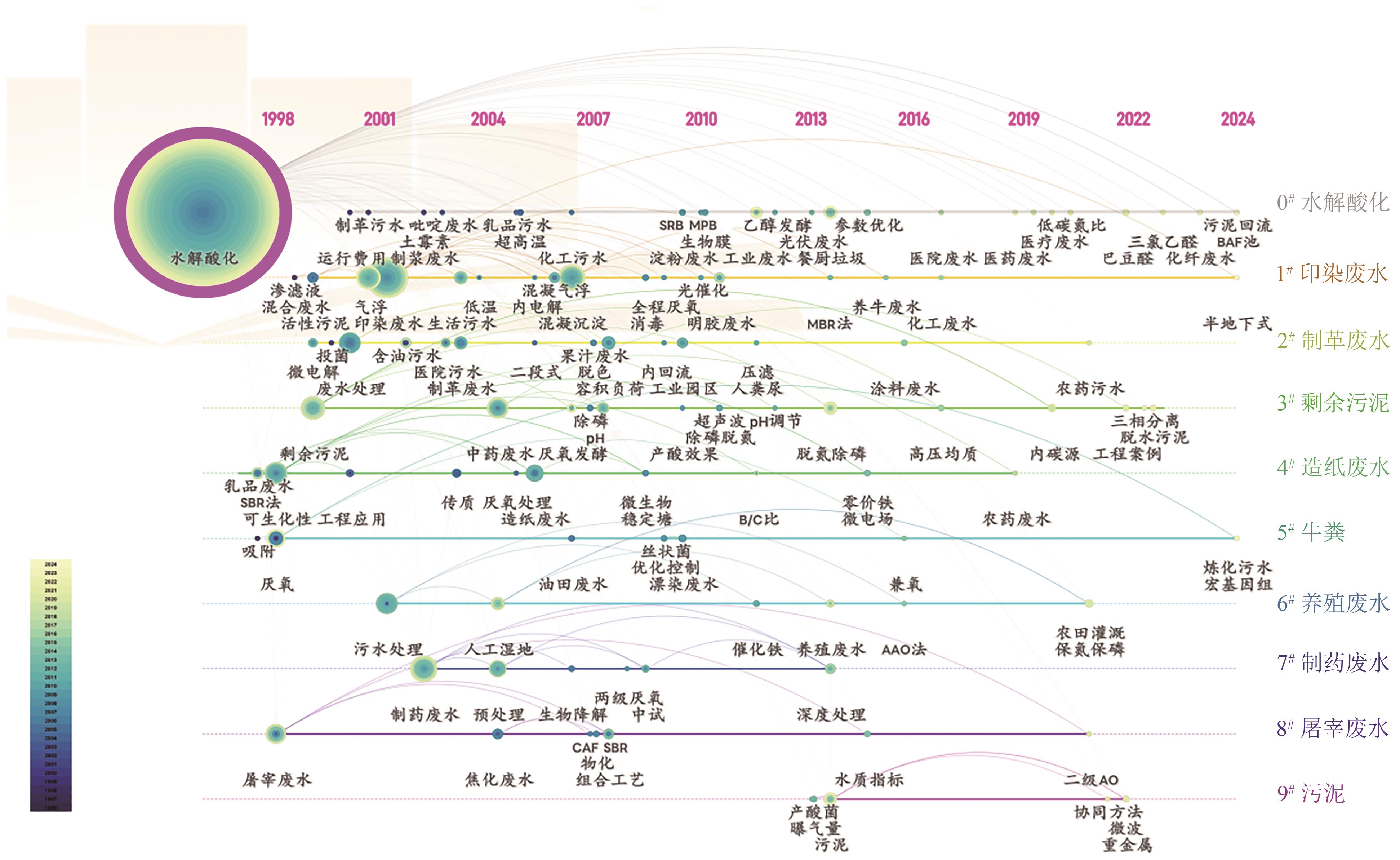
图1 我国水解酸化工艺文献关键词聚类时间线SRB—硫酸盐还原菌;MPB—产甲烷菌;BAF—曝气生物滤池;MBR—生物膜法;SBR—序批式活性污泥法;B/C比—污染物生化需氧量(BOD)和化学需氧量(COD)的比值;AAO—厌氧-缺氧-好氧法;CAF—涡凹气浮法;AO—厌氧-好氧工艺
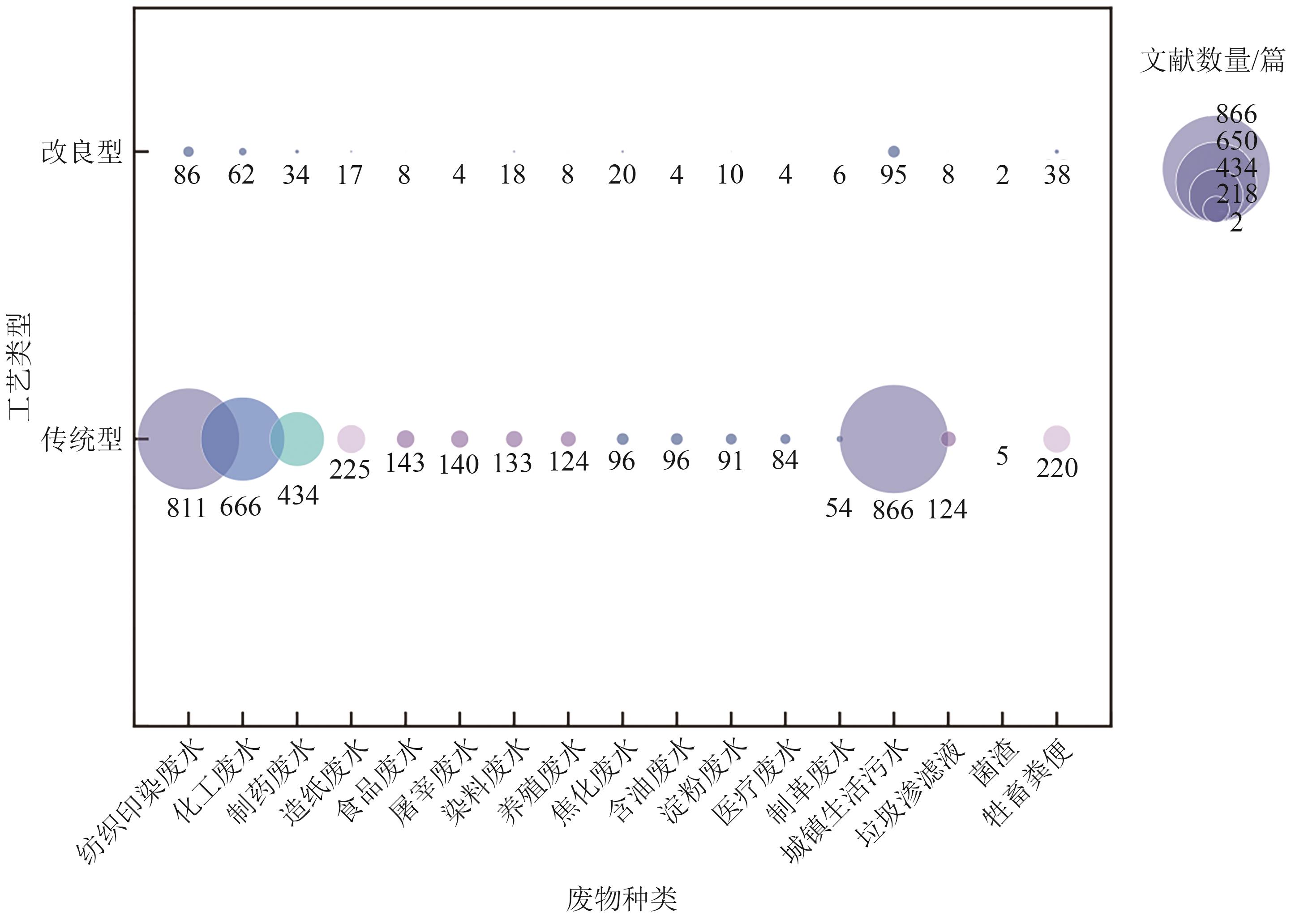
图2 典型工业废水/有机固废水解酸化处理文献统计气泡图
| ECs种类 | 具体污染物 | 废水类型 | 水力停留时间(HRT)/d | 初始浓度/mg·L-1 | 去除率/% | 参考文献 |
|---|---|---|---|---|---|---|
| POPs | 三氯乙烯 | 模拟石化废水 | 3 | 10~200 | 77.83~6.67 | [ |
| 三氯乙醛 | 模拟石化废水 | 3 | 100 | 70 | [ | |
| PAHs | 实际浓缩污泥 | 2 | 7.82 | 37.05 | [ | |
| 抗生素 | 三氯生 | 模拟城镇生活污水 | 10 | 10 | 87 | [ |
| 青霉素G | 模拟城镇生活污水 | 10 | 1.3×10⁻⁴ | 0.7±2.4 | [ | |
| 恩诺沙星 | 模拟城镇生活污水 | 10 | 1.0×10⁻⁴ | 0.8±31.8 | [ | |
| 磺胺甲𫫇唑 | 模拟城镇生活污水 | 10 | 8.0×10⁻⁴ | 0.7±0.5 | [ | |
| 三甲氧苄啶 | 模拟城镇生活污水 | 10 | 6.5×10⁻⁴ | 0.7±0.1 | [ | |
| EDCs | 双酚A | 模拟淀粉废水 | 28 | 0.05~0.5 | 61 | [ |
| 西地那非 | 模拟淀粉废水 | 28 | 0.05~0.5 | 43 | [ | |
| ARGs | aph3Ib、sul2、tetX、aph6Id、tetG、sul1 | 实际剩余污泥 | 3 | 169.8 | 26.1 | [ |
| tetA、tetG、tetX、sul1、ermB、dfrA1、dfrA12、intI1 | 实际脱水污泥 | 3 | 107~109① | 0.1~0.72② | [ | |
| etA、tetG、tetL、tetM、tetO、tetW、tetX、intl1 | 实际剩余污泥 | 5 | 106~108① | 0.16~1.1② | [ |
表1 水解酸化体系中的典型新污染物去除效果
| ECs种类 | 具体污染物 | 废水类型 | 水力停留时间(HRT)/d | 初始浓度/mg·L-1 | 去除率/% | 参考文献 |
|---|---|---|---|---|---|---|
| POPs | 三氯乙烯 | 模拟石化废水 | 3 | 10~200 | 77.83~6.67 | [ |
| 三氯乙醛 | 模拟石化废水 | 3 | 100 | 70 | [ | |
| PAHs | 实际浓缩污泥 | 2 | 7.82 | 37.05 | [ | |
| 抗生素 | 三氯生 | 模拟城镇生活污水 | 10 | 10 | 87 | [ |
| 青霉素G | 模拟城镇生活污水 | 10 | 1.3×10⁻⁴ | 0.7±2.4 | [ | |
| 恩诺沙星 | 模拟城镇生活污水 | 10 | 1.0×10⁻⁴ | 0.8±31.8 | [ | |
| 磺胺甲𫫇唑 | 模拟城镇生活污水 | 10 | 8.0×10⁻⁴ | 0.7±0.5 | [ | |
| 三甲氧苄啶 | 模拟城镇生活污水 | 10 | 6.5×10⁻⁴ | 0.7±0.1 | [ | |
| EDCs | 双酚A | 模拟淀粉废水 | 28 | 0.05~0.5 | 61 | [ |
| 西地那非 | 模拟淀粉废水 | 28 | 0.05~0.5 | 43 | [ | |
| ARGs | aph3Ib、sul2、tetX、aph6Id、tetG、sul1 | 实际剩余污泥 | 3 | 169.8 | 26.1 | [ |
| tetA、tetG、tetX、sul1、ermB、dfrA1、dfrA12、intI1 | 实际脱水污泥 | 3 | 107~109① | 0.1~0.72② | [ | |
| etA、tetG、tetL、tetM、tetO、tetW、tetX、intl1 | 实际剩余污泥 | 5 | 106~108① | 0.16~1.1② | [ |
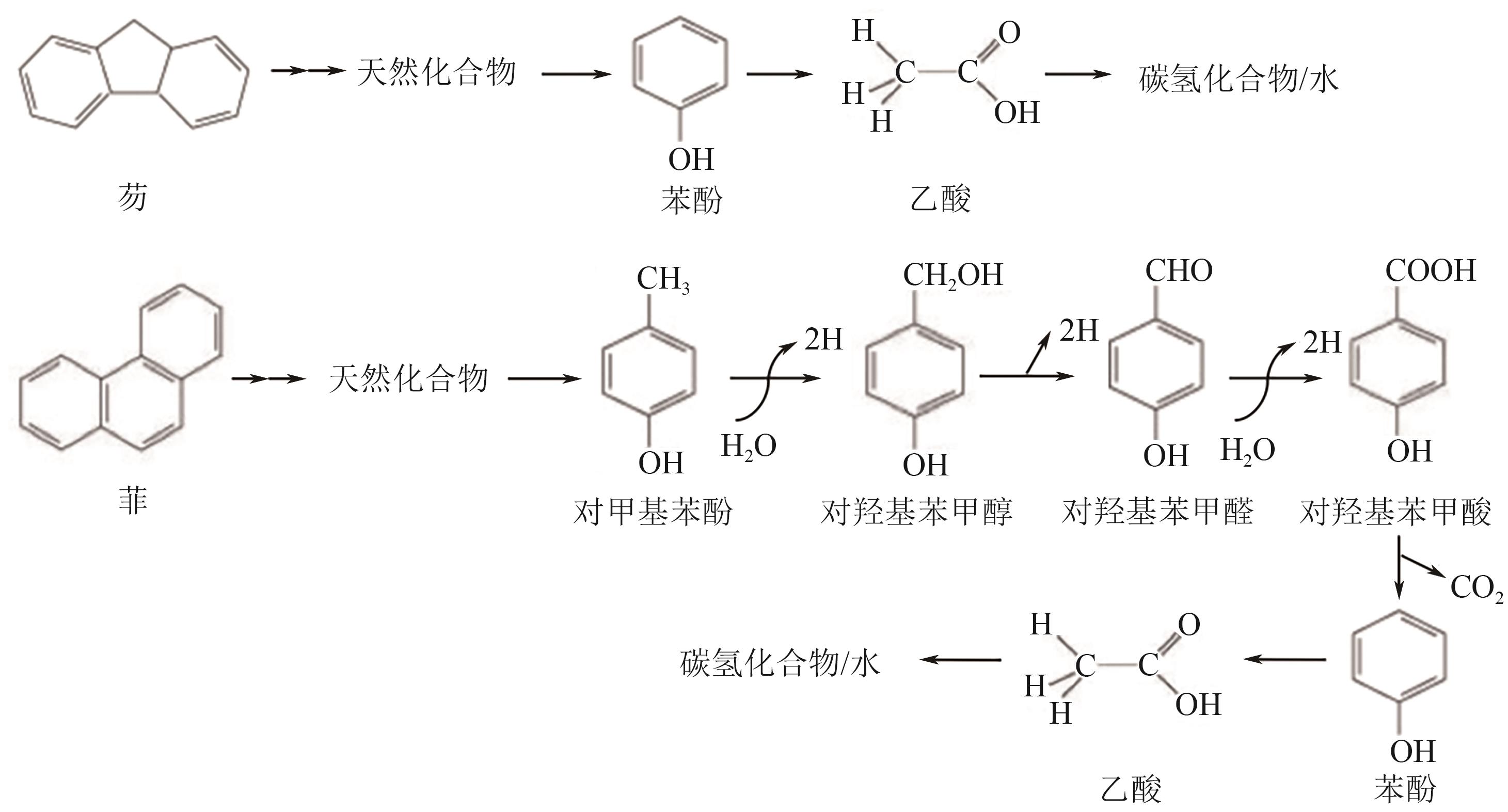
图3 硫酸盐还原菌对芴和菲的拟厌氧生物转化途径
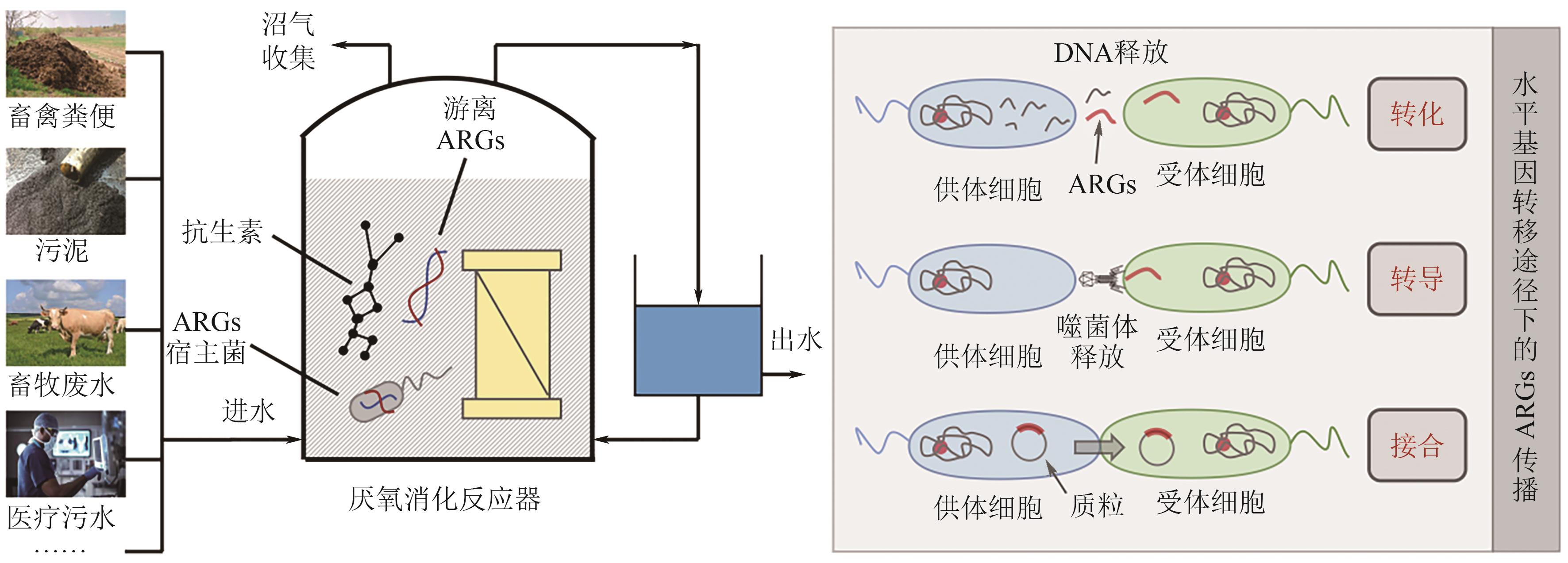
图4 厌氧产酸阶段的拟水平ARGs转移机理
| [1] | RAHMAN Nurhaslina ABD, CHOONG Choe Earn, PICHIAH Saravanan, et al. Recent advances in the TiO2 based photoreactors for removing contaminants of emerging concern in water[J]. Separation and Purification Technology, 2023, 304: 122294. |
| [2] | 孙建林, 龙阳可, 王可昳, 等. 环境中新污染物的来源、行为、归趋与治理[J]. 广东化工, 2023, 50(23): 107-109. |
| SUN Jianlin, LONG Yangke, WANG Keyi, et al. Source, behavior, fate, and governance of emerging pollutants in the environment[J]. Guangdong Chemical Industry, 2023, 50(23): 107-109. | |
| [3] | YADAV Deepak, RANGABHASHIYAM S, VERMA Pramit, et al. Environmental and health impacts of contaminants of emerging concerns: Recent treatment challenges and approaches[J]. Chemosphere, 2021, 272: 129492. |
| [4] | 宋梦琪, 周春江, 马鲁铭. 水解酸化工艺处理印染废水的机理[J]. 环境工程学报, 2015, 9(1): 102-106. |
| SONG Mengqi, ZHOU Chunjiang, MA Luming. Mechanism of printing and dyeing wastewater treatment by hydrolysis and acidification process[J]. Chinese Journal of Environmental Engineering, 2015, 9(1): 102-106. | |
| [5] | 张盛. 铁/碳强化水解酸化去除三氯乙醛的研究[D]. 兰州: 兰州交通大学, 2022. |
| ZHANG Sheng. Removal of trichloroacetaldehyde by iron/carbon enhanced hydrolytic acidification[D]. Lanzhou: Lanzhou Jiatong University, 2022. | |
| [6] | 朱悦. 钛盐及钛基固体酸水解预处理制药废水中泰乐菌素的研究[D]. 北京: 北京林业大学, 2020. |
| ZHU Yue. Study on pretreatment of tylosin in pharmaceutical wastewater by hydrolysis of titanium salt and titanium-based solid acid[D]. Beijing: Beijing Forestry University, 2020. | |
| [7] | AHMAD M, ESKICIOGLU C. Fate of sterols, polycyclic aromatic hydrocarbons, pharmaceuticals, ammonia and solids in single-stage anaerobic and sequential anaerobic/aerobic/anoxic sludge digestion[J]. Waste Management, 2019, 93: 72-82. |
| [8] | 邱玉, 李智饶, 刘浩亮, 等. 利福霉素类抗生素废水的水解酸化处理技术研究[J]. 中国资源综合利用, 2024, 42(11): 39-43, 66. |
| QIU Yu, LI Zhirao, LIU Haoliang, et al. Study on the hydrolysis and acidification treatment technology of rifamycin antibiotic wastewater[J]. China Resources Comprehensive Utilization, 2024, 42(11): 39-43, 66. | |
| [9] | 孙远帅. 半导体生产废水处理的工程实例[J]. 工业用水与废水, 2020, 51(6): 77-79, 83. |
| SUN Yuanshuai. A project example of semiconductor production wastewater treatment[J]. Industrial Water & Wastewater, 2020, 51(6): 77-79, 83. | |
| [10] | 肖卓远, 黄南, 巫寅虎, 等. 集成电路废水的达标排放、资源回收和再生处理[J]. 工业水处理, 2024, 44(4): 1-9. |
| XIAO Zhuoyuan, HUANG Nan, WU Yinhu, et al. The discharge, recovery, and reuse treatments of integrated circuit industry wastewater[J]. Industrial Water Treatment, 2024, 44(4): 1-9. | |
| [11] | 熊建辉. 酸化—好氧工艺处理硅生产废水的应用研究[D]. 哈尔滨: 哈尔滨工业大学, 2011. |
| XIONG Jianhui. Study on the application of acidification-aerobic process in treating silicon production wastewater[D]. Harbin: Harbin Institute of Technology, 2011. | |
| [12] | 李元志, 刘佳. 新能源汽车动力电池生产废水深度处理研究[J]. 中国资源综合利用, 2024, 42(5): 192-194. |
| LI Yuanzhi, LIU Jia. Research on advanced treatment of wastewater from the production of power batteries for new energy vehicles[J]. China Resources Comprehensive Utilization, 2024, 42(5): 192-194. | |
| [13] | GUO Tao, PAN Kuan, CHEN Yunxin, et al. When aerobic granular sludge faces emerging contaminants: A review[J]. Science of the Total Environment, 2024, 907: 167792. |
| [14] | 李学健, 漆丹, 张成, 等. 典型新污染物在我国垃圾填埋渗滤液中的赋存、迁移与去除[J]. 环境化学, 2024, 43(8): 2555-2570. |
| LI Xuejian, QI Dan, ZHANG Cheng, et al. The occurrence, migration, and removal of typical emerging contaminants in landfill leachate in China[J]. Environmental chemistry, 2024, 43(8): 2555-2570. | |
| [15] | 彭薪屹, 李玉花, 杨晓, 等. 制药污水处理厂污泥中抗生素的污染特征及风险评估: 生产负荷的影响[J]. 中国环境科学, 2025, 45(2): 736-747. |
| PENG Xinyi, LI Yuhua, YANG Xiao, et al. Pollution characteristics and risk assessment of antibiotics in sludge from pharmaceutical wastewater treatment plants: The influence of production load[J]. China Environmental Science, 2025, 45(2): 736-747. | |
| [16] | JANG Hyun Min, LEE Jangwoo, SHIN Seung Gu, et al. Comparing the fate of antibiotic resistance genes in two full-scale thermophilic anaerobic digestion plants treating food wastewater[J]. Bioresource Technology, 2020, 312: 123577. |
| [17] | WANG Yali, ZHAO Jianwei, WANG Dongbo, et al. Free nitrous acid promotes hydrogen production from dark fermentation of waste activated sludge[J]. Water Research, 2018, 145: 113-124. |
| [18] | CHEN Hongbo, ZOU Zhiming, TANG Mengge, et al. Polycarbonate microplastics induce oxidative stress in anaerobic digestion of waste activated sludge by leaching bisphenol A[J]. Journal of Hazardous Materials, 2023, 443: 130158. |
| [19] | SHANG Zezhou, WANG Rui, ZHANG Xiyi, et al. Differential effects of petroleum-based and bio-based microplastics on anaerobic digestion: A review[J]. Science of the Total Environment, 2023, 875: 162674. |
| [20] | SHI Yafei, CHAI Jiaqi, XU Tao, et al. Microplastics contamination associated with low-value domestic source organic solid waste: A review[J]. Science of the Total Environment, 2023, 857: 159679. |
| [21] | ALIMOHAMMADI Mahsa, DEMIRER Goksel N. Microplastics in anaerobic digestion: Occurrence, impact, and mitigation strategies[J]. Journal of Environmental Health Science & Engineering, 2024, 22(2): 397-411. |
| [22] | BENN Nicholas, ZITOMER Daniel. Pretreatment and anaerobic co-digestion of selected PHB and PLA bioplastics[J]. Frontiers in Environmental Science, 2018, 5: 93. |
| [23] | PORTERFIELD K K, HOBSON S A, NEHER D A, et al. Microplastics in composts, digestates, and food wastes: A review[J]. Journal of Environmental Quality, 2023, 52(2): 225-240. |
| [24] | MAHON A M, O’CONNELL B, HEALY M G, et al. Microplastics in sewage sludge: Effects of treatment[J]. Environmental Science & Technology, 2017, 51(2): 810-818. |
| [25] | STAPLETON Michael J, Faisal I HAI. Microplastics as an emerging contaminant of concern to our environment: A brief overview of the sources and implications[J]. Bioengineered, 2023, 14(1): 2244754. |
| [26] | DELIGIANNIS Michalis, GKALIPIDOU Evdokia, GATIDOU Georgia, et al. Study on the fate of per- and polyfluoroalkyl substances during thermophilic anaerobic digestion of sewage sludge and the role of granular activated carbon addition[J]. Bioresource Technology, 2024, 406: 131013. |
| [27] | 宋雨佩, 马玉石, 张朝志, 等. 三氯乙烯对厌氧水解酸化菌的抑制作用及去除特性[J]. 环境工程技术学报, 2023, 13(3): 1088-1096. |
| SONG Yupei, MA Yushi, ZHANG Chaozhi, et al. Inhibition and removal characteristics of trichloroethylene on anaerobic hydrolysis acidifying bacteria[J]. Journal of Environmental Engineering Technology, 2023, 13(3): 1088-1096. | |
| [28] | 张树艳. 微波化学协同水解酸化/好氧堆肥降解污泥有机污染物[D]. 西安: 西安工程大学, 2021. |
| ZHANG Shuyan. Degradation of organic pollutants in sludge by microwave chemical hydrolysis acidification/aerobic composting[D]. Xi’an: Xi’an Polytechnic University, 2021. | |
| [29] | GANGADHARAN PUTHIYA Veetil Prajeesh, VIJAYA NADARAJA Anupama, BHASI Arya, et al. Degradation of triclosan under aerobic, anoxic, and anaerobic conditions[J]. Applied Biochemistry and Biotechnology, 2012, 167(6): 1603-1612. |
| [30] | RUAS Graziele, Rebeca LÓPEZ-SERNA, SCARCELLI Priscila Guenka, et al. Influence of the hydraulic retention time on the removal of emerging contaminants in an anoxic-aerobic algal-bacterial photobioreactor coupled with anaerobic digestion[J]. Science of the Total Environment, 2022, 827: 154262. |
| [31] | Jennifer ARCILA-SAENZ, Gina HINCAPIÉ-MEJÍA, LONDOÑO-CAÑAS Yudy Andrea, et al. Role of the hydrolytic-acidogenic phase on the removal of bisphenol A and sildenafil during anaerobic treatment[J]. Environmental Monitoring and Assessment, 2023, 195(12): 1552. |
| [32] | WU Ying, CUI Erping, ZUO Yiru, et al. Fate of antibiotic and metal resistance genes during two-phase anaerobic digestion of residue sludge revealed by metagenomic approach[J]. Environmental Science and Pollution Research International, 2018, 25(14): 13956-13963. |
| [33] | WU Ying, CUI Erping, ZUO Yiru, et al. Influence of two-phase anaerobic digestion on fate of selected antibiotic resistance genes and class Ⅰ integrons in municipal wastewater sludge[J]. Bioresource Technology, 2016, 211: 414-421. |
| [34] | 李哲. 热碱解-水解处理剩余污泥的效果及四环素类抗性基因的变化研究[D]. 广州: 华南理工大学, 2018. |
| LI Zhe. Study on the effect of thermal alkaline hydrolysis-hydrolysis treatment of excess sludge and the change of tetracycline resistance genes[D]. Guangzhou: South China University of Technology, 2018. | |
| [35] | HERON Gorm, LACHANCE John, BAKER Ralph. Removal of PCE DNAPL from tight clays using in situ thermal desorption[J]. Groundwater Monitoring & Remediation, 2013, 33(4): 31-43. |
| [36] | Joanna POLUSZYŃSKA, Elżbieta JAROSZ-KRZEMIŃSKA, Edeltrauda HELIOS-RYBICKA. Studying the effects of two various methods of composting on the degradation levels of polycyclic aromatic hydrocarbons (PAHs) in sewage sludge[J]. Water, Air, & Soil Pollution, 2017, 228(8): 305. |
| [37] | LIU Zhineng, LI Qing, WU Qihang, et al. Removal efficiency and risk assessment of polycyclic aromatic hydrocarbons in a typical municipal wastewater treatment facility in Guangzhou, China[J]. International Journal of Environmental Research and Public Health, 2017, 14(8): 861. |
| [38] | TSAI Jen-Chieh, KUMAR Mathava, LIN Jih-Gaw. Anaerobic biotransformation of fluorene and phenanthrene by sulfate-reducing bacteria and identification of biotransformation pathway[J]. Journal of Hazardous Materials, 2009, 164(2/3): 847-855. |
| [39] | BERGMANN Franz D, SELESI Draženka, MECKENSTOCK Rainer U. Identification of new enzymes potentially involved in anaerobic naphthalene degradation by the sulfate-reducing enrichment culture N47[J]. Archives of Microbiology, 2011, 193(4): 241-250. |
| [40] | AZIZAN Nur Alyaa Zahida, YUZIR Ali, ABDULLAH Norhayati. Pharmaceutical compounds in anaerobic digestion: A review on the removals and effect to the process performance[J]. Journal of Environmental Chemical Engineering, 2021, 9(5): 105926. |
| [41] | KOCH Niharika, ISLAM Nazim F, SONOWAL Songita, et al. Environmental antibiotics and resistance genes as emerging contaminants: Methods of detection and bioremediation[J]. Current Research in Microbial Sciences, 2021, 2: 100027. |
| [42] | MARTINEZ Jose Luis. Environmental pollution by antibiotics and by antibiotic resistance determinants[J]. Environmental Pollution, 2009, 157(11): 2893-2902. |
| [43] | CARNEIRO Rodrigo B, Lorena GONZALEZ-GIL, LONDOÑO Yudy Andrea, et al. Acidogenesis is a key step in the anaerobic biotransformation of organic micropollutants[J]. Journal of Hazardous Materials, 2020, 389: 121888. |
| [44] | Lorena GONZALEZ-GIL, KRAH Daniel, GHATTAS Ann-Kathrin, et al. Biotransformation of organic micropollutants by anaerobic sludge enzymes[J]. Water Research, 2019, 152: 202-214. |
| [45] | ZHOU Haidong, CAO Zhengcao, ZHANG Minquan, et al. Zero-valent iron enhanced in situ advanced anaerobic digestion for the removal of antibiotics and antibiotic resistance genes in sewage sludge[J]. Science of the Total Environment, 2021, 754: 142077. |
| [46] | YANG Shengfu, LIN Chengfang, LIN Angela Yu-Chen, et al. Sorption and biodegradation of sulfonamide antibiotics by activated sludge: Experimental assessment using batch data obtained under aerobic conditions[J]. Water Research, 2011, 45(11): 3389-3397. |
| [47] | GERBERSDORF Sabine U, CIMATORIBUS Carla, CLASS Holger, et al. Anthropogenic trace compounds (ATCs) in aquatic habitats—Research needs on sources, fate, detection and toxicity to ensure timely elimination strategies and risk management[J]. Environment International, 2015, 79: 85-105. |
| [48] | LUO Yunlong, GUO Wenshan, Huu Hao NGO, et al. A review on the occurrence of micropollutants in the aquatic environment and their fate and removal during wastewater treatment[J]. Science of the Total Environment, 2014, 473/474: 619-641. |
| [49] | POLESEL Fabio, ANDERSEN Henrik R, TRAPP Stefan, et al. Removal of antibiotics in biological wastewater treatment systems—A critical assessment using the activated sludge modeling framework for xenobiotics (ASM-X)[J]. Environmental Science & Technology, 2016, 50(19): 10316-10334. |
| [50] | TRAN Ngoc Han, REINHARD Martin, Karina Yew-Hoong GIN. Occurrence and fate of emerging contaminants in municipal wastewater treatment plants from different geographical regions—A review[J]. Water Research, 2018, 133: 182-207. |
| [51] | TRAN Ngoc Han, CHEN Hongjie, REINHARD Martin, et al. Occurrence and removal of multiple classes of antibiotics and antimicrobial agents in biological wastewater treatment processes[J]. Water Research, 2016, 104: 461-472. |
| [52] | LI Bing, ZHANG Tong. Biodegradation and adsorption of antibiotics in the activated sludge process[J]. Environmental Science & Technology, 2010, 44(9): 3468-3473. |
| [53] | LANGBEHN Rayane Kunert, MICHELS Camila, SOARES Hugo Moreira. Antibiotics in wastewater: From its occurrence to the biological removal by environmentally conscious technologies[J]. Environmental Pollution, 2021, 275: 116603. |
| [54] | TIWARI Bhagyashree, SELLAMUTHU Balasubramanian, OUARDA Yassine, et al. Review on fate and mechanism of removal of pharmaceutical pollutants from wastewater using biological approach[J]. Bioresource Technology, 2017, 224: 1-12. |
| [55] | COUSINS I T, STAPLES C A, KLEĈKA G M, et al. A multimedia assessment of the environmental fate of bisphenol A[J]. Human and Ecological Risk Assessment, 2002, 8(5): 1107-1135. |
| [56] | SYAFIUDDIN Achmad, BOOPATHY Raj. Role of anaerobic sludge digestion in handling antibiotic resistant bacteria and antibiotic resistance genes—A review[J]. Bioresource Technology, 2021, 330: 124970. |
| [57] | 叶涛. 甾体激素原料药废水处理工艺优化研究及应用[D]. 南昌: 南昌大学, 2024. |
| YE Tao. Study and application of optimization of steroid hormone raw material drug wastewater treatment process[D]. Nanchang: Nanchang University, 2024. | |
| [58] | LOPEZ Manuel, CORNAGLIA Laura María, GUTIERREZ Laura Beatriz, et al. Electrodialysis as a potential technology for 4-nitrophenol abatement from wastewater[J]. Environmental Science and Pollution Research, 2023, 30(46): 102198-102211. |
| [1] | 罗司玲, 艾建平, 李文魁, 王翼, 程丽红, 万芸, 黄隆, 李喜宝. 高级氧化技术降解典型抗生素的研究进展[J]. 化工进展, 2025, 44(7): 4169-4189. |
| [2] | 张千, 秦树敏, 杨晨曦, 杜泽宇, 唐清平, 杨周洪, 江佳骏, 冯尧, 万娟, 李伟. 群体感应调节对废水生物处理工艺影响的研究进展[J]. 化工进展, 2025, 44(6): 3630-3641. |
| [3] | 周渝, 唐甜, 熊子悠, 韦奇. 基于两级微通道分离工艺的甲醇制烯烃废水深度处理[J]. 化工进展, 2025, 44(1): 100-108. |
| [4] | 姜梁妍, 王庆宏, 李晋, 梁家豪, 尚鹏寅, 宋艳珂, 李琢宇, 陈春茂. 炼化污水中低温水解酸化性能及微生物特性对比[J]. 化工进展, 2024, 43(8): 4654-4663. |
| [5] | 杜永亮, 梁卓彬, 龚耀煦, 毕豪杰, 徐志远, 苑宏英. 气隙式膜蒸馏技术研究现状和应用[J]. 化工进展, 2024, 43(4): 1655-1666. |
| [6] | 常占坤, 张弛, 苏冰琴, 张聪政, 王健, 权晓慧. H2S气态基质对污泥生物沥滤处理效能的影响[J]. 化工进展, 2023, 42(5): 2733-2743. |
| [7] | 李华华, 李逸航, 金北辰, 李隆昕, 成少安. 厌氧氨氧化-生物电化学耦合废水处理系统的研究进展[J]. 化工进展, 2023, 42(5): 2678-2690. |
| [8] | 赵星程, 贾方旭, 蒋伟彧, 陈佳熠, 刘晨雨, 姚宏. 氧化还原介体介导厌氧氨氧化生物脱氮的研究进展[J]. 化工进展, 2023, 42(3): 1606-1617. |
| [9] | 武诗宇, 杜志平, 申婧, 李剑锋, 程芳琴, 赵华章. 生物电芬顿系统在废水处理中的研究进展[J]. 化工进展, 2023, 42(11): 5929-5942. |
| [10] | 应璐瑶, 王荣昌. 菌藻共生系统削减抗生素类污染物的去除途径及胁迫响应[J]. 化工进展, 2023, 42(1): 469-479. |
| [11] | 王超超, 吴翼伶, 陈嘉巧, 蔡天宁, 刘文如, 李祥, 吴鹏. 新型厌氧水解酸化-短程反硝化厌氧氨氧化工艺同步处理生活污水和含硝酸盐模拟废水[J]. 化工进展, 2022, 41(7): 3890-3899. |
| [12] | 张丽珠, 王欢, 李琼, 杨东杰. 木质素衍生吸附材料及其在废水处理中的应用研究进展[J]. 化工进展, 2022, 41(7): 3731-3744. |
| [13] | 李海涛, 汪东. 精对苯二甲酸生产废水处理与CO2协同利用技术的实践与展望[J]. 化工进展, 2022, 41(3): 1132-1135. |
| [14] | 陈诗雨, 许志成, 杨婧, 徐浩, 延卫. 微生物燃料电池在废水处理中的研究进展[J]. 化工进展, 2022, 41(2): 951-963. |
| [15] | 杜明辉, 王勇, 高群丽, 张耀宗, 孙晓明. 臭氧微气泡处理有机废水的效果与机制[J]. 化工进展, 2021, 40(12): 6907-6915. |
| 阅读次数 | ||||||
|
全文 |
|
|||||
|
摘要 |
|
|||||