化工进展 ›› 2025, Vol. 44 ›› Issue (12): 7190-7204.DOI: 10.16085/j.issn.1000-6613.2024-1817
• 资源与环境化工 • 上一篇
机动车尾气碳捕集技术研究进展
朱蓉1( ), 李双俊2, 黄耀炜1, 李万洋3, 李淳风1, 兰文超1, 逄钰家1, 邓帅1()
- 1.天津大学先进内燃动力全国重点实验室,天津 300350
2.高丽大学,韩国 首尔 136-701
3.潍柴动力股份有限公司,山东 潍坊 261000
-
收稿日期:2024-11-07修回日期:2025-03-13出版日期:2025-12-25发布日期:2026-01-06 -
通讯作者:邓帅 -
作者简介:朱蓉(2000—),女,博士研究生,研究方向为直接空气碳捕集技术。E-mail:zhur0924@tju.edu.cn。 -
基金资助:国家自然科学基金(52476216);国家自然科学基金青年基金(72104257);天津市自然科学基金重点项目(22JCZDJC00540)
Progress on carbon capture technology for vehicle exhausts
ZHU Rong1(), LI Shuangjun2, HUANG Yaowei1, LI Wanyang3, LI Chunfeng1, LAN Wenchao1, PENG Yujia1, DENG Shuai1()
- 1.State Key Laboratory of Engines, Tianjin University, Tianjin 300350, China
2.Korea University, Seoul 136-701, South Korea
3.Weichai Power Co. , Ltd. , Weifang 261000, Shandong, China
-
Received:2024-11-07Revised:2025-03-13Online:2025-12-25Published:2026-01-06 -
Contact:DENG Shuai

摘要:
车载碳捕集和存储(VCCOR)系统的应用是实现以内燃机为主要动力源的道路交通运输部门净零排放目标的新策略。本文以减少车辆尾气中的碳排放为目标,针对VCCOR系统开展综述。首先围绕经典碳捕集技术的原理和特点,讨论其在车载应用中的适用性和发展情况;其次,针对VCCOR系统的整体配置特点,探讨其规模化应用发展所可能面临的关键技术难题。通过VCCOR系统的应用,高效、低能耗地实现车辆尾气中CO2的分离和存储是一条可行的碳减排技术路线。然而,该技术目前仍处于起步阶段,在技术、成本、安全和政策等多方面仍需开展深入研究。
中图分类号:
引用本文
朱蓉, 李双俊, 黄耀炜, 李万洋, 李淳风, 兰文超, 逄钰家, 邓帅. 机动车尾气碳捕集技术研究进展[J]. 化工进展, 2025, 44(12): 7190-7204.
ZHU Rong, LI Shuangjun, HUANG Yaowei, LI Wanyang, LI Chunfeng, LAN Wenchao, PENG Yujia, DENG Shuai. Progress on carbon capture technology for vehicle exhausts[J]. Chemical Industry and Engineering Progress, 2025, 44(12): 7190-7204.
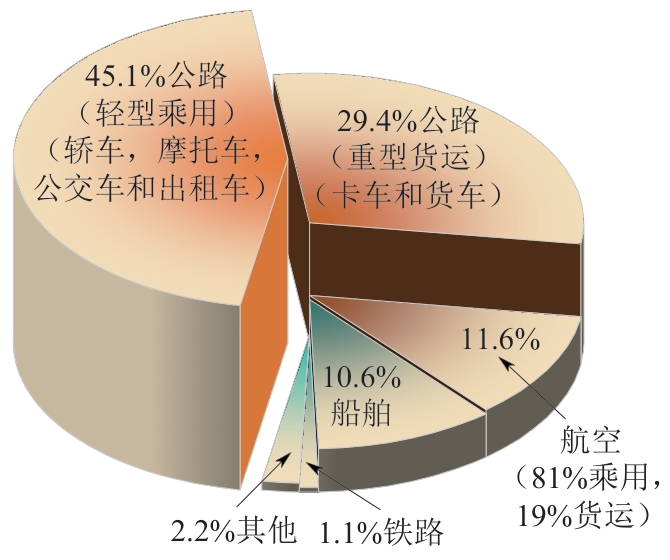
图1 交通运输行业各子领域碳排放占比[2]
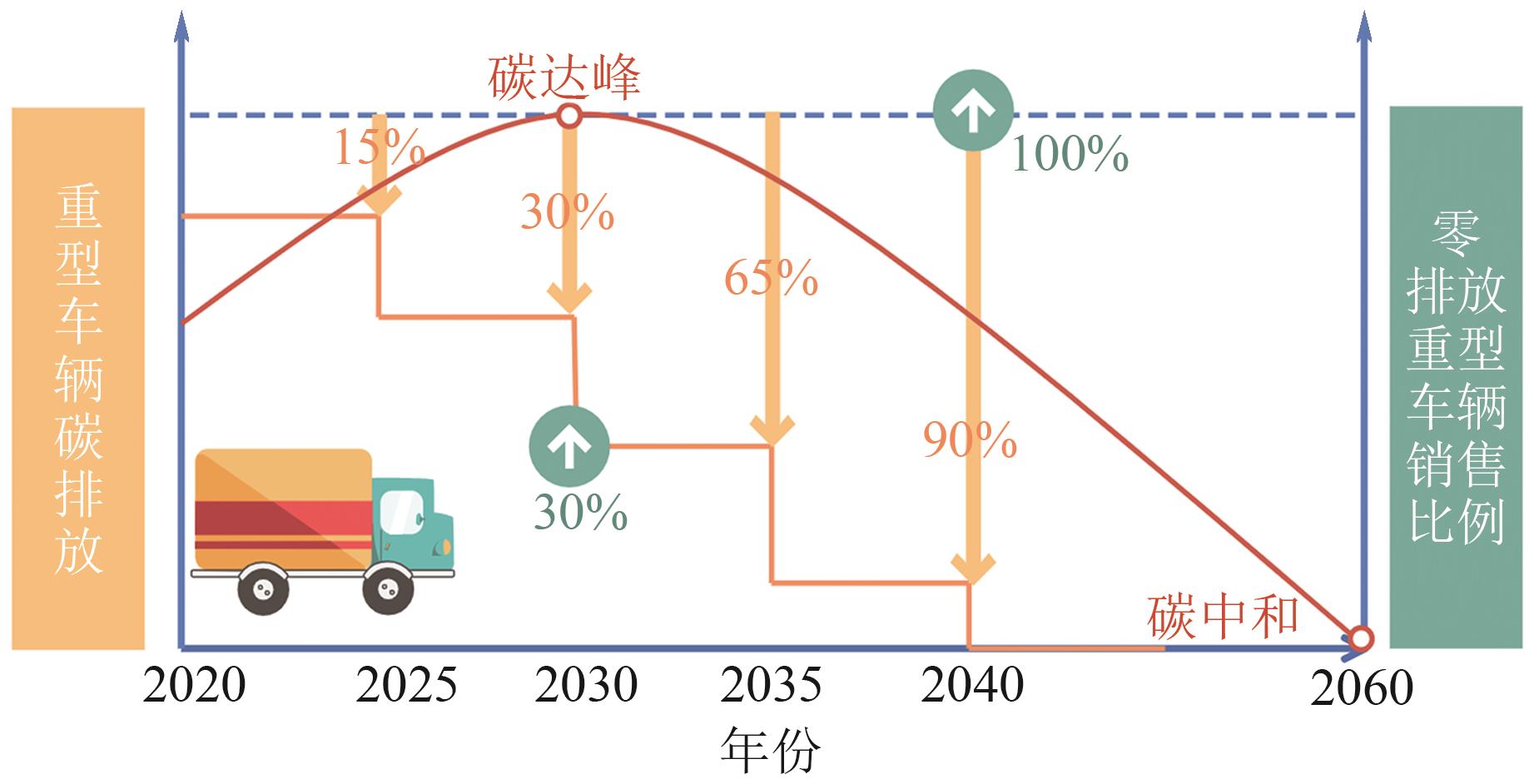
图2 欧盟、美国和中国制定的重型车辆碳排放政策[6-7]
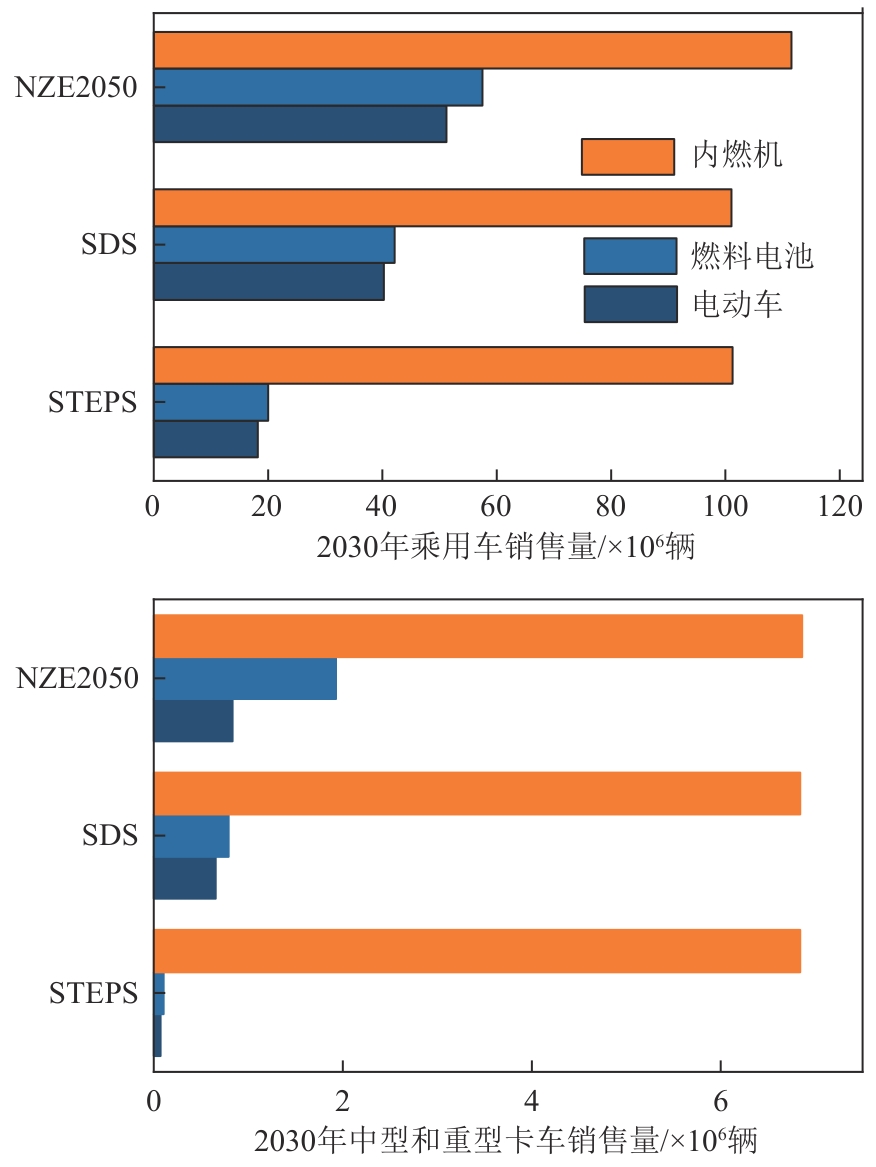
图3 既定政策情景(STEPS)、可持续发展情景(SDS)和2050年净零排放情景(NZE2050)下EV、FCV和ICEV的年销量[8]
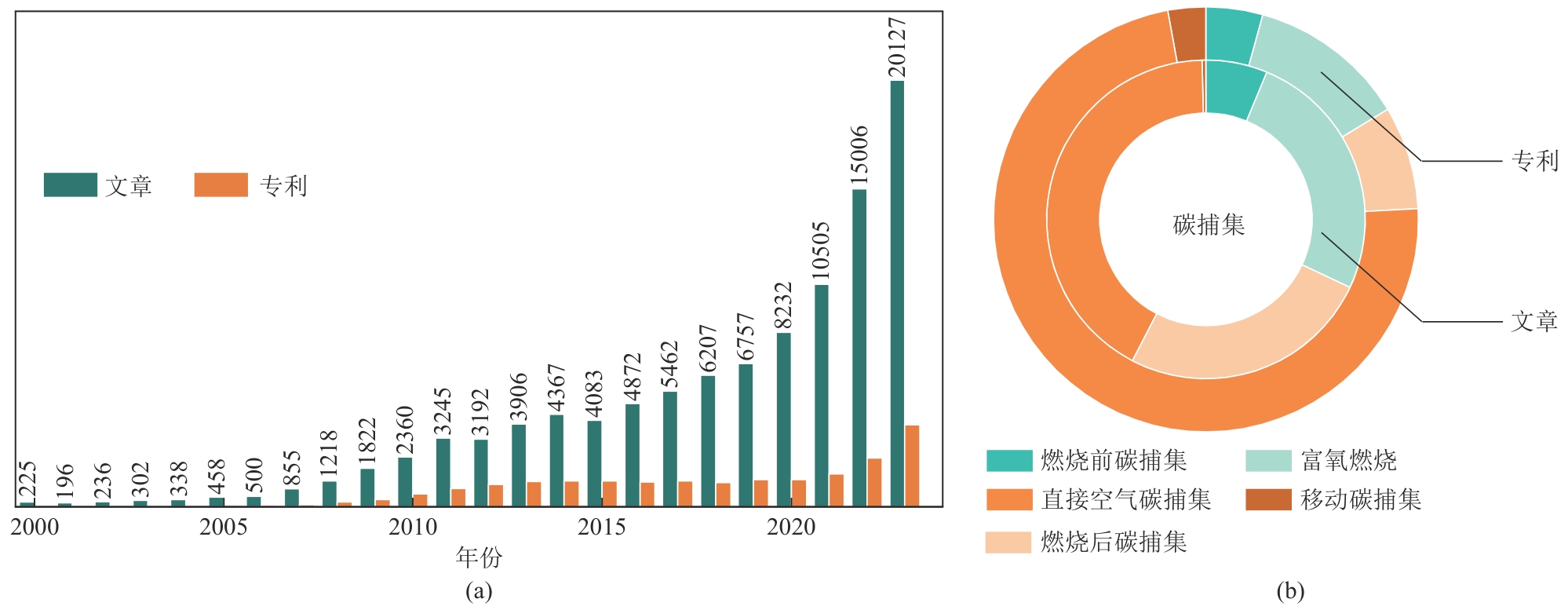
图4 历年碳捕集技术的研究论文、专利数量以及不同碳捕集技术的占比(Scopus数据库检索,以“carbon capture”为关键词)
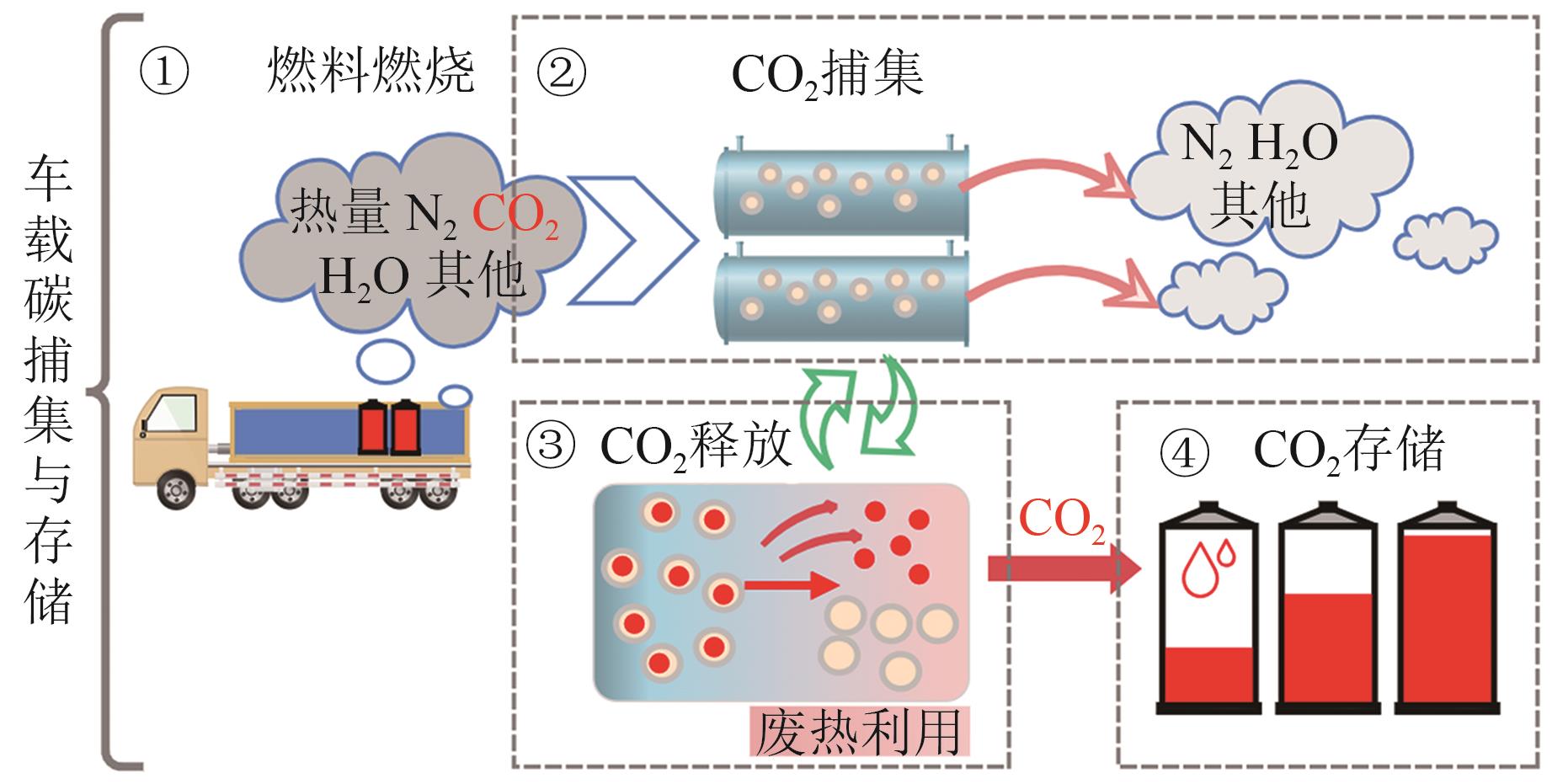
图5 车载碳捕集和存储系统[14]
| 内燃机参数 | 尾气特征 | VCCOR技术 | 文献 | |||||||||
|---|---|---|---|---|---|---|---|---|---|---|---|---|
| 型号 | 燃料 | 转速/r·min-1 | 负荷 | 成分 | 温度/℃ | 流速 | 压力/MPa | CO2体积分数/% | 捕集方式 | CO2捕获率 | 能耗 | |
| M936G | 天然气 | 1000 | 75% | CO2, H2O, N2 | 560 | 0.09kg/s | 0.109 | 15.40 | 固相吸附(活性炭) | 70.00% | 631kJ/kg | [ |
| Ford EcoSport (Euro-Ⅴ) | 汽油 | 700 | — | CO2, CO, NO x, HC | 200 | 5800L/h | 0.101 | 14.10 | 固相吸附(Al2O3) | 7.35% | — | [ |
| Volkswagen jetta TDI | 柴油 | 800 | - | CO2, CO, HC, O2 | 200 | 195kg/h | 0.101 | 2.56 | 固相吸附(Al2O3) | 14.40% | [ | |
| — | 柴油 | 800 | — | CO2, CO, NO x, HC, O2 | 200 | 195kg/h | 0.101 | 4.45 | 固相吸附(ZSM-5沸石) | 43.00% | — | [ |
| Kirloskar TAF AV1 | 柴油 | — | — | CO2, CO, HC, NO x, | 200 | — | — | — | 固相吸附(沸石13X) | 45.00% | — | [ |
| Volvo D13 | 柴油 | 1200 | 25600kg | CO2, N2, H2O | 110 | 100g/s | 3 | 15.00 | 固相吸附(KAUST-7) | 53.00% | — | [ |
| — | — | — | — | CO2, N2 | 95 | 157L/min | — | — | 溶剂吸收(50% NaOH和50%Ca(OH)2) | 100%~20% (0~370min) | — | [ |
| Turbocharged DI diesel engine | 柴油 | 1500 | 1.13kg | CO2, CO, NO x, HC, O2 | 76 | — | — | 5.98 | 溶剂吸收(乙醇胺) | 90.95% | 再生能耗2.2kW·h | [ |
| M936G | 天然气 | 1900 | 25% | CO2 | — | 754.7kg/h | 0.109 | — | 溶剂吸收(质量分数30%乙醇胺) | 66.00% | — | [ |
| — | 柴油 | — | 3500kg | CO2, N2, H2O | 250 | 13.3kmol/h | 0.303 | 10.00 | 膜分离(MFI-氧化铝中空纤维膜) | 75.00% | — | [ |
表1 几类典型车载碳捕集和存储技术的研究结果
| 内燃机参数 | 尾气特征 | VCCOR技术 | 文献 | |||||||||
|---|---|---|---|---|---|---|---|---|---|---|---|---|
| 型号 | 燃料 | 转速/r·min-1 | 负荷 | 成分 | 温度/℃ | 流速 | 压力/MPa | CO2体积分数/% | 捕集方式 | CO2捕获率 | 能耗 | |
| M936G | 天然气 | 1000 | 75% | CO2, H2O, N2 | 560 | 0.09kg/s | 0.109 | 15.40 | 固相吸附(活性炭) | 70.00% | 631kJ/kg | [ |
| Ford EcoSport (Euro-Ⅴ) | 汽油 | 700 | — | CO2, CO, NO x, HC | 200 | 5800L/h | 0.101 | 14.10 | 固相吸附(Al2O3) | 7.35% | — | [ |
| Volkswagen jetta TDI | 柴油 | 800 | - | CO2, CO, HC, O2 | 200 | 195kg/h | 0.101 | 2.56 | 固相吸附(Al2O3) | 14.40% | [ | |
| — | 柴油 | 800 | — | CO2, CO, NO x, HC, O2 | 200 | 195kg/h | 0.101 | 4.45 | 固相吸附(ZSM-5沸石) | 43.00% | — | [ |
| Kirloskar TAF AV1 | 柴油 | — | — | CO2, CO, HC, NO x, | 200 | — | — | — | 固相吸附(沸石13X) | 45.00% | — | [ |
| Volvo D13 | 柴油 | 1200 | 25600kg | CO2, N2, H2O | 110 | 100g/s | 3 | 15.00 | 固相吸附(KAUST-7) | 53.00% | — | [ |
| — | — | — | — | CO2, N2 | 95 | 157L/min | — | — | 溶剂吸收(50% NaOH和50%Ca(OH)2) | 100%~20% (0~370min) | — | [ |
| Turbocharged DI diesel engine | 柴油 | 1500 | 1.13kg | CO2, CO, NO x, HC, O2 | 76 | — | — | 5.98 | 溶剂吸收(乙醇胺) | 90.95% | 再生能耗2.2kW·h | [ |
| M936G | 天然气 | 1900 | 25% | CO2 | — | 754.7kg/h | 0.109 | — | 溶剂吸收(质量分数30%乙醇胺) | 66.00% | — | [ |
| — | 柴油 | — | 3500kg | CO2, N2, H2O | 250 | 13.3kmol/h | 0.303 | 10.00 | 膜分离(MFI-氧化铝中空纤维膜) | 75.00% | — | [ |
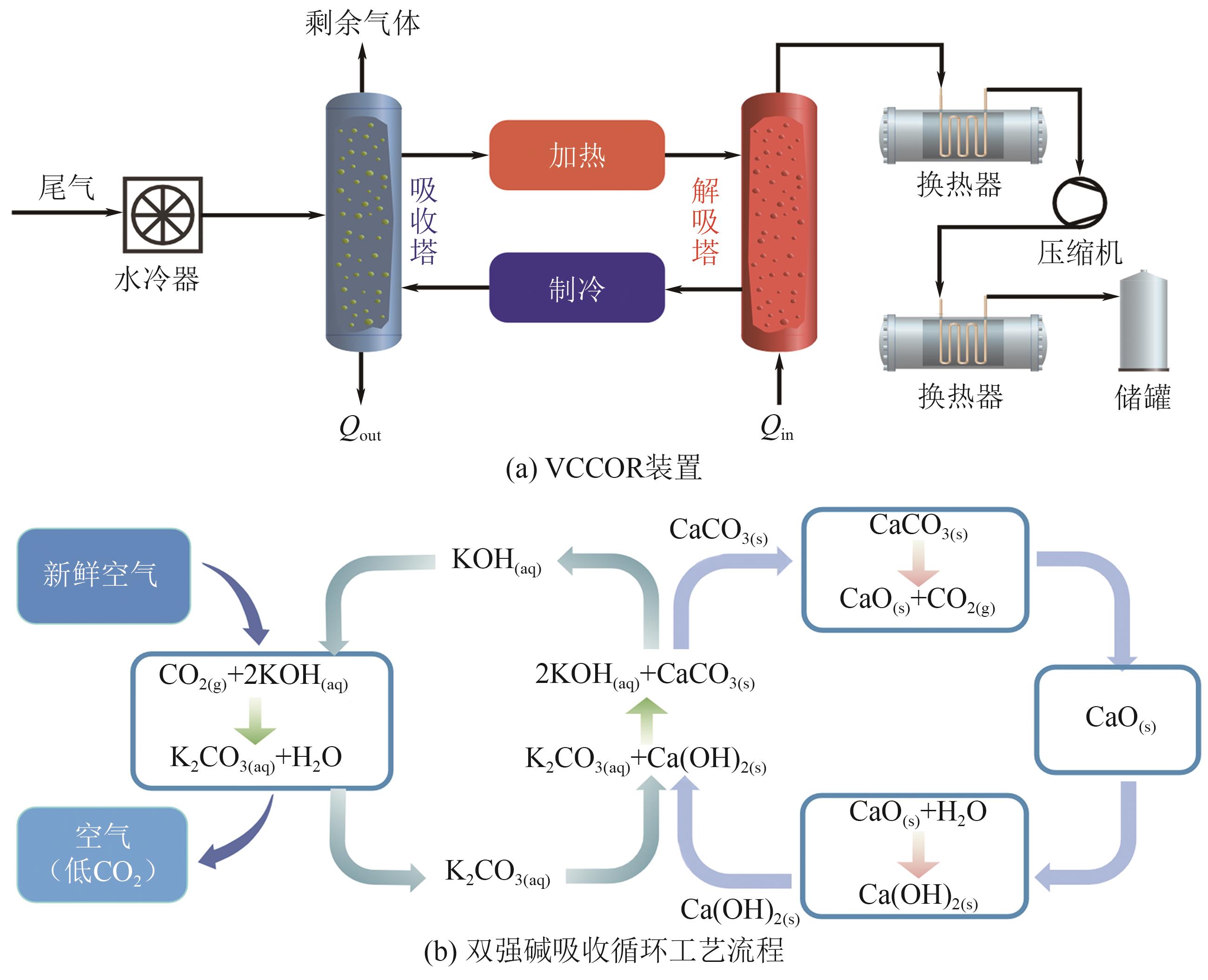
图6 VCCOR装置的设计[28]及双强碱吸收循环工艺流程[35]
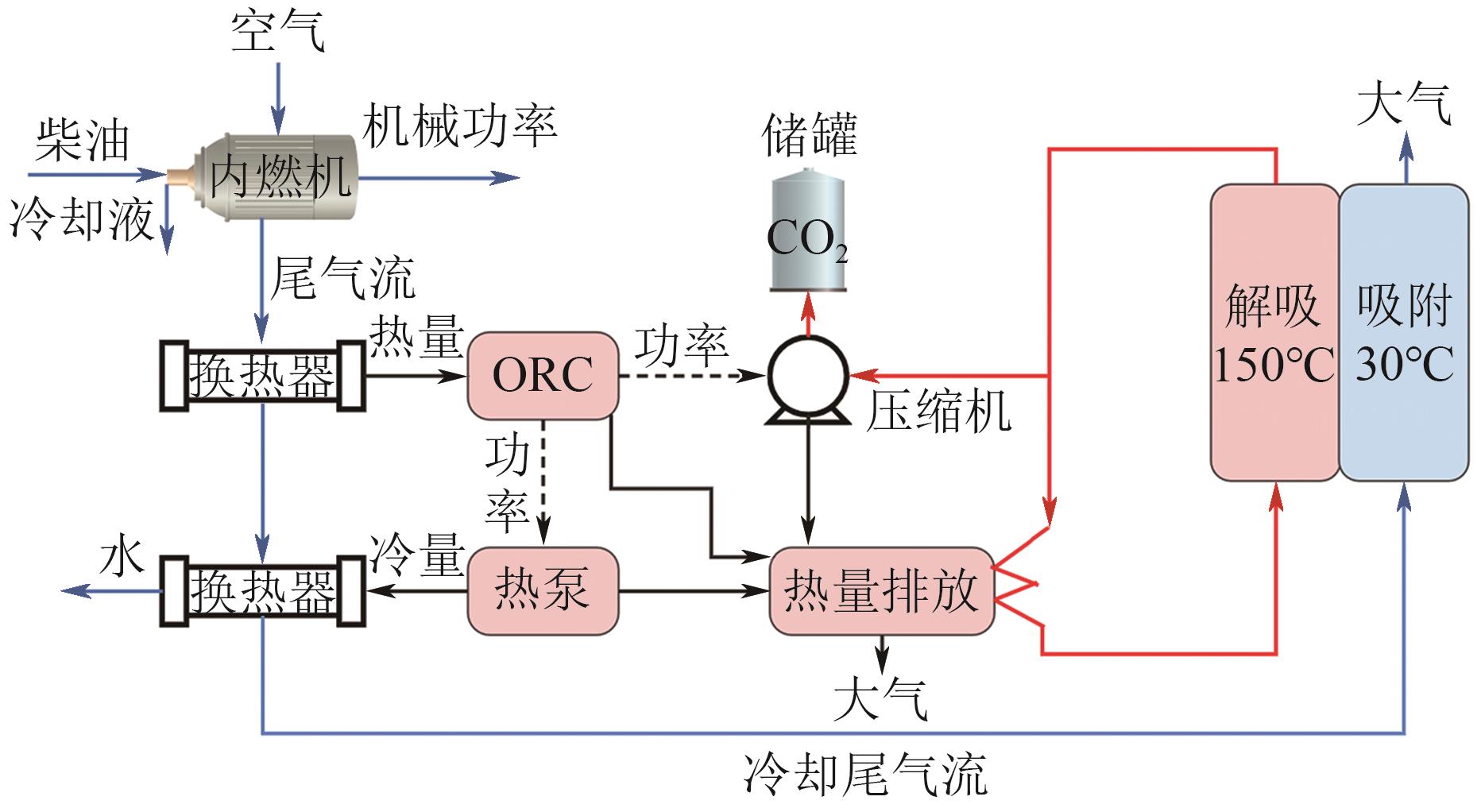
图7 集成朗肯循环和热泵的VCCOR系统设计[37]
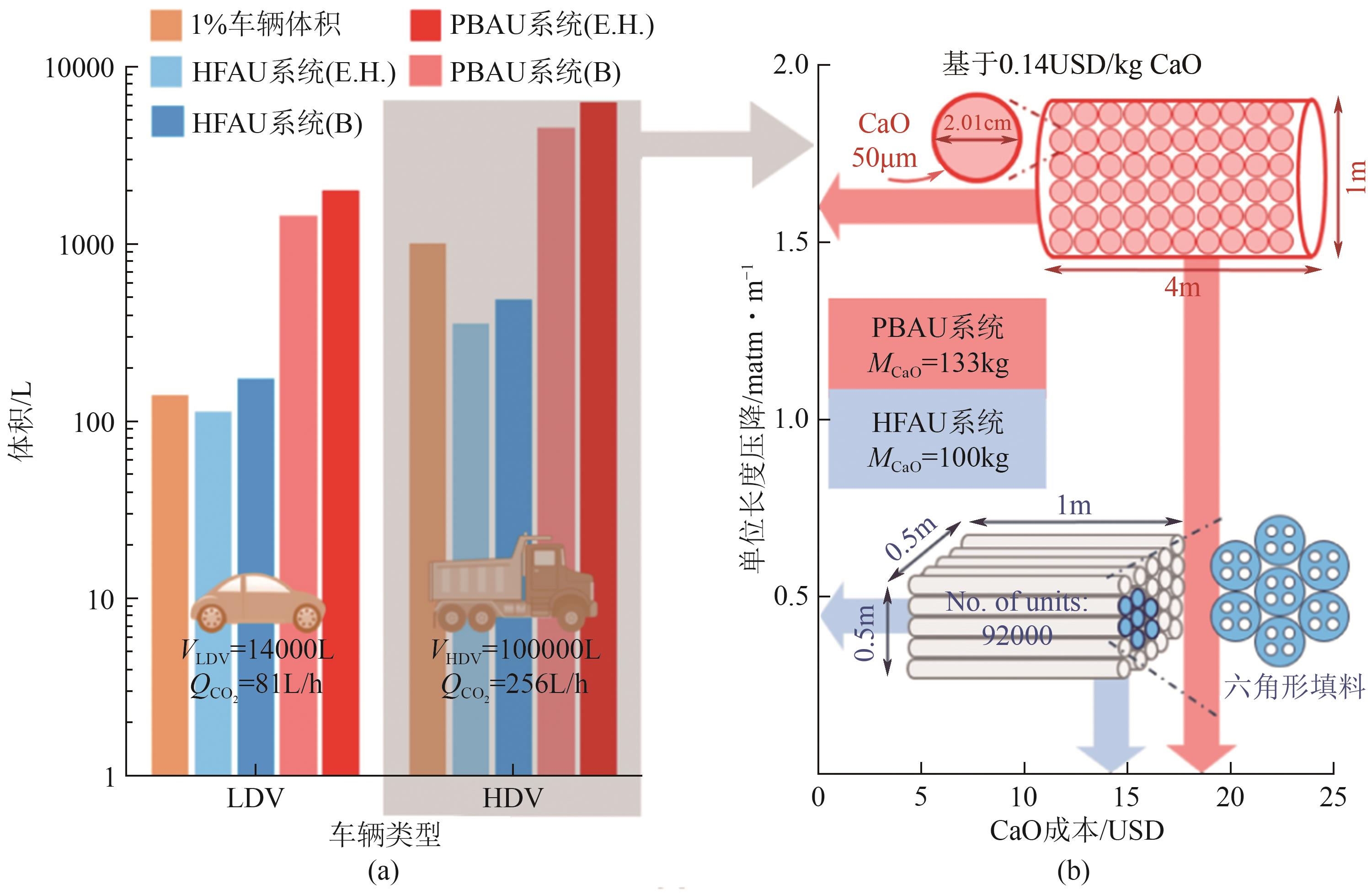
图8 基于HFAU和PBAU的轻型车辆(LDV)和重型车辆(HDV)的VCCOR系统体积(a);HDV的VCCOR系统的单位长度压降对应的CaO成本(b)[39]
| VCCOR技术与评价指标 | 技术优势 | 技术制约 | 技术成熟度 | 紧凑性 | 捕集效率 | 能源消耗 |
|---|---|---|---|---|---|---|
| 溶剂吸收 | 高效吸收,技术成熟 | 溶剂蒸发损失大,再生能耗高,设备腐蚀 | 成熟 | 尺寸较大吸收塔、解吸塔及换热器的安装 | 高(90%+) | 高 |
| 固相吸附 | 适用低浓度及空间受限碳源 | 受限于吸附剂成本、吸附容量及稳定性 | 较成熟 | 设备较小,适合模块化部署 | 较高(80%~90%) | 低至中等 |
| 膜分离 | 能耗较低,操作简便 | 易受污染,膜材料稳定性差,成本较高 | 较新 | 占地面积小,紧凑型最佳 | 中等(70%~85%) | 中等 |
| 低温分离 | 高捕集效率 | 适用高浓度碳源,高制冷能耗 | 较成熟 | 压缩、制冷装置占地面积大 | 高(95%+) | 非常高 |
| 微藻固碳 | 可持续,低能耗,高附加值 | 能量利用效率低,依赖阳光 | 不成熟 | 需较大面积的养殖空间 | 中等(70%~85%) | 低 |
表2 不同车载碳捕集与存储技术对比
| VCCOR技术与评价指标 | 技术优势 | 技术制约 | 技术成熟度 | 紧凑性 | 捕集效率 | 能源消耗 |
|---|---|---|---|---|---|---|
| 溶剂吸收 | 高效吸收,技术成熟 | 溶剂蒸发损失大,再生能耗高,设备腐蚀 | 成熟 | 尺寸较大吸收塔、解吸塔及换热器的安装 | 高(90%+) | 高 |
| 固相吸附 | 适用低浓度及空间受限碳源 | 受限于吸附剂成本、吸附容量及稳定性 | 较成熟 | 设备较小,适合模块化部署 | 较高(80%~90%) | 低至中等 |
| 膜分离 | 能耗较低,操作简便 | 易受污染,膜材料稳定性差,成本较高 | 较新 | 占地面积小,紧凑型最佳 | 中等(70%~85%) | 中等 |
| 低温分离 | 高捕集效率 | 适用高浓度碳源,高制冷能耗 | 较成熟 | 压缩、制冷装置占地面积大 | 高(95%+) | 非常高 |
| 微藻固碳 | 可持续,低能耗,高附加值 | 能量利用效率低,依赖阳光 | 不成熟 | 需较大面积的养殖空间 | 中等(70%~85%) | 低 |
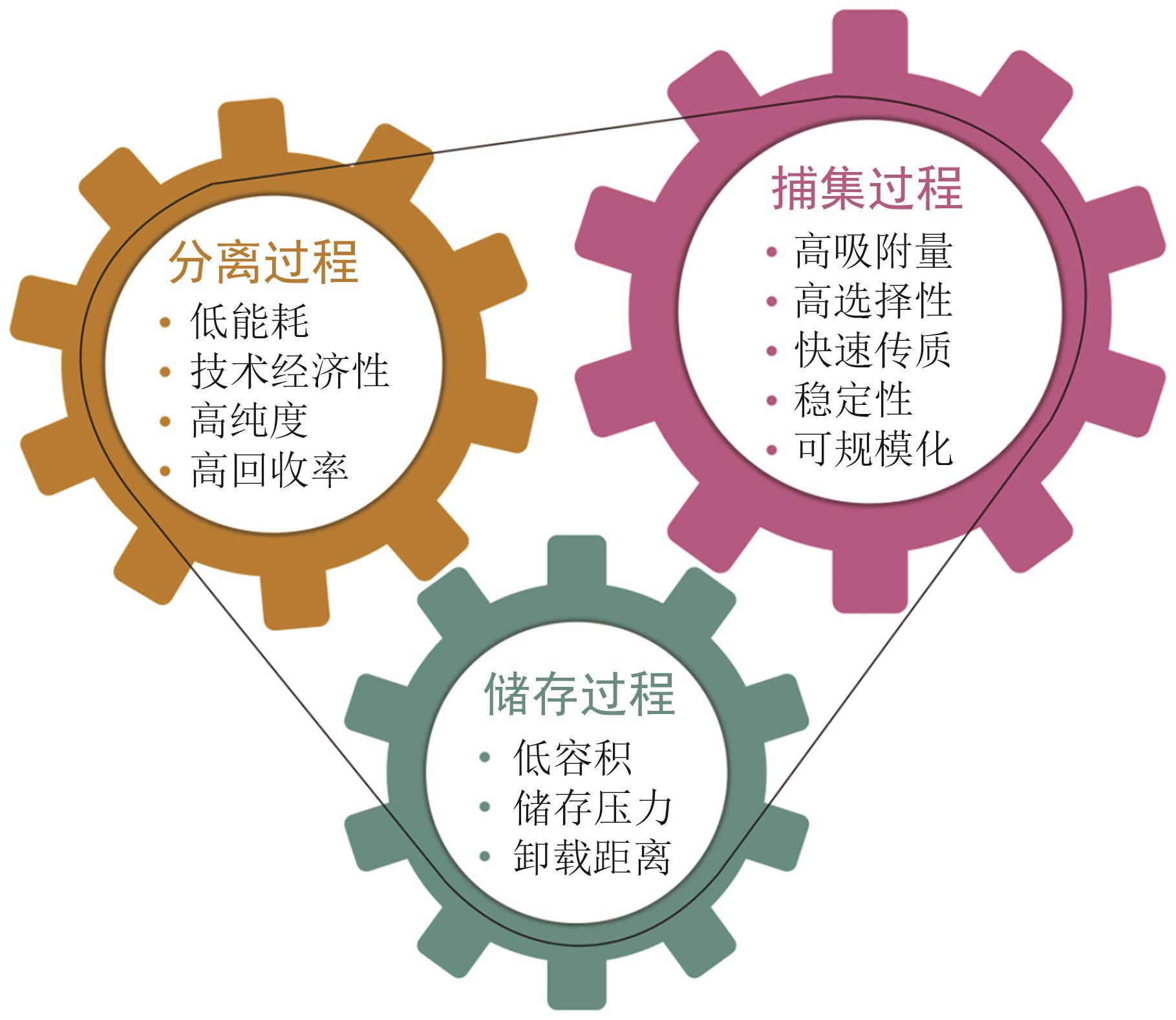
图9 VCCOR系统配置的三个主要环节
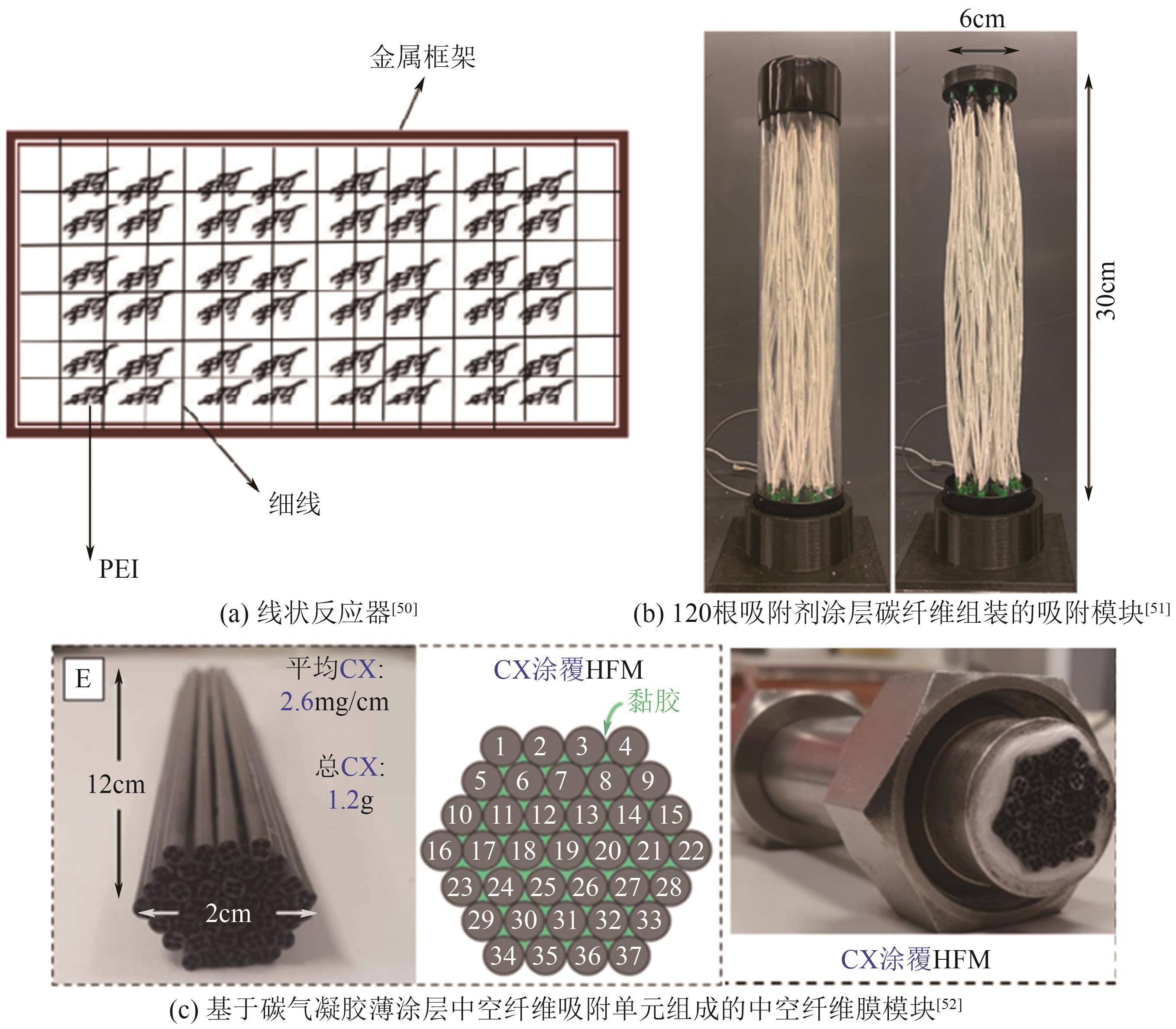
图10 反应器工艺设计与材料特性的联系
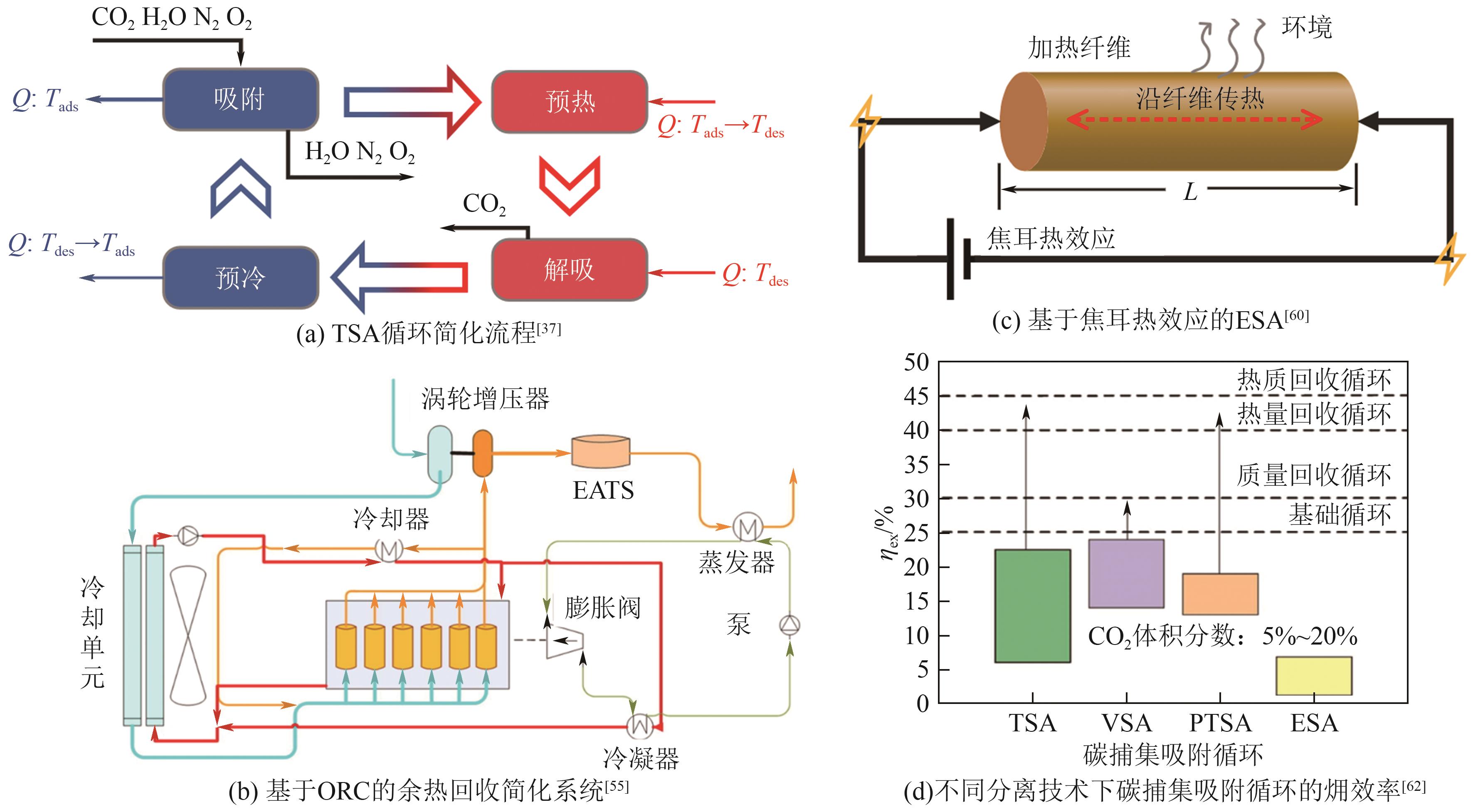
图11 低能耗的分离技术
| [1] | Seungchul WOO, JEONG Yusin, LEE Kihyung. Feasibility study of exhaust energy recovery system for mobile carbon capture operations in commercial engines through 1D simulation[J]. Energies, 2023, 16(24): 8025. |
| [2] | RITCHIE Hannah. Cars, planes, trains: where do CO2 emissions from transport come from?[R/OL]. (2020-10-06) [2024-11-07]. . |
| [3] | UNION European. Regulation (EU) 2019/631 of the European Parliament and of the Council of 17 April 2019 settingCO2 emission performance standards for new passenger cars and for new light commercial vehicles, and repealing Regulations (EC) No 443/2009 and (EU) No 510/2011 (recast) (Text with EEA relevance)Text with EEA relevance[EB/OL]. (2019-04-25) [2024-11-07]. . |
| [4] | LARSON Eric. Net-zero America: potential pathways, infrastructure, and impacts, interim report[R/OL]. (2021-10-29) [2024-11-07]. . |
| [5] | Alexander GARCÍA‐MARIACA, Eva LLERA‐SASTRESA. Energy and economic analysis feasibility of CO2 capture on a natural gas internal combustion engine[J]. Greenhouse Gases: Science and Technology, 2022, 13(2): 144-159. |
| [6] | 国际清洁交通委员会. 欧盟重型车CO2标准修订[EB/OL]. (2024-06-26) [2024-11-07]. . |
| International Council on Clean Transportation. Revision of CO2 standards for heavy-duty vehicles in the European Union[EB/OL]. (2024-06-26) [2024-11-07]. . | |
| [7] | 国际清洁交通委员会. 迈向零排放重卡之路: 美国重型车温室气体排放标准新规及其影响[EB/OL]. (2024-04-26) [2024-11-07]. . |
| International Council on Clean Transportation (ICCT). Toward the path of zero-emission heavy-duty trucks: New regulations on greenhouse gas emission standards for heavy-duty vehicles in the United States and their impacts[EB/OL]. (2024-04-26) [2024-11-07]. . | |
| [8] | International Energy Agency. Energy Technology Outlook 2020[R/OL]. (2020-10) [2024-11-07]. . |
| [9] | MAAS Heiko, SCHAMEL Andreas, WEBER Carsten, et al. Review of combustion engine efficiency improvements and the role of e-fuels[C]// Internationaler Motorenkongress 2016. Wiesbaden: Springer Fachmedien Wiesbaden, 2016: 463-483. |
| [10] | GÜR Turgut M. Carbon dioxide emissions, capture, storage and utilization: Review of materials, processes and technologies[J]. Progress in Energy and Combustion Science, 2022, 89: 100965. |
| [11] | HARRISON Daniel. Automotive powertrain forecast 2020—2030 navigating regional and redgulatory divergence on the road to electrification[EB/OL]. (2019-10-25) [2024-11-07]. |
| [12] | 清华大学互联网产业研究院. 零碳交通白皮书[R/OL]. (2022-12-27) [2024-11-07]. . |
| Institute of Internet Industry, Tsinghua University. White paper on zero-carbon transportation[R/OL]. (2022-12-27) [2024-11-07]. . | |
| [13] | SOTOMAYOR Francisco. Future of carbon capture: materials and strategies[D]. Ann Arbor, MI, USA: University of Michigan, 2016. |
| [14] | KIM Taenam, KIM Kangseok, LEE Giwook, et al. Guidelines for the design of solid CO2 adsorbents for mobile carbon capture in heavy-duty vehicles: A review[J]. Korean Journal of Chemical Engineering, 2024, 41(1): 25-42. |
| [15] | QUADRELLI Elsje Alessandra, CENTI Gabriele, DUPLAN Jean‐Luc, et al. Carbon dioxide recycling: Emerging large‐scale technologies with industrial potential[J]. ChemSusChem, 2011, 4(9): 1194-1215. |
| [16] | MITTAL Shivika, HANAOKA Tatsuya, SHUKLA Priyadarshi R, et al. Air pollution co-benefits of low carbon policies in road transport: A sub-national assessment for India[J]. Environmental Research Letters, 2015, 10(8): 085006. |
| [17] | Andrzej ZIÓŁKOWSKI, Paweł FUĆ, LIJEWSKI Piotr, et al. Analysis of exhaust emissions from heavy-duty vehicles on different applications[J]. Energies, 2022, 15(21): 7886. |
| [18] | SKOBIEJ Kinga, PIELECHA Jacek. Analysis of the exhaust emissions of hybrid vehicles for the current and future RDE driving cycle[J]. Energies, 2022, 15(22): 8691. |
| [19] | Branislav ŠARKAN, Marek JAŚKIEWICZ, KUBIAK Przemysław, et al. Exhaust emissions measurement of a vehicle with retrofitted LPG system[J]. Energies, 2022, 15(3): 1184. |
| [20] | YANG Dong, WEI Shiming, MA Yinjie, et al. Influence of critical parameters on combustion and emission characteristics of methanol/diesel dual fuel compression combustion engine[J]. Fuel, 2024, 368: 131647. |
| [21] | Alexander GARCÍA-MARIACA, Eva LLERA-SASTRESA, MORENO Francisco. CO2 capture feasibility by temperature swing adsorption in heavy-duty engines from an energy perspective[J]. Energy, 2024, 292: 130511. |
| [22] | RAJDURAI Mylaudy S, RAO A Haresh Srinivasa, KAMALAKKANNAN K CO 2 Capture using activated alumina in gasoline passenger vehicles [J]. International Journal of Engineering Research and Applications, 2016, 6(4): 73-77 |
| [23] | MAYAKRISHNAN Jaikumar. Reduction of carbon dioxide emissions from diesel passenger vehicle exhaust tail pipe by capturing method using activated alumina with analyzed reactor chamber[J]. Journal of Mechanical and Civil Engineering, 2016, 13: 83-91. |
| [24] | VENKATESH V, MAYAKRISHNAN Jaikumar, MYLAUDY S, et al. CO2 capture by using modified ZSM-5 zeolite in diesel powered vehicle[J]. Journal of Mechanical and Civil Engineering, 2016, 13: 102-107. |
| [25] | SARAVANAN S, RAMESH KUMAR C. Carbon dioxide capture using adsorption technology in diesel engines[J]. International Journal of Renewable Energy Research, 2020, 10(4). |
| [26] | PEZZELLA Giuseppe, BHATT Prashant M, ALHAJI Abdulhadi, et al. Onboard capture and storage system using metal-organic frameworks for reduced carbon dioxide emissions from vehicles[J]. Cell Reports Physical Science, 2023, 4(7): 101467. |
| [27] | AHMED Samer F, ATILHAN Mert. Evaluating the performance of a newly developed carbon capture device for mobile emission sources[J]. Journal of Energy Resources Technology, 2017, 139(6): 062101. |
| [28] | KUMAR Pulkit, RATHOD Vishwas, PARWANI Ajit Kumar. Experimental investigation on performance of absorbents for carbon dioxide capture from diesel engine exhaust[J]. Environmental Progress & Sustainable Energy, 2021, 40(5): e1365. |
| [29] | PERA-TITUS M, ALSHEBANI A, NICOLAS C H, et al. Nanocomposite MFI-alumina membranes: High-flux hollow fibers for CO2 capture from internal combustion vehicles[J]. Industrial & Engineering Chemistry Research, 2009, 48(20): 9215-9223. |
| [30] | 唐思扬, 李星宇, 鲁厚芳, 等. 低能耗化学吸收碳捕集技术展望[J]. 化工进展, 2022, 41(3): 1102-1106. |
| Siyang ANG, LI Xingyu, LU Houfang, et al. Perspective on low-energy chemical absorption for CO2 capture[J]. Chemical Industry and Engineering Progress, 2022, 41(3): 1102-1106. | |
| [31] | 张卫风, 许元龙, 王秋华. CO2醇胺富液低能耗再生研究进展[J]. 化工进展, 2021, 40(8): 4497-4507. |
| ZHANG Weifeng, XU Yuanlong, WANG Qiuhua. Progress of research on regeneration of rich alkanolamine solution with low energy consumption[J]. Chemical Industry and Engineering Progress, 2021, 40(8): 4497-4507. | |
| [32] | THOMPSON Jesse, MATIN Naser, LIU Kunlei. Solubility and thermodynamic modeling of carcinogenic nitrosamines in aqueous amine solvents for CO2 capture[J]. Energy Procedia, 2017, 114: 1038-1044. |
| [33] | KUMAR Pulkit, PARWANI Ajit Kumar, RASHIDI Mohammad Mehdi. Mitigation of NO x and CO2 from diesel engine with EGR and carbon capture unit[J]. Journal of Thermal Analysis and Calorimetry, 2022, 147(16): 8791-8802. |
| [34] | YOO Miran, HAN Sang-Jun, Jung-Ho WEE. Carbon dioxide capture capacity of sodium hydroxide aqueous solution[J]. Journal of Environmental Management, 2013, 114: 512-519. |
| [35] | KEITH David W, HOLMES Geoffrey, ANGELO David ST,et al. A process for capturing CO2 from the atmosphere[J]. Joule, 2018, 2(8): 1573-1594. |
| [36] | CHAO Cong, DENG Yimin, DEWIL Raf, et al. Post-combustion carbon capture[J]. Renewable and Sustainable Energy Reviews, 2021, 138: 110490. |
| [37] | SHARMA Shivom, François MARéCHAL. Carbon dioxide capture from internal combustion engine exhaust using temperature swing adsorption[J]. Frontiers in Energy Research, 2019, 7: 143. |
| [38] | RAVI Maniarasu, RATHORE Sushil Kumar, SIVALINGAM Murugan. Comparative experimental studies of post-combustion carbon capture using adsorbents in a diesel engine exhaust[J]. Water, Air, & Soil Pollution, 2023, 234(7): 403. |
| [39] | LARKIN Collette, MORRISON James, HEMMINGS Molly, et al. Hollow fibre adsorption unit for on-board carbon capture: The key to reducing transport emissions[J]. Carbon Capture Science & Technology, 2022, 2: 100034. |
| [40] | IGNATUSHA Pavlo, LIN Haiqing, KAPUSCINSKY Noe, et al. Membrane separation technology in direct air capture[J]. Membranes, 2024, 14(2): 30. |
| [41] | TSUJI Takeshi, SORAI Masao, SHIGA Masashige, et al. Geological storage of CO2-N2-O2 mixtures produced by membrane-based direct air capture (DAC)[J]. Greenhouse Gases: Science and Technology, 2021, 11(4): 610-618. |
| [42] | 王志, 原野, 生梦龙, 等. 膜法碳捕集技术——研究现状及展望[J]. 化工进展, 2022, 41(3): 1097-1101. |
| WANG Zhi, YUAN Ye, SHENG Menglong, et al. Membrane technology for carbon capture — Research status and prospects[J]. Chemical Industry and Engineering Progress, 2022, 41(3): 1097-1101. | |
| [43] | ASGHARIAN Hossein, Florin IOV, ARAYA Samuel Simon, et al. A review on process modeling and simulation of cryogenic carbon capture for post-combustion treatment[J]. Energies, 2023, 16(4): 1855. |
| [44] | ASGHARIAN Hossein, MARQUES Daniel Lemos, Florin IOV, et al. The role of cryogenic carbon capture in future carbon-neutral societies[J]. International Journal of Greenhouse Gas Control, 2024, 135: 104161. |
| [45] | Carolina FONT-PALMA, David CANN, Chinonyelum UDEMU. Review of cryogenic carbon capture innovations and their potential applications[J]. C, 2021, 7(3): 58. |
| [46] | 毛炜炜, 张磊, 尹庆蓉, 等. 微藻固碳光合作用强化策略及展望[J]. 洁净煤技术, 2022, 28(9): 30-43. |
| MAO Weiwei, ZHANG Lei, YIN Qingrong, et al. Strategies and prospect of photosynthesis mechanism intensification of microalgae CO2 fixation[J]. Clean Coal Technology, 2022, 28(9): 30-43. | |
| [47] | TELLES Enio C, YANG Sam, VARGAS Jose V C, et al. Stationary compression ignition internal combustion engines (CI-ICE) CO2 capturing via microalgae culture using a mini-photobioreactor[C]// 2015 IEEE Conference on Technologies for Sustainability (SusTech). IEEE, 2015: 209-215. |
| [48] | ZHANG Zhen, CANO Zachary Paul, LUO Dan, et al. Rational design of tailored porous carbon-based materials for CO2 capture[J]. Journal of Materials Chemistry A, 2019, 7(37): 20985-21003. |
| [49] | HU Leiqing, CLARK Krysta, ALEBRAHIM Taliehsadat, et al. Mixed matrix membranes for post-combustion carbon capture: From materials design to membrane engineering[J]. Journal of Membrane Science, 2022, 644: 120140. |
| [50] | KAUSHAL Arvind, AHIRWAR Rekha, VARDHAN Ajay Investigation of CO 2 capturing capacity of solid adsorbents (PEIs) polyethylenimines from automotive vehicle exhausts system for 4-stroke SI engine[J]. Bonfring International Journal of Industrial Engineering and Management Science, 2018, 8(2): 31-35. |
| [51] | LEE Won Hee, ZHANG Xin, BANERJEE Sayan, et al. Sorbent-coated carbon fibers for direct air capture using electrically driven temperature swing adsorption[J]. Joule, 2023, 7(6): 1241-1259. |
| [52] | LARKIN Collette, LI Kang, OLIVA Fermín, et al. Scaling up a hollow fibre adsorption unit for on-board CCS applications using a real gasoline engine exhaust[J]. Chemical Engineering Journal, 2024, 497: 154453. |
| [53] | GARCIA Susana, SMIT Berend. How to decarbonize our energy systems: Process-informed design of new materials for carbon capture[J]. Chemie Ingenieur Technik, 2023, 95(3): 309-314. |
| [54] | DINKER Abhay, AGARWAL Madhu, AGARWAL G D. Heat storage materials, geometry and applications: A review[J]. Journal of the Energy Institute, 2017, 90(1): 1-11. |
| [55] | GRELET Vincent, REICHE Thomas, LEMORT Vincent, et al. Transient performance evaluation of waste heat recovery Rankine cycle based system for heavy duty trucks[J]. Applied Energy, 2016, 165: 878-892. |
| [56] | SPROUSE Charles, DEPCIK Christopher. Review of organic Rankine cycles for internal combustion engine exhaust waste heat recovery[J]. Applied Thermal Engineering, 2013, 51(1/2): 711-722. |
| [57] | WANG Lu, LIU Zhen, LI Ping, et al. Experimental and modeling investigation on post-combustion carbon dioxide capture using zeolite 13X-APG by hybrid VTSA process[J]. Chemical Engineering Journal, 2012, 197: 151-161. |
| [58] | PLAZA M G, GARCÍA S, RUBIERA F, et al. Post-combustion CO2 capture with a commercial activated carbon: Comparison of different regeneration strategies[J]. Chemical Engineering Journal, 2010, 163(1/2): 41-47. |
| [59] | KIM Jinwoo, YOO Youngdon, KIM Suhyun, et al. Design and assessment of a novel mobile carbon capture system: Energy and exergy analyses[J]. Energy Conversion and Management, 2024, 300: 117934. |
| [60] | CHIEN An-Ting, CHO Sangbeom, JOSHI Yogendra, et al. Electrical conductivity and Joule heating of polyacrylonitrile/carbon nanotube composite fibers[J]. Polymer, 2014, 55(26): 6896-6905. |
| [61] | MOINEE Abdullah AL, ROWNAGHI Ali A, REZAEI Fateme. Challenges and opportunities in electrification of adsorptive separation processes[J]. ACS Energy Letters, 2024, 9(3): 1228-1248. |
| [62] | JIANG L, WANG R Q, GONZALEZ-DIAZ A, et al. Comparative analysis on temperature swing adsorption cycle for carbon capture by using internal heat/mass recovery[J]. Applied Thermal Engineering, 2020, 169: 114973. |
| [63] | MILLWARD Andrew R, YAGHI Omar M. Metal-organic frameworks with exceptionally high capacity for storage of carbon dioxide at room temperature[J]. Journal of the American Chemical Society, 2005, 127(51): 17998-17999. |
| [64] | REYNOLDS Christina D. Decarbonizing freight transport: Mobile carbon capture from heavy-duty vehicles[D]. Ann Arbor, MI, USA: University of Michigan, 2019. |
| [65] | SCHMAUSS Travis A, BARNETT Scott A. Viability of vehicles utilizing on-board CO2 capture[J]. ACS Energy Letters, 2021, 6(9): 3180-3184. |
| [66] | XU Bin, RATHOD Dhruvang, YEBI Adamu, et al. A comprehensive review of organic Rankine cycle waste heat recovery systems in heavy-duty diesel engine applications[J]. Renewable and Sustainable Energy Reviews, 2019, 107: 145-170. |
| [1] | 刘克峰, 董卫刚, 胡雪生, 刘陶然, 周华群, 时文, 万子岸, 高飞. 推动二氧化碳捕集、输送、应用和封存发展的政策和举措[J]. 化工进展, 2025, 44(9): 4879-4897. |
| [2] | 黄可儿, 刘佳豪, 李昊明, 周天航, 高金森, 蓝兴英. 基于分子动力学模拟的胺溶剂碳捕集过程自扩散系数[J]. 化工进展, 2025, 44(8): 4352-4364. |
| [3] | 秘一芳, 王保国, 王文强, 孙国金, 曹志海. 氮自掺杂蓝藻生物质基活性炭的制备及其CO2吸附性能[J]. 化工进展, 2025, 44(7): 4223-4232. |
| [4] | 窦玉, 王文选, 范春雷, 马吉亮, 梁财, 陈晓平. 脱硫石膏矿化CO2制备球霰石碳酸钙[J]. 化工进展, 2025, 44(4): 2328-2337. |
| [5] | 张亚婷, 马小梅, 李可可, 贾嘉, 陈萌, 代亮, 高希桐. CDs/g-C3N4异质结构筑及其在光催化领域的应用[J]. 化工进展, 2025, 44(10): 5751-5763. |
| [6] | 李乐天, 陆诗建, 刘含笑, 吴黎明, 刘玲, 康国俊. 有机胺富液解吸再生研究进展[J]. 化工进展, 2025, 44(1): 490-499. |
| [7] | 王博葳, 郑明朕, 王乐萌, 付东, 王珊, 朱生俊, 赵昆, 张盼. Na2SO4电解制备NaOH捕集CO2[J]. 化工进展, 2024, 43(S1): 604-614. |
| [8] | 于梦洁, 吴语童, 罗发祥, 豆义波. 低浓度二氧化碳还原光催化剂结构设计的研究进展[J]. 化工进展, 2024, 43(S1): 335-350. |
| [9] | 智远, 马吉亮, 陈晓平, 刘道银, 梁财. 流化床喷雾浸渍制备负载型钠基CO2吸附剂脱碳性能[J]. 化工进展, 2024, 43(6): 2961-2967. |
| [10] | 刘克峰, 刘陶然, 蔡勇, 胡雪生, 董卫刚, 周华群, 高飞. 二氧化碳捕集技术研究和工程示范进展[J]. 化工进展, 2024, 43(6): 2901-2914. |
| [11] | 武西宁, 张宁, 秦佳敏, 徐龙, 魏朝阳, 马晓迅. 低冷量下强化CO2吸收的甲醇基纳米流体性能[J]. 化工进展, 2024, 43(5): 2811-2822. |
| [12] | 高凡翔, 刘阳, 张贵泉, 秦锋, 姚建涛, 金辉, 师进文. 燃煤烟气湿法协同脱硫脱碳技术研究进展[J]. 化工进展, 2024, 43(5): 2324-2342. |
| [13] | 苗诒贺, 王耀祖, 刘雨杭, 朱炫灿, 李佳, 于立军. 添加剂改性固态胺吸附剂用于碳捕集的研究进展[J]. 化工进展, 2024, 43(5): 2739-2759. |
| [14] | 孙伟吉, 刘浪, 方治余, 朱梦博, 解耿, 何伟, 高宇恒. 改性镁渣的湿法碳酸化工艺[J]. 化工进展, 2024, 43(4): 2161-2173. |
| [15] | 徐泽文, 王明, 王强, 侯影飞. 胺基材料在二氧化碳分离膜领域研究进展[J]. 化工进展, 2024, 43(3): 1374-1386. |
| 阅读次数 | ||||||
|
全文 |
|
|||||
|
摘要 |
|
|||||