化工进展 ›› 2025, Vol. 44 ›› Issue (5): 2825-2833.DOI: 10.16085/j.issn.1000-6613.2024-1729
• CO2减排利用 • 上一篇
电-酶催化CO2转化生产化学品的研究展望
夏猛( ), 赵雪冰, 蒋国强, 卢滇楠, 刘铮()
- 清华大学化学工程系,北京 100084
-
收稿日期:2024-10-28修回日期:2024-12-18出版日期:2025-05-25发布日期:2025-05-20 -
通讯作者:刘铮 -
作者简介:夏猛(1998—),男,博士研究生,研究方向为工业酶催化。E-mail:xiam20@mails.tsinghua.edu.cn。 -
基金资助:国家重点研发计划(2022YFC2105900);国家自然科学基金(22120102003)
Prospects for electro-enzymatic conversion of CO2 into chemicals
XIA Meng(), ZHAO Xuebing, JIANG Guoqiang, LU Diannan, LIU Zheng()
- Department of Chemical Engineering, Tsinghua University, Beijing 100084, China
-
Received:2024-10-28Revised:2024-12-18Online:2025-05-25Published:2025-05-20 -
Contact:LIU Zheng

摘要:
酶催化CO2转化生产化学品具有反应条件温和、催化活性与选择性高的潜在优势,为化学工业实现碳中和目标提供了新途径,但需要提高酶在工业环境中的稳定性和催化活性、强化电子传递过程以及调控CO2水合反应以提高产能。固定化酶技术提供了提高酶在工业环境中稳定性的有效途径,电-酶催化集成了电场在能量供给和酶催化在CO2活化与反应选择性中的优势,为解决上述问题提供了新思路。本文综述了CO2还原酶的底物结合、CO2活化和电子传递特性,介绍了近期发展的酶催化和电-酶催化CO2合成化学品技术、以电催化为酶供能的两类电子传递过程和电-酶催化中的过程强化策略,从分子工程和过程工程层面探讨了电-酶催化CO2合成化学品的后续研究需要关注的问题和创新机遇。
中图分类号:
引用本文
夏猛, 赵雪冰, 蒋国强, 卢滇楠, 刘铮. 电-酶催化CO2转化生产化学品的研究展望[J]. 化工进展, 2025, 44(5): 2825-2833.
XIA Meng, ZHAO Xuebing, JIANG Guoqiang, LU Diannan, LIU Zheng. Prospects for electro-enzymatic conversion of CO2 into chemicals[J]. Chemical Industry and Engineering Progress, 2025, 44(5): 2825-2833.
| 还原力供给 | 酶 | 来源 | 活性中心 | 电子传递体 | 化学反应式 | 参考文献 |
|---|---|---|---|---|---|---|
| 表面反应 | CODH | Clostridium thermoaceticum等 | NiFe簇 | Fe-S簇 | CO2+2e-+2H+ | [ |
| FDH | Clostridium ljungdahlii等 | W/Mo金属螯合物 | Fe-S簇 | CO2+2e-+2H+ | [ | |
| HDCR | Thermoanaerobacter kivui | W金属螯合物 | Fe-S簇 | CO2+H2 | [ | |
| 固氮酶 | Azotobacter vinelandii | FeV辅因子 | Fe-S簇 | 2H++2e- CO2+8e-+8H+ 2CO2+12e-+12H+ 3CO2+18e-+18H+ | [ | |
| 活性位点反应 | FDH | Candida boidinii Chaetomium thermophilum等 | Asn119、Arg258、His311等 | NADH | CO2+NADH+H+ | [ |
表1 CO2还原酶类别及其电子传递方式
| 还原力供给 | 酶 | 来源 | 活性中心 | 电子传递体 | 化学反应式 | 参考文献 |
|---|---|---|---|---|---|---|
| 表面反应 | CODH | Clostridium thermoaceticum等 | NiFe簇 | Fe-S簇 | CO2+2e-+2H+ | [ |
| FDH | Clostridium ljungdahlii等 | W/Mo金属螯合物 | Fe-S簇 | CO2+2e-+2H+ | [ | |
| HDCR | Thermoanaerobacter kivui | W金属螯合物 | Fe-S簇 | CO2+H2 | [ | |
| 固氮酶 | Azotobacter vinelandii | FeV辅因子 | Fe-S簇 | 2H++2e- CO2+8e-+8H+ 2CO2+12e-+12H+ 3CO2+18e-+18H+ | [ | |
| 活性位点反应 | FDH | Candida boidinii Chaetomium thermophilum等 | Asn119、Arg258、His311等 | NADH | CO2+NADH+H+ | [ |
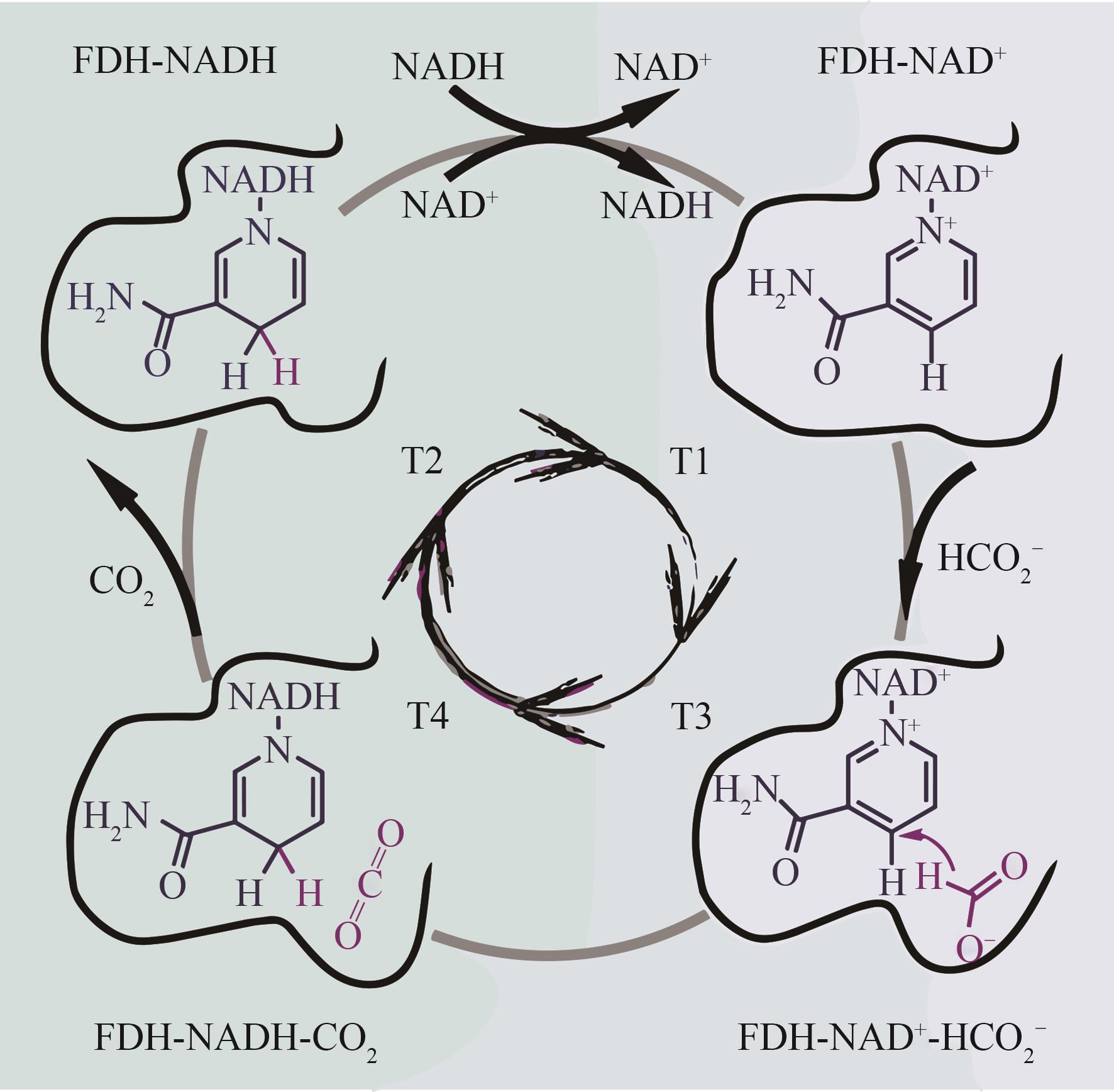
图1 NADH依赖的FDH的催化循环[33]
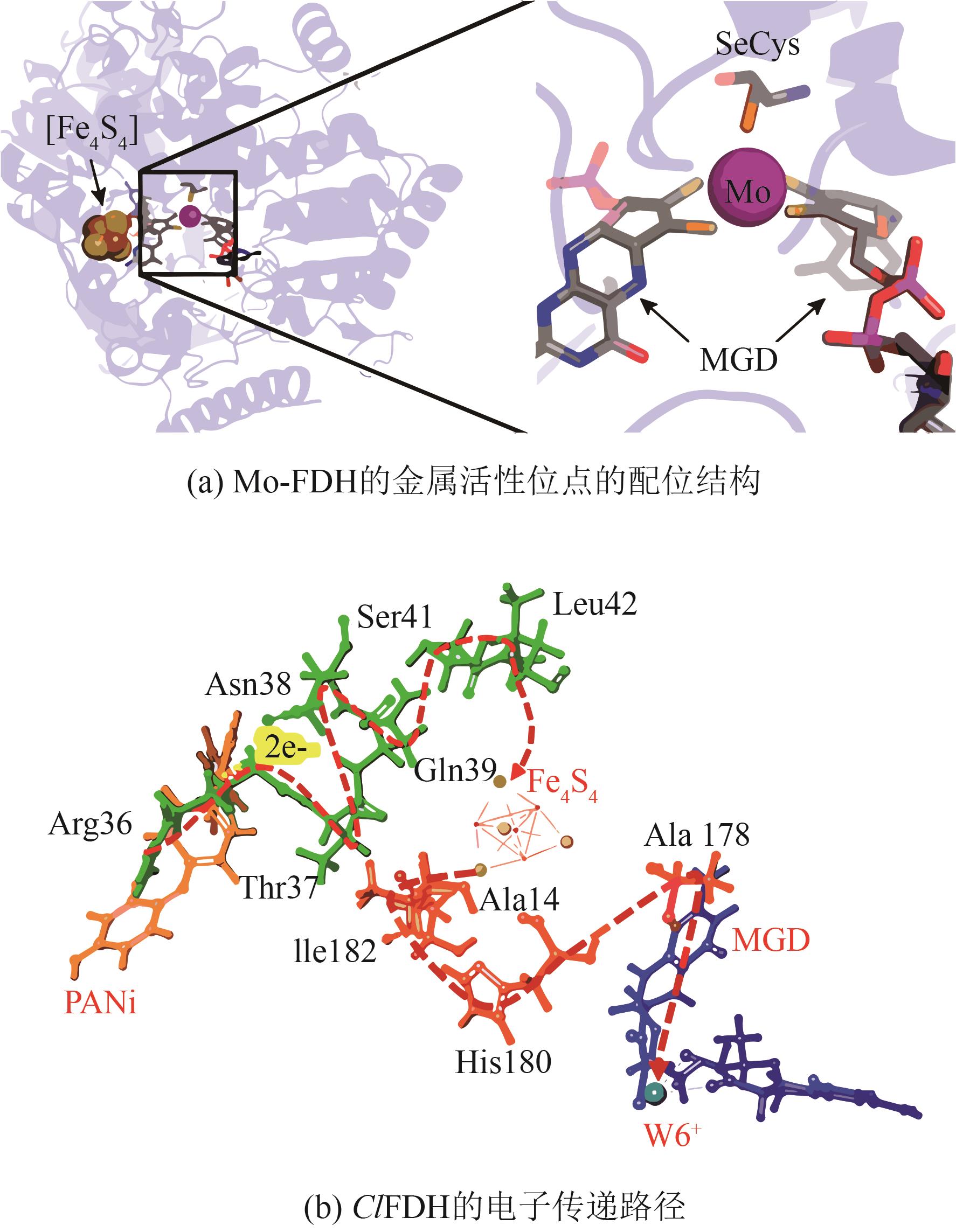
图2 金属依赖的FDH的结构与催化机制[28, 35]
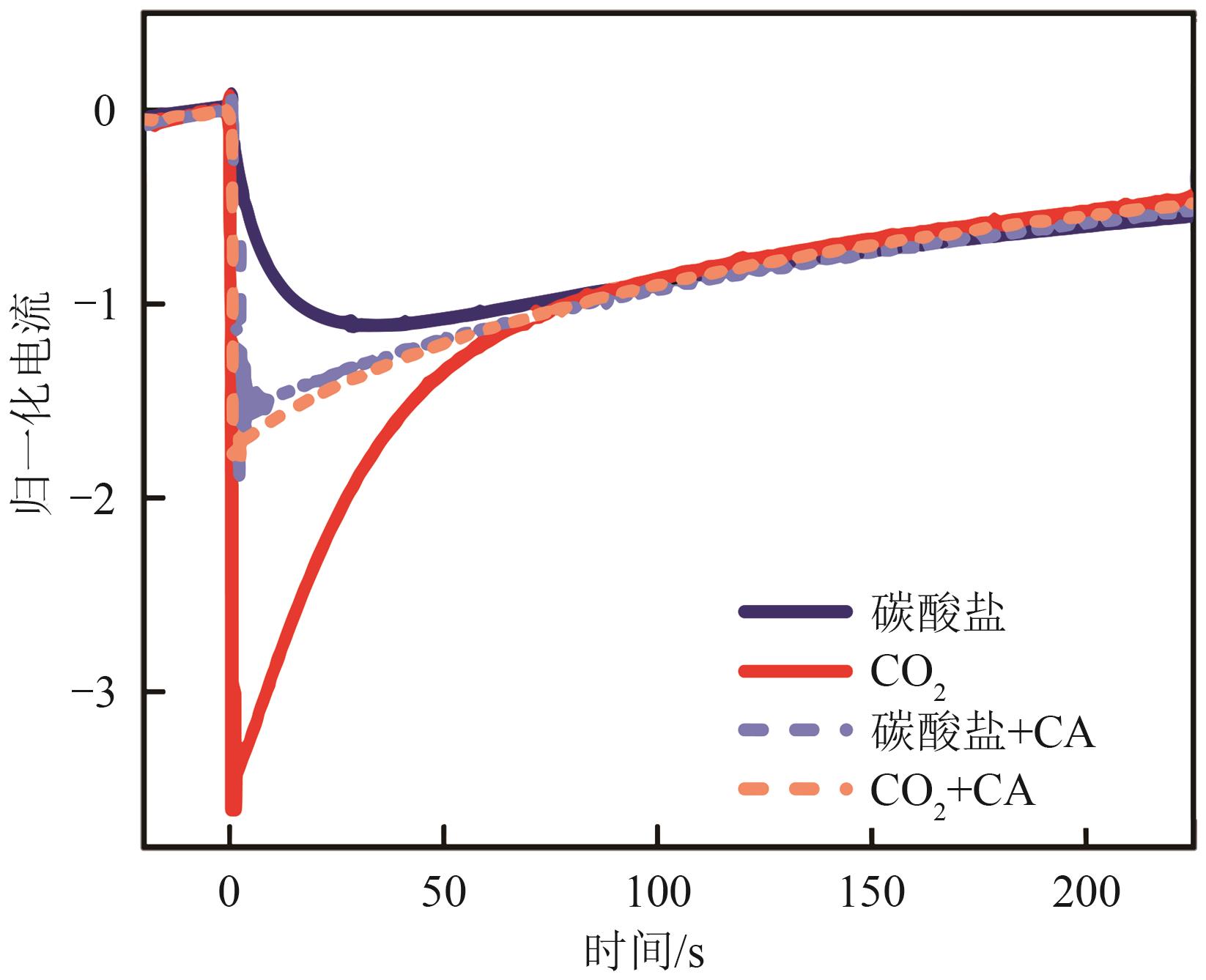
图3 反应体系中添加CO2与HCO3-时FDH还原CO2的电流比较[41]
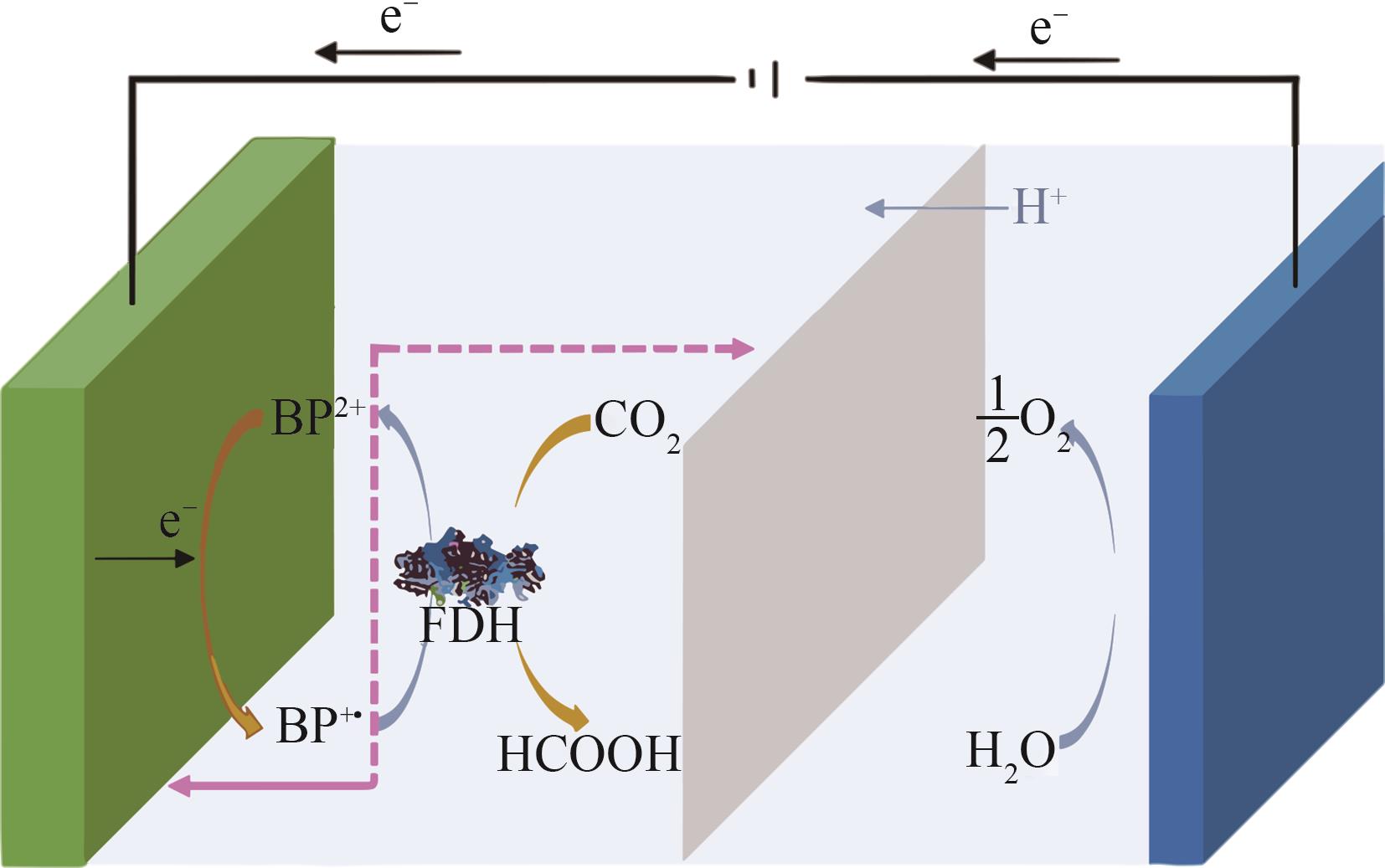
图4 基于CbFDH的电-酶催化CO2还原系统[72]
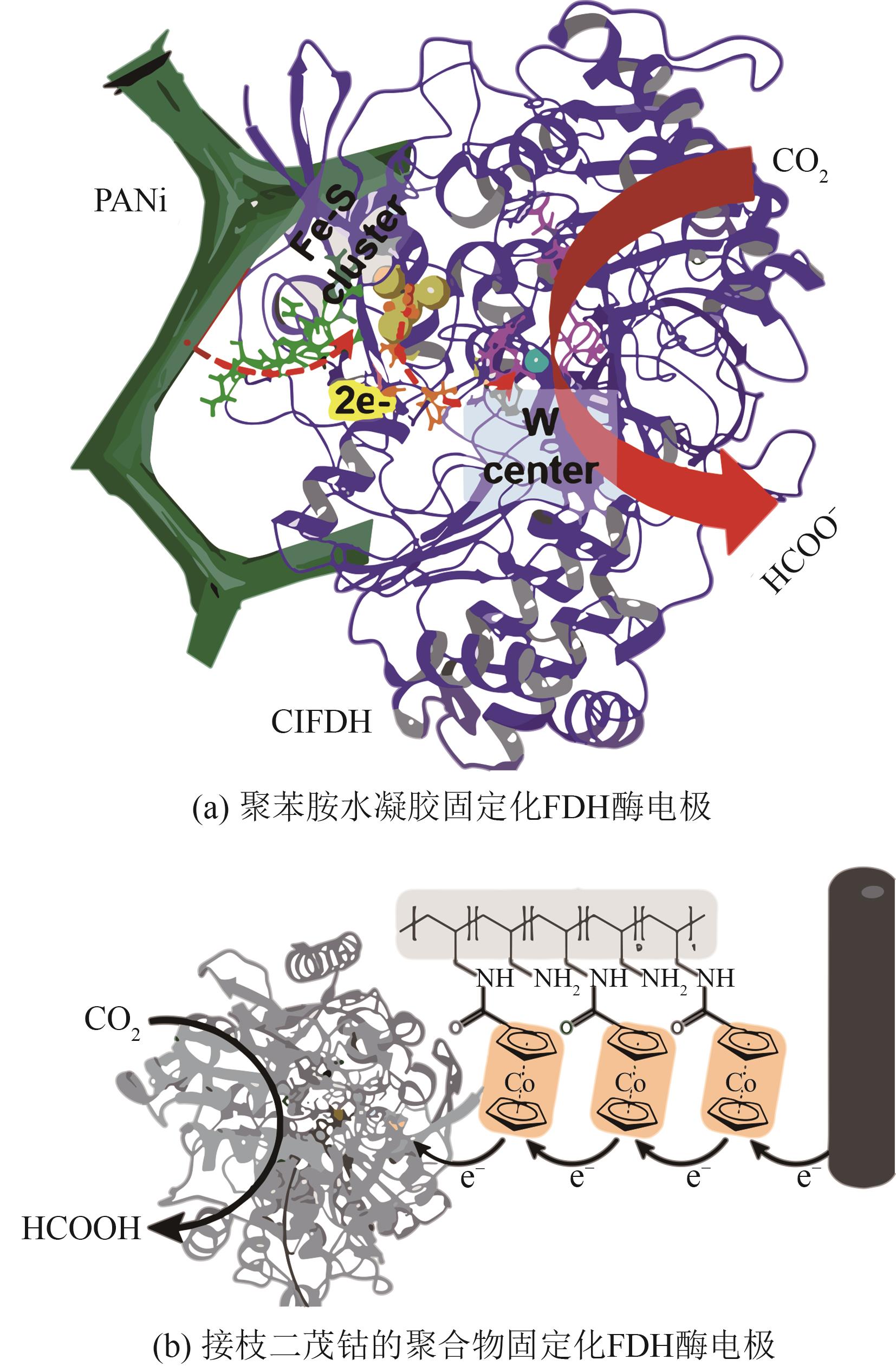
图5 基于金属酶的电-酶催化CO2还原系统[35, 82]
| 1 | Mai BUI, ADJIMAN Claire S, BARDOW André, et al. Carbon capture and storage (CCS): The way forward[J]. Energy & Environmental Science, 2018, 11(5): 1062-1176. |
| 2 | VALLURI Sriram, CLAREMBOUX Victor, KAWATRA Surendra. Opportunities and challenges in CO2 utilization[J]. Journal of Environmental Sciences, 2022, 113: 322-344. |
| 3 | ARTZ Jens, MÜLLER Thomas E, THENERT Katharina, et al. Sustainable conversion of carbon dioxide: An integrated review of catalysis and life cycle assessment[J]. Chemical Reviews, 2018, 118(2): 434-504. |
| 4 | GARBA Mustapha D, USMAN Muhammad, KHAN Sikandar, et al. CO2 towards fuels: A review of catalytic conversion of carbon dioxide to hydrocarbons[J]. Journal of Environmental Chemical Engineering, 2021, 9(2): 104756. |
| 5 | WANG Zhoujun, SONG Hui, LIU Huimin, et al. Coupling of solar energy and thermal energy for carbon dioxide reduction: Status and prospects[J]. Angewandte Chemie International Edition, 2020, 59(21): 8016-8035. |
| 6 | BENSON Eric E, KUBIAK Clifford P, SATHRUM Aaron J, et al. Electrocatalytic and homogeneous approaches to conversion of CO2 to liquid fuels[J]. Chemical Society Reviews, 2009, 38(1): 89-99. |
| 7 | KONDRATENKO Evgenii V, Guido MUL, BALTRUSAITIS Jonas, et al. Status and perspectives of CO2 conversion into fuels and chemicals by catalytic, photocatalytic and electrocatalytic processes[J]. Energy & Environmental Science, 2013, 6(11): 3112-3135. |
| 8 | YAASHIKAA P R, SENTHIL KUMAR P, VARJANI Sunita J, et al. A review on photochemical, biochemical and electrochemical transformation of CO2 into value-added products[J]. Journal of CO2 Utilization, 2019, 33: 131-147. |
| 9 | WANG Jijie, LI Guanna, LI Zelong, et al. A highly selective and stable ZnO-ZrO2 solid solution catalyst for CO2 hydrogenation to methanol[J]. Science Advances, 2017, 3(10): e1701290. |
| 10 | ZHOU Hui, CHEN Zixuan, LÓPEZ Anna Vidal, et al. Engineering the Cu/Mo2CTx (MXene) interface to drive CO2 hydrogenation to methanol[J]. Nature Catalysis, 2021, 4: 860-871. |
| 11 | YU Jiafeng, YANG Meng, ZHANG Jixin, et al. Stabilizing Cu+ in Cu/SiO2 catalysts with a shattuckite-like structure boosts CO2 hydrogenation into methanol[J]. ACS Catalysis, 2020, 10(24): 14694-14706. |
| 12 | WAGNER Andreas, SAHM Constantin D, REISNER Erwin. Towards molecular understanding of local chemical environment effects in electro- and photocatalytic CO2 reduction[J]. Nature Catalysis, 2020, 3: 775-786. |
| 13 | WEN Guobin, REN Bohua, ZHENG Yun, et al. Engineering electrochemical surface for efficient carbon dioxide upgrade[J]. Advanced Energy Materials, 2022, 12(3): 2103289. |
| 14 | ZHENG Tingting, JIANG Kun, WANG Haotian. Recent advances in electrochemical CO2-to-CO conversion on heterogeneous catalysts[J]. Advanced Materials, 2018, 30(48): 1802066. |
| 15 | MASEL Richard I, LIU Zengcai, YANG Hongzhou, et al. An industrial perspective on catalysts for low-temperature CO2 electrolysis[J]. Nature Nanotechnology, 2021, 16(2): 118-128. |
| 16 | GARCÍA DE ARQUER F Pelayo, DINH Cao-Thang, OZDEN Adnan, et al. CO2 electrolysis to multicarbon products at activities greater than 1 A cm-2 [J]. Science, 2020, 367(6478): 661-666. |
| 17 | BUSHUYEV Oleksandr S, DE LUNA Phil, DINH Cao Thang, et al. What should we make with CO2 and how can we make it?[J]. Joule, 2018, 2(5): 825-832. |
| 18 | LEI Zhendong, XUE Yuancheng, CHEN Wenqian, et al. MOFs-based heterogeneous catalysts: New opportunities for energy-related CO2 conversion[J]. Advanced Energy Materials, 2018, 8(32): 1801587. |
| 19 | CHEN Hui, DONG Fangyuan, MINTEER Shelley D. The progress and outlook of bioelectrocatalysis for the production of chemicals, fuels and materials[J]. Nature Catalysis, 2020, 3: 225-244. |
| 20 | TAN Xinyi, NIELSEN Jens. The integration of bio-catalysis and electrocatalysis to produce fuels and chemicals from carbon dioxide[J]. Chemical Society Reviews, 2022, 51(11): 4763-4785. |
| 21 | Michael KÖPKE, SIMPSON Séan D. Pollution to products: Recycling of ‘above ground’ carbon by gas fermentation[J]. Current Opinion in Biotechnology, 2020, 65, 180-189. |
| 22 | LIEW Fungmin Eric, NOGLE Robert, ABDALLA Tanus, et al. Carbon-negative production of acetone and isopropanol by gas fermentation at industrial pilot scale[J]. Nature Biotechnology, 2022, 40(3): 335-344. |
| 23 | 刘伟松, 张坤城, 崔会娟, 等. 电能辅助二氧化碳生物转化[J]. 合成生物学, 2023, 4(6): 1191-1222. |
| LIU Weisong, ZHANG Kuncheng, CUI Huijuan, et al. Electro-assisted carbon dioxide biotransformation[J]. Synthetic Biology Journal, 2023, 4(6): 1191-1222. | |
| 24 | RUICKOLDT Jakob, BASAK Yudhajeet, DOMNIK Lilith, et al. On the kinetics of CO2 reduction by Ni, Fe-CO dehydrogenases[J]. ACS Catalysis, 2022, 12(20): 13131-13142. |
| 25 | SHAFAAT Hannah S, YANG Jenny Y. Uniting biological and chemical strategies for selective CO2 reduction[J]. Nature Catalysis, 2021, 4: 928-933. |
| 26 | MOON Myounghoon, PARK Gwon Woo, LEE Joon-Pyo, et al. Recombinant expression and characterization of formate dehydrogenase from Clostridium ljungdahlii (ClFDH) as CO2 reductase for converting CO2 to formate[J]. Journal of CO2 Utilization, 2022, 57: 101876. |
| 27 | OLIVEIRA Ana Rita, MOTA Cristiano, MOURATO Cláudia, et al. Toward the mechanistic understanding of enzymatic CO2 reduction[J]. ACS Catalysis, 2020, 10(6): 3844-3856. |
| 28 | BASSEGODA Arnau, MADDEN Christopher, WAKERLEY David W, et al. Reversible interconversion of CO2 and formate by a molybdenum-containing formate dehydrogenase[J]. Journal of the American Chemical Society, 2014, 136(44): 15473-15476. |
| 29 | GUO Qi, GAKHAR Lokesh, WICKERSHAM Kyle, et al. Structural and kinetic studies of formate dehydrogenase from Candida boidinii [J]. Biochemistry, 2016, 55(19): 2760-2771. |
| 30 | YILMAZER Berin, ISUPOV Michail N, DE ROSE Simone A, et al. Structural insights into the NAD+-dependent formate dehydrogenase mechanism revealed from the NADH complex and the formate NAD+ ternary complex of the Chaetomium thermophilum enzyme[J]. Journal of Structural Biology, 2020, 212(3): 107657. |
| 31 | DIETRICH Helge M, RIGHETTO Ricardo D, KUMAR Anuj, et al. Membrane-anchored HDCR nanowires drive hydrogen-powered CO2 fixation[J]. Nature, 2022, 607(7920): 823-830. |
| 32 | CAI Rong, MILTON Ross D, ABDELLAOUI Sofiene, et al. Electroenzymatic C-C bond formation from CO2 [J]. Journal of the American Chemical Society, 2018, 140(15): 5041-5044. |
| 33 | ZHANG Aihui, ZHUANG Xiaoyan, LIU Jia, et al. Catalytic cycle of formate dehydrogenase captured by single-molecule conductance[J]. Nature Catalysis, 2023, 6: 266-275. |
| 34 | BOYINGTON Jeffrey C, GLADYSHEV Vadim N, KHANGULOV Sergei V, et al. Crystal structure of formate dehydrogenase H: Catalysis involving Mo, molybdopterin, selenocysteine, and an Fe4S4 cluster[J]. Science, 1997, 275(5304): 1305-1308. |
| 35 | Su Keun KUK, GOPINATH Krishnasamy, SINGH Raushan K, et al. NADH-free electroenzymatic reduction of CO2 by conductive hydrogel-conjugated formate dehydrogenase[J]. ACS Catalysis, 2019, 9(6): 5584-5589. |
| 36 | MAIA Luisa B, FONSECA Luis, MOURA Isabel, et al. Reduction of carbon dioxide by a molybdenum-containing formate dehydrogenase: A kinetic and mechanistic study[J]. Journal of the American Chemical Society, 2016, 138(28): 8834-8846. |
| 37 | TIBERTI Matteo, PAPALEO Elena, RUSSO Nino, et al. Evidence for the formation of a Mo-H intermediate in the catalytic cycle of formate dehydrogenase[J]. Inorganic Chemistry, 2012, 51(15): 8331-8339. |
| 38 | ROBINSON William E, BASSEGODA Arnau, REISNER Erwin, et al. Oxidation-state-dependent binding properties of the active site in a Mo-containing formate dehydrogenase[J]. Journal of the American Chemical Society, 2017, 139(29): 9927-9936. |
| 39 | SATO Ryohei, AMAO Yutaka. Can formate dehydrogenase from Candida boidinii catalytically reduce carbon dioxide, bicarbonate, or carbonate to formate?[J]. New Journal of Chemistry, 2020, 44(28): 11922-11926. |
| 40 | SATO Ryohei, AMAO Yutaka. No competitive inhibition of bicarbonate or carbonate for formate dehydrogenase from Candida boidinii-catalyzed CO2 reduction[J]. New Journal of Chemistry, 2022, 46(33): 15820-15830. |
| 41 | MENEGHELLO Marta, OLIVEIRA Ana Rita, Aurore JACQ-BAILLY, et al. Formate dehydrogenases reduce CO2 rather than HCO3 -: An Electrochemical demonstration[J]. Angewandte Chemie International Edition, 2021, 60(18): 9964-9967. |
| 42 | KIM Eun Jin, FENG Jian, BRAMLETT Matthew R, et al. Evidence for a proton transfer network and a required persulfide-bond-forming cysteine residue in Ni-containing carbon monoxide dehydrogenases[J]. Biochemistry, 2004, 43(19): 5728-5734. |
| 43 | DAIZADEH Iraj, MEDVEDEV Emile S, STUCHEBRUKHOV Alexei A. Effect of protein dynamics on biological electron transfer[J]. Proceedings of the National Academy of Sciences of the United States of America, 1997, 94(8): 3703-3708. |
| 44 | BALABIN Ilya A, ONUCHIC José N. Dynamically controlled protein tunneling paths in photosynthetic reaction centers[J]. Science, 2000, 290(5489): 114-117. |
| 45 | WANG Haiyu, LIN Su, ALLEN James P, et al. Protein dynamics control the kinetics of initial electron transfer in photosynthesis[J]. Science, 2007, 316(5825): 747-750. |
| 46 | OEHLMANN Niels N, REBELEIN Johannes G. The conversion of carbon monoxide and carbon dioxide by nitrogenases[J]. ChemBioChem, 2022, 23(8): e202100453. |
| 47 | REBELEIN Johannes G, HU Yilin, RIBBE Markus W. Differential reduction of CO2 by molybdenum and vanadium nitrogenases[J]. Angewandte Chemie International Edition, 2014, 53(43): 11543-11546. |
| 48 | SEEFELDT Lance C, RASCHE Madeline E, ENSIGN Scott A. Carbonyl sulfide and carbon dioxide as new substrates, and carbon disulfide as a new inhibitor, of nitrogenase[J]. Biochemistry, 1995, 34(16): 5382-5389. |
| 49 | HU Bo, HARRIS Derek F, DEAN Dennis R, et al. Electrocatalytic CO2 reduction catalyzed by nitrogenase MoFe and FeFe proteins[J]. Bioelectrochemistry, 2018, 120: 104-109. |
| 50 | YANG Zhiyong, MOURE Vivian R, DEAN Dennis R, et al. Carbon dioxide reduction to methane and coupling with acetylene to form propylene catalyzed by remodeled nitrogenase[J]. Proceedings of the National Academy of Sciences of the United States of America, 2012, 109(48): 19644-19648. |
| 51 | PU Xin, HAN Yejun. Promotion of carbon dioxide biofixation through metabolic and enzyme engineering[J]. Catalysts, 2022, 12(4): 399. |
| 52 | RAGSDALE Stephen W. Enzymology of the Wood-Ljungdahl pathway of acetogenesis[J]. Annals of the New York Academy of Sciences, 2008, 1125(1): 129-136. |
| 53 | TRISCHLER Raphael, ROTH Jennifer, SORBARA Matthew T, et al. A functional Wood-Ljungdahl pathway devoid of a formate dehydrogenase in the gut acetogens Blautia wexlerae, Blautia luti and beyond[J]. Environmental Microbiology, 2022, 24(7): 3111-3123. |
| 54 | SINGH Raushan Kumar, SINGH Ranjitha, SIVAKUMAR Dakshinamurthy, et al. Insights into cell-free conversion of CO2 to chemicals by a multienzyme cascade reaction[J]. ACS Catalysis, 2018, 8(12): 11085-11093. |
| 55 | Suhan BASKAYA F, ZHAO Xueyan, FLICKINGER Michael C, et al. Thermodynamic feasibility of enzymatic reduction of carbon dioxide to methanol[J]. Applied Biochemistry and Biotechnology, 2010, 162(2): 391-398. |
| 56 | MARPANI Fauziah, Zsuzsa SÁROSSY, PINELO Manuel, et al. Kinetics based reaction optimization of enzyme catalyzed reduction of formaldehyde to methanol with synchronous cofactor regeneration[J]. Biotechnology and Bioengineering, 2017, 114(12): 2762-2770. |
| 57 | ZHANG Shaohua, SHI Jiafu, SUN Yiying, et al. Artificial thylakoid for the coordinated photoenzymatic reduction of carbon dioxide[J]. ACS Catalysis, 2019, 9(5): 3913-3925. |
| 58 | WANG Xiaoli, LI Zheng, SHI Jiafu, et al. Bioinspired approach to multienzyme cascade system construction for efficient carbon dioxide reduction[J]. ACS Catalysis, 2014, 4(3): 962-972. |
| 59 | WENDELL David, TODD Jacob, MONTEMAGNO Carlo. Artificial photosynthesis in ranaspumin-2 based foam[J]. Nano Letters, 2010, 10(9): 3231-3236. |
| 60 | SCHWANDER Thomas, VON BORZYSKOWSKI Lennart Schada, BURGENER Simon, et al. A synthetic pathway for the fixation of carbon dioxide in vitro [J]. Science, 2016, 354(6314): 900-904. |
| 61 | LUO Shanshan, LIN Paul P, NIEH Liang-Yu, et al. A cell-free self-replenishing CO2-fixing system[J]. Nature Catalysis, 2022, 5: 154-162. |
| 62 | CAI Tao, SUN Hongbing, QIAO Jing, et al. Cell-free chemoenzymatic starch synthesis from carbon dioxide[J]. Science, 2021, 373(6562): 1523-1527. |
| 63 | ZHOU Junhui, TIAN Xinyu, YANG Qian, et al. Three multi-enzyme cascade pathways for conversion of C1 to C2/C4 compounds[J]. Chem Catalysis, 2022, 2(10): 2675-2690. |
| 64 | CRACKNELL James A, VINCENT Kylie A, ARMSTRONG Fraser A. Enzymes as working or inspirational electrocatalysts for fuel cells and electrolysis[J]. Chemical Reviews, 2008, 108(7): 2439-2461. |
| 65 | YANG Junzhu, Chi-Kit SOU, LU Yuan. Cell-free biocatalysis coupled with photo-catalysis and electro-catalysis: Efficient CO2-to-chemical conversion[J]. Green Energy & Environment, 2024, 9(9): 1366-1383. |
| 66 | SABA Tony, BURNETT Joseph W H, LI Jianwei, et al. A facile analytical method for reliable selectivity examination in cofactor NADH regeneration[J]. Chemical Communications, 2020, 56(8): 1231-1234. |
| 67 | TIAN Shujie, LONG Guifa, ZHOU Panwang, et al. A coupled system of Ni3S2 and Rh complex with biomimetic function for electrocatalytic 1,4-NAD(P)H regeneration[J]. Journal of the American Chemical Society, 2024, 146(23): 15730-15739. |
| 68 | ABDELLAOUI Sofiene, MILTON Ross D, QUAH Timothy, et al. NAD-dependent dehydrogenase bioelectrocatalysis: The ability of a naphthoquinone redox polymer to regenerate NAD[J]. Chemical Communications, 2016, 52(6): 1147-1150. |
| 69 | IKEYAMA Shusaku, AMAO Yutaka. An artificial co-enzyme based on the viologen skeleton for highly efficient CO2 reduction to formic acid with formate dehydrogenase[J]. ChemCatChem, 2017, 9(5): 833-838. |
| 70 | MILTON Ross D, ABDELLAOUI Sofiene, KHADKA Nimesh, et al. Nitrogenase bioelectrocatalysis: Heterogeneous ammonia and hydrogen production by MoFe protein[J]. Energy & Environmental Science, 2016, 9(8): 2550-2554. |
| 71 | JAYATHILAKE Buddhinie S, BHATTACHARYA Supriyo, VAIDEHI Nagarajan, et al. Efficient and selective electrochemically driven enzyme-catalyzed reduction of carbon dioxide to formate using formate dehydrogenase and an artificial cofactor[J]. Accounts of Chemical Research, 2019, 52(3): 676-685. |
| 72 | ZHANG Zhibo, VASILIU Tudor, LI Fangfang, et al. Electrochemically driven efficient enzymatic conversion of CO2 to formic acid with artificial cofactors[J]. Journal of CO2 Utilization, 2021, 52: 101679. |
| 73 | ZHANG Zhibo, VASILIU Tudor, LI Fangfang, et al. Novel artificial ionic cofactors for efficient electro-enzymatic conversion of CO2 to formic acid[J]. Journal of CO2 Utilization, 2022, 60: 101978. |
| 74 | SEELAJAROEN Hathaichanok, BAKANDRITSOS Aristides, OTYEPKA Michal, et al. Immobilized enzymes on graphene as nanobiocatalyst[J]. ACS Applied Materials & Interfaces, 2020, 12(1): 250-259. |
| 75 | ZHANG Liyun, MORELLO Giorgio, CARR Stephen B, et al. Aerobic photocatalytic H2 production by a [NiFe] hydrogenase engineered to place a silver nanocluster in the electron relay[J]. Journal of the American Chemical Society, 2020, 142(29): 12699-12707. |
| 76 | BADIANI Vivek M, CASADEVALL Carla, MILLER Melanie, et al. Engineering electro- and photocatalytic carbon materials for CO2 reduction by formate dehydrogenase[J]. Journal of the American Chemical Society, 2022, 144(31): 14207-14216. |
| 77 | Julia ALVAREZ-MALMAGRO, OLIVEIRA Ana R, Cristina GUTIÉRREZ-SÁNCHEZ, et al. Bioelectrocatalytic activity of W-formate dehydrogenase covalently immobilized on functionalized gold and graphite electrodes[J]. ACS Applied Materials & Interfaces, 2021, 13(10): 11891-11900. |
| 78 | DUTTA Saikat, PATIL Rahul, CHONGDAR Sayantan, et al. Dehydrogenase-functionalized interfaced materials in electroenzymatic and photoelectroenzymatic CO2 reduction[J]. ACS Sustainable Chemistry & Engineering, 2022, 10(19): 6141-6156. |
| 79 | YATES Nicholas D J, FASCIONE Martin A, PARKIN Alison. Methodologies for “wiring” redox proteins/enzymes to electrode surfaces[J]. Chemistry:A European Journal, 2018, 24(47): 12164-12182. |
| 80 | SOKOL Katarzyna P, ROBINSON William E, OLIVEIRA Ana R, et al. Photoreduction of CO2 with a formate dehydrogenase driven by photosystem Ⅱ using a semi-artificial Z-scheme architecture[J]. Journal of the American Chemical Society, 2018, 140(48): 16418-16422. |
| 81 | MORELLO Giorgio, MEGARITY Clare F, ARMSTRONG Fraser A. The power of electrified nanoconfinement for energising, controlling and observing long enzyme cascades[J]. Nature Communications, 2021, 12(1): 340. |
| 82 | YUAN Mengwei, SAHIN Selmihan, CAI Rong, et al. Creating a low-potential redox polymer for efficient electroenzymatic CO2 reduction[J]. Angewandte Chemie International Edition, 2018, 57(22): 6582-6586. |
| 83 | EDWARDES MOORE Esther, COBB Samuel J, COITO Ana Margarida, et al. Understanding the local chemical environment of bioelectrocatalysis[J]. Proceedings of the National Academy of Sciences of the United States of America, 2022, 119(4): e2114097119. |
| 84 | HOU Jingwei, JI Chao, DONG Guangxi, et al. Biocatalytic Janus membranes for CO2 removal utilizing carbonic anhydrase[J]. Journal of Materials Chemistry A, 2015, 3(33): 17032-17041. |
| 85 | COBB Samuel J, DHARANI Azim M, OLIVEIRA Ana Rita, et al. Carboxysome-inspired electrocatalysis using enzymes for the reduction of CO2 at low concentrations[J]. Angewandte Chemie International Edition, 2023, 62(26): e202218782. |
| 86 | LIU Guanhua, WANG Lirong, YAN Lihang, et al. A dual-enzyme microreactor based on encapsulation and covalent bond for enzymatic electrocatalytic CO2 reduction[J]. Chemical Engineering Journal, 2023, 475: 146186. |
| 87 | WU Donghuan, JIAO Feng, LU Qi. Progress and understanding of CO2/CO electroreduction in flow electrolyzers[J]. ACS Catalysis, 2022, 12(20): 12993-13020. |
| 88 | DINH Cao-Thang, BURDYNY Thomas, KIBRIA Md Golam, et al. CO2 electroreduction to ethylene via hydroxide-mediated copper catalysis at an abrupt interface[J]. Science, 2018, 360(6390): 783-787. |
| 89 | SZCZESNY Julian, RUFF Adrian, OLIVEIRA Ana R, et al. Electroenzymatic CO2 fixation using redox polymer/enzyme-modified gas diffusion electrodes[J]. ACS Energy Letters, 2020, 5(1): 321-327. |
| 90 | BECKER Jana M, LIELPETERE Anna, SZCZESNY Julian, et al. Bioelectrocatalytic CO2 reduction by redox polymer-wired carbon monoxide dehydrogenase gas diffusion electrodes[J]. ACS Applied Materials & Interfaces, 2022, 14(41): 46421-46426. |
| 91 | AMAO Yutaka, SHUTO Naho. Formate dehydrogenase–viologen-immobilized electrode for CO2 conversion, for development of an artificial photosynthesis system[J]. Research on Chemical Intermediates, 2014, 40(9): 3267-3276. |
| 92 | Su Keun KUK, JANG Jinha, KIM Jinhyun, et al. CO2-reductive, copper oxide-based photobiocathode for Z-scheme semi-artificial leaf structure[J]. ChemSusChem, 2020, 13(11): 2940-2944. |
| 93 | CHEN Yijing, LI Peng, ZHOU Jiawang, et al. Integration of enzymes and photosensitizers in a hierarchical mesoporous metal-organic framework for light-driven CO2 reduction[J]. Journal of the American Chemical Society, 2020, 142(4): 1768-1773. |
| [1] | 冯娇, 刘明明, 刘耀, 王昕, 陈可泉. 利用可再生原料生物合成脂肪族短链二元胺与醇的研究进展[J]. 化工进展, 2025, 44(5): 2655-2666. |
| [2] | 朱俊英, 荣峻峰, 宗保宁. 螺旋藻固碳和作为饲用蛋白原料可行性分析[J]. 化工进展, 2025, 44(5): 2705-2715. |
| [3] | 乔金樑. 原料替代助力我国石化产业高质量发展[J]. 化工进展, 2025, 44(5): 2803-2805. |
| [4] | 陈奥辉, 宋艳芳, 陈为, 魏伟. 多孔自支撑电极电催化还原二氧化碳[J]. 化工进展, 2025, 44(5): 2806-2810. |
| [5] | 窦玉, 王文选, 范春雷, 马吉亮, 梁财, 陈晓平. 脱硫石膏矿化CO2制备球霰石碳酸钙[J]. 化工进展, 2025, 44(4): 2328-2337. |
| [6] | 王文, 金央, 李军, 陈建钧, 陈明, 孟昕. 基于FeOOH原位生长制备用于CO2吸收的超疏水PVDF膜[J]. 化工进展, 2025, 44(3): 1570-1577. |
| [7] | 谢鑫瑶, 万芬, 伏炫羽, 范雨婷, 陈令修, 李鹏. Cu-Ag纳米团簇CO2电催化还原性能和机理[J]. 化工进展, 2025, 44(3): 1387-1395. |
| [8] | 张新宇, 陶梦滢, 于小婷, 赵钟兴, 赵祯霞. 介孔金属有机骨架固定化漆酶及其活性艳蓝KN-R降解性能[J]. 化工进展, 2025, 44(3): 1758-1767. |
| [9] | 刘江涛, 彭冲, 张永春. Zn调控Fe基催化剂催化CO2加氢制低碳烯烃[J]. 化工进展, 2025, 44(3): 1396-1405. |
| [10] | 杨帆, 赵溢涛, 朱学栋, 王达锐. 三元尖晶石与孪晶ZSM-5分子筛在苯与二氧化碳甲基化中的应用[J]. 化工进展, 2025, 44(2): 856-866. |
| [11] | 张甜甜, 刘霞, 张红飞, 李倩, 周鸿宇, 李冰麟. 微水无溶剂体系酶促制备DHA-磷酯酰丝氨酸[J]. 化工进展, 2025, 44(2): 1033-1041. |
| [12] | 贾亦静, 陶金泉, 黄文斌, 刘昊然, 李蓉蓉, 姚荣鹏, 白天瑜, 魏强, 周亚松. CO2加氢制低碳烯烃Fe基催化剂研究进展[J]. 化工进展, 2025, 44(2): 820-833. |
| [13] | 廖旭, 王玮, 黄文婷, 熊文涛, 王泽宇, 覃佐东, 林金清. 生物质基催化剂在二氧化碳转化为环状碳酸酯中的研究进展[J]. 化工进展, 2025, 44(2): 834-846. |
| [14] | 李乐天, 陆诗建, 刘含笑, 吴黎明, 刘玲, 康国俊. 有机胺富液解吸再生研究进展[J]. 化工进展, 2025, 44(1): 490-499. |
| [15] | 王世鑫, 闫锋, 刘晓利, 宋光春, 李玉星, 胡其会. “双碳”背景下二氧化碳管道输送技术研究进展[J]. 化工进展, 2025, 44(1): 17-26. |
| 阅读次数 | ||||||
|
全文 |
|
|||||
|
摘要 |
|
|||||