化工进展 ›› 2025, Vol. 44 ›› Issue (9): 5363-5376.DOI: 10.16085/j.issn.1000-6613.2024-1219
• 资源与环境化工 • 上一篇
超低浓度甲烷减排与资源化利用研究进展
王晓光1( ), 董青1, 郎文丽1, 洪翔鑫1, 黄振祥2, 谭凤玉2,3(), 雷以柱3, 余子夷2
- 1.淮北矿业股份有限公司电力分公司,安徽 淮北 235141
2.南京工业大学化工学院,材料化学工程国家重点实验室,江苏 南京 211816
3.六盘水师范学院化学与材料工程学院,贵州 六盘水 553000
-
收稿日期:2024-07-26修回日期:2024-08-29出版日期:2025-09-25发布日期:2025-09-30 -
通讯作者:谭凤玉 -
作者简介:王晓光(1983—),男,研究方向为瓦斯发电。E-mail:985827396@qq.com。 -
基金资助:国家自然科学基金优秀青年基金(T2322011);材料化学工程国家重点实验室揭榜挂帅自主课题(SKL-MCE-22A06)
Progress on emission reduction and resource utilization of ultra-low concentration methane
WANG Xiaoguang1(), DONG Qing1, LANG Wenli1, HONG Xiangxin1, HUANG Zhenxiang2, TAN Fengyu2,3(), LEI Yizhu3, YU Ziyi2
- 1.Electric Power Branch, Huaibei Mining Co. , Huaibei 235141, Anhui, China
2.State Key Laboratory of Materials-Oriented Chemical Engineering, College of Chemical Engineering, Nanjing Tech University, Nanjing 211816, Jiangsu, China
3.School of Chemistry and Materials Engineering, Liupanshui Normal University, Liupanshui 553000, Guizhou, China
-
Received:2024-07-26Revised:2024-08-29Online:2025-09-25Published:2025-09-30 -
Contact:TAN Fengyu

摘要:
甲烷(CH4)是全球第二大温室气体,占全球温室气体排放量的19%,其20年时间尺度内增温潜能是二氧化碳(CO2)的80倍以上,成为重点关注的温室气体减排方向。对于体积分数在6.0%以下的超低浓度甲烷,尽管排放源分散和浓度变化范围广等特点使得减排技术面临诸多挑战,但对其进行减排处理具有重要的环保意义。本文针对超低浓度甲烷减排及资源化利用的研究进展进行了讨论、分析和总结。首先,概述了人类活动排放甲烷的主要来源,着重分析了超低浓度甲烷主要的排放源;其次,阐述了超低浓度甲烷减排的政策及市场机制;最后,着重讨论了超低浓度甲烷资源化利用目前主要采用的技术,包括分离提纯浓缩、热氧化利用和生物催化利用等技术的工作原理和开发研究进展。未来,需要进一步加强技术创新和完善政策机制,实现超低浓度甲烷的减排及资源化利用,助力“双碳”背景下能源的可持续发展。
中图分类号:
引用本文
王晓光, 董青, 郎文丽, 洪翔鑫, 黄振祥, 谭凤玉, 雷以柱, 余子夷. 超低浓度甲烷减排与资源化利用研究进展[J]. 化工进展, 2025, 44(9): 5363-5376.
WANG Xiaoguang, DONG Qing, LANG Wenli, HONG Xiangxin, HUANG Zhenxiang, TAN Fengyu, LEI Yizhu, YU Ziyi. Progress on emission reduction and resource utilization of ultra-low concentration methane[J]. Chemical Industry and Engineering Progress, 2025, 44(9): 5363-5376.
| 政策文件名称 | 主要内容 | 时间 |
|---|---|---|
| 《碳排放权交易管理暂行条例》 | 重点排放单位可以按照国家有关规定,购买经核证的温室气体减排量用于清缴其碳排放配额 | 2024年 |
| 《全国温室气体自愿减排交易(CCER)》 | 构建强制碳配额+自愿碳减排两个相互关联的碳市场体系,对碳市场期现联动的打通及碳金融产品开发创新的推动 | 2024年 |
| 《甲烷排放控制行动方案》 | 甲烷排放控制顶层设计文件;强调加强甲烷排放监测、核算、报告和核查体系建设;推进能源、农业、垃圾和污水处理领域甲烷排放和利用 | 2023年 |
| 《“全球甲烷承诺”部长级会议》 | 到2030年将人为甲烷排放量从2020年水平减少至少30% | 2023年 |
| 欧盟《甲烷减排法规》 | 通过立法强制要求对能源生产活动产生的甲烷排放进行监测、报告和核查 | 2023年 |
| 《“十四五”现代能源体系规划》 | 指出要加大能源行业甲烷采收利用力度,推进甲烷减排 | 2022年 |
| 《通胀削减法案甲烷排放收费政策简介》 | 首次提出2024年正式对石油和天然气行业的甲烷排放收费;对甲烷排放收费的范围和适用性、费率和潜在收费豁免作出了详细规定 | 2022年 |
| 《工业领域碳达峰实施方案》 | 提出加快推进工业绿色低碳转型,切实做好油气、煤炭、固废利用等工业领域“碳达峰”工作 | 2022年 |
| 《美国甲烷减排行动计划》 | 针对油气领域甲烷减排制定了新的规则;针对废弃煤炭、石油、天然气设施以及改进工业制造设备等 | 2021年 |
表1 国内外甲烷减排主要政策机制文件
| 政策文件名称 | 主要内容 | 时间 |
|---|---|---|
| 《碳排放权交易管理暂行条例》 | 重点排放单位可以按照国家有关规定,购买经核证的温室气体减排量用于清缴其碳排放配额 | 2024年 |
| 《全国温室气体自愿减排交易(CCER)》 | 构建强制碳配额+自愿碳减排两个相互关联的碳市场体系,对碳市场期现联动的打通及碳金融产品开发创新的推动 | 2024年 |
| 《甲烷排放控制行动方案》 | 甲烷排放控制顶层设计文件;强调加强甲烷排放监测、核算、报告和核查体系建设;推进能源、农业、垃圾和污水处理领域甲烷排放和利用 | 2023年 |
| 《“全球甲烷承诺”部长级会议》 | 到2030年将人为甲烷排放量从2020年水平减少至少30% | 2023年 |
| 欧盟《甲烷减排法规》 | 通过立法强制要求对能源生产活动产生的甲烷排放进行监测、报告和核查 | 2023年 |
| 《“十四五”现代能源体系规划》 | 指出要加大能源行业甲烷采收利用力度,推进甲烷减排 | 2022年 |
| 《通胀削减法案甲烷排放收费政策简介》 | 首次提出2024年正式对石油和天然气行业的甲烷排放收费;对甲烷排放收费的范围和适用性、费率和潜在收费豁免作出了详细规定 | 2022年 |
| 《工业领域碳达峰实施方案》 | 提出加快推进工业绿色低碳转型,切实做好油气、煤炭、固废利用等工业领域“碳达峰”工作 | 2022年 |
| 《美国甲烷减排行动计划》 | 针对油气领域甲烷减排制定了新的规则;针对废弃煤炭、石油、天然气设施以及改进工业制造设备等 | 2021年 |
| 检测方法 | 工作原理 |
|---|---|
| 催化燃烧型传感器 | 利用甲烷在催化剂表面氧化产生的热量变化,通过热敏元件转化为电信号,热敏电阻感应到温度升高,其阻值相应变化,从而形成与甲烷浓度成正比的电信号输出 |
| 电化学型传感器 | 利用甲烷与电解质发生化学反应,产生电流;电流大小与甲烷浓度直接相关,通过测量电流强度即可确定甲烷浓度 |
| 红外吸收型传感器 | 利用甲烷分子对特定红外波段具有选择性吸收,吸收程度与甲烷浓度成正比;通过比较入射光与出射光强度,即可计算出甲烷浓度 |
| 半导体型传感器 | 利用甲烷吸附导致半导体材料电阻变化的特性,当甲烷气体吸附到半导体表面时,改变了其电阻率;通过测量电阻变化,间接反映出甲烷浓度 |
| 光纤型传感器 | 利用光的传播特性,通过检测甲烷对光信号的调制(如吸收、散射、相位变化等)来判断甲烷浓度 |
| 气相色谱法 | 将气体样本引入色谱柱,利用不同成分的分离特性来检测甲烷的存在 |
| 化学分析法 | 使用化学反应法,如甲烷的特定化学试剂反应,可以检测到低浓度的甲烷 |
| 光谱分析法 | 利用甲烷特定的光谱特性来检测其浓度,比如傅里叶变换红外光谱(FTIR)技术 |
表2 甲烷常用检测方法
| 检测方法 | 工作原理 |
|---|---|
| 催化燃烧型传感器 | 利用甲烷在催化剂表面氧化产生的热量变化,通过热敏元件转化为电信号,热敏电阻感应到温度升高,其阻值相应变化,从而形成与甲烷浓度成正比的电信号输出 |
| 电化学型传感器 | 利用甲烷与电解质发生化学反应,产生电流;电流大小与甲烷浓度直接相关,通过测量电流强度即可确定甲烷浓度 |
| 红外吸收型传感器 | 利用甲烷分子对特定红外波段具有选择性吸收,吸收程度与甲烷浓度成正比;通过比较入射光与出射光强度,即可计算出甲烷浓度 |
| 半导体型传感器 | 利用甲烷吸附导致半导体材料电阻变化的特性,当甲烷气体吸附到半导体表面时,改变了其电阻率;通过测量电阻变化,间接反映出甲烷浓度 |
| 光纤型传感器 | 利用光的传播特性,通过检测甲烷对光信号的调制(如吸收、散射、相位变化等)来判断甲烷浓度 |
| 气相色谱法 | 将气体样本引入色谱柱,利用不同成分的分离特性来检测甲烷的存在 |
| 化学分析法 | 使用化学反应法,如甲烷的特定化学试剂反应,可以检测到低浓度的甲烷 |
| 光谱分析法 | 利用甲烷特定的光谱特性来检测其浓度,比如傅里叶变换红外光谱(FTIR)技术 |
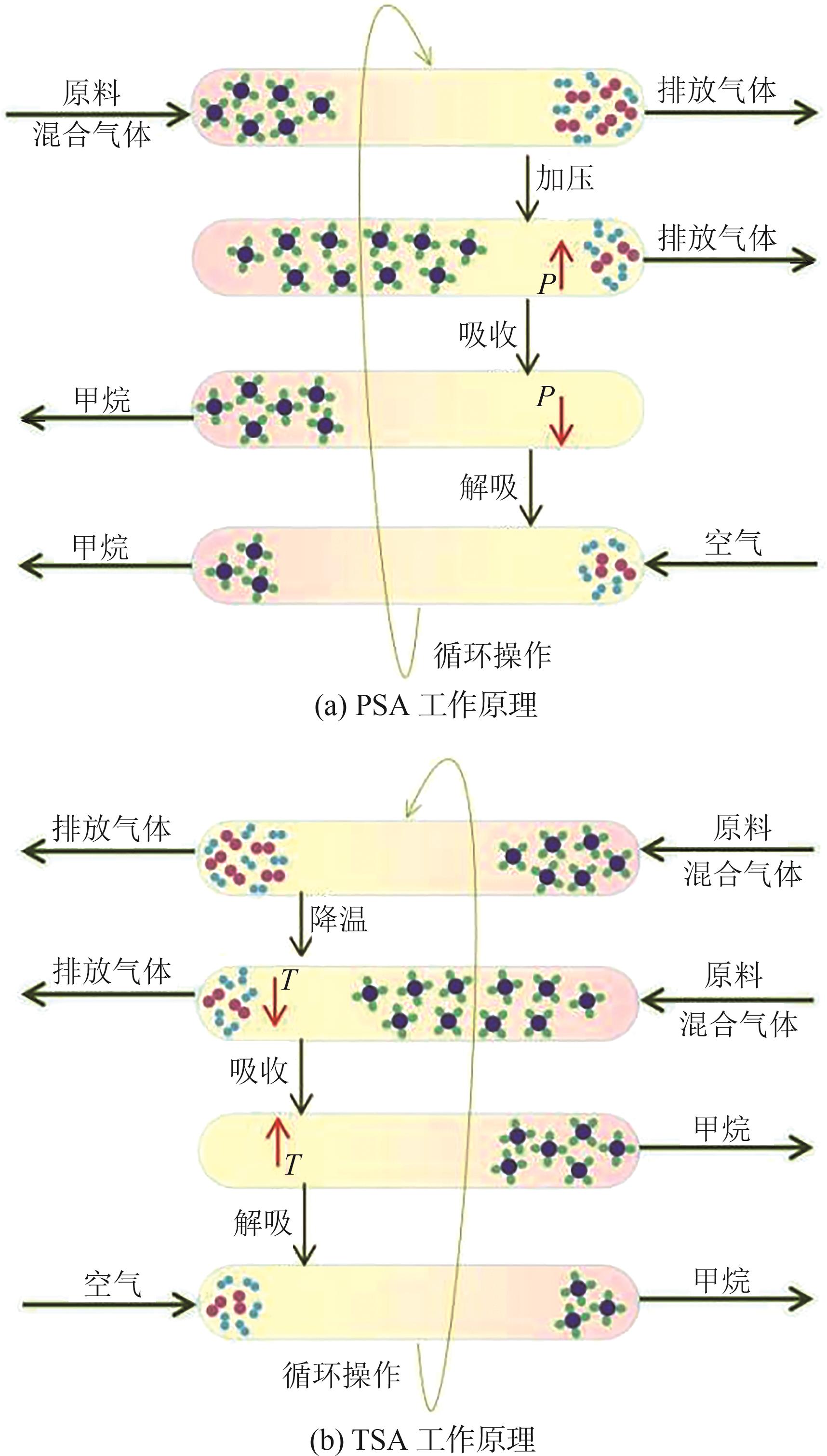
图1 PSA和TSA工作原理图
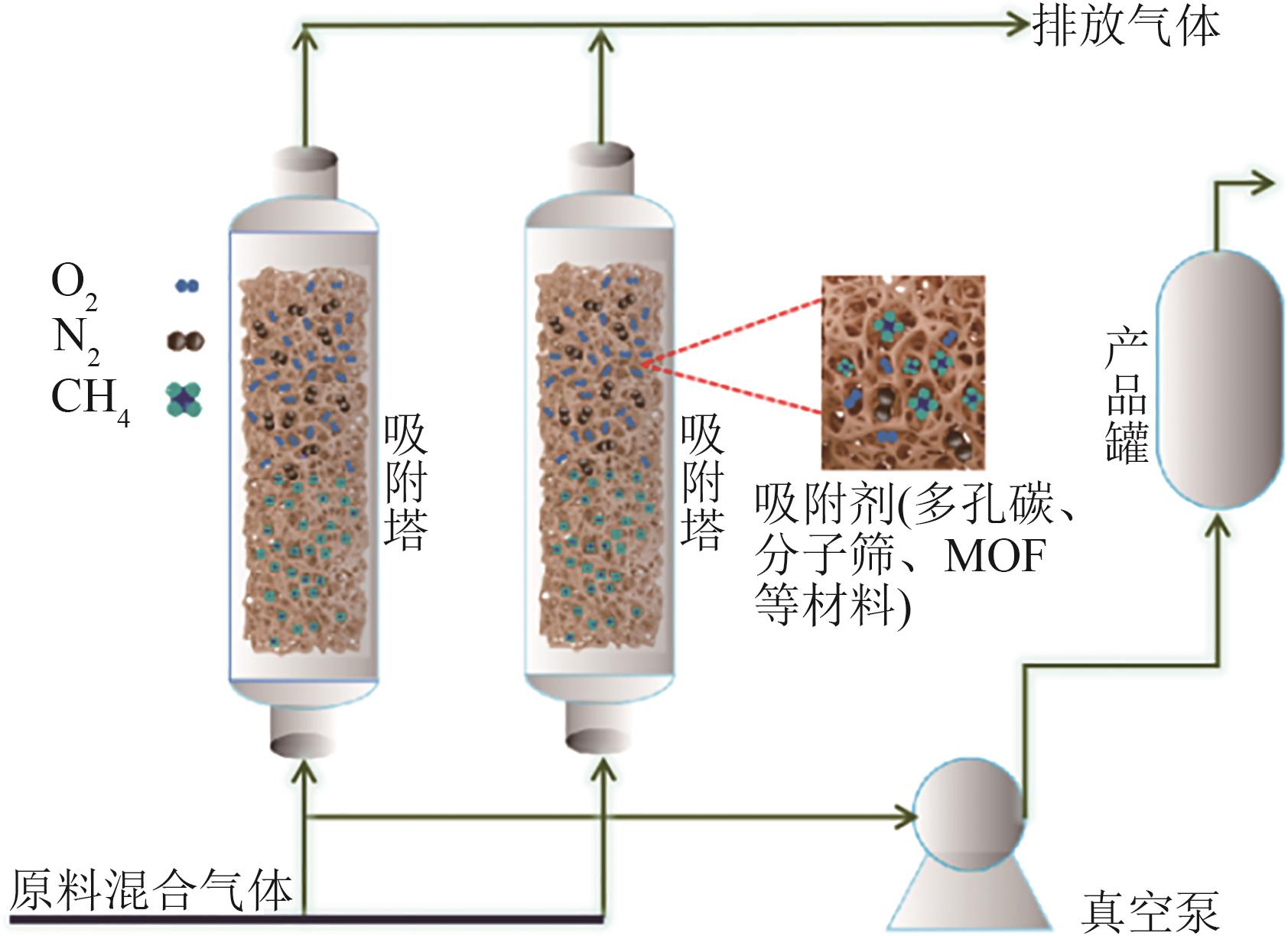
图2 吸附分离富集CH4过程示意图
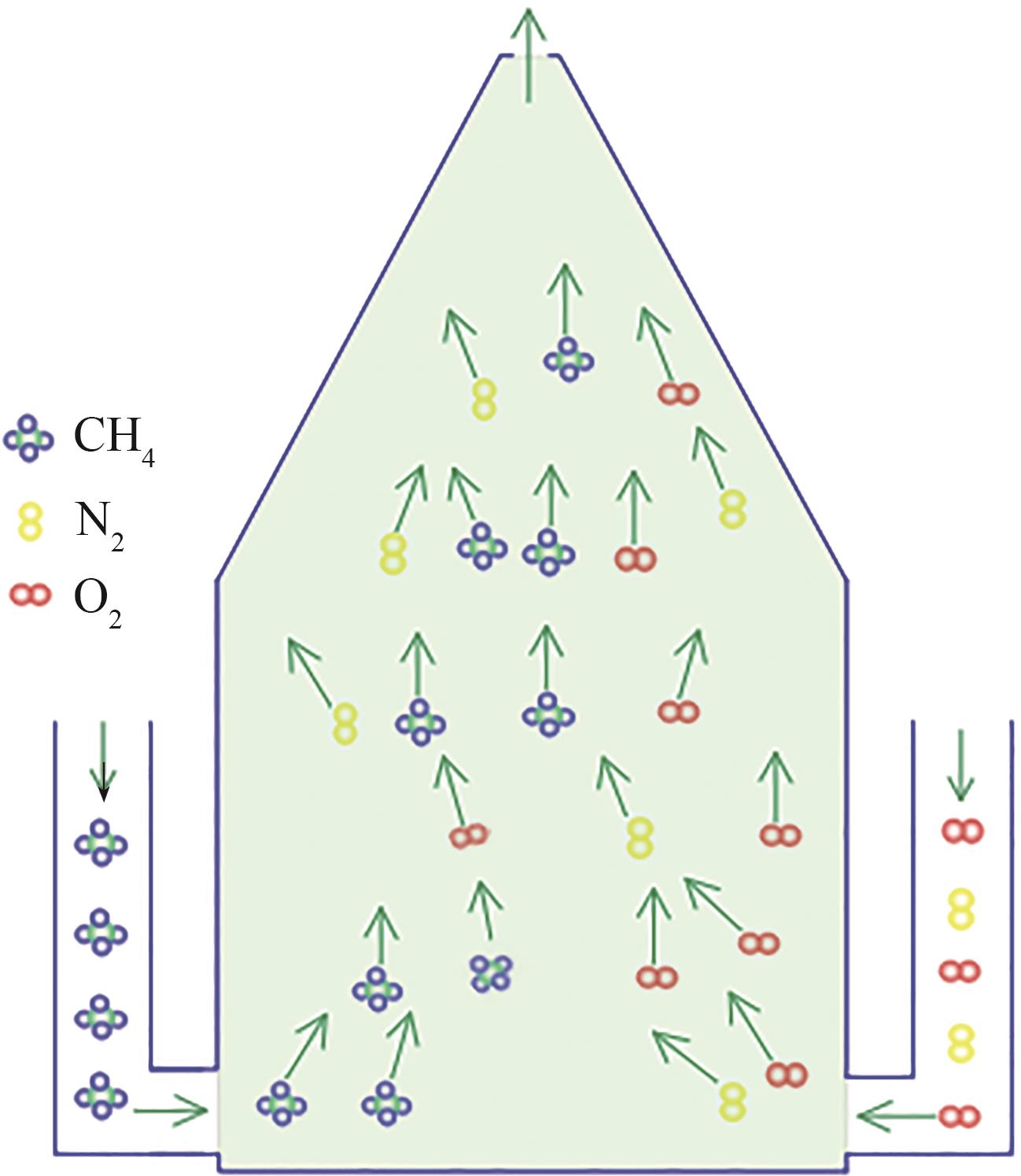
图3 CH4浓缩塔富集实验示意图[29]
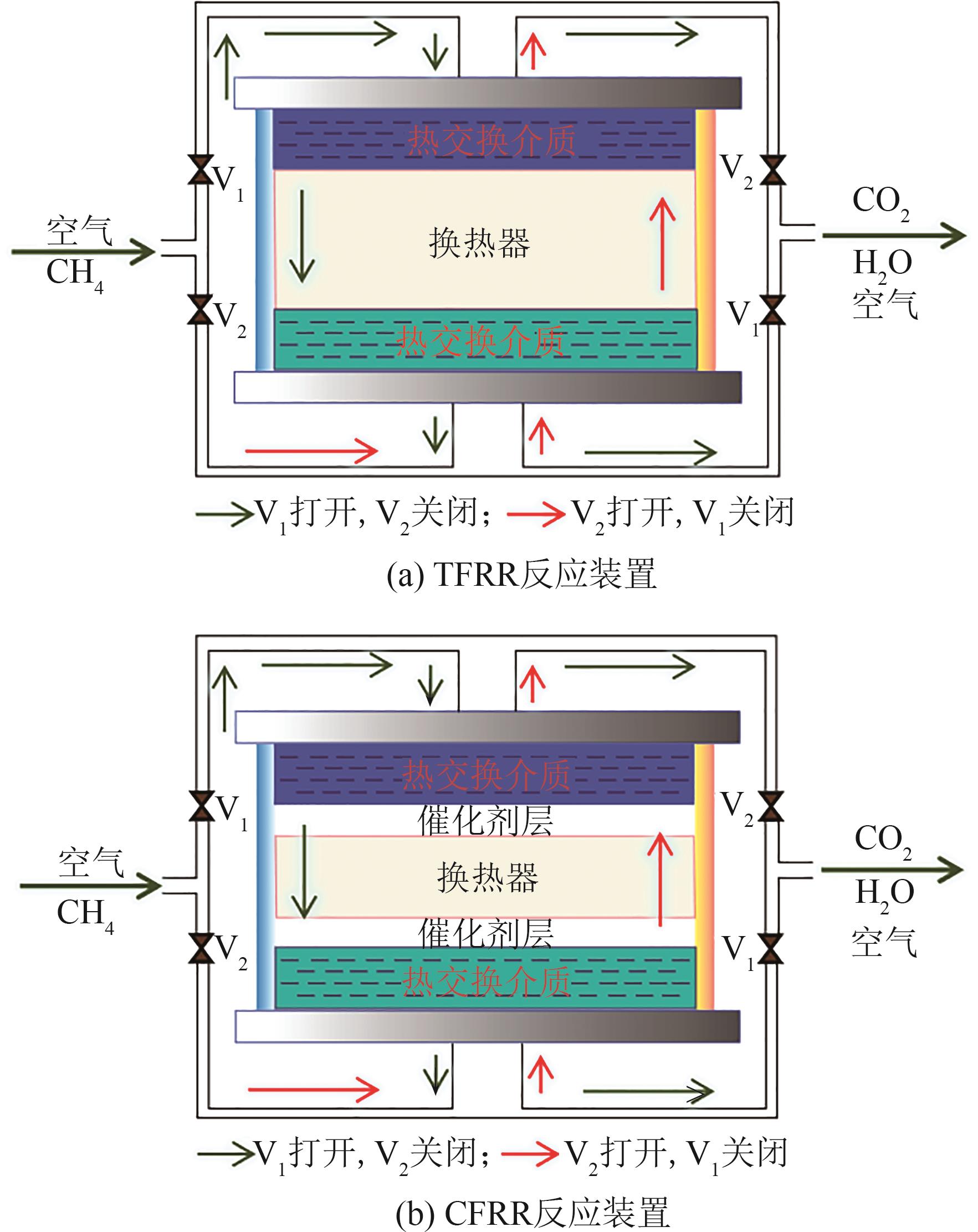
图4 TFRR和CFRR反应装置示意图
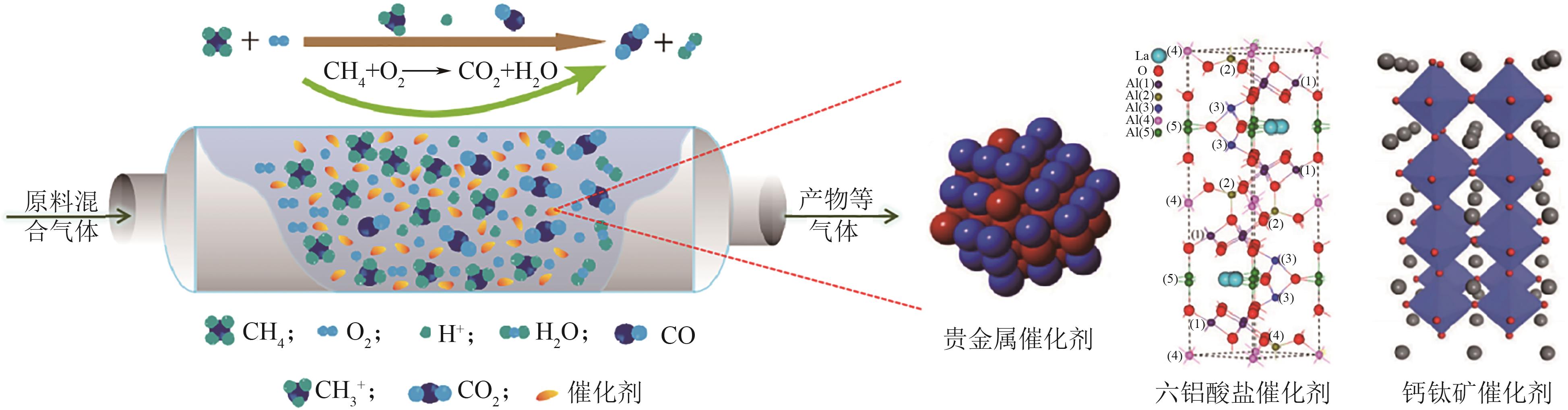
图5 甲烷催化氧化反应过程示意图[56]
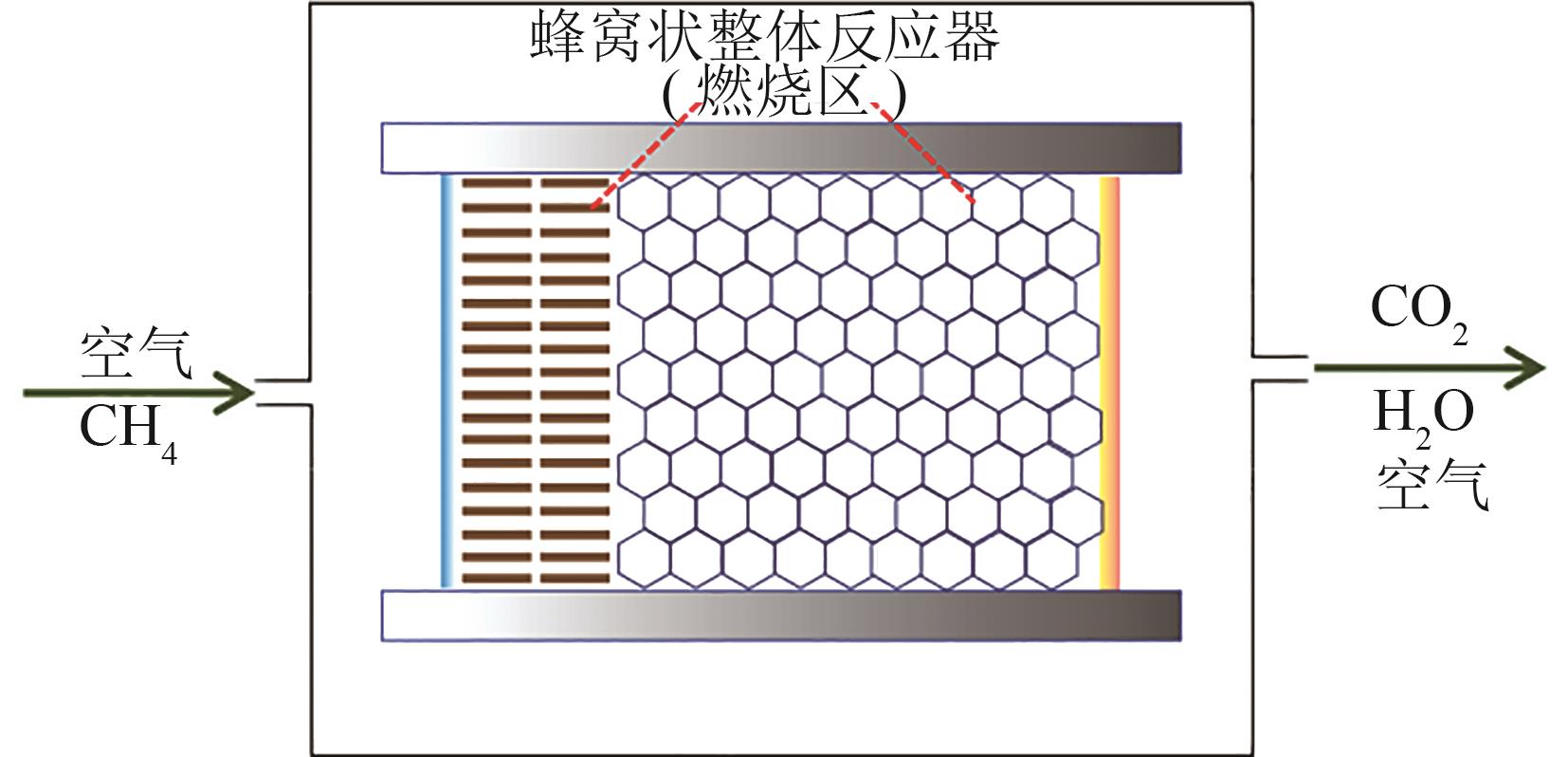
图6 CMR反应装置示意图
| 反应设备 | 工作原理 | 催化剂 | 气体 流向 | 起燃温度 | 最低甲烷体积分数 | 经济性分析 |
|---|---|---|---|---|---|---|
| TFRR | 甲烷与热交换介质直接在反应区进行热交换,受热达到燃烧所需要的温度发生氧化反应 | 无 | 逆流 | 1000℃ | 0.2% | 需要复杂的流动和高效的热管理系统,经济成本高 |
| CFRR | 甲烷与热交换介质在催化剂床层之间接触,受热达到燃烧所需要的温度发生催化氧化反应 | 有 | 逆流 | 350~800℃ | 0.1% | 设备设计和催化剂更换等过程难度大,经济成本高 |
| CMR | 甲烷与热交换介质在涂有催化剂的平行气流通道整体式反应器内接触,受热达到燃烧所需要的温度发生催化氧化反应 | 有 | 平行 | 500℃ | 0.4% | 设备设计、催化剂更换和整体催化剂的制造成本略低,经济成本较适中 |
表3 超低浓度甲烷热氧化利用技术主要设备比较[23,61]
| 反应设备 | 工作原理 | 催化剂 | 气体 流向 | 起燃温度 | 最低甲烷体积分数 | 经济性分析 |
|---|---|---|---|---|---|---|
| TFRR | 甲烷与热交换介质直接在反应区进行热交换,受热达到燃烧所需要的温度发生氧化反应 | 无 | 逆流 | 1000℃ | 0.2% | 需要复杂的流动和高效的热管理系统,经济成本高 |
| CFRR | 甲烷与热交换介质在催化剂床层之间接触,受热达到燃烧所需要的温度发生催化氧化反应 | 有 | 逆流 | 350~800℃ | 0.1% | 设备设计和催化剂更换等过程难度大,经济成本高 |
| CMR | 甲烷与热交换介质在涂有催化剂的平行气流通道整体式反应器内接触,受热达到燃烧所需要的温度发生催化氧化反应 | 有 | 平行 | 500℃ | 0.4% | 设备设计、催化剂更换和整体催化剂的制造成本略低,经济成本较适中 |
| 燃气轮机类型 | 工作原理 | 燃烧温度 | 甲烷最低体积分数 | NO x 排放量 | CO排放量 |
|---|---|---|---|---|---|
| EDL回热式燃气轮机 | 整体式蜂窝状反应器 | 700~1000℃ | 1.6% | 较高 | 低 |
| CSIRO稀燃催化燃气轮机 | 整体式反应堆 | — | 0.8% | 低 | 低 |
| IR微型燃气轮机 | 整体式反应堆 | 500℃ | 1.0% | 低 | 低 |
| 川崎催化燃烧燃气轮机 | 整体式反应堆 | 300~1000℃ | 2.0% | 低 | 低 |
表4 超低浓度甲烷利用稀燃燃气轮机性能比较[23]
| 燃气轮机类型 | 工作原理 | 燃烧温度 | 甲烷最低体积分数 | NO x 排放量 | CO排放量 |
|---|---|---|---|---|---|
| EDL回热式燃气轮机 | 整体式蜂窝状反应器 | 700~1000℃ | 1.6% | 较高 | 低 |
| CSIRO稀燃催化燃气轮机 | 整体式反应堆 | — | 0.8% | 低 | 低 |
| IR微型燃气轮机 | 整体式反应堆 | 500℃ | 1.0% | 低 | 低 |
| 川崎催化燃烧燃气轮机 | 整体式反应堆 | 300~1000℃ | 2.0% | 低 | 低 |
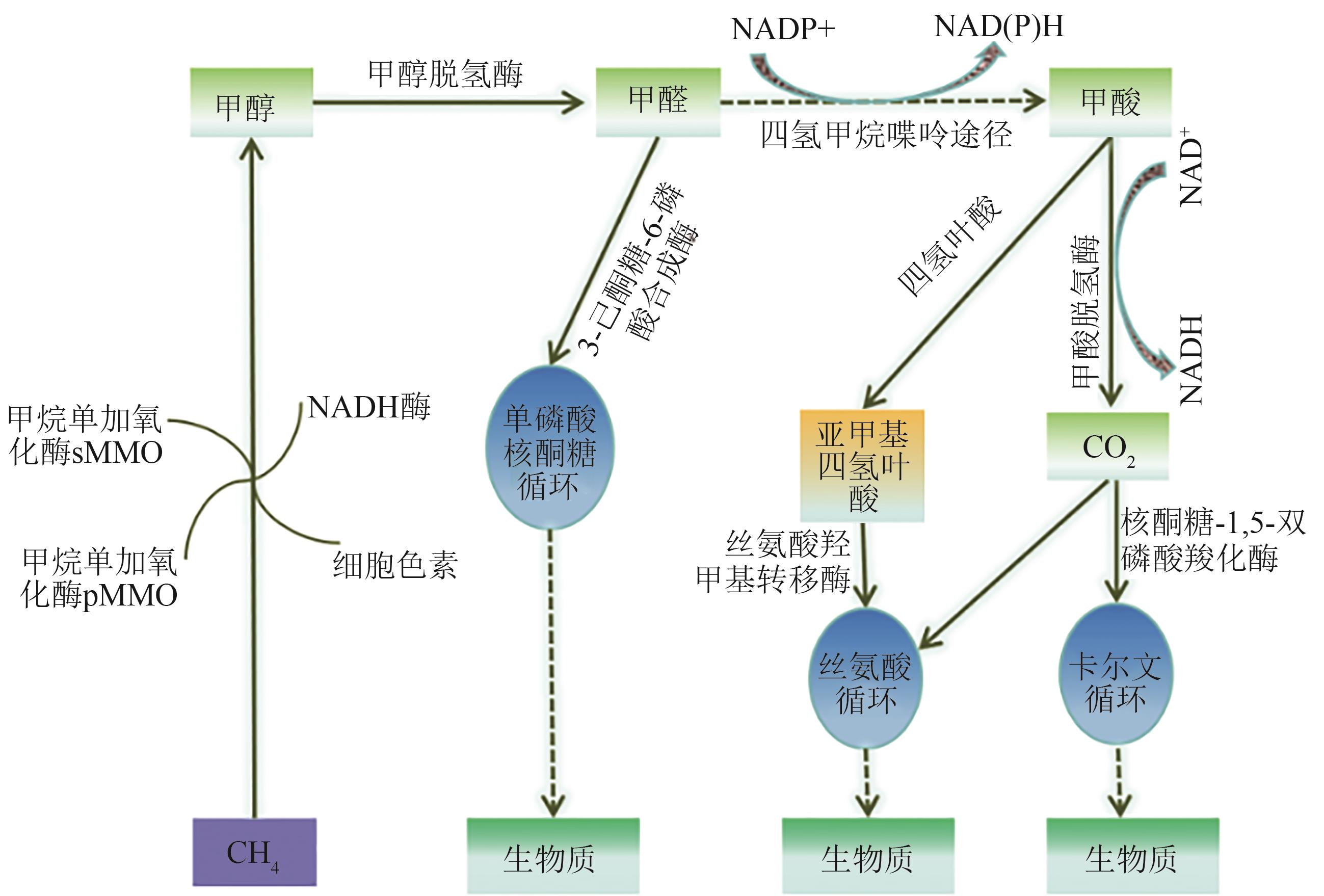
图7 甲烷氧化菌中甲烷的代谢途径示意图[67]
| [25] | GUO Shuqi, NGUYEN Diep Thi Ngoc, CHAU Tin Hoang Trung, et al. Systems metabolic engineering of methanotrophic bacteria for biological conversion of methane to value-added compounds[M]//Advances in biochemical engineering/biotechnology. Cham: Springer International Publishing, 2022: 91-126. |
| [26] | GE Xumeng, YANG Liangcheng, SHEETS Johnathon P, et al. Biological conversion of methane to liquid fuels: Status and opportunities[J]. Biotechnology Advances, 2014, 32(8): 1460-1475. |
| [27] | LI Yongling, LIU Yingshu, YANG Xiong, et al. Safety analysis on low concentration coal mine methane enrichment process by proportion pressure swing adsorption[C]//5th International Conference on Bio informatics and Biomedical Engineering (ICBBE), 2011,10-12. |
| [28] | FULCHAND Pahade Ravindra, BERNARD Saunders John, JOSEPH Maloney James. Process for separating methane and nitrogen: DE3664375[P]. 1989-08-17. |
| [29] | WANG Wen, WANG Heng, LI Huamin, et al. Experimental enrichment of low-concentration ventilation air methane in free diffusion conditions[J]. Energies, 2018, 11(2): 428. |
| [30] | PETHANI Kishan Bharatbhai, GEICK Thomas, KUHLA Björn. A pilot study to capture methane from the exhausted air of dairy cows using a cryogenic approach[J]. Journal of Environmental Management, 2024, 356: 120588. |
| [31] | 孙恒, 朱鸿梅, 舒丹. 一种低浓度煤层气低温液化分馏工艺的模拟与分析[J]. 低温与超导, 2009, 37(8): 21-23. |
| SUN Heng, ZHU Hongmei, SHU Dan. Simulation and analysis of a liquefaction and separation process of low concentration CBM[J]. Cryogenics and Superconductivity, 2009, 37(8): 21-23. | |
| [32] | LI Peiyuan, HANDAN TEZEL F. Adsorption separation of N2, O2, CO2 and CH4 gases by β-zeolite[J]. Microporous and Mesoporous Materials, 2007, 98(1/2/3): 94-101. |
| [33] | MULGUNDMATH V P, TEZEL F H, HOU F, et al. Binary adsorption behaviour of methane and nitrogen gases[J]. Journal of Porous Materials, 2012, 19(4): 455-464. |
| [34] | ZIELINSKA I, WARMUZINSKI K, TANCZYK M. Methane recovery from low-concentration sources by permeation through polymeric membranes[J]. Chemical Papers, 2012,66(3): 177-184. |
| [35] | BAKER Richard W, LOKHANDWALA Kaaeid A, WIJMANS Johannes G, et al. Nitrogen removal from natural gas using two types of membranes: US6630011[P]. 2003-10-07. |
| [36] | BAKER Richard W, LOKHANDWALA Kaaeid. Natural gas processing with membranes: An overview[J]. Industrial & Engineering Chemistry Research, 2008, 47(7): 2109-2121. |
| [37] | KADIOGLU Ozge, KESKIN Seda. Efficient separation of helium from methane using MOF membranes[J]. Separation and Purification Technology, 2018, 191: 192-199. |
| [38] | HE Xuezhong, LEI Linfeng. Optimizing methane recovery: Techno-economic feasibility analysis of N2-selective membranes for the enrichment of ventilation air methane[J]. Separation and Purification Technology, 2021, 259: 118180. |
| [39] | LIANG Yueyao, YU Caijiao, JU Jingge, et al. Polymer-supported ultra-thin two-dimensional ZIF-L membranes through in situ interface exfoliation for gas separation[J]. Science Bulletin, 2020, 65(21): 1788-1791. |
| [40] | GU Zhenjie, YANG Zibo, SUN Yuxiu, et al. Large-area vacuum-treated ZIF-8 mixed-matrix membrane for highly efficient methane/nitrogen separation[J]. AIChE Journal, 2022, 68(9): e17749. |
| [41] | LI Zhikai, WU Zhiwei, QIN Zhangfeng, et al. Demonstration of mitigation and utilization of ventilation air methane in a pilot scale catalytic reverse flow reactor[J]. Fuel Processing Technology, 2017, 160: 102-108. |
| [42] | 康建东, 兰波, 邹维峰. 煤矿五床式乏风瓦斯蓄热氧化装置设计与应用[J]. 煤炭科学技术, 2015, 43(2): 136-139. |
| KANG Jiandong, LAN Bo, ZOU Weifeng. Design and application on five-bed type thermal accumulation oxidized device of mine ventilation air methane[J]. Coal Science and Technology, 2015, 43(2): 136-139. | |
| [43] | LAN Bo, LI Yourong, ZHAO Xusheng, et al. Industrial-scale experimental study on the thermal oxidation of ventilation air methane and the heat recovery in a multibed thermal flow-reversal reactor[J]. Energies, 2018, 11(6): 1578. |
| [44] | LI Qingzhao, LIN Baiquan, YUAN Desheng, et al. Demonstration and its validation for ventilation air methane (VAM) thermal oxidation and energy recovery project[J]. Applied Thermal Engineering, 2015, 90: 75-85. |
| [45] | 贾剑. 乏风氧化及余热利用技术在山西潞安高河煤矿的应用[J]. 矿业安全与环保, 2014, 41(6): 68-72, 76. |
| JIA Jian. Application of ventilation air methane oxidization and waste heat utilization technology in Shanxi Lu'an gaohe coal mine[J]. Mining Safety & Environmental Protection, 2014, 41(6): 68-72, 76. | |
| [46] | 高鹏飞, 孙东玲, 霍春秀, 等. 超低浓度瓦斯蓄热氧化利用技术研究进展[J]. 煤炭科学技术, 2018, 46(12): 67-73. |
| GAO Pengfei, SUN Dongling, HUO Chunxiu, et al. Study progress on thermal oxidized utilization technology of ultra low concentration gas[J]. Coal Science and Technology, 2018, 46(12): 67-73. | |
| [47] | 王泽昱, 马克东, 王娟, 等. 非贵金属类甲烷催化燃烧催化剂的研究进展[J]. 中国沼气, 2019, 37(1): 9-14. |
| WANG Zeyu, MA Kedong, WANG Juan, et al. Research progress of non-noble-metal catalysts for methane catalytic combustion[J]. China Biogas, 2019, 37(1): 9-14. | |
| [48] | 张洪雁, 杜双利, 王雪峰. 非贵金属氧化物甲烷催化燃烧催化剂的研究进展[J]. 天然气化工(C1化学与化工), 2021, 46(2): 10-14, 127. |
| ZHANG Hongyan, DU Shuangli, WANG Xuefeng. Research progress of non-noble metal catalysts for methane catalytic combustion[J]. Natural Gas Chemical Industry, 2021, 46(2): 10-14, 127. | |
| [49] | 楚培齐, 王赛飞, 赵世广, 等. 甲烷催化燃烧反应机理及催化剂研究进展[J]. 燃料化学学报, 2022, 50(2): 180-194. |
| CHU Peiqi, WANG Saifei, ZHAO Shiguang, et al. Research progress of reaction mechanism and catalysts on catalytic methane combustion[J]. Journal of Fuel Chemistry and Technology, 2022, 50(2): 180-194. | |
| [50] | SETIAWAN Adi, FRIGGIERI Jarrod, KENNEDY Eric M, et al. Catalytic combustion of ventilation air methane (VAM)-long term catalyst stability in the presence of water vapour and mine dust[J]. Catal Sci Technol, 2014, 4(6): 1793-1802. |
| [51] | KINNUNEN Niko M, HIRVI Janne T, KALLINEN Kauko, et al. Case study of a modern lean-burn methane combustion catalyst for automotive applications: What are the deactivation and regeneration mechanisms?[J]. Applied Catalysis B: Environmental, 2017, 207: 114-119. |
| [52] | CHEN Jianjun, WU Yang, HU Wei, et al. Insights into the role of Pt on Pd catalyst stabilized by magnesia-alumina spinel on gama-alumina for lean methane combustion: Enhancement of hydrothermal stability[J]. Molecular Catalysis, 2020, 496: 111185. |
| [53] | ZHAO Guofeng, PAN Xiaxia, ZHANG Zhiqiang, et al. A thin-felt Pd-MgO-Al2O3/Al-fiber catalyst for catalytic combustion of methane with resistance to water-vapor poisoning[J]. Journal of Catalysis, 2020, 384: 122-135. |
| [54] | NOMURA Kazuhiro, NORO Kiyoshi, NAKAMURA Yasuhisa, et al. Combustion of a trace amount of CH4 in the presence of water vapor over ZrO2-supported Pd catalysts[J]. Catalysis Letters, 1999, 58(2): 127-130. |
| [55] | TAN Linyan, XIANG Ganghua, LIU Zhigang. Thermally stable Pd/CeO2@SiO2 with a core-shell structure for catalytic lean methane combustion[J]. Nanoscale, 2024, 16(13): 6720-6728. |
| [56] | HE Li, FAN Yilin, BELLETTRE Jérôme, et al. A review on catalytic methane combustion at low temperatures: Catalysts, mechanisms, reaction conditions and reactor designs[J]. Renewable and Sustainable Energy Reviews, 2020, 119: 109589. |
| [57] | ZHANG Yagang, QIN Zhangfeng, WANG Guofu, et al. Catalytic performance of MnO x -NiO composite oxide in lean methane combustion at low temperature[J]. Applied Catalysis B: Environmental, 2013, 129: 172-181. |
| [58] | TAN Xihan, HAN Ning, CHEN Huibing, et al. Investigation of perovskite BaCe1- x Mn x O3- δ for methane combustion[J]. Ceramics International, 2021, 47(7): 8762-8768. |
| [59] | XU Haiwen, LI Danyang, JIANG Lei, et al. Enhanced thermal stability of lean methane combustion by structural interactions of CeO2 with Pt/3DOM LaFeO3 catalysts[J]. Fuel, 2024, 364: 131069. |
| [60] | FENG Xiangbo, JIANG Lei, LI Danyang, et al. Progress and key challenges in catalytic combustion of lean methane[J]. Journal of Energy Chemistry, 2022, 75: 173-215. |
| [61] | 董之润, 王恒, 张积浩, 等. 矿井通风瓦斯热氧化与催化氧化技术之比较[J]. 环境与可持续发展, 2016, 41(1): 56-59. |
| DONG Zhirun, WANG Heng, ZHANG Jihao, et al. Comparison of thermal oxidation and catalytic oxidation technology for ventilation air methane[J]. Environment and Sustainable Development, 2016, 41(1): 56-59. | |
| [62] | SETIAWAN Adi, KENNEDY Eric M, STOCKENHUBER Michael. Development of combustion technology for methane emitted from coal-mine ventilation air systems[J]. Energy Technology, 2017, 5(4): 521-538. |
| [63] | SU S, BEATH A, MALLETT C. Coal mine ventilation air methane catalytic combustion gas turbine[M]//Greenhouse gas control technologies: 6th international conference. Amsterdam: Elsevier, 2003: 1287-1292. |
| [64] | SCHIRO Fabio, STOPPATO Anna. Experimental investigation of emissions and flame stability for steel and metal fiber cylindrical premixed burners[J]. Combustion Science and Technology, 2019, 191(3): 453-471. |
| [65] | BAGHERNAVEHSI Haleh, FAZELI Ali. Comparison of conventional and metal fiber burners in a compact methane reformer using CFD modeling[J]. International Journal of Hydrogen Energy, 2023, 48(74): 28733-28746. |
| [66] | WANG Guanqing, HUANG Longfei, TU Huaxin, et al. Stable lean co-combustion of ammonia/methane with air in a porous burner[J]. Applied Thermal Engineering, 2024, 248: 123092. |
| [67] | 郭树奇, 费强. 甲烷生物利用及嗜甲烷菌的工程改造[J]. 生物工程学报, 2021, 37(3): 816-830. |
| GUO Shuqi, FEI Qiang. Bioconversion of methane by metabolically engineered methanotrophs[J]. Chinese Journal of Biotechnology, 2021, 37(3): 816-830. | |
| [68] | ZHANG Ruilin, ZHOU Yinbo, YU Hong, et al. Experimental investigation of the use of methanotrophs for the degradation of low-concentration methane[J]. Arabian Journal of Geosciences, 2021, 14(8): 685. |
| [69] | 孙文静, 孙高格, 张舒芸. 生物炭-甲烷氧化菌-黏土覆盖层的甲烷去除效能[J]. 岩土工程学报, 2024, 46(12): 2529-2537. |
| SUN Wenjing, SUN Gaoge, ZHANG Shuyun. Methane removal efficiency in biochar-methanotroph-clay landfill cover[J]. Chinese Journal of Geotechnical Engineering, 2024, 46(12): 2529-2537. | |
| [70] | 严程, 梅娟, 赵由才. 好氧甲烷氧化菌及其工程应用进展[J]. 生物工程学报, 2022, 38(4): 1322-1338. |
| YAN Cheng, MEI Juan, ZHAO Youcai. Engineering application of aerobic methane oxidizing bacteria (methanotrophs): A review[J]. Chinese Journal of Biotechnology, 2022, 38(4): 1322-1338. | |
| [71] | 郭树奇, 焦子悦, 费强. 基于化学品生物合成的嗜甲烷菌人工细胞构建及应用进展[J]. 合成生物学, 2021, 2(6): 1017-1029. |
| GUO Shuqi, JIAO Ziyue, FEI Qiang. Progress in construction and applications of methanotrophic cell factory for chemicals biosynthesis[J]. Synthetic Biology Journal, 2021, 2(6): 1017-1029. | |
| [72] | 侯千姿, 郭心怡, 焦子悦, 等. 好氧性嗜甲烷菌生物能供给与调控的研究进展[J]. 化工进展, 2023, 42(1): 86-93. |
| HOU Qianzi, GUO Xinyi, JIAO Ziyue, et al. Research progress on energy supply and regulation of aerobic methanotrophs[J]. Chemical Industry and Engineering Progress, 2023, 42(1): 86-93. | |
| [73] | 蔺玉萍, 王钦宏. 工业微生物遗传和环境扰动的调控和适应进化[J]. 生物工程学报, 2019, 35(10): 1925-1941. |
| LIN Yuping, WANG Qinhong. Regulation and adaptive evolution of industrial microorganisms towards genetic and environmental disturbances[J]. Chinese Journal of Biotechnology, 2019, 35(10): 1925-1941. | |
| [1] | FELDMAN D R, COLLINS W D, BIRAUD S C, et al. Observationally derived rise in methane surface forcing mediated by water vapour trends[J]. Nature Geoscience, 2018, 11(4): 238-243. |
| [2] | IEA. Global Methane Tracker 2023[Z]. . |
| [3] | 中国碳市场进展报告(2024年)[R].中华人民共和国生态环境部, 2024年. |
| Progress Report of China’s National Carbon Market (2024) [R]. Ministry of Ecology and Environment of the People’s Republic of China, 2024. | |
| [4] | 桑树勋, 刘世奇, 韩思杰, 等. 中国煤炭甲烷管控与减排潜力[J]. 煤田地质与勘探, 2023, 51(1): 159-175. |
| SANG Shuxun, LIU Shiqi, HAN Sijie, et al. Coal methane control and its emission reduction potential in China[J]. Coal Geology & Exploration, 2023, 51(1): 159-175. | |
| [5] | Global Energy Monitor 2024[Z]. https://globalenergymonitor.org/. |
| [6] | IPCC. In Climate Change 2021: The Physical Science Basis[R]. Working Group Ⅰ to the Sixth Assessment Report of the Intergovernmental Panel on Climate Change. Cambridge University Press. 2021. |
| [7] | 黄鑫, 焦熙, 黄国宝, 等. 甲烷催化燃烧钯基催化剂研究进展[J]. 低碳化学与化工, 2023, 48(5): 147-154. |
| HUANG Xin, JIAO Xi, HUANG Guobao, et al. Research progress on Pd-based catalysts for methane catalytic combustion[J]. Low-Carbon Chemistry and Chemical Engineering, 2023, 48(5): 147-154. | |
| [8] | 马翠梅, 戴尔阜, 刘乙辰, 等. 中国煤炭开采和矿后活动甲烷逃逸排放研究[J]. 资源科学, 2020, 42(2): 311-322. |
| MA Cuimei, DAI Erfu, LIU Yichen, et al. Methane fugitive emissions from coal mining and post-mining activities in China[J]. Resources Science, 2020, 42(2): 311-322. | |
| [9] | 刘文革, 徐鑫, 韩甲业, 等. 碳中和目标下煤矿甲烷减排趋势模型及关键技术[J]. 煤炭学报, 2022, 47(1): 470-479. |
| LIU Wenge, XU Xin, HAN Jiaye, et al. Trend model and key technologies of coal mine methane emission reduction aiming for the carbon neutrality[J]. Journal of China Coal Society, 2022, 47(1): 470-479. | |
| [10] | LI Xiyue, GE Binbin, YAN Jin, et al. Review on hydrate-based CH4 separation from low-concentration coalbed methane in China[J]. Energy & Fuels, 2021, 35(10): 8494-8509. |
| [11] | 栗硕豪, 巩雨晴, 付沈光, 等. 煤矿瓦斯变压吸附提纯甲烷的研究进展[J]. 中国科学: 化学, 2023, 53(6): 992-1007. |
| LI Shuohao, GONG Yuqing, FU Shenguang, et al. Research progress of methane purification from coal mine gas by variable pressure adsorption[J]. Scientia Sinica Chimica, 2023, 53(6): 992-1007. | |
| [12] | David URSUEGUÍA, Eva DÍAZ, Salvador ORDÓÑEZ. Adsorbents selection for the enrichment of low-grade methane coal mine emissions by temperature and pressure swing adsorption technologies[J]. Journal of Natural Gas Science and Engineering, 2022, 105: 104721. |
| [13] | SALEMAN Thomas L, LI Gang Kevin), RUFFORD Thomas E, et al. Capture of low grade methane from nitrogen gas using dual-reflux pressure swing adsorption[J]. Chemical Engineering Journal, 2015, 281: 739-748. |
| [14] | Eric F MAY, ZHANG Yechun, SALEMAN Thomas L H, et al. Demonstration and optimisation of the four dual-reflux pressure swing adsorption configurations[J]. Separation and Purification Technology, 2017, 177: 161-175. |
| [15] | KEARNS David T, WEBLEY Paul A. Modelling and evaluation of dual-reflux pressure swing adsorption cycles: Part Ⅰ. Mathematical models[J]. Chemical Engineering Science, 2006, 61(22): 7223-7233. |
| [16] | KEARNS David T, WEBLEY Paul A. Modelling and evaluation of dual reflux pressure swing adsorption cycles: Part Ⅱ. Productivity and energy consumption[J]. Chemical Engineering Science, 2006, 61(22): 7234-7239. |
| [17] | HU Guoping, ZHAO Qinghu, TAO Lefu, et al. Enrichment of low grade CH4 from N2/CH4 mixtures using vacuum swing adsorption with activated carbon[J]. Chemical Engineering Science, 2021, 229: 116152. |
| [18] | OUYANG Shaobo, XU Shaoping, SONG Ning, et al. Coconut shell-based carbon adsorbents for ventilation air methane enrichment[J]. Fuel, 2013, 113: 420-425. |
| [19] | YANG Xiong, LIU Yingshu, LI Ziyi, et al. Vacuum exhaust process in pilot-scale vacuum pressure swing adsorption for coal mine ventilation air methane enrichment[J]. Energies, 2018, 11(5): 1030. |
| [20] | WANG Xinxin, WANG Zujing, WEI Kangwei, et al. Kinetic-separation vacuum swing adsorption for safe and efficient enrichment of low concentration coal mine gas[J]. Separation and Purification Technology, 2022, 299: 121683. |
| [21] | Jun-Seok BAE, YU Xin xiang, SU Shi. Enrichment of low-quality methane by various combinations of vacuum and temperature swing adsorption processes[J]. Industrial & Engineering Chemistry Research, 2022, 61(38): 14298-14304. |
| [22] | MENON V C, KOMARNENI S. Porous adsorbents for vehicular natural gas storage: A review[J]. Journal of Porous Materials, 1998, 5(1): 43-58. |
| [23] | LIU Hong, DING Wei, ZHOU Fubao, et al. An overview and outlook on gas adsorption: For the enrichment of low concentration coalbed methane[J]. Separation Science and Technology, 2020, 55(6): 1102-1114. |
| [24] | HUANG Qinglin, FAROOQ S, KARIMI I A. Binary and ternary adsorption kinetics of gases in carbon molecular sieves[J]. Langmuir, 2003, 19(14): 5722-5734. |
| [1] | 夏猛, 赵雪冰, 蒋国强, 卢滇楠, 刘铮. 电-酶催化CO2转化生产化学品的研究展望[J]. 化工进展, 2025, 44(5): 2825-2833. |
| [2] | 冯娇, 刘明明, 刘耀, 王昕, 陈可泉. 利用可再生原料生物合成脂肪族短链二元胺与醇的研究进展[J]. 化工进展, 2025, 44(5): 2655-2666. |
| [3] | 张新宇, 陶梦滢, 于小婷, 赵钟兴, 赵祯霞. 介孔金属有机骨架固定化漆酶及其活性艳蓝KN-R降解性能[J]. 化工进展, 2025, 44(3): 1758-1767. |
| [4] | 张甜甜, 刘霞, 张红飞, 李倩, 周鸿宇, 李冰麟. 微水无溶剂体系酶促制备DHA-磷酯酰丝氨酸[J]. 化工进展, 2025, 44(2): 1033-1041. |
| [5] | 熊小鹤, 张一楠, 张京晶, 杨富鑫, 谭厚章. 基于沉降炉的锅炉耦合掺烧退役风电有机固废实验[J]. 化工进展, 2024, 43(S1): 555-563. |
| [6] | 陈王觅, 席北斗, 李鸣晓, 叶美瀛, 侯佳奇, 于承泽, 魏域芳, 孟繁华. 热解系统碳排放削减技术研究进展[J]. 化工进展, 2024, 43(S1): 479-503. |
| [7] | 王宁, 邓世丰, 曲腾, 邵怀爽, 赵钦新. 全预混紧凑缝隙式水冷燃气锅炉燃烧特性模拟[J]. 化工进展, 2024, 43(9): 4871-4881. |
| [8] | 狄子琛, 雷飞霞, 常成功, 陈文慧, 程芳琴. 焦化行业碳氢资源利用潜力与低碳路径评价[J]. 化工进展, 2024, 43(5): 2862-2871. |
| [9] | 姚远, 井红权, 尹玉婷, 齐帅亮, 王艳语, 侯翠红. “双碳”背景下热法黄磷生产技术研究现状及建议[J]. 化工进展, 2024, 43(4): 2104-2116. |
| [10] | 刘世达, 王海燕, 侯栓弟, 刘忠生, 廖昌建, 王宽岭. 我国石化储罐VOCs安全高效深度减排、回收和热氧化技术进展[J]. 化工进展, 2024, 43(4): 2063-2076. |
| [11] | 王璧琮, 潘大伟, 谢锐, 巨晓洁, 刘壮, 汪伟, 褚良银. 复合酶@ZIF-8的制备及其黑米花青素提取性能[J]. 化工进展, 2024, 43(3): 1403-1411. |
| [12] | 杨双霞, 侯建军, 李天津, 陈雷, 孙来芝, 华栋梁. 抗生素菌渣热解技术研究现状及展望[J]. 化工进展, 2024, 43(12): 6933-6943. |
| [13] | 邵斌, 栗粟, 马榕廷, 谢志成, 高梓皓, 贾中昊, 王文慧, 孙哲毅, 胡军. 高碳排工业“碳中和”潜在途径[J]. 化工进展, 2024, 43(11): 5995-6009. |
| [14] | 苏辉辉, 王恩禄, 徐逸飞. 液体吸收剂捕集燃烧后CO2的研究进展[J]. 化工进展, 2024, 43(10): 5734-5747. |
| [15] | 王玉杰, 张艳梅, 栾金义, 赵之平. 酶催化固碳过程及其强化技术研究进展[J]. 化工进展, 2024, 43(1): 232-245. |
| 阅读次数 | ||||||
|
全文 |
|
|||||
|
摘要 |
|
|||||