化工进展 ›› 2025, Vol. 44 ›› Issue (6): 3618-3629.DOI: 10.16085/j.issn.1000-6613.2024-0673
• 资源与环境化工 • 上一篇
强化黄铜矿细菌浸出的研究进展
武敏( ), 廖亚龙(), 贾小宝, 杨双宇
- 昆明理工大学冶金与能源工程学院,云南 昆明 650093
-
收稿日期:2024-04-22修回日期:2024-06-18出版日期:2025-06-25发布日期:2025-07-09 -
通讯作者:廖亚龙 -
作者简介:武敏(1998—),硕士研究生,研究方向为复杂有色金属资源综合利用。E-mail: wuminem@stu.kust.edu.cn。 -
基金资助:国家自然科学基金(21978122)
Research progress on enhancing bacterial leaching methods of chalcopyrite
WU Min(), LIAO Yalong(), JIA Xiaobao, YANG Shuangyu
- Faculty of Metallurgical and Energy Engineering, Kunming University of Science and Technology, Kunming 650093, Yunnan, China
-
Received:2024-04-22Revised:2024-06-18Online:2025-06-25Published:2025-07-09 -
Contact:LIAO Yalong

摘要:
细菌浸出法在黄铜矿浸出中具有低成本、低能耗、设备要求简单以及零排放等显著优势,契合现代工业可持续发展的需求。然而,实际应用过程存在钝化现象,导致浸出效率较低的突出问题。本文对黄铜矿细菌浸出过程的作用机理、钝化机制及强化方法进行了综述。分析表明,黄铜矿细菌浸出存在接触作用、非接触作用和协同作用三种反应方式,钝化现象形成机制缘于黄钾铁矾、硫单质和聚硫化物的产生;提高黄铜矿细菌浸出效率的强化方法有化学、物理学及生物学的途径,包括调节氧化还原电位、添加金属阳离子、使用氯化物、混合培养细菌、物理场强化、表面活性剂、光照和碳质物质等方法,核心在于调控氧化还原电位,避免矿物表面钝化层的形成。分析和总结各类强化方法的优势和局限性,为开发新型环保、高效的黄铜矿细菌浸出技术提供了重要参考。
中图分类号:
引用本文
武敏, 廖亚龙, 贾小宝, 杨双宇. 强化黄铜矿细菌浸出的研究进展[J]. 化工进展, 2025, 44(6): 3618-3629.
WU Min, LIAO Yalong, JIA Xiaobao, YANG Shuangyu. Research progress on enhancing bacterial leaching methods of chalcopyrite[J]. Chemical Industry and Engineering Progress, 2025, 44(6): 3618-3629.
| 种类 | 最适生长温度/℃ | 细菌名称 |
|---|---|---|
| 嗜温细菌 | <40 | 嗜酸氧化亚铁硫杆菌、嗜酸氧化硫硫杆菌、氧化亚铁钩端螺旋菌 |
| 中度嗜热细菌 | 40~55 | 嗜热硫氧化硫杆菌、嗜酸硫化杆菌、硫杆菌 |
| 极度嗜热细菌 | 55~80 | 布氏嗜酸菌、嗜热金属球菌、金属硫化叶菌 |
表1 黄铜矿细菌浸出的典型菌种
| 种类 | 最适生长温度/℃ | 细菌名称 |
|---|---|---|
| 嗜温细菌 | <40 | 嗜酸氧化亚铁硫杆菌、嗜酸氧化硫硫杆菌、氧化亚铁钩端螺旋菌 |
| 中度嗜热细菌 | 40~55 | 嗜热硫氧化硫杆菌、嗜酸硫化杆菌、硫杆菌 |
| 极度嗜热细菌 | 55~80 | 布氏嗜酸菌、嗜热金属球菌、金属硫化叶菌 |
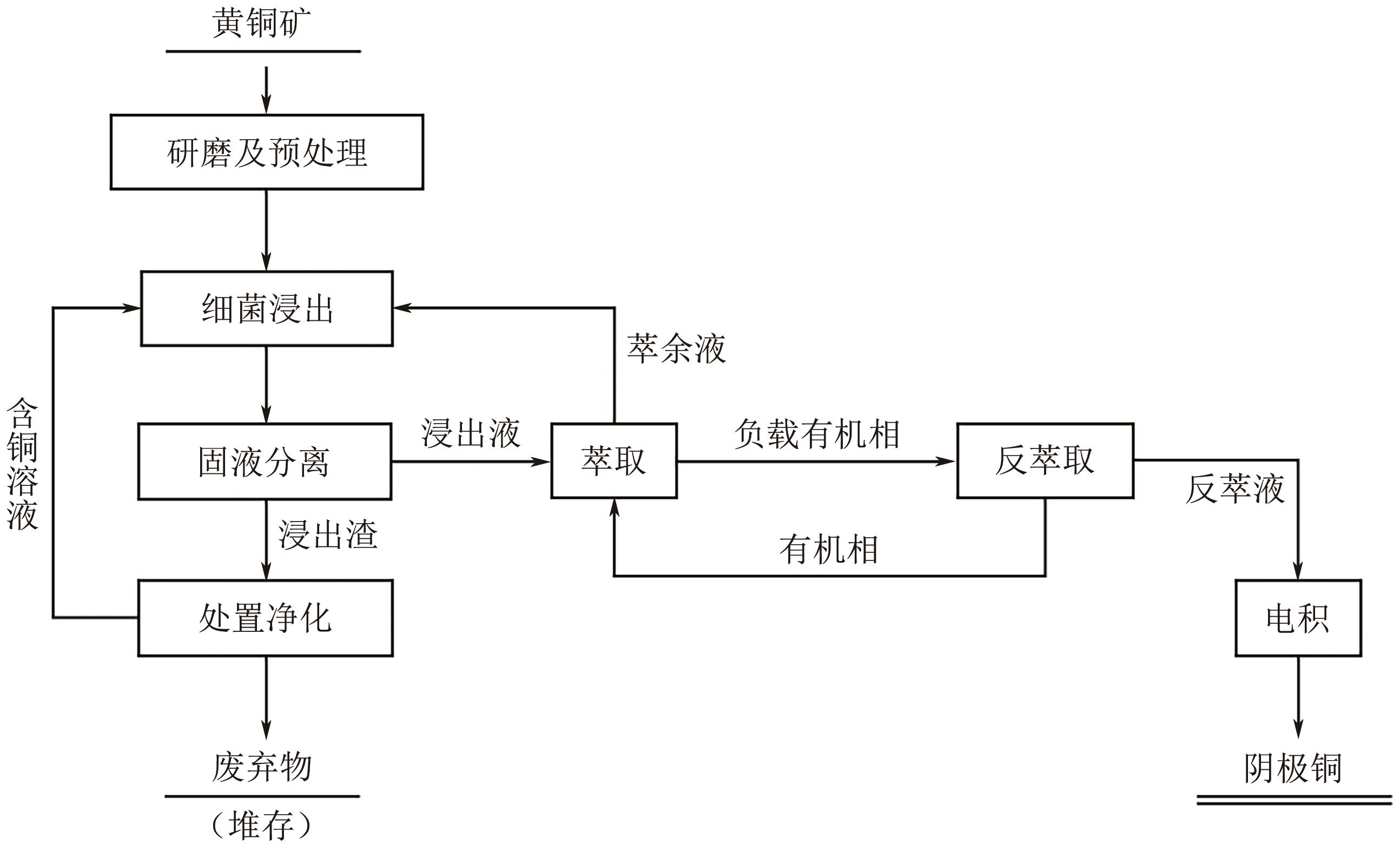
图1 黄铜矿细菌浸出工艺流程示意图
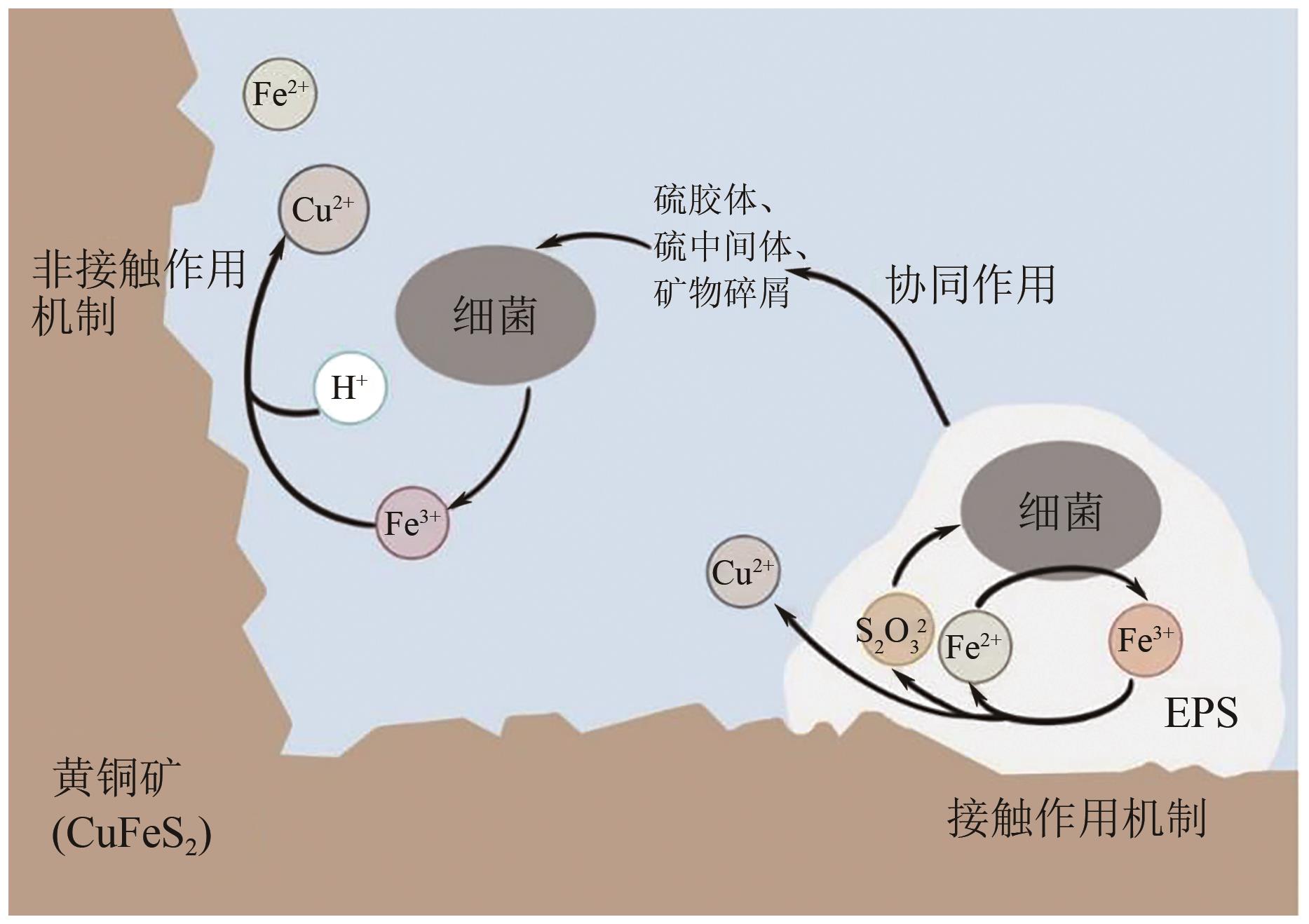
图2 非接触作用、接触作用和协同作用机制示意图
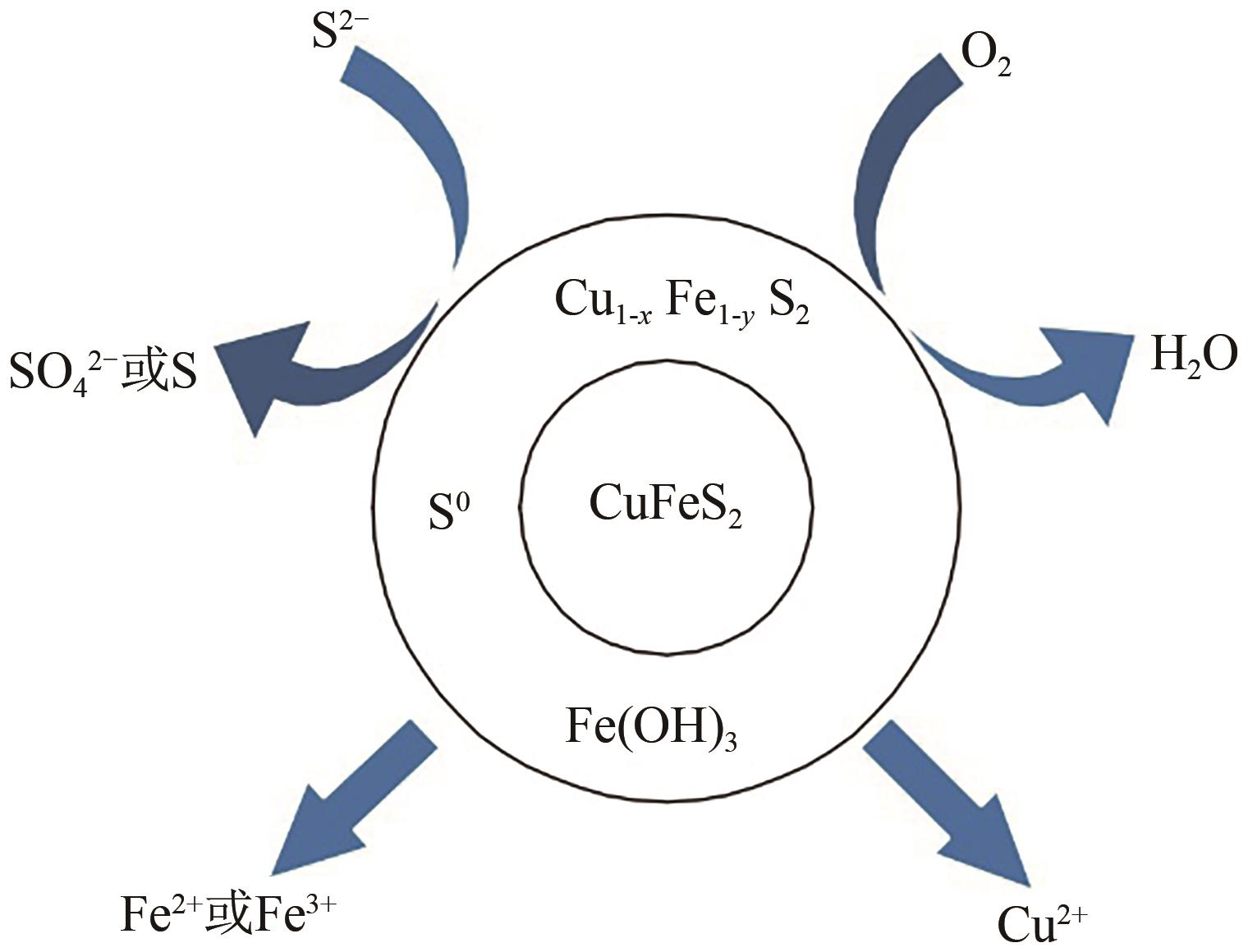
图3 钝化层形成过程示意图[12]
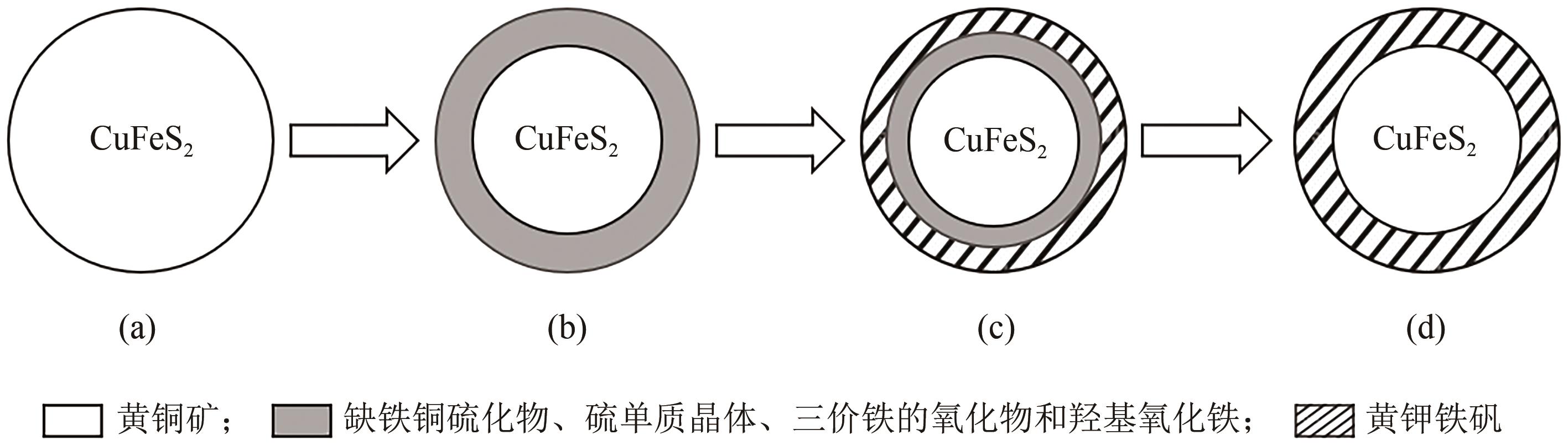
图4 细菌浸出过程中黄铜矿表面变化示意图
| [1] | ELSHKAKI Ayman, GRAEDEL T E, CIACCI Luca, et al. Copper demand, supply, and associated energy use to 2050[J]. Global Environmental Change, 2016, 39: 305-315. |
| [2] | JENA Silpa Sweta, TRIPATHY Sunil Kumar, MANDRE N R, et al. Sustainable use of copper resources: Beneficiation of low-grade copper ores[J]. Minerals, 2022, 12(5): 545. |
| [3] | PIETRZYK S, TORA B. Trends in global copper mining—A review[J]. IOP Conference Series: Materials Science and Engineering, 2018, 427: 012002. |
| [4] | JI Guangxiong, LIAO Yalong, WU Yue, et al. A review on the research of hydrometallurgical leaching of low-grade complex chalcopyrite[J]. Journal of Sustainable Metallurgy, 2022, 8(3): 964-977. |
| [5] | YIN Shenghua, WANG Leiming, WU Aixiang, et al. Research progress in enhanced bioleaching of copper sulfides under the intervention of microbial communities[J]. International Journal of Minerals, Metallurgy and Materials, 2019, 26(11): 1337-1350. |
| [6] | ZHANG Xueming, ZHANG Shaohui, HUANG Tao, et al. Copper extraction from low-grade chalcopyrite in a bioleaching column assisted by bioelectrochemical system[J]. Environmental Science and Pollution Research International, 2022, 29(23): 35459-35470. |
| [7] | DEBERNARDI Gianfranco, CARLESI Carlos. Chemical-electrochemical approaches to the study passivation of chalcopyrite[J]. Mineral Processing and Extractive Metallurgy Review, 2013, 34(1): 10-41. |
| [8] | HONG Maoxin, LIU Shitong, HUANG Xiaotao, et al. A review on bornite (bio) leaching[J]. Minerals Engineering, 2021, 174: 107245. |
| [9] | TOLEDO Ailton Guilherme Rissoni, COSTA Rachel Biancalana, DELFORNO Tiago Palladino, et al. Exploring chalcopyrite (bio) leaching mechanisms under thermophilic conditions[J]. Minerals Engineering, 2023, 204: 108417. |
| [10] | 张仕奇, 杨洪英, 佟琳琳, 等. 硫化矿细菌浸出机理及协同作用研究现状[J]. 有色金属(冶炼部分), 2021(4): 1-10. |
| ZHANG Shiqi, YANG Hongying, TONG Linlin, et al. Research status of bioleaching of sulfide minerals and bacteria synergy mechanisms[J]. Nonferrous Metals (Extractive Metallurgy), 2021(4): 1-10. | |
| [11] | O’CONNOR G M, EKSTEEN J J. A critical review of the passivation and semiconductor mechanisms of chalcopyrite leaching[J]. Minerals Engineering, 2020, 154: 106401. |
| [12] | 谢浩松, 肖庆飞, 裴英杰, 等. 黄铜矿生物浸出的钝化机制及强化浸出方法[J]. 金属矿山, 2022(6): 74-81. |
| XIE Haosong, XIAO Qingfei, PEI Yingjie, et al. Passivation mechanism and enhanced leaching method of chalcopyrite bioleaching[J]. Metal Mine, 2022(6): 74-81. | |
| [13] | ZHAO Hongbo, ZHANG Yisheng, ZHANG Xian, et al. The dissolution and passivation mechanism of chalcopyrite in bioleaching: An overview[J]. Minerals Engineering, 2019, 136: 140-154. |
| [14] | CÓRDOBA E M, MUÑOZ J A, BLÁZQUEZ M L, et al. Leaching of chalcopyrite with ferric ion. Part Ⅰ: General aspects[J]. Hydrometallurgy, 2008, 93(3/4): 81-87. |
| [15] | Åke SANDSTRÖM, SHCHUKAREV Andrei, PAUL Jan. XPS characterisation of chalcopyrite chemically and bio-leached at high and low redox potential[J]. Minerals Engineering, 2005, 18(5): 505-515. |
| [16] | ZHU Wei, XIA Jinlan, YANG Yi, et al. Sulfur oxidation activities of pure and mixed thermophiles and sulfur speciation in bioleaching of chalcopyrite[J]. Bioresource Technology, 2011, 102(4): 3877-3882. |
| [17] | 杨洪英, 潘颢丹, 佟琳琳, 等. 黄铜矿表面生物氧化膜的形成过程[J]. 金属学报, 2012, 48(9): 1145-1152. |
| YANG Hongying, PAN Haodan, TONG Linlin, et al. Formation process of biological oxide film on chalcopyrite crystal surface[J]. Acta Metallurgica Sinica, 2012, 48(9): 1145-1152. | |
| [18] | PAN Haodan, YANG Hongying, TONG Linlin, et al. Control method of chalcopyrite passivation in bioleaching[J]. Transactions of Nonferrous Metals Society of China, 2012, 22(9): 2255-2260. |
| [19] | KARTAL Muhammet, XIA Fang, RALPH David, et al. Enhancing chalcopyrite leaching by tetrachloroethylene-assisted removal of sulphur passivation and the mechanism of jarosite formation[J]. Hydrometallurgy, 2020, 191: 105192. |
| [20] | DONG Yingbo, ZAN Jinyu, LIN Hai. Bioleaching of heavy metals from metal tailings utilizing bacteria and fungi: Mechanisms, strengthen measures, and development prospect[J]. Journal of Environmental Management, 2023, 344: 118511. |
| [21] | KLAUBER Craig, PARKER Andrew, VAN BRONSWIJK Wilhelm, et al. Sulphur speciation of leached chalcopyrite surfaces as determined by X-ray photoelectron spectroscopy[J]. International Journal of Mineral Processing, 2001, 62(1/2/3/4): 65-94. |
| [22] | BLIGHT K R, CANDY R M, RALPH D E. The preferential oxidation of orthorhombic sulfur during batch culture[J]. Hydrometallurgy, 2009, 99(1/2): 100-104. |
| [23] | YANG Yi, LIU Weihua, CHEN Miao. A copper and iron K-edge XANES study on chalcopyrite leached by mesophiles and moderate thermophiles[J]. Minerals Engineering, 2013, 48: 31-35. |
| [24] | YANG Yi, HARMER Sarah, CHEN Miao. Synchrotron-based XPS and NEXAFS study of surface chemical species during electrochemical oxidation of chalcopyrite[J]. Hydrometallurgy, 2015, 156: 89-98. |
| [25] | YANG Congren, JIAO Fen, QIN Wenqing. Co-bioleaching of chalcopyrite and silver-bearing bornite in a mixed moderately thermophilic culture[J]. Minerals, 2018, 8(1): 4. |
| [26] | TIAN Zuyuan, LI Haodong, WEI Qian, et al. Effects of redox potential on chalcopyrite leaching: An overview[J]. Minerals Engineering, 2021, 172: 107135. |
| [27] | MASAKI Yusei, HIRAJIMA Tsuyoshi, SASAKI Keiko, et al. Microbiological redox potential control to improve the efficiency of chalcopyrite bioleaching[J]. Geomicrobiology Journal, 2018, 35(8): 648-656. |
| [28] | HONG Maoxin, HUANG Xiaotao, GAN Xiaowen, et al. The use of pyrite to control redox potential to enhance chalcopyrite bioleaching in the presence of Leptospirillum ferriphilum[J]. Minerals Engineering, 2021, 172: 107145. |
| [29] | Daniela RÍOS, Sören BELLENBERG, CHRISTEL Stephan, et al. Potential of single and designed mixed cultures to enhance the bioleaching of chalcopyrite by oxidation-reduction potential control[J]. Hydrometallurgy, 2024, 224: 106245. |
| [30] | ZHAO Hongbo, WANG Jun, GAN Xiaowen, et al. Role of pyrite in sulfuric acid leaching of chalcopyrite: An elimination of polysulfide by controlling redox potential[J]. Hydrometallurgy, 2016, 164: 159-165. |
| [31] | MARHUAL N P, PRADHAN N, KAR R N, et al. Differential bioleaching of copper by mesophilic and moderately thermophilic acidophilic consortium enriched from same copper mine water sample[J]. Bioresource Technology, 2008, 99(17): 8331-8336. |
| [32] | THIRD K A, CORD-RUWISCH R, WATLING H R. Control of the redox potential by oxygen limitation improves bacterial leaching of chalcopyrite[J]. Biotechnology and Bioengineering, 2002, 78(4): 433-441. |
| [33] | 王康林, 韩效钊, 汪模辉, 等. 银离子在细菌浸出黄铜矿中的催化行为研究[J]. 矿冶工程, 2003, 23(5): 60-62. |
| WANG Kanglin, HAN Xiaozhao, WANG Mohui, et al. The study of catalyzing behavior of silver ions in bacterial leaching of chalcopyrite[J]. Mining and Metallurgical Engineering, 2003, 23(5): 60-62. | |
| [34] | XIA Jinlan, SONG Jianjun, LIU Hongchang, et al. Study on catalytic mechanism of silver ions in bioleaching of chalcopyrite by SR-XRD and XANES[J]. Hydrometallurgy, 2018, 180: 26-35. |
| [35] | ZHAO Chunxiao, YANG Baojun, LIAO Rui, et al. Combined effect and mechanism of visible light and Ag+ on chalcopyrite bioleaching[J]. Minerals Engineering, 2022, 175: 107283. |
| [36] | ZHANG Xueming, ZHANG Shaohui. Enhanced copper extraction in the chalcopyrite bioleaching system assisted by microbial fuel cells and catalyzed by silver-bearing ores[J]. Journal of Environmental Chemical Engineering, 2022, 10(6): 108827. |
| [37] | JIN Zhixin, HUANG Tao, ZHANG Xueming, et al. Bioelectrochemical-assisted bioleaching of chalcopyrite: Effect of pulp density, anode material, and sliver ion[J]. Process Safety and Environmental Protection, 2022, 159: 740-748. |
| [38] | LIAO Rui, WANG Xingxing, YANG Baojun, et al. Catalytic effect of silver-bearing solid waste on chalcopyrite bioleaching: A kinetic study[J]. Journal of Central South University, 2020, 27(5): 1395-1403. |
| [39] | NIE Zhenyuan, ZHANG Weiwei, LIU Hongchang, et al. Synchrotron radiation based study of the catalytic mechanism of Ag+ to chalcopyrite bioleaching by mesophilic and thermophilic cultures[J]. Minerals, 2018, 8(9): 382. |
| [40] | YANG Yi, LIU Weihua, GAO Xiyu, et al. An XAS study of silver species evolution in silver-catalysed chalcopyrite bioleaching[J]. Hydrometallurgy, 2019, 186: 252-259. |
| [41] | ZHANG Ruiyang, MAO Yuyu, LIU Chen, et al. Synergistic catalytic effect of chloride ion and ammonium ion on the leaching of chalcopyrite in sulfuric acid solution[J]. Minerals Engineering, 2022, 185: 107686. |
| [42] | MARTINS Flávio Luiz, LEÃO Versiane Albis. Bioleaching of two different chalcopyrite ores in chloride media[J]. Brazilian Journal of Chemical Engineering, 2024, 41(1): 475-485. |
| [43] | BEHRAD VAKYLABAD Ali, NAZARI Sabereh, DAREZERESHKI Esmaeel. Bioleaching of copper from chalcopyrite ore at higher NaCl concentrations[J]. Minerals Engineering, 2022, 175: 107281. |
| [44] | TORRES Cynthia M, GHORBANI Yousef, HERNÁNDEZ Pía C, et al. Cupric and chloride ions: Leaching of chalcopyrite concentrate with low chloride concentration media[J]. Minerals, 2019, 9(10): 639. |
| [45] | MARTINS Flávio Luiz, LEÃO Versiane Albis. Chalcopyrite bioleaching in chloride media: A mini-review[J]. Hydrometallurgy, 2023, 216: 105995. |
| [46] | 李佳峰, 杨洪英, 佟琳琳. 硫化物生物浸出过程中木质纤维素的应用现状[J]. 有色金属(冶炼部分), 2020(10): 5-13. |
| LI Jiafeng, YANG Hongying, TONG Linlin. Application status of lignocellulose in sulfide bioleaching[J]. Nonferrous Metals (Extractive Metallurgy), 2020(10): 5-13. | |
| [47] | ZHANG Hao, WEI Dezhou, LIU Wengang, et al. Effect of polyvinyl pyrrolidone on chalcopyrite bioleaching with Acidithiobacillus ferrooxidans[J]. Hydrometallurgy, 2021, 205: 105753. |
| [48] | ZHANG Ruiyang, SUN Chunbao, KOU Jue, et al. Enhancing the leaching of chalcopyrite using acidithiobacillus ferrooxidans under the induction of surfactant triton X-100[J]. Minerals, 2018, 9(1): 11. |
| [49] | LIU Wei, ZHANG Shujiang, SUN Feng, et al. Catalytic effect of a combined silver and surfactant catalyst on cobalt ore bioleaching[J]. JOM, 2018, 70(12): 2819-2824. |
| [50] | AI Chenbing, YAN Zhang, CHAI Hongsheng, et al. Increased chalcopyrite bioleaching capabilities of extremely thermoacidophilic Metallosphaera sedula inocula by mixotrophic propagation[J]. Journal of Industrial Microbiology & Biotechnology, 2019, 46(8): 1113-1127. |
| [51] | MA Liyuan, WANG Xingjie, FENG Xue, et al. Co-culture microorganisms with different initial proportions reveal the mechanism of chalcopyrite bioleaching coupling with microbial community succession[J]. Bioresource Technology, 2017, 223: 121-130. |
| [52] | WANG Jun, TAO Lang, ZHAO Hongbo, et al. Cooperative effect of chalcopyrite and bornite interactions during bioleaching by mixed moderately thermophilic culture[J]. Minerals Engineering, 2016, 95: 116-123. |
| [53] | 宫磊, 徐晓军. 物理诱变氧化亚铁硫杆菌及浸出低品位黄铜矿的研究[J]. 金属矿山, 2005(8): 39-41. |
| GONG Lei, XU Xiaojun. Research on physical mutatioo of bacterium T.f and its leaching of low grade chalcopyrite ore[J]. Metal Mine, 2005(8): 39-41. | |
| [54] | PENG Tangjian, LIAO Wanqing, WANG Jingshu, et al. Bioleaching and electrochemical behavior of chalcopyrite by a mixed culture at low temperature[J]. Frontiers in Microbiology, 2021, 12: 663757. |
| [55] | BENZAL Eva, Montse SOLÉ, LAO Conxita, et al. Influence of ore grade and mineral medium on chalcopyrite bioleaching with mixed microbial consortia[J]. Environmental Progress & Sustainable Energy, 2021, 40(3): e13588. |
| [56] | Lilian VELÁSQUEZ-YÉVENES, MALVERDE Sebastián, Víctor QUEZADA. A sustainable bioleaching of a low-grade chalcopyrite ore[J]. Minerals, 2022, 12(4): 487. |
| [57] | 祝丽丽, 汪模辉, 陈雪. 微生物强化浸出及微波技术在黄铜矿冶金中的应用[J]. 冶金丛刊, 2007(3): 33-37. |
| ZHU Lili, WANG Mohui, CHEN Xue. Application of comprehensive bioleaching and microwave techniques to chalcopyrite metallurgy[J]. Metallurgical Collections, 2007(3): 33-37. | |
| [58] | CAO Siting, ZHENG Xingfu, NIE Zhenyuan, et al. Mechanical activation on bioleaching of chalcopyrite: A new insight[J]. Minerals, 2020, 10(9): 788. |
| [59] | YOU Junhyuk, SOLONGO Stephen Kayombo, Allan GOMEZ-FLORES, et al. Intensified bioleaching of chalcopyrite concentrate using adapted mesophilic culture in continuous stirred tank reactors[J]. Bioresource Technology, 2020, 307: 123181. |
| [60] | YANG Baojun, GAN Min, LUO Wen, et al. Synergistic catalytic effects of visible light and graphene on bioleaching of chalcopyrite[J]. RSC Advances, 2017, 7(79): 49838-49848. |
| [61] | YANG Baojun, LUO Wen, LIAO Qi, et al. Photogenerated-hole scavenger for enhancing photocatalytic chalcopyrite bioleaching[J]. Transactions of Nonferrous Metals Society of China, 2020, 30(1): 200-211. |
| [62] | ZHAO Chunxiao, YANG Baojun, WANG Xingxing, et al. Catalytic effect of visible light and Cd2+ on chalcopyrite bioleaching[J]. Transactions of Nonferrous Metals Society of China, 2020, 30(4): 1078-1090. |
| [63] | MA Yalong, LIU Hongchang, XIA Jinlan, et al. Relatedness between catalytic effect of activated carbon and passivation phenomenon during chalcopyrite bioleaching by mixed thermophilic Archaea culture at 65℃[J]. Transactions of Nonferrous Metals Society of China, 2017, 27(6): 1374-1384. |
| [64] | KONADU Kojo T, SAKAI Ryotaro, MENDOZA Diego M, et al. Effect of carbonaceous matter on bioleaching of Cu from chalcopyrite ore[J]. Hydrometallurgy, 2020, 195: 105363. |
| [65] | OYAMA Keishi, TAKAMATSU Kyohei, HAYASHI Kaito, et al. Carbon-assisted bioleaching of chalcopyrite and three chalcopyrite/enargite-bearing complex concentrates[J]. Minerals, 2021, 11(4): 432. |
| [1] | 柳永兵, 王亚军, 谷平, 张永民, 郭怀勇, 刘凯. 浆态床反应器中多相分离研究进展[J]. 化工进展, 2025, 44(6): 3345-3363. |
| [2] | 韩沛, 李金键, 柯天, 张治国, 鲍宗必, 任其龙, 杨启炜. 新型多孔材料吸附分离六氟化硫/氮气研究进展[J]. 化工进展, 2025, 44(6): 3592-3617. |
| [3] | 付江, 孙姣霞, 付俊杰, 朱敏, 宋品学, 周怡宁, 樊建新. 疏水改性聚酯纤维织物的自清洁作用及油水分离性能[J]. 化工进展, 2025, 44(6): 3121-3131. |
| [4] | 王恒, 卢春喜. 3.6Mt/a催化裂化旋风分离装置结构优选及运行效果分析[J]. 化工进展, 2025, 44(6): 3238-3246. |
| [5] | 张磊, 张新儒, 王永洪, 李晋平, 刘春波. 二维纳米材料混合基质膜在渗透汽化有机物分离的研究进展[J]. 化工进展, 2025, 44(6): 3324-3335. |
| [6] | 李佩燚, 孙波龙, 刘瑞岩, 周歆尧, 刘瑞林, 胡园园, 徐功涛, 李新平. 海藻酸钠/二氧化钛复合多孔材料的制备及油水分离应用[J]. 化工进展, 2025, 44(6): 3053-3061. |
| [7] | 顾晟燊, 郭猛, 任秀秀, 潘阳, 靳栋梁, 钟璟. 微孔有机硅膜在CO2分离中的研究进展[J]. 化工进展, 2025, 44(5): 2846-2855. |
| [8] | 罗伊雯, 赵亮, 张宇豪, 刘东阳, 高金森, 徐春明. 轻烃分离材料和机理的研究进展[J]. 化工进展, 2025, 44(5): 2938-2954. |
| [9] | 陈彦君, 戴杰, 单军强, 张思欣, 计磊, 朱晨杰, 应汉杰. 我国纤维素乙醇的研究进展和发展趋势[J]. 化工进展, 2025, 44(5): 2541-2562. |
| [10] | 蔡瑞芸, 焦芮, 孙寒雪, 李安. 不对称浸润性Janus有机多孔膜的设计、制备及应用[J]. 化工进展, 2025, 44(4): 2057-2067. |
| [11] | 曹俊雅, 宋恕哲, 贺鹏, 王利国, 赵雪锋, 曹妍, 李会泉. 顺序式模拟移动床分离煤基混合醇的Aspen色谱动态模拟[J]. 化工进展, 2025, 44(3): 1228-1242. |
| [12] | 王奇, 张乾, 杨凯, 高晨明, 孙岳鹏, 黄伟. 煤气化渣提炭分质用于橡胶补强填充料[J]. 化工进展, 2025, 44(3): 1749-1757. |
| [13] | 王雪莉, 杨卫亚, 张会成, 王少军, 凌凤香. 金属有机框架(MOF)基混合基质膜界面改性方法及其气体分离性能[J]. 化工进展, 2025, 44(2): 928-940. |
| [14] | 周渝, 唐甜, 熊子悠, 韦奇. 基于两级微通道分离工艺的甲醇制烯烃废水深度处理[J]. 化工进展, 2025, 44(1): 100-108. |
| [15] | 苏宣合, 蒙仕达, 柯杰坤, 卢苇. 基于分子交换流的多级气体分离系统性能与能耗分析[J]. 化工进展, 2025, 44(1): 109-120. |
| 阅读次数 | ||||||
|
全文 |
|
|||||
|
摘要 |
|
|||||