化工进展 ›› 2025, Vol. 44 ›› Issue (7): 3718-3726.DOI: 10.16085/j.issn.1000-6613.2024-0780
• 化工过程与装备 • 上一篇
微米级湿颗粒的动态碰撞行为及能量耗散机制
张若琛( ), 王家瑞, 王斯民(), 张早校
- 西安交通大学化学工程与技术学院,陕西 西安 710049
-
收稿日期:2024-05-10修回日期:2024-08-25出版日期:2025-07-25发布日期:2025-08-04 -
通讯作者:王斯民 -
作者简介:张若琛(2001—),女,硕士研究生,研究方向为多相流传热传质。E-mail:zhangrc223@stu.xjtu.edu.cn。 -
基金资助:国家自然科学基金(22308273)
Dynamic collision behavior and energy dissipation mechanism of micron wet particles
ZHANG Ruochen(), WANG Jiarui, WANG Simin(), ZHANG Zaoxiao
- School of Chemical Engineering and Technology, Xi’an Jiaotong University, Xi’an 710049, Shaanxi, China
-
Received:2024-05-10Revised:2024-08-25Online:2025-07-25Published:2025-08-04 -
Contact:WANG Simin

摘要:
微细颗粒不仅是造成雾霾的主要原因,还会携带可吸附有毒物质进入人体肺部,危害人体健康。异质凝结技术作为最有前景的除尘技术之一,通过在颗粒表面形成液膜有效提高了气固分离效率。然而,目前对微米级湿颗粒的碰撞和聚并机制尚未完全明确。本文针对微米级可凝结湿颗粒,基于Fluent软件构建了耦合两相流动、连续表面张力模型和重叠网格的模型,研究微米级湿颗粒碰撞过程中颗粒和液桥的动态变化过程。通过分析表面张力系数、液膜厚度和碰撞前相对速度对颗粒碰撞行为的影响,总结了碰撞过程颗粒动力学变化规律及能量耗散情况,为改善湿颗粒的聚合效果和提升除尘性能提供了理论基础。结果表明,湿颗粒在法向碰撞中遵循液膜变形、反弹和聚并或分离的运动模式。同时,减小液膜表面张力系数、减小液膜厚度、提高碰撞前相对速度都会使液桥高度增加。在动能耗散方面,压差阻力和表面张力引起的能量损失是主导因素,而黏性阻力的能量损失可忽略不计。
中图分类号:
引用本文
张若琛, 王家瑞, 王斯民, 张早校. 微米级湿颗粒的动态碰撞行为及能量耗散机制[J]. 化工进展, 2025, 44(7): 3718-3726.
ZHANG Ruochen, WANG Jiarui, WANG Simin, ZHANG Zaoxiao. Dynamic collision behavior and energy dissipation mechanism of micron wet particles[J]. Chemical Industry and Engineering Progress, 2025, 44(7): 3718-3726.
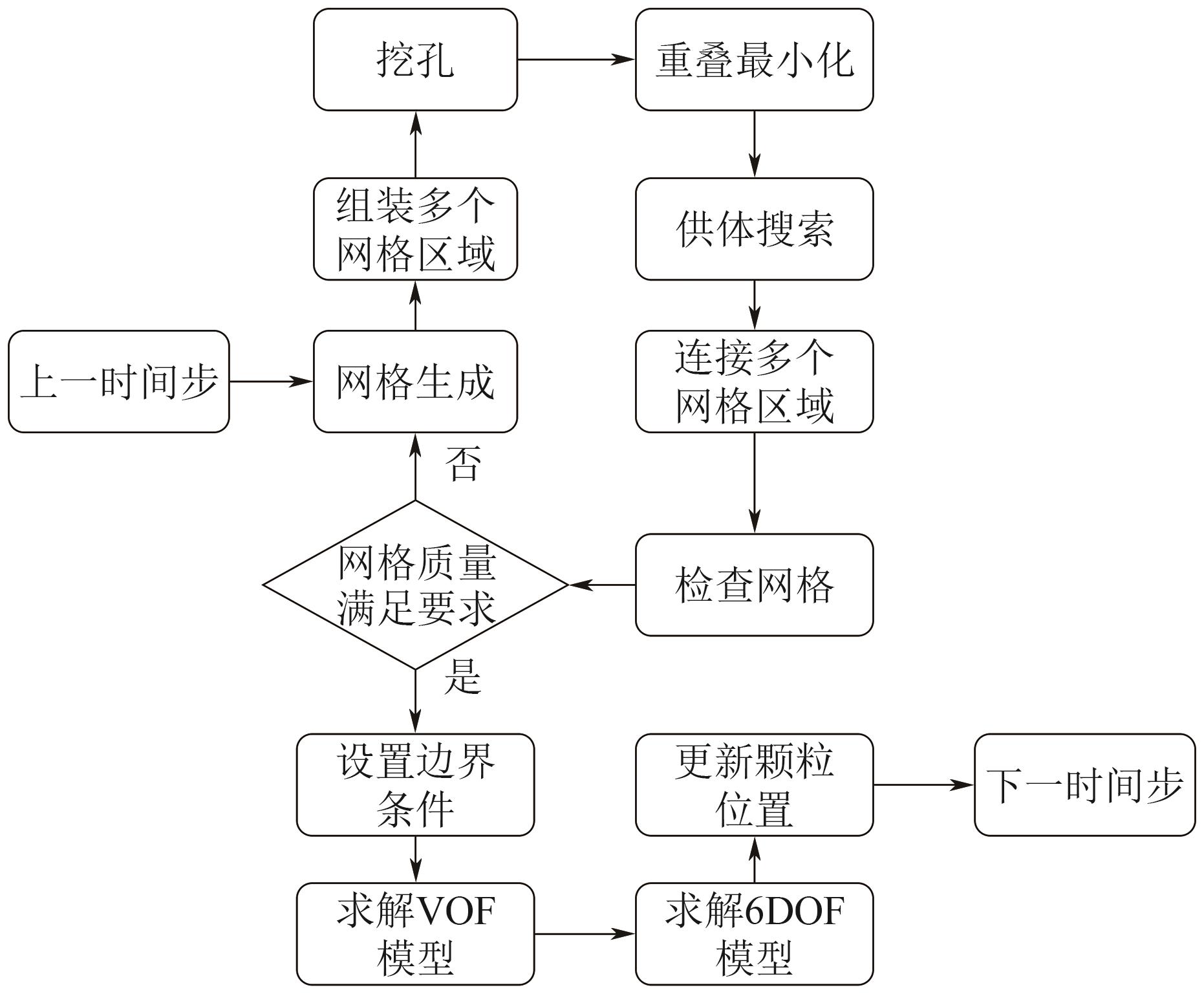
图1 重叠网格计算求解流程
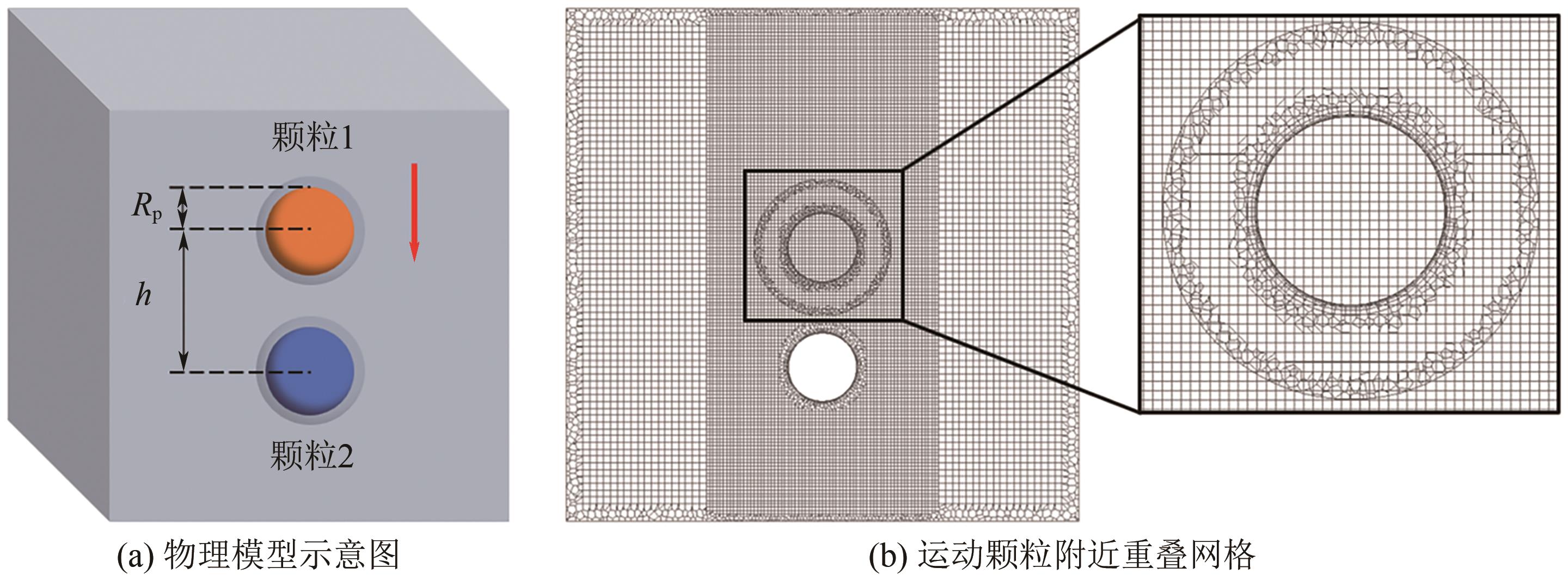
图2 物理模型示意图与运动颗粒附近重叠网格
| 参数 | 数值 |
|---|---|
| 背景区尺寸/μm | 10×10×10 |
| 重叠区域球形直径/μm | 4 |
| 颗粒密度/kg·m-3 | 2200 |
| 颗粒半径/μm | 1 |
| 气体密度/kg·m-3 | 1.225 |
| 气体黏度/Pa·s | 1.789×10⁻⁵ |
| 液体密度/kg·m-3 | 998.2 |
| 液体黏度/Pa·s | 1.003×10⁻³ |
| 接触角/(°) | 150 |
| 干恢复系数 | 0.853 |
| 重力加速度/m·s-2 | -9.81 |
表1 参数设置
| 参数 | 数值 |
|---|---|
| 背景区尺寸/μm | 10×10×10 |
| 重叠区域球形直径/μm | 4 |
| 颗粒密度/kg·m-3 | 2200 |
| 颗粒半径/μm | 1 |
| 气体密度/kg·m-3 | 1.225 |
| 气体黏度/Pa·s | 1.789×10⁻⁵ |
| 液体密度/kg·m-3 | 998.2 |
| 液体黏度/Pa·s | 1.003×10⁻³ |
| 接触角/(°) | 150 |
| 干恢复系数 | 0.853 |
| 重力加速度/m·s-2 | -9.81 |
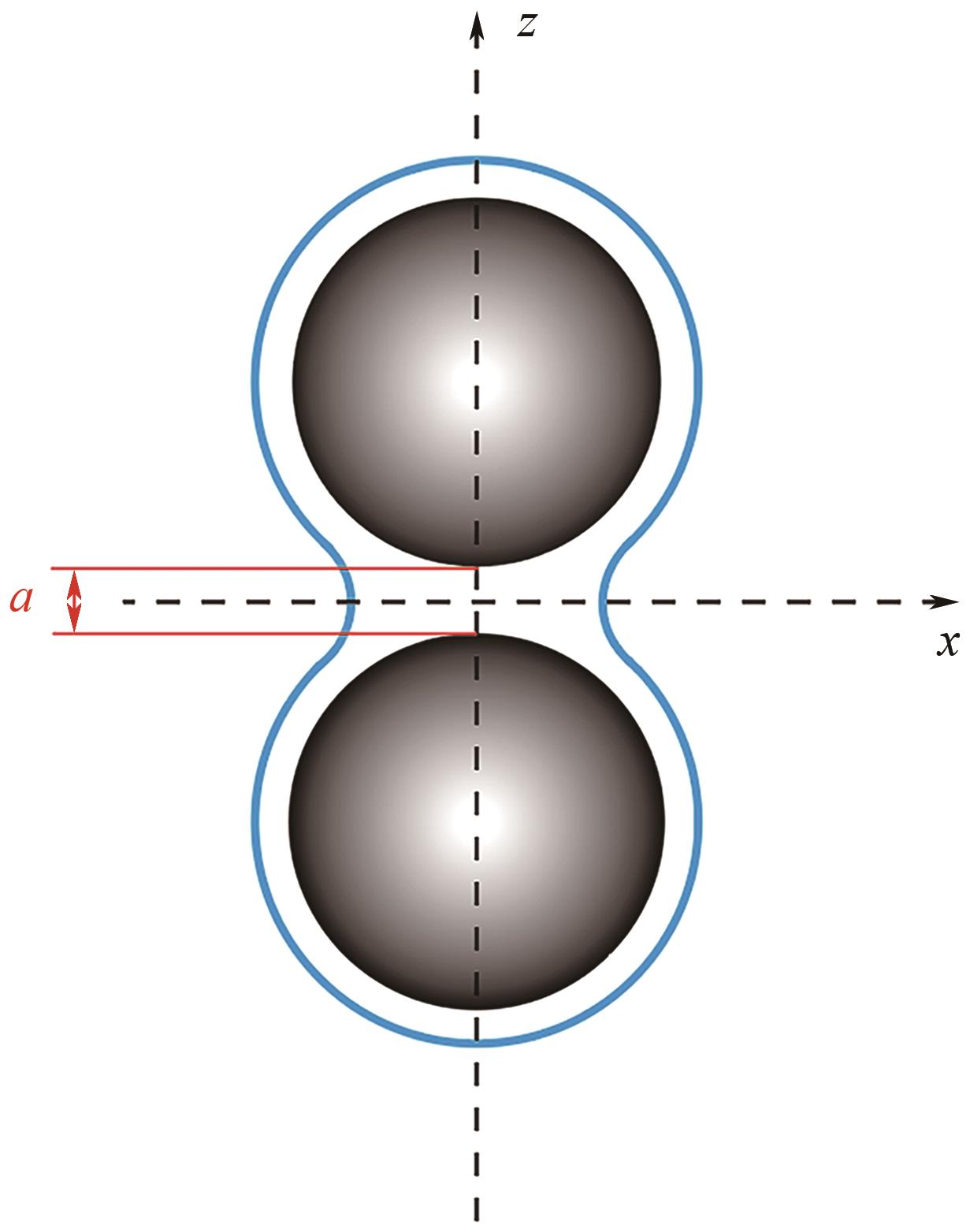
图3 湿颗粒之间液桥结构
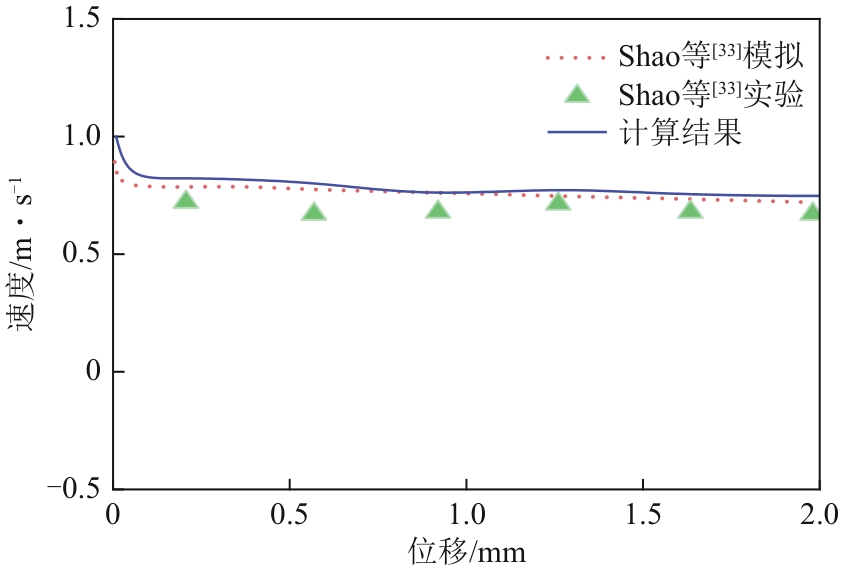
图4 颗粒速度-位移曲线的实验与模拟结果
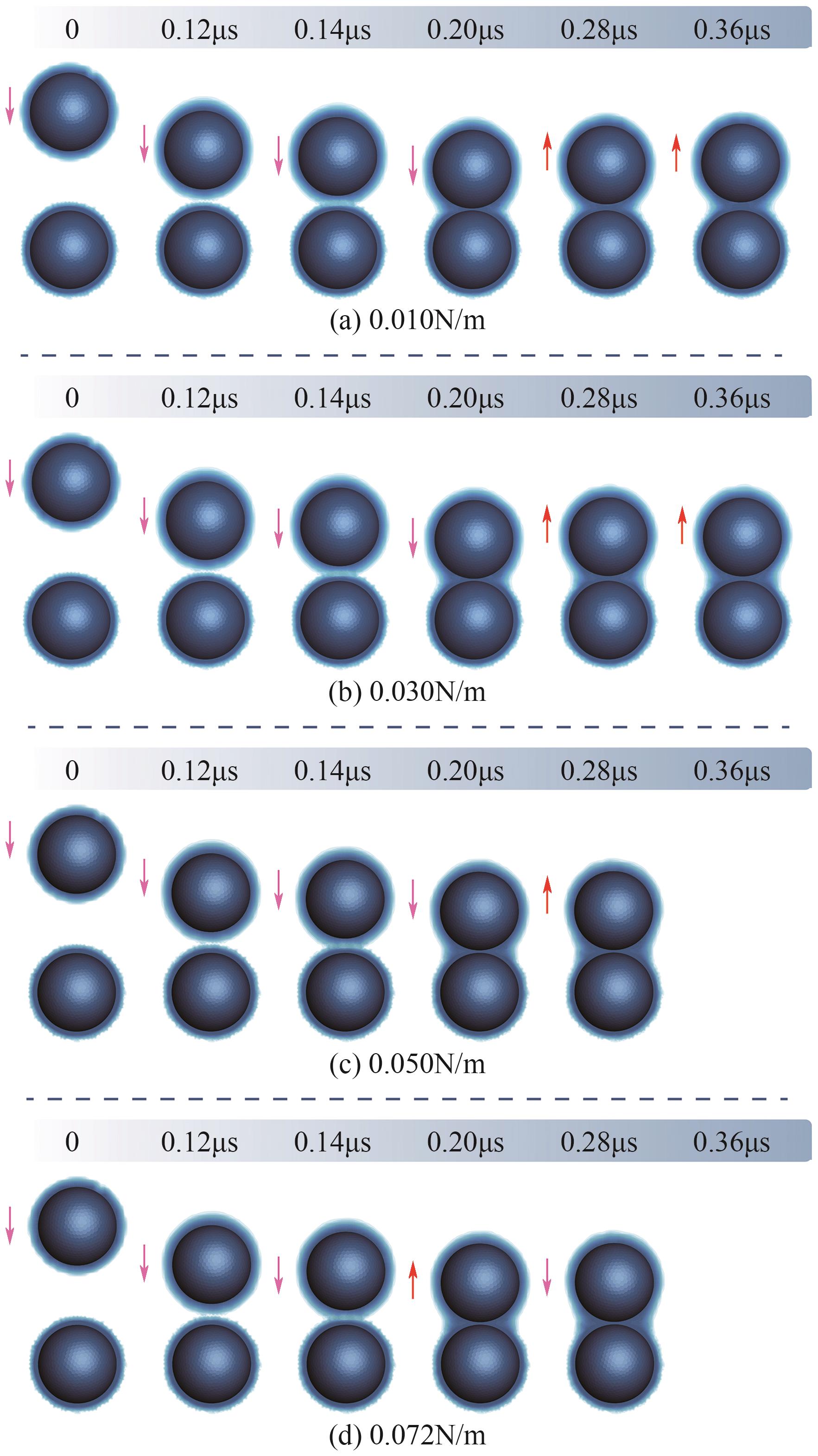
图5 颗粒和液桥形态的模拟结果
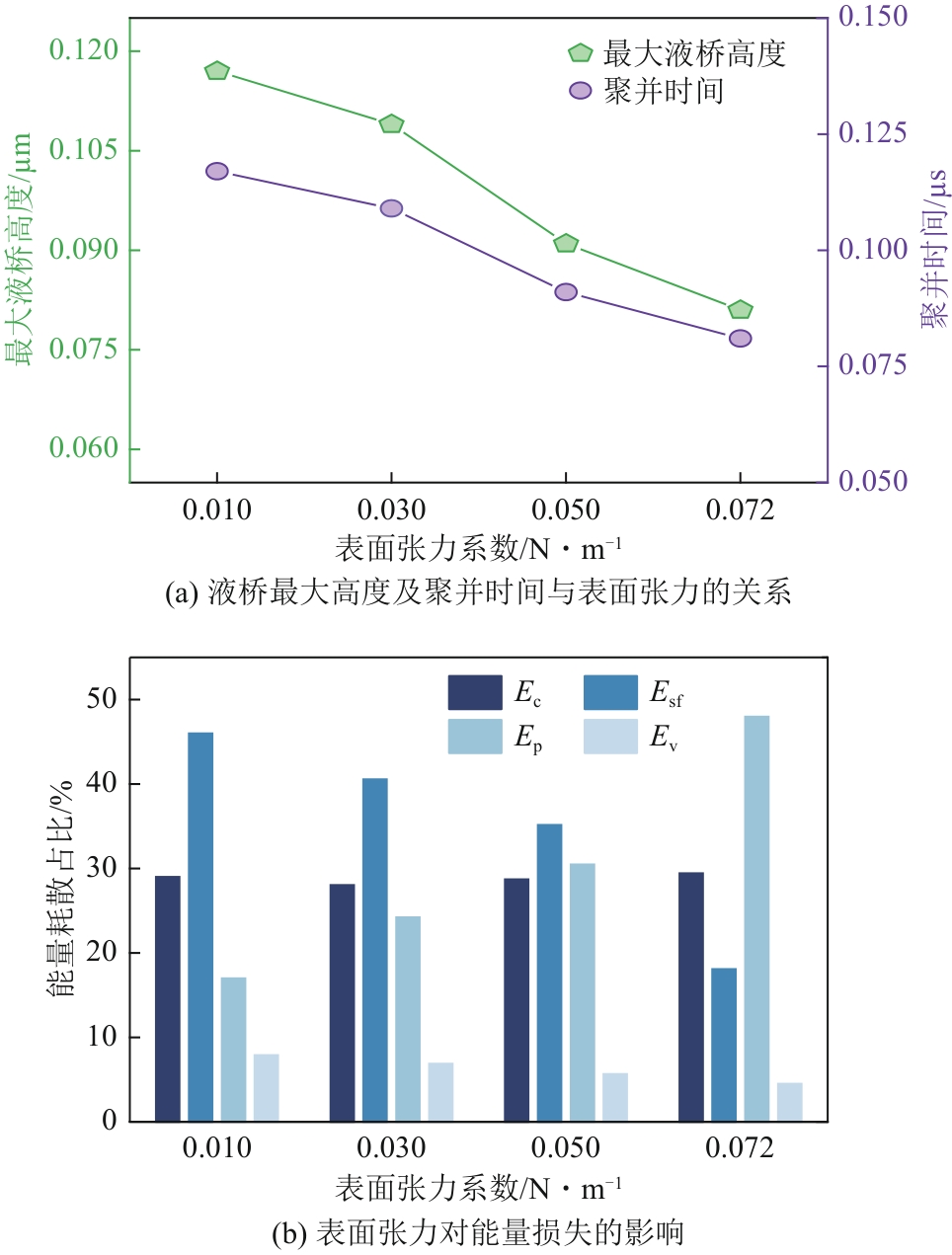
图6 液桥行为特性及表面张力对能量损失的影响分析

图7 颗粒和液桥形态的模拟结果

图8 液桥行为特性及液膜厚度对能量损失的影响分析
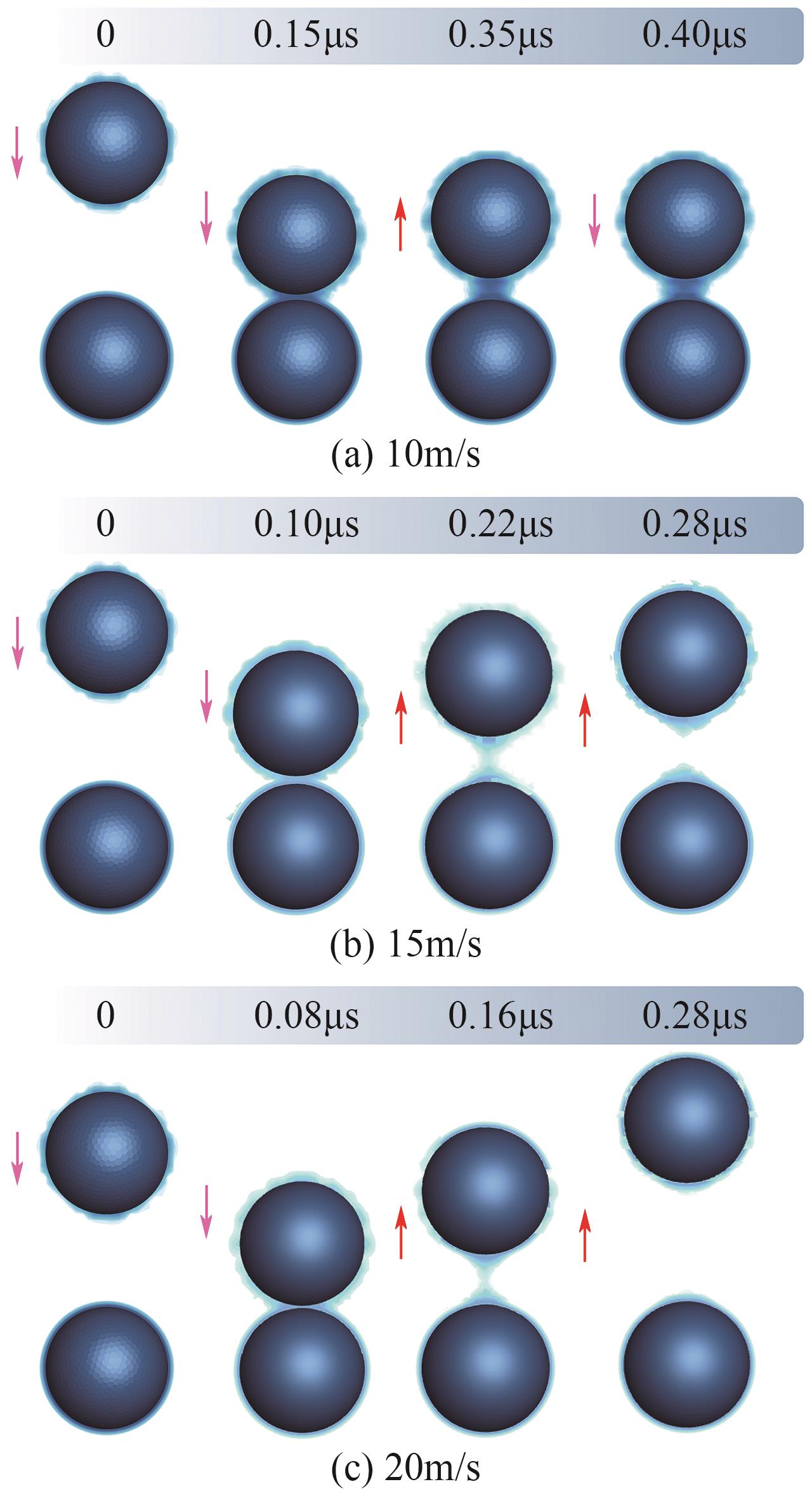
图9 颗粒和液桥形态的模拟结果
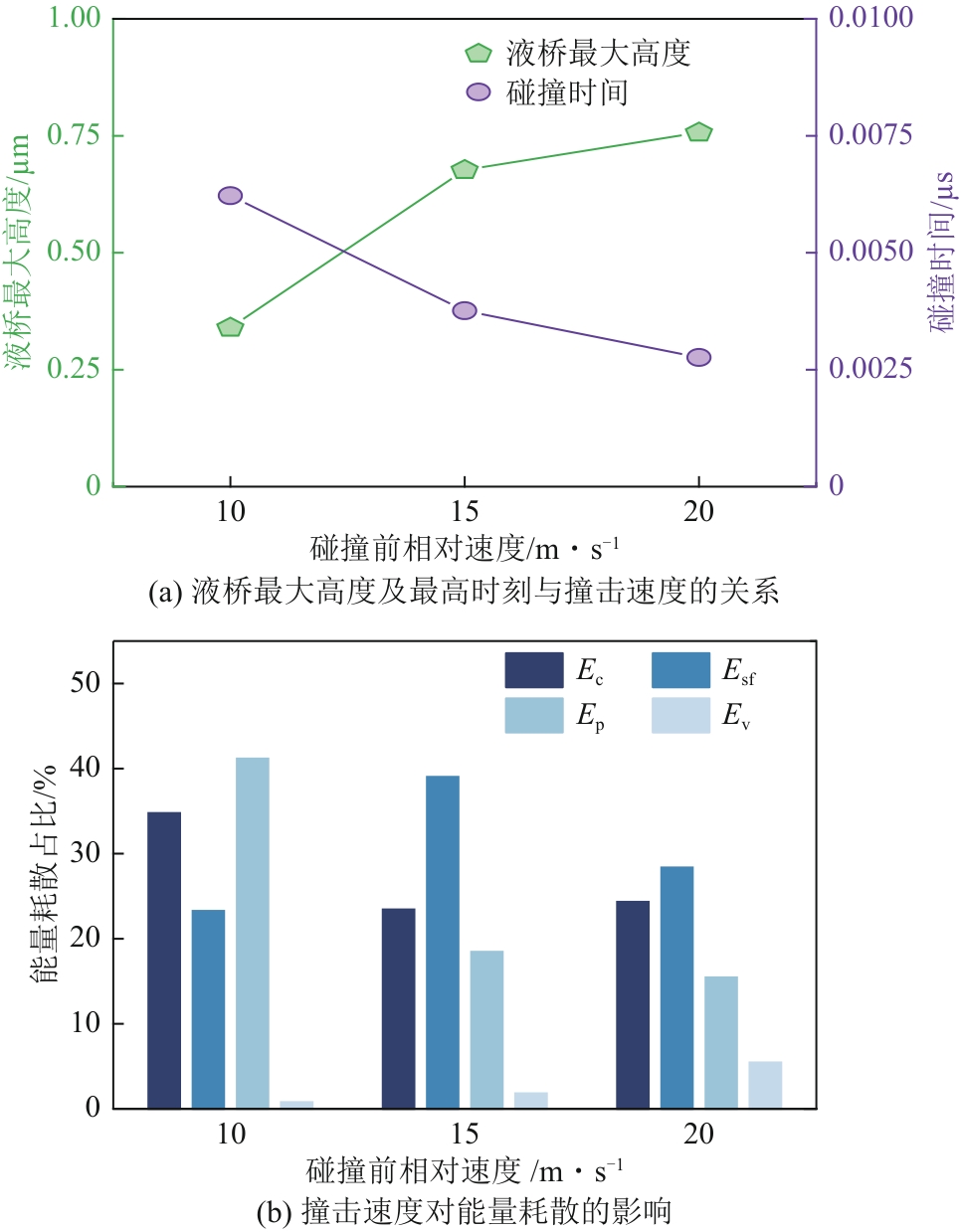
图10 液桥行为特性及碰撞前相对速度对能量损失的影响分析
| [1] | 王英, 冉进业, 张今, 等. 基于深度时间序列特征融合的西安市2015—2020年供暖季雾霾重污染过程预警[J]. 化工进展, 2022, 41(10): 5685-5694. |
| WANG Ying, RAN Jinye, ZHANG Jin, et al. Prediction of heavy haze pollution episodes based on deep feature fusion of pollutant and meteorological time series in Xi’an during 2015—2020 heating season[J]. Chemical Industry and Engineering Progress, 2022, 41(10): 5685-5694. | |
| [2] | CAO Chen, JIANG Wenjun, WANG Buying, et al. Inhalable microorganisms in Beijing’s PM2.5 and PM10 pollutants during a severe smog event[J]. Environmental Science & Technology, 2014, 48(3): 1499-1507. |
| [3] | 龙正伟, 冯壮波, 姚强. 静电除尘器数值模拟[J]. 化工学报, 2012, 、63(11): 3393-3401. |
| LONG Zhengwei, FENG Zhuangbo, YAO Qiang. Numerical modeling of electrostatic precipitator[J]. CIESC Journal, 2012, 63(11): 3393-3401. | |
| [4] | 常景彩. 柔性集尘极应用于燃煤脱硫烟气深度净化的试验研究[D]. 济南: 山东大学, 2011. |
| CHANG Jingcai. Experimental study on the application of flexible dust collector in deep purification of flue gas from coal-fired desulfurization[D]. Jinan: Shandong University, 2011. | |
| [5] | 徐金苗, 李伟科, 樊晓茹. 高频电源对电除尘器性能及能耗影响的试验研究[J]. 电力建设, 2013, 34(6): 73-77. |
| XU Jinmiao, LI Weike, FAN Xiaoru. Impact of high frequency power on performance and energy consumption of electrostatic precipitator[J]. Electric Power Construction, 2013, 34(6): 73-77. | |
| [6] | 朱法华, 李辉, 王强. 高频电源在我国电除尘器上的应用及节能减排潜力分析[J]. 环境工程技术学报, 2011, 1(1): 26-32. |
| ZHU Fahua, LI Hui, WANG Qiang. Application of high frequency power supply for ESP in the power industry of China and its potential for energy saving and emissions reducing[J]. Journal of Environmental Engineering Technology, 2011, 1(1): 26-32. | |
| [7] | 彭小成, 金平, 刘佳幸, 等. 基于异质凝结原理环流式旋风多目标优化研究[J]. 化学工程, 2023, 51(1): 57-62. |
| PENG Xiaocheng, JIN Ping, LIU Jiaxing, et al. Multi-objective optimization investigation on performance of circumfluent cyclone separator based on heterogeneous condensation[J]. Chemical Engineering (China), 2023, 51(1): 57-62. | |
| [8] | 鲍静静, 许家菱, 唐继国, 等. 水汽相变促进烟气中细颗粒物成核长大特性研究[J]. 工程科学与技术, 2017, 49(5): 171-177. |
| BAO Jingjing, XU Jialing, TANG Jiguo, et al. Study on the nucleation and growth of fine particles in flue gas promoted by heterogeneous condensation of water vapor[J]. Advanced Engineering Sciences, 2017, 49(5): 171-177. | |
| [9] | 贾雨彬, 王树青, 朱玉颖. 液固流化床内双组分颗粒流动数值模拟[J]. 化工机械, 2021, 48(1): 64-68, 83. |
| JIA Yubin, WANG Shuqing, ZHU Yuying. Numerical simulation of flow characteristics of bi-component particles in liquid-solid fluidized bed[J]. Chemical Engineering & Machinery, 2021, 48(1): 64-68, 83. | |
| [10] | ANTONYUK Sergiy, HEINRICH Stefan, DEEN Niels, et al. Influence of liquid layers on energy absorption during particle impact[J]. Particuology, 2009, 7(4): 245-259. |
| [11] | KAN Hiroyuki, NAKAMURA Hideya, WATANO Satoru. Numerical simulation of particle-particle adhesion by dynamic liquid bridge[J]. Chemical Engineering Science, 2015, 138: 607-615. |
| [12] | DI RENZO Alberto, PICARELLI Giada, DI MAIO Francesco P. Numerical investigation of funicular liquid bridge interactions between spherical particles[J]. Chemical Engineering & Technology, 2020, 43(5): 830-837. |
| [13] | BARNOCKY Guy, DAVIS Robert H. Elastohydrodynamic collision and rebound of spheres: Experimental verification[J]. Physics of Fluids, 1988, 31(6): 1324-1329. |
| [14] | DAVIS Robert H, RAGER Dean A, GOOD Brian T. Elastohydrodynamic rebound of spheres from coated surfaces[J]. Journal of Fluid Mechanics, 2002, 468(1): 107-119. |
| [15] | CRÜGER B, SALIKOV V, HEINRICH S, et al. Coefficient of restitution for particles impacting on wet surfaces: An improved experimental approach[J]. Particuology, 2016, 25: 1-9. |
| [16] | GOLLWITZER Frank, REHBERG Ingo, KRUELLE Christof A, et al. Coefficient of restitution for wet particles[J]. Physical Review E, Statistical, Nonlinear, and Soft Matter Physics, 2012, 86(1): 011303. |
| [17] | Thomas MÜLLER, HUANG Kai. Influence of the liquid film thickness on the coefficient of restitution for wet particles[J]. Physical Review E, 2016, 93: 042904. |
| [18] | MA Jiliang, LIU Daoyin, CHEN Xiaoping. Experimental study of oblique impact between dry spheres and liquid layers[J]. Physical Review E, Statistical, Nonlinear, and Soft Matter Physics, 2013, 88(3): 033018. |
| [19] | BUCK Britta, TANG Yali, DEEN Niels G, et al. Dynamics of wet particle-wall collisions: Influence of wetting condition[J]. Chemical Engineering Research and Design, 2018, 135: 21-29. |
| [20] | BUCK Britta, HEINRICH Stefan. Collision dynamics of wet particles: Comparison of literature models to new experiments[J]. Advanced Powder Technology, 2019, 30(12): 3241-3252. |
| [21] | 李雪, 东明, 张璜, 等. 潮湿环境下微尺度颗粒撞击平板的动力学研究[J]. 化工学报, 2022, 73(5): 1940-1946. |
| LI Xue, DONG Ming, ZHANG Huang, et al. Kinetic characteristics of micro-particle impact on a flat surface under humidity conditions[J]. CIESC Journal, 2022, 73(5): 1940-1946. | |
| [22] | ZHANG Hao, TAN Yuanqiang, SHU Shi, et al. Numerical investigation on the role of discrete element method in combined LBM-IBM-DEM modeling[J]. Computers & Fluids, 2014, 94: 37-48. |
| [23] | WU Mingqiu, RADL Stefan, KHINAST Johannes G. A model to predict liquid bridge formation between wet particles based on direct numerical simulations[J]. AIChE Journal, 2016, 62(6): 1877-1897. |
| [24] | FAN Zhiheng, LIU Daoyin, LIANG Cai, et al. Numerical simulation of mid-air collisions between droplets and particles: An examination of particle forces and kinetic energy dissipation[J]. Powder Technology, 2024, 432: 119124. |
| [25] | 王翱, 宋蔷, 姚强. 脱硫塔内单液滴捕集颗粒物的数值模拟[J]. 工程热物理学报, 2014, 35(9): 1889-1893. |
| WANG Ao, SONG Qiang, YAO Qiang. Numerical simulation of single droplet capturing particles in the WFGD[J]. Journal of Engineering Thermophysics, 2014, 35(9): 1889-1893. | |
| [26] | WANG Ao, SONG Qiang, YAO Qiang. Behavior of hydrophobic micron particles impacting on droplet surface[J]. Atmospheric Environment, 2015, 115: 1-8. |
| [27] | JI Bingqiang, SONG Qiang, YAO Qiang. Numerical study of hydrophobic micron particle’s impaction on liquid surface[J]. Physics of Fluids, 2017, 29(7): 077102. |
| [28] | ZHU Shijie, LIU Runzhe, WANG Tian, et al. Penetration time of hydrophilic micron particles impacting into an unconfined planar gas-liquid interface[J]. Chemical Engineering Science, 2019, 193: 282-297. |
| [29] | 仇轶, 由长福, 祁海鹰, 等. 多相流动的直接数值模拟进展[J]. 力学进展, 2003, 33(4): 507-517. |
| QIU Yi, YOU Changfu, QI Haiying, et al. Direct numerical simulations of multiphase flows[J]. Advances in Mechanics, 2003, 33(4): 507-517. | |
| [30] | HIRT C W, NICHOLS B D. Volume of fluid (VOF) method for the dynamics of free boundaries[J]. Journal of Computational Physics, 1981, 39(1): 201-225. |
| [31] | BRACKBILL J U, KOTHE D B, ZEMACH C. A continuum method for modeling surface tension[J]. Journal of Computational Physics, 1992, 100(2): 335-354. |
| [32] | 王志东, 钱进, 凌宏杰, 等. 基于重叠网格的救生艇抛落入水全过程数值预报方法研究[J]. 中国造船, 2020, 61(S2): 330-339. |
| WANG Zhidong, QIAN Jin, LING Hongjie, et al. Research on numerical prediction for whole launching process of sliding lifeboat based on overlapping grid[J]. Shipbuilding of China, 2020, 61(S2): 330-339. | |
| [33] | SHAO Lili, LIU Daoyin, MA Jiliang, et al. Normal collision between partially wetted particles by using direct numerical simulation[J]. Chemical Engineering Science, 2022, 247: 117090. |
| [34] | 冀秉强. 微米级颗粒撞击液面行为与机制研究[D]. 北京: 清华大学, 2019. |
| JI Bingqiang. Research on the behavior and mechanism of micron-sized particles impacting the liquid surface[D]. Beijing: Tsinghua University, 2019. |
| [1] | 周鹏辉, 曾琳, 代黎, 冯小波, 倪笛. 响应面法和熵权法对离心风机的多目标性能优化[J]. 化工进展, 2025, 44(6): 3271-3279. |
| [2] | 周鹏辉, 曾琳, 代黎, 李嘉乐, 陈建琦, 李剑平, 汪华林. 微旋流混合器的混合特性数值计算[J]. 化工进展, 2025, 44(6): 3280-3287. |
| [3] | 陈巨辉, 张谦, 李丹, 李魏康, 陈轲, 周欢, ZHURAVKOV Michael, LAPATSIN Siarhel, 姜文锐. 基于DEM-PPM方法的非球形颗粒流动特性[J]. 化工进展, 2025, 44(6): 3382-3392. |
| [4] | 贺逸健, 刘祥坤, 施尧, 段学志. 乙烷氧化脱氢制乙烯催化剂颗粒外形设计[J]. 化工进展, 2025, 44(6): 3497-3508. |
| [5] | 程崇律, 单聪慧, 张孟凡, WEN X Jennifer, 徐宝鹏. 氢安全建模研究进展[J]. 化工进展, 2025, 44(3): 1285-1297. |
| [6] | 李昊阳, 李洪伟, 谭建宇. 瞬态振荡加热条件下沸腾气泡运动特性[J]. 化工进展, 2025, 44(2): 735-742. |
| [7] | 黄政锋, 王恒, 洪浩, 朱国瑞. 同心圆过渡排布管束旋涡脱落特性[J]. 化工进展, 2025, 44(2): 698-705. |
| [8] | 陈可欣, 李熙, 常福城, 武萧衣, 娄嘉诚, 李会雄. 螺旋管内水-水蒸气两相流压降及流型转变特性[J]. 化工进展, 2025, 44(2): 613-624. |
| [9] | 于海, 栾智勇, 姬宜朋, 安申法, 陈家庆, 司政, 任强, 孙丰旭, 宋泽润. 动态水力旋流器内短路流流量的计算方法及影响分析[J]. 化工进展, 2025, 44(1): 135-144. |
| [10] | 乔磊, 张亚新, 魏博, 冉文燊, 马金荣, 王峰. 氧热法气流床电石反应器烧嘴布置参数及操作参数优化[J]. 化工进展, 2025, 44(1): 145-157. |
| [11] | 邢雷, 周晓庆, 蒋明虎, 赵立新, 李新亚, 陈德海. 突缩突扩圆管内离散油滴运动行为及变形特性[J]. 化工进展, 2025, 44(1): 27-37. |
| [12] | 孙建辰, 杨捷, 李军, 孙会东, 牛俊敏, 廖逸飞, 任俊颖, 商辉. 催化剂颗粒排列方式对微波加热效果的影响[J]. 化工进展, 2025, 44(1): 57-65. |
| [13] | 张天昊, 李双喜, 贾祥际, 胡鼎国, 崔瑞焯, 李世聪. 干摩擦釜用机械密封DLC涂层-石墨配副摩擦磨损与温度变形场分析[J]. 化工进展, 2024, 43(S1): 121-133. |
| [14] | 毛宁轩, 万小维, 鞠杰, 胡彦杰, 江浩. 工业气固流化床内流场的CFD-PBM数值模拟和结构优化[J]. 化工进展, 2024, 43(S1): 13-20. |
| [15] | 张伟业, 朱晓武, 罗永皓, 王志. 复合型叶序微流道混合性能的数值模拟[J]. 化工进展, 2024, 43(S1): 154-165. |
| 阅读次数 | ||||||
|
全文 |
|
|||||
|
摘要 |
|
|||||