Chemical Industry and Engineering Progress ›› 2025, Vol. 44 ›› Issue (7): 4144-4157.DOI: 10.16085/j.issn.1000-6613.2024-0993
• Resources and environmental engineering • Previous Articles
Research progress on the removal of microcystin-LR by multicomponent composite nanomaterials
YE Xiaosheng( ), YUAN Ting, JIA Xin, REN Qingxia
- School of Resource and Environment, Hunan University of Technology and Business, Changsha 410205, Hunan, China
-
Received:2024-06-20Revised:2024-09-13Online:2025-08-04Published:2025-07-25 -
Contact:YE Xiaosheng
多元复合纳米材料去除微囊藻毒素-LR研究进展
叶晓生(), 袁婷, 贾鑫, 任庆霞
- 湖南工商大学资源环境学院,湖南 长沙 410205
-
通讯作者:叶晓生 -
作者简介:叶晓生(1985—),男,博士,硕士生导师,研究方向为纳米材料及其环境污染物分析与去除。E-mail:yexiaosheng520@163.com。 -
基金资助:国家自然科学基金(82003508);湖南省自然科学基金(2021JJ40718)

CLC Number:
Cite this article
YE Xiaosheng, YUAN Ting, JIA Xin, REN Qingxia. Research progress on the removal of microcystin-LR by multicomponent composite nanomaterials[J]. Chemical Industry and Engineering Progress, 2025, 44(7): 4144-4157.
叶晓生, 袁婷, 贾鑫, 任庆霞. 多元复合纳米材料去除微囊藻毒素-LR研究进展[J]. 化工进展, 2025, 44(7): 4144-4157.
share this article
Add to citation manager EndNote|Ris|BibTeX
URL: https://hgjz.cip.com.cn/EN/10.16085/j.issn.1000-6613.2024-0993
| 光催化剂 | 催化剂用量/mg·L-1 | MC-LR初始浓度/mg·L-1 | 激发波长/nm | 时间 | 效率/% | 参考文献 |
|---|---|---|---|---|---|---|
| TiO2-N | 250 | 2.0 | >420 | 14h | 100 | [ |
| TiO2-Fe | 100mg/g | 100µg/mL | 370 | 3h | 100 | [ |
| TiO2-S-C-N | 500 | 0.5µmol/L | 478 | 5h | 100 | [ |
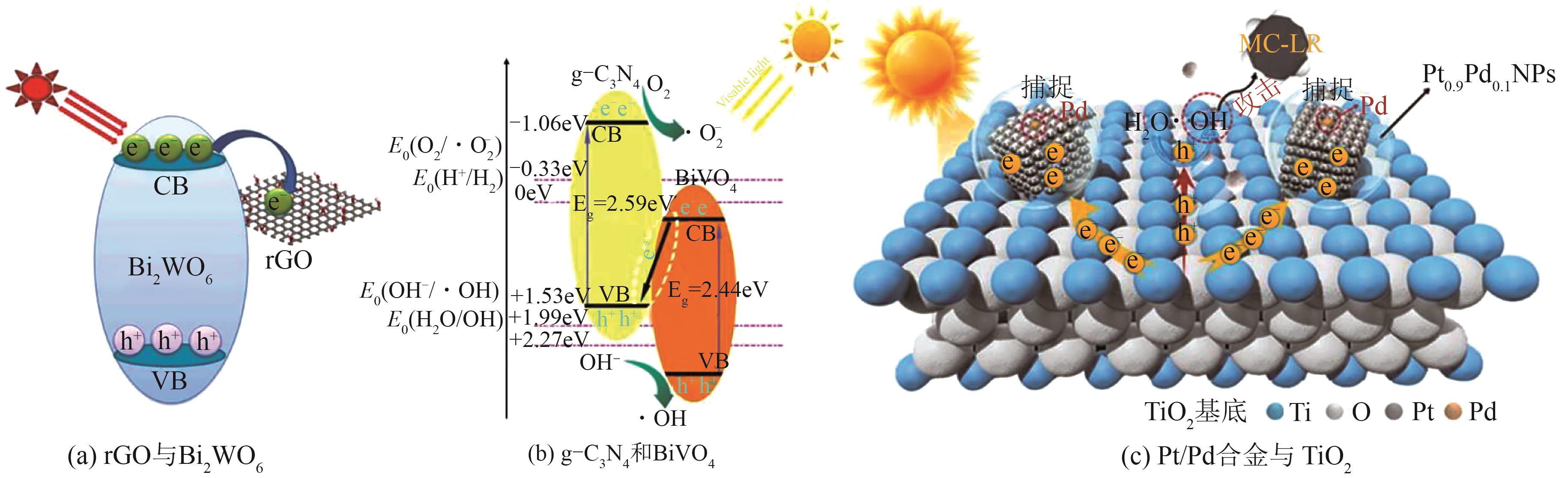
| TiO2-Pt0.9Pd0.1 | 1.0 | >320 | 40min | 100 | [ | |
| B-Fe/Pd | 5µg/L | 5.0 | 238 | 3h | 96.86 | [ |
| PbCrO4 | 500 | 1.0 | >420 | 27min | 100 | [ |
| TiO2-BiVO4 | 1000 | 0.5 | 400-600 | 120min | 99.88 | [ |
| C3N5 | 500 | 4.0 | >400 | 45min | 99.99 | [ |
| BiVO4/g-C3N4 | 500 | 5.0 | >420 | 10min | 100 | [ |
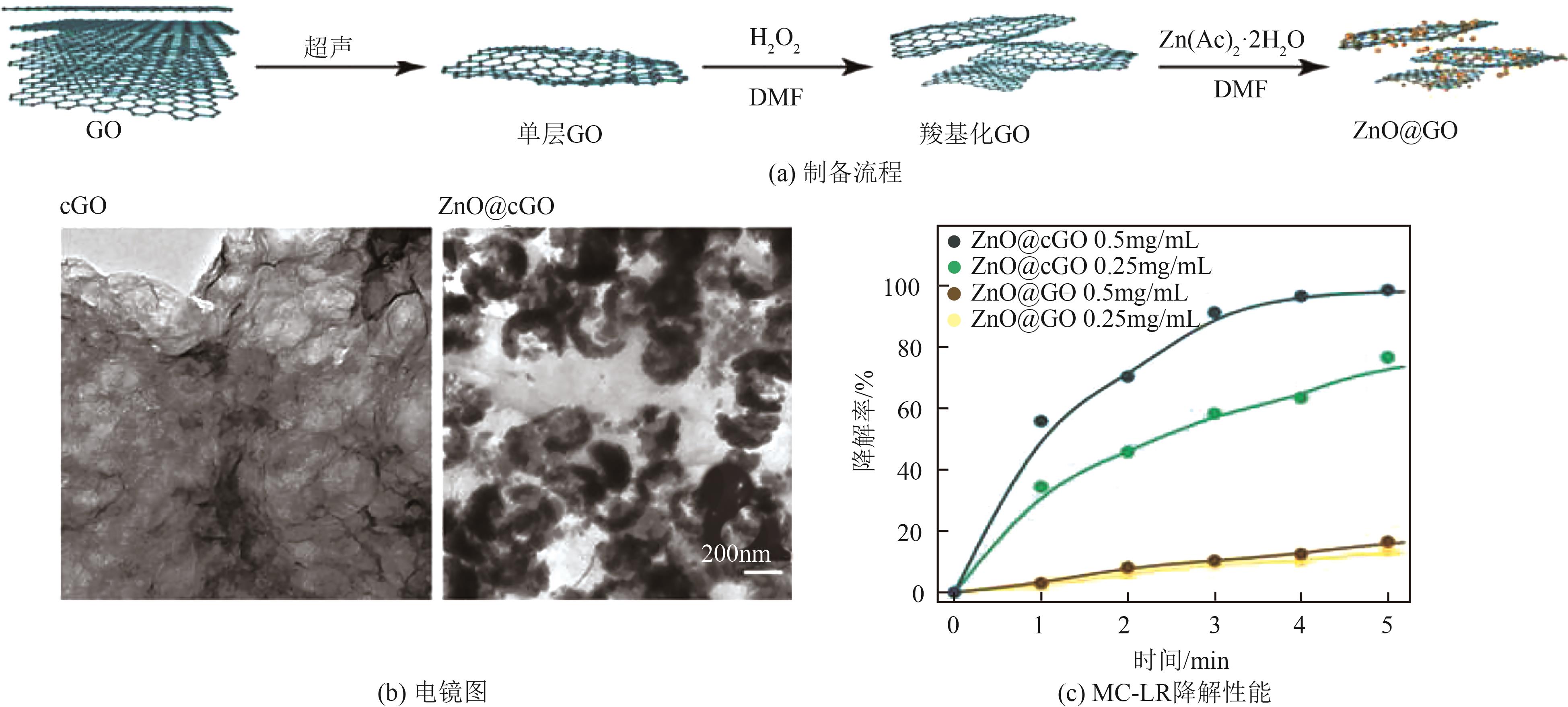
| ZnO@cGO | 500 | 7.5 | >350 | 5min | 87(循环5次) | [ |
| ZnFe2O4-Ag/rGO | 500 | 2.0 | >420 | 2h | 100 | [ |
| 光催化剂 | 催化剂用量/mg·L-1 | MC-LR初始浓度/mg·L-1 | 激发波长/nm | 时间 | 效率/% | 参考文献 |
|---|---|---|---|---|---|---|
| TiO2-N | 250 | 2.0 | >420 | 14h | 100 | [ |
| TiO2-Fe | 100mg/g | 100µg/mL | 370 | 3h | 100 | [ |
| TiO2-S-C-N | 500 | 0.5µmol/L | 478 | 5h | 100 | [ |
| TiO2-Pt0.9Pd0.1 | 1.0 | >320 | 40min | 100 | [ | |
| B-Fe/Pd | 5µg/L | 5.0 | 238 | 3h | 96.86 | [ |
| PbCrO4 | 500 | 1.0 | >420 | 27min | 100 | [ |
| TiO2-BiVO4 | 1000 | 0.5 | 400-600 | 120min | 99.88 | [ |
| C3N5 | 500 | 4.0 | >400 | 45min | 99.99 | [ |
| BiVO4/g-C3N4 | 500 | 5.0 | >420 | 10min | 100 | [ |
| ZnO@cGO | 500 | 7.5 | >350 | 5min | 87(循环5次) | [ |
| ZnFe2O4-Ag/rGO | 500 | 2.0 | >420 | 2h | 100 | [ |
| 吸附剂 | 吸附剂用量/mg·L-1 | MC-LR初始浓度/mg·L-1 | 时间/h | 吸附性能/mg·g-1 | 参考文献 |
|---|---|---|---|---|---|
| Biochar | 40 | 0.5 | 48 | 9.47 | [ |
| Woody C | 400 | 4.5 | 48 | 75.62 | [ |
| Fe3O4@TabTfa-F4 | 500 | 15 | 4 | 495.1 | [ |
| PAC-Fe(Ⅲ) | 150 | 10.0 | 6 | 126.61 | [ |
| PPy/Fe3O4 | 10 | 0.05 | 0.5 | 301.11 | [ |
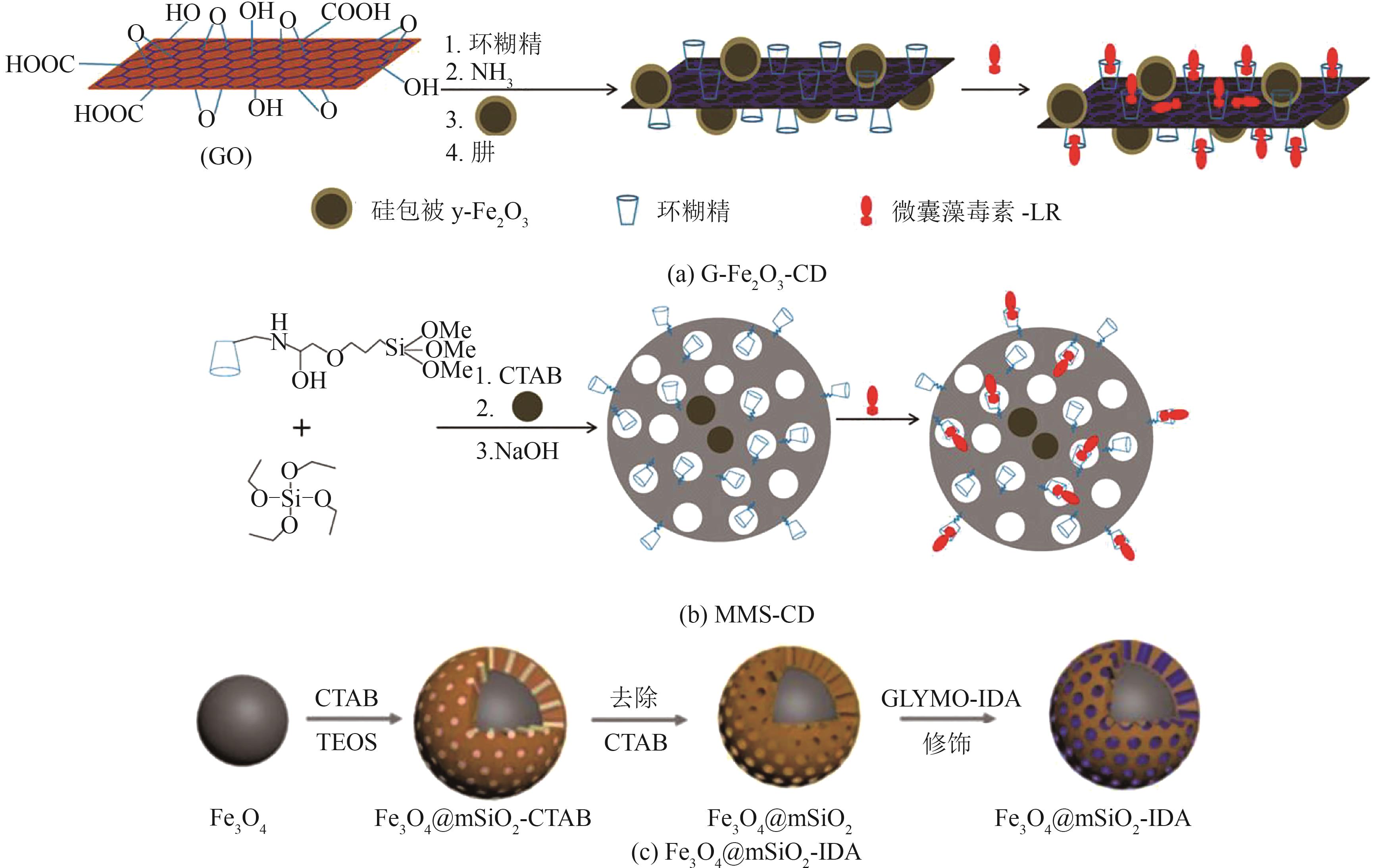
| G-Fe2O3-CD | 50 | 6 | 2 | 160 | [ |
| MMS-CD | 1000 | 6 | 2 | 8 | [ |
| Fe3O4@mSiO2-IDA | 1500 | 0.01 | 0.5 | 约6.2 | [ |
| MCNTs@TpPa-1 | 400 | 0.05 | 1 | 0.244 | [ |
| 吸附剂 | 吸附剂用量/mg·L-1 | MC-LR初始浓度/mg·L-1 | 时间/h | 吸附性能/mg·g-1 | 参考文献 |
|---|---|---|---|---|---|
| Biochar | 40 | 0.5 | 48 | 9.47 | [ |
| Woody C | 400 | 4.5 | 48 | 75.62 | [ |
| Fe3O4@TabTfa-F4 | 500 | 15 | 4 | 495.1 | [ |
| PAC-Fe(Ⅲ) | 150 | 10.0 | 6 | 126.61 | [ |
| PPy/Fe3O4 | 10 | 0.05 | 0.5 | 301.11 | [ |
| G-Fe2O3-CD | 50 | 6 | 2 | 160 | [ |
| MMS-CD | 1000 | 6 | 2 | 8 | [ |
| Fe3O4@mSiO2-IDA | 1500 | 0.01 | 0.5 | 约6.2 | [ |
| MCNTs@TpPa-1 | 400 | 0.05 | 1 | 0.244 | [ |
| [1] | YANG Fei, HUANG Feiyu, FENG Hai, et al. A complete route for biodegradation of potentially carcinogenic cyanotoxin microcystin-LR in a novel indigenous bacterium[J]. Water Research, 2020, 174: 115638. |
| [2] | ZHAO Yanyan, XUE Qingju, SU Xiaomei, et al. First identification of the toxicity of microcystins on pancreatic islet function in humans and the involved potential biomarkers[J]. Environmental Science & Technology, 2016, 50(6): 3137-3144. |
| [3] | ZHANG Huixia, LI Bingyan, LIU Yipeng, et al. Immunoassay technology: Research progress in microcystin-LR detection in water samples[J]. Journal of Hazardous Materials, 2022, 424: 127406. |
| [4] | GUPTA Nidhi, PANT S C, VIJAYARAGHAVAN R, et al. Comparative toxicity evaluation of cyanobacterial cyclic peptide toxin microcystin variants (LR, RR, YR) in mice[J]. Toxicology, 2003, 188(2/3): 285-296. |
| [5] | IMANISHI Susumu, HARADA Ken-ichi. Proteomics approach on microcystin binding proteins in mouse liver for investigation of microcystin toxicity[J]. Toxicon, 2004, 43(6): 651-659. |
| [6] | KULABHUSAN Prabir Kumar, CAMPBELL Katrina. Physico-chemical treatments for the removal of cyanotoxins from drinking water: Current challenges and future trends[J]. Science of the Total Environment, 2024, 917: 170078. |
| [7] | LEI Feifei, LEI Xu, LI Rugui, et al. Microcystin-LR in peripheral circulation worsens the prognosis partly through oxidative stress in patients with hepatocellular carcinoma[J]. Clinical and Experimental Medicine, 2019, 19(2): 235-243. |
| [8] | ZHAO Sujuan, LIU Ying, WANG Fang, et al. N-acetylcysteine protects against microcystin-LR-induced endoplasmic reticulum stress and germ cell apoptosis in zebrafish testes[J]. Chemosphere, 2018, 204: 463-473. |
| [9] | YI Xiping, XU Shuaishuai, HUANG Feiyu, et al. Effects of chronic exposure to microcystin-LR on kidney in mice[J]. International Journal of Environmental Research and Public Health, 2019, 16(24): 5030. |
| [10] | CAO Linghui, MASSEY Isaac Yaw, FENG Hai, et al. A review of cardiovascular toxicity of microcystins[J]. Toxins, 2019, 11(9): 507. |
| [11] | ABDEL-DAIM Mohamed M, SAYED Amany A, ABDEEN Ahmed, et al. Piperine enhances the antioxidant and anti-inflammatory activities of thymoquinone against microcystin-LR-induced hepatotoxicity and neurotoxicity in mice[J]. Oxidative Medicine and Cellular Longevity, 2019, 2019(1): 1309175. |
| [12] | DÍEZ-QUIJADA JIMÉNEZ Leticia, Remedios GUZMÁN-GUILLÉN, CASCAJOSA LIRA Antonio, et al. In vitro assessment of cyanotoxins bioaccessibility in raw and cooked mussels[J]. Food and Chemical Toxicology, 2020, 140: 111391. |
| [13] | HERNÁNDEZ Juan Martínez, LÓPEZ-RODAS V, COSTAS E. Microcystins from tap water could be a risk factor for liver and colorectal cancer: A risk intensified by global change[J]. Medical Hypotheses, 2009, 72(5): 539-540. |
| [14] | ANTONIOU Maria G, DE LA CRUZ Armah A, DIONYSIOU Dionysios D. Cyanotoxins: New generation of water contaminants[J]. Journal of Environmental Engineering, 2005, 131(9): 1239-1243. |
| [15] | ZHANG Shiyu, DU Xingde, LIU Haohao, et al. The latest advances in the reproductive toxicity of microcystin-LR[J]. Environmental Research, 2021, 192: 110254. |
| [16] | LIU Yipeng, LI Bingyan, ZHANG Huixia, et al. Participation of fluorescence technology in the cross-disciplinary detection of microcystins[J]. Coordination Chemistry Reviews, 2022, 457: 214416. |
| [17] | XIE Guangyu, HU Xinjiang, DU Yuxuan, et al. Light-driven breakdown of microcystin-LR in water: A critical review[J]. Chemical Engineering Journal, 2021, 417: 129244. |
| [18] | ZHAN Mingming, HONG Yu. Recent advances in technologies for removal of microcystins in water: A review[J]. Current Pollution Reports, 2022, 8(2): 113-127. |
| [19] | KUMAR Pratik, REHAB Hadji, HEGDE Krishnamoorthy, et al. Physical and biological removal of microcystin-LR and other water contaminants in a biofilter using manganese dioxide coated sand and graphene sand composites[J]. Science of the Total Environment, 2020, 703: 135052. |
| [20] | KRISHNAN Anjali, ZHANG Yuqin, BALABAN Meaghan, et al. Taxonomic and genotypical heterogeneity of microcystin degrading bacterioplankton in western Lake Erie[J]. Harmful Algae, 2020, 98: 101895. |
| [21] | ZHANG Ming, WANG Yafeng, WU Xinyou, et al. Potential of ozone micro-bombs in simultaneously fast removing bloom-forming cyanobacteria and in situ degrading microcystins[J]. Chemical Engineering Journal, 2021, 407: 127186. |
| [22] | Jesús MORÓN-LÓPEZ, MOLINA Serena. Optimization of recycled-membrane biofilm reactor (R-MBfR) as a sustainable biological treatment for microcystins removal[J]. Biochemical Engineering Journal, 2020, 153: 107422. |
| [23] | WU Xiang, WU Hao, GU Xiaoxiao, et al. Effect of the immobilized microcystin-LR-degrading enzyme MlrA on nodularin degradation and its immunotoxicity study[J]. Environmental Pollution, 2020, 258: 113653. |
| [24] | KARCI Akin, WURTZLER Elizabeth M, DE LA CRUZ Armah A, et al. Solar photo-Fenton treatment of microcystin-LR in aqueous environment: Transformation products and toxicity in different water matrices[J]. Journal of Hazardous Materials, 2018, 349: 282-292. |
| [25] | TEOW Yeit Haan, MOHAMMAD Abdul Wahab. New generation nanomaterials for water desalination: A review[J]. Desalination, 2019, 451: 2-17. |
| [26] | RASOOL Kashif, PANDEY Ravi P, Abdul RASHEED P, et al. Water treatment and environmental remediation applications of two-dimensional metal carbides (MXenes)[J]. Materials Today, 2019, 30: 80-102. |
| [27] | CHINNASAMY Chandraleka, PERUMAL Nagapandiselvi, CHOUBEY Akanksha, et al. Recent advancements in MXene-based nanocomposites as photocatalysts for hazardous pollutant degradation—A review[J]. Environmental Research, 2023, 233: 116459. |
| [28] | SARKAR Shrabana, PONCE Nidia Torres, BANERJEE Aparna, et al. Green polymeric nanomaterials for the photocatalytic degradation of dyes: A review[J]. Environmental Chemistry Letters, 2020, 18(5): 1569-1580. |
| [29] | SAYYED Anwar J, PINJARI Dipak V, SONAWANE Shirish H, et al. Cellulose-based nanomaterials for water and wastewater treatments: A review[J]. Journal of Environmental Chemical Engineering, 2021, 9(6): 106626. |
| [30] | 杨建成, 王诗宁, 杨硕, 等. 金属有机框架材料吸附VOCs影响因素研究进展[J]. 化工进展, 2021, 40(1): 463-476. |
| YANG Jiancheng, WANG Shining, YANG Shuo, et al. Influence factors of VOCs adsorption on metal-organic frameworks: The reviews[J]. Chemical Industry and Engineering Progress, 2021, 40(1): 463-476. | |
| [31] | AHMADIJOKANI Farhad, MOLAVI Hossein, BAHI Addie, et al. Metal-organic frameworks and electrospinning: A happy marriage for wastewater treatment[J]. Advanced Functional Materials, 2022, 32(51): 2207723. |
| [32] | 许春树, 姚庆达, 梁永贤, 等. 金属-有机框架材料的调控策略及其对典型重金属离子的吸附性能[J]. 化工进展, 2023, 42(12): 6518-6534. |
| XU Chunshu, YAO Qingda, LIANG Yongxian, et al. Modulation strategies of metal-organic framework materials and its adsorption performance on typical heavy metal ions[J]. Chemical Industry and Engineering Progress, 2023, 42(12): 6518-6534. | |
| [33] | YOUSEF Aseel, THIEHMED Zeineb, ABDUL SHAKOOR Rana, et al. Recent progress in WS2-based nanomaterials employed for photocatalytic water treatment[J]. Catalysts, 2022, 12(10): 1138. |
| [34] | AMARAL Leonardo O, DANIEL-DA-SILVA Ana L. MoS2 and MoS2 nanocomposites for adsorption and photodegradation of water pollutants: A review[J]. Molecules, 2022, 27(20): 6782. |
| [35] | FENG Xiaogang, RONG Fei, FU Degang, et al. Photocatalytic degradation of trace-level of microcystin-LR by nano-film of titanium dioxide[J]. Chinese Science Bulletin, 2006, 51(10): 1191-1198. |
| [36] | YANG Yangyang, HOU Jun, WANG Peifang, et al. The effects of extracellular polymeric substances on magnetic iron oxide nanoparticles stability and the removal of microcystin-LR in aqueous environments[J]. Ecotoxicology and Environmental Safety, 2018, 148: 89-96. |
| [37] | SONG Hak Jin, GURAV Ranjit, BHATIA Shashi Kant, et al. Treatment of microcystin-LR cyanotoxin contaminated water using Kentucky bluegrass-derived biochar[J]. Journal of Water Process Engineering, 2021, 41: 102054. |
| [38] | HE Xinghou, WANG Anzhi, WU Pian, et al. Photocatalytic degradation of microcystin-LR by modified TiO2 photocatalysis: A review[J]. Science of the Total Environment, 2020, 743: 140694. |
| [39] | YANG Jing, CHEN Dengxia, DENG Anping, et al. Visible light-induced N-doped TiO2 nanoparticles for the degradation of microcystin-LR[J]. Science China Chemistry, 2010, 53(8): 1793-1800. |
| [40] | KIM Dul-Sun, LEE Dong-Keun. Low-temperature catalytic aqueous phase oxidation of microcystin-LR with iron-doped TiO2 pillared clay catalysts[J]. Environmental Technology, 2021, 42(22): 3546-3553. |
| [41] | EL-SHEIKH Said M, ZHANG Geshan, EL-HOSAINY Hamza M, et al. High performance sulfur, nitrogen and carbon doped mesoporous anatase-brookite TiO2 photocatalyst for the removal of microcystin-LR under visible light irradiation[J]. Journal of Hazardous Materials, 2014, 280: 723-733. |
| [42] | CHEN Zhenglin, WEI Zhihui, YANG Lixia, et al. Easily hydroxylated Pt x Pd1- x -TiO2 nanotube arrays: An energetic Schottky photocatalyst for synergistically boosted degradation of microcystin-LR[J]. Chemical Engineering Journal, 2023, 475: 146236. |
| [43] | WANG Feifeng, GAO Ying, SUN Qian, et al. Degradation of microcystin-LR using functional clay supported bimetallic Fe/Pd nanoparticles based on adsorption and reduction[J]. Chemical Engineering Journal, 2014, 255: 55-62. |
| [44] | LIU Guoshuai, ZHANG Guoqiang, ZHANG Shuo, et al. Degradation and mechanism of microcystin-LR by PbCrO4 nanorods driven by visible light[J]. Chemosphere, 2020, 239: 124739. |
| [45] | EBRAHIMI Afshin, JAFARI Negar, EBRAHIMPOUR Karim, et al. A novel ternary heterogeneous TiO2/BiVO4/NaY-zeolite nanocomposite for photocatalytic degradation of microcystin-leucine arginine (MC-LR) under visible light[J]. Ecotoxicology and Environmental Safety, 2021, 210: 111862. |
| [46] | LIU Qizhuo, JI Xiaodong, DENG Jiaqin, et al. Preparation of porous C3N5 nanosheets by temperature modulation: Visible-light induced degradation characteristics and mechanism of microcystin-LR[J]. Journal of Environmental Chemical Engineering, 2023, 11(3): 110153. |
| [47] | XU Yifeng, HU Bingkun, LIU Jining, et al. Visible light-activated degradation of microcystin-LR by ultrathin g-C3N4 nanosheets-based heterojunction photocatalyst[J]. Journal of the American Ceramic Society, 2020, 103(2): 1281-1292. |
| [48] | HE Yongwu, HAN Songling, ZHAO Gaomei, et al. Zinc oxide-coated carboxyl-riched graphene oxide efficiently degrades microcystin-leucine arginine and antibiotics under visible light[J]. Journal of Environmental Chemical Engineering, 2022, 10(3): 107829. |
| [49] | KHADGI Nirina, UPRETI Akhanda Raj. Photocatalytic degradation of microcystin-LR by visible light active and magnetic, ZnFe2O4-Ag/rGO nanocomposite and toxicity assessment of the intermediates[J]. Chemosphere, 2019, 221: 441-451. |
| [50] | ZHANG Zhenzhen, ZHANG Meng, XU Yuhuan, et al. Bi3+ engineered black anatase titania coupled with graphene for effective tobramycin photoelectrochemical detection[J]. Sensors and Actuators B: Chemical, 2020, 321: 128464. |
| [51] | WANG Yarui, CHEN Fengjie, YU Wanchao, et al. An efficient floating adsorption-photocatalyst to decarboxylate D-Glu and D-MeAsp of microcystin-LR via holes direct oxidation[J]. Chemical Engineering Journal, 2021, 413: 127543. |
| [52] | SEID Mingizem Gashaw, Aseom SON, CHO Kangwoo, et al. Doped and immobilized titanium dioxide photocatalysts as a potential source of nitrosamine formation[J]. Water Research, 2023, 230: 119573. |
| [53] | WEI Xuechun, ZHU Hongxiang, XIONG Jianhua, et al. Anti-algal activity of a fluorine-doped titanium oxide photocatalyst against Microcystis aeruginosa and its photocatalytic degradation[J]. New Journal of Chemistry, 2021, 45(37): 17483-17492. |
| [54] | WU Zhipeng, SHAN Shiyao, ZANG Shuangquan, et al. Dynamic core-shell and alloy structures of multimetallic nanomaterials and their catalytic synergies[J]. Accounts of Chemical Research, 2020, 53(12): 2913-2924. |
| [55] | PIETRZAK Mariusz, IVANOVA Polina. Bimetallic and multimetallic nanoparticles as nanozymes[J]. Sensors and Actuators B: Chemical, 2021, 336: 129736. |
| [56] | XING Cuili, MA Min, CHANG Jiangnan, et al. Polyoxometalate anchored zinc oxide nanocomposite as a highly effective photocatalyst and bactericide for wastewater decontamination[J]. Chemical Engineering Journal, 2023, 464: 142632. |
| [57] | WANG Xiaoying, Liangrui LYU, GU Xuan, et al. A novel p16 protein electrochemiluminescence biosensor using optical multi-metal nanocomposites as excellent nanocarriers[J]. Microchemical Journal, 2021, 166: 106183. |
| [58] | SUBAPRIYA V, KARTHICKEYAN D, SARAVANAN M, et al. ZnMoO4/g-C3N4 S-scheme heterojunction photocatalyst: Synthesis, structural, optical, and its photocatalytic properties[J]. Journal of Materials Science: Materials in Electronics, 2024, 35(20): 1437. |
| [59] | 张申平, 王艺蒙, 葛宇, 等. 基于孔材料的多元复合光催化剂降解抗生素[J]. 化工进展, 2021, 40(6): 3287-3299. |
| ZHANG Shenping, WANG Yimeng, GE Yu, et al. Degradation of antibiotics by porous composite photocatalyst[J]. Chemical Industry and Engineering Progress, 2021, 40(6): 3287-3299. | |
| [60] | 金兴智, 邵怡亮, 郑毅, 等. 钛酸锶光催化剂的改性研究进展[J]. 分子催化, 2020, 34(6): 559-568. |
| JIN Xingzhi, SHAO Yiliang, ZHENG Yi, et al. Progress in modification of strontium titanate photocatalyst[J]. Journal of Molecular Catalysis (China), 2020, 34(6): 559-568. | |
| [61] | SUN Haibo, ZHOU Guohua, GUO Zhili, et al. Efficient synthesis of TiO2-coated layer for Fe-based soft magnetic composites and their regulation mechanism analysis on magnetic properties[J]. Journal of Materials Science: Materials in Electronics, 2022, 33(17): 13956-13967. |
| [62] | BOCZAR Dariusz, Tomasz ŁĘCKI, SKOMPSKA Magdalena. Visible-light driven Fe x O y /TiO2/Au photocatalyst—Synthesis, characterization and application for methyl orange photodegradation[J]. Journal of Electroanalytical Chemistry, 2020, 859: 113829. |
| [63] | TAO Qingqing, HUANG Xin, BI Jingtao, et al. Aerobic oil-phase cyclic magnetic adsorption to synthesize 1D Fe2O3@TiO2 nanotube composites for enhanced visible-light photocatalytic degradation[J]. Nanomaterials, 2020, 10(7): 1345. |
| [64] | LIU Yuchuan, YU Zongxue, LI Xiuhui, et al. Super hydrophilic composite membrane with photocatalytic degradation and self-cleaning ability based on LDH and g-C3N4 [J]. Journal of Membrane Science, 2021, 617: 118504. |
| [65] | DUAN Cunxu, XIE Lili, WANG Siyu, et al. Photocatalytic hydrogen evolution by degradation of organic pollutants over quantum dots doped nitrogen carbide[J]. Chemosphere, 2022, 291: 132873. |
| [66] | CAI Zhengqing, HUANG Yining, JI Haodong, et al. Type-Ⅱ surface heterojunction of bismuth-rich Bi4O5Br2 on nitrogen-rich g-C3N5 nanosheets for efficient photocatalytic degradation of antibiotics[J]. Separation and Purification Technology, 2022, 280: 119772. |
| [67] | Wee-Jun ONG, TAN Lling-Lling, Yun Hau NG, et al. Graphitic carbon nitride (g-C3N4)-based photocatalysts for artificial photosynthesis and environmental remediation: Are we a step closer to achieving sustainability?[J]. Chemical Reviews, 2016, 116(12): 7159-7329. |
| [68] | WANG Zhenyu, XU Yuao, WANG Chuanxi, et al. Photocatalytic inactivation of harmful algae Microcystis aeruginosa and degradation of microcystin by g-C3N4/Cu-MOF nanocomposite under visible light[J]. Separation and Purification Technology, 2023, 313: 123515. |
| [69] | NOVOSELOV K S, GEIM A K, MOROZOV S V, et al. Electric field effect in atomically thin carbon films[J]. Science, 2004, 306(5696): 666-669. |
| [70] | XU Boyu, PEI Jiahui, FENG Liefeng, et al. Graphene and graphene-related materials as brain electrodes[J]. Journal of Materials Chemistry B, 2021, 9(46): 9485-9496. |
| [71] | PARRINO Francesco, Massimiliano D’ARIENZO, MOSTONI Silvia, et al. Electron and energy transfer mechanisms: The double nature of TiO2 heterogeneous photocatalysis[J]. Topics in Current Chemistry, 2021, 380(1): 2. |
| [72] | WU Yunjian, GAO Peng, LI Yalong, et al. Degradation of SF6 by dielectric barrier discharge cooperating with TiO2 photocatalysis: Insights into the reaction mechanism[J]. Applied Surface Science, 2024, 660: 159957. |
| [73] | WANG Xin, WANG Xuejiang, MA Rongrong, et al. Efficient elimination of the pollutants in eutrophicated water with carbon strengthened expanded graphite based photocatalysts: Unveiling the synergistic role of metal sites[J]. Journal of Hazardous Materials, 2021, 416: 125729. |
| [74] | SONG Jingke, LI Chenyang, WANG Xuejiang, et al. Visible-light-driven heterostructured g-C3N4/Bi-TiO2 floating photocatalyst with enhanced charge carrier separation for photocatalytic inactivation of Microcystis Aeruginosa [J]. Frontiers of Environmental Science & Engineering, 2021, 15(6): 129. |
| [75] | WANG Hongzhen, WANG Ning, WANG Fushuai, et al. Spherical montmorillonite-supported molybdenum disulfide nanosheets as a self-sedimentary catalyst for organic pollutants removal[J]. Separation and Purification Technology, 2020, 251: 117346. |
| [76] | LI Chenyang, WANG Boqiang, ZHANG Fengjun, et al. Performance of Ag/BiOBr/GO composite photocatalyst for visible-light-driven dye pollutants degradation[J]. Journal of Materials Research and Technology, 2020, 9(1): 610-621. |
| [77] | ZHAN Mingming, HONG Yu, FANG Zhi, et al. Visible light-driven photocatalytic degradation of microcystin-LR by Bi2WO6/Reduced graphene oxide heterojunctions: Mechanistic insight, DFT calculation and degradation pathways[J]. Chemosphere, 2023, 321: 138105. |
| [78] | STOLL Stephanie, ZHANG Wei, YANG Yang, et al. Photodegradation of MC-LR using a novel Au-decorated Ni metal-organic framework (Au/Ni-MOF)[J]. Chemosphere, 2023, 344: 140404. |
| [79] | YANG Boram, PARK Hee-Deung, HONG Seok Won, et al. Photocatalytic degradation of microcystin-LR and anatoxin-a with presence of natural organic matter using UV-light emitting diodes/TiO2 process[J]. Journal of Water Process Engineering, 2020, 34: 101163. |
| [80] | JAFARI Negar, ABDOLAHNEJAD Ali, BEHNAMI Ali, et al. Evaluation of microcystin-LR photocatalytic degradation in aqueous solutions by BiVO4/NaY-Zeolite nanocomposite: Determination of optimum conditions by response surface methodology (RSM)[J]. Toxin Reviews, 2022, 41(2): 564-576. |
| [81] | ZENG Shengquan, KAN Eunsung. Thermally enhanced adsorption and persulfate oxidation-driven regeneration on FeCl3-activated biochar for removal of microcystin-LR in water[J]. Chemosphere, 2022, 286: 131950. |
| [82] | TANG Shengyin, ZHANG Lixun, ZHU Haoxin, et al. Coupling physiochemical adsorption with biodegradation for enhanced removal of microcystin-LR in water[J]. Science of the Total Environment, 2024, 937: 173370. |
| [83] | LU Junyu, ZHOU Jinghui, GUO Hongying, et al. Highly fluorinated magnetic covalent organic framework for efficient adsorption and sensitive detection of microcystin toxin in aqueous samples[J]. Journal of Chromatography A, 2022, 1676: 463290. |
| [84] | DAI Guofei, GAN Nanqin, SONG Lirong, et al. Fast adsorption of microcystin-LR by Fe(Ⅲ)-modified powdered activated carbon[J]. Journal of Oceanology and Limnology, 2018, 36(4): 1103-1111. |
| [85] | HENA S, ROZI R, TABASSUM S, et al. Simultaneous removal of potent cyanotoxins from water using magnetophoretic nanoparticle of polypyrrole: Adsorption kinetic and isotherm study[J]. Environmental Science and Pollution Research International, 2016, 23(15): 14868-14880. |
| [86] | SINHA Arjyabaran, JANA Nikhil R. Separation of microcystin-LR by cyclodextrin-functionalized magnetic composite of colloidal graphene and porous silica[J]. ACS Applied Materials & Interfaces, 2015, 7(18): 9911-9919. |
| [87] | ZHANG Wantong, XU Zixing, DAI Guofei, et al. Removal of microcystin-LR in lake water sample by hydrophilic mesoporous silica composites under high-throughput MALDI-TOF MS detection platform[J]. Chinese Chemical Letters, 2024, 35(5): 109135. |
| [88] | LIU Guancheng, CHEN Hui, ZHANG Wenmin, et al. Facile mechanochemistry synthesis of magnetic covalent organic framework composites for efficient extraction of microcystins in lake water samples[J]. Analytica Chimica Acta, 2021, 1166: 338539. |
| [89] | HE Yafei, WU Pian, LI Guiyin, et al. Optimization on preparation of Fe3O4/chitosan as potential matrix material for the removal of microcystin-LR and its evaluation of adsorption properties[J]. International Journal of Biological Macromolecules, 2020, 156: 1574-1583. |
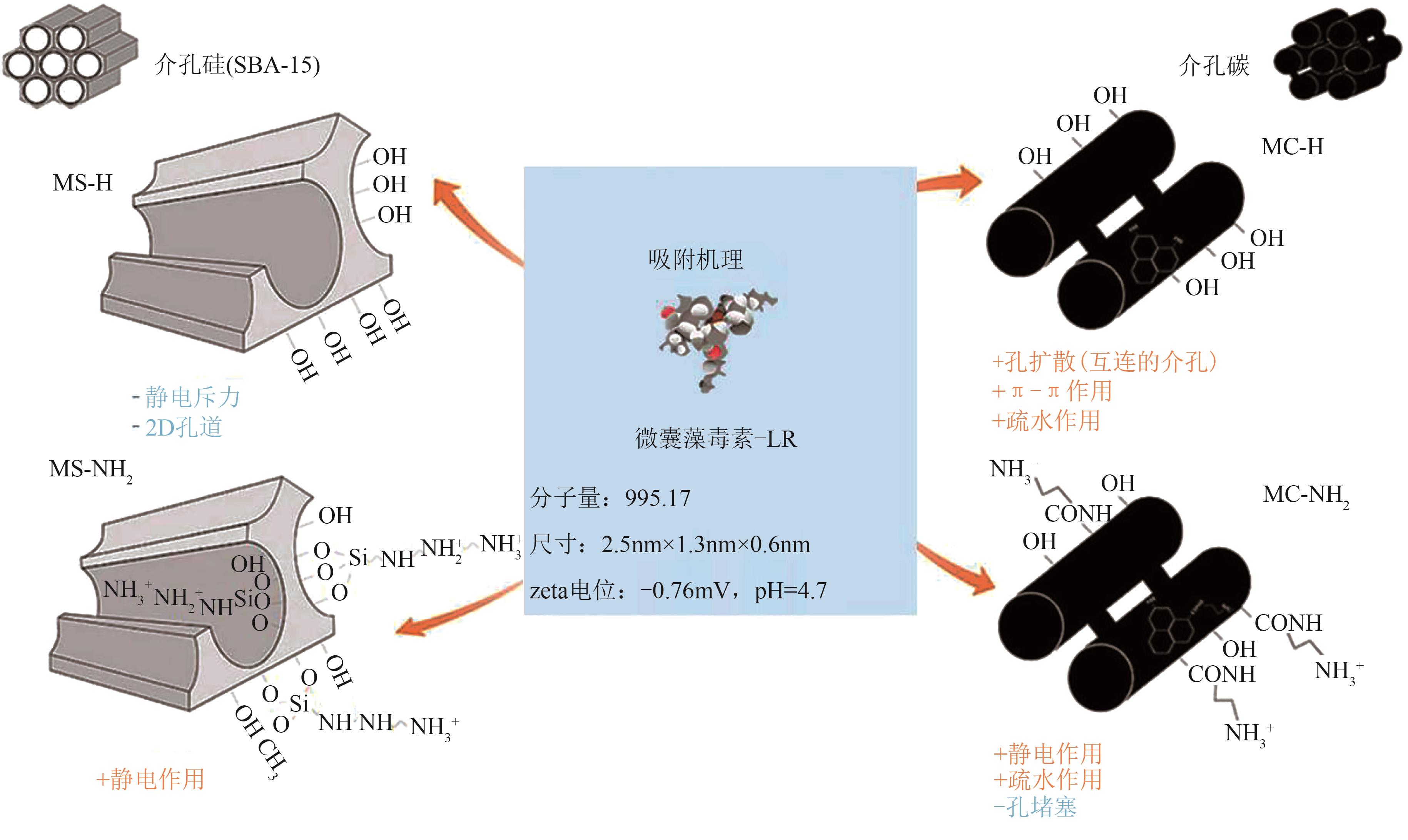
| [90] | PARK Jeong-Ann, KANG Jin-Kyu, JUNG Sung-Mok, et al. Investigating microcystin-LR adsorption mechanisms on mesoporous carbon, mesoporous silica, and their amino-functionalized form: Surface chemistry, pore structures, and molecular characteristics[J]. Chemosphere, 2020, 247: 125811. |
| [1] | WANG Shuai, QIAN Xiangchen, ZHANG Leiqi, WU Qiliang, LIU Min. Degradation mechanism of key components in proton exchange membrane fuel cells and proton exchange membrane electrolysis cells [J]. Chemical Industry and Engineering Progress, 2025, 44(7): 3804-3815. |
| [2] | GAO Jiaojiao, YAN Shiyu, YANG Taishun, XIE Shangzhi, YANG Yanjuan, XU Jing. Effect of alumina support crystal structure of Ru-based catalysts on polyethylene hydrogenolysis performance [J]. Chemical Industry and Engineering Progress, 2025, 44(7): 3917-3927. |
| [3] | LIANG Shuwei, YU Jie, XIE Zhongyin, PEI Jianlu, LIN Zhongxin, CHEN Zexiang. Covalent organic frameworks for radioactive gaseous iodine adsorption [J]. Chemical Industry and Engineering Progress, 2025, 44(7): 3965-3975. |
| [4] | WANG Ying, TANG Mengfei, WANG Ying, ZHANG Chuanfang, ZHANG Guojie, LIU Jun, ZHAO Yuqiong. Preparation of CNT composites from coal pyrolysis catalyzed by different alkali metals for adsorption of Rhodamine B [J]. Chemical Industry and Engineering Progress, 2025, 44(7): 3985-3996. |
| [5] | ZHAO Baohua, LIU Xiaona, HU Yanyun, JIA Tiancong, XIE Qiang, HE Yan, MA Xiangshuai, MA Shuangchen. Comparison and development trend of traditional electroadsorption and flow electrode capacitive deion technology [J]. Chemical Industry and Engineering Progress, 2025, 44(7): 4101-4116. |
| [6] | CHEN Chongming, LI Dong, YU Jinxing, CHE Kai, HE Wei, CHEN Chuanmin. Adsorption performance of titanium based MXene aerogel for Hg(Ⅱ) in desulfurization wastewater [J]. Chemical Industry and Engineering Progress, 2025, 44(6): 3112-3120. |
| [7] | HAN Pei, LI Jinjian, KE Tian, ZHANG Zhiguo, BAO Zongbi, REN Qilong, YANG Qiwei. Advances in adsorption separation of sulfur hexafluoride/nitrogen by novel porous materials [J]. Chemical Industry and Engineering Progress, 2025, 44(6): 3592-3617. |
| [8] | REN Pengkun, ZHONG Zhaoping, ZHANG Xiaoni, YANG Yuxuan, RAN Zhenzhen. Preparation of sludge-sawdust-based activated carbon and its adsorption performance for benzene series VOCs [J]. Chemical Industry and Engineering Progress, 2025, 44(6): 3031-3040. |
| [9] | LUO Yiwen, ZHAO Liang, ZHANG Yuhao, LIU Dongyang, GAO Jinsen, XU Chunming. Progress on separation materials and mechanisms of light hydrocarbons [J]. Chemical Industry and Engineering Progress, 2025, 44(5): 2938-2954. |
| [10] | FU Donglong, FENG Guanqing, XU Xinquan, LU Zhenpu, PEI Chunlei, GONG Jinlong. Recent advances in catalytic conversion of waste plastics [J]. Chemical Industry and Engineering Progress, 2025, 44(5): 2758-2766. |
| [11] | ZHANG Yiru, HAN Dongmei, MA Weifang. Research progress on iron-based composite bismuth oxyhalide magnetic materials for enhanced visible light catalytic treatment of refractory organic wastewater [J]. Chemical Industry and Engineering Progress, 2025, 44(4): 2258-2273. |
| [12] | NIU Jingwei, CHEN Xiaoyang, ZHANG Jian, ZHOU Yuzhi, CHEN Min. Activated persulfate-induced degradation of typical environmental endocrine disruptors in soil [J]. Chemical Industry and Engineering Progress, 2025, 44(4): 2285-2296. |
| [13] | WANG Peigan, LI Leli, XIE Songzhuan, SONG Bingbing, KONG Qiaoping, LIU Gaige, MA Weiwei, SHI Xueqing. Phosphate adsorption mechanism of sludge-based FeCa-ALE composite material [J]. Chemical Industry and Engineering Progress, 2025, 44(4): 2365-2373. |
| [14] | ZHANG Pei, GAO Lining, DING Siqing, LI Li, ZHU Xiruo, HE Rui. Preparation of g-C3N4/TiO2 heterojunction catalyst and its photocatalytic NO degradation performance [J]. Chemical Industry and Engineering Progress, 2025, 44(4): 2045-2056. |
| [15] | ZHAO Kaiqiang, LIU Hao, DAI Zhenhua, SUN Zhenfeng, YANG Chao, MA Cheng. Research progress in preparation of high sulfur polymers from vegetable oils [J]. Chemical Industry and Engineering Progress, 2025, 44(3): 1454-1465. |
| Viewed | ||||||
|
Full text |
|
|||||
|
Abstract |
|
|||||