化工进展 ›› 2025, Vol. 44 ›› Issue (S1): 232-242.DOI: 10.16085/j.issn.1000-6613.2025-0179
• 工业催化 • 上一篇
TiO2载体粒度对RuO x -V2O5-WO3/TiO2催化剂脱硝及抗水硫中毒性能的影响
刘超1( ), 丁承奥1, 吴宝顺1, 雷欣宇1, 王光应2, 余正伟1()
- 1.安徽工业大学冶金工程学院,安徽 马鞍山 243032
2.安徽元琛环保科技股份有限公司催化剂事业部,安徽 合肥 230012
-
收稿日期:2025-02-10修回日期:2025-03-29出版日期:2025-10-25发布日期:2025-11-24 -
通讯作者:余正伟 -
作者简介:刘超(1999—),男,硕士研究生,研究方向为脱硝催化剂、低碳冶金。E-mail:15256078997@163.com。 -
基金资助:国家自然科学基金(52174290);安徽省高校自然科学研究项目(KJ2021A0397)
Effect of TiO2 support particle size on the denitrification and water/sulfur poisoning resistance of RuO x -V2O5-WO3/TiO2 catalyst
LIU Chao1(), DING Chengao1, WU Baoshun1, LEI Xinyu1, WANG Guangying2, YU Zhengwei1()
- 1.School of Metallurgical Engineering, Anhui University of Technology, Ma’anshan 243032, Anhui, China
2.Catalyst Division, Anhui Yuanchen Environmental Protection Science and Technology Co. , Ltd. , Hefei 230012, Anhui, China
-
Received:2025-02-10Revised:2025-03-29Online:2025-10-25Published:2025-11-24 -
Contact:YU Zhengwei

摘要:
以TiO2为载体的RuO x 掺杂VWTi催化剂(RVWTi)因其优异的低温脱硝活性和抗水硫中毒性能,已成为工业烟气低温脱硝催化剂开发的重要方向。然而,TiO2载体的粒度对催化剂性能有显著影响,导致其性能稳定性存在不足。本文以5nm、20nm、30nm和50nm四种粒度的TiO2为载体制备RVWTi催化剂,系统评价其脱硝活性、物化性能及抗水硫中毒性能。在[NO]=[NH3]=550μL/L、[O2]=16%、GHSV=28000h⁻¹及150℃的条件下,30nm TiO2载体催化剂表现出最优脱硝性能,NO x 转化率达85.7%,优异性能归因于其较高的表面化学吸附氧含量和V⁴⁺物种比例。5nm TiO2载体催化剂因团聚程度较高、比表面积较小,表现最差,NO x 转化率仅为56.9%。抗水硫中毒性能测试表明,30nm TiO2载体制备的催化剂在含10%(体积分数)水蒸气和35mg/m³ SO2条件下表现最佳,主要得益于其最大比表面积、较高的表面吸附NH₃能力及对硫酸铵盐生成的抑制作用。本文阐明了载体粒度TiO2对催化剂性能的影响规律,揭示了其对催化剂活性及抗中毒机理的影响,并为催化剂配方优化提供了技术支撑。
中图分类号:
引用本文
刘超, 丁承奥, 吴宝顺, 雷欣宇, 王光应, 余正伟. TiO2载体粒度对RuO x -V2O5-WO3/TiO2催化剂脱硝及抗水硫中毒性能的影响[J]. 化工进展, 2025, 44(S1): 232-242.
LIU Chao, DING Chengao, WU Baoshun, LEI Xinyu, WANG Guangying, YU Zhengwei. Effect of TiO2 support particle size on the denitrification and water/sulfur poisoning resistance of RuO x -V2O5-WO3/TiO2 catalyst[J]. Chemical Industry and Engineering Progress, 2025, 44(S1): 232-242.
| 名称 | 规格 | 生产厂家 |
|---|---|---|
| 锐钛矿型二氧化钛(TiO2) | >99.5% | 比斯利新材料(苏州)有限公司 |
| 钨酸铵[(NH4)10W12O41·xH2O] | 90.0% | 国药集团化学试剂有限公司 |
| 亚硝酰硝酸钌(N4O10Ru) | Ru质量浓度1.5kg/L | 上海阿拉丁生化科技股份有限公司 |
| 偏钒酸铵(NH4VO3) | >99.5% | 国药集团化学试剂有限公司 |
| 去离子水(H2O) | >99.9% | — |
表1 实验试剂
| 名称 | 规格 | 生产厂家 |
|---|---|---|
| 锐钛矿型二氧化钛(TiO2) | >99.5% | 比斯利新材料(苏州)有限公司 |
| 钨酸铵[(NH4)10W12O41·xH2O] | 90.0% | 国药集团化学试剂有限公司 |
| 亚硝酰硝酸钌(N4O10Ru) | Ru质量浓度1.5kg/L | 上海阿拉丁生化科技股份有限公司 |
| 偏钒酸铵(NH4VO3) | >99.5% | 国药集团化学试剂有限公司 |
| 去离子水(H2O) | >99.9% | — |
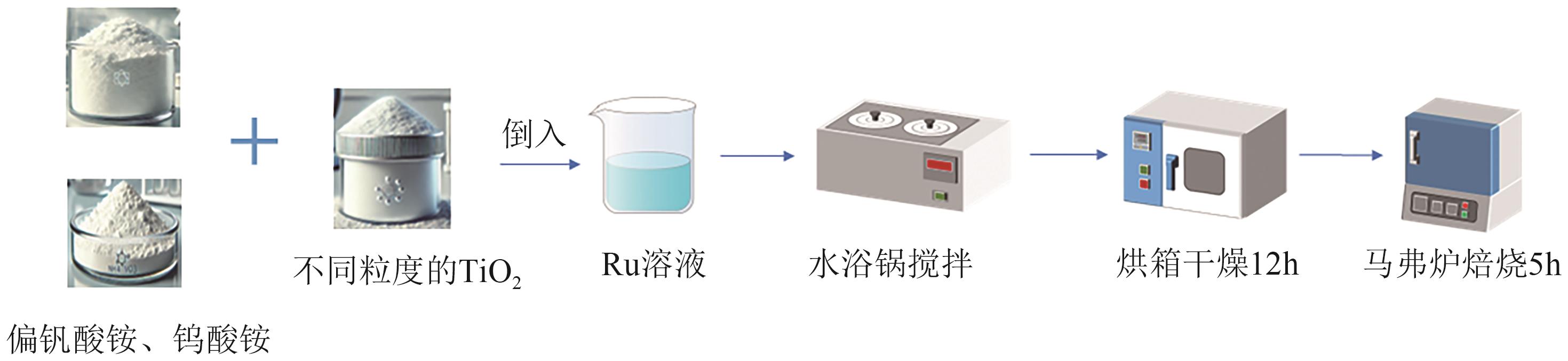
图1 新鲜催化剂的制备流程
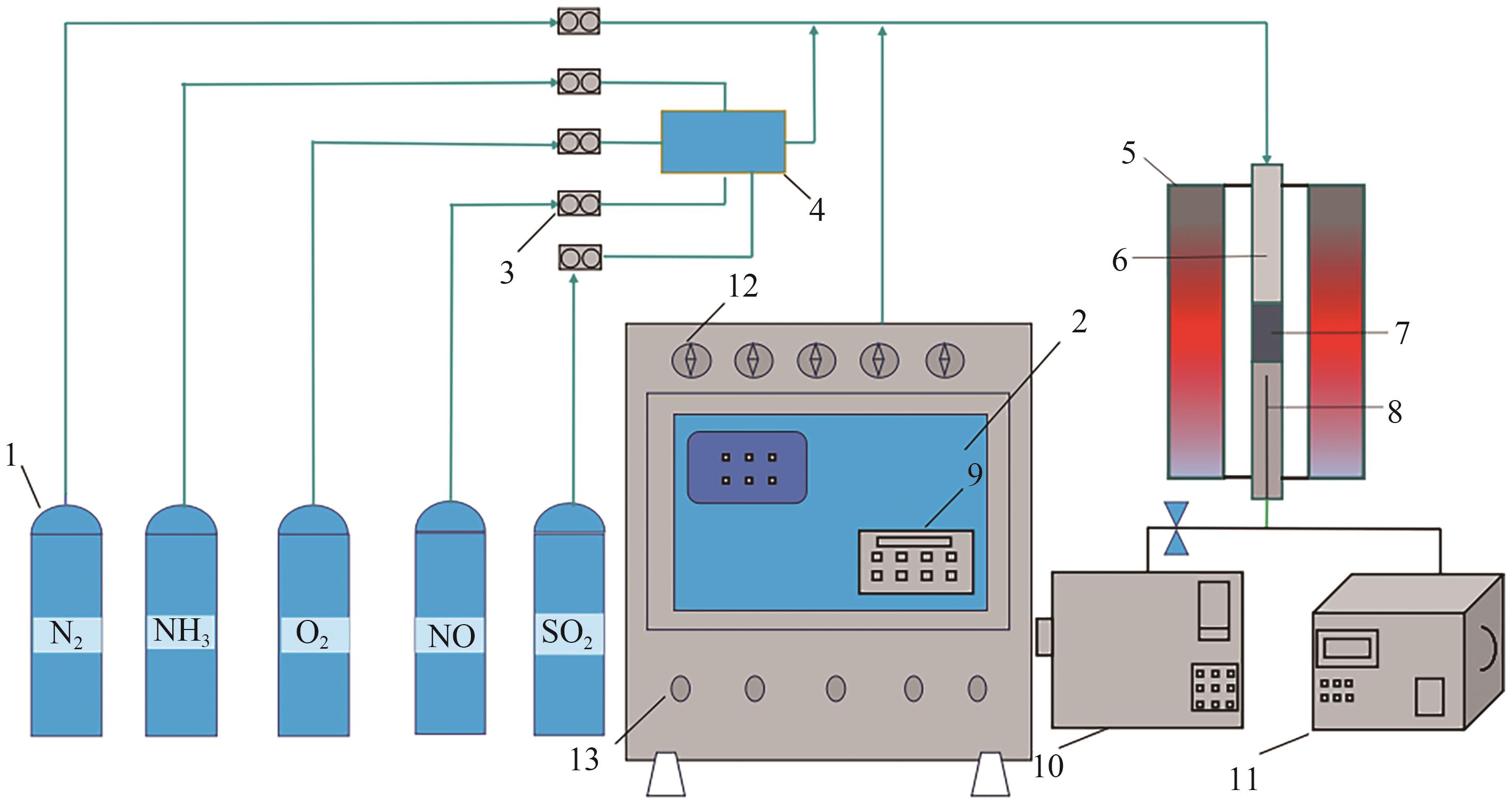
图2 固定催化平台装置1—反应气体;2—控制面板;3—流量计;4—气体混合器;5—加热炉;6—石英管;7—实验样品;8—热电偶;9—温度设置器;10—气相色谱仪;11—Testo烟气分析仪;12—压力表;13—流量控制阀
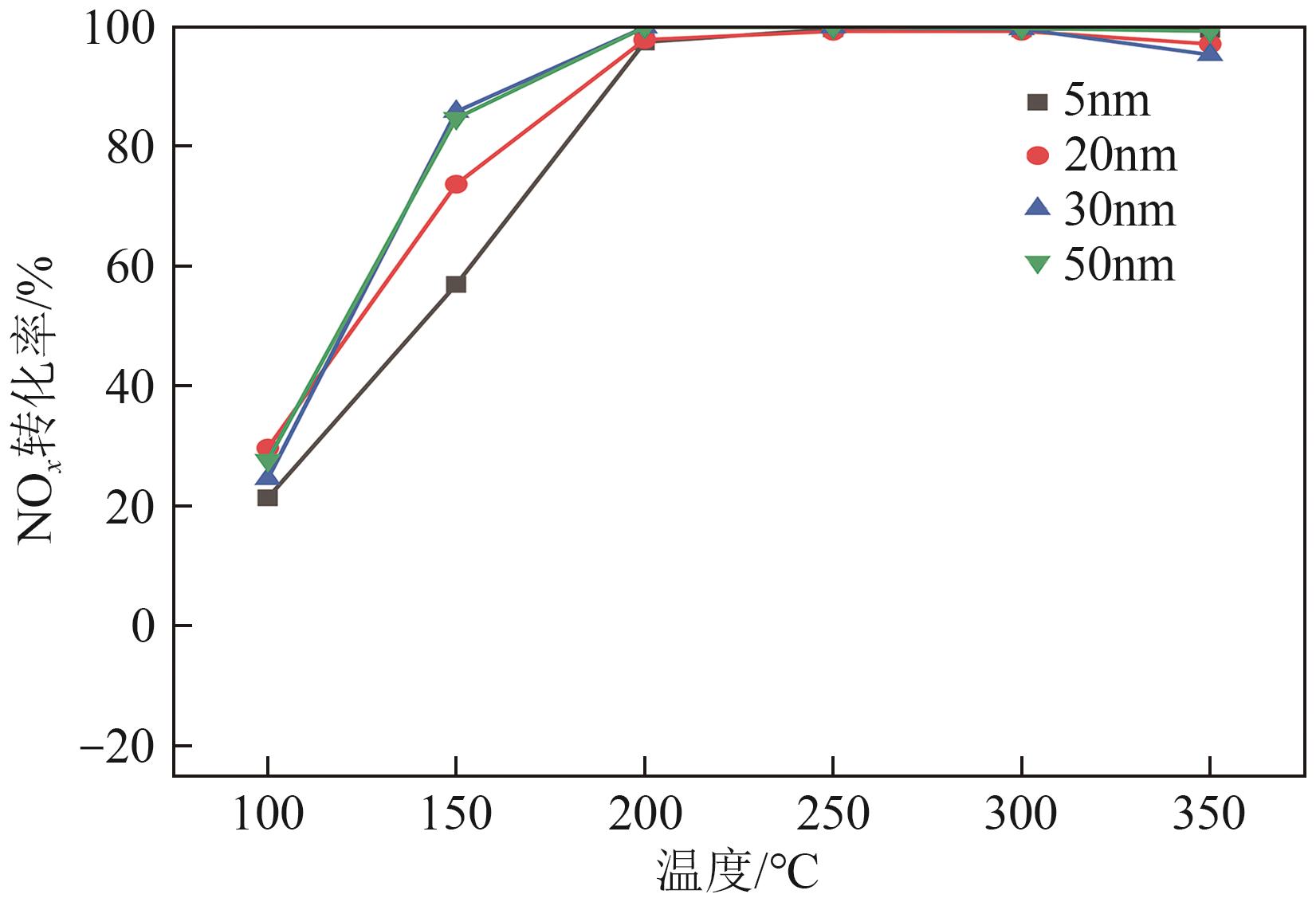
图3 不同TiO2粒度下RVWTi催化剂的NO x 转化率
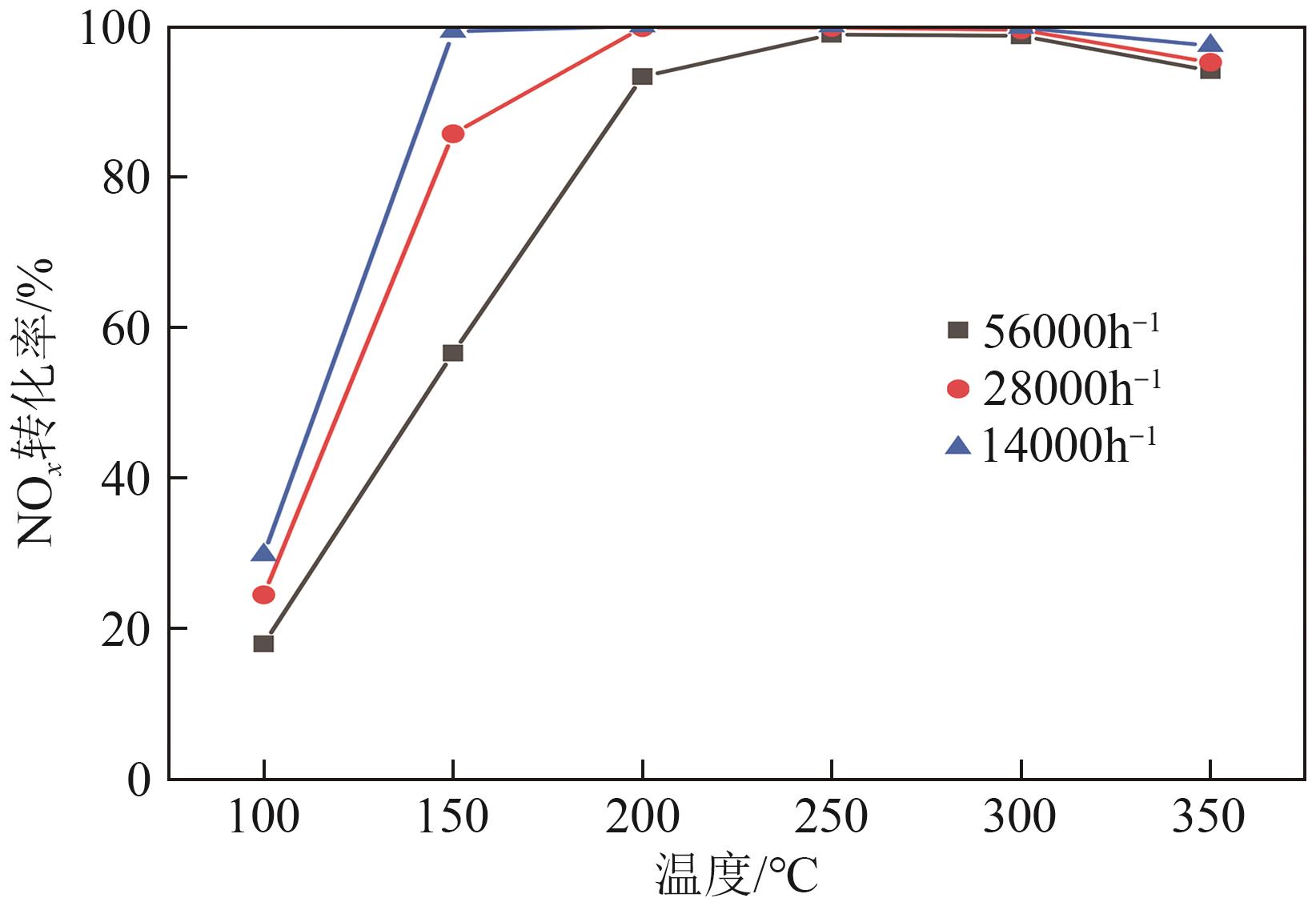
图4 不同空速下TiO2(30)-RVWT的NO x 转化率
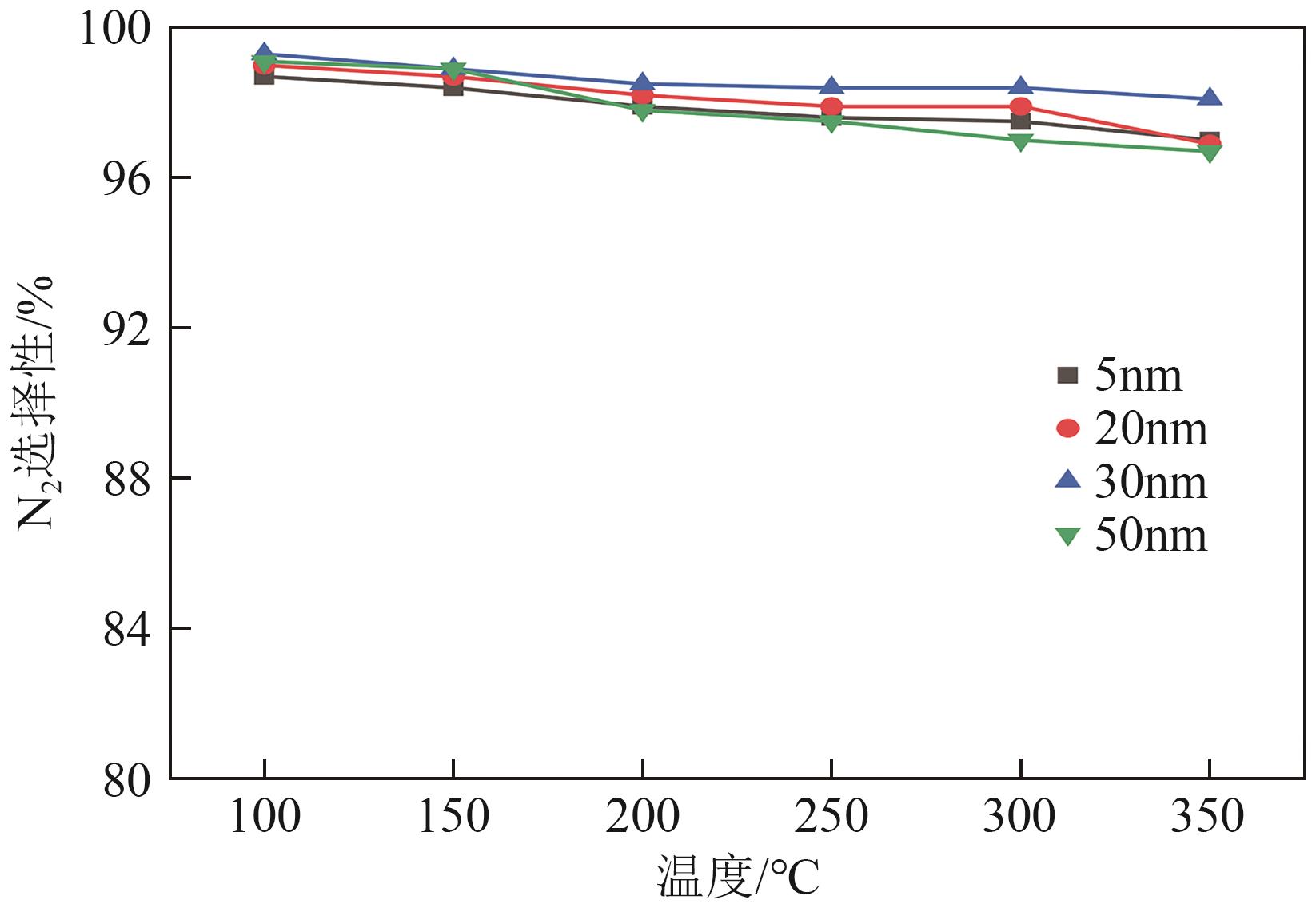
图5 不同TiO2粒度下RVWTi催化剂的N2选择性
| 样品 | 比表面积/m2·g-1 | 孔容/cm3·g-1 | 平均孔径/nm |
|---|---|---|---|
| TiO2(5)-RVWT | 44.309 | 0.268 | 14.29 |
| TiO2(20)-RVWT | 44.877 | 0.275 | 25.47 |
| TiO2(30)-RVWT | 50.015 | 0.322 | 25.84 |
| TiO2(50)-RVWT | 45.882 | 0.286 | 25.65 |
表2 RVWTi催化剂的比表面积、孔容、平均孔径
| 样品 | 比表面积/m2·g-1 | 孔容/cm3·g-1 | 平均孔径/nm |
|---|---|---|---|
| TiO2(5)-RVWT | 44.309 | 0.268 | 14.29 |
| TiO2(20)-RVWT | 44.877 | 0.275 | 25.47 |
| TiO2(30)-RVWT | 50.015 | 0.322 | 25.84 |
| TiO2(50)-RVWT | 45.882 | 0.286 | 25.65 |
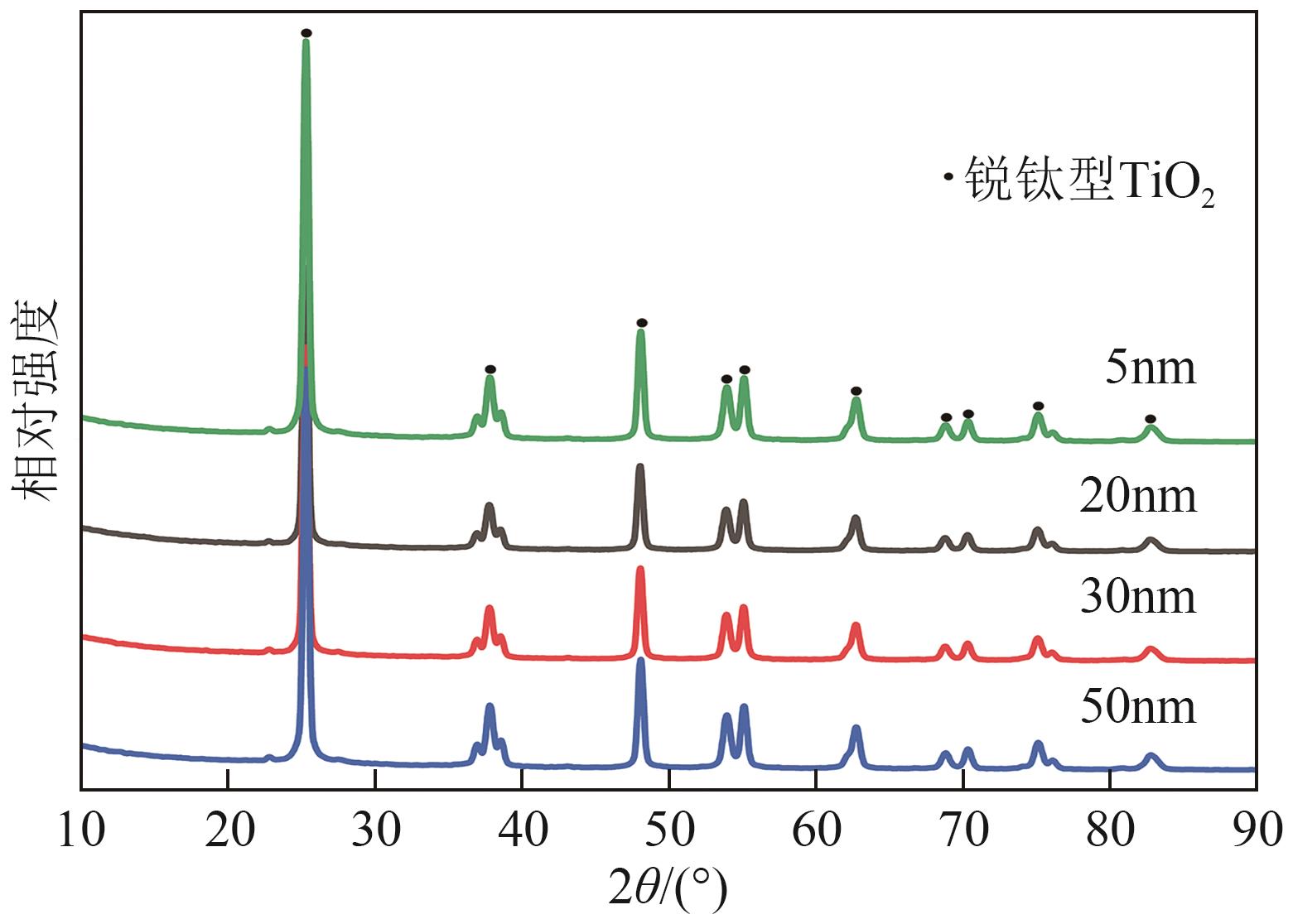
图6 不同TiO2粒度的RVWTi催化剂的XRD谱图
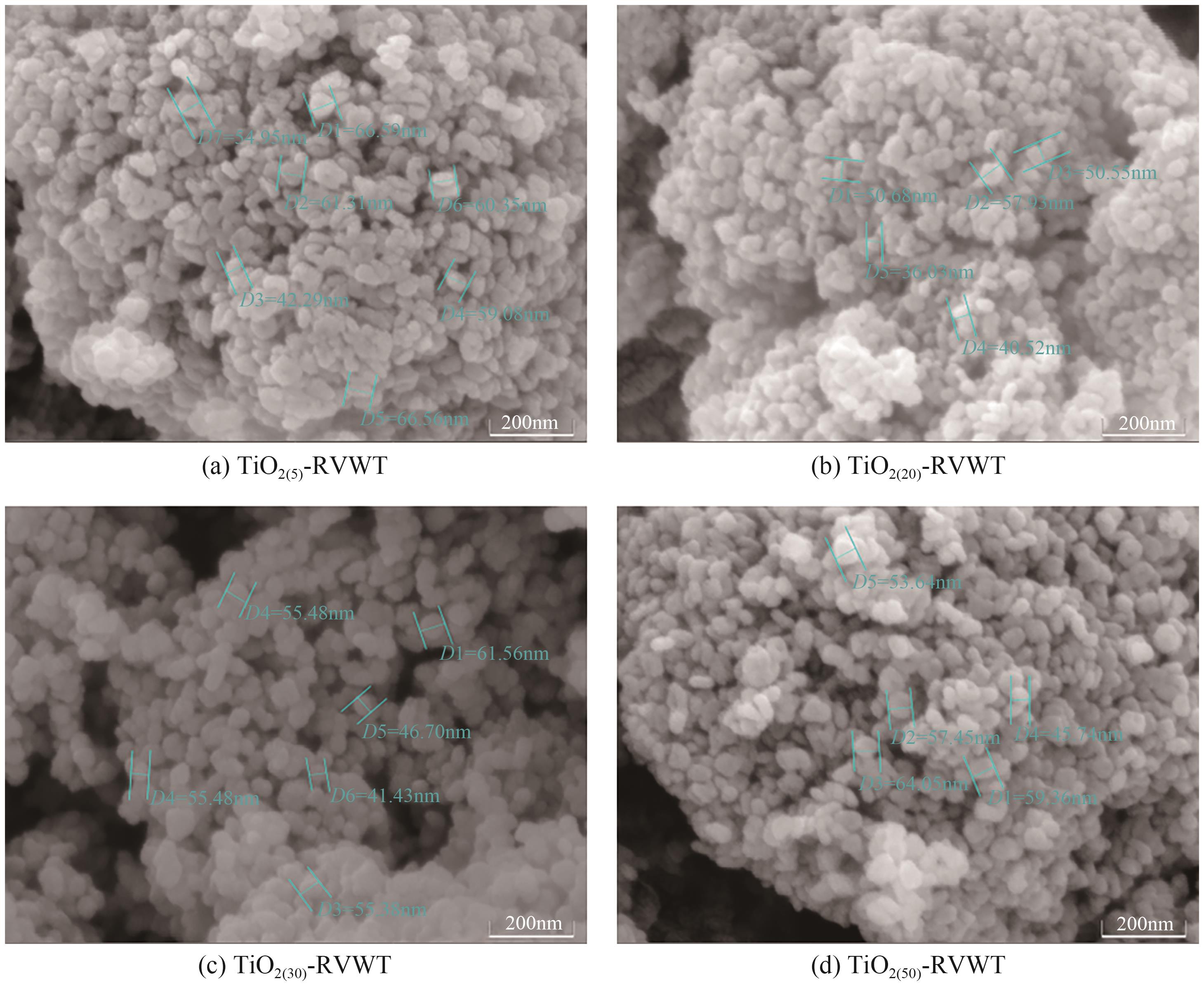
图7 催化剂的SEM图
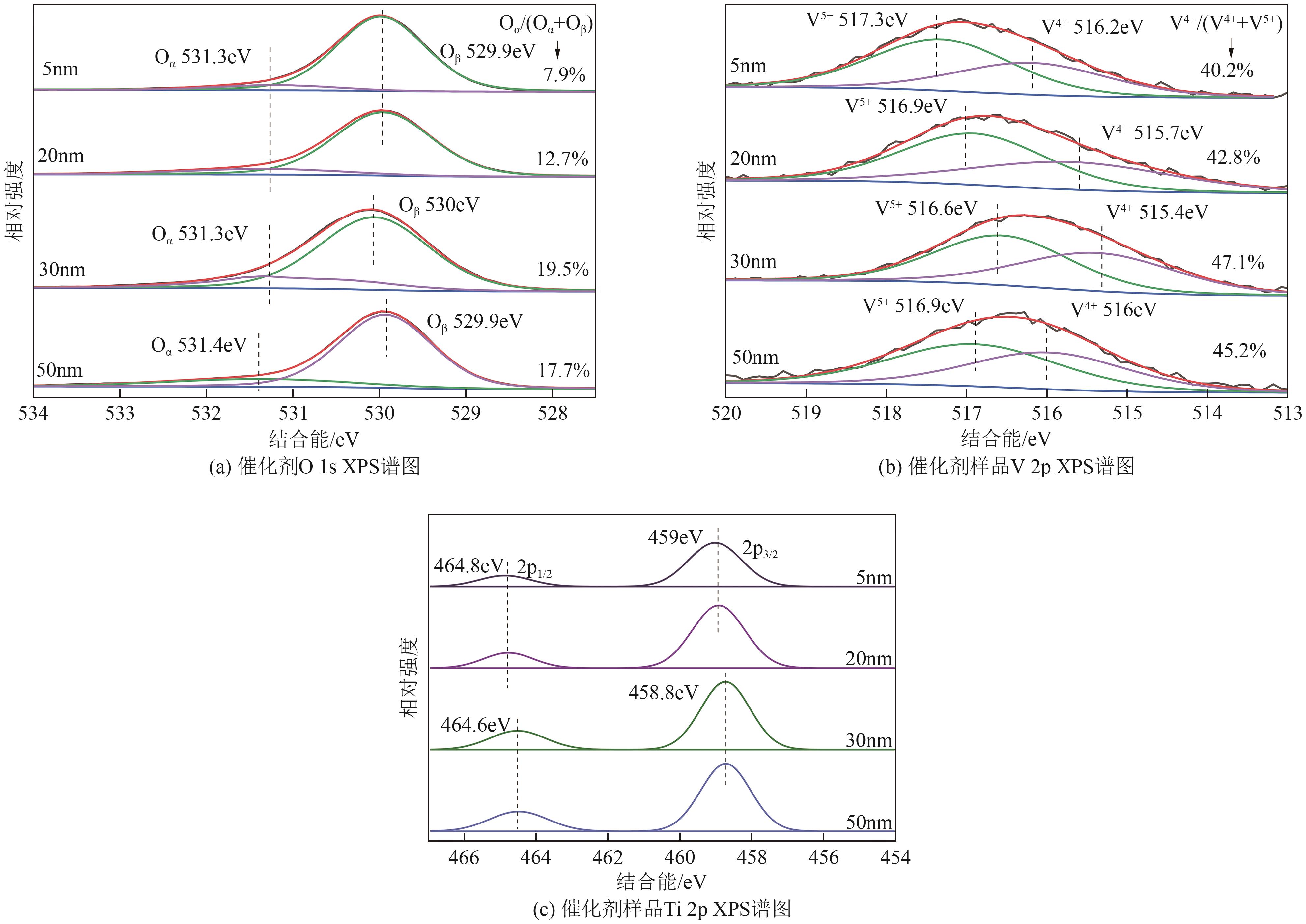
图8 不同TiO2粒度的RVWTi催化剂的XPS谱图
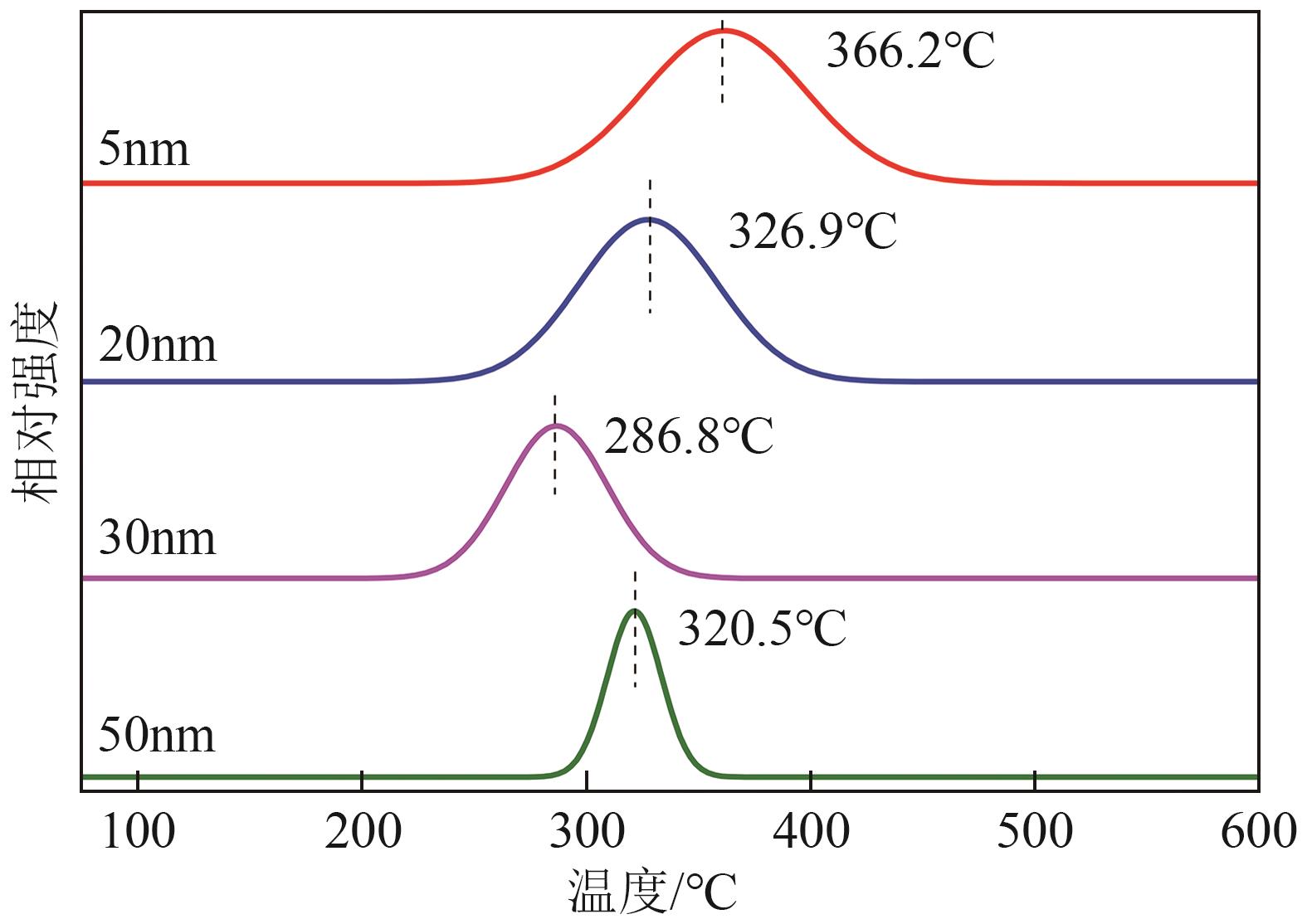
图9 催化剂的H2-TPR谱图
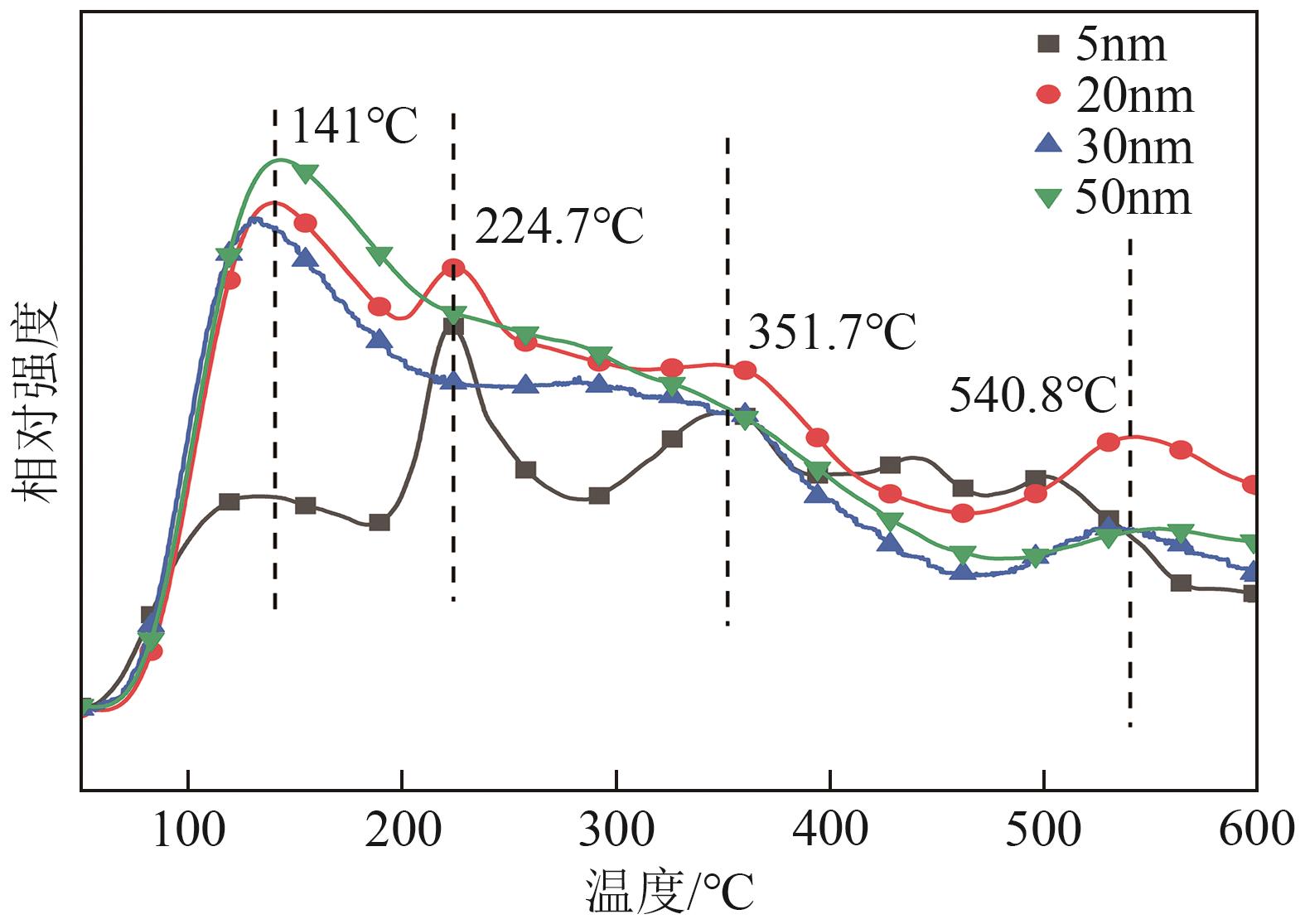
图10 TiO2的NH3-TPD谱图
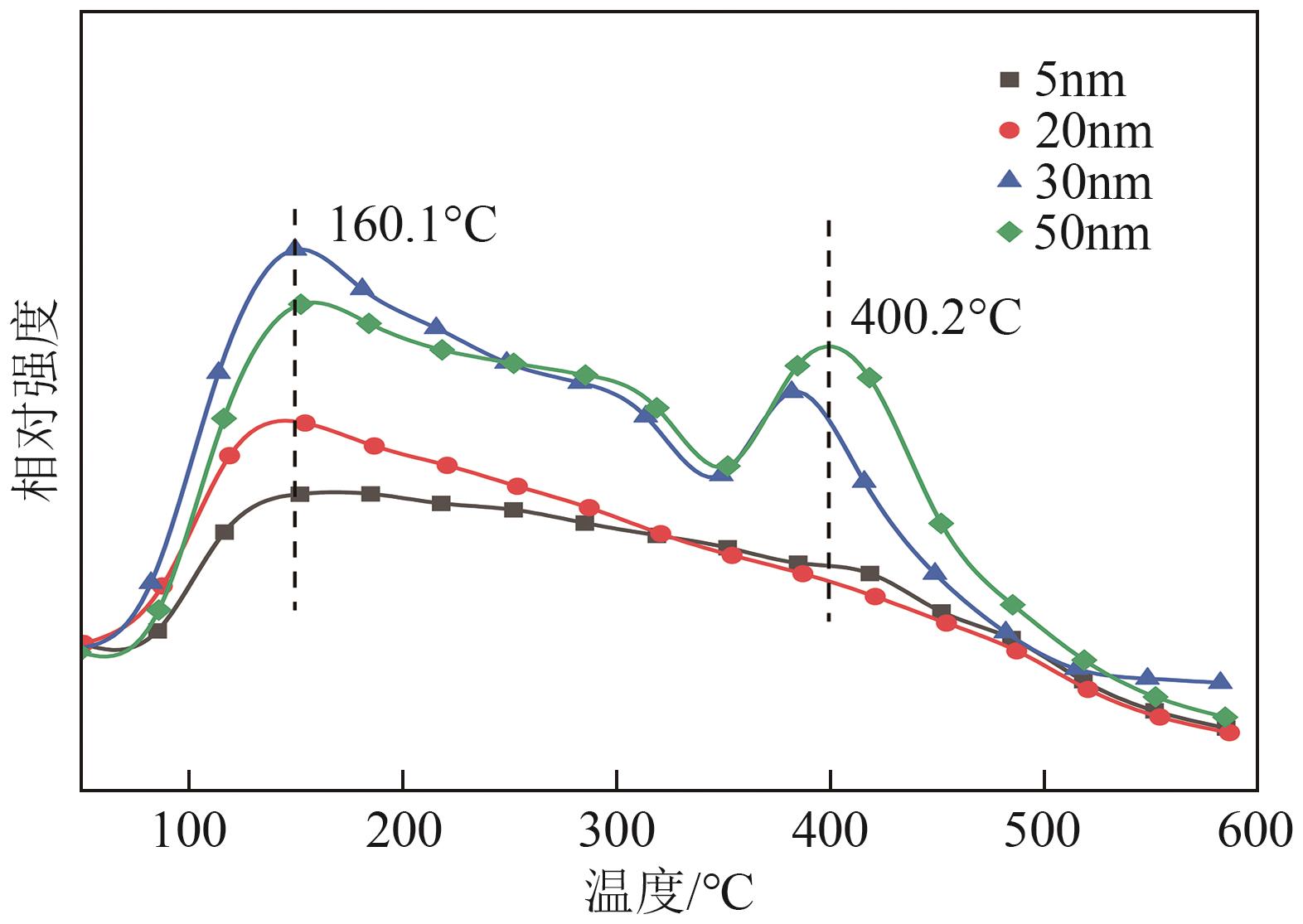
图11 RVWTi催化剂的NH3-TPD谱图
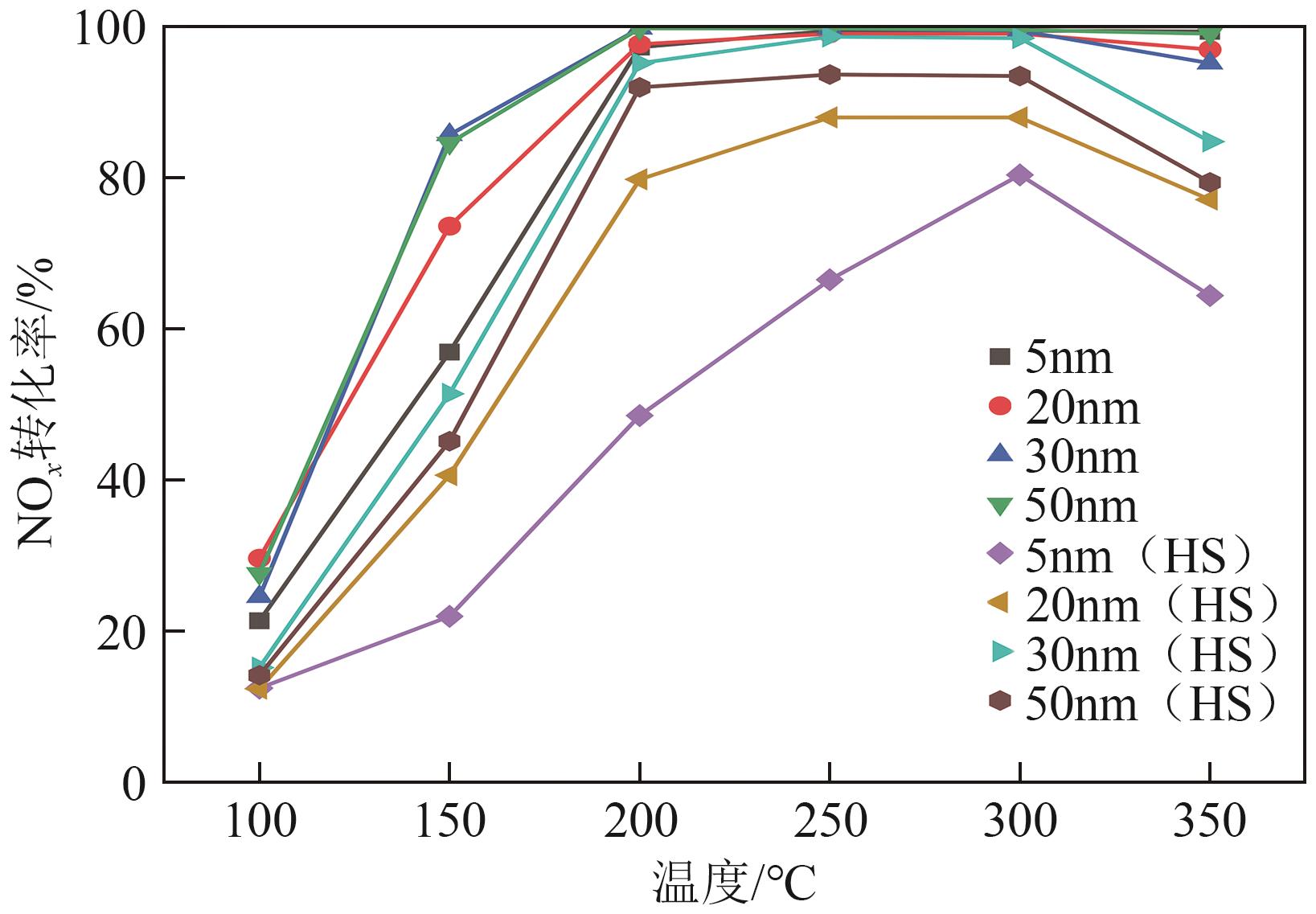
图12 不同TiO2粒度的RVWTi催化剂水硫中毒后的NO x 转化率
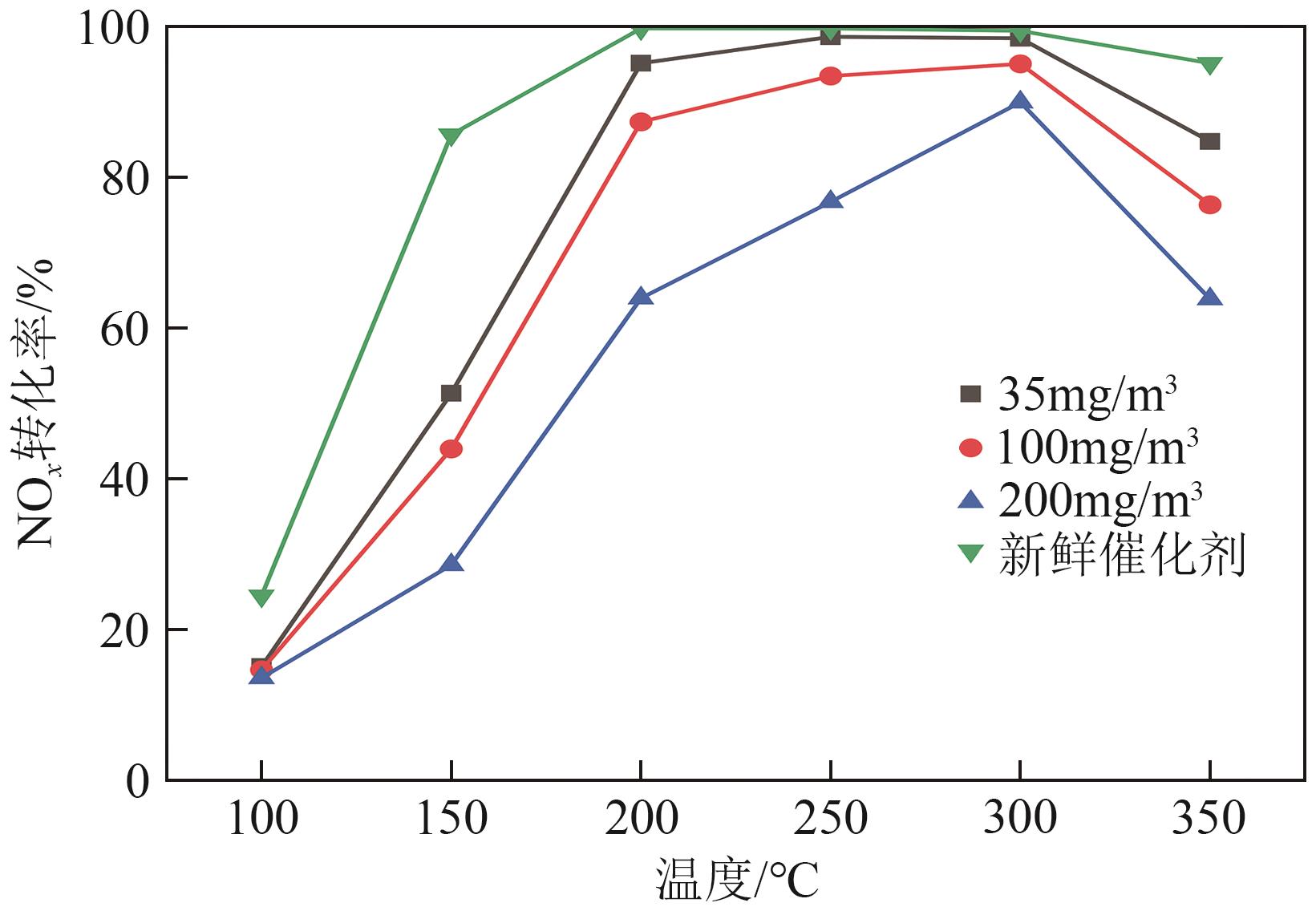
图13 TiO2(30)-RVWT催化剂在不同SO2浓度中毒下的NO x 转化率
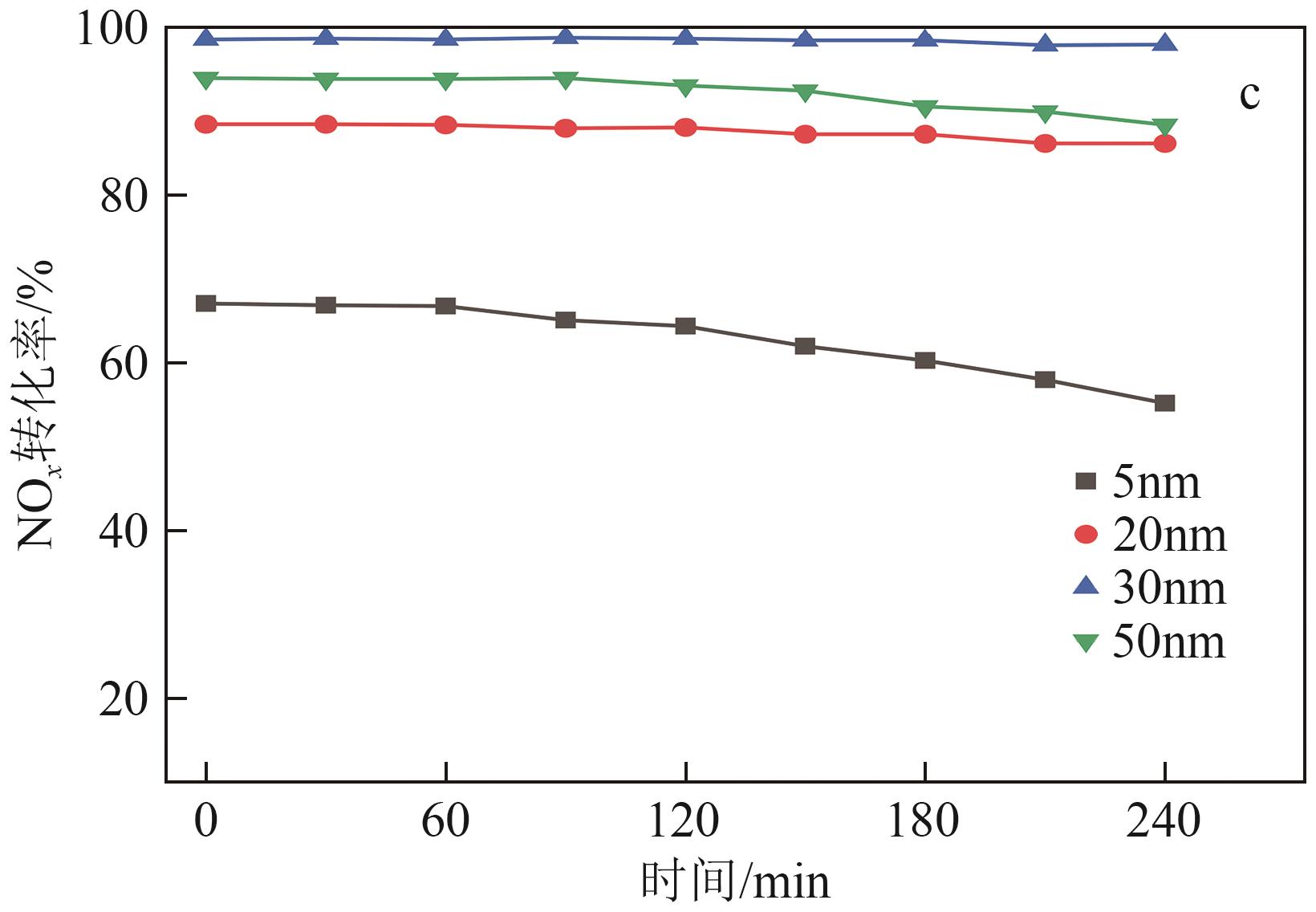
图14 不同TiO2粒度的RVWTi催化剂水硫中毒4h NO x 转化率的稳定性
| [1] | 闫武装, 谢桂龙, 周景伟, 等. 低温氧化法用于烧结烟气脱硝的可行性探析[J]. 中国冶金, 2018, 28(5): 1-6. |
| YAN Wuzhuang, XIE Guilong, ZHOU Jingwei, et al. Feasibility analysis of applying low temperature oxidation technology to sintering flue gas denitration[J]. China Metallurgy, 2018, 28(5): 1-6. | |
| [2] | 张建良, 尉继勇, 刘征建, 等. 中国钢铁工业空气污染物排放现状及趋势[J]. 钢铁, 2021, 56(12): 1-9. |
| ZHANG Jianliang, YU Jiyong, LIU Zhengjian, et al. Current situation and trend of air pollutant emission in China’s steel industry[J]. Iron and Steel, 2021, 56(12): 1-9. | |
| [3] | 陈焕章, 李宏, 李花. 负载型Mn-Fe/γ-Al2O3低温脱硝催化剂的性能[J]. 化工进展, 2016, 35(4): 1107-1112. |
| CHEN Huanzhang, LI Hong, LI Hua. Denitration performance of supported Mn-Fe/γ-Al2O3 catalyst at low temperature[J]. Chemical Industry and Engineering Progress, 2016, 35(4): 1107-1112. | |
| [4] | 景有志, 杨丽, 朱淑维, 等. 锰钛系低温选择性催化还原催化剂的抗SO2和抗H2O性能研究进展[J]. 化工进展, 2018, 37(1): 105-111. |
| JING Youzhi, YANG Li, ZHU Shuwei, et al. Research progress on the SO2 and H2O resistance of Mn-Ti catalysts for low-temperature SCR[J]. Chemical Industry and Engineering Progress, 2018, 37(1): 105-111. | |
| [5] | ZHANG Bolin, DENG Lifeng, LIU Bo, et al. Synergistic effect of cobalt and niobium in Co3-Nb-O x on performance of selective catalytic reduction of NO with NH3 [J]. Rare Metals, 2022, 41(1): 166-178. |
| [6] | 龙红明, 丁龙, 陶家杰, 等. 烧结烟气脱硝废弃钒钨钛催化剂资源化利用途径分析[J]. 钢铁, 2022, 57(7): 162-178. |
| LONG Hongming, DING Long, TAO Jiajie, et al. Analysis on resource utilization of spent V2O5-WO3/TiO2 catalyst produced in sintering flue gas[J]. Iron and Steel, 2022, 57(7): 162-178. | |
| [7] | HAN J, HE X, QIN L, et al. NO x removal coupled with energy recovery in sintering plant[J]. Ironmaking & Steelmaking, 2014, 41(5): 350-354. |
| [8] | 李永光, 安璐, 任翠涛, 等. 烧结烟气低温SCR脱硝催化剂半工业化试验[J]. 中国冶金, 2021, 31(2): 95-102. |
| LI Yongguang, AN Lu, REN Cuitao, et al. Semi-industrial test on low temperature SCR denitrification catalyst for sintering flue gas[J]. China Metallurgy, 2021, 31(2): 95-102. | |
| [9] | PENG Yaoyao, SONG Lei, LU Siru, et al. Superior resistance to alkali metal potassium of vanadium-based NH3-SCR catalyst promoted by the solid superacid SO 4 2 - -TiO2 [J]. Chinese Journal of Chemical Engineering, 2023, 55: 246-256. |
| [10] | 尤兴萌, 殷进, 李伟, 等. 燃煤电厂废V2O5-WO3/TiO2催化剂失活及再生研究进展[J]. 现代化工, 2024, 44(11): 33-37. |
| YOU Xingmeng, YIN Jin, LI Wei, et al. Research progress on the deactivation and regeneration of waste V2O5-WO3/TiO2 catalysts in coal-fired power plants[J]. Modern Chemical Industry, 2024, 44(11): 33-37. | |
| [11] | 许腾飞. V2O5/TiO2脱硝催化剂的改性及硫中毒机制研究[D]. 北京: 清华大学, 2017. |
| XU Tengfei. Research on the modification and sulfur poisoning of V2O5/TiO2 catalysts for NH3-SCR reaction[D]. Beijing: Tsinghua University, 2017. | |
| [12] | REN Zhixiang, LI Ao, LEI Xinyu, et al. Enhancement effect of RuO2 doping on the reduction process of NO x by NH3 via V2O5-WO3/TiO2 particle catalyst under low-temperature: Structure-activity relationship and reaction mechanism[J]. Applied Surface Science, 2023, 625: 157-160. |
| [13] | 沙菲, 王滨, 杨力. 纳米粉体的团聚、分散及表面改性[C]//“上海市颗粒学会2005年年会”论文集. 上海: 上海纳米材料检测中心, 2005: 58-62. |
| SHA Fei, WANG Bin, YANG Li. Agglomeration, dispersion and surface modification of nanopowders[C]//Proceedings of “the 2005 Annual Meeting of the Shanghai Particle Society”. Shanghai: Shanghai Nanomaterials Testing Center, 2005: 58-62. | |
| [14] | 李爱元, 徐国财, 邢宏龙, 等. 纳米粉体表面改性技术及应用[J]. 化工新型材料, 2002, 30(10): 25-28. |
| LI Aiyuan, XU Guocai, XING Honglong, et al. Surface-modified technique for nanoparticles powder[J]. New Chemical Materials, 2002, 30(10): 25-28. | |
| [15] | 朱燕萍, 徐连来, 李长福. 纳米颗粒团聚问题的研究进展[J]. 天津医科大学学报, 2005, 11(2): 338-341. |
| ZHU Yanping, XU Lianlai, LI Changfu. Research progress on nanoparticle agglomeration[J]. Journal of Tianjin Medical University, 2005, 11(2): 338-341. | |
| [16] | ZHANG Lei, LI Lulu, CAO Yuan, et al. Getting insight into the influence of SO2 on TiO2/CeO2 for the selective catalytic reduction of NO by NH3 [J]. Applied Catalysis B: Environmental, 2015, 165: 589-598. |
| [17] | KWON Dong Wook, Ki Bok NAM, HONG Sung Chang. The role of ceria on the activity and SO2 resistance of catalysts for the selective catalytic reduction of NO x by NH3 [J]. Applied Catalysis B: Environmental, 2015, 166/167: 37-44. |
| [18] | ZHANG Xianlong, DIAO Qinchao, HU Xiaorui, et al. Modification of V2O5-WO3/TiO2 catalyst by loading of MnO x for enhanced low-temperature NH3-SCR performance[J]. Nanomaterials, 2020, 10(10): 1900. |
| [19] | QIAN Lixin, YANG Tao, LONG Hongming, et al. Recycling of waste V2O5-WO3/TiO2 catalysts in the iron ore sintering process via a preballing approach[J]. ACS Sustainable Chemistry & Engineering, 2021, 9(48): 16373-16383. |
| [20] | CHEN Yaxin, HUANG Zhiwei, ZHOU Meijuan, et al. Single silver adatoms on nanostructured manganese oxide surfaces: Boosting oxygen activation for benzene abatement[J]. Environmental Science & Technology, 2017, 51(4): 2304-2311. |
| [21] | Kahyun HAM, LEE Jaewon, LEE Kiyoung, et al. Boosting the oxygen evolution reaction performance of wrinkled Mn(OH)2 via conductive activation with a carbon binder[J]. Journal of Energy Chemistry, 2022, 71: 580-587. |
| [22] | LÁZARO M J, BOYANO A, HERRERA C, et al. Vanadium loaded carbon-based monoliths for the on-board NO reduction: Influence of vanadia and tungsten loadings[J]. Chemical Engineering Journal, 2009, 155(1/2): 68-75. |
| [23] | WU Zihua, CHEN Hao, WAN Zhongdang, et al. Promotional effect of S doping on V2O5-WO3/TiO2 catalysts for low-temperature NO x reduction with NH3 [J]. Industrial & Engineering Chemistry Research, 2020, 59(35): 15478-15488. |
| [24] | LI Qichao, CHEN Sifan, LIU Zhenyu, et al. Combined effect of KCl and SO2 on the selective catalytic reduction of NO by NH3 over V2O5/TiO2 catalyst[J]. Applied Catalysis B: Environmental, 2015, 164: 475-482. |
| [25] | ZHANG Shule, ZHONG Qin. Promotional effect of WO3 on O 2 - over V2O5/TiO2 catalyst for selective catalytic reduction of NO with NH3 [J]. Journal of Molecular Catalysis A: Chemical, 2013, 373: 108-113. |
| [26] | NIE Hua, LI Wei, WU Qirong, et al. The poisoning of V2O5-WO3/TiO2 and V2O5-Ce(SO4)2/TiO2 SCR catalysts by KCl and the partial regeneration by SO2 [J]. Catalysts, 2020, 10(2): 207. |
| [27] | CHMIELARZ Lucjan, DZIEMBAJ Roman, GRZYBEK Teresa, et al. Pillared smectite modified with carbon and manganese as catalyst for SCR of NO x with NH3. Part Ⅱ. Temperature-programmed studies[J]. Catalysis Letters, 2000, 68(1): 95-100. |
| [28] | NICOSIA D, ELSENER M, KRÖCHER O, et al. Basic investigation of the chemical deactivation of V2O5/WO3-TiO2 SCR catalysts by potassium, calcium, and phosphate[J]. Topics in Catalysis, 2007, 42(1): 333-336. |
| [29] | MARBERGER Adrian, ELSENER Martin, FERRI Davide, et al. VO x surface coverage optimization of V2O5/WO3-TiO2 SCR catalysts by variation of the V loading and by aging[J]. Catalysts, 2015, 5(4): 1704-1720. |
| [30] | XU Junqiang, CHEN Guorong, GUO Fang, et al. Development of wide-temperature vanadium-based catalysts for selective catalytic reducing of NO x with ammonia: Review[J]. Chemical Engineering Journal, 2018, 353: 507-518. |
| [31] | 柴高贵, 郝晓明. 焦化厂VOCs与焦炉烟道废气循环综合利用技术的探讨[J]. 煤化工, 2020, 48(5): 65-68. |
| CHAI Gaogui, HAO Xiaoming. Discussion on comprehensive utilization technology of VOCs and coke oven flue gas circulation in coking plant[J]. Coal Chemical Industry, 2020, 48(5): 65-68. | |
| [32] | 董锐锋, 王志东, 李媛, 等. 燃煤电厂超低排放改造的技术路线研究[J]. 环境污染与防治, 2017, 9(12): 1394-1398, 1402. |
| DONG Ruifeng, WANG Zhidong, LI Yuan, et al. Research on ultra-low emission technologies of coal-fired power plants[J]. Environmental Pollution & Control, 2017, 39(12): 1394-1398, 1402. | |
| [33] | PENG Yue, LI Kezhi, LI Junhua. Identification of the active sites on CeO2-WO3 catalysts for SCR of NO x with NH3: An in situ IR and Raman spectroscopy study[J]. Applied Catalysis B: Environmental, 2013, 140/141: 483-492. |
| [34] | 黄椹. 固定式燃气内燃机组环保性能及环境影响研究[D]. 南京: 南京信息工程大学, 2016. |
| HUANG Zhen. Environmental protection performance and environmental impact research of the stationary internal gas-combustion engines[D]. Nanjing: Nanjing University of Information Science & Technology, 2016. | |
| [35] | 赵栗. 宽温域改性钒钛系中温SCR脱硝催化剂制备及硫中毒再生实验研究[D]. 南京: 东南大学, 2017. |
| ZHAO Li. Preparation of modified V2O5/TiO2 catalyst in wide temperature domain and regeneration of sulfur poisoning catalyst for SCR denitration[D]. Nanjing: Southeast University, 2017. | |
| [36] | YANG Shijian, QI Feihong, LIAO Yong, et al. Dual effect of sulfation on the selective catalytic reduction of NO with NH3 over MnO x /TiO2: Key factor of NH3 distribution[J]. Industrial & Engineering Chemistry Research, 2014, 53(14): 5810-5819. |
| [37] | ZHU Minghui, LAI Junkun, TUMULURI Uma, et al. Nature of active sites and surface intermediates during SCR of NO with NH3 by supported V2O5-WO3/TiO2 catalysts[J]. Journal of the American Chemical Society, 2017, 139(44): 15624-15627. |
| [38] | YU Yanke, MIAO Jifa, WANG Jinxiu, et al. Facile synthesis of CuSO4/TiO2 catalysts with superior activity and SO2 tolerance for NH3-SCR: Physicochemical properties and reaction mechanism[J]. Catalysis Science & Technology, 2017, 7(7): 1590-1601. |
| [39] | WANG Dong, LUO Jinming, YANG Qilei, et al. Deactivation mechanism of multipoisons in cement furnace flue gas on selective catalytic reduction catalysts[J]. Environmental Science & Technology, 2019, 53(12): 6937-6944. |
| [40] | 尹梦. 制氢催化剂载体SiO2@TiO2的制备及其性能研究[D]. 绵阳: 西南科技大学, 2021. |
| YIN Meng. Study on the preparation and properties of silicon dioxide of hydrogen production SiO2@TiO2 catalyst support[D]. Mianyang: Southwest University of Science and Technology, 2021. | |
| [41] | 吴辰, 刘国龙, 马占松, 等. 用于CO氧化的Au催化剂载体研究进展[J]. 现代化工, 2023, 43(S1): 11-16, 23. |
| WU Chen, LIU Guolong, MA Zhansong, et al. Advances on support of Au-based catalyst for CO oxidation[J]. Modern Chemical Industry, 2023, 43(S1): 11-16, 23. | |
| [42] | YANG Haotian, RIDGE Claron J, OVERDEEP Kyle, et al. Strong metal-support bonding enhanced thermal stability in Au-Al2O3 core-shell nanowires characterized by in situ transmission electron microscopy[J]. Chemical Communications, 2023, 59(62): 9525-9528. |
| [43] | GUO Chenxu, XIAO Hanning, GUO Wenming, et al. Direct synthesis of CuO-ZnO-CeO2 catalyst on Al2O3/cordierite monolith for methanol steam reforming[J]. Ceramics International, 2023, 49(5): 8212-8222. |
| [44] | 张瑞, 唐四叶. 负载型乙炔选择性加氢催化剂载体的研究进展[J]. 山东化工, 2023, 52(23): 132-134. |
| ZHANG Rui, TANG Siye. Research progress on supported catalysts for selective hydrogenation of acetylene[J]. Shandong Chemical Industry, 2023, 52(23): 132-134. |
| [1] | 刘哲, 周顺利, 李永祥, 张成喜, 刘宜鹏. 烷基萘合成催化剂研究进展[J]. 化工进展, 2025, 44(S1): 144-158. |
| [2] | 林已杰, 乔鹏, 李心睿, 张宏斌, 王雪芹. TiO2纳米光催化剂的异质结构建策略与应用研究进展[J]. 化工进展, 2025, 44(S1): 159-177. |
| [3] | 王涛, 张雪冰, 张琪, 陈强, 张魁, 门卓武. 还原碳化温度和CO浓度对工业级费托合成沉淀铁催化剂性能的影响[J]. 化工进展, 2025, 44(S1): 178-184. |
| [4] | 包新德, 刘必烨, 黄仁伟, 洪宇豪, 关鑫, 林金国. 生物质基@CuNiOS复合催化剂的制备及其在有机染料还原中的应用[J]. 化工进展, 2025, 44(S1): 185-196. |
| [5] | 赵思阳, 李陈冉, 刘洋. 副产C4预积炭调控MTO再生催化剂双烯选择性的工艺优化[J]. 化工进展, 2025, 44(S1): 205-212. |
| [6] | 赵雨龙, 蔡凯, 于善青. 氧化铝孔结构对催化裂化烃类分子吸附扩散及反应性能的影响[J]. 化工进展, 2025, 44(S1): 213-221. |
| [7] | 李军良, 李悦, 孙道来. Cu/SiO2-Al2O3催化1,2-丁二醇加氢脱氧制备1-丁醇[J]. 化工进展, 2025, 44(S1): 222-231. |
| [8] | 陈子朝, 何方书, 胡强, 杨扬, 陈汉平, 杨海平. 甲烷干重整抗积炭Ni基催化剂研究进展[J]. 化工进展, 2025, 44(9): 4968-4978. |
| [9] | 王振, 张耀远, 吴芹, 史大昕, 陈康成, 黎汉生. 甲烷干重整用Ni/Al2O3基催化剂研究进展[J]. 化工进展, 2025, 44(9): 4979-4998. |
| [10] | 张海鹏, 秦珊珊, 王俣萱, 于海彪. 3.0F-Ag x Co催化剂的制备及其催化分解N2O[J]. 化工进展, 2025, 44(9): 4999-5005. |
| [11] | 孙梦圆, 陆诗建, 刘玲, 薛艳阳, 张云蓉, 董琦, 康国俊. 金属有机框架及衍生物在碳捕集领域的研究进展[J]. 化工进展, 2025, 44(9): 5339-5350. |
| [12] | 王文君, 刘瑞鑫, 王军, 张庆磊, 侯立安. 浅析二氧化钛材料可见光降解室内VOCs的研究进展[J]. 化工进展, 2025, 44(9): 5351-5362. |
| [13] | 曾金, 高艳, 王赵鹏, 谢雨芸, 刘俊, 梁旗, 王春英. NaYF4:Yb,Tm复合TiO2/Bi2WO6光催化降解2,4-二氯苯氧乙酸机制及产物毒性评价[J]. 化工进展, 2025, 44(9): 5416-5431. |
| [14] | 吴博, 马琳萱, 张明峰, 曹丽娟, 周蕾, 王学重. 基于机器学习的超声衰减预测水滑石粒度分布[J]. 化工进展, 2025, 44(8): 4365-4374. |
| [15] | 赵用明, 卜亿峰, 王涛, 杜冰, 门卓武. 费托合成催化剂动态置换与稳态工艺的集成优化[J]. 化工进展, 2025, 44(8): 4536-4544. |
| 阅读次数 | ||||||
|
全文 |
|
|||||
|
摘要 |
|
|||||