化工进展 ›› 2025, Vol. 44 ›› Issue (9): 5351-5362.DOI: 10.16085/j.issn.1000-6613.2024-1130
• 资源与环境化工 • 上一篇
浅析二氧化钛材料可见光降解室内VOCs的研究进展
王文君1( ), 刘瑞鑫1, 王军1, 张庆磊2, 侯立安3()
- 1.浙江科技大学环境与资源学院,浙江 杭州 310023
2.烟台金正环保科技有限公司,山东 烟台 264034
3.北京师范大学,北京 100091
-
收稿日期:2024-07-15修回日期:2024-10-25出版日期:2025-09-25发布日期:2025-09-30 -
通讯作者:王文君,侯立安 -
作者简介:王文君(1988—),女,讲师,研究方向为室内VOCs净化。E-mail:wangwenjunsunny@163.com。 -
基金资助:国家重点研发计划子课题(2023YFC3806102-02)
Research progress of visible light degradation of indoor VOCs by titanium dioxide materials
WANG Wenjun1(), LIU Ruixin1, WANG Jun1, ZHANG Qinglei2, HOU Li’an3()
- 1.College of Environment and Resources, Zhejiang University of Science and Technology, Hangzhou 310023, Zhejiang, China
2.Yantai Jinzheng Eco-Technology Co. , Ltd. , Yantai 264034, Shandong, China
3.Beijing Normal University, Beijing 100091, China
-
Received:2024-07-15Revised:2024-10-25Online:2025-09-25Published:2025-09-30 -
Contact:WANG Wenjun, HOU Li’an

摘要:
室内空气质量已成为公众关注的重要健康问题,光催化氧化(PCO)技术具有能耗低且效率高的特点,使其在室内挥发性有机化合物(VOCs)治理中展现出较大的潜力。在众多PCO材料中,二氧化钛(TiO2)因其来源广、化学性质稳定、氧化能力强、毒性低等特点成为降解室内VOCs的优选催化剂,但其对可见光的利用率较低等问题限制了其在光催化领域的应用。本文综述了TiO2材料的特性及其在室内VOCs治理方面的研究进展,详述了TiO2可见光光催化降解室内典型VOCs的反应机理,梳理归纳了近年来提升TiO2吸附和催化氧化性能的相关研究,分析介绍了近几年室内单/多组分VOCs降解的研究进展,并对未来TiO2材料可见光下净化室内VOCs污染做出展望,为未来降解单/多组分VOCs及其混合物的研究提出建议。
中图分类号:
引用本文
王文君, 刘瑞鑫, 王军, 张庆磊, 侯立安. 浅析二氧化钛材料可见光降解室内VOCs的研究进展[J]. 化工进展, 2025, 44(9): 5351-5362.
WANG Wenjun, LIU Ruixin, WANG Jun, ZHANG Qinglei, HOU Li’an. Research progress of visible light degradation of indoor VOCs by titanium dioxide materials[J]. Chemical Industry and Engineering Progress, 2025, 44(9): 5351-5362.
| 化合物 | 物质来源 |
|---|---|
| 甲醛 | 农药、涂料、压制木材、泡沫 |
| 乙醛 | 胶水、地板材料、皮革霉菌 |
| 对二氯苯 | 房间除臭剂、天花板材料 |
| 二氯甲烷 | 除漆剂、溶剂 |
| 苯乙烯 | 绝缘纺织品、消毒剂、塑料、油漆 |
| 丙烯醛 | 化石燃料燃烧、烟草烟雾 |
| 甲苯 | 油漆、聚氨酯泡沫、气凝胶 |
| 邻苯二甲酸酐 | 环氧树脂家具 |
| 挥发性胺 | 箱子的腐败退化 |
| 乙苯 | 建筑材料、溶剂、黏合剂 |
| 四氯乙烯 | 吸烟、二手烟 |
| 氯仿 | 穿着或干洗过的衣服、氯化水 |
| 芳烃 | 油漆、黏合剂、汽油、燃烧源 |
| 其他VOCs(酯类和酮类) | 塑料、树脂、香水、增塑剂、香料 |
表1 常见室内有机污染物来源[2]
| 化合物 | 物质来源 |
|---|---|
| 甲醛 | 农药、涂料、压制木材、泡沫 |
| 乙醛 | 胶水、地板材料、皮革霉菌 |
| 对二氯苯 | 房间除臭剂、天花板材料 |
| 二氯甲烷 | 除漆剂、溶剂 |
| 苯乙烯 | 绝缘纺织品、消毒剂、塑料、油漆 |
| 丙烯醛 | 化石燃料燃烧、烟草烟雾 |
| 甲苯 | 油漆、聚氨酯泡沫、气凝胶 |
| 邻苯二甲酸酐 | 环氧树脂家具 |
| 挥发性胺 | 箱子的腐败退化 |
| 乙苯 | 建筑材料、溶剂、黏合剂 |
| 四氯乙烯 | 吸烟、二手烟 |
| 氯仿 | 穿着或干洗过的衣服、氯化水 |
| 芳烃 | 油漆、黏合剂、汽油、燃烧源 |
| 其他VOCs(酯类和酮类) | 塑料、树脂、香水、增塑剂、香料 |
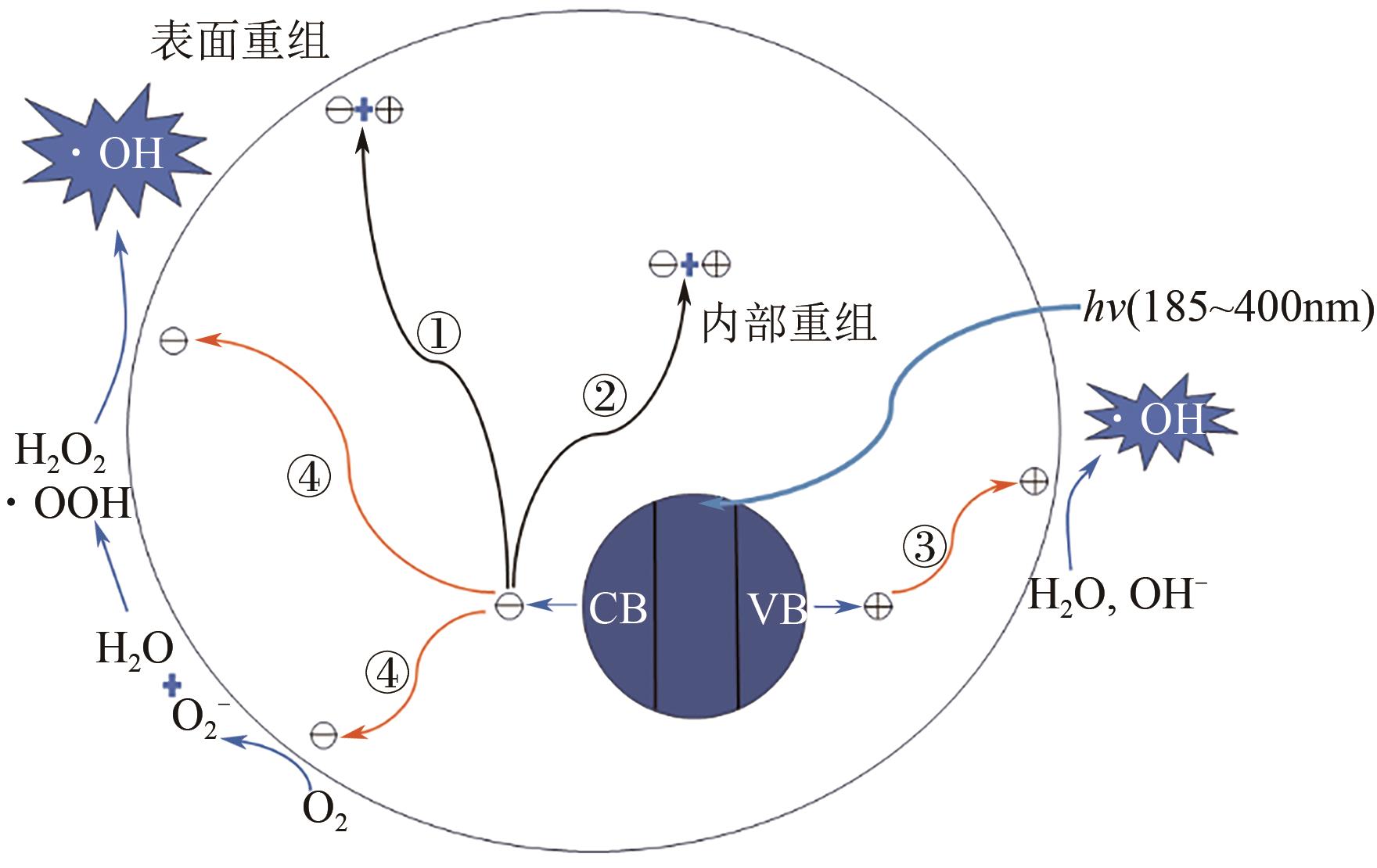
图1 电子激发和PCO反应机理
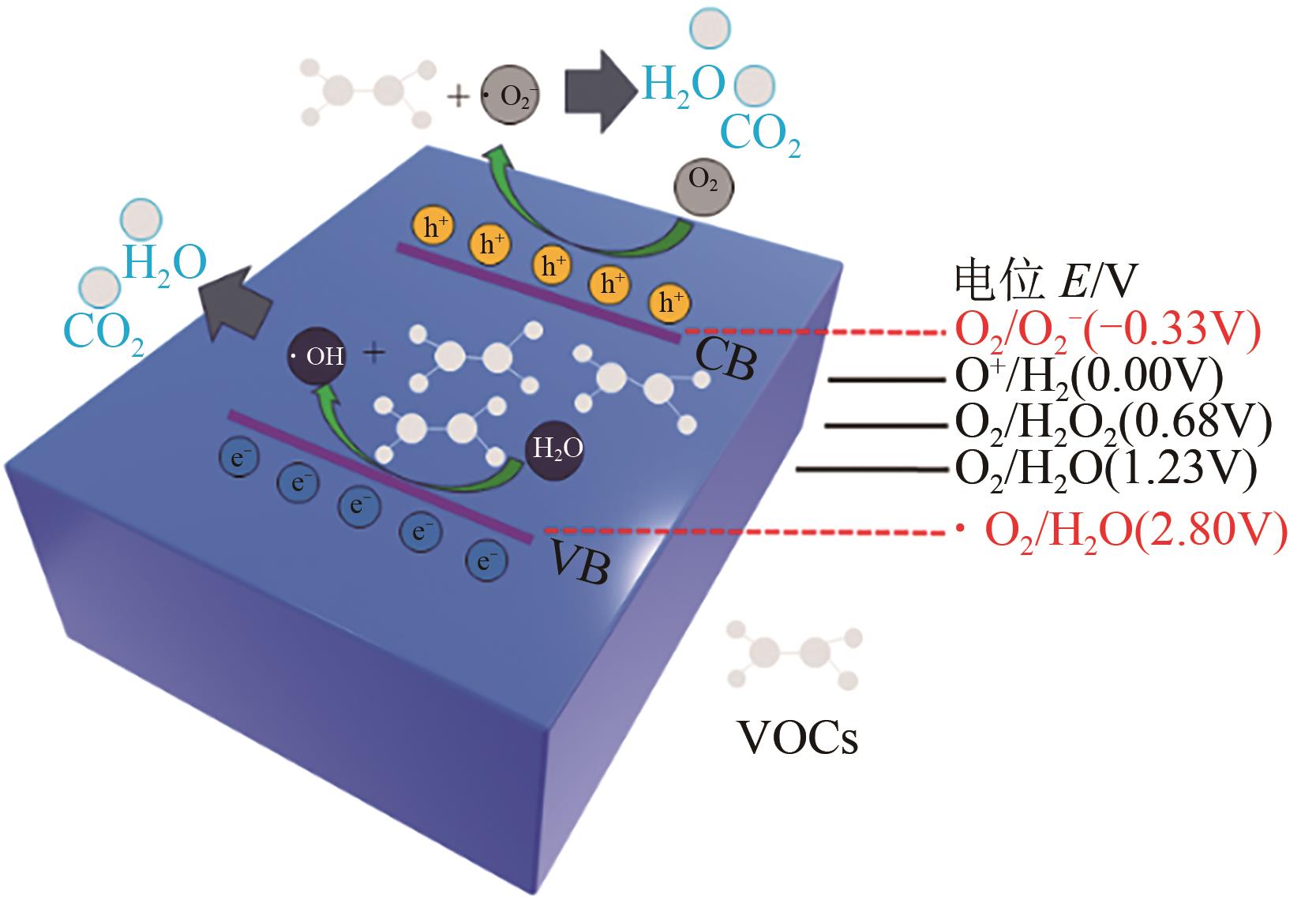
图2 光催化降解VOCs[6]
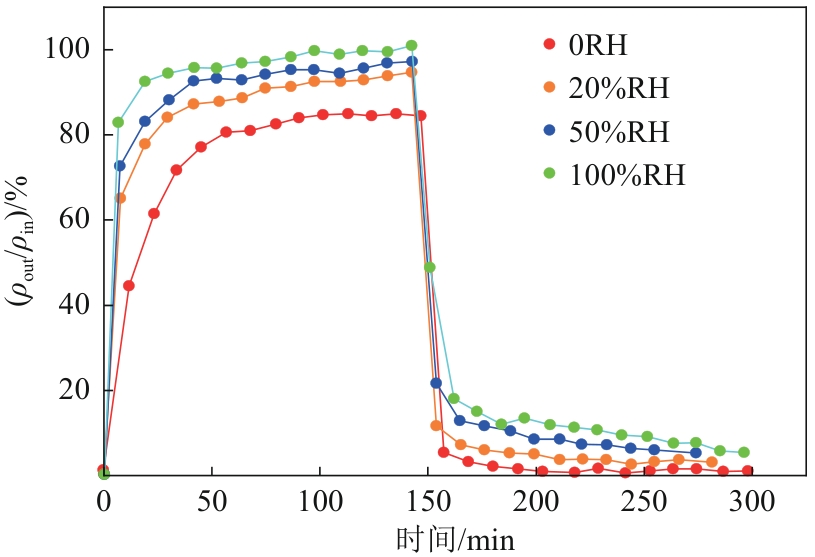
图3 RH水平对光催化降解效率的影响[21]
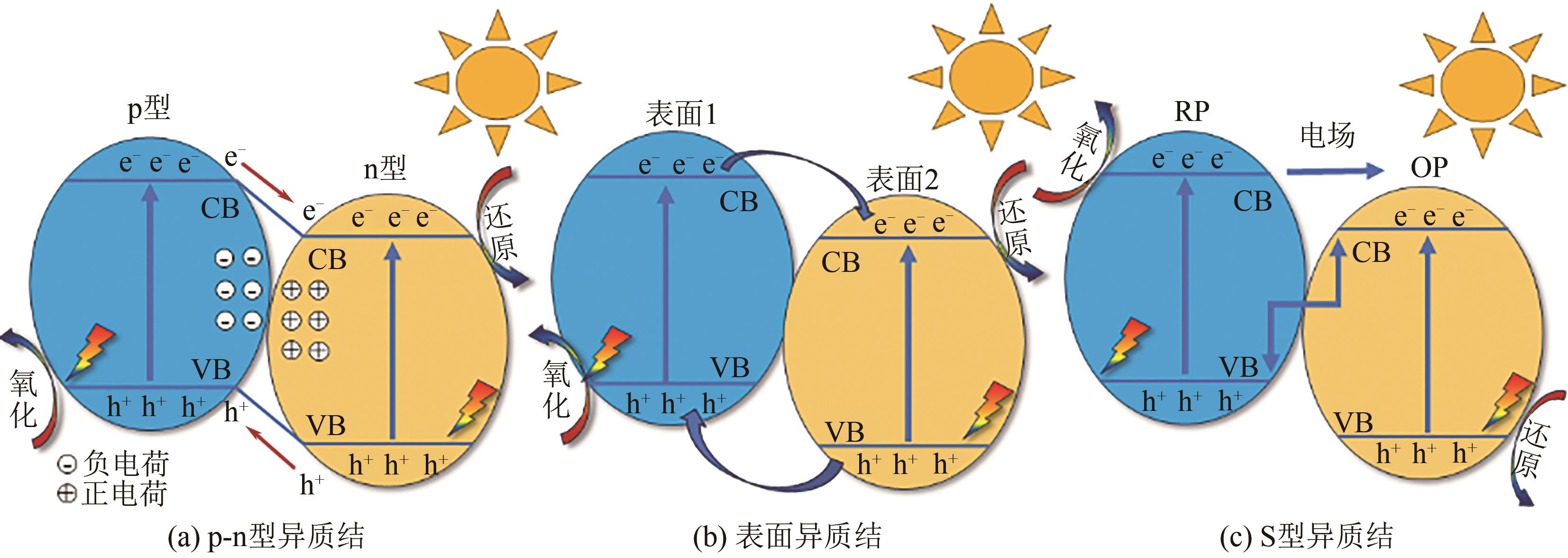
图4 传统光响应异质结光催化剂中电子空穴对三种分离机制[36]
| 催化剂 | VOCs种类 | 浓度 /mL·m-3 | 去除效率 /% | 参考文献 |
|---|---|---|---|---|
| TiO2/硅藻土 | 丙酮 | 10 | 42 | [ |
| TiO2/Mg-Al LDH | 甲苯 | 100 | 74 | [ |
| Pt-TiO2 | 甲基乙基甲酮 | 1 | 73 | [ |
| Pt-TiO2-R | 间二氯苄 | 1 | 73 | [ |
| MOF(Ti) | 乙醛 | 200 | 98 | [ |
| F-TiO2 | 甲苯 | 30 | 80 | [ |
| MOF(Fe)/Fe2O3 | 邻二甲苯 | 25 | 100 | [ |
| Zn-Ti-LDH | 甲苯 | 500 | 75 | [ |
| Zn2SO4/LDH | 甲苯 | 500 | 90 | [ |
| TiO2/O3 | 甲苯 | 100 | 90 | [ |
| IL-PANI-NH2-MIL125(Ti) | 乙醛 | 300 | 92 | [ |
| ZIF-8-T | 甲醛 | 20 | 100 | [ |
| NH2-UiO-66-Zr@TiO2 | 甲苯 | 150 | 77 | [ |
表2 单组分室内VOCs降解研究进展
| 催化剂 | VOCs种类 | 浓度 /mL·m-3 | 去除效率 /% | 参考文献 |
|---|---|---|---|---|
| TiO2/硅藻土 | 丙酮 | 10 | 42 | [ |
| TiO2/Mg-Al LDH | 甲苯 | 100 | 74 | [ |
| Pt-TiO2 | 甲基乙基甲酮 | 1 | 73 | [ |
| Pt-TiO2-R | 间二氯苄 | 1 | 73 | [ |
| MOF(Ti) | 乙醛 | 200 | 98 | [ |
| F-TiO2 | 甲苯 | 30 | 80 | [ |
| MOF(Fe)/Fe2O3 | 邻二甲苯 | 25 | 100 | [ |
| Zn-Ti-LDH | 甲苯 | 500 | 75 | [ |
| Zn2SO4/LDH | 甲苯 | 500 | 90 | [ |
| TiO2/O3 | 甲苯 | 100 | 90 | [ |
| IL-PANI-NH2-MIL125(Ti) | 乙醛 | 300 | 92 | [ |
| ZIF-8-T | 甲醛 | 20 | 100 | [ |
| NH2-UiO-66-Zr@TiO2 | 甲苯 | 150 | 77 | [ |
| 目标VOCs | 催化剂 | 主要中间产物 | 分析方法 | 参考文献 |
|---|---|---|---|---|
| 甲苯 | Sr2Sb2O7 | 苯甲醇,苯甲醛,苯甲酸 | in situ DRIFTS | [ |
| Pt/CeO2 | 苄,苯甲醇,苯甲醛,苯甲酸,甲酸盐 | in situ DRIFTS | [ | |
| MIL-125(Ti) | 苯甲醇,苯甲醛,苯甲酸,甲酸盐和乙酸盐 | FTIR,GC-MS | [ | |
| Co3O4/TiO2 | 苯甲醇,苯甲醛,苯甲酸,丙酮 | in situ DRIFTS | [ | |
| TiO2/CeO2 | 苯甲醇,苯甲醛和苯甲酸,甲酸和草酸 | UV-Vis DRS | [ | |
| 苯 | nano-TiO2 | 苯酚,对苯二酚,对苯并醌,儿茶酚,邻苯并醌 | DFT,CG-MS | [ |
| W-MnO2 | 苯,苯甲酸,马来酸,乙酸 | in situ DRIFTS | [ | |
| Mn-Cu/Al2O3 | 一氧化碳,甲酸 | FTIR | [ | |
| 甲醛 | MnOOH/MnO2 | 甲酸 | FTIR | [ |
| CaSn(OH)6 | 甲酸 | in situ DRIFTS | [ | |
| TiO2/硅藻土 | 甲酸,甲酸盐 | in situ DRIFTS | [ |
表3 室内VOCs降解中间产物总结
| 目标VOCs | 催化剂 | 主要中间产物 | 分析方法 | 参考文献 |
|---|---|---|---|---|
| 甲苯 | Sr2Sb2O7 | 苯甲醇,苯甲醛,苯甲酸 | in situ DRIFTS | [ |
| Pt/CeO2 | 苄,苯甲醇,苯甲醛,苯甲酸,甲酸盐 | in situ DRIFTS | [ | |
| MIL-125(Ti) | 苯甲醇,苯甲醛,苯甲酸,甲酸盐和乙酸盐 | FTIR,GC-MS | [ | |
| Co3O4/TiO2 | 苯甲醇,苯甲醛,苯甲酸,丙酮 | in situ DRIFTS | [ | |
| TiO2/CeO2 | 苯甲醇,苯甲醛和苯甲酸,甲酸和草酸 | UV-Vis DRS | [ | |
| 苯 | nano-TiO2 | 苯酚,对苯二酚,对苯并醌,儿茶酚,邻苯并醌 | DFT,CG-MS | [ |
| W-MnO2 | 苯,苯甲酸,马来酸,乙酸 | in situ DRIFTS | [ | |
| Mn-Cu/Al2O3 | 一氧化碳,甲酸 | FTIR | [ | |
| 甲醛 | MnOOH/MnO2 | 甲酸 | FTIR | [ |
| CaSn(OH)6 | 甲酸 | in situ DRIFTS | [ | |
| TiO2/硅藻土 | 甲酸,甲酸盐 | in situ DRIFTS | [ |
| [1] | GUO Yunlong, WEN Meicheng, LI Guiying, et al. Recent advances in VOC elimination by catalytic oxidation technology onto various nanoparticles catalysts: A critical review[J]. Applied Catalysis B: Environmental, 2021, 281: 119447. |
| [2] | 宋晶璟, 孙晓丹. 光催化涂层净化室内VOCs研究进展[J]. 精细化工, 2023, 40(8): 1679-1687. |
| SONG Jingjing, SUN Xiaodan. Advances in photocatalytic coating for indoor VOCs purification[J]. Fine Chemicals, 2023, 40(8): 1679-1687. | |
| [3] | 路潇, 王斌, 梁璐. 空气污染与心脏骤停相关研究进展[J]. 职业卫生与应急救援, 2023, 41(6): 787-790. |
| LU Xiao, WANG Bin, LIANG Lu. Progress of research on air pollution and cardiac arrest[J]. Occupational Health and Emergency Rescue, 2023, 41(6): 787-790. | |
| [4] | 李东阳. 有机废气VOCs治理技术及应用研究[J]. 节能与环保, 2022(9): 85-87. |
| LI Dongyang. Study on VOCs treatment technology and application of organic waste gas[J]. Energy Conservation & Environmental Protection, 2022(9): 85-87. | |
| [5] | 李京尧. 二氧化钛基光催化剂的结构设计及光催化性能研究[D]. 长春: 吉林大学, 2024. |
| LI Jingyao. Structural design and photocatalytic performances of titania based photocatalysts[D]. Changchun: Jilin University, 2024. | |
| [6] | 刘人源, 廖润华, 周凡, 等. 二氧化钛基光催化降解甲醛的研究进展[J]. 中国陶瓷, 2021, 57(10): 1-7. |
| LIU Renyuan, LIAO Runhua, ZHOU Fan, et al. The research progress of the photocatalytic degradation of formaldehyde by titanium dioxide[J]. China Ceramics, 2021, 57(10): 1-7. | |
| [7] | ZHANG Lianfeng, MORALEJO Carol, ANDERSON William A. A review of the influence of humidity on photocatalytic decomposition of gaseous pollutants on TiO2‐based catalysts[J]. The Canadian Journal of Chemical Engineering, 2020, 98(1): 263-273. |
| [8] | 张焱, 张婷婷, 单凤君, 等. 光催化氧化技术用于室内挥发性有机化合物净化的研究进展[J]. 辽宁化工, 2023, 52(9): 1354-1358. |
| ZHANG Yan, ZHANG Tingting, SHAN Fengjun, et al. Research progress of photocatalytic oxidation for indoor purification of volatile organic compounds[J]. Liaoning Chemical Industry, 2023, 52(9): 1354-1358. | |
| [9] | Javier GONZÁLEZ-MARTÍN, KRAAKMAN Norbertus, Cristina PÉREZ, et al. A state-of-the-art review on indoor air pollution and strategies for indoor air pollution control[J]. Chemosphere, 2021, 262: 128376. |
| [10] | 惠婷, 曹占平, 李欣航, 等. 改性二氧化钛吸附性能研究进展[J]. 天津化工, 2021, 35(2): 6-9. |
| HUI Ting, CAO Zhanping, LI Xinhang, et al. Research progress of doped titanium dioxide[J]. Tianjin Chemical Industry, 2021, 35(2): 6-9. | |
| [11] | LI Qi, LI Fatang. Recent advances in surface and interface design of photocatalysts for the degradation of volatile organic compounds[J]. Advances in Colloid and Interface Science, 2020, 284: 102275. |
| [12] | ZHAN Yujie, JI Jian, HUANG Haibao, et al. A facile VUV/H2O system without auxiliary substances for efficient degradation of gaseous toluene[J]. Chemical Engineering Journal, 2018, 334: 1422-1429. |
| [13] | LIN Wenjiao, XIE Xiaofeng, WANG Xiao, et al. Efficient adsorption and sustainable degradation of gaseous acetaldehyde and o-xylene using rGO-TiO2 photocatalyst[J]. Chemical Engineering Journal, 2018, 349: 708-718. |
| [14] | FU Shifeng, ZHENG Yuan, ZHOU Xiaobo, et al. Visible light promoted degradation of gaseous volatile organic compounds catalyzed by Au supported layered double hydroxides: Influencing factors, kinetics and mechanism[J]. Journal of Hazardous Materials, 2019, 363: 41-54. |
| [15] | 简垲琳, 王宁. C掺杂TiO2光催化剂制备及降解空气中甲醛研究[J]. 化工生产与技术, 2023, 29(2): 28-32, 63. |
| JIAN Kailin, WANG Ning. Preparation of C doped TiO2 photocatalyst and study on its degradation of formaldehyde in air[J]. Chemical Production and Technology, 2023, 29(2): 28-32, 63. | |
| [16] | CHEN Dongjie, CHENG Yanling, ZHOU Nan, et al. Photocatalytic degradation of organic pollutants using TiO2-based photocatalysts: A review[J]. Journal of Cleaner Production, 2020, 268: 121725. |
| [17] | ARMAKOVIĆ Sanja J, SAVANOVIĆ Maria M, Stevan ARMAKOVIĆ. Titanium dioxide as the most used photocatalyst for water purification: An overview[J]. Catalysts, 2022, 13(1): 26. |
| [18] | PENG Linghui, WANG Haiyu, LI Guiying, et al. Bioinspired artificial spider silk photocatalyst for the high-efficiency capture and inactivation of bacteria aerosols[J]. Nature Communications, 2023, 14(1): 2412. |
| [19] | LI Xiuquan, ZHANG Li, YANG Zhongqing, et al. Adsorption materials for volatile organic compounds (VOCs) and the key factors for VOCs adsorption process: A review[J]. Separation and Purification Technology, 2020, 235: 116213. |
| [20] | ZHANG Guangxin, PEYRAVI Arman, HASHISHO Zaher, et al. Integrated adsorption and photocatalytic degradation of VOCs using a TiO2/diatomite composite: Effects of relative humidity and reaction atmosphere[J]. Catalysis Science & Technology, 2020, 10(8): 2378-2388. |
| [21] | ZHANG Jinjian, VIKRANT Kumar, KIM Ki-Hyun, et al. Unveiling the collective effects of moisture and oxygen on the photocatalytic degradation of m-xylene using a titanium dioxide supported platinum catalyst[J]. Chemical Engineering Journal, 2022, 439: 135747. |
| [22] | MASRESHA Girma, Anuradha JABASINGH S, KEBEDE Shimelis, et al. A review of prospects and challenges of photocatalytic decomposition of volatile organic compounds (VOCs) under humid environment[J]. The Canadian Journal of Chemical Engineering, 2023, 101(12): 6905-6918. |
| [23] | Van Thi Thanh HO, CHAU Dung Hung, Khang Quang BUI, et al. A high-performing nanostructured Ir doped-TiO2 for efficient photocatalytic degradation of gaseous toluene[J]. Inorganics, 2022, 10(3): 29. |
| [24] | 麻新宇. TiO2/伊利石复合光催化剂的制备及光催化能力研究[D]. 延吉: 延边大学, 2024. |
| MA Xinyu. Preparation and photocatalytic capacity of TiO2/illite composite photocatalyst[D]. Yanji: Yanbian University, 2024. | |
| [25] | 靳亚斌, 徐甜甜, 刘海华, 等. 光催化降解甲基橙及强化工艺研究进展[J]. 工业催化, 2023, 31(9): 16-24. |
| JIN Yabin, XU Tiantian, LIU Haihua, et al. Research progress on photocatalytic degradation of methyl orange and enhanced catalytic process[J]. Industrial Catalysis, 2023, 31(9): 16-24. | |
| [26] | PAN Longkai, ZHANG Minggang, MEI Hui, et al. 3D bionic reactor optimizes photon and mass transfer by expanding reaction space to enhance photocatalytic CO2 reduction[J]. Separation and Purification Technology, 2022, 301: 121974. |
| [27] | LIU Jingyin, LIU Yuwei, ZHANG Wenjing, et al. Efficient VOC removal over grape-like GdCoO3 perovskite prepared from the viscous mixture[J]. Materials Letters, 2024, 357: 135796. |
| [28] | SHONEYE Ayoola, CHANG Jang SEN, CHONG Mengnan, et al. Recent progress in photocatalytic degradation of chlorinated phenols and reduction of heavy metal ions in water by TiO2-based catalysts[J]. International Materials Reviews, 2022, 67(1): 47-64. |
| [29] | 田松, 苏敏, 王霞. 钒表面掺杂TiO2对甲醛的催化降解影响[J]. 黑龙江科学, 2019, 10(18): 20-21. |
| TIAN Song, SU Min, WANG Xia. Effect of vanadium surface doping with TiO2 on the catalytic degradation of formaldehyde[J]. Heilongjiang Science, 2019, 10(18): 20-21. | |
| [30] | 廖芳. 镱掺杂二氧化钛/活性炭纤维的制备及其在有机污染物去除中的应用[D]. 上海: 上海师范大学, 2019. |
| LIAO Fang. Preparation of ytterbium-doped titanium dioxide/activated carbon fibers and their application in organic pollutant removal[D]. Shanghai: Shanghai Normal University, 2019. | |
| [31] | 欧阳园园, 王松, 蒋大富, 等. 非金属离子掺杂对二氧化钛光催化降解有机染料的研究进展[J]. 辽宁化工, 2021, 50(8): 1186-1192. |
| OUYANG Yuanyuan, WANG Song, JIANG Dafu, et al. Research progress of non-metal ion doped TiO2 for photocatalytical degradation of organic pollutants[J]. Liaoning Chemical Industry, 2021, 50(8): 1186-1192. | |
| [32] | 吴国斐. 硫掺杂TiO2(001)和(101)表面与甲醛分子相互作用的密度泛函理论研究[D]. 南宁: 广西大学, 2020. |
| WU Guofei. Dft study of the interaction between HCHO and S-doped TiO2 (001) and (101) surfaces[D]. Nanning: Guangxi University, 2020. | |
| [33] | MAARISETTY Dileep, BARAL Saroj Sundar. Defect engineering in photocatalysis: Formation, chemistry, optoelectronics, and interface studies[J]. Journal of Materials Chemistry A, 2020, 8(36): 18560-18604. |
| [34] | 杜瑞成, 王亮, 李燕, 等. 新型TiO2基光催化剂改性降解VOCs的研究进展[J]. 当代化工研究, 2023(6): 28-30. |
| DU Ruicheng, WANG Liang, LI Yan, et al. Research progress of new modified TiO2-based photocatalytic materials for degradation of VOCs[J]. Modern Chemical Research, 2023(6): 28-30. | |
| [35] | ZHAO Yunxuan, ZHAO Yufei, SHI Run, et al. Tuning oxygen vacancies in ultrathin TiO2 nanosheets to boost photocatalytic nitrogen fixation up to 700nm[J]. Advanced Materials, 2019, 31(16): 1806482. |
| [36] | WANG Huijie, LI Xin, ZHAO Xiaoxue, et al. A review on heterogeneous photocatalysis for environmental remediation: From semiconductors to modification strategies[J]. Chinese Journal of Catalysis, 2022, 43(2): 178-214. |
| [37] | KHALID N R, ARSHAD Amna, TAHIR M B, et al. Fabrication of p-n heterojunction Ag2O@Ce2O nanocomposites make enables to improve photocatalytic activity under visible light[J]. Applied Nanoscience, 2021, 11(1): 199-206. |
| [38] | ZHANG Xin, SUN Shaodong, CUI Jie, et al. Spatial charge separation and high-index facet dependence in polyhedral Cu2O type-Ⅱ surface heterojunctions for photocatalytic activity enhancement[J]. Inorganic Chemistry Frontiers, 2021, 8(10): 2603-2610. |
| [39] | CHEN Jinfeng, ZHANG Xiaodong, SHI Xiaoyu, et al. Synergistic effects of octahedral TiO2-MIL-101(Cr) with two heterojunctions for enhancing visible-light photocatalytic degradation of liquid tetracycline and gaseous toluene[J]. Journal of Colloid and Interface Science, 2020, 579: 37-49. |
| [40] | 刘敏, 黄秀, 张理元. S型异质结光催化剂的研究进展[J]. 无机盐工业, 2024, 56(7): 18-27. |
| LIU Min, HUANG Xiu, ZHANG Liyuan. Research progress of S-type heterojunction photocatalysts[J]. Inorganic Chemicals Industry, 2024, 56(7): 18-27. | |
| [41] | Nóra JUSTH, MIKULA Gergő János, BAKOS László Péter, et al. Photocatalytic properties of TiO2@polymer and TiO2@carbon aerogel composites prepared by atomic layer deposition[J]. Carbon, 2019, 147: 476-482. |
| [42] | HU Xiaolong, SONG Junying, ZHENG Shuilin, et al. Insight into the defective sites of TiO2/sepiolite composite on formaldehyde removal and H2 evolution[J]. Materials Today Energy, 2022, 24: 100932. |
| [43] | ZHANG Guangxin, LIU Yangyu, HASHISHO Zaher, et al. Adsorption and photocatalytic degradation performances of TiO2/diatomite composite for volatile organic compounds: Effects of key parameters[J]. Applied Surface Science, 2020, 525: 146633. |
| [44] | 胡旌钰, 李茹, 冯燕. 室内空气污染物分类及净化技术研究进展[J]. 当代化工, 2022, 51(2): 418-422. |
| HU Jingyu, LI Ru, FENG Yan. Research progress of indoor air pollutant classification and purification technology[J]. Contemporary Chemical Industry, 2022, 51(2): 418-422. | |
| [45] | 姚明俊. 室内香烟、电子烟释放甲醛和VOCs的散发特征及健康风险分析[D]. 北京: 北京建筑大学, 2023. |
| YAO Minjun. Emission characteristics and health risk analysis of formaldehyde and VOCs emitted from indoor cigarettes and e-cigarettes[D]. Beijing: Beijing University of Civil Engineering and Architecture, 2023. | |
| [46] | VARDOULAKIS Sotiris, GIAGLOGLOU Evanthia, STEINLE Susanne, et al. Indoor exposure to selected air pollutants in the home environment: A systematic review[J]. International Journal of Environmental Research and Public Health, 2020, 17(23): 8972. |
| [47] | 黄雪燕, 庄晶晶, 胡学靖, 等. 室内VOCs光催化法处理研究进展[J]. 环境保护与循环经济, 2021, 41(3): 29-32. |
| HUANG Xueyan, ZHUANG Jingjing, HU Xuejing, et al. Research progress on photocatalytic treatment of indoor VOCs[J]. Environmental Protection and Circular Economy, 2021, 41(3): 29-32. | |
| [48] | DONG Xingan, CUI Zhihao, SUN Yanjuan, et al. Humidity-independent photocatalytic toluene mineralization benefits from the utilization of edge hydroxyls in layered double hydroxides (LDHs): A combined operando and theoretical investigation[J]. ACS Catalysis, 2021, 11(13): 8132-8139. |
| [49] | YOU Ji Won, VIKRANT Kumar, Dae Hwan LIM, et al. Photocatalytic potential of a titanium dioxide-supported platinum catalyst against VOCs with complicated composition under varying humidity conditions[J]. Journal of Cleaner Production, 2022, 371: 133487. |
| [50] | GAO Zhu, WANG Jiaxing, MUHAMMAD Yaseen, et al. Enhanced moisture-resistance and excellent photocatalytic performance of synchronous N/Zn-decorated MIL-125(Ti) for vaporous acetaldehyde degradation[J]. Chemical Engineering Journal, 2020, 388: 124389. |
| [51] | XIE Ruijie, LEI Dongxue, ZHAN Yujie, et al. Efficient photocatalytic oxidation of gaseous toluene over F-doped TiO2 in a wet scrubbing process[J]. Chemical Engineering Journal, 2020, 386: 121025. |
| [52] | CHEN Lu, WANG Xiao, RAO Zepeng, et al. In-situ synthesis of Z-Scheme MIL-100(Fe)/α-Fe2O3 heterojunction for enhanced adsorption and visible-light photocatalytic oxidation of o-xylene[J]. Chemical Engineering Journal, 2021, 416: 129112. |
| [53] | LIU Yongyi, CHEN Si, LI Kanglu, et al. Promote the activation and ring opening of intermediates for stable photocatalytic toluene degradation over Zn-Ti-LDH[J]. Journal of Colloid and Interface Science, 2022, 606: 1435-1444. |
| [54] | LEI Ben, CUI Wen, CHEN Peng, et al. Rational design of LDH/Zn2SnO4 heterostructures for efficient mineralization of toluene through boosted interfacial charge separation[J]. Energy & Environmental Materials, 2023, 6(1): 12291. |
| [55] | RIBEIRO Bárbara Maria Borges, NONATO Renato Carajelescov, FUJIMOTO Tânia Miyoko, et al. Toluene degradation by heterogeneous photocatalysis assisted with ozone in a tubular reactor: Analysis over the reactor length[J]. Environmental Science and Pollution Research, 2021, 28(19): 24216-24223. |
| [56] | SHAH Syed Jalil, WANG Ruimeng, GAO Zhu, et al. IL-assisted synthesis of defect-rich polyaniline/NH2-MIL-125 nanohybrids with strengthened interfacial contact for ultra-fast photocatalytic degradation of acetaldehyde under high humidity[J]. Chemical Engineering Journal, 2021, 411: 128590. |
| [57] | WANG Tianqi, WANG Yufei, SUN Mingzhe, et al. Thermally treated zeolitic imidazolate framework-8 (ZIF-8) for visible light photocatalytic degradation of gaseous formaldehyde[J]. Chemical Science, 2020, 11(26): 6670-6681. |
| [58] | ZHOU Yi, OUYANG Weilong, WANG Yuejun, et al. Core-shell structured NH2-UiO-66@TiO2 photocatalyst for the degradation of toluene under visible light irradiation[J]. Acta Physico Chimica Sinica, 2020, 37(8): 2009045-0. |
| [59] | 吴儒雅. 室内甲醛污染影响因素的实证研究[J]. 福建建材, 2023(11): 23-25, 91. |
| WU Ruya. Empirical study on influencing factors of indoor formaldehyde pollution[J]. Fujian Building Materials, 2023(11): 23-25, 91. | |
| [60] | 王聪宇. TiO2基复合材料在可见光下对气态乙醛的降解特性研究[D]. 上海: 中国科学院大学(中国科学院上海硅酸盐研究所), 2021. |
| WANG Congyu. The degradation of gaseous acetaldehyde by TiO2-based composites under visible light[D]. Shanghai: University of Chinese Academy of Sciences (Chinese Academy of Sciences Shanghai Silicate Institute), 2021. | |
| [61] | 周健, 王新伟, 覃道枞, 等. 自然通风对学生宿舍室内苯污染影响的数值模拟[J]. 工业安全与环保, 2022, 48(1): 75-80. |
| ZHOU Jian, WANG Xinwei, QIN Daocong, et al. Numerical simulation of natural ventilation effect on benzene pollution in student dormitory[J]. Industrial Safety and Environmental Protection, 2022, 48(1): 75-80. | |
| [62] | CHEN Lücun, CHEN Peng, WANG Hong, et al. Surface lattice oxygen activation on Sr2Sb2O7 enhances the photocatalytic mineralization of toluene: From reactant activation, intermediate conversion to product desorption[J]. ACS Applied Materials & Interfaces, 2021, 13(4): 5153-5164. |
| [63] | FAN Jie, SUN Yuhang, FU Mingli, et al. Modulate the metal support interactions to optimize the surface-interface features of Pt/CeO2 catalysts for enhancing the toluene oxidation[J]. Journal of Hazardous Materials, 2022, 424: 127505. |
| [64] | ZHANG Xiaodong, CHEN Jinfeng, JIANG Shuntong, et al. Enhanced photocatalytic degradation of gaseous toluene and liquidus tetracycline by anatase/rutile titanium dioxide with heterophase junction derived from materials of Institut Lavoisier-125(Ti): Degradation pathway and mechanism studies[J]. Journal of Colloid and Interface Science, 2021, 588: 122-137. |
| [65] | YANG Yang, ZHAO Shenghao, BI Fukun, et al. Highly efficient photothermal catalysis of toluene over Co3O4/TiO2 p-n heterojunction: The crucial roles of interface defects and band structure[J]. Applied Catalysis B: Environmental, 2022, 315: 121550. |
| [66] | BELLARDITA Marianna, FIORENZA Roberto, Luisa D’URSO, et al. Exploring the photothermo-catalytic performance of brookite TiO2-CeO2 composites[J]. Catalysts, 2020, 10(7): 765. |
| [67] | LIN Zhifeng, SHEN Wenhao, CHEN Xiaoquan, et al. Impact of intermediate products on benzene photocatalytic oxidation in pulp mills: Experimental and adsorption simulation study[J]. Applied Surface Science, 2020, 529: 147130. |
| [68] | MA Jiami, WANG Jinlong, DANG Yanliu. Photo-assisted oxidation of gaseous benzene on tungsten-doped MnO2 at lower temperature[J]. Chemical Engineering Journal, 2020, 388: 124387. |
| [69] | SHANG Kefeng, REN Jingyu, ZHANG Qi, et al. Successive treatment of benzene and derived byproducts by a novel plasma catalysis-adsorption process[J]. Journal of Environmental Chemical Engineering, 2021, 9(4): 105767. |
| [70] | ZHENG Jiayu, ZHOU Kailing, ZHAO Wenkang, et al. Enhanced the synergistic degradation effect between active hydroxyl and reactive oxygen species for indoor formaldehyde based on platinum atoms modified MnOOH/MnO2 catalyst[J]. Journal of Colloid and Interface Science, 2022, 628: 359-370. |
| [71] | WANG Hong, DONG Xing’an, TANG Ruofei, et al. Selective breakage of CH bonds in the key oxidation intermediates of gaseous formaldehyde on self-doped CaSn(OH)6 cubes for safe and efficient photocatalysis[J]. Applied Catalysis B: Environmental, 2020, 277: 119214. |
| [72] | YUAN Fang, LI Chunquan, YANG Renfeng, et al. Polyaniline π-electron mediated electron-hole separation of TiO2/diatomite composite for enhancing visible light-induced indoor formaldehyde degradation[J]. Applied Surface Science, 2023, 612: 155855. |
| [73] | WU Qiqi, YE Jiani, QIAO Wei, et al. Inhibit the formation of toxic methylphenolic by-products in photo-decomposition of formaldehyde-toluene/xylene mixtures by Pd cocatalyst on TiO2 [J]. Applied Catalysis B: Environmental, 2021, 291: 120118. |
| [74] | 惠世恩, 朱新伟, 王登辉, 等. 活性炭负载TiO2吸附与光催化降解甲醛研究进展[J]. 洁净煤技术, 2022, 28(2): 1-12. |
| HUI Shien, ZHU Xinwei, WANG Denghui, et al. Research progress on adsorption and photocatalytic degradation of formaldehyde by TiO2 supported on activated carbon[J]. Clean Coal Technology, 2022, 28(2): 1-12. | |
| [75] | 沈晓玲. Fe/I共掺杂TiO2的制备及其光催化降解气相苯的研究[D]. 徐州: 中国矿业大学, 2019. |
| SHEN Xiaoling. Preparation of Fe/I co-doped TiO2 and its photocatalytic degradation of gas-phase benzene[D]. Xuzhou: China University of Mining and Technology, 2019. | |
| [76] | HE Chi, CHENG Jie, ZHANG Xin, et al. Recent advances in the catalytic oxidation of volatile organic compounds: A review based on pollutant sorts and sources[J]. Chemical Reviews, 2019, 119(7): 4471-4568. |
| [77] | LU Tonglu, ZHANG Chunxia, DU Fangyuan, et al. Mutual inhibition effects on the synchronous conversion of benzene, toluene, and xylene over MnO x catalysts[J]. Journal of Colloid and Interface Science, 2023, 641: 791-802. |
| [78] | RAO Zepeng, SHI Gansheng, WANG Zhuang, et al. Photocatalytic degradation of gaseous VOCs over Tm3+-TiO2: Revealing the activity enhancement mechanism and different reaction paths[J]. Chemical Engineering Journal, 2020, 395: 125078. |
| [79] | LI Jieyuan, CHEN Ruimin, CUI Wen, et al. Synergistic photocatalytic decomposition of a volatile organic compound mixture: High efficiency, reaction mechanism, and long-term stability[J]. ACS Catalysis, 2020, 10(13): 7230-7239. |
| [80] | WANG Wenjun, LIN Fawei, AN Taicheng, et al. Photocatalytic mineralization of indoor VOC mixtures over unique ternary TiO2/C/MnO2 with high adsorption selectivity[J]. Chemical Engineering Journal, 2021, 425: 131678. |
| [1] | 陈子朝, 何方书, 胡强, 杨扬, 陈汉平, 杨海平. 甲烷干重整抗积炭Ni基催化剂研究进展[J]. 化工进展, 2025, 44(9): 4968-4978. |
| [2] | 王振, 张耀远, 吴芹, 史大昕, 陈康成, 黎汉生. 甲烷干重整用Ni/Al2O3基催化剂研究进展[J]. 化工进展, 2025, 44(9): 4979-4998. |
| [3] | 张海鹏, 秦珊珊, 王俣萱, 于海彪. 3.0F-Ag x Co催化剂的制备及其催化分解N2O[J]. 化工进展, 2025, 44(9): 4999-5005. |
| [4] | 孙梦圆, 陆诗建, 刘玲, 薛艳阳, 张云蓉, 董琦, 康国俊. 金属有机框架及衍生物在碳捕集领域的研究进展[J]. 化工进展, 2025, 44(9): 5339-5350. |
| [5] | 赵用明, 卜亿峰, 王涛, 杜冰, 门卓武. 费托合成催化剂动态置换与稳态工艺的集成优化[J]. 化工进展, 2025, 44(8): 4536-4544. |
| [6] | 张巍, 梁垚城, 伍乔, 付业昊, 尹艳山, 成珊, 阮敏, 刘涛, 周昭仪, 张凯凯, 李丹聪. 基于金属离子改性的Cu-SSZ-13催化剂在NH3-SCR脱硝中的应用[J]. 化工进展, 2025, 44(7): 3879-3891. |
| [7] | 卢朋, 张迪, 刘瑶瑶, 于万金, 刘武灿, 张建君. 气相脱氟化氢合成C2氢氟烯烃催化剂的研究进展[J]. 化工进展, 2025, 44(7): 3907-3916. |
| [8] | 高姣姣, 颜诗宇, 杨太顺, 谢尚志, 杨艳娟, 徐晶. 不同晶型Al2O3负载Ru催化剂对聚乙烯氢解的影响[J]. 化工进展, 2025, 44(7): 3917-3927. |
| [9] | 陈东健, 孙雨倩, 银凤翔. FeNi3-Fe3O4/CN催化剂的制备及其电催化析氧性能[J]. 化工进展, 2025, 44(7): 3928-3937. |
| [10] | 于宁, 王秋月, 王志才, 高子怡, 柴永明, 董斌. 双位点协同调控增强钙钛矿氧化物的水氧化活性[J]. 化工进展, 2025, 44(7): 3976-3984. |
| [11] | 任鹏锟, 仲兆平, 张小霓, 杨宇轩, 冉真真. 污泥-木屑基活性炭的制备及其对苯系VOCs的吸附性能[J]. 化工进展, 2025, 44(6): 3031-3040. |
| [12] | 石秀顶, 王永全, 曾静, 苏畅, 洪俊明. 纳米管状Co-N-C活化过碳酸盐降解四环素[J]. 化工进展, 2025, 44(6): 3041-3052. |
| [13] | 李佩燚, 孙波龙, 刘瑞岩, 周歆尧, 刘瑞林, 胡园园, 徐功涛, 李新平. 海藻酸钠/二氧化钛复合多孔材料的制备及油水分离应用[J]. 化工进展, 2025, 44(6): 3053-3061. |
| [14] | 周美梅, 何家慧, 向婉婷, 尚佳欣, 魏心语, 孙蜜蜜, 邹伟, 罗平平. 电纺PVA/SiO2纳米纤维负载A-TiO2/BiOBr增强可见光催化活性[J]. 化工进展, 2025, 44(6): 3084-3092. |
| [15] | 谢武强, 张岭, 贺杠, 蒋里锋, 郑晰瑞, 张和鹏. CoTBrPP-PTAB-Cu电催化还原CO2制甲烷[J]. 化工进展, 2025, 44(6): 3093-3100. |
| 阅读次数 | ||||||
|
全文 |
|
|||||
|
摘要 |
|
|||||