化工进展 ›› 2025, Vol. 44 ›› Issue (11): 6542-6551.DOI: 10.16085/j.issn.1000-6613.2024-1648
• 材料科学与技术 • 上一篇
不同分子结构相对渗透率改善剂对控水稳油性能的影响规律
闻学军1( ), 郭拥军1,2,3(), 张伟3,4, 蒲迪3,5, 李华兵3,4, 金诚2, 李镇武1, 张新民1,3
- 1.西南石油大学化学化工学院,四川 成都 610500
2.西南石油大学新能源与材料学院,四川 成都 610500
3.西南石油大学油气藏地质及开发工程国家重点实验室,四川 成都 610500
4.四川光亚聚合物化工有限公司,四川 南充 637900
5.新疆光亚油气新技术发展有限公司,新疆 克拉玛依 834000
-
收稿日期:2024-10-13修回日期:2024-11-18出版日期:2025-11-25发布日期:2025-12-08 -
通讯作者:郭拥军 -
作者简介:闻学军(1999—),男,硕士研究生,研究方向为油田功能化学剂。E-mail:13890560192@163.com。 -
基金资助:克拉玛依八区压舱石示范工程研究课题(2023YQX10206);新疆维吾尔自治区“天池英才”第二批引进计划(2023)
Influence regulation of different molecular structure relative permeability modifier on controlling water cut and stabilizing oil performance
WEN Xuejun1(), GUO Yongjun1,2,3(), ZHANG Wei3,4, PU Di3,5, LI Huabing3,4, JIN Cheng2, LI Zhenwu1, ZHANG Xinming1,3
- 1.School of Chemistry and Chemical Engineering, Southwest Petroleum University, Chengdu 610500, Sichuan, China
2.School of New Energy and Materials, Southwest Petroleum University, Chengdu 610500, Sichuan, China
3.State Key Laboratory of Oil and Gas Reservoir Geology and Exploitation, Southwest Petroleum University, Chengdu 610500, Sichuan, China
4.Sichuan Guangya Polymer Chemical Co. , Ltd. , Nanchong 637900, Sichuan, China
5.Xinjiang Guangya Oil and Gas New Technology Development Co. , Ltd. , Karamay 834000, Xinjiang, China
-
Received:2024-10-13Revised:2024-11-18Online:2025-11-25Published:2025-12-08 -
Contact:GUO Yongjun

摘要:
目前,聚丙烯酰胺作为相对渗透率改善剂(RPM)在高含水油藏控水增产中效果有限。为进一步提升聚合物控水稳油性能,本文选用3类典型分子结构模型聚合物作为相渗剂,在一定条件下,对比研究了不同结构相渗剂控水稳油性能和注入性能。其中,Ⅰ类相渗剂(引入阳离子吸附基团的改性聚丙烯酰胺)通过静电作用大量吸附在孔隙表面,极大减小了孔隙通道半径,具有高堵水率(83.86%~96.66%)、高堵油率(37.14%~53.52%)和注入性能差的特性;Ⅱ类相渗剂(引入疏水缔合基团的改性聚丙烯酰胺)通过分子间缔合作用在孔隙通道内形成可逆的超分子网状结构,对水具有阻碍能力的同时,遇油通过“解缔合”作用释放通道,具有适当的堵水率(37.78%~43.30%)和堵油率(20.45%~30.00%),且注入性能优秀的特性;Ⅲ类相渗剂(同时引入阳离子吸附基团和疏水缔合基团的改性聚丙烯酰胺)同时具有“吸附+缔合”双重机制,通过功能基团含量优化,可优选出具有高堵水率(64.58%)和低堵油率(19.05%)的吸附缔合型相渗剂,其注入性能优秀。优选出的吸附缔合型相渗剂在500×104和700×104分子量、约200mD和500mD渗透率下,具有较高堵水率(64.58%~71.15%),在300×104分子量下皆出现“透油”现象。结果表明,500×104~700×104分子量聚合物可能更适用200~500mD的储层,300×104分子量聚合物可能适用于200mD以下的储层,500mD以上的储层可能需要更高分子量聚合物进行适配。本文为指导优选适应各种高含水油藏的相渗剂提供方向和参考意见。
中图分类号:
引用本文
闻学军, 郭拥军, 张伟, 蒲迪, 李华兵, 金诚, 李镇武, 张新民. 不同分子结构相对渗透率改善剂对控水稳油性能的影响规律[J]. 化工进展, 2025, 44(11): 6542-6551.
WEN Xuejun, GUO Yongjun, ZHANG Wei, PU Di, LI Huabing, JIN Cheng, LI Zhenwu, ZHANG Xinming. Influence regulation of different molecular structure relative permeability modifier on controlling water cut and stabilizing oil performance[J]. Chemical Industry and Engineering Progress, 2025, 44(11): 6542-6551.
| 模拟地层盐水离子含量/mg·L-1 | 总矿化度/mg·L-1 | ||||||
|---|---|---|---|---|---|---|---|
| K++Na+ | Ca2+ | Mg2+ | Cl- | CO | HCO3- | SO | |
| 8622.07 | 21.41 | 6.11 | 11333.50 | 185.72 | 3169.88 | 35.66 | 23374.35 |
表1 模拟地层盐水组成
| 模拟地层盐水离子含量/mg·L-1 | 总矿化度/mg·L-1 | ||||||
|---|---|---|---|---|---|---|---|
| K++Na+ | Ca2+ | Mg2+ | Cl- | CO | HCO3- | SO | |
| 8622.07 | 21.41 | 6.11 | 11333.50 | 185.72 | 3169.88 | 35.66 | 23374.35 |
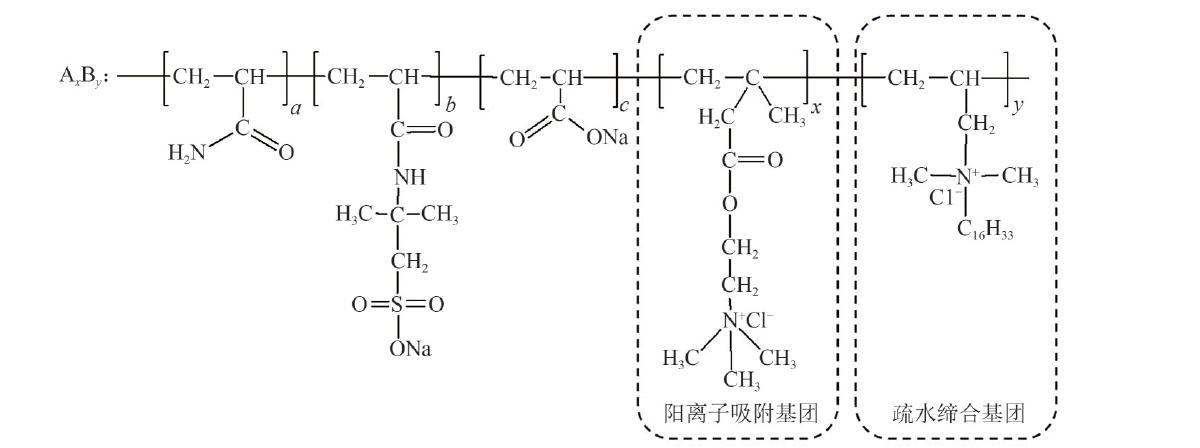
图1 RPM分子结构示意图
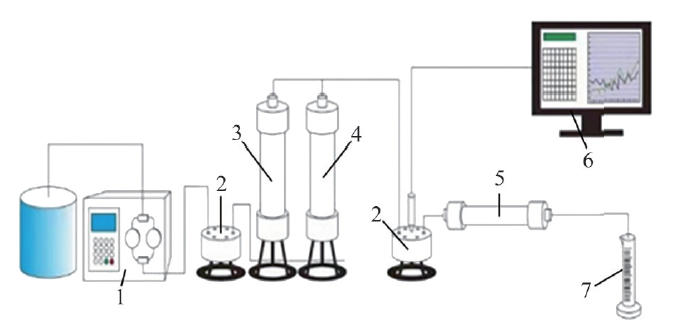
图2 岩心驱替装置1—水泵;2—流通阀;3—储油罐;4—储水罐;5—岩心夹持器;6—压力监测器;7—量筒
| 注入性能分级 | 增长率λ |
|---|---|
| 一(优秀) | 0~0.5 |
| 二(较好) | 0.5~1.0 |
| 三(良) | 1.0~1.5 |
| 四(差) | >1.5 |
表2 注入性能分级
| 注入性能分级 | 增长率λ |
|---|---|
| 一(优秀) | 0~0.5 |
| 二(较好) | 0.5~1.0 |
| 三(良) | 1.0~1.5 |
| 四(差) | >1.5 |
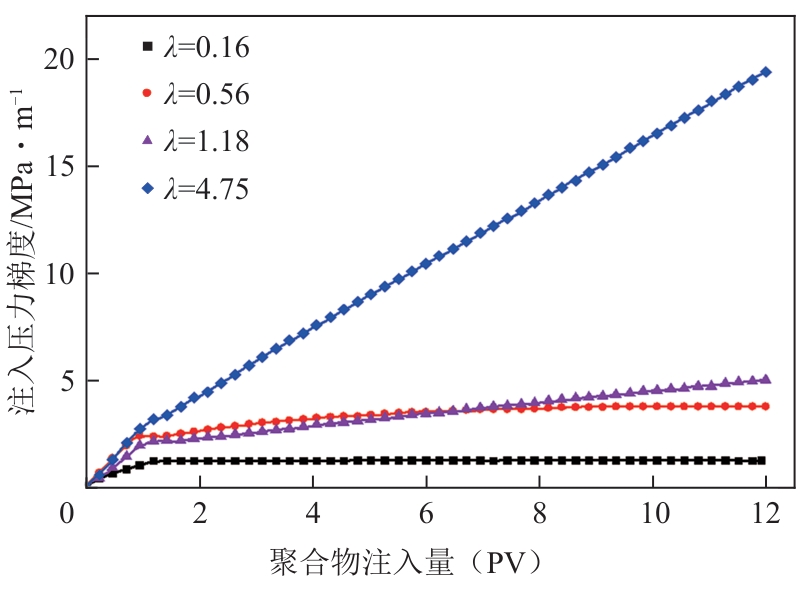
图3 注入性能分级
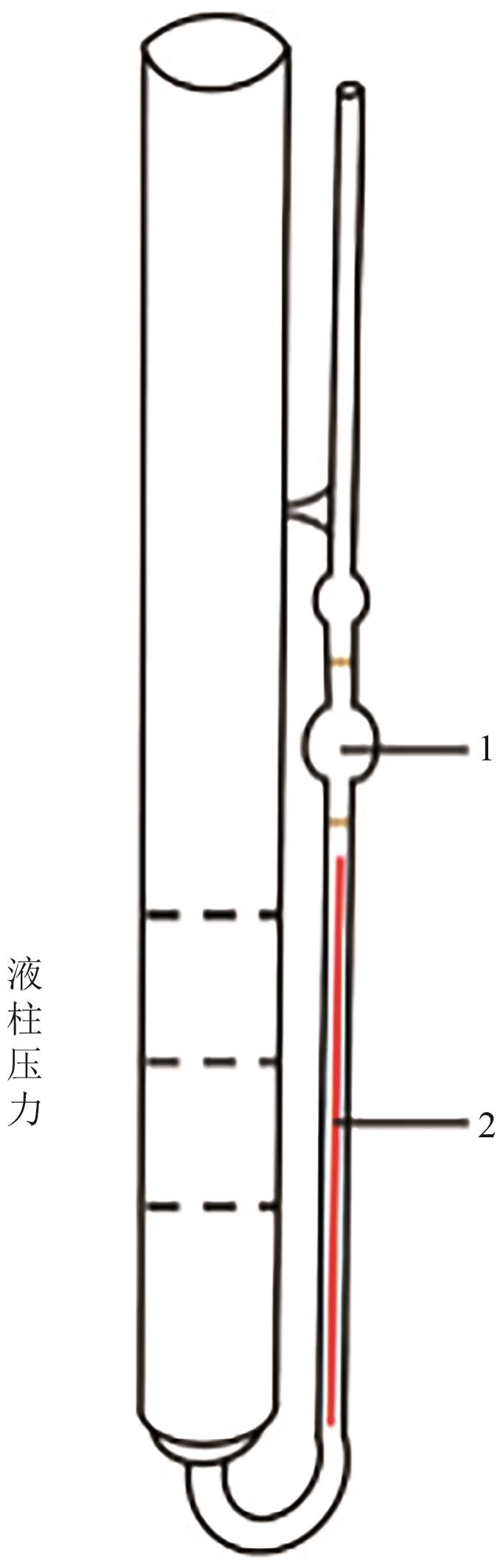
图4 毛细管模型1—容量球;2—毛细管t0t1=1-dR4 (5)
| 聚合物编号 | 孔隙度/% | 渗透率/mD | 注入压力梯度/MPa·m-1 | 注入压力梯度增长率 | 堵水率/% | 堵油率/% | 水油封堵率比值 |
|---|---|---|---|---|---|---|---|
| A0.5B0-500 | 37.24 | 211 | 12.51 | 4.93 | 96.66 | 52.97 | 1.82 |
| A0.75B0-500 | 37.73 | 223 | 12.33 | 4.88 | 96.04 | 53.52 | 1.79 |
| A1.5B0-500 | 37.45 | 206 | 6.45 | 3.21 | 92.17 | 45.30 | 2.03 |
| A2.5B0-500 | 38.88 | 192 | 6.03 | 2.38 | 86.64 | 37.14 | 2.33 |
| A3.5B0-500 | 38.18 | 204 | 5.76 | 2.07 | 84.36 | 39.34 | 2.14 |
| A5B0-500 | 37.45 | 214 | 5.59 | 1.89 | 83.86 | 41.07 | 2.04 |
表3 Ⅰ类相渗剂(RPM-A x B0)水油封堵率
| 聚合物编号 | 孔隙度/% | 渗透率/mD | 注入压力梯度/MPa·m-1 | 注入压力梯度增长率 | 堵水率/% | 堵油率/% | 水油封堵率比值 |
|---|---|---|---|---|---|---|---|
| A0.5B0-500 | 37.24 | 211 | 12.51 | 4.93 | 96.66 | 52.97 | 1.82 |
| A0.75B0-500 | 37.73 | 223 | 12.33 | 4.88 | 96.04 | 53.52 | 1.79 |
| A1.5B0-500 | 37.45 | 206 | 6.45 | 3.21 | 92.17 | 45.30 | 2.03 |
| A2.5B0-500 | 38.88 | 192 | 6.03 | 2.38 | 86.64 | 37.14 | 2.33 |
| A3.5B0-500 | 38.18 | 204 | 5.76 | 2.07 | 84.36 | 39.34 | 2.14 |
| A5B0-500 | 37.45 | 214 | 5.59 | 1.89 | 83.86 | 41.07 | 2.04 |
| 聚合物编号 | 孔隙度/% | 渗透率/mD | 注入压力梯度/MPa·m-1 | 注入压力梯度增长率 | 堵水率/% | 堵油率/% | 水油封堵率比值 |
|---|---|---|---|---|---|---|---|
| A0B0.5-500 | 38.01 | 200 | 0.66 | 0.22 | 43.30 | 20.45 | 2.12 |
| A0B0.75-500 | 35.73 | 198 | 0.73 | 0.19 | 42.03 | 27.50 | 1.53 |
| A0B1.5-500 | 38.76 | 199 | 0.75 | 0.17 | 39.02 | 27.91 | 1.40 |
| A0B2.5-500 | 39.18 | 206 | 0.76 | 0.12 | 40.98 | 28.89 | 1.42 |
| A0B3.5-500 | 38.58 | 189 | 0.77 | 0.13 | 37.78 | 29.73 | 1.27 |
| A0B5-500 | 38.88 | 187 | 0.79 | 0.10 | 41.51 | 30.00 | 1.38 |
表4 Ⅱ类相渗剂(RPM-A0B y )水油封堵率
| 聚合物编号 | 孔隙度/% | 渗透率/mD | 注入压力梯度/MPa·m-1 | 注入压力梯度增长率 | 堵水率/% | 堵油率/% | 水油封堵率比值 |
|---|---|---|---|---|---|---|---|
| A0B0.5-500 | 38.01 | 200 | 0.66 | 0.22 | 43.30 | 20.45 | 2.12 |
| A0B0.75-500 | 35.73 | 198 | 0.73 | 0.19 | 42.03 | 27.50 | 1.53 |
| A0B1.5-500 | 38.76 | 199 | 0.75 | 0.17 | 39.02 | 27.91 | 1.40 |
| A0B2.5-500 | 39.18 | 206 | 0.76 | 0.12 | 40.98 | 28.89 | 1.42 |
| A0B3.5-500 | 38.58 | 189 | 0.77 | 0.13 | 37.78 | 29.73 | 1.27 |
| A0B5-500 | 38.88 | 187 | 0.79 | 0.10 | 41.51 | 30.00 | 1.38 |
| 聚合物编号 | 孔隙度/% | 渗透率/mD | 注入压力梯度/MPa·m-1 | 注入压力梯度增长率 | 堵水率/% | 堵油率/% | 水油封堵率比值 |
|---|---|---|---|---|---|---|---|
| A0.75B0.5-500 | 36.46 | 227 | 2.88 | 1.33 | 78.52 | 29.17 | 2.69 |
| A0.75B2.5-500 | 36.47 | 196 | 1.92 | 0.27 | 64.58 | 19.05 | 3.39 |
| A1.5B0.5-500 | 35.61 | 186 | 4.92 | 1.50 | 86.12 | 42.62 | 2.02 |
| A1.5B2.5-500 | 37.18 | 193 | 1.95 | 0.33 | 69.15 | 24.39 | 2.84 |
| A3.5B0.5-500 | 37.47 | 185 | 5.28 | 1.63 | 86.78 | 43.86 | 1.98 |
| A3.5B2.5-500 | 36.38 | 175 | 2.46 | 0.38 | 70.31 | 26.67 | 2.64 |
表5 Ⅲ类相渗剂(RPM-A x B y )水油封堵率
| 聚合物编号 | 孔隙度/% | 渗透率/mD | 注入压力梯度/MPa·m-1 | 注入压力梯度增长率 | 堵水率/% | 堵油率/% | 水油封堵率比值 |
|---|---|---|---|---|---|---|---|
| A0.75B0.5-500 | 36.46 | 227 | 2.88 | 1.33 | 78.52 | 29.17 | 2.69 |
| A0.75B2.5-500 | 36.47 | 196 | 1.92 | 0.27 | 64.58 | 19.05 | 3.39 |
| A1.5B0.5-500 | 35.61 | 186 | 4.92 | 1.50 | 86.12 | 42.62 | 2.02 |
| A1.5B2.5-500 | 37.18 | 193 | 1.95 | 0.33 | 69.15 | 24.39 | 2.84 |
| A3.5B0.5-500 | 37.47 | 185 | 5.28 | 1.63 | 86.78 | 43.86 | 1.98 |
| A3.5B2.5-500 | 36.38 | 175 | 2.46 | 0.38 | 70.31 | 26.67 | 2.64 |
| 聚合物编号 | 孔隙度/% | 渗透率/mD | 注入压力梯度增长率 | 堵水率/% | 堵油率/% |
|---|---|---|---|---|---|
| A0.75B0-500 | 37.73 | 223 | 4.88 | 96.04 | 53.52 |
| A0B2.5-500 | 39.18 | 206 | 0.12 | 40.98 | 28.89 |
| A0.75B2.5-500 | 36.47 | 196 | 0.27 | 64.58 | 19.05 |
表6 典型RPM水油封堵率
| 聚合物编号 | 孔隙度/% | 渗透率/mD | 注入压力梯度增长率 | 堵水率/% | 堵油率/% |
|---|---|---|---|---|---|
| A0.75B0-500 | 37.73 | 223 | 4.88 | 96.04 | 53.52 |
| A0B2.5-500 | 39.18 | 206 | 0.12 | 40.98 | 28.89 |
| A0.75B2.5-500 | 36.47 | 196 | 0.27 | 64.58 | 19.05 |
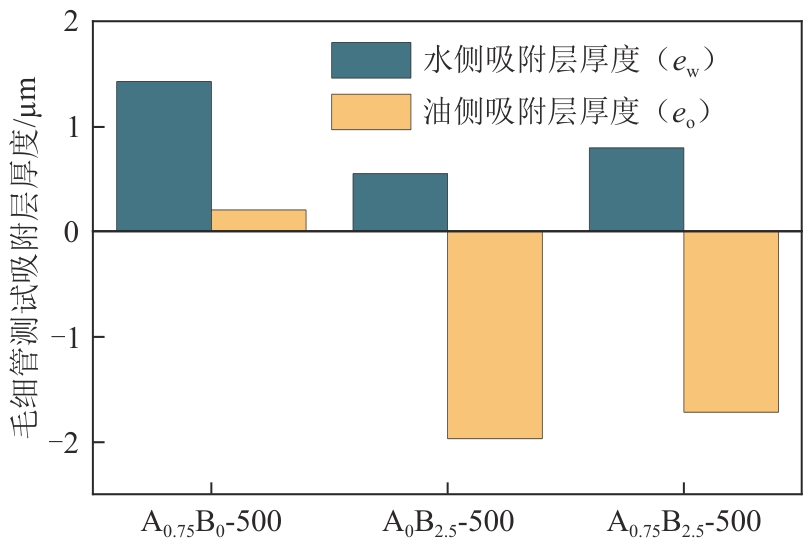
图5 典型RPM吸附层厚度
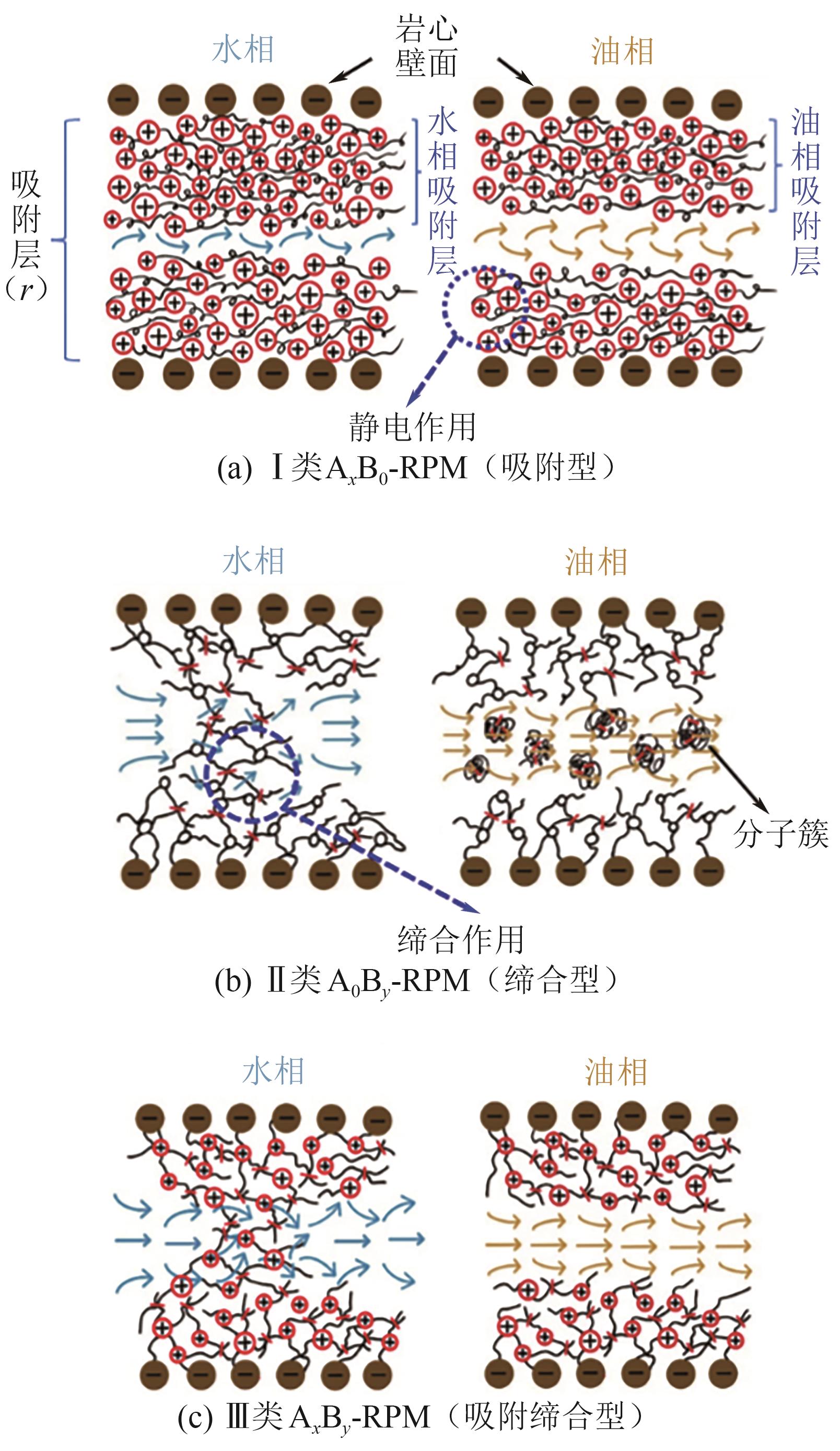
图6 三类RPM作用机理
| 分子量 | 渗透率200mD | 渗透率500mD | 渗透率1000mD | |||
|---|---|---|---|---|---|---|
| 注入压力梯度增长率 | 注入压力梯度/MPa·m-1 | 注入压力梯度增长率 | 注入压力梯度/MPa·m-1 | 注入压力梯度增长率 | 注入压力梯度/MPa·m-1 | |
| 300×104 | 0.07 | 0.78 | 0.11 | 0.44 | 0.09 | 0.25 |
| 500×104 | 0.33 | 1.95 | 0.24 | 1.15 | 0.16 | 0.36 |
| 700×104 | 0.38 | 2.15 | 0.32 | 1.39 | 0.21 | 0.42 |
表7 A0.75B2.5注入压力增长率和注入压力梯度与渗透率间的关系
| 分子量 | 渗透率200mD | 渗透率500mD | 渗透率1000mD | |||
|---|---|---|---|---|---|---|
| 注入压力梯度增长率 | 注入压力梯度/MPa·m-1 | 注入压力梯度增长率 | 注入压力梯度/MPa·m-1 | 注入压力梯度增长率 | 注入压力梯度/MPa·m-1 | |
| 300×104 | 0.07 | 0.78 | 0.11 | 0.44 | 0.09 | 0.25 |
| 500×104 | 0.33 | 1.95 | 0.24 | 1.15 | 0.16 | 0.36 |
| 700×104 | 0.38 | 2.15 | 0.32 | 1.39 | 0.21 | 0.42 |
| 聚合物编号 | 孔隙度/% | 渗透率/mD | 孔隙半径/μm | 堵水率/% | 堵油率/% | 水油封堵率比值 |
|---|---|---|---|---|---|---|
| A0.75B2.5-300 | 37.17 | 254 | 2.30 | 20.00 | -3.23 | -6.19 |
| 38.58 | 528 | 3.37 | 24.14 | -5.88 | -4.11 | |
| 34.88 | 1126 | 5.08 | 12.50 | -7.14 | -1.75 | |
| A0.75B2.5-500 | 36.47 | 196 | 2.01 | 64.58 | 19.05 | 3.39 |
| 36.54 | 559 | 3.50 | 70.27 | 14.29 | 4.92 | |
| 36.64 | 958 | 4.64 | 27.27 | -11.11 | -2.45 | |
| A0.75B2.5-700 | 36.89 | 214 | 2.13 | 68.42 | 20.00 | 3.42 |
| 37.51 | 546 | 3.45 | 71.15 | 15.07 | 4.72 | |
| 37.22 | 1095 | 4.94 | 30.43 | 5.26 | 5.79 |
表8 不同分子量A0.75B2.5在不同岩心渗透率下水油封堵率
| 聚合物编号 | 孔隙度/% | 渗透率/mD | 孔隙半径/μm | 堵水率/% | 堵油率/% | 水油封堵率比值 |
|---|---|---|---|---|---|---|
| A0.75B2.5-300 | 37.17 | 254 | 2.30 | 20.00 | -3.23 | -6.19 |
| 38.58 | 528 | 3.37 | 24.14 | -5.88 | -4.11 | |
| 34.88 | 1126 | 5.08 | 12.50 | -7.14 | -1.75 | |
| A0.75B2.5-500 | 36.47 | 196 | 2.01 | 64.58 | 19.05 | 3.39 |
| 36.54 | 559 | 3.50 | 70.27 | 14.29 | 4.92 | |
| 36.64 | 958 | 4.64 | 27.27 | -11.11 | -2.45 | |
| A0.75B2.5-700 | 36.89 | 214 | 2.13 | 68.42 | 20.00 | 3.42 |
| 37.51 | 546 | 3.45 | 71.15 | 15.07 | 4.72 | |
| 37.22 | 1095 | 4.94 | 30.43 | 5.26 | 5.79 |
| [1] | 陈洪才, 王昭凯, 金忠康, 等. 中低渗砂岩油藏水驱后期油藏再评价及提高采收率对策[J]. 特种油气藏, 2024, 31(4): 133-141. |
| CHEN Hongcai, WANG Zhaokai, JIN Zhongkang, et al. Re-evaluation of medium-low permeability sandstone reservoirs in the later stage of water flooding and strategies to improve recovery efficiency[J]. Special Oil & Gas Reservoirs, 2024, 31(4): 133-141. | |
| [2] | YANG Yu, DENG Yonghong, TONG Zhen, et al. Multifunctional foams derived from poly(melamine formaldehyde) as recyclable oil absorbents[J]. Journal of Materials Chemistry A, 2014, 2(26): 9994-9999. |
| [3] | PARK Hyungmin, SUN Guangyi, KIM Chang-Jin. Superhydrophobic turbulent drag reduction as a function of surface grating parameters[J]. Journal of Fluid Mechanics, 2014, 747: 722-734. |
| [4] | 莘怡成, 汪华珍, 高彦才, 等. 海上机械控水完井技术应用现状及发展趋势[J]. 石油矿场机械, 2024, 53(3): 76-81. |
| XIN Yicheng, WANG Huazhen, GAO Yancai, et al. Application and development trend of offshore mechanical water-controlled completion technology[J]. Oil Field Equipment, 2024, 53(3): 76-81. | |
| [5] | MENG Haifeng, WANG Shutao, XI Jinming, et al. Facile means of preparing superamphiphobic surfaces on common engineering metals[J]. The Journal of Physical Chemistry C, 2008, 112(30): 11454-11458. |
| [6] | 潘豪. 海上油田水平井稳油控水技术现状与发展趋势[J]. 石油矿场机械, 2020, 49(3): 86-93. |
| PAN Hao. Status and development trend of horizontal well water-control completion technology for offshore oilfield[J]. Oil Field Equipment, 2020, 49(3): 86-93. | |
| [7] | LAU Kenneth K S, BICO José, Kenneth B K TEO, et al. Superhydrophobic carbon nanotube forests[J]. Nano Letters, 2003, 3(12): 1701-1705. |
| [8] | TABAEH HAYAVI Mohammad, KALANTARIASL Azim, Reza MALAYERI M. Application of polymeric relative permeability modifiers for water control purposes: Opportunities and challenges[J]. Geoenergy Science and Engineering, 2023, 231: 212330. |
| [9] | SERIGHT Randy, BRATTEKAS Bergit. Water shutoff and conformance improvement: An introduction[J]. Petroleum Science, 2021, 18(2): 450-478. |
| [10] | SANDIFORD B B. Laboratory and field studies of water floods using polymer solutions to increase oil recoveries[J]. Journal of Petroleum Technology, 1964, 16(8): 917-922. |
| [11] | 刘建新, 张营华, 任韶然. 新型相对渗透率改善剂控水性能试验研究[J]. 石油天然气学报, 2008, 30(5): 140-142, 148, 382. |
| LIU Jianxin, ZHANG Yinghua, REN Shaoran. Laboratory study on new relative permeability modifier for water control[J]. Journal of Oil and Gas Technology, 2008, 30(5): 140-142, 148, 382. | |
| [12] | 翟恒来, 齐宁, 樊家铖, 等. 油田相对渗透率改善体系研究进展[J]. 油田化学, 2018, 35(2): 375-380. |
| ZHAI Henglai, QI Ning, FAN Jiacheng, et al. Research progress of relative permeability modifiers system used in oilfield[J]. Oilfield Chemistry, 2018, 35(2): 375-380. | |
| [13] | WHITE J L, GODDARD J E, PHILLIPS H M. Use of polymers to control water production in oil wells[J]. Journal of Petroleum Technology, 1973, 25(2): 143-150. |
| [14] | 梁海滨. 低渗砂岩中高含水油层控水压裂技术研究[D]. 北京: 中国石油大学(北京), 2019. |
| LIANG Haibin. Study on water control fracturing technology for medium and high water cut reservoirs in low permeability sandstone[D]. Beijing: China University of Petroleum (Beijing), 2019. | |
| [15] | CHEN Tielong, ZHAO Yong, PENG Kezong, et al. A relative permeability modifier for water control of gas wells in a low-permeability reservoir[J]. SPE Reservoir Engineering, 1996, 11(3): 168-173. |
| [16] | Ibrahim AL-HULAIL, SHAKEEL Muzzammil, BINGHANIM Ahmed, et al. Water control in high-water-cut oil wells using relative permeability modifiers: A Saudi lab study[C]//SPE Kingdom of Saudi Arabia Annual Technical Symposium and Exhibition. Dammam, Saudi Arabia: SPE, 2017: D043S042R001. |
| [17] | Faaiz AL-SHAJALEE, WOOD Colin, XIE Quan, et al. Effective mechanisms to relate initial rock permeability to outcome of relative permeability modification[J]. Energies, 2019, 12(24): 4688. |
| [18] | Faaiz AL-SHAJALEE, SEYYEDI Mojtaba, VERRALL Michael, et al. Impact of prolonged water-gas flow on the performance of polyacrylamide[J]. Journal of Applied Polymer Science, 2022, 139(17): 52037. |
| [19] | LI Xu, WANG Xiaopeng, PU Chunsheng, et al. Effect of a hydrophobically associating polymer on disproportionate permeability reduction to oil and water for sandstone reservoirs[J]. Desalination and Water Treatment, 2023, 293: 276-285. |
| [20] | DALRYMPLE E D, EOFF L, REDDY B R, et al. Studies of a relative permeability modifier treatment performed using multitap flow cells[C]//SPE/DOE Improved Oil Recovery Symposium. Tulsa, Oklahoma: SPE, 2000: SPE-59346-MS. |
| [21] | 刘新荣, 韩松, 李庆松. 相渗透率改善剂对岩石润湿性的影响[J]. 东北林业大学学报, 2009, 37(6): 115-116. |
| LIU Xinrong, HAN Song, LI Qingsong. Effect of relative permeability modifier on rock wettability[J]. Journal of Northeast Forestry University, 2009, 37(6): 115-116. | |
| [22] | ZALTOUN Alain, KOHLER Norbert, GUERRINL Yannick. Improved polyacrylamide treatments for water control in producing wells[J]. Journal of Petroleum Technology, 1991, 43(7): 862-867. |
| [23] | 李志臻, 史斌, 麻路, 等. 一种溶液型选择性堵水体系的室内研究及应用[J]. 石油化工应用, 2020, 39(1): 53-61. |
| LI Zhizhen, SHI Bin, MA Lu, et al. Research and application of a solution type water shutoff system[J]. Petrochemical Industry Application, 2020, 39(1): 53-61. | |
| [24] | WANG Jun, ZHANG Na, LI Cuiqin, et al. Synthesis and characterization of a novel hydrophobically associating relative permeability modifier[J]. Journal of Macromolecular Science, Part A, 2013, 50(1): 29-35. |
| [25] | 龙长俊, 周劲辉, 李玉涛, 等. 一种新型相渗透率改善剂体系性能评价与应用[J]. 石油钻采工艺, 2020, 42(6): 757-761, 796. |
| LONG Changjun, ZHOU Jinhui, LI Yutao, et al. Evaluation and application of a new type of relative permeability modifier system[J]. Oil Drilling & Production Technology, 2020, 42(6): 757-761, 796. | |
| [26] | 刘建新. 相对渗透率改善剂的研究与应用[D]. 青岛: 中国石油大学(华东), 2009. |
| LIU Jianxin. Research and application of relative permeability improver[D]. Qingdao: China University of Petroleum (East China), 2009. | |
| [27] | 张娜. 疏水缔合型相渗透率改善剂的结构与性能的关系[D]. 大庆: 东北石油大学, 2013. |
| ZHANG Na. Relationship between structure and properties of hydrophobically associated phase permeability improver[D]. Daqing: Northeast Petroleum University, 2013. | |
| [28] | Faaiz AL-SHAJALEE, SAEEDI Ali, WOOD Colin. A new dimensionless approach to assess relative permeability modifiers[J]. Energy & Fuels, 2019, 33(4): 3448-3455. |
| [29] | YANG Chao, NAVARRETE Reinaldo, ASADI Mahmoud. A novel relative permeability modifier polymer[C]//SPE International Conference and Exhibition on Formation Damage Control. Lafayette, Louisiana, USA: SPE, 2020: D011S006R006. |
| [30] | ZAITOUN A, KOHLER N. Two-phase flow through porous media: Effect of an adsorbed polymer layer[C]//SPE Annual Technical Conference and Exhibition. Houston, Texas: SPE, 1988: SPE-18085-MS. |
| [31] | Faaiz AL-SHAJALEE, ARIF Muhammad, MACHALE Jinesh, et al. A multiscale investigation of cross-linked polymer gel injection in sandstone gas reservoirs: Implications for water shutoff treatment[J]. Energy & Fuels, 2020, 34(11): 14046-14057. |
| [32] | 李浩, 杨海洋, 朱平平, 等. 利用Poiseuille方程确定聚乙烯醇在粘度计毛细管管壁上吸附层的厚度[J]. 功能高分子学报, 2002, 15(3): 319-324. |
| LI Hao, YANG Haiyang, ZHU Pingping, et al. Thickness of the polyvinyl alcohol layers adsorbed on the wall of viscometer capillary determined according to Poiseuille equation[J]. Journal of Functional Polymers, 2002, 15(3): 319-324. | |
| [33] | Faaiz AL-SHAJALEE, ARIF Muhammad, SARI Ahmed, et al. Low-salinity-assisted cationic polyacrylamide water shutoff in low-permeability sandstone gas reservoirs[J]. Energy & Fuels, 2020, 34(5): 5524-5536. |
| [34] | EOFF Larry, DALRYMPLE E, REDDY B R, et al. Structure and process optimization for the use of a polymeric relative-permeability modifier in conformance control[C]//Proceedings of SPE International Symposium on Oilfield Chemistry. Houston, Texas: SPE, 2001: SPE-64985-MS. |
| [35] | 罗明良, 孙涛, 温庆志, 等. 低渗透油藏RPM控水压裂液性能评价与应用[J]. 西安石油大学学报(自然科学版), 2016, 31(3): 74-80, 85. |
| LUO Mingliang, SUN Tao, WEN Qingzhi, et al. Performance evaluation and application of RPM water control fracturing fluid for low permeability oil reservoirs[J]. Journal of Xi’an Shiyou University (Natural Science Edition), 2016, 31(3): 74-80, 85. | |
| [36] | Ahmed ALI, YASSINE Rami, WAHEED Arshad, et al. Relative permeability modifier fracturing technique inhibits post-fracturing water production: Case histories from Egypt[C]//North Africa Technical Conference and Exhibition. Cairo, Egypt: SPE, 2010: SPE-128322-MS. |
| [37] | 董海斌. 溶液型阳离子选择堵水剂的制备及性能研究[D]. 成都: 西南石油大学, 2019. |
| DONG Haibing. Preparation and performance study of solution type cationic selective water blocking agent[D]. Chengdu: Southwest Petroleum University, 2019. | |
| [38] | GRATTONI C A, LUCKHAM P F, JING X D, et al. Polymers as relative permeability modifiers: Adsorption and the dynamic formation of thick polyacrylamide layers[J]. Journal of Petroleum Science and Engineering, 2004, 45(3/4): 233-245. |
| [39] | 朱怀江, 刘强, 沈平平, 等. 聚合物分子尺寸与油藏孔喉的配伍性[J]. 石油勘探与开发, 2006, 33(5): 609-613. |
| ZHU Huaijiang, LIU Qiang, SHEN Pingping, et al. Compatibility between polymer molecular size and pore throat in reservoirs[J]. Petroleum Exploration and Development, 2006, 33(5): 609-613. | |
| [40] | QIN Liming, MYERS Matthew B, OTTO Claus, et al. Further insights into the performance of silylated polyacrylamide-based relative permeability modifiers in carbonate reservoirs and influencing factors[J]. ACS Omega, 2021, 6(21): 13671-13683. |
| [41] | PARKHONYUK Sergey, LEVANYUK Olesya, OPARIN Maxim, et al. Implementation of relative permeability modifiers in krasnoleninskoe oil field: Case histories[C]//SPE Improved Oil Recovery Symposium. Tulsa, Oklahoma, USA: SPE, 2012 SPE-152410-MS. |
| [1] | 武锦怡, 赵睿恺, 邓帅, 张家麒, 高春霄, 刘葳桦, 赵力. 混合绝缘气体变温吸附分离回收SF6的数值模拟[J]. 化工进展, 2025, 44(S1): 19-28. |
| [2] | 赵雨龙, 蔡凯, 于善青. 氧化铝孔结构对催化裂化烃类分子吸附扩散及反应性能的影响[J]. 化工进展, 2025, 44(S1): 213-221. |
| [3] | 袁晓亮, 张馨月, 李天舒, 张天琪, 王东青. 环烯烃聚合物专利技术态势分析[J]. 化工进展, 2025, 44(S1): 252-260. |
| [4] | 王露, 何阳东, 李雅欣, 范锐, 陈仕锦, 张杰. 高性能聚合物膜用于He/CH4和He/N2分离的结构设计与性能优化[J]. 化工进展, 2025, 44(S1): 261-276. |
| [5] | 王瑞琪, 刘浩伟, 孙彦丽, 李荣花, 王政, 吴玉花, 吴建波, 张慧, 白红存. 面向高效储氢MOFs的设计构筑与性能调控研究现状分析及展望[J]. 化工进展, 2025, 44(S1): 323-339. |
| [6] | 刘颖, 包成, 张欣欣. 用于氢气提纯的改性载铜活性炭[J]. 化工进展, 2025, 44(S1): 413-421. |
| [7] | 符红梅, 刘定华, 刘晓勤. MOF材料在芳烃同分异构体分离中的研究进展[J]. 化工进展, 2025, 44(9): 5006-5017. |
| [8] | 张文静, 黄致新, 李士腾, 邓帅, 李双俊. 生物质碳气凝胶CO2吸附剂研究进展[J]. 化工进展, 2025, 44(9): 5018-5032. |
| [9] | 张博, 马骏, 张维隆, 贾世川, 张智飞, 丁宇, 潘有华, 王俊宇, 张兰河. α-ZrP/PDMS超疏水防腐涂层的制备及其耐腐蚀性能[J]. 化工进展, 2025, 44(9): 5130-5139. |
| [10] | 王晋, 贺晓蕊, 江壮壮, 冯勇, 刘城, 沈星汉. 车用燃料电池质子交换膜气体渗透率的理论计算和实验[J]. 化工进展, 2025, 44(9): 5202-5210. |
| [11] | 孙梦圆, 陆诗建, 刘玲, 薛艳阳, 张云蓉, 董琦, 康国俊. 金属有机框架及衍生物在碳捕集领域的研究进展[J]. 化工进展, 2025, 44(9): 5339-5350. |
| [12] | 杨证禄, 杨立峰, 路晓飞, 锁显, 张安运, 崔希利, 邢华斌. 机器学习加速多孔吸附剂筛选发现的研究进展[J]. 化工进展, 2025, 44(8): 4288-4301. |
| [13] | 杨勇, 张钊, 王东亮, 周怀荣, 赵子豪, 李煜坤. 二甲苯异构体不同分离策略的技术经济评价[J]. 化工进展, 2025, 44(8): 4732-4740. |
| [14] | 高姣姣, 颜诗宇, 杨太顺, 谢尚志, 杨艳娟, 徐晶. 不同晶型Al2O3负载Ru催化剂对聚乙烯氢解的影响[J]. 化工进展, 2025, 44(7): 3917-3927. |
| [15] | 梁书玮, 俞杰, 谢钟音, 裴鉴禄, 林中鑫, 陈泽翔. 共价有机框架吸附放射性气态碘的研究进展[J]. 化工进展, 2025, 44(7): 3965-3975. |
| 阅读次数 | ||||||
|
全文 |
|
|||||
|
摘要 |
|
|||||