Chemical Industry and Engineering Progress ›› 2025, Vol. 44 ›› Issue (6): 3413-3431.DOI: 10.16085/j.issn.1000-6613.2024-0641
• Energy processes and technology • Previous Articles
Research progress on enhancing hydrate gas storage performance in porous media
ZHEN Xiaofei1,2( ), YANG Tebo1,2, DONG Ti1,2, QI Yonghao1,2, LIU Jia1,2()
- 1.School of New Energy and Power Engineering, Lanzhou Jiaotong University, Lanzhou 730070, Gansu, China
2.Gansu Provincial Technology Innovation Center for Energy Storage System and Operation Control, Lanzhou 730070, Gansu, China
-
Received:2024-04-17Revised:2024-07-30Online:2025-07-08Published:2025-06-25 -
Contact:LIU Jia
多孔介质强化水合物储气性能研究进展
甄箫斐1,2(), 杨特勃1,2, 董缇1,2, 齐永豪1,2, 刘佳1,2()
- 1.兰州交通大学新能源与动力工程学院,甘肃 兰州 730070
2.甘肃省储能系统与运行控制技术创新中心,甘肃 兰州 730070
-
通讯作者:刘佳 -
作者简介:甄箫斐(1987—),男,博士,副教授,研究方向为可再生能源。E-mail:zxf283386515@163.com。 -
基金资助:国家自然科学基金(52206255);甘肃省青年科技基金(23JRRA887);兰州交通大学青年科学基金(2023026)

CLC Number:
Cite this article
ZHEN Xiaofei, YANG Tebo, DONG Ti, QI Yonghao, LIU Jia. Research progress on enhancing hydrate gas storage performance in porous media[J]. Chemical Industry and Engineering Progress, 2025, 44(6): 3413-3431.
甄箫斐, 杨特勃, 董缇, 齐永豪, 刘佳. 多孔介质强化水合物储气性能研究进展[J]. 化工进展, 2025, 44(6): 3413-3431.
share this article
Add to citation manager EndNote|Ris|BibTeX
URL: https://hgjz.cip.com.cn/EN/10.16085/j.issn.1000-6613.2024-0641
| 强化方法 | 具体操作 |
|---|---|
| 物理方法 | 搅拌[ |
| 物理化学方法 | |
| 热力学促进剂 | 四氢呋喃(THF)[ |
| 表面活性剂 | 十二烷基硫磺钠(SDS)[ |
| 多孔介质 | 沸石、聚酯氨泡沫(PU)[ |
| 强化方法 | 具体操作 |
|---|---|
| 物理方法 | 搅拌[ |
| 物理化学方法 | |
| 热力学促进剂 | 四氢呋喃(THF)[ |
| 表面活性剂 | 十二烷基硫磺钠(SDS)[ |
| 多孔介质 | 沸石、聚酯氨泡沫(PU)[ |
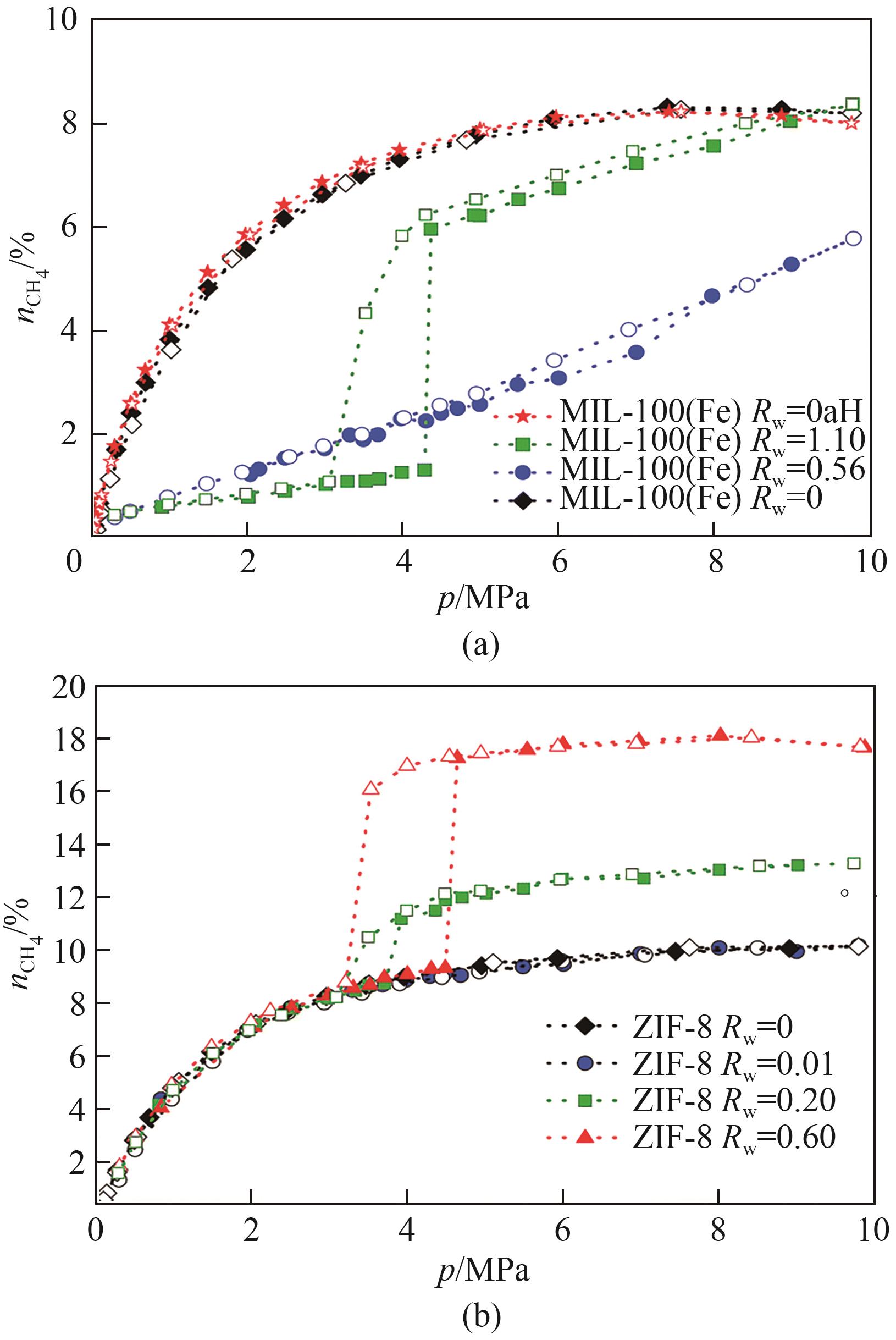
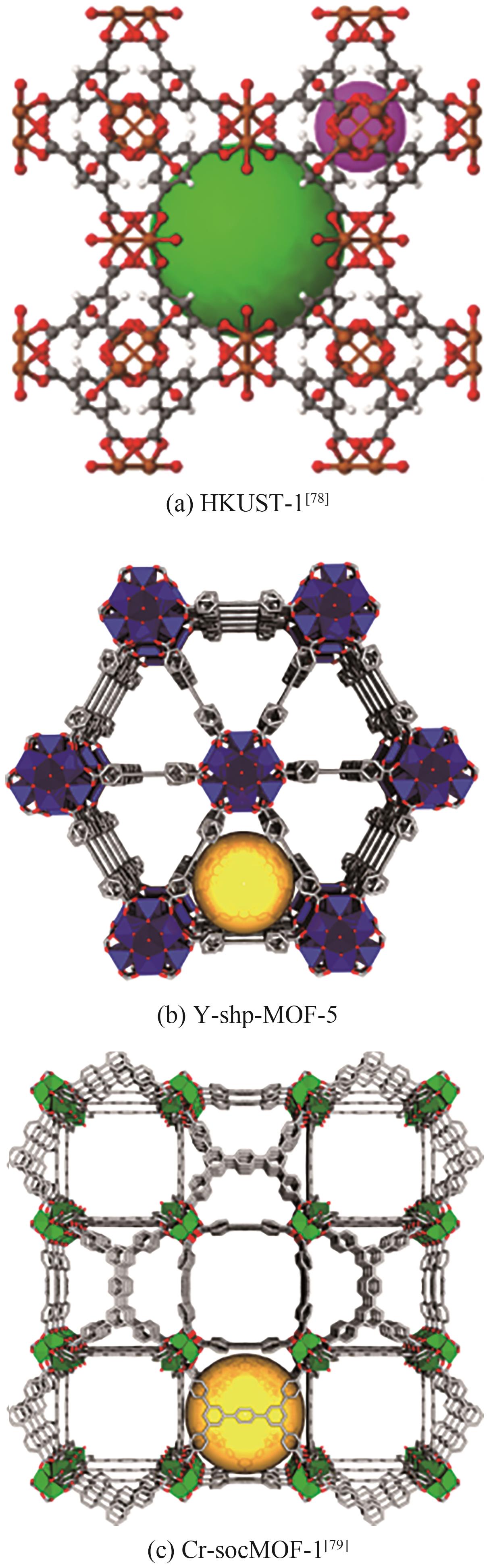
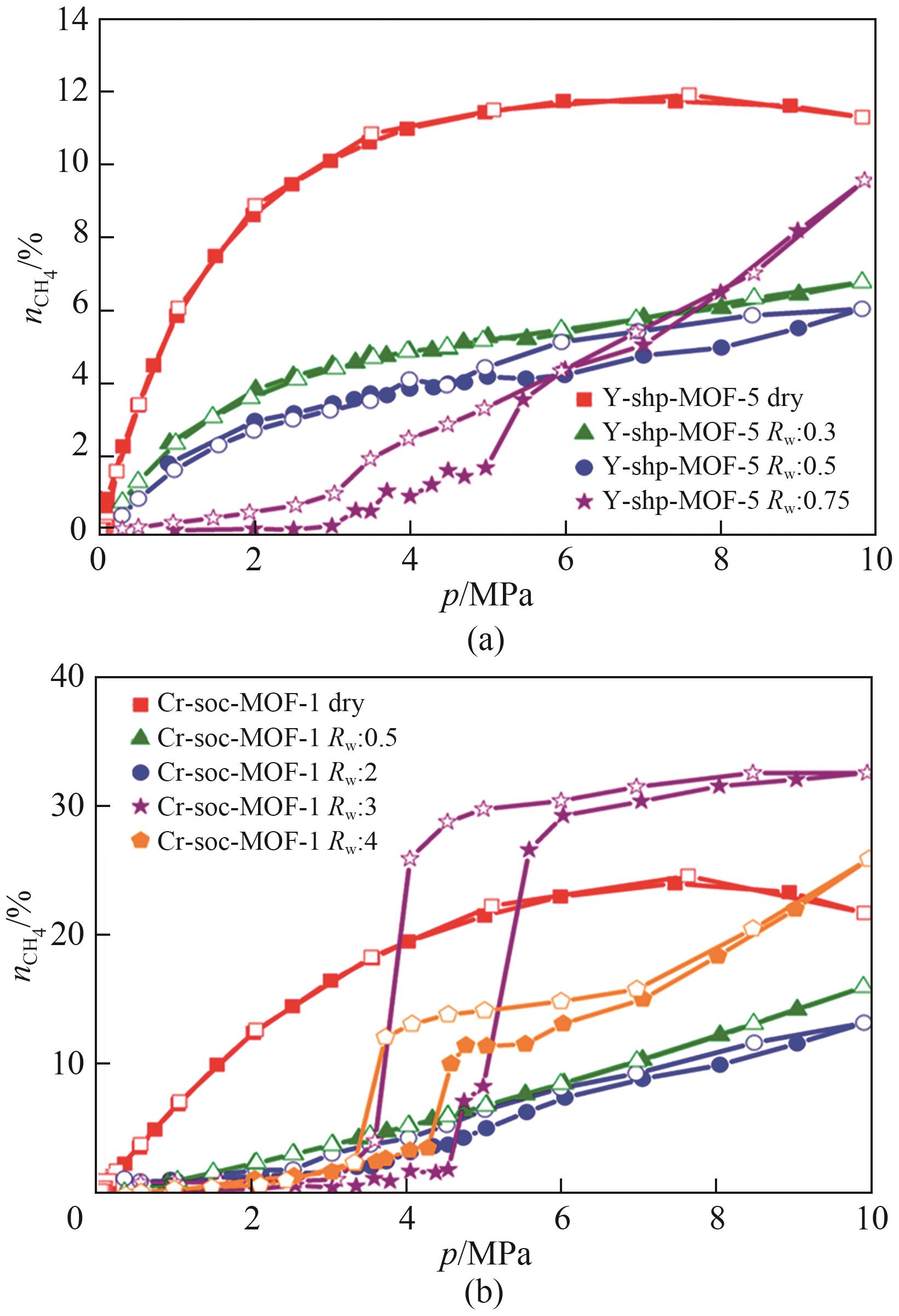
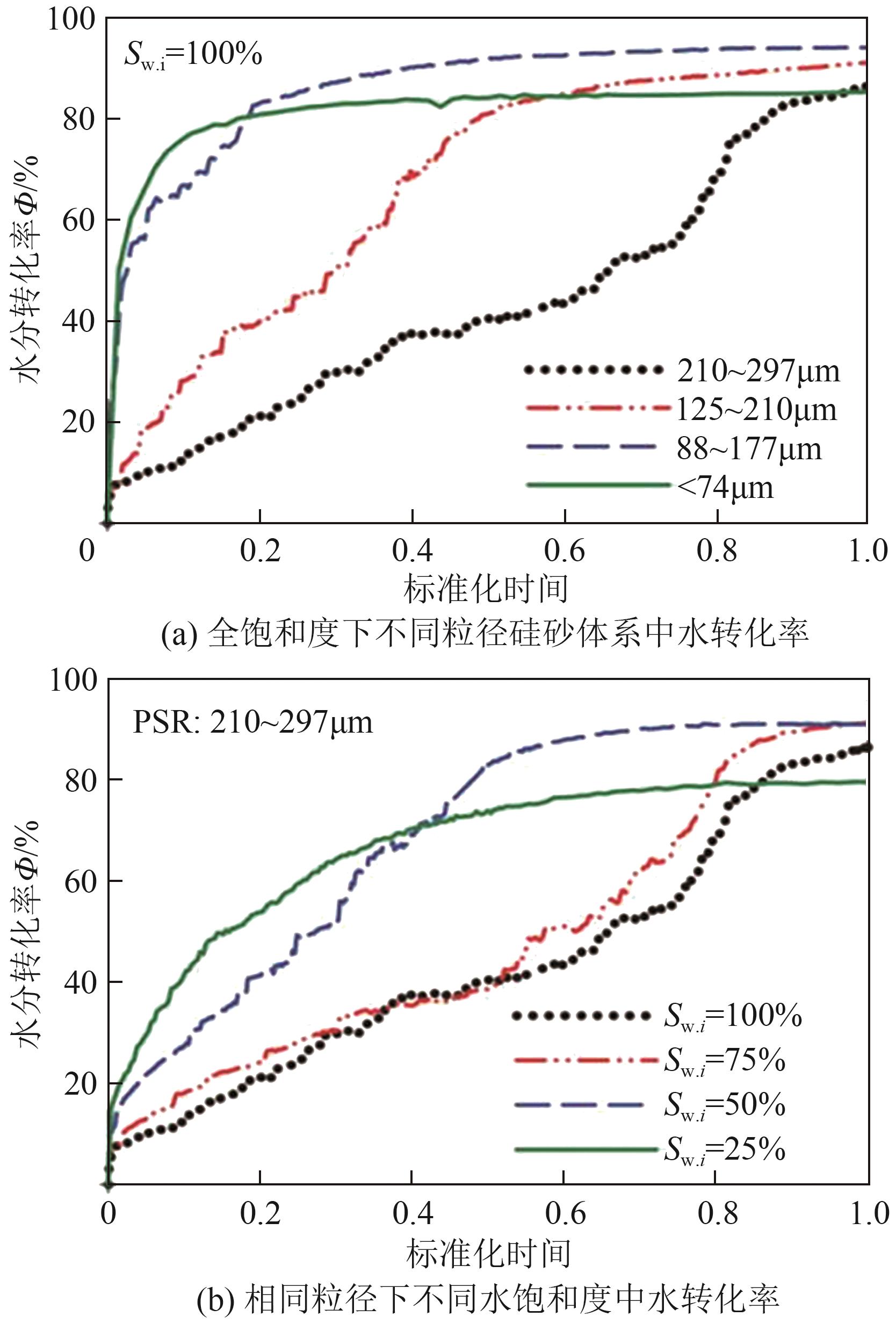
| 孔径大小 | 诱导时间/min | 气体消耗量/mol | 储气量/m3∙m-3 | 最大生成速率/m3∙m-3∙min-1 |
|---|---|---|---|---|
| 10PPI | 60 | 0.1670 | 169.6 | 18.99 |
| 35PPI | 48 | 0.1494 | 151.8 | 11.70 |
| 孔径大小 | 诱导时间/min | 气体消耗量/mol | 储气量/m3∙m-3 | 最大生成速率/m3∙m-3∙min-1 |
|---|---|---|---|---|
| 10PPI | 60 | 0.1670 | 169.6 | 18.99 |
| 35PPI | 48 | 0.1494 | 151.8 | 11.70 |
| [1] | Center for climate and energy solutions. Leveraging natural gas to reduce greenhouse gas emissions[EB/OL]. (2013-06). . |
| [2] | 陈光进, 孙长宇, 马庆兰. 气体水合物科学与技术[M]. 2版. 北京: 化学工业出版社, 2020. |
| CHEN Guangjin, SUN Changyu, MA Qinglan. Gas hydrate science and technology[M]. 2nd ed. Beijing: Chemical Industry Press, 2020. | |
| [3] | ALIAKBAR Hassanpouryouzband, EDRIS Joonaki, MEHRDAD Vasheghani Farahani, et al. Gas hydrates in sustainable chemistry[J]. Chemical Society Reviews, 2020, 49(15): 5225-5309. |
| [4] | WANG Zhuangzhuang, WU Nengyou, HU Gaowei, et al. Study on the growth habit of methane hydrate at pore scale by visualization experiment[J]. Energy Reports, 2021, 7: 8346-8356. |
| [5] | HAYAMA Hiroaki, MITARAI Makoto, MORI Hiroyuki, et al. Surfactant effects on crystal growth dynamics and crystal morphology of methane hydrate formed at gas/liquid interface[J]. Crystal Growth & Design, 2016, 16(10): 6084-6088. |
| [6] | 周诗岽, 余益松, 王树立, 等. 管道流动体系下天然气水合物生成模型的研究进展[J]. 天然气工业, 2014, 34(2): 92-98. |
| ZHOU Shidong, YU Yisong, WANG Shuli, et al. Research progress in the natural gas hydrate formation model under the pipeline flow System[J]. Natural Gas Industry, 2014, 34(2): 92-98. | |
| [7] | 吕秋楠, 陈朝阳, 李小森. 气体水合物快速生成强化技术与方法研究进展[J]. 化工进展, 2011, 30(1): 74-79. |
| Qiunan LYU, CHEN Zhaoyang, LI Xiaosen. Advances in technology and method for promoting gas hydrate rapid formation[J]. Chemical Industry and Engineering Progress, 2011, 30(1): 74-79. | |
| [8] | 黄怡. 碳纳米管、聚氨酯泡沫和新型干水对甲烷水合物生成的强化作用[D]. 广州: 华南理工大学, 2016. |
| HUANG Yi. Enhancement of methane hydrate formation by carbon nanotubes, polyurethane foam and new dry water[D]. Guangzhou: South China University of Technology, 2016. | |
| [9] | 刘志安. 天然气水合物生成机理和热力学模型研究[D]. 北京: 中国石油大学, 2007. |
| LIU Zhi’an. Study on formation mechanism and thermodynamic model of natural gas hydrate[D]. Beijing: China University of Petroleum, 2007. | |
| [10] | AMAN Zachary M, Carolyn A KOH. Interfacial phenomena in gas hydrate systems[J]. Chemical Society Reviews, 2016, 45(6): 1678-1690. |
| [11] | HAO Wenfeng, WANG Jinqu, FAN Shuanshi, et al. Study on methane hydration process in a semi-continuous stirred tank reactor[J]. Energy Conversion and Management, 2007, 48(3): 954-960. |
| [12] | 钟栋梁, 杨晨, 刘道平, 等. 喷雾反应器中二氧化碳水合物的生长实验研究[J]. 过程工程学报, 2010, 10(2): 309-313. |
| ZHONG Dongliang, YANG Chen, LIU Daoping, et al. Experimental study on formation of carbon dioxide hydrate in a water spraying reactor[J]. The Chinese Journal of Process Engineering, 2010, 10(2): 309-313. | |
| [13] | LUO Y-T, ZHU J-H, FAN S-S, et al. Study on the kinetics of hydrate formation in a bubble column[J]. Chemical Engineering Science, 2007, 62(4): 1000-1009. |
| [14] | LINGA Praveen, ADEYEMO Adebola, ENGLEZOS Peter. Medium-pressure clathrate hydrate/membrane hybrid process for postcombustion capture of carbon dioxide[J]. Environmental Science & Technology, 2008, 42(1): 315-320. |
| [15] | Nguyen Hong DUC, CHAUVY Fabien, HERRI Jean-Michel. CO2 capture by hydrate crystallization—A potential solution for gas emission of steelmaking industry[J]. Energy Conversion and Management, 2007, 48(4): 1313-1322. |
| [16] | Leong Chuan HO, BABU Ponnivalavan, KUMAR Rajnish, et al. HBGS (hydrate based gas separation) process for carbon dioxide capture employing an unstirred reactor with cyclopentane[J]. Energy, 2013, 63: 252-259. |
| [17] | YANG Mingjun, SONG Yongchen, LIU Weiguo, et al. Effects of additive mixtures (THF/SDS) on carbon dioxide hydrate formation and dissociation in porous media[J]. Chemical Engineering Science, 2013, 90: 69-76. |
| [18] | WANG Weixing, HUANG Zhan, CHEN Haoran, et al. Methane hydrates with a high capacity and a high formation rate promoted by biosurfactants[J]. Chemical Communications, 2012, 48(95): 11638-11640. |
| [19] | BABU Ponnivalavan, KUMAR Rajnish, LINGA Praveen. A new porous material to enhance the kinetics of clathrate process: Application to precombustion carbon dioxide capture[J]. Environmental Science & Technology, 2013, 47(22): 13191-13198. |
| [20] | SUN Duo, ENGLEZOS Peter. Storage of CO2 in a partially water saturated porous medium at gas hydrate formation conditions[J]. International Journal of Greenhouse Gas Control, 2014, 25: 1-8. |
| [21] | YILDIRIM Taner. Carbon capture and methane storage in porous metal-organic frameworks: A comparative study and independent validation of current records and future directions[C]//Abstracts of papers of the American Chemical Society. the American Chemical Society, 2013: 245. |
| [22] | Tina DÜREN, SARKISOV Lev, YAGHI Omar M, et al. Design of new materials for methane storage[J]. Langmuir, 2004, 20(7): 2683-2689. |
| [23] | 代梦玲, 孙志高, 李娟, 等. 水合物储气促进技术研究进展[J]. 化工进展, 2020, 39(10): 3975-3986. |
| DAI Mengling, SUN Zhigao, LI Juan, et al. Progress on promotion technology for gas storage in hydrates[J]. Chemical Industry and Engineering Progress, 2020, 39(10): 3975-3986. | |
| [24] | MAJID A A A, WORLEY J, KOH C A. Thermodynamic and kinetic promoters for gas hydrate technological applications[J]. Energy & Fuels, 2021, 35(23): 19288-19301. |
| [25] | LI Xiaoyan, LI Xiaosen, WANG Yi, et al. Influence of particle size on the heat and mass transfer characteristics of methane hydrate formation and decomposition in porous media[J]. Energy & Fuels, 2021, 35(3): 2153-2164. |
| [26] | LU Yiyu, GE Binbin, ZHONG Dongliang. Investigation of using graphite nanofluids to promote methane hydrate formation: Application to solidified natural gas storage[J]. Energy, 2020, 199: 117424. |
| [27] | 臧小亚, 梁德青, 吴能友. 细砂沉积物中水合物生成过程研究[J]. 中国科学(地球科学), 2013, 43(3): 360-367. |
| ZANG Xiaoya, LIANG Deqing, WU Nengyou. Gas hydrate formation in fine sand[J]. Scientia Sinica (Terrae), 2013, 43(3): 360-367. | |
| [28] | 阎立军, 刘犟, 陈光进, 等. 活性炭中甲烷水合物的生成动力学[J]. 石油学报(石油加工), 2002, 18(3): 1-7. |
| YAN Lijun, LIU Jiang, CHEN Guangjin, et al. Kinetics of methane hydrate formation in active carbon[J]. Acta Petrolei Sinica (Petroleum Processing Section), 2002, 18(3): 1-7. | |
| [29] | 刘名瑞, 丁凯, 王唯, 等. 基于物理吸附储氢材料的研究进展[J]. 储能科学与技术, 2023, 12(6): 1804-1814. |
| LIU Mingrui, DING Kai, WANG Wei, et al. Research progress of hydrogen storage materials based on physical adsorption[J]. Energy Storage Science and Technology, 2023, 12(6): 1804-1814. | |
| [30] | ZHOU Li, SUN Yan, ZHOU Yaping. Enhancement of the methane storage on activated carbon by preadsorbed water[J]. AIChE Journal, 2002, 48(10): 2412-2416. |
| [31] | CASCO Mirian E, Joaquín SILVESTRE-ALBERO, RAMÍREZ-CUESTA Anibal J, et al. Methane hydrate formation in confined nanospace can surpass nature[J]. Nature Communications, 2015, 6: 6432. |
| [32] | Carlos CUADRADO-COLLADOS, FAUTH François, Ión SUCH-BASAÑEZ, et al. Methane hydrate formation in the confined nanospace of activated carbons in seawater environment[J]. Microporous and Mesoporous Materials, 2018, 255: 220-225. |
| [33] | ZHANG Guodong, SHI Xiaoyun, ZHANG Runcheng, et al. Promotion of activated carbon on the nucleation and growth kinetics of methane hydrates[J]. Frontiers in Chemistry, 2020, 8: 526101. |
| [34] | ZHOU Li, LIU Jia, SU Wei, et al. Progress in studies of natural gas storage with wet adsorbents[J]. Energy & Fuels, 2010, 24(7): 3789-3795. |
| [35] | CASCO Mirian E, ZHANG En, Sven GRÄTZ, et al. Experimental evidence of confined methane hydrate in hydrophilic and hydrophobic model carbons[J]. The Journal of Physical Chemistry C, 2019, 123(39): 24071-24079. |
| [36] | CASCO Mirian Elizabeth, Carlos CUADRADO-COLLADOS, Manuel MARTÍNEZ-ESCANDELL, et al. Influence of the oxygen-containing surface functional groups in the methane hydrate nucleation and growth in nanoporous carbon[J]. Carbon, 2017, 123: 299-301. |
| [37] | SIANGSAI Atsadawuth, RANGSUNVIGIT Pramoch, KITIYANAN Boonyarach, et al. Investigation on the roles of activated carbon particle sizes on methane hydrate formation and dissociation[J]. Chemical Engineering Science, 2015, 126: 383-389. |
| [38] | 邝若谷, 吴良猛, 谢凤梅, 等. 活性炭+THF溶液体系中CO2水合物生成特性研究[J]. 低碳化学与化工, 2023(5): 109-114. |
| KUANG Ruogu, WU Liangmeng, XIE Fengmei, et al. Study on characteristics of CO2 hydrate formation in activated carbon+THF solution system[J]. Low-Carbon Chemistry and Chemical Engineering, 2023(5): 109-114. | |
| [39] | LIU Jia, ZHOU Yaping, SUN Yan, et al. Methane storage in wet carbon of tailored pore sizes[J]. Carbon, 2011, 49(12): 3731-3736. |
| [40] | PARK Sungjin, RUOFF Rodney S. Chemical methods for the production of graphenes[J]. Nature Nanotechnology, 2009, 4(4): 217-224. |
| [41] | GHOZATLOO Ahmad, HOSSEINI Mohsen, Mojtaba SHARIATY-NIASSAR. Improvement and enhancement of natural gas hydrate formation process by Hummers’ graphene[J]. Journal of Natural Gas Science and Engineering, 2015, 27: 1229-1233. |
| [42] | HOSSEINI Mohsen, GHOZATLOO Ahmad, Mojtaba SHARIATY-NIASSAR. Effect of CVD graphene on hydrate formation of natural gas[J]. Journal of Nanostructure in Chemistry, 2015, 5(2): 219-226. |
| [43] | REZAEI Erfan, MANTEGHIAN Mehrdad, TAMADDONDAR Marzieh. Kinetic study of ethylene hydrate formation in presence of graphene oxide and sodium dodecyl sulfate[J]. Journal of Petroleum Science and Engineering, 2016, 147: 857-863. |
| [44] | YAN Shuo, DAI Wenjie, WANG Shuli, et al. Graphene oxide: An effective promoter for CO2 hydrate formation[J]. Energies, 2018, 11(7): 1756. |
| [45] | CHOI Jae Woo, CHUNG Jin Tack, KANG Yong Tae. CO2 hydrate formation at atmospheric pressure using high efficiency absorbent and surfactants[J]. Energy, 2014, 78: 869-876. |
| [46] | 王蕊蕊, 杨保亚, 周航, 等. 氧化石墨烯对甲烷水合物生成影响的分子动力学模拟[J]. 天然气化工—C1化学与化工, 2022, 47(3): 141-146. |
| WANG Ruirui, YANG Baoya, ZHOU Hang, et al. Molecular dynamics simulation of effect of graphene oxide on methane hydrate formation[J]. Natural Gas Chemical Industry, 2022, 47(3): 141-146. | |
| [47] | 叶赛, 建伟伟, 王帅, 等. 金属负载氧化石墨烯对CO2水合物生成的动力学特性研究[J]. 石油化工高等学校学报, 2024, 37(1): 25-33. |
| YE Sai, JIAN Weiwei, WANG Shuai, et al. Kinetic characteristics of metal supported graphene oxide on CO2 hydrate formation[J]. Journal of Petrochemical Universities, 2024, 37(1): 25-33. | |
| [48] | KIM Daeok, KIM Dae Woo, Hyung-Kyu LIM, et al. Inhibited phase behavior of gas hydrates in graphene oxide: influences of surface and geometric constraints[J]. Physical Chemistry Chemical Physics, 2014, 16(41): 22717-22722. |
| [49] | WANG Fei, MENG Hanlin, GUO Gang, et al. Methane hydrate formation promoted by-SO 3 - -coated graphene oxide nanosheets [J]. ACS Sustainable Chemistry & Engineering, 2017, 5(8): 6597-6604. |
| [50] | WANG Ruirui, ZHOU Hang, YANG Baoya, et al. Experimental study of methane hydrate generation characteristics in the presence of GO and re-GO[J]. RSC Advances, 2022, 12(14): 8760-8770. |
| [51] | CHEN Chen, YUAN Haoyu, WANG Xiaoming, et al. Magnetically separable 0D-2D Fe3O4-GO nanocomposite with high thermal diffusivity for methane hydrate formation[J]. Chemical Engineering Journal, 2023, 465: 142832. |
| [52] | WANG Meijiao, YAN Shaojiu, WANG Nan, et al. Methane hydrate efficient formation in a 3D-rGO/SDBS composite[J]. RSC Advances, 2024, 14(6): 3900-3908. |
| [53] | JARA Allah D, BETEMARIAM Amha, WOLDETINSAE Girma, et al. Purification, application and current market trend of natural graphite: A review[J]. International Journal of Mining Science and Technology, 2019, 29(5): 671-689. |
| [54] | ZHOU Shidong, YU Yisong, ZHAO Miaomiao, et al. Effect of graphite nanoparticles on promoting CO2 hydrate formation [J]. Energy & Fuels, 2014, 28(7): 4694-4698. |
| [55] | YANG Liang, WANG Xin, LIU Daoping, et al. Accelerated methane storage in clathrate hydrates using surfactant-stabilized suspension with graphite nanoparticles[J]. Chinese Journal of Chemical Engineering, 2020, 28(4): 1112-1119. |
| [56] | DENG Zhixia, WANG Yanhong, YU Chi, et al. Promoting methane hydrate formation with expanded graphite additives: Application to solidified natural gas storage[J]. Fuel, 2021, 299: 120867. |
| [57] | 韦业, 高林. 膨胀石墨的多孔结构及其应用[J]. 长江大学学报(自科版)(上旬), 2008(1): 173-175. |
| WEI Ye, GAO Lin. Review on porous structure and relevant applications of expanded graphite[J]. Journal of Yangtze University (Natural Science Edition) Sci & Eng, 2008(1): 173-175. | |
| [58] | SUN Xinran, LIU Daiming, ZHANG Yongtao, et al. Methane hydrate formation enhanced by thermally expanded graphite with multi-sized pores[J]. Chemical Engineering Journal, 2024, 480: 148280. |
| [59] | DENG Zhixia, WANG Yanhong, LANG Xuemei, et al. Fast formation kinetics of methane hydrate promoted by fluorinated graphite[J]. Chemical Engineering Journal, 2022, 431: 133869. |
| [60] | 谈松林, 庄永起, 易健宏. 溶胶-喷雾法制备多壁碳纳米管增强氧化铝基复合材料及性能研究[J]. 物理学报, 2022, 71(1): 320-325. |
| TAN Songlin, ZHUANG Yongqi, YI Jianhong. Preparation and properties of multi-walled carbon nanotube reinforced alumina composites by sol-spray method[J]. Acta Physica Sinica, 2022, 71(1): 320-325. | |
| [61] | PARK Sung-Seek, LEE Sang-Baek, KIM Nam-Jin. Effect of multi-walled carbon nanotubes on methane hydrate formation[J]. Journal of Industrial and Engineering Chemistry, 2010, 16(4): 551-555. |
| [62] | KIM Nam-Jin, PARK Sung-Seek, KIM Hyung Taek, et al. A comparative study on the enhanced formation of methane hydrate using CM-95 and CM-100 MWCNTs[J]. International Communications in Heat and Mass Transfer, 2011, 38(1): 31-36. |
| [63] | PASIEKA James, COULOMBE Sylvain, SERVIO Phillip. Investigating the effects of hydrophobic and hydrophilic multi-wall carbon nanotubes on methane hydrate growth kinetics[J]. Chemical Engineering Science, 2013, 104: 998-1002. |
| [64] | SONG Yuanmei, WANG Fei, LIU Guoqiang, et al. Promotion effect of carbon nanotubes-doped SDS on methane hydrate formation[J]. Energy & Fuels, 2017, 31(2): 1850-1857. |
| [65] | SONG Yuanmei, LIANG Ruquan, WANG Fei, et al. Enhanced methane hydrate formation in the highly dispersed carbon nanotubes-based nanofluid[J]. Fuel, 2021, 285: 119234. |
| [66] | SONG Yuanmei, WANG Fei, GUO Gang, et al. Energy-efficient storage of methane in the formed hydrates with metal nanoparticles-grafted carbon nanotubes as promoter[J]. Applied Energy, 2018, 224: 175-183. |
| [67] | SONG Yuanmei, WANG Fei, GUO Gang, et al. Amphiphilic-polymer-coated carbon nanotubes as promoters for methane hydrate formation[J]. ACS Sustainable Chemistry & Engineering, 2017, 5(10): 9271-9278. |
| [68] | YAO Xueping, LI Jie, KONG Liang, et al. Surface functionalization of carbon nanotubes by direct encapsulation with varying dosages of amphiphilic block copolymers[J]. Nanotechnology, 2015, 26(32): 325601. |
| [69] | 马丰泽. 基于3D打印的甲烷水合物多孔载体构建[D]. 青岛: 青岛科技大学, 2023. |
| MA Fengze. Construction of methane hydrate porous carrier based on 3D printing[D]. Qingdao: Qingdao University of Science & Technology, 2023. | |
| [70] | 黄麟. 新型金属-有机及有机多孔骨架材料的制备和性能研究[D]. 长春: 吉林大学, 2014. |
| HUANG Lin. Preparation and properties of new metal-organic and organic porous skeleton materials[D]. Changchun: Jilin University, 2014. | |
| [71] | ZHOU Hongcai, LONG Jeffrey R, YAGHI Omar M. Introduction to metal-organic frameworks[J]. Chemical Reviews, 2012, 112(2): 673-674. |
| [72] | BAO Qilong, LOU Yongbing, XING Tiantian, et al. Rapid synthesis of zeolitic imidazolate framework-8 (ZIF-8) in aqueous solution via microwave irradiation[J]. Inorganic Chemistry Communications, 2013, 37: 170-173. |
| [73] | DENNING Shurraya, MAJID Ahmad A A, LUCERO Jolie M, et al. Methane hydrate growth promoted by microporous zeolitic imidazolate frameworks ZIF-8 and ZIF-67 for enhanced methane storage[J]. ACS Sustainable Chemistry & Engineering, 2021, 9(27): 9001-9010. |
| [74] | MU Liang, LIU Bei, LIU Huang, et al. A novel method to improve the gas storage capacity of ZIF-8[J]. Journal of Materials Chemistry, 2012, 22(24): 12246-12252. |
| [75] | 李智, 裴家玲, 李楠, 等. 湿材料固定床中甲烷水合物微观形成过程模拟[J]. 化工进展, 2023, 42(11): 5689-5699. |
| LI Zhi, PEI Jialing, LI Nan, et al. Simulation on the micro formation process of methane hydrate in the fixed bed filled with wet materials[J]. Chemical Industry and Engineering Progress, 2023, 42(11): 5689-5699. | |
| [76] | CASCO Mirian E, Fernando REY, JORDÁ José L, et al. Paving the way for methane hydrate formation on metal-organic frameworks (MOFs)[J]. Chemical Science, 2016, 7(6): 3658-3666. |
| [77] | ZHANG Guodong, LIU Zhe, LIU Daming, et al. Hydrate-based adsorption-hydration hybrid approach enhances methane storage density in ZIF-8@AC[J]. Chemical Engineering Journal, 2023, 455: 140503. |
| [78] | DENNING Shurraya, MAJID Ahmad AA, LUCERO Jolie M, et al. Metal-organic framework HKUST-1 promotes methane hydrate formation for improved gas storage capacity[J]. ACS Applied Materials & Interfaces, 2020, 12(47): 53510-53518. |
| [79] | Carlos CUADRADO-COLLADOS, MOUCHAHAM Georges, DAEMEN Luke, et al. Quest for an optimal methane hydrate formation in the pores of hydrolytically stable metal-organic frameworks[J]. Journal of the American Chemical Society, 2020, 142(31): 13391-13397. |
| [80] | XUE Wenjuan, ZHANG Zhengqing, HUANG Hongliang, et al. Theoretical insights into the initial hydrolytic breakdown of HKUST-1[J]. The Journal of Physical Chemistry C, 2020, 124(3): 1991-2001. |
| [81] | LINGA Praveen, DARABOINA Nagu, RIPMEESTER John A, et al. Enhanced rate of gas hydrate formation in a fixed bed column filled with sand compared to a stirred vessel[J]. Chemical Engineering Science, 2012, 68(1): 617-623. |
| [82] | Alireza BAGHERZADEH S, MOUDRAKOVSKI Igor L, RIPMEESTER John A, et al. Magnetic resonance imaging of gas hydrate formation in a bed of silica sand particles[J]. Energy & Fuels, 2011, 25(7): 3083-3092. |
| [83] | LIU Huang, GUO Ping, DU Jianfen, et al. Experiments and modeling of hydrate phase equilibrium of CH4/CO2/H2S/N2 quaternary sour gases in distilled water and methanol-water solutions[J]. Fluid Phase Equilibria, 2017, 432: 10-17. |
| [84] | SUN Shicai, LIU Changling, YE Yuguang, et al. Phase behavior of methane hydrate in silica sand[J]. The Journal of Chemical Thermodynamics, 2014, 69: 118-124. |
| [85] | PAN Zhen, LIU Zhiming, ZHANG Zhi’en, et al. Effect of silica sand size and saturation on methane hydrate formation in the presence of SDS[J]. Journal of Natural Gas Science and Engineering, 2018, 56: 266-280. |
| [86] | KHAN Salman A, ASIRI Abdullah M. Physicochemical and critical micelle concentration (CMC) of cationic (CATB) and anionic (SDS) surfactants with environmentally benign blue emitting TTQC dye[J]. Journal of Fluorescence, 2015, 25(6): 1595-1599. |
| [87] | WANG R, SUN H, XU X, et al. Study of the mechanism of hydrate formation promoted by hydrophobic nano-SiO2 [J]. Energy Sources, Part A: Recovery, Utilization, and Environmental Effects, 2018, 40(19): 2257-2264. |
| [88] | 白淼. 泡沫金属强化相变储热材料传热特性研究[D]. 吉林: 东北电力大学, 2021. |
| BAI Miao. Study on heat transfer characteristics of phase change heat storage materials strengthened by foam metal[D]. Jilin: Northeast Dianli University, 2021. | |
| [89] | LEE Jeonghwan, SHIN Changhoon, LEE Youngsoo. Experimental investigation to improve the storage potentials of gas hydrate under the unstirring condition[J]. Energy & Fuels, 2010, 24(2): 1129-1134. |
| [90] | HETSRONI G, GUREVICH M, ROZENBLIT R. Natural convection in metal foam strips with internal heat generation[J]. Experimental Thermal and Fluid Science, 2008, 32(8): 1740-1747. |
| [91] | YANG Liang, FAN Shuanshi, WANG Yanhong, et al. Accelerated formation of methane hydrate in aluminum foam[J]. Industrial & Engineering Chemistry Research, 2011, 50(20): 11563-11569. |
| [92] | 裴俊华, 杨亮, 汪鑫, 等. 泡沫铜强化甲烷水合物生成动力学实验研究[J]. 化工学报, 2021, 72(11): 5751-5760. |
| PEI Junhua, YANG Liang, WANG Xin, et al. Experimental study on kinetics of methane hydrate formation enhanced by copper foam[J]. CIESC Journal, 2021, 72(11): 5751-5760. | |
| [93] | LI Renliang, LIU Daoping, YANG Liang, et al. Rapid methane hydrate formation in aluminum honeycomb[J]. Fuel, 2019, 252: 574-580. |
| [94] | FAN Shuanshi, YANG Liang, LANG Xuemei, et al. Kinetics and thermal analysis of methane hydrate formation in aluminum foam[J]. Chemical Engineering Science, 2012, 82: 185-193. |
| [95] | 王向鹏, 郑云香, 张春晓, 等. 碳点杂化水凝胶的制备及应用[J]. 化工进展, 2024, 44(1):305-318. |
| WANG Xiangpeng, ZHENG Yunxiang, ZHANG Chunxiao, et al. Preparation and application of carbon point hybrid hydrogels[J]. Chemical Industry and Engineering Progress, 2024, 44(1):305-318. | |
| [96] | SHI Bohui, YANG Liang, FAN Shuanshi, et al. An investigation on repeated methane hydrates formation in porous hydrogel particles[J]. Fuel, 2017, 194: 395-405. |
| [97] | WANG Fei, SONG Fupeng, LI Chang, et al. Promoted methane hydrate formation in-SO3-rich hydrogel clathrate[J]. Fuel, 2022, 323: 124398. |
| [98] | LIU Xiaowan, TIAN Linqing, CHEN Daoyi, et al. Accelerated formation of methane hydrates in the porous SiC foam ceramic packed reactor[J]. Fuel, 2019, 257: 115858. |
| [99] | TIAN Linqing, Li HA, WANG Li, et al. Location optimization of silicon carbide foam packings in the unstirred packing trays reactor for the enhancement of solidified natural gas storage[J]. Chemical Engineering Science, 2022, 253: 117503. |
| [100] | DENG Zhixia, FAN Shuanshi, WANG Yanhong, et al. Enhance hydrates formation with stainless steel fiber for high capacity methane storage[J]. Chinese Journal of Chemical Engineering, 2022, 50: 435-443. |
| [101] | RONG Wenlian, ZHANG Yu, LUO Shengjun, et al. A novel core-shell structure of CuNW@PSS accelerates the process of methane hydrate formation[J]. Fuel, 2023, 331: 125388. |
| [102] | 潘振, 刘志明, 刘德俊, 等. 多孔介质中天然气水合物生成影响因素研究进展[J]. 化工进展, 2017, 36(12): 4403-4415. |
| PAN Zhen, LIU Zhiming, LIU Dejun, et al. Research progress on influence factors of natural gas hydrate formation in porous media[J]. Chemical Industry and Engineering Progress, 2017, 36(12): 4403-4415. |
| [1] | DAI Guilong, LIU Yishuo, MU Longkun, GONG Lingchu. Optimization on coupled heat transfer model performance of cavity-shaped porous solar receivers [J]. Chemical Industry and Engineering Progress, 2025, 44(6): 3258-3270. |
| [2] | JIANG Huizhen, LUO Kai, WANG Yan, FEI Hua, WU Dengke, YE Zhuocheng, CAO Xiongjin. Construction and application of waste biomass composite phase change materials [J]. Chemical Industry and Engineering Progress, 2024, 43(7): 3934-3945. |
| [3] | YANG Lei, QIU Guangwei, LI Siyan, GE Hongcheng, SUN Yuanyuan, WANG Fei, FAN Xiaoguang. Insulin controlled release carriers based on temperature and glucose dual-response copolymer microcapsules [J]. Chemical Industry and Engineering Progress, 2024, 43(6): 3277-3284. |
| [4] | HU Zhihao, ZHANG Haojing, ZHOU Ye, WU Rui. Visualization observation of bubble behavior and performance impact analysis in efficient nickel based ordered porous electrodes [J]. Chemical Industry and Engineering Progress, 2024, 43(2): 680-687. |
| [5] | XU Jinyang, HONG Fangjun, ZHANG Chaoyang. Effects of microporous copper surface parameters on pool boiling enhancement with self-induced jet impingement [J]. Chemical Industry and Engineering Progress, 2024, 43(10): 5381-5392. |
| [6] | LI Ning, LI Jinke, DONG Jinshan. Research and development of porous medium burner in ethylene cracking furnace [J]. Chemical Industry and Engineering Progress, 2023, 42(S1): 73-83. |
| [7] | XU Maoyu, TAO Shuai, QI Cong, LIANG Lin. Start-up and temperature fluctuation of loop heat pipe with flat disk evaporator [J]. Chemical Industry and Engineering Progress, 2023, 42(9): 4531-4537. |
| [8] | WANG Jiansheng, ZHANG Huipeng, LIU Xueling, FU Yuguo, ZHU Jianxiao. Analysis of flow and heat transfer characteristics in porous media reservoir [J]. Chemical Industry and Engineering Progress, 2023, 42(8): 4212-4220. |
| [9] | MA Zhejie, ZHANG Wenli, ZHAO Xuankai, LI Ping. Progress on the influence of oxygen mass transfer resistance in PEMFC cathode catalyst layer [J]. Chemical Industry and Engineering Progress, 2023, 42(6): 2860-2873. |
| [10] | WANG Guangyu, MENG Jinghui, ZHANG Kai. Simulation of intermittent microwave drying of coal slime and dielectric properties [J]. Chemical Industry and Engineering Progress, 2023, 42(4): 1779-1786. |
| [11] | GUO Zhipeng, BU Xianbiao, LI Huashan, GONG Yulie, WANG Lingbao. Numerical simulation of heat extraction in single-well enhanced geothermal system based on thermal-hydraulic-chemical coupling model [J]. Chemical Industry and Engineering Progress, 2023, 42(2): 711-721. |
| [12] | ZHOU Zhiyi, WANG Jinqing, WANG Guangxin, CHI Zuohe, WENG Yukan. Study on pore size of bubble maturation characteristics in porous media [J]. Chemical Industry and Engineering Progress, 2022, 41(3): 1265-1271. |
| [13] | ZHANG Xuemin, ZHANG Shanling, LI Pengyu, HUANG Tingting, YIN Shaoqi, LI Jinping, WANG Yingmei. Research progress on influencing factors and strengthening mechanism of CO2-CH4 hydrate replacement in porous media system [J]. Chemical Industry and Engineering Progress, 2022, 41(10): 5259-5271. |
| [14] | WEN Fengshuo, LIU Shaoshuai, WU Wenting, SONG Jiantang, ZHU Haifeng, JIANG Zhenhua, WU Yinong. Comparison of pure stainless steel wire mesh and mixed HoCu2 particle as regenerator material at 10—30K [J]. Chemical Industry and Engineering Progress, 2022, 41(1): 113-119. |
| [15] | SHU Zhao, ZHONG Ke, XIAO Xin, JIA Hongwei, LYU Fengyong, CHANG Sha. Recent progress in application of composite phase change materials with nanoparticles matrix for energy savings of buildings [J]. Chemical Industry and Engineering Progress, 2021, 40(S2): 265-278. |
| Viewed | ||||||
|
Full text |
|
|||||
|
Abstract |
|
|||||