Chemical Industry and Engineering Progress ›› 2025, Vol. 44 ›› Issue (12): 6920-6943.DOI: 10.16085/j.issn.1000-6613.2024-2030
• Industrial catalysis • Previous Articles
Design of molybdenum sulfide-based catalyst and its application in hydrodesulfurization reaction
GUO Luyao1( ), YAN Siyang1, WANG Manyu1, YANG Ping2, HE Wenhui2, LIU Jiaxu1()
- 1.School of Chemical Engineering, Dalian University of Technology, Dalian 116024, Liaoning, China
2.Sinopec Research Institute of Petroleum Processing Company Limited, Beijing 100083, China
-
Received:2024-12-13Revised:2025-03-25Online:2026-01-06Published:2025-12-25 -
Contact:LIU Jiaxu
硫化钼基催化剂的设计及其在加氢脱硫反应中的应用
郭璐瑶1(), 闫思杨1, 王曼玉1, 杨平2, 何文会2, 刘家旭1()
- 1.大连理工大学化工学院,辽宁 大连 116024
2.中石化石油化工科学研究院有限公司,北京 100083
-
通讯作者:刘家旭 -
作者简介:郭璐瑶(1997—),女,博士研究生,研究方向为化学工程。E-mail:luyaoguo@mail.dlut.edu.cn。 -
基金资助:国家重点研发计划(2022YFA1504400);国家能源石油炼制技术研发中心(中石化石油化工科学研究院有限公司)开放基金;“智能材料化工前沿科学中心”成果(DUT22LAB601等)

CLC Number:
Cite this article
GUO Luyao, YAN Siyang, WANG Manyu, YANG Ping, HE Wenhui, LIU Jiaxu. Design of molybdenum sulfide-based catalyst and its application in hydrodesulfurization reaction[J]. Chemical Industry and Engineering Progress, 2025, 44(12): 6920-6943.
郭璐瑶, 闫思杨, 王曼玉, 杨平, 何文会, 刘家旭. 硫化钼基催化剂的设计及其在加氢脱硫反应中的应用[J]. 化工进展, 2025, 44(12): 6920-6943.
share this article
Add to citation manager EndNote|Ris|BibTeX
URL: https://hgjz.cip.com.cn/EN/10.16085/j.issn.1000-6613.2024-2030
| 噻吩环类取代物 | 结构 | 电子云密度 | 假一级反应速率常数/L·g-1·s-1 |
|---|---|---|---|
| 噻吩 | 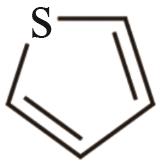 | 5.700 | 1.38×10⁻³ |
| 苯并噻吩 | 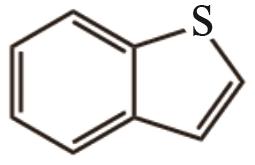 | 5.739 | 8.11×10⁻⁴ |
| 二苯并噻吩 | 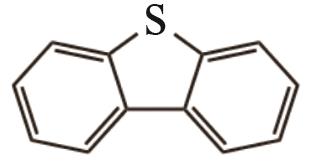 | 5.758 | 7.38×10⁻⁵ |
| 4-甲基二苯并噻吩 | 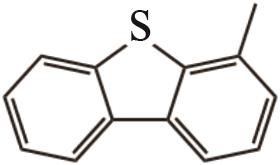 | 5.759 | 6.64×10⁻⁶ |
| 4,6-二甲基二苯并噻吩 | 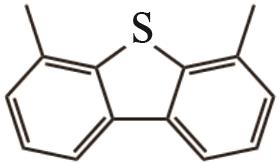 | 5.760 | 4.92×10⁻⁶ |
| 噻吩环类取代物 | 结构 | 电子云密度 | 假一级反应速率常数/L·g-1·s-1 |
|---|---|---|---|
| 噻吩 | | 5.700 | 1.38×10⁻³ |
| 苯并噻吩 | | 5.739 | 8.11×10⁻⁴ |
| 二苯并噻吩 | | 5.758 | 7.38×10⁻⁵ |
| 4-甲基二苯并噻吩 | | 5.759 | 6.64×10⁻⁶ |
| 4,6-二甲基二苯并噻吩 | | 5.760 | 4.92×10⁻⁶ |
| 催化剂 | 温度/℃ | 催化剂质量/g | 原料 | 反应速率/10-6mol·g-1·s-1 | HYD速率/DDS速率 | 转化频率/h-1 | 参考文献 |
|---|---|---|---|---|---|---|---|
| NiMo/δ-MA | 340 | 0.5 | 500mg/kg S,4,6-二甲基二苯并噻吩 | 0.72 | 3.08 | 9.5 | [ |
| NiMo/Al2O3-600 | 340 | 1 | 500mg/kg S,4,6-二甲基二苯并噻吩 | 0.05 | 0.40 | 0.01 | [ |
| NiMo@(1)Ga-A-Al2O3 | 290 | 0.15 | 质量分数1.68%二苯并噻吩 | 0.3 | 0.65 | 0.87 | [ |
| NiMo-80A20Z | 300 | 0.1 | 摩尔分数8.2%噻吩/H2 | 9.5 | — | — | [ |
| NiMo/Al2O3-A | 350 | 0.3 | 体积分数5.0%二苯并噻吩 | 3.77 | 0.26 | — | [ |
| NiMo/MA-20Ti | 320 | 1 | 质量分数1.0% 4,6-二甲基二苯并噻吩 | 0.27 | 8.96 | 3.9 | [ |
| NiMo/1-ZAT | 320 | 2 | 质量分数1.0%二苯并噻吩 | 0.38 | 0.62 | 6.12 | [ |
| NiMo/TF-35 | 360 | — | 500mg/kg S,二苯并噻吩 | 0.16 | 0.58 | 1.64 | [ |
| NiMo/HMY-6 | 290 | 1 | 质量分数0.5% 4,6-二甲基二苯并噻吩 | 0.22 | 0.58 | 3.50 | [ |
| NiMo/TD-Mg(2) | 340 | 1 | 500mg/kg S,二苯并噻吩 | 0.34 | — | 3.40 | [ |
| 500mg/kg S, 4,6-二甲基二苯并噻吩 | 0.29 | — | 2.80 | ||||
| NiMoO x /Hol-ZSM-5 | 330 | 0.05 | 500mg/kg S,二苯并噻吩 | 1.87 | 0.03 | — | [ |
| 1Ge-NiMoS/Al2O3 | 290 | 1 | 质量分数0.5% 4,6-二甲基二苯并噻吩 | 0.608 | 2.87 | 3.27 | [ |
| NiMoS x /ZSM-5-100 | 360 | — | 500mg/kg S,二苯并噻吩 | 1.41 | 0.05 | 10.69 | [ |
| 250mg/kg S,4,6-二甲基二苯并噻吩 | 0.27 | — | — | ||||
| 5Mo@NC | 320 | 0.4 | 质量分数1.0%二苯并噻吩 | 0.04 | 0.14 | 1.8 | [ |
| 催化剂 | 温度/℃ | 催化剂质量/g | 原料 | 反应速率/10-6mol·g-1·s-1 | HYD速率/DDS速率 | 转化频率/h-1 | 参考文献 |
|---|---|---|---|---|---|---|---|
| NiMo/δ-MA | 340 | 0.5 | 500mg/kg S,4,6-二甲基二苯并噻吩 | 0.72 | 3.08 | 9.5 | [ |
| NiMo/Al2O3-600 | 340 | 1 | 500mg/kg S,4,6-二甲基二苯并噻吩 | 0.05 | 0.40 | 0.01 | [ |
| NiMo@(1)Ga-A-Al2O3 | 290 | 0.15 | 质量分数1.68%二苯并噻吩 | 0.3 | 0.65 | 0.87 | [ |
| NiMo-80A20Z | 300 | 0.1 | 摩尔分数8.2%噻吩/H2 | 9.5 | — | — | [ |
| NiMo/Al2O3-A | 350 | 0.3 | 体积分数5.0%二苯并噻吩 | 3.77 | 0.26 | — | [ |
| NiMo/MA-20Ti | 320 | 1 | 质量分数1.0% 4,6-二甲基二苯并噻吩 | 0.27 | 8.96 | 3.9 | [ |
| NiMo/1-ZAT | 320 | 2 | 质量分数1.0%二苯并噻吩 | 0.38 | 0.62 | 6.12 | [ |
| NiMo/TF-35 | 360 | — | 500mg/kg S,二苯并噻吩 | 0.16 | 0.58 | 1.64 | [ |
| NiMo/HMY-6 | 290 | 1 | 质量分数0.5% 4,6-二甲基二苯并噻吩 | 0.22 | 0.58 | 3.50 | [ |
| NiMo/TD-Mg(2) | 340 | 1 | 500mg/kg S,二苯并噻吩 | 0.34 | — | 3.40 | [ |
| 500mg/kg S, 4,6-二甲基二苯并噻吩 | 0.29 | — | 2.80 | ||||
| NiMoO x /Hol-ZSM-5 | 330 | 0.05 | 500mg/kg S,二苯并噻吩 | 1.87 | 0.03 | — | [ |
| 1Ge-NiMoS/Al2O3 | 290 | 1 | 质量分数0.5% 4,6-二甲基二苯并噻吩 | 0.608 | 2.87 | 3.27 | [ |
| NiMoS x /ZSM-5-100 | 360 | — | 500mg/kg S,二苯并噻吩 | 1.41 | 0.05 | 10.69 | [ |
| 250mg/kg S,4,6-二甲基二苯并噻吩 | 0.27 | — | — | ||||
| 5Mo@NC | 320 | 0.4 | 质量分数1.0%二苯并噻吩 | 0.04 | 0.14 | 1.8 | [ |
| 催化剂 | 温度/℃ | 催化剂质量/g | 原料 | 反应速率/10-6mol·g-1·s-1 | HYD速率/DDS速率 | 转化频率/h-1 | 参考文献 |
|---|---|---|---|---|---|---|---|
| Co3S4@CoMoS | 300 | 0.03 | 500mg/kg S,二苯并噻吩 | 5.0 | 0.26 | 15.8 | [ |
| CoMo | 260 | 3 mL | 质量分数3.0%二苯并噻吩 | 0.14 | 0.41 | — | [ |
| NiMo | 260 | 3 mL | 质量分数3.0%二苯并噻吩 | 0.13 | 0.75 | — | |
| MoNi(Co)S | 300 | 0.1 | 噻吩/四氢萘/正己烷体积比1/9/10 | 转化率约80% | — | — | [ |
| mwnt-MoS2/Ni | 320 | 0.2 | 500mg/kg S,二苯并噻吩 | 0.24 | 1.3 | — | [ |
| hnt-MoS2/Ni | 320 | 0.2 | 500mg/kg S,二苯并噻吩 | 1.05 | 1.8 | — | |
| H-NiMo-150-400 | 320 | 0.45 | 质量分数1.0%二苯并噻吩 | 转化率约94.7% | 0.34 | — | [ |
| NiYMoS400 | 320 | 0.18 | 500mg/kg S,二苯并噻吩 | 0.42 | — | — | [ |
| NiS2-MoS2-0.2 | 290~350 | 0.3 | 质量分数0.32%噻吩 | 0.68 | — | 6.4 | [ |
| 质量分数0.2% 4,6-二甲基二苯并噻吩 | 0.54 | 0.8 | 4.8 | ||||
| Co-Mo Sub-microtube | 300 | 0.2 | 500mg/kg S,二苯并噻吩 | 4.0 | — | — | [ |
| Ni9.5Zn0.5Mo10 | 260 | 0.3 | 质量分数1.0%二苯并噻吩 | 0.13 | 1.8 | — | [ |
| hp-NiMoS | 320 | 0.18 | 500mg/kg S,二苯并噻吩 | 0.99 | 7.5 | — | [ |
| lp-NiMoS | 320 | 0.18 | 500mg/kg S,二苯并噻吩 | 0.42 | 2.7 | — | |
| CoMoS-1/1 | 340 | 0.015 | 质量分数2.0%二苯并噻吩 | 4.1 | 1.15 | 118.8 | [ |
| Co4Mo12 sulfide | 300 | — | 质量分数2.0%二苯并噻吩 | 0.72 | — | 5.3 | [ |
| MoS2-OA | 320 | 0.05 | 330mg/kg S,二苯并噻吩 | 0.55 | 3.26 | — | [ |
| Ni1Mo1-200 | 240 | 2mL | 质量分数1.0%二苯并噻吩 | 58 | — | 792 | [ |
| 3DOM CoMo | 300 | 1 | 质量分数0.5%噻吩 | 转化率约94% | — | — | [ |
| 催化剂 | 温度/℃ | 催化剂质量/g | 原料 | 反应速率/10-6mol·g-1·s-1 | HYD速率/DDS速率 | 转化频率/h-1 | 参考文献 |
|---|---|---|---|---|---|---|---|
| Co3S4@CoMoS | 300 | 0.03 | 500mg/kg S,二苯并噻吩 | 5.0 | 0.26 | 15.8 | [ |
| CoMo | 260 | 3 mL | 质量分数3.0%二苯并噻吩 | 0.14 | 0.41 | — | [ |
| NiMo | 260 | 3 mL | 质量分数3.0%二苯并噻吩 | 0.13 | 0.75 | — | |
| MoNi(Co)S | 300 | 0.1 | 噻吩/四氢萘/正己烷体积比1/9/10 | 转化率约80% | — | — | [ |
| mwnt-MoS2/Ni | 320 | 0.2 | 500mg/kg S,二苯并噻吩 | 0.24 | 1.3 | — | [ |
| hnt-MoS2/Ni | 320 | 0.2 | 500mg/kg S,二苯并噻吩 | 1.05 | 1.8 | — | |
| H-NiMo-150-400 | 320 | 0.45 | 质量分数1.0%二苯并噻吩 | 转化率约94.7% | 0.34 | — | [ |
| NiYMoS400 | 320 | 0.18 | 500mg/kg S,二苯并噻吩 | 0.42 | — | — | [ |
| NiS2-MoS2-0.2 | 290~350 | 0.3 | 质量分数0.32%噻吩 | 0.68 | — | 6.4 | [ |
| 质量分数0.2% 4,6-二甲基二苯并噻吩 | 0.54 | 0.8 | 4.8 | ||||
| Co-Mo Sub-microtube | 300 | 0.2 | 500mg/kg S,二苯并噻吩 | 4.0 | — | — | [ |
| Ni9.5Zn0.5Mo10 | 260 | 0.3 | 质量分数1.0%二苯并噻吩 | 0.13 | 1.8 | — | [ |
| hp-NiMoS | 320 | 0.18 | 500mg/kg S,二苯并噻吩 | 0.99 | 7.5 | — | [ |
| lp-NiMoS | 320 | 0.18 | 500mg/kg S,二苯并噻吩 | 0.42 | 2.7 | — | |
| CoMoS-1/1 | 340 | 0.015 | 质量分数2.0%二苯并噻吩 | 4.1 | 1.15 | 118.8 | [ |
| Co4Mo12 sulfide | 300 | — | 质量分数2.0%二苯并噻吩 | 0.72 | — | 5.3 | [ |
| MoS2-OA | 320 | 0.05 | 330mg/kg S,二苯并噻吩 | 0.55 | 3.26 | — | [ |
| Ni1Mo1-200 | 240 | 2mL | 质量分数1.0%二苯并噻吩 | 58 | — | 792 | [ |
| 3DOM CoMo | 300 | 1 | 质量分数0.5%噻吩 | 转化率约94% | — | — | [ |
| [1] | 张俊逸, 王伟, 陈光. 国Ⅵ汽油质量升级技术分析及应对措施[J]. 当代化工, 2021, 50(11): 2656-2661. |
| ZHANG Junyi, WANG Wei, CHEN Guang. Technical analysis and countermeasures of gasoline quality upgrading to national Ⅵ standard[J]. Contemporary Chemical Industry, 2021, 50(11): 2656-2661. | |
| [2] | 李硕, 刘熠斌, 冯翔, 等. MoS2基催化剂加氢脱硫反应活性相和作用机理研究进展[J]. 化工进展, 2019, 38(2): 867-875. |
| LI Shuo, LIU Yibin, FENG Xiang, et al. Research progress in active phase structure and reaction mechanism of MoS2-based catalysts for hydrodesulfurization[J]. Chemical Industry and Engineering Progress, 2019, 38(2): 867-875. | |
| [3] | 陈晓贞, 刘丽, 杨成敏, 等. 氧化铝基加氢脱硫催化剂研究进展[J]. 化工进展, 2024, 43(2): 948-961. |
| CHEN Xiaozhen, LIU Li, YANG Chengmin, et al. Research progress of alumina-supported hydrodesulfurization catalyst[J]. Chemical Industry and Engineering Progress, 2024, 43(2): 948-961. | |
| [4] | SALAZAR Norberto, RANGARAJAN Srinivas, Jonathan RODRÍGUEZ-FERNÁNDEZ, et al. Site-dependent reactivity of MoS2 nanoparticles in hydrodesulfurization of thiophene[J]. Nature Communications, 2020, 11(1): 4369. |
| [5] | HE Wenhui, XIN Mudi, XIANG Yanjuan, et al. In situ tracking of the impact of atomic-scale fragment structures on MoS2 nanocrystals for high-stability industrial NiMo/γ-Al2O3 hydrodesulfurization catalysts[J]. Chemical Engineering Journal, 2024, 498: 155760. |
| [6] | PRABHU M K, LOUWEN J N, VOGT E C, et al. Hydrodesulfurization of methanethiol over Co-promoted MoS2 model catalysts[J]. Nature Communications, 2024, 15(1): 7170. |
| [7] | 刘迪, 张景成. 刘晨光. 非负载型加氢精制催化剂的制备及工业应用研究进展[J]. 化工进展, 2010, 29(4): 643-648. |
| LIU Di, ZHANG Jingcheng, LIU Chenguang. Progress in preparation and industrial application of unsupported hydrotreating catalysts[J]. Chemical Industry and Engineering Progress, 2010, 29(4): 643-648. | |
| [8] | 宋财城, 陈晓贞, 刘丽, 等. 碳基载体负载加氢脱硫催化剂的研究进展[J]. 化工进展, 2024, 43(S1): 305-314. |
| SONG Caicheng, CHEN Xiaozhen, LIU Li, et al. Research progress of carbon-based carrier supported hydrodesulfurization catalysts[J]. Chemical Industry and Engineering Progress, 2024, 43(S1): 305-314. | |
| [9] | NAG N K, SAPRE A V, BRODERICK D H, et al. Hydrodesulfurization of polycyclic aromatics catalyzed by sulfided CoO-MoO3 γ-Al2O3: The relative reactivities[J]. Journal of Catalysis, 1979, 57(3): 509-512. |
| [10] | MOSES Poul Georg, HINNEMANN Berit, Henrik TOPSØE, et al. The effect of Co-promotion on MoS2 catalysts for hydrodesulfurization of thiophene: A density functional study[J]. Journal of Catalysis, 2009, 268(2): 201-208. |
| [11] | CHEN W, LONG X, LI M, et al. Influence of active phase structure of CoMo/Al2O3 catalyst on the selectivity of hydrodesulfurization and hydrodearomatization[J]. Catalysis Today, 2017, 292: 97-109. |
| [12] | SALMERON M, SOMORJAI G A, WOLD A, et al. The adsorption and binding of thiophene, butene and H2S on the basal plane of MoS2 single crystals[J]. Chemical Physics Letters, 1982, 90(2): 105-107. |
| [13] | WALTON A S, LAURITSEN J V, TOPSØE H, et al. MoS2 nanoparticle morphologies in hydrodesulfurization catalysis studied by scanning tunneling microscopy[J]. Journal of Catalysis, 2013, 308: 306-318. |
| [14] | SCHWEIGER Hannes, RAYBAUD Pascal, KRESSE Georg, et al. Shape and edge sites modifications of MoS2 catalytic nanoparticles induced by working conditions: A theoretical study[J]. Journal of Catalysis, 2002, 207(1): 76-87. |
| [15] | BYSKOV Line S, NØRSKOV Jens K, CLAUSEN Bjerne S, et al. DFT calculations of unpromoted and promoted MoS2-based hydrodesulfurization catalysts[J]. Journal of Catalysis, 1999, 187(1): 109-122. |
| [16] | TUXEN Anders, KIBSGAARD Jakob, Henrik GØBEL, et al. Size threshold in the dibenzothiophene adsorption on MoS2 nanoclusters[J]. ACS Nano, 2010, 4(8): 4677-4682. |
| [17] | WANG Enlai, YANG Fuhui, SONG Mingyu, et al. Recent advances in the unsupported catalysts for the hydrodesulfurization of fuel[J]. Fuel Processing Technology, 2022, 235: 107386. |
| [18] | DAAGE M, CHIANELLI R R. Structure-function relations in molybdenum sulfide catalysts: The “rim-edge” model[J]. Journal of Catalysis, 1994, 149(2): 414-427. |
| [19] | PRINS R. Hydrogen spillover. Facts and fiction[J]. Chemical Reviews, 2012, 112(5): 2714-2738. |
| [20] | ESCALONA N, GARCÍA R, LAGOS G, et al. Effect of the hydrogen spillover on the selectivity of dibenzothiophene hydrodesulfurization over CoS x /γ-Al2O3, NiS x /γ-Al2O3 and MoS2/γ-Al2O3 catalysts[J]. Catalysis Communications, 2006, 7(12): 1053-1056. |
| [21] | BAEZA P, VILLARROEL M, ÁVILA P, et al. Spillover hydrogen mobility during Co-Mo catalyzed HDS in industrial-like conditions[J]. Applied Catalysis A: General, 2006, 304: 109-115. |
| [22] | GRØNBORG Signe S, SALAZAR Norberto, BRUIX Albert, et al. Visualizing hydrogen-induced reshaping and edge activation in MoS2 and Co-promoted MoS2 catalyst clusters[J]. Nature Communications, 2018, 9(1): 2211. |
| [23] | HANSEN Lars P, RAMASSE Quentin M, KISIELOWSKI Christian, et al. Atomic-scale edge structures on industrial-style MoS2 nanocatalysts[J]. Angewandte Chemie International Edition, 2011, 50(43): 10153-10156. |
| [24] | BESENBACHER F, BRORSON M, CLAUSEN B S, et al. Recent STM, DFT and HAADF-STEM studies of sulfide-based hydrotreating catalysts: Insight into mechanistic, structural and particle size effects[J]. Catalysis Today, 2008, 130(1): 86-96. |
| [25] | LAURITSEN Jeppe V, KIBSGAARD Jakob, OLESEN Georg H, et al. Location and coordination of promoter atoms in Co- and Ni-promoted MoS2-based hydrotreating catalysts[J]. Journal of Catalysis, 2007, 249(2): 220-233. |
| [26] | DELMON BERNARD, FROMENT GILBERT F. Remote control of catalytic sites by spillover species: A chemical reaction engineering approach[J]. Catalysis Reviews, 1996, 38(1): 69-100. |
| [27] | CHIANELLI R R, BERHAULT G. Symmetrical synergism and the role of carbon in transition metal sulfide catalytic materials[J]. Catalysis Today, 1999, 53(3): 357-366. |
| [28] | Henrik TOPSØE, CLAUSEN Bjerne S, CANDIA Roberto, et al. In situ Mössbauer emission spectroscopy studies of unsupported and supported sulfided Co-Mo hydrodesulfurization catalysts: Evidence for and nature of a Co-Mo-S phase[J]. Journal of Catalysis, 1981, 68(2): 433-452. |
| [29] | OJEDA J, ESCALONA N, BAEZA P, et al. Synergy between Mo/SiO2 and Co/SiO2 beds in HDS: A remote control effect?[J]. Chemical Communications, 2003(13): 1608-1609. |
| [30] | LAURITSEN J V, HELVEG S, LÆGSGAARD E, et al. Atomic-scale structure of Co-Mo-S nanoclusters in hydrotreating catalysts[J]. Journal of Catalysis, 2001, 197(1): 1-5. |
| [31] | MOSES Poul Georg, HINNEMANN Berit, Henrik TOPSØE, et al. The hydrogenation and direct desulfurization reaction pathway in thiophene hydrodesulfurization over MoS2 catalysts at realistic conditions: A density functional study[J]. Journal of Catalysis, 2007, 248(2): 188-203. |
| [32] | TUXEN Anders K, FÜCHTBAUER Henrik G, TEMEL Burcin, et al. Atomic-scale insight into adsorption of sterically hindered dibenzothiophenes on MoS2 and Co-Mo-S hydrotreating catalysts[J]. Journal of Catalysis, 2012, 295: 146-154. |
| [33] | ZHU Yuanyuan, RAMASSE Quentin M, BRORSON Michael, et al. Visualizing the stoichiometry of industrial-style Co-Mo-S catalysts with single-atom sensitivity[J]. Angewandte Chemie International Edition, 2014, 53(40): 10723-10727. |
| [34] | SUN Mingyong, NELSON Alan E, ADJAYE John. Ab initio DFT study of hydrogen dissociation on MoS2, NiMoS, and CoMoS: Mechanism, kinetics, and vibrational frequencies[J]. Journal of Catalysis, 2005, 233(2): 411-421. |
| [35] | RANGARAJAN Srinivas, MAVRIKAKIS Manos. On the preferred active sites of promoted MoS2 for hydrodesulfurization with minimal organonitrogen inhibition[J]. ACS Catalysis, 2017, 7(1): 501-509. |
| [36] | HUMBERT S, IZZET G, RAYBAUD P. Competitive adsorption of nitrogen and sulphur compounds on a multisite model of NiMoS catalyst: A theoretical study[J]. Journal of Catalysis, 2016, 333: 78-93. |
| [37] | KIBSGAARD Jakob, TUXEN Anders, KNUDSEN Kim G, et al. Comparative atomic-scale analysis of promotional effects by late 3D-transition metals in MoS2 hydrotreating catalysts[J]. Journal of Catalysis, 2010, 272(2): 195-203. |
| [38] | FERNÁNDEZ Eva M, MOSES Poul G, TOFTELUND Anja, et al. Scaling relationships for adsorption energies on transition metal oxide, sulfide, and nitride surfaces[J]. Angewandte Chemie International Edition, 2008, 47(25): 4683-4686. |
| [39] | Henrik TTOPSØE. The role of Co-Mo-S type structures in hydrotreating catalysts[J]. Applied Catalysis A: General, 2007, 322: 3-8. |
| [40] | Henrik TOPSØE, CLAUSEN Bjerne S. Active sites and support effects in hydrodesulfurization catalysts[J]. Applied Catalysis, 1986, 25(1/2): 273-293. |
| [41] | Henrik TOPSØE, HINNEMANN Berit, NØRSKOV Jens K, et al. The role of reaction pathways and support interactions in the development of high activity hydrotreating catalysts[J]. Catalysis Today, 2005, 107: 12-22. |
| [42] | LIU Zhiwei, HAN Wei, HU Dawei, et al. Effects of Ni-Al2O3 interaction on NiMo/Al2O3 hydrodesulfurization catalysts[J]. Journal of Catalysis, 2020, 387: 62-72. |
| [43] | CAO Jing, XIA Jing, ZHANG Yicen, et al. Influence of the alumina crystal phase on the performance of CoMo/Al2O3 catalysts for the selective hydrodesulfurization of fluid catalytic cracking naphtha[J]. Fuel, 2021, 289: 119843. |
| [44] | ZEPEDA T A, PAWELEC B, OBESO-ESTRELLA R, et al. Competitive HDS and HDN reactions over NiMoS/HMS-Al catalysts: Diminishing of the inhibition of HDS reaction by support modification with P[J]. Applied Catalysis B: Environmental, 2016, 180: 569-579. |
| [45] | ONFROY Thomas, LI Wencui, Ferdi SCHÜTH, et al. Surface chemistry of carbon-templated mesoporous aluminas[J]. Physical Chemistry Chemical Physics, 2009, 11(19): 3671. |
| [46] | WANG Xilong, ZHAO Zhen, ZHENG Peng, et al. Synthesis of NiMo catalysts supported on mesoporous Al2O3 with different crystal forms and superior catalytic performance for the hydrodesulfurization of dibenzothiophene and 4,6-dimethyldibenzothiophene[J]. Journal of Catalysis, 2016, 344: 680-691. |
| [47] | WANG Yan, HUA Mingqing, ZHOU Shuhui, et al. Regulating the coordination environment of surface alumina on NiMo/Al2O3 to enhance ultra-deep hydrodesulfurization of diesel[J]. Applied Catalysis B: Environment and Energy, 2024, 357: 124265. |
| [48] | ARORA Shalini, RASHMI, SIVAKUMAR Sri. Suppression of inactive sites in NiMo@amorphous alumina catalysts for hydrodesulfurization reaction: Effect of Ga doping[J]. Journal of Catalysis, 2024, 434: 115501. |
| [49] | LÓPEZ-BENÍTEZ A, BERHAULT G, GUEVARA-LARA A. NiMo catalysts supported on Mn-Al2O3 for dibenzothiophene hydrodesulfurization application[J]. Applied Catalysis B: Environmental, 2017, 213: 28-41. |
| [50] | NADEINA K A, KAZAKOV M O, DANILOVA I G, et al. The influence of B and P in the impregnating solution on the properties of NiMo/γ-δ-Al2O3 catalysts for VGO hydrotreating[J]. Catalysis Today, 2019, 329: 2-12. |
| [51] | HAJJAR Zeinab, KAZEMEINI Mohammad, RASHIDI Alimorad, et al. Hydrodesulfurization catalysts based on carbon nanostructures: A review[J]. Fullerenes, Nanotubes and Carbon Nanostructures, 2018, 26(9): 557-569. |
| [52] | CUI Tianyou, RAJENDRAN Antony, FAN Hongxia, et al. Review on hydrodesulfurization over zeolite-based catalysts[J]. Industrial & Engineering Chemistry Research, 2021, 60(8): 3295-3323. |
| [53] | BASTON Eduardo Prado, FRANÇA Alexandre Boscaro, DA SILVA NETO Alano Vieira, et al. Incorporation of the precursors of Mo and Ni oxides directly into the reaction mixture of sol-gel prepared γ-Al2O3-ZrO2 supports—Evaluation of the sulfided catalysts in the thiophene hydrodesulfurization[J]. Catalysis Today, 2015, 246: 184-190. |
| [54] | ROMERO TOLEDO R, Bravo SÁNCHEZ M, Rangel PORRAS G, et al. Effect of Mg as impurity on the structure of mesoporous γ-Al2O3: Efficiency as catalytic support in HDS of DBT[J]. International Journal of Chemical Reactor Engineering, 2018, 16(11): 20170141. |
| [55] | ZHOU Wenwu, YANG Li, LIU Lang, et al. Synthesis of novel NiMo catalysts supported on highly ordered TiO2-Al2O3 composites and their superior catalytic performance for 4,6-dimethyldibenzothiophene hydrodesulfurization[J]. Applied Catalysis B: Environmental, 2020, 268: 118428. |
| [56] | FAN Fei, HAN Shiyu, LI Ying, et al. Regulating the microenvironments and the D-band center of hierarchical NiMoS/TS-1 catalyst by ZrO2 to enhance the hydrodesulfurization performance of dibenzothiophene[J]. Separation and Purification Technology, 2025, 354: 128702. |
| [57] | LI Dongze, XIAO Chengkun, ZOU Yutong, et al. Novel titanium silicon micro-mesoporous composites via nano-assembly strategy for efficient hydrodesulfurization of dibenzothiophene[J]. Chemical Engineering Journal, 2024, 494: 152938. |
| [58] | ZHOU Wenwu, WEI Qiang, ZHOU Yasong, et al. Hydrodesulfurization of 4,6-dimethyldibenzothiophene over NiMo sulfide catalysts supported on meso-microporous Y zeolite with different mesopore sizes[J]. Applied Catalysis B: Environmental, 2018, 238: 212-224. |
| [59] | ZOU Yutong, XIAO Chengkun, YANG Xu, et al. Regulation of metallic active phase on dendritic micro-mesoporous composite catalysts for efficient hydrodesulfurization of dibenzothiophenes[J]. Chemical Engineering Journal, 2025, 507: 160479. |
| [60] | KANG Xin, WANG Dongxu, LIU Jiancong, et al. Ni-promoted MoS2 in hollow zeolite nanoreactors: Enhanced catalytic activity and stability for deep hydrodesulfurization[J]. Journal of Materials Chemistry A, 2022, 10(13): 7263-7270. |
| [61] | FAN Fei, TIAN Chang, HE Yanqin, et al. Ge regulated microregion electron structures of Ge-NiMoS active phase to boost 4,6-dimethyldibenzothiophene hydrodesulfurization[J]. Applied Catalysis B: Environment and Energy, 2025, 367: 125119. |
| [62] | KANG Xin, LIU Jiancong, TIAN Chungui, et al. Surface curvature-confined strategy to ultrasmall nickel-molybdenum sulfide nanoflakes for highly efficient deep hydrodesulfurization[J]. Nano Research, 2020, 13(3): 882-890. |
| [63] | LIU Bin, Hongyang LYU, TIAN Fengyu, et al. Fabrication of a single-atom Mo catalyst for significantly enhanced hydrodesulfurization activity of dibenzothiophene[J]. Chemical Engineering Journal, 2025, 505: 159747. |
| [64] | SHAFIQ Iqrash, SHAFIQUE Sumeer, AKHTER Parveen, et al. Recent developments in alumina supported hydrodesulfurization catalysts for the production of sulfur-free refinery products: A technical review[J]. Catalysis Reviews, 2022, 64(1): 1-86. |
| [65] | HOU Ranran, YANG Qinghe, ZENG Shuangqin, et al. Optimizing the incorporation modes of TiO2 in TiO2-Al2O3 composites for enhancing hydrodesulfurization performance of corresponding NiMoP-supported catalysts[J]. Catalysts, 2024, 14(5): 287. |
| [66] | TREJO F, RANA Mohan S, ANCHEYTA J. CoMo/MgO-Al2O3 supported catalysts: An alternative approach to prepare HDS catalysts[J]. Catalysis Today, 2008, 130(2/3/4): 327-336. |
| [67] | MOGICA-BETANCOURT J C, LÓPEZ-BENÍTEZ A, MONTIEL-LÓPEZ J R, et al. Interaction effects of nickel polyoxotungstate with the Al2O3-MgO support for application in dibenzothiophene hydrodesulfurization[J]. Journal of Catalysis, 2014, 313: 9-23. |
| [68] | Leonardo DÍAZ-GARCÍA, Víctor SANTES, Tomás VIVEROS-GARCÍA, et al. Electronic binding of sulfur sites into Al2O3-ZrO2 supports for NiMoS configuration and their application for hydrodesulfurization[J]. Catalysis Today, 2017, 282: 230-239. |
| [69] | ZHANG Dengqian, DUAN Aijun, ZHAO Zhen, et al. Preparation, characterization and hydrotreating performances of ZrO2-Al2O3-supported NiMo catalysts[J]. Catalysis Today, 2010, 149(1/2): 62-68. |
| [70] | JABBARNEZHAD Parisa, HAGHIGHI Mohammad, TAGHAVINEZHAD Parisa. Sonochemical synthesis of NiMo/Al2O3-ZrO2 nanocatalyst: Effect of sonication and zirconia loading on catalytic properties and performance in hydrodesulfurization reaction[J]. Fuel Processing Technology, 2014, 126: 392-401. |
| [71] | CHAVEZ-ESQUIVEL G, GARCÍA-MARTÍNEZ J C, DE LOS REYES J A, et al. The influence of Al2O3 content on Al2O3-ZrO2 composite-textural structural and morphological studies[J]. Materials Research Express, 2019, 6(10): 105201. |
| [72] | Esneyder PUELLO-POLO, Noemi-Raquel CHECCA-HUAMAN, TOLOZA Carlos A T, et al. Dibenzothiophene hydrodesulfurization performance over hierarchically porous NiMoS(Si,Zr)/Al2O3 catalysts[J]. Industrial & Engineering Chemistry Research, 2024, 63(19): 8553-8565. |
| [73] | DÍAZ DE LEÓN J N. Binary γ-Al2O3-α-Ga2O3 as supports of NiW catalysts for hydrocarbon sulfur removal[J]. Applied Catalysis B: Environmental, 2016, 181: 524-533. |
| [74] | SILVA-RODRIGO R, CASTILLO JIMENEZ H, GUEVARA-LARA A, et al. Synthesis, characterization and catalytic properties of NiMoP/MCM41-γ-Al2O3 catalysts for DBT hydrodesulfurization[J]. Catalysis Today, 2015, 250: 2-11. |
| [75] | MORRIS Stacy M, HORTON Joe A, JARONIEC Mietek. Soft-templating synthesis and properties of mesoporous alumina-titania[J]. Microporous and Mesoporous Materials, 2010, 128(1/2/3): 180-186. |
| [76] | Víctor SANTES, HERBERT Javier, CORTEZ Maria Teresa, et al. Catalytic hydrotreating of heavy gasoil FCC feed on alumina-titania-supported NiMo catalysts[J]. Applied Catalysis A: General, 2005, 281(1/2): 121-128. |
| [77] | TANG Tiandi, YIN Chengyang, WANG Lifeng, et al. Good sulfur tolerance of a mesoporous beta zeolite-supported palladium catalyst in the deep hydrogenation of aromatics[J]. Journal of Catalysis, 2008, 257(1): 125-133. |
| [78] | AN Guoqing, WANG Chang’an, GAO Hongyi, et al. A novel MOFs-induced strategy for preparing anatase-free hierarchical TS-1 zeolite: Synthesis routes, growth mechanisms and enhanced catalytic performance[J]. Journal of Colloid and Interface Science, 2023, 633: 291-302. |
| [79] | Dora SOLÍS, AGUDO Antonio López, Jorge RAMÍREZ, et al. Hydrodesulfurization of hindered dibenzothiophenes on bifunctional NiMo catalysts supported on zeolite-alumina composites[J]. Catalysis Today, 2006, 116(4): 469-477. |
| [80] | WELTERS W J J, DE BEER V H J, VAN SANTEN R A. Influence of zeolite acidity on thiophene hydrodesulfurization activity[J]. Applied Catalysis A: General, 1994, 119(2): 253-269. |
| [81] | ZHANG Dengqian, DUAN Aijun, ZHAO Zhen, et al. Synthesis, characterization, and catalytic performance of NiMo catalysts supported on hierarchically porous beta-KIT-6 material in the hydrodesulfurization of dibenzothiophene[J]. Journal of Catalysis, 2010, 274(2): 273-286. |
| [82] | ZHOU Wenwu, ZHANG Qing, ZHOU Yasong, et al. Effects of Ga- and P-modified USY-based NiMoS catalysts on ultra-deep hydrodesulfurization for FCC diesels[J]. Catalysis Today, 2018, 305: 171-181. |
| [83] | XU Wenjing, ZHANG Tianjun, BAI Risheng, et al. A one-step rapid synthesis of TS-1 zeolites with highly catalytically active mononuclear TiO6 species[J]. Journal of Materials Chemistry A, 2020, 8(19): 9677-9683. |
| [84] | VAN HAANDEL Lennart, GEUS John W, WEBER Thomas. Direct synthesis of TiO2-supported MoS2 nanoparticles by reductive coprecipitation[J]. ChemCatChem, 2016, 8(7): 1367-1372. |
| [85] | WANG Baohe, GUO Yanke, ZHU Jing, et al. A review on titanosilicate-1 (TS-1) catalysts: Research progress of regulating titanium species[J]. Coordination Chemistry Reviews, 2023, 476: 214931. |
| [86] | VALTCHEV Valentin, MAJANO Gerardo, MINTOVA Svetlana, et al. Tailored crystalline microporous materials by post-synthesis modification[J]. Chemical Society Reviews, 2013, 42(1): 263-290. |
| [87] | ZHENG Meng, WEI Jun, CHEN Jingye, et al. Brønsted acid properties of hydrodesulfuriaztion catalysts for minimizing the loss of octane number: A DFT and microkinetic study[J]. Microporous and Mesoporous Materials, 2022, 331: 111671. |
| [88] | WANG Yanli, YANG Hong, ZUO Yi, et al. New penta- and hexa-coordinated titanium sites in titanium silicalite-1 catalyst for propylene epoxidation[J]. Applied Catalysis B: Environmental, 2023, 325: 122396. |
| [89] | SZCZODROWSKI Karol, Bénédicte PRÉLOT, LANTENOIS Sébastien, et al. Effect of heteroatom doping on surface acidity and hydrophilicity of Al, Ti, Zr-doped mesoporous SBA-15[J]. Microporous and Mesoporous Materials, 2009, 124(1/2/3): 84-93. |
| [90] | CHEN Shih-Yuan, JANG Ling-Yun, CHENG Soofin. Synthesis of Zr-incorporated SBA-15 mesoporous materials in a self-generated acidic environment[J]. Chemistry of Materials, 2004, 16(21): 4174-4180. |
| [91] | ISMAGILOV Zinfer R, YASHNIK Svetlana A, STARTSEV Anatolii N, et al. Deep desulphurization of diesel fuels on bifunctional monolithic nanostructured Pt-zeolite catalysts[J]. Catalysis Today, 2009, 144(3/4): 235-250. |
| [92] | TANG Tiandi, ZHANG Lei, FU Wenqian, et al. Design and synthesis of metal sulfide catalysts supported on zeolite nanofiber bundles with unprecedented hydrodesulfurization activities[J]. Journal of the American Chemical Society, 2013, 135(31): 11437-11440. |
| [93] | YASHNIK Svetlana A, URZHUNTSEV Gleb A, STADNICHENKO Andrei I, et al. Effect of Pd-precursor and support acid properties on the Pd electronic state and the hydrodesulfurization activity of Pd-zeolite catalysts[J]. Catalysis Today, 2019, 323: 257-270. |
| [94] | ZHANG Lei, FU Wenqian, YU Quanyong, et al. Ni2P clusters on zeolite nanosheet assemblies with high activity and good stability in the hydrodesulfurization of 4,6-dimethyldibenzothiophene[J]. Journal of Catalysis, 2016, 338: 210-221. |
| [95] | BAO Wenjing, FENG Chao, MA Shuyan, et al. Controlled construction of Co3S4@CoMoS yolk-shell sphere for efficient hydrodesulfurization promoted by hydrogen spillover effect[J]. Chinese Journal of Catalysis, 2024, 57: 154-170. |
| [96] | WEINDL Roland, KHARE Rachit, KOVARIK Libor, et al. Zeolite-stabilized di- and tetranuclear molybdenum sulfide clusters form stable catalytic hydrogenation sites[J]. Angewandte Chemie International Edition, 2021, 60(17): 9301-9305. |
| [97] | TANG Cheng, JIAO Yan, SHI Bingyang, et al. Coordination tunes selectivity: Two-electron oxygen reduction on high-loading molybdenum single-atom catalysts[J]. Angewandte Chemie International Edition, 2020, 59(23): 9171-9176. |
| [98] | WANG Changlai, WANG Dongdong, LIU Shuai, et al. Engineering the coordination environment enables molybdenum single-atom catalyst for efficient oxygen reduction reaction[J]. Journal of Catalysis, 2020, 389: 150-156. |
| [99] | SUN Guangxun, LIU Dongyuan, LI Min, et al. Atomic coordination structural dynamic evolution of single-atom Mo catalyst for promoting H2 activation in slurry phase hydrocracking[J]. Science Bulletin, 2023, 68(5): 503-515. |
| [100] | RYABOSHAPKA Daria, PICCOLO Laurent, AOUINE Mimoun, et al. Ultradispersed (Co)Mo catalysts with high hydrodesulfurization activity[J]. Applied Catalysis B: Environmental, 2022, 302: 120831. |
| [101] | SUN Guangxun, LIU Dongyuan, SHI Hongfu, et al. Oxygen-vacancy-induced built-in electric field across MoCo dual-atomic site catalyst for promoting hydrogen spillover in hydrocracking and hydrodesulfurization[J]. ACS Catalysis, 2024, 14(5): 3208-3217. |
| [102] | LIU Chenguang, LIU Huan, YIN Changlong, et al. Preparation, characterization, and hydrodesulfurization properties of binary transition-metal sulfide catalysts[J]. Fuel, 2015, 154: 88-94. |
| [103] | GUO Kun, DING Yi, YU Zhixin. One-step synthesis of ultrafine MoNiS and MoCoS monolayers as high-performance catalysts for hydrodesulfurization and hydrodenitrogenation[J]. Applied Catalysis B: Environmental, 2018, 239: 433-440. |
| [104] | CHOWDARI Ramesh Kumar, DÍAZ DE LEÓN Jorge Noé, Sergio FUENTES-MOYADO. Template-free, facile synthesis of nickel promoted multi-walled MoS2 & nano-bricks containing hierarchical MoS2 nanotubes from the bulk NiMo oxide[J]. Applied Catalysis B: Environmental, 2021, 298: 120617. |
| [105] | YANG Chuangchuang, HU Anpeng, DAI Qiaoling, et al. Study on the performance of Ni-MoS2 catalysts with different MoS2 structures for dibenzothiophene hydrodesulfurization[J]. ACS Omega, 2023, 8(44): 41182-41193. |
| [106] | CHOWDARI Ramesh Kumar, DÍAZ DE LEÓN J Noé, Sergio FUENTES-MOYADO. Single step and template-free synthesis of dandelion flower-like core-shell architectures of metal oxide microspheres: Influence of sulfidation on particle morphology & hydrodesulfurization performance[J]. Applied Catalysis B: Environmental, 2020, 277: 119213. |
| [107] | ZHANG Hao, ZHANG Qing, QIAN Guangren, et al. In situ synthesis of mesoporous NiS2-MoS2 sphere-flower hybrid for hydrodesulfurization of thiophene and 4,6-dimethyl-dibenzothiophene[J]. Journal of Catalysis, 2024, 429: 115255. |
| [108] | LI Guangci, YUE Li, FAN Ruikun, et al. Synthesis of a Co-Mo sulfide catalyst with a hollow structure for highly efficient hydrodesulfurization of dibenzothiophene[J]. Catalysis Science & Technology, 2017, 7(23): 5505-5509. |
| [109] | LIU Huan, LIU Chenguang, YIN Changlong, et al. Preparation of highly active unsupported nickel-zinc-molybdenum catalysts for the hydrodesulfurization of dibenzothiophene[J]. Applied Catalysis B: Environmental, 2015, 174: 264-276. |
| [110] | CHOWDARI Ramesh Kumar, DÍAZ DE LEÓN J Noé, Sergio FUENTES-MOYADO. Effect of sulfidation conditions on the unsupported flower-like bimetallic oxide microspheres for the hydrodesulfurization of dibenzothiophene[J]. Catalysis Today, 2022, 394: 13-24. |
| [111] | LI Guangci, LI Yanpeng, LIN Guannan, et al. Synthesis of unsupported Co-Mo hydrodesulfurization catalysts with ethanol-water mixed solvent: Effects of the ethanol/water ratio on active phase composition, morphology and activity[J]. Applied Catalysis A: General, 2020, 602: 117663. |
| [112] | LIANG Jilei, WU Mengmeng, ZHANG Zhihai, et al. Constructing a superior Co-Mo HDS catalyst from a crystalline precursor separated from the impregnating solution[J]. Catalysis Science & Technology, 2022, 12(7): 2278-2288. |
| [113] | YAN Tianlan, JIA Yingshuai, HOU Kaige, et al. Highly efficient hydrodesulfurization driven by an in situ reconstruction of ammonium/amine intercalated MoS2 catalysts[J]. iScience, 2024, 27(6): 109824. |
| [114] | SUN Kun, GUO Hailing, FENG Chao, et al. One-pot solvothermal preparation of the porous NiS2//MoS2 composite catalyst with enhanced low-temperature hydrodesulfurization activity[J]. Journal of Colloid and Interface Science, 2024, 659: 650-664. |
| [115] | WANG Guangjian, CHEN Guoliang, XIE Wenpeng, et al. Three-dimensionally ordered macroporous bulk catalysts with enhanced catalytic performance for thiophene hydrodesulfurization[J]. Fuel Processing Technology, 2020, 199: 106268. |
| [116] | GOCHI Y, ORNELAS C, PARAGUAY E, et al. Effect of sulfidation on Mo-W-Ni trimetallic catalysts in the HDS of DBT[J]. Catalysis Today, 2005, 107-08: 531-536. |
| [117] | AFANASIEV Pavel. The influence of reducing and sulfiding conditions on the properties of unsupported MoS2-based catalysts[J]. Journal of Catalysis, 2010, 269(2): 269-280. |
| [118] | YIN Changlong, WANG Yiyan, XUE Shushu, et al. Influence of sulfidation conditions on morphology and hydrotreating performance of unsupported Ni-Mo-W catalysts[J]. Fuel, 2016, 175: 13-19. |
| [119] | SALEH Tawfik A. Carbon nanotube-incorporated alumina as a support for MoNi catalysts for the efficient hydrodesulfurization of thiophenes[J]. Chemical Engineering Journal, 2021, 404: 126987. |
| [120] | ALEKSANDROV P V, RESHETNIKOV S I, BUKHTIYAROVA G A, et al. Deep hydrodesulfurization of gas oils with high sulfur content: Experiment and kinetic modeling[J]. Chemical Engineering Journal, 2022, 446: 137059. |
| [121] | YOOSUK Boonyawan, KIM Jae Hyung, SONG Chunshan, et al. Highly active MoS2, CoMoS2 and NiMoS2 unsupported catalysts prepared by hydrothermal synthesis for hydrodesulfurization of 4,6-dimethyldibenzothiophene[J]. Catalysis Today, 2008, 130(1): 14-23. |
| [122] | DOMINGUEZ GARCIA Elizabeth, CHEN Jianjun, OLIVIERO Erwan, et al. New insight into the support effect on HDS catalysts: Evidence for the role of Mo-support interaction on the MoS2 slab morphology[J]. Applied Catalysis B: Environmental, 2020, 260: 117975. |
| [123] | AKRAM Hanane, Cecilia MATEOS-PEDRERO, Esteban GALLEGOS-SUAREZ, et al. Effect of surfactant concentration on the morphology of Mo x S y nanoparticles prepared by a solvothermal route[J]. Green Processing and Synthesis, 2017, 6(2): 161-171. |
| [124] | LI Guanghui, LEI Pingping, ZHOU Min, et al. Effect of molecular weight of polyethylene glycol on the sheet-thickness and photocatalytic performance of MoS2 nanoparticles[J]. Applied Surface Science, 2019, 469: 312-315. |
| [125] | LIU Huan, YIN Changlong, LI Xuehui, et al. Effect of NiMo phases on the hydrodesulfurization activities of dibenzothiophene[J]. Catalysis Today, 2017, 282: 222-229. |
| [126] | YANG Chuangchuang, DAI Qiaoling, HU Anpeng, et al. The influence of metal-support interactions on the performance of Ni-MoS2/Al2O3 catalysts for dibenzothiophene hydrodesulfurization[J]. Processes, 2023, 11(11): 3181. |
| [127] | HU Lianren, REN Yumei, YANG Hongxia, et al. Fabrication of 3D hierarchical MoS2/polyaniline and MoS2/C architectures for lithium-ion battery applications[J]. ACS Applied Materials & Interfaces, 2014, 6(16): 14644-14652. |
| [128] | YAN Ya, XIA Baoyu, GE Xiaoming, et al. Ultrathin MoS2 nanoplates with rich active sites as highly efficient catalyst for hydrogen evolution[J]. ACS Applied Materials & Interfaces, 2013, 5(24): 12794-12798. |
| [129] | CHHOWALLA Manish, SHIN Hyeon Suk, Goki EDA, et al. The chemistry of two-dimensional layered transition metal dichalcogenide nanosheets[J]. Nature Chemistry, 2013, 5(4): 263-275. |
| [130] | DONG Huishuang, XU Yang, ZHANG Chenglin, et al. MoS2 nanosheets with expanded interlayer spacing for enhanced sodium storage[J]. Inorganic Chemistry Frontiers, 2018, 5(12): 3099-3105. |
| [131] | ZUO Xiaoxia, CHANG Kun, ZHAO Jing, et al. Bubble-template-assisted synthesis of hollow fullerene-like MoS2 nanocages as a lithium ion battery anode material[J]. Journal of Materials Chemistry A, 2016, 4(1): 51-58. |
| [132] | ZHENG Shizheng, ZHENG Lijun, ZHU Zhengyou, et al. MoS2 nanosheet arrays rooted on hollow rGO spheres as bifunctional hydrogen evolution catalyst and supercapacitor electrode[J]. Nano-Micro Letters, 2018, 10(4): 62. |
| [133] | LI He, XIE Fei, LI Wei, et al. Preparation and adsorption capacity of porous MoS2 nanosheets[J]. RSC Advances, 2016, 6(107): 105222-105230. |
| [134] | WANG Weiyan, LI Lu, WU Kui, et al. Hydrothermal synthesis of bimodal mesoporous MoS2 nanosheets and their hydrodeoxygenation properties[J]. RSC Advances, 2015, 5(76): 61799-61807. |
| [135] | AFANASIEV Pavel. Topotactic synthesis of size-tuned MoS2 inorganic fullerenes that allows revealing particular catalytic properties of curved basal planes[J]. Applied Catalysis B: Environmental, 2018, 227: 44-53. |
| [136] | YE Gonglan, GONG Yongji, LIN Junhao, et al. Defects engineered monolayer MoS2 for improved hydrogen evolution reaction[J]. Nano Letters, 2016, 16(2): 1097-1103. |
| [137] | LI Hong, TSAI Charlie, Ai Leen KOH, et al. Activating and optimizing MoS2 basal planes for hydrogen evolution through the formation of strained sulphur vacancies[J]. Nature Materials, 2016, 15(1): 48-53. |
| [138] | XIE Junfeng, ZHANG Hao, LI Shuang, et al. Defect-rich MoS2 ultrathin nanosheets with additional active edge sites for enhanced electrocatalytic hydrogen evolution[J]. Advanced Materials, 2013, 25(40): 5807-5813. |
| [139] | LIU Yunke, JIANG Shan, LI Shijin, et al. Interface engineering of (Ni,Fe)S2@MoS2 heterostructures for synergetic electrochemical water splitting[J]. Applied Catalysis B: Environmental, 2019, 247: 107-114. |
| [140] | AN Tiance, WANG Yang, TANG Jing, et al. Interlaced NiS2-MoS2 nanoflake-nanowires as efficient hydrogen evolution electrocatalysts in basic solutions[J]. Journal of Materials Chemistry A, 2016, 4(35): 13439-13443. |
| [141] | NI Shan, YANG Liangrong, QU Hongnan, et al. Tailoring the structure and energy level over transition-metal doped MoS2 towards enhancing 4-nitrophenol reduction reaction[J]. Journal of Environmental Chemical Engineering, 2021, 9(2): 105101. |
| [142] | HAN Bo, CHEN Shuangqiang, GUO Chaofei, et al. Atomic layer deposition of alumina onto yolk-shell FeS/MoS2 as universal anodes for Li/Na/K-ion batteries[J]. Electrochimica Acta, 2022, 402: 139471. |
| [143] | GAO Hongwei, ZANG Jianbing, WANG Yanhui, et al. One-step preparation of cobalt-doped NiS@MoS2 core-shell nanorods as bifunctional electrocatalyst for overall water splitting[J]. Electrochimica Acta, 2021, 377: 138051. |
| [144] | ZHANG Haiping, LIN Hongfei, ZHENG Ying. Deactivation study of unsupported nano MoS2 catalyst[J]. Carbon Resources Conversion, 2020, 3: 60-66. |
| [145] | RAYBAUD P, HAFNER J, KRESSE G, et al. Ab initio study of the H2-H2S/MoS2 gas-solid interface: The nature of the catalytically active sites[J]. Journal of Catalysis, 2000, 189(1): 129-146. |
| [146] | SONG Chunshan, MA Xiaoliang. New design approaches to ultra-clean diesel fuels by deep desulfurization and deep dearomatization[J]. Applied Catalysis B: Environmental, 2003, 41(1/2): 207-238. |
| [147] | DAAGE M, CHIANELLI R R, RUPPERT A F. Structure-function relations in layered transition metal sulfide catalysts[J]. Studies in Surface Science and Catalysis, 1993, 75: 571-584. |
| [148] | SHARIFVAGHEFI Seyyedmajid, YANG Bo, ZHENG Ying. New insights on the role of H2S and sulfur vacancies on dibenzothiophene hydrodesulfurization over MoS2 edges[J]. Applied Catalysis A: General, 2018, 566: 164-173. |
| [149] | ZHANG Cen, LI Ping, LIU Xinyi, et al. Morphology-performance relation of (Co)MoS2 catalysts in the hydrodesulfurization of FCC gasoline[J]. Applied Catalysis A: General, 2018, 556: 20-28. |
| [150] | ZHENG Peng, DUAN Aijun, CHI Kebin, et al. Influence of sulfur vacancy on thiophene hydrodesulfurization mechanism at different MoS2 edges: A DFT study[J]. Chemical Engineering Science, 2017, 164: 292-306. |
| [151] | ALEXIEV Valentin, PRINS Roel, WEBER Thomas. DFT study of MoS2 and hydrogen adsorbed on the (101—0) face of MoS2 [J]. Physical Chemistry Chemical Physics, 2001, 3(23): 5326-5336. |
| [152] | RABARIHOELA-RAKOTOVAO V, BRUNET S, PEROT G, et al. Effect of H2S partial pressure on the HDS of dibenzothiophene and 4,6-dimethyldibenzothiophene over sulfided NiMoP/Al2O3 and CoMoP/Al2O3 catalysts[J]. Applied Catalysis A: General, 2006, 306: 34-44. |
| [153] | CHIANELLI Russell R, BERHAULT Gilles, TORRES Brenda. Unsupported transition metal sulfide catalysts: 100 years of science and application[J]. Catalysis Today, 2009, 147(3/4): 275-286. |
| [154] | TOPSØE N Y, TOPSØE H. FTIR studies of Mo/Al2O3-based catalysts Ⅱ. Evidence for the presence of SH groups and their role in acidity and activity[J]. Journal of Catalysis, 1993, 139(2): 641-651. |
| [155] | CRISTOL S, PAUL J F, PAYEN E. Theoretical study of the MoS2(100) surface: A chemical potential analysis of sulfur and hydrogen coverage. 2. Effect of the total pressure on surface stability[J]. The Journal of Physical Chemistry B, 2002, 106: 5659-5667. |
| [156] | BOLLINGER M V, JACOBSEN K W, NØRSKOV J K. Atomic and electronic structure of MoS2 nanoparticles[J]. Physical Review, 2003, 67: 085410. |
| [157] | TRAVERT Arnaud, NAKAMURA Hiroyuki, VAN SANTEN Rutger A, et al. Hydrogen activation on Mo-based sulfide catalysts, a periodic DFT study[J]. Journal of the American Chemical Society, 2002, 124(24): 7084-7095. |
| [158] | LAURITSEN J V, BOLLINGER M V, LÆGSGAARD E, et al. Atomic-scale insight into structure and morphology changes of MoS2 nanoclusters in hydrotreating catalysts[J]. Journal of Catalysis, 2004, 221(2): 510-522. |
| [159] | SCHWEIGER Hannes, RAYBAUD Pascal, TOULHOAT Hervé. Promoter sensitive shapes of Co(Ni)MoS nanocatalysts in sulfo-reductive conditions[J]. Journal of Catalysis, 2002, 212(1): 33-38. |
| [160] | SUN Mingyong, NELSON Alan E, ADJAYE John. On the incorporation of nickel and cobalt into MoS2-edge structures[J]. Journal of Catalysis, 2004, 226(1): 32-40. |
| [161] | Nan-Yu TOPSØE. In situ FTIR: A versatile tool for the study of industrial catalysts[J]. Catalysis Today, 2006, 113(1/2): 58-64. |
| [1] | LI Xiaoqian, REN Shenyong, LIU Lu, YANG Chi, SHEN Baojian, XU Chunming. Modulation of NiMo-based catalysts by Fe species and its effect on catalytic hydrodesulfurization performance [J]. Chemical Industry and Engineering Progress, 2025, 44(2): 867-878. |
| [2] | CHEN Xiaozhen, LIU Li, YANG Chengmin, ZHENG Bumei, YIN Xiaoying, SUN Jin, YAO Yunhai, DUAN Weiyu. Research progress of alumina-supported hydrodesulfurization catalyst [J]. Chemical Industry and Engineering Progress, 2024, 43(2): 948-961. |
| [3] | SUN Jin, CHEN Xiaozhen, LIU Mingrui, LIU Li, NIU Shikun, GUO Rong. Deactivation mechanism of sodium poisoning hydrodesulfurization catalyst [J]. Chemical Industry and Engineering Progress, 2024, 43(1): 407-413. |
| [4] | WANG Jia, PENG Chong, TANG Lei, LU Anhui. Modification of the active phase structure of residue hydrogenation catalyst and its catalytic performance [J]. Chemical Industry and Engineering Progress, 2023, 42(4): 1811-1821. |
| [5] | ZHOU Liya, ZHOU Xitong, ZHAO Congli, JIANG Yanjun, MA Li, He Ying. Synthesis and utilization of Pt and Pd nanoparticle-decorated MoS2 nanocomposites for fabrication of electrochemical biosensor [J]. Chemical Industry and Engineering Progress, 2021, 40(8): 4371-4380. |
| [6] | Lingyu WANG,Wenfeng HAN,Huazhang LIU,Xiazhen YANG. Research progress on active phase of iron-based catalysts for light olefins synthesis from syngas [J]. Chemical Industry and Engineering Progress, 2019, 38(11): 4949-4955. |
| [7] | LIU Pan, LU Jichang, XU Zhizhi, LIU Jiangping, YU Jie, LUO Yongming. Effect of K cation on the one-step synthesis of CH3SH using molybdenum based catalysts [J]. Chemical Industry and Engineering Progress, 2018, 37(07): 2644-2648. |
| [8] | JU Yana, LAN Ling, LIU Kunhong, ZHONG Haijun, LÜ Zhongwu, JIANG Zengkun, LI Yang. Preparation and evaluation of a deep hydrodesulfurization(HDS) catalyst for catalytic cracking gasoline [J]. Chemical Industry and Engineering Progress, 2017, 36(07): 2511-2516. |
| [9] | HUANG Tingting,CHAI Yongming,SHANG Hongyan,YAN Qun,LIU Chenguang. Applications of chelating ligands for preparing hydrorefining catalysts [J]. Chemical Industry and Engineering Progree, 2014, 33(04): 914-920. |
| [10] | LIU Yuandong. Sulfurization of activated carbon supported molybdenum-based catalysts for hydroprocessing of residuum [J]. Chemical Industry and Engineering Progree, 2013, 32(08): 1838-1844. |
| [11] | LIU Yongjun. Catalytically stable active phases of transition metal sulfides [J]. Chemical Industry and Engineering Progree, 2012, 31(09): 1968-1974. |
| Viewed | ||||||
|
Full text |
|
|||||
|
Abstract |
|
|||||