Chemical Industry and Engineering Progress ›› 2025, Vol. 44 ›› Issue (10): 6062-6072.DOI: 10.16085/j.issn.1000-6613.2024-1426
• Resources and environmental engineering • Previous Articles
Carbon footprint analysis of tire manufacturing process based on LCA
SHA Hongyu( ), JIANG Xingyu(), WANG Zisheng, LIU Dan, ZHANG Fei, GE Shaocong, YANG Guozhe
- College of Mechanicl Engineering, Shenyang University of Technology, Shenyang 110870, Liaoning, China
-
Received:2024-09-02Revised:2024-10-30Online:2025-11-10Published:2025-10-25 -
Contact:JIANG Xingyu
基于LCA的轮胎制造过程碳足迹分析
沙泓宇(), 姜兴宇(), 王子生, 刘丹, 张飞, 葛邵聪, 杨国哲
- 沈阳工业大学机械工程学院,辽宁 沈阳 110870
-
通讯作者:姜兴宇 -
作者简介:沙泓宇(1999—),男,硕士研究生,研究方向为绿色制造。E-mail:13500733050@163.com。 -
基金资助:辽宁省揭榜挂帅(2022JH1/10800061);辽宁省教育厅重点攻关项目(LJKZ.Z20220023);沈阳市科学技术计划(23-503-6-01)

CLC Number:
Cite this article
SHA Hongyu, JIANG Xingyu, WANG Zisheng, LIU Dan, ZHANG Fei, GE Shaocong, YANG Guozhe. Carbon footprint analysis of tire manufacturing process based on LCA[J]. Chemical Industry and Engineering Progress, 2025, 44(10): 6062-6072.
沙泓宇, 姜兴宇, 王子生, 刘丹, 张飞, 葛邵聪, 杨国哲. 基于LCA的轮胎制造过程碳足迹分析[J]. 化工进展, 2025, 44(10): 6062-6072.
share this article
Add to citation manager EndNote|Ris|BibTeX
URL: https://hgjz.cip.com.cn/EN/10.16085/j.issn.1000-6613.2024-1426
| 工序 | 电能消耗量/kW·h | 能耗占比/% |
|---|---|---|
| 密炼工序 | 2.66 | 42.16 |
| 压延工序 | 1.11 | 17.59 |
| 成型工序 | 0.80 | 12.68 |
| 硫化工序 | 1.20 | 19.02 |
| 检验工序 | 0.54 | 8.55 |
| 工序 | 电能消耗量/kW·h | 能耗占比/% |
|---|---|---|
| 密炼工序 | 2.66 | 42.16 |
| 压延工序 | 1.11 | 17.59 |
| 成型工序 | 0.80 | 12.68 |
| 硫化工序 | 1.20 | 19.02 |
| 检验工序 | 0.54 | 8.55 |
| 序号 | 能源物料种类 | 占比/% | 胎身/% | 胎面/% | 轮毂/% | 整胎能源物料消耗量 |
|---|---|---|---|---|---|---|
| 1 | 天然胶 | 37.91 | 33.97 | 59.14 | 18.86 | 21.799kg |
| 2 | 顺丁胶 | 3.56 | 27.79 | 2.04 | 35.02 | 2.046kg |
| 3 | 溴化丁基橡胶 | 2.33 | 0.00 | 0.00 | 0.00 | 1.339kg |
| 4 | 塑解剂 | 0.02 | 0.00 | 0.00 | 0.06 | 0.013kg |
| 5 | 炭黑 | 21.80 | 27.79 | 29.16 | 37.72 | 12.534kg |
| 6 | 白炭黑 | 1.17 | 0.00 | 1.63 | 0.00 | 0.672kg |
| 7 | 不溶性硫黄 | 0.81 | 0.00 | 0.00 | 0.00 | 0.466kg |
| 8 | 氧化锌 | 2.50 | 2.16 | 2.45 | 1.62 | 1.437kg |
| 9 | 其他粉料 | 2.12 | 1.84 | 2.40 | 2.16 | 1.220kg |
| 10 | 硫黄 | 0.26 | 0.77 | 0.70 | 0.81 | 0.152kg |
| 11 | 防焦剂 | 0.08 | 0.00 | 0.13 | 0.18 | 0.043kg |
| 12 | 防老剂 | 1.32 | 3.83 | 1.94 | 2.69 | 0.762kg |
| 13 | 黏合剂及树脂 | 1.44 | 1.85 | 0.00 | 0.00 | 0.829kg |
| 14 | 增塑剂 | 0.12 | 0.00 | 0.41 | 0.00 | 0.069kg |
| 15 | 油 | 0.46 | 0.00 | 0.00 | 0.89 | 0.266kg |
| 16 | 骨架材料 | 24.03 | 0.00 | 0.00 | 0.00 | 13.818kg |
| 17 | 汽油 | 0.06 | 0.00 | 0.00 | 0.00 | 0.034kg |
| 18 | 电能 | — | — | — | — | 74.378kW·h |
| 19 | 水 | — | — | — | — | 858kg |
| 20 | 水蒸气 | — | — | — | — | 80kg |
| 序号 | 能源物料种类 | 占比/% | 胎身/% | 胎面/% | 轮毂/% | 整胎能源物料消耗量 |
|---|---|---|---|---|---|---|
| 1 | 天然胶 | 37.91 | 33.97 | 59.14 | 18.86 | 21.799kg |
| 2 | 顺丁胶 | 3.56 | 27.79 | 2.04 | 35.02 | 2.046kg |
| 3 | 溴化丁基橡胶 | 2.33 | 0.00 | 0.00 | 0.00 | 1.339kg |
| 4 | 塑解剂 | 0.02 | 0.00 | 0.00 | 0.06 | 0.013kg |
| 5 | 炭黑 | 21.80 | 27.79 | 29.16 | 37.72 | 12.534kg |
| 6 | 白炭黑 | 1.17 | 0.00 | 1.63 | 0.00 | 0.672kg |
| 7 | 不溶性硫黄 | 0.81 | 0.00 | 0.00 | 0.00 | 0.466kg |
| 8 | 氧化锌 | 2.50 | 2.16 | 2.45 | 1.62 | 1.437kg |
| 9 | 其他粉料 | 2.12 | 1.84 | 2.40 | 2.16 | 1.220kg |
| 10 | 硫黄 | 0.26 | 0.77 | 0.70 | 0.81 | 0.152kg |
| 11 | 防焦剂 | 0.08 | 0.00 | 0.13 | 0.18 | 0.043kg |
| 12 | 防老剂 | 1.32 | 3.83 | 1.94 | 2.69 | 0.762kg |
| 13 | 黏合剂及树脂 | 1.44 | 1.85 | 0.00 | 0.00 | 0.829kg |
| 14 | 增塑剂 | 0.12 | 0.00 | 0.41 | 0.00 | 0.069kg |
| 15 | 油 | 0.46 | 0.00 | 0.00 | 0.89 | 0.266kg |
| 16 | 骨架材料 | 24.03 | 0.00 | 0.00 | 0.00 | 13.818kg |
| 17 | 汽油 | 0.06 | 0.00 | 0.00 | 0.00 | 0.034kg |
| 18 | 电能 | — | — | — | — | 74.378kW·h |
| 19 | 水 | — | — | — | — | 858kg |
| 20 | 水蒸气 | — | — | — | — | 80kg |
| 项目名称 | 表示符号 | 备注 |
|---|---|---|
| 轮胎寿命 | L | 按实际情况取值 |
| 车辆耗油量 | FU | 按实际情况取值 |
| 轮胎的燃料贡献率 | 按车辆型号取值 | |
| 轮胎安装条数 | N | 按实际情况取值 |
| 轮胎的滚动阻力修正系数 | 按轮胎种类取值 | |
| 车辆燃油的GHG排放系数 | CE | 按所用燃料取值 |
| 项目名称 | 表示符号 | 备注 |
|---|---|---|
| 轮胎寿命 | L | 按实际情况取值 |
| 车辆耗油量 | FU | 按实际情况取值 |
| 轮胎的燃料贡献率 | 按车辆型号取值 | |
| 轮胎安装条数 | N | 按实际情况取值 |
| 轮胎的滚动阻力修正系数 | 按轮胎种类取值 | |
| 车辆燃油的GHG排放系数 | CE | 按所用燃料取值 |
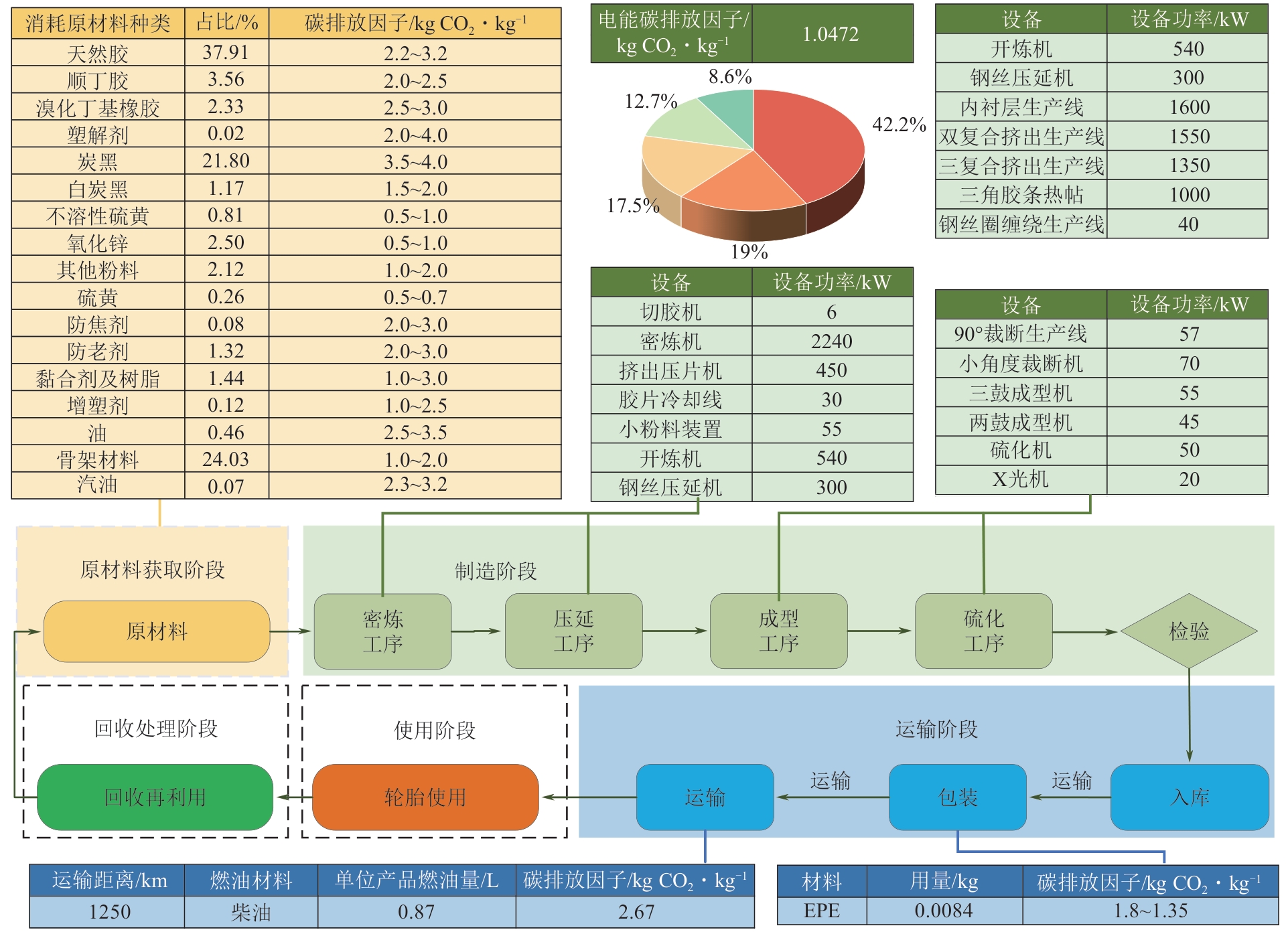
| 消耗原材料种类 | 占比/% | 整胎原材料消耗量/kg |
|---|---|---|
| 天然胶 | 37.91 | 21.799 |
| 顺丁胶 | 3.56 | 2.046 |
| 溴化丁基橡胶 | 2.33 | 1.339 |
| 塑解剂 | 0.02 | 0.013 |
| 炭黑 | 21.80 | 12.534 |
| 白炭黑 | 1.17 | 0.672 |
| 不溶性硫黄 | 0.81 | 0.466 |
| 氧化锌 | 2.50 | 1.437 |
| 其他粉料 | 2.12 | 1.220 |
| 硫黄 | 0.26 | 0.152 |
| 防焦剂 | 0.08 | 0.043 |
| 防老剂 | 1.32 | 0.762 |
| 黏合剂及树脂 | 1.44 | 0.829 |
| 增塑剂 | 0.12 | 0.069 |
| 油 | 0.46 | 0.266 |
| 骨架材料 | 24.03 | 13.818 |
| 汽油 | 0.07 | 0.034 |
| 消耗原材料种类 | 占比/% | 整胎原材料消耗量/kg |
|---|---|---|
| 天然胶 | 37.91 | 21.799 |
| 顺丁胶 | 3.56 | 2.046 |
| 溴化丁基橡胶 | 2.33 | 1.339 |
| 塑解剂 | 0.02 | 0.013 |
| 炭黑 | 21.80 | 12.534 |
| 白炭黑 | 1.17 | 0.672 |
| 不溶性硫黄 | 0.81 | 0.466 |
| 氧化锌 | 2.50 | 1.437 |
| 其他粉料 | 2.12 | 1.220 |
| 硫黄 | 0.26 | 0.152 |
| 防焦剂 | 0.08 | 0.043 |
| 防老剂 | 1.32 | 0.762 |
| 黏合剂及树脂 | 1.44 | 0.829 |
| 增塑剂 | 0.12 | 0.069 |
| 油 | 0.46 | 0.266 |
| 骨架材料 | 24.03 | 13.818 |
| 汽油 | 0.07 | 0.034 |
| 工序 | 设备 | 设备功率/kW | 耗电量/kW·h |
|---|---|---|---|
| 密炼工序 | 切胶机 | 6 | 0.03 |
| 密炼机 | 2240 | 1.24 | |
| 挤出压片机 | 450 | 0.23 | |
| 胶片冷却线 | 30 | 0.30 | |
| 小粉料装置 | 55 | 0.86 | |
| 压延工序 | 开炼机 | 540 | 0.26 |
| 钢丝压延机 | 300 | 0.05 | |
| 内衬层生产线 | 1600 | 0.26 | |
| 双复合挤出生产线 | 1550 | 0.24 | |
| 三复合挤出生产线 | 1350 | 0.14 | |
| 三角胶条热帖 | 1000 | 0.12 | |
| 钢丝圈缠绕生产线 | 40 | 0.04 | |
| 成型工序 | 90°裁断生产线 | 57 | 0.14 |
| 小角度裁断机 | 70 | 0.35 | |
| 三鼓成型机 | 55 | 0.20 | |
| 两鼓成型机 | 45 | 0.11 | |
| 硫化工序 | 硫化机 | 50 | 1.20 |
| X光机 | 20 | 0.10 | |
| 检查工序 | 均匀性 | 37 | 0.09 |
| 动平衡 | 60 | 0.30 | |
| 运输线 | 20 | 0.05 |
| 工序 | 设备 | 设备功率/kW | 耗电量/kW·h |
|---|---|---|---|
| 密炼工序 | 切胶机 | 6 | 0.03 |
| 密炼机 | 2240 | 1.24 | |
| 挤出压片机 | 450 | 0.23 | |
| 胶片冷却线 | 30 | 0.30 | |
| 小粉料装置 | 55 | 0.86 | |
| 压延工序 | 开炼机 | 540 | 0.26 |
| 钢丝压延机 | 300 | 0.05 | |
| 内衬层生产线 | 1600 | 0.26 | |
| 双复合挤出生产线 | 1550 | 0.24 | |
| 三复合挤出生产线 | 1350 | 0.14 | |
| 三角胶条热帖 | 1000 | 0.12 | |
| 钢丝圈缠绕生产线 | 40 | 0.04 | |
| 成型工序 | 90°裁断生产线 | 57 | 0.14 |
| 小角度裁断机 | 70 | 0.35 | |
| 三鼓成型机 | 55 | 0.20 | |
| 两鼓成型机 | 45 | 0.11 | |
| 硫化工序 | 硫化机 | 50 | 1.20 |
| X光机 | 20 | 0.10 | |
| 检查工序 | 均匀性 | 37 | 0.09 |
| 动平衡 | 60 | 0.30 | |
| 运输线 | 20 | 0.05 |
| 子午线轮胎包装 | 材料 | 用量/kg |
|---|---|---|
| 包装纸 | EPE | 0.0084 |
| 子午线轮胎包装 | 材料 | 用量/kg |
|---|---|---|
| 包装纸 | EPE | 0.0084 |
| 过程 | 运输方式 | 运输距离/kg | 燃油材料 | 单位产品燃油量/L |
|---|---|---|---|---|
| 生产商到总经销商 | 汽运 | 1250 | 柴油 | 0.87 |
| 过程 | 运输方式 | 运输距离/kg | 燃油材料 | 单位产品燃油量/L |
|---|---|---|---|---|
| 生产商到总经销商 | 汽运 | 1250 | 柴油 | 0.87 |
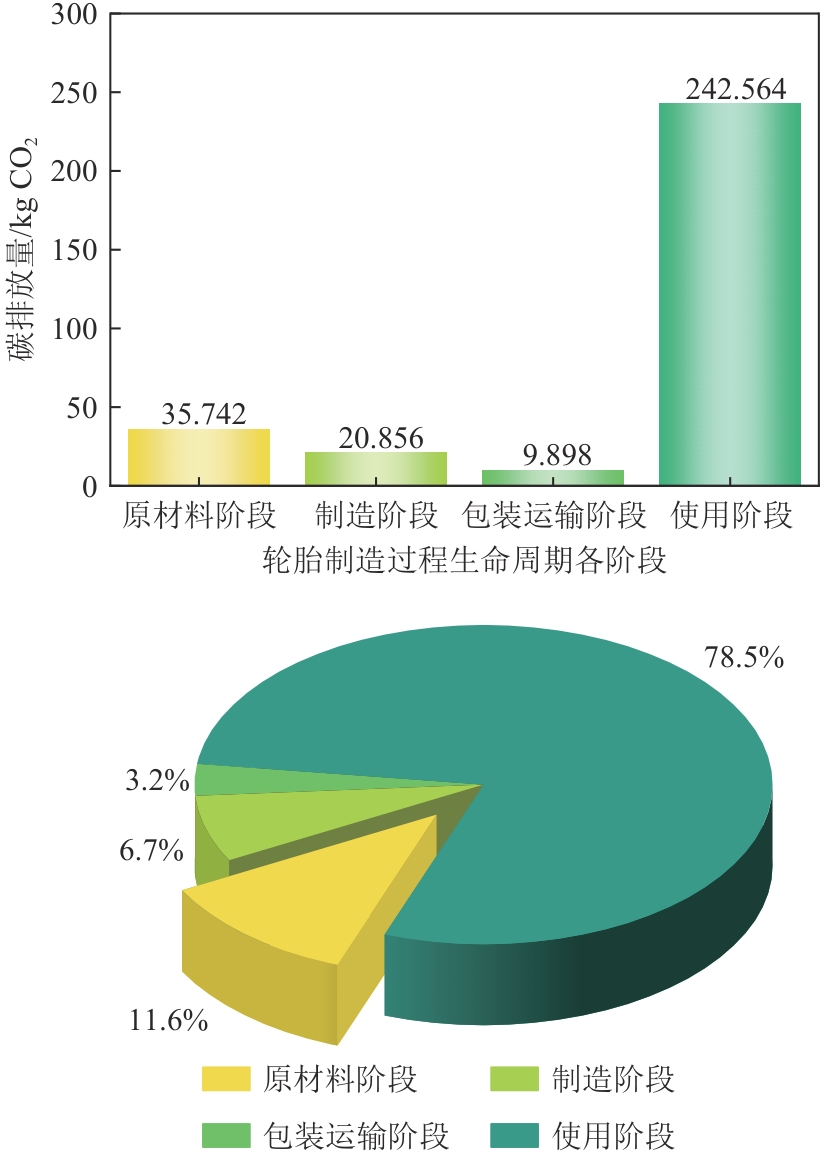
| 周期阶段 | 碳排放量/kg CO2 |
|---|---|
| 原材料阶段 | 35.742 |
| 制造阶段 | 20.856 |
| 包装运输阶段 | 9.898 |
| 使用阶段 | 242.564 |
| 总排放量 | 309.06 |
| 周期阶段 | 碳排放量/kg CO2 |
|---|---|
| 原材料阶段 | 35.742 |
| 制造阶段 | 20.856 |
| 包装运输阶段 | 9.898 |
| 使用阶段 | 242.564 |
| 总排放量 | 309.06 |
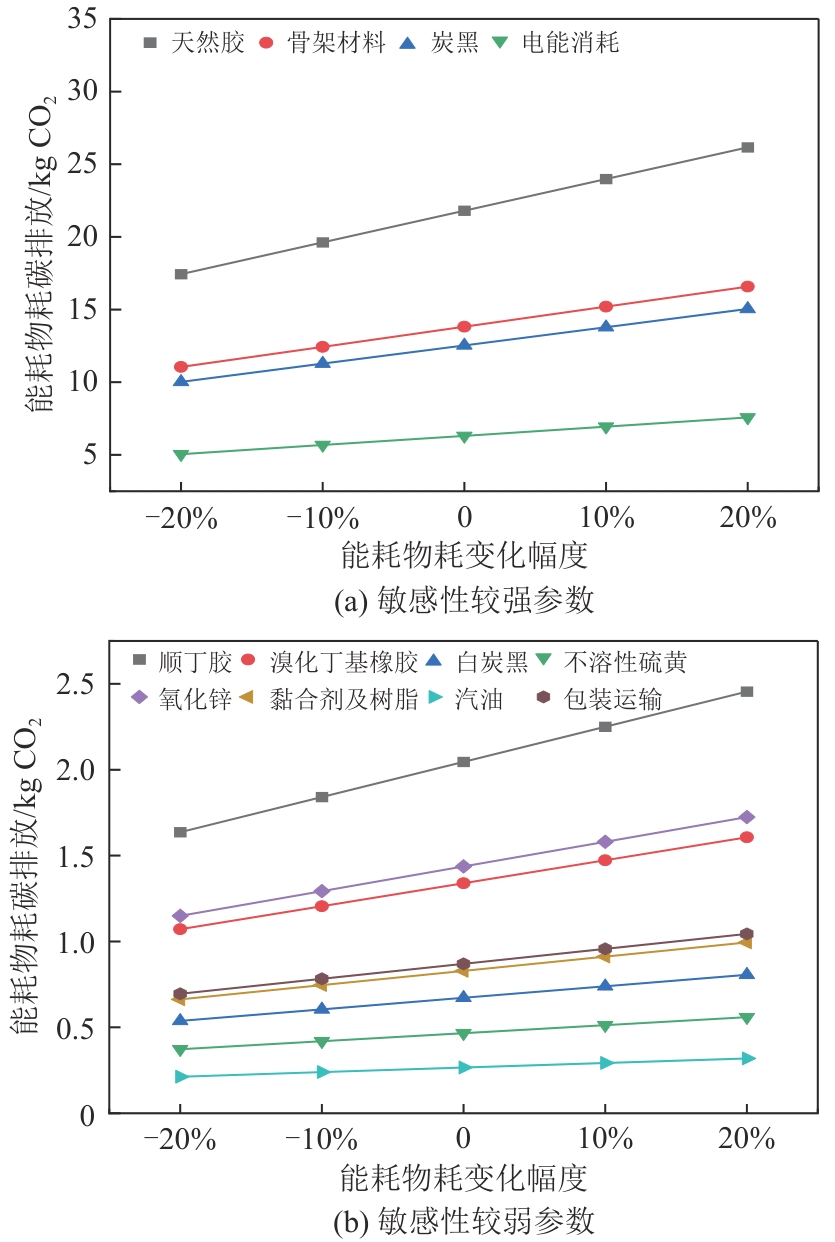
| 参数名称 | 浮动后的质量参数值碳排放量/kg CO2 | 敏感度系数 | ||||
|---|---|---|---|---|---|---|
| -20% | -10% | 0 | 10% | 20% | ||
| 天然胶 | 17.439 | 19.619 | 21.799 | 23.979 | 26.159 | 0.07053 |
| 304.700 | 306.880 | 309.060 | 311.240 | 313.420 | ||
| 顺丁胶 | 1.637 | 1.841 | 2.046 | 2.251 | 2.455 | 0.00662 |
| 308.651 | 308.855 | 309.060 | 309.265 | 309.469 | ||
| 溴化丁基橡胶 | 1.071 | 1.205 | 1.339 | 1.473 | 1.607 | 0.00433 |
| 308.792 | 308.926 | 309.060 | 309.194 | 309.328 | ||
| 炭黑 | 10.027 | 11.281 | 12.534 | 13.787 | 15.041 | 0.04056 |
| 306.553 | 307.807 | 309.060 | 310.313 | 311.567 | ||
| 白炭黑 | 0.538 | 0.605 | 0.672 | 0.739 | 0.806 | 0.00217 |
| 308.926 | 308.993 | 309.060 | 309.127 | 309.194 | ||
| 不溶性硫黄 | 0.373 | 0.419 | 0.466 | 0.513 | 0.559 | 0.00151 |
| 308.967 | 309.0134 | 309.060 | 309.107 | 309.153 | ||
| 氧化锌 | 1.150 | 1.293 | 1.437 | 1.581 | 1.724 | 0.00465 |
| 308.773 | 308.916 | 309.060 | 309.203 | 309.347 | ||
| 黏合剂及树脂 | 0.663 | 0.746 | 0.829 | 0.912 | 0.995 | 0.00268 |
| 308.894 | 308.977 | 309.060 | 309.143 | 309.226 | ||
| 骨架材料 | 11.054 | 12.436 | 13.818 | 15.200 | 16.581 | 0.04471 |
| 306.2964 | 307.6782 | 309.06 | 310.4418 | 311.8236 | ||
| 汽油 | 0.213 | 0.239 | 0.266 | 0.293 | 0.319 | 0.00086 |
| 309.007 | 309.033 | 309.060 | 309.087 | 309.113 | ||
| 电能消耗 | 5.048 | 5.679 | 6.310 | 6.941 | 7.572 | 0.02042 |
| 307.798 | 308.429 | 309.060 | 309.691 | 310.322 | ||
| 包装运输 | 0.696 | 0.783 | 0.870 | 0.957 | 1.044 | 0.00281 |
| 308.886 | 308.973 | 309.060 | 309.147 | 309.234 | ||
| 参数名称 | 浮动后的质量参数值碳排放量/kg CO2 | 敏感度系数 | ||||
|---|---|---|---|---|---|---|
| -20% | -10% | 0 | 10% | 20% | ||
| 天然胶 | 17.439 | 19.619 | 21.799 | 23.979 | 26.159 | 0.07053 |
| 304.700 | 306.880 | 309.060 | 311.240 | 313.420 | ||
| 顺丁胶 | 1.637 | 1.841 | 2.046 | 2.251 | 2.455 | 0.00662 |
| 308.651 | 308.855 | 309.060 | 309.265 | 309.469 | ||
| 溴化丁基橡胶 | 1.071 | 1.205 | 1.339 | 1.473 | 1.607 | 0.00433 |
| 308.792 | 308.926 | 309.060 | 309.194 | 309.328 | ||
| 炭黑 | 10.027 | 11.281 | 12.534 | 13.787 | 15.041 | 0.04056 |
| 306.553 | 307.807 | 309.060 | 310.313 | 311.567 | ||
| 白炭黑 | 0.538 | 0.605 | 0.672 | 0.739 | 0.806 | 0.00217 |
| 308.926 | 308.993 | 309.060 | 309.127 | 309.194 | ||
| 不溶性硫黄 | 0.373 | 0.419 | 0.466 | 0.513 | 0.559 | 0.00151 |
| 308.967 | 309.0134 | 309.060 | 309.107 | 309.153 | ||
| 氧化锌 | 1.150 | 1.293 | 1.437 | 1.581 | 1.724 | 0.00465 |
| 308.773 | 308.916 | 309.060 | 309.203 | 309.347 | ||
| 黏合剂及树脂 | 0.663 | 0.746 | 0.829 | 0.912 | 0.995 | 0.00268 |
| 308.894 | 308.977 | 309.060 | 309.143 | 309.226 | ||
| 骨架材料 | 11.054 | 12.436 | 13.818 | 15.200 | 16.581 | 0.04471 |
| 306.2964 | 307.6782 | 309.06 | 310.4418 | 311.8236 | ||
| 汽油 | 0.213 | 0.239 | 0.266 | 0.293 | 0.319 | 0.00086 |
| 309.007 | 309.033 | 309.060 | 309.087 | 309.113 | ||
| 电能消耗 | 5.048 | 5.679 | 6.310 | 6.941 | 7.572 | 0.02042 |
| 307.798 | 308.429 | 309.060 | 309.691 | 310.322 | ||
| 包装运输 | 0.696 | 0.783 | 0.870 | 0.957 | 1.044 | 0.00281 |
| 308.886 | 308.973 | 309.060 | 309.147 | 309.234 | ||
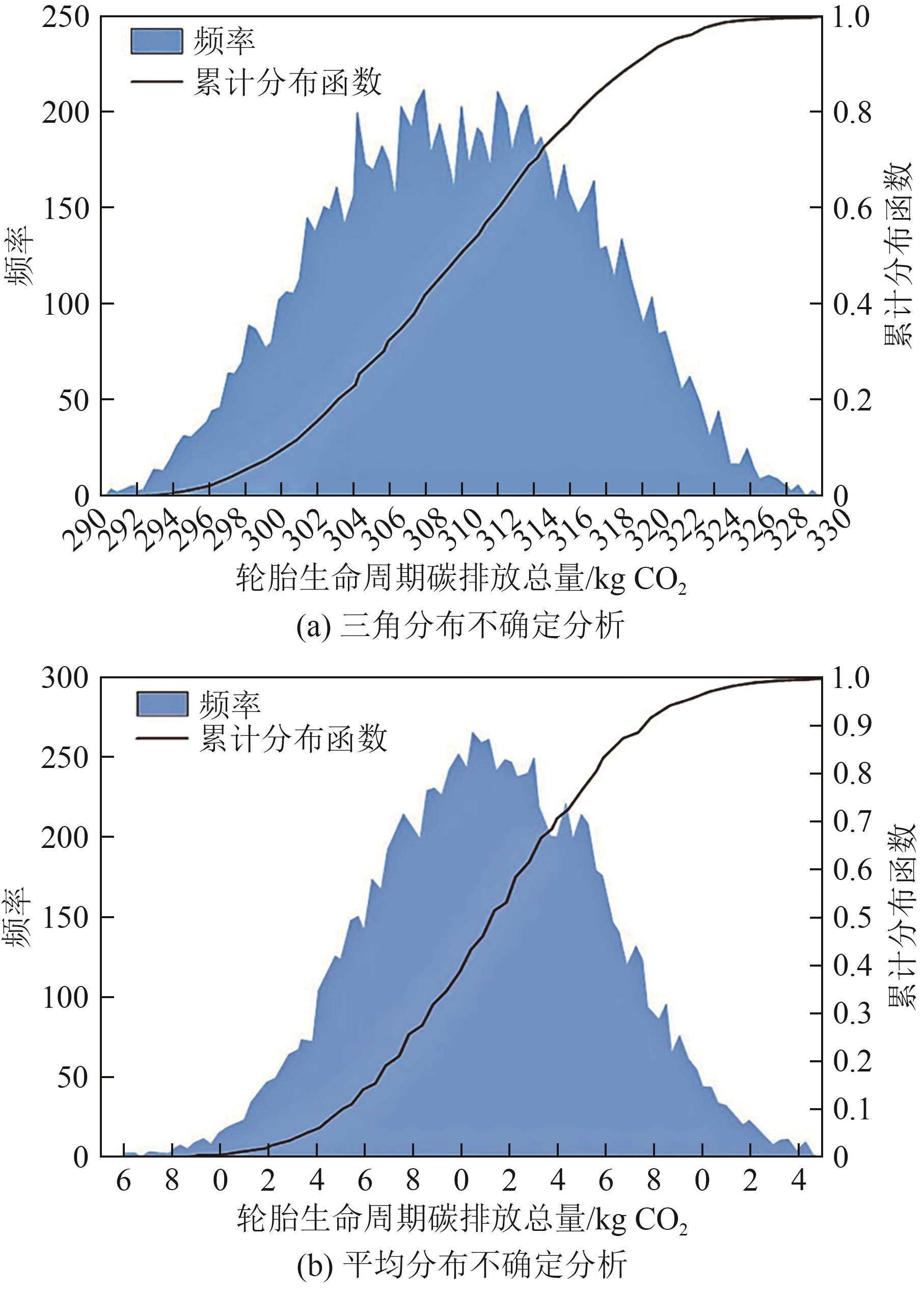
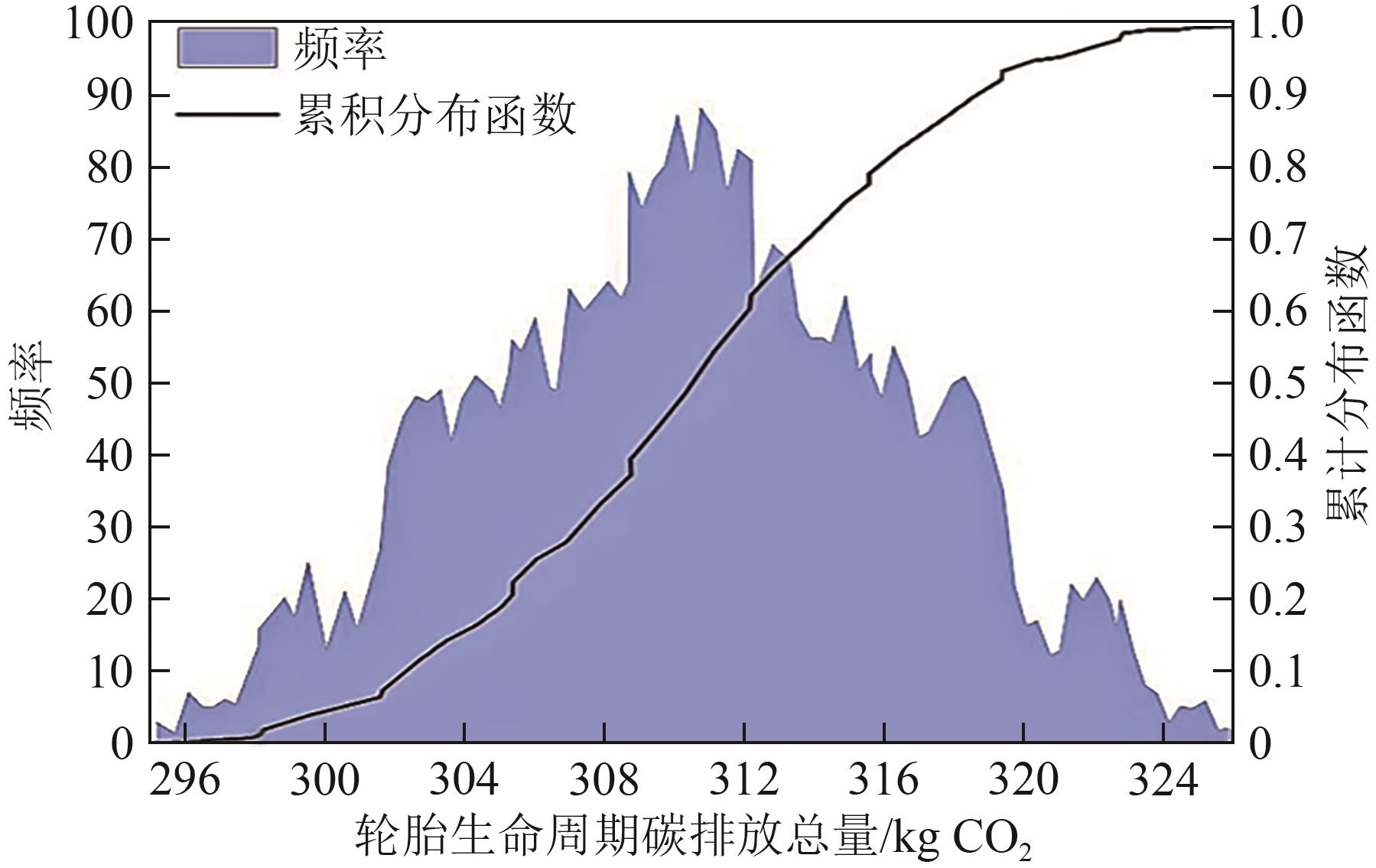
| 参数名称 | 消耗量 | 不确定度 |
|---|---|---|
| 电能消耗 | 6.310kW·h | ±5% |
| 骨架材料 | 13.818kg | ±10% |
| 天然胶 | 21.799kg | ±10% |
| 炭黑 | 12.534kg | ±10% |
| 参数名称 | 消耗量 | 不确定度 |
|---|---|---|
| 电能消耗 | 6.310kW·h | ±5% |
| 骨架材料 | 13.818kg | ±10% |
| 天然胶 | 21.799kg | ±10% |
| 炭黑 | 12.534kg | ±10% |

| [1] | 史一锋. 当前我国轮胎行业总体发展状况及展望[J]. 轮胎工业, 2024, 44(6): 323-329. |
| SHI Yifeng. Current overall development status and outlook of Chinese tire industry[J]. Tire Industry, 2024, 44(6): 323-329. | |
| [2] | 林晓昱, 黄婼爽. 半钢子午线轮胎花纹性能特点及设计方法分析[J]. 中国橡胶, 2024, 40(S1): 11-15. |
| LIN Xiaoyu, HUANG Ruoshuang. Analysis of tread performance characteristics and design method of semi-steel radial tires[J]. China Rubber, 2024, 40(S1): 11-15. | |
| [3] | 许君清. 废旧轮胎热解及其产物炭黑用于湿法炼胶的工艺过程研究[D]. 上海: 同济大学, 2022. |
| XU Junqing. Study on pyrolysis of waste tires and the process of using carbon black as its product in wet rubber refining[D]. Shanghai: Tongji University, 2022. | |
| [4] | 双钱轮胎: 多措并举减碳,全力实现“双碳”目标[J]. 中国橡胶, 2023, 39(12): 32-34. |
| Double coin tire: Reducing carbon with various measures to achieve the goal of “double carbon”[J]. China Rubber, 2023, 39(12): 32-34. | |
| [5] | 包含,王耿,晏长根,等. 公路建设碳排放核算与岩土工程低碳措施及碳补偿研究综述[J]. 中国公路学报, 2025, 38(1): 46-72. |
| BAO Han, WANG Geng, YAN Changgen, et al. Highway construction carbon emission assessment and low-carbon measures and carbon compensation for geotechnical engineering: A review[J]. China Journal of Highway and Transport, 2025, 38(1): 46-72. | |
| [6] | 郑励行, 赵黛青, 漆小玲, 等. 基于全生命周期评价的中国制氢路线能效、碳排放及经济性研究[J]. 工程热物理学报, 2022, 43(9): 2305-2317. |
| ZHENG Lixing, ZHAO Daiqing, QI Xiaoling, et al. Research on energy efficiency, carbon emission and economy of hydrogen production routes in china based on life cycle assessment method[J]. Journal of Engineering Thermophysics, 2022, 43(9): 2305-2317. | |
| [7] | 朱继忠, 周迦琳, 张迪. 清洁能源和电力系统碳足迹全生命周期核算综述[J]. 中国电机工程学报, 2025, 45(4): 1323-1343. |
| ZHU Jizhong, ZHOU Jialin, ZHANG Di. Review of full life-cycle carbon footprints accounting of clean energy and power systems[J]. Chinese Journal of Electrical Engineering, 2025, 45(4): 1323-1343. | |
| [8] | 张硕, 蔡旭, 张春梅, 等. 氢燃料电池重型商用车全生命周期评价研究及不确定性分析[J]. 汽车工程, 2023, 45(12): 2366-2380. |
| ZHANG Shuo, CAI Xu, ZHANG Chunmei, et al. Life cycle assessment research and uncertainty analysis hydrogen fuel cell heavy-duty commercial vehicles[J]. Automotive Engineering, 2023, 45(12): 2366-2380. | |
| [9] | 张文会, 付博, 周舸, 等. 城市公共汽车全生命周期碳排放测算[J]. 吉林大学学报(工学版), 2025, 55(4): 1232-1240. |
| ZHANG Wenhui, FU Bo, ZHOU Ge, et al. Carbon emissions calculation for urban buses throughout lifecycles[J]. Journal of Jilin University (Engineering and Technology Edition), 2025, 55(4): 1232-1240. | |
| [10] | 黄小娱, 谢明辉, 李晓蔚, 等. 典型氢能产品生命周期评价和碳足迹比较[J]. 环境科学, 2024, 45(10): 5641-5649. |
| HUANG Xiaoyu, XIE Minghui, LI Xiaowei, et al. Comparative life cycle assessment and carbon footprint of typical hydrogen energy products[J]. Environmental Science, 2024, 45(10): 5641-5649. | |
| [11] | 宋晓聪, 杜帅, 邓陈宁, 等. 钢铁行业生命周期碳排放核算及减排潜力评估[J]. 环境科学, 2023, 44(12): 6630-6642. |
| SONG Xiaocong, DU Shuai, DENG Chenning, et al. Life cycle carbon emission accounting and emission reduction potential assessment of steel industry[J]. Environmental Science, 2023, 44(12): 6630-6642. | |
| [12] | 虞介泽, 邵煜, 雍小龙. 基于Sobol法的建筑热水系统碳排放计算敏感性分析[J]. 山西建筑, 2022, 48(20): 120-122. |
| YU Jieze, SHAO Yu, YONG Xiaolong. Sensitivity analysis of calculation of carbon emission from building hot water system based on Sobol method[J]. Shanxi Architecture, 2022, 48(20): 120-122. | |
| [13] | LEI Bin, YU Linjie, CHEN Zhiyu, et al. Carbon emission evaluation of recycled fine aggregate concrete based on life cycle assessment[J]. Sustainability, 2022, 14(21): 14448. |
| [14] | BAAQEL Husain A, BERNARDI Andrea, HALLETT Jason P, et al. Global sensitivity analysis in life-cycle assessment of early-stage technology using detailed process simulation: Application to dialkylimidazolium ionic liquid production[J]. ACS Sustainable Chemistry & Engineering, 2023, 11(18): 7157-7169. |
| [15] | KIM Seungdo, DALE Bruce E, BASSO Bruno. Uncertainties in greenhouse gas emission factors: A comprehensive analysis of switchgrass-based biofuel production[J]. GCB Bioenergy, 2024, 16(8): e13179. |
| [16] | 付伟, 罗明灿, 陈建成. 碳足迹及其影响因素研究进展与展望[J]. 林业经济, 2021, 43(8): 39-49. |
| FU Wei, LUO Mingcan, CHEN Jiancheng. Research progress and prospects of carbon footprint and its influencing factors[J]. Forestry Economics, 2021, 43(8): 39-49. | |
| [17] | 罗楠, 张应中, 田景海. 基于BOM和开放知识驱动的全生命周期清单建模[J]. 计算机集成制造系统, 2025, 31(6): 2015-2027. |
| LUO Nan, ZHANG Yingzhong, TIAN Jinghai. Automatic modeling forlife cycle inventory analysis of products based on bom and knowledge driven[J]. Computer Integrated Manufacturing Systems, 2025, 31(6): 2015-2027. | |
| [18] | 康得军, 邱福杰, 温儒杰, 等. 基于SWMM的LID参数局部与全局敏感性分析[J]. 中国给水排水, 2023, 39(17): 131-138. |
| KANG Dejun, QIU Fujie, WEN Rujie, et al. Analysis on local and global sensitivity of LID parameters based on SWMM[J]. China Water & Wastewater, 2023, 39(17): 131-138. | |
| [19] | 胡涛, 申立群, 朱镜达, 等. 基于FAST和Sobol指数法的雷达系统效能敏感性分析[J]. 系统工程与电子技术, 2024, 46(2): 561-569. |
| HU Tao, SHEN Liqun, ZHU Jingda, et al. Sensitivity analysis of radar system effectiveness based on FAST and Sobol index method[J]. Systems Engineering and Electronics, 2024, 46(2): 561-569. | |
| [20] | 郭刚, 李桂花. 公共卫生教育的双斑块SIR传染病模型的敏感性分析[J]. 中北大学学报(自然科学版), 2020, 41(3): 203-208. |
| GUO Gang, LI Guihua. Sensitivity analysis of a SIR two plaque infectious disease model in public health education[J]. Journal of North University of China (Natural Science Edition), 2020, 41(3): 203-208. | |
| [21] | PATRA Rajesh Ranjan, KUNDU Soumen, MAITRA Sarit. Effect of delay and control on a predator-prey ecosystem with generalist predator and group defence in the prey species[J]. The European Physical Journal Plus, 2021, 137(1): 28. |
| [22] | 张敬雷, 王伟, 李彤, 等. 基于EFAST法的公路梁桥全局敏感性分析[J]. 土木工程与管理学报, 2020, 37(5): 51-56. |
| ZHANG Jinglei, WANG Wei, LI Tong, et al. Global sensitivity analysis of highway beam bridge based on EFAST method[J]. Journal of Civil Engineering and Management, 2020, 37(5): 51-56. | |
| [23] | 徐亚宁, 卢文喜, 王梓博, 等. 考虑参数和边界条件不确定性的地下水污染随机模拟[J]. 中国环境科学, 2022, 42(7): 3244-3253. |
| XU Yaning, LU Wenxi, WANG Zibo, et al. Stochastic simulation of groundwater pollution considering uncertainty of parameters and boundary conditions[J]. China Environmental Science, 2022, 42(7): 3244-3253. | |
| [24] | 李莉, 张仕昕, 强跃, 等. 泥石流危险性评价的权重赋值概率学优化方法[J]. 重庆交通大学学报(自然科学版), 2022, 41(7): 120-125. |
| LI Li, ZHANG Shixin, QIANG Yue, et al. Probabilistic optimization method for weight assignment of debris flow risk assessment[J]. Journal of Chongqing Jiaotong University (Natural Science), 2022, 41(7): 120-125. | |
| [25] | 高俊莲, 徐向阳, 郑凤琴, 等. 基于全生命周期的煤炭碳排放清单计算与不确定性分析[J]. 中国煤炭, 2017, 43(6): 22-26. |
| GAO Junlian, XU Xiangyang, ZHENG Fengqin, et al. Coal carbon emission inventory calculation and uncertainties analysis based on lifecycle analysis[J]. China Coal, 2017, 43(6): 22-26. |
| [1] | XUE Zijie, WU Yan, CUI Ziyuan, XU Guanxin, TANG Shuo, WANG Yufei, MA Mingyan. Long cycle green ammonia synthesis model based on economic analysis: Considering the impact of continuous changes in grid carbon emission factors [J]. Chemical Industry and Engineering Progress, 2025, 44(9): 4917-4927. |
| [2] | WEI Mengyu, TONG Zhangfa, JIANG Yinghua. Multi-objective optimization of municipal solid waste supply chain network based on waste classification [J]. Chemical Industry and Engineering Progress, 2025, 44(8): 4617-4627. |
| [3] | LIU Hanxiao, SHAN Sike, FANG Jian, LIN Qingyang, YU Liyuan, FANG Ni, LIU Xiaowei, LIU Zhong, LU Shijian. Carbon footprint quantification and assessment of combined heat and power generation products [J]. Chemical Industry and Engineering Progress, 2025, 44(7): 4233-4240. |
| [4] | CHENG Yun, ZHOU Xiaoli, CAO Zhiqiang, ZHOU Jie, DONG Weiliang, JIANG Min. Comparison of the environmental impacts of waste PET enzymatic depolymerization and alkaline hydrolysis through LCA [J]. Chemical Industry and Engineering Progress, 2025, 44(5): 2788-2797. |
| [5] | FU Jun, XU Chungang, LI Yunhao, LI Xiaosen. Research progress on CO2 hydrate formation and carbon sequestration in brine systems [J]. Chemical Industry and Engineering Progress, 2025, 44(10): 5926-5940. |
| [6] | CHEN Wangmi, XI Beidou, LI Mingxiao, YE Meiying, HOU Jiaqi, YU Chengze, WEI Yufang, MENG Fanhua. Research progress on carbon emission reduction technology for pyrolysis system [J]. Chemical Industry and Engineering Progress, 2024, 43(S1): 479-503. |
| [7] | LI Jingying, MA Longfei, PAN Yibo, LU Shan, ZHANG Hongjuan, XU Long, MA Xiaoxun. Life cycle environmental analysis of coke oven gas to liquefied natural gas based on decarburization and methanation processes [J]. Chemical Industry and Engineering Progress, 2024, 43(5): 2872-2879. |
| [8] | DI Zichen, LEI Feixia, CHANG Chenggong, CHEN Wenhui, CHENG Fangqin. Evaluation of hydrocarbon resource utilization potential and low-carbon path in the coking industry [J]. Chemical Industry and Engineering Progress, 2024, 43(5): 2862-2871. |
| [9] | LI Jingying, MA Longfei, ZHANG Hongjuan, PAN Yibo, LU Shan, XU Long, MA Xiaoxun. Current status and research progress of life cycle assessment method in pharmaceutical field [J]. Chemical Industry and Engineering Progress, 2024, 43(5): 2851-2861. |
| [10] | XU Bing, ZHANG Qian, WU Huanhuan, SHAO Guangyi, TIAN Shuwen, CHAI Wenming, ZHANG Ming, YAO Hong. Carbon footprint analysis and environmental impact assessment of integrated membrane process for fracturing flowback fluid based on LCA [J]. Chemical Industry and Engineering Progress, 2024, 43(12): 7105-7114. |
| [11] | MENG Xingyu, ZONG Yuhang, ZHANG Xihua, YAN Wenyi, SUN Zhi. Analysis on material flows and carbon emissions of nickel resources in China [J]. Chemical Industry and Engineering Progress, 2024, 43(11): 6563-6572. |
| [12] | WANG Fu'an. Consumption and emission reduction of the reactor of 300kt/a propylene oxide process [J]. Chemical Industry and Engineering Progress, 2023, 42(S1): 213-218. |
| [13] | LI Wenxiu, YANG Yuhang, HUANG Yan, WANG Tao, WANG Lei, FANG Mengxiang. Preparation of ultrafine calcium carbonate by CO2 mineralization using high calcium-based solid waste [J]. Chemical Industry and Engineering Progress, 2023, 42(4): 2047-2057. |
| [14] | LIU Hongru, LIN Wensheng. Energy efficiency and carbon emission analysis of hydrogen transport chains based on liquid hydrogen and ammonia [J]. Chemical Industry and Engineering Progress, 2023, 42(3): 1291-1298. |
| [15] | FAN Baotian, YAN Zhenrong, SU Houde, LIU Cenfan, SONG Yujuan. Synergistic reduction of NO x and CO2 emissions by coupling pulverized coal with biomass gas [J]. Chemical Industry and Engineering Progress, 2023, 42(10): 5501-5508. |
| Viewed | ||||||
|
Full text |
|
|||||
|
Abstract |
|
|||||