化工进展 ›› 2025, Vol. 44 ›› Issue (10): 5627-5639.DOI: 10.16085/j.issn.1000-6613.2024-1485
• 化工过程与装备 • 上一篇
相变冷却与液冷耦合的锂电池组热管理系统多目标优化
许智( ), 姜昌伟(), 李兵, 亓俣权, 钱发, 李光伟
- 长沙理工大学能源与动力工程学院,湖南 长沙 410114
-
收稿日期:2024-09-09修回日期:2024-12-27出版日期:2025-10-25发布日期:2025-11-10 -
通讯作者:姜昌伟 -
作者简介:许智(1998—),男,硕士研究生,研究方向为锂电池热管理技术。E-mail:320220100@qq.com。 -
基金资助:国家自然科学基金(52208094);国家自然科学基金(52078053)
Multi-objective optimization of thermal management system for lithium battery packs coupled with phase-change cooling and liquid cooling
XU Zhi(), JIANG Changwei(), LI Bing, QI Yuquan, QIAN Fa, LI Guangwei
- School of Energy and Power Engineering, Changsha University of Science and Technology, Changsha 410114, Hubei, China
-
Received:2024-09-09Revised:2024-12-27Online:2025-10-25Published:2025-11-10 -
Contact:JIANG Changwei

摘要:
针对一种相变材料耦合液冷散热的电池热管理系统进行了基于神经网络与非支配排序遗传算法(NSGA-Ⅱ)结合的多目标优化。首先使用数值模拟方法研究了不同电池间距、冷却液流速和冷却液通道纵横比等设计变量对电池散热效果的影响,然后利用拉丁超立方抽样(LHS)生成设计变量经数值模拟获得目标值进行神经网络训练,建立起设计变量与电池最高温度和最大温差之间的映射关系。随后采用带精英保留策略的NSGA-Ⅱ算法找到最小化电池包体积(Vb)、电池最高温度(Tmax)和电池最大温差(∆Tmax)的三目标优化Pareto前沿并确定最佳设计。最终优化结果表明,神经网络与NSGA-Ⅱ算法结合的多目标优化方法十分有效。相较于初始设计,优化后的Vb降低了7.6%,能量密度提升了8.22%;电池组Tmax和ΔTmax分别为34.89℃和4.02℃;相变材料(PCM)的利用率提升了7%;冷却液泵功耗从8.79×10⁻⁴W降低到了4.065×10⁻⁴W,降低幅度高达53.75%。
中图分类号:
引用本文
许智, 姜昌伟, 李兵, 亓俣权, 钱发, 李光伟. 相变冷却与液冷耦合的锂电池组热管理系统多目标优化[J]. 化工进展, 2025, 44(10): 5627-5639.
XU Zhi, JIANG Changwei, LI Bing, QI Yuquan, QIAN Fa, LI Guangwei. Multi-objective optimization of thermal management system for lithium battery packs coupled with phase-change cooling and liquid cooling[J]. Chemical Industry and Engineering Progress, 2025, 44(10): 5627-5639.
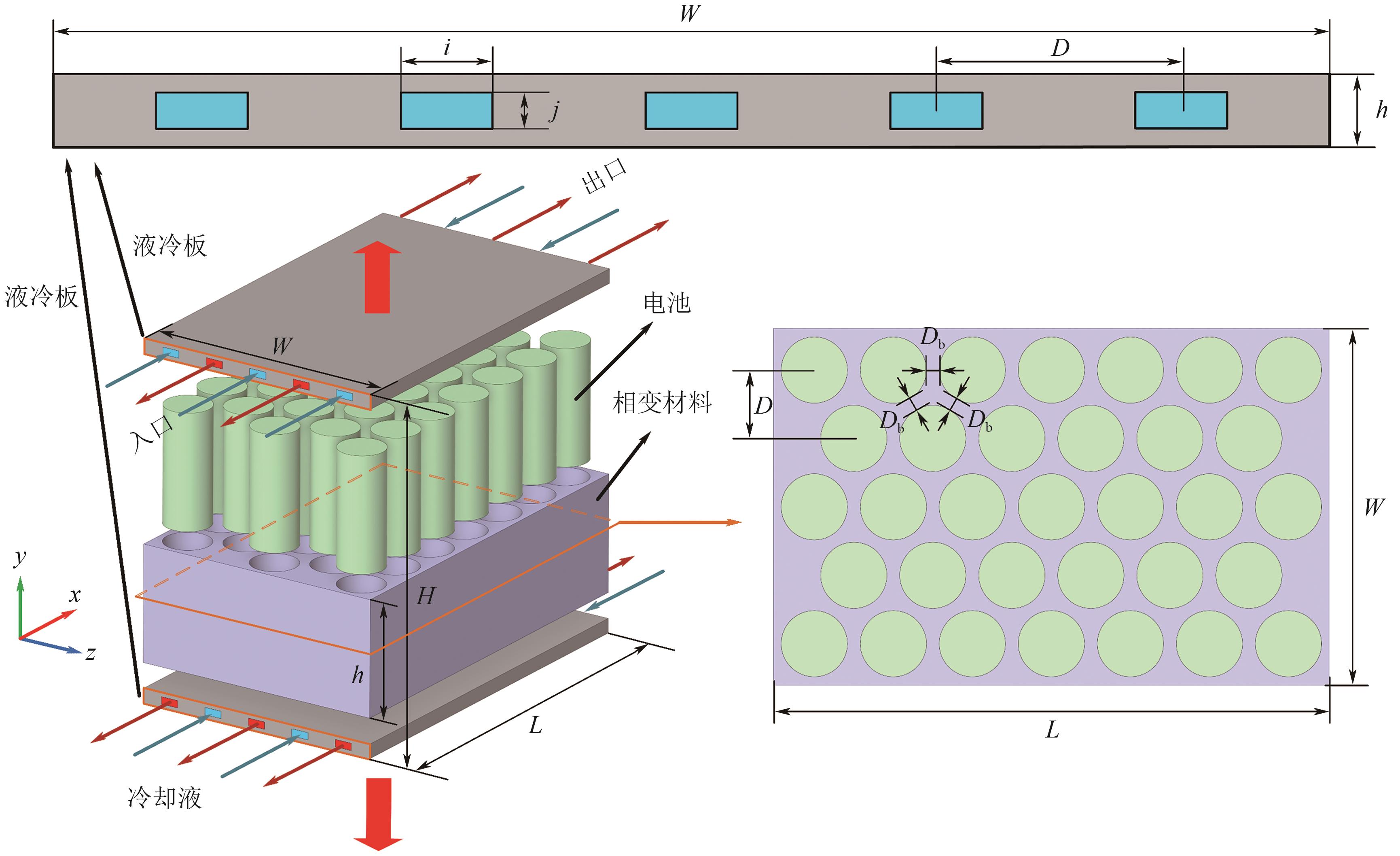
图1 相变冷却与液冷耦合的锂电池热管理系统几何结构
| 参数 | 数值 |
|---|---|
| 容量/A·h | 3 |
| 电池质量/g | 84 |
| 标称电压/V | 3.2 |
| 放电截止电压/V | 2.5 |
| 径向热导率/W·m-1·K-1 | 0.98 |
| 轴向热导率/W·m-1·K-1 | 26.96 |
| 密度/kg·m-3 | 2059 |
| 比热容/J·kg-1·K-1 | 1375 |
| 内阻/mΩ | 28 |
表1 电池主要性能参数[33]
| 参数 | 数值 |
|---|---|
| 容量/A·h | 3 |
| 电池质量/g | 84 |
| 标称电压/V | 3.2 |
| 放电截止电压/V | 2.5 |
| 径向热导率/W·m-1·K-1 | 0.98 |
| 轴向热导率/W·m-1·K-1 | 26.96 |
| 密度/kg·m-3 | 2059 |
| 比热容/J·kg-1·K-1 | 1375 |
| 内阻/mΩ | 28 |
| 密度/kg·m-3 | 比热容/J·kg-1·K-1 | 热导率/W·m-1·K-1 | 潜热/kJ·kg | 相变温度/℃ |
|---|---|---|---|---|
| 870 | 2412 | 5.023 | 119.24 | 31~36 |
表2 复合相变材料物性参数[34]
| 密度/kg·m-3 | 比热容/J·kg-1·K-1 | 热导率/W·m-1·K-1 | 潜热/kJ·kg | 相变温度/℃ |
|---|---|---|---|---|
| 870 | 2412 | 5.023 | 119.24 | 31~36 |
| 名称 | 密度/kg·m-3 | 比热容/J·kg-1·K-1 | 热导率/W·m-1·K-1 | 动力黏度/Pa∙s |
|---|---|---|---|---|
| 冷却液 | 1069.4 | 3341 | 0.419 | 0.00394 |
| 液冷板 | 8978 | 381 | 387.6 | — |
表3 冷却液和液冷板物性参数[35-36]
| 名称 | 密度/kg·m-3 | 比热容/J·kg-1·K-1 | 热导率/W·m-1·K-1 | 动力黏度/Pa∙s |
|---|---|---|---|---|
| 冷却液 | 1069.4 | 3341 | 0.419 | 0.00394 |
| 液冷板 | 8978 | 381 | 387.6 | — |
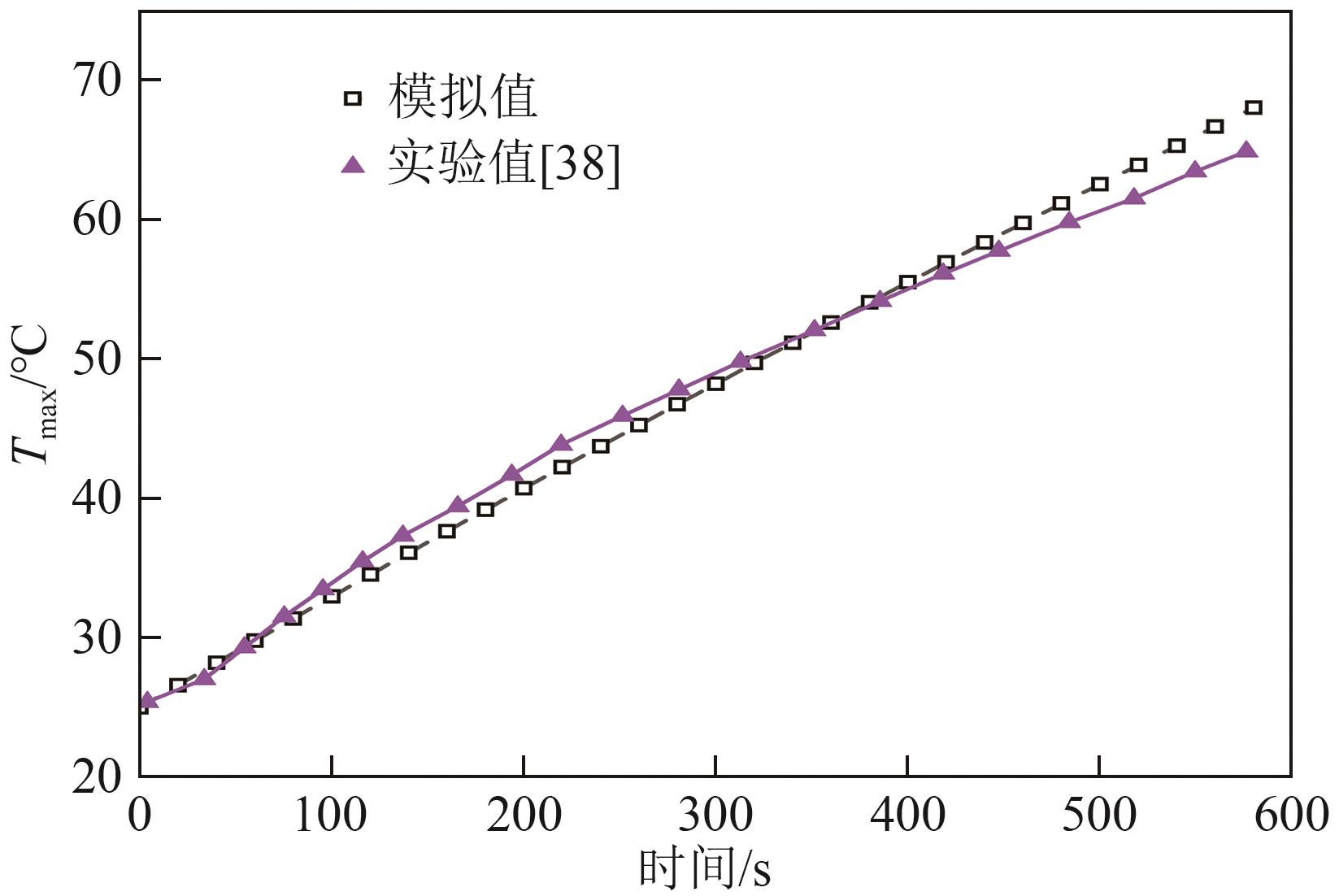
图2 单体电池模型温升验证
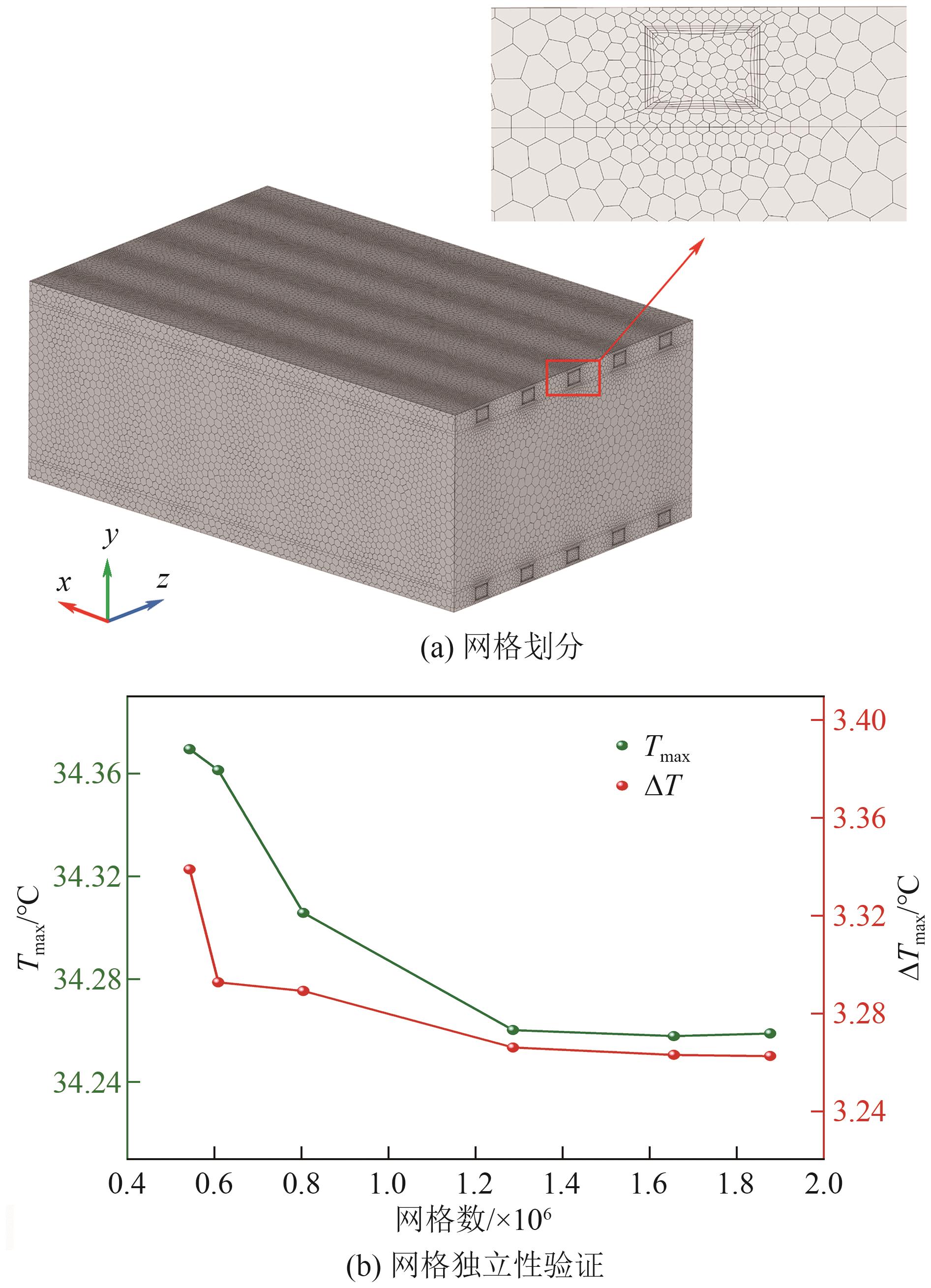
图3 网格划分和网格独立性验证
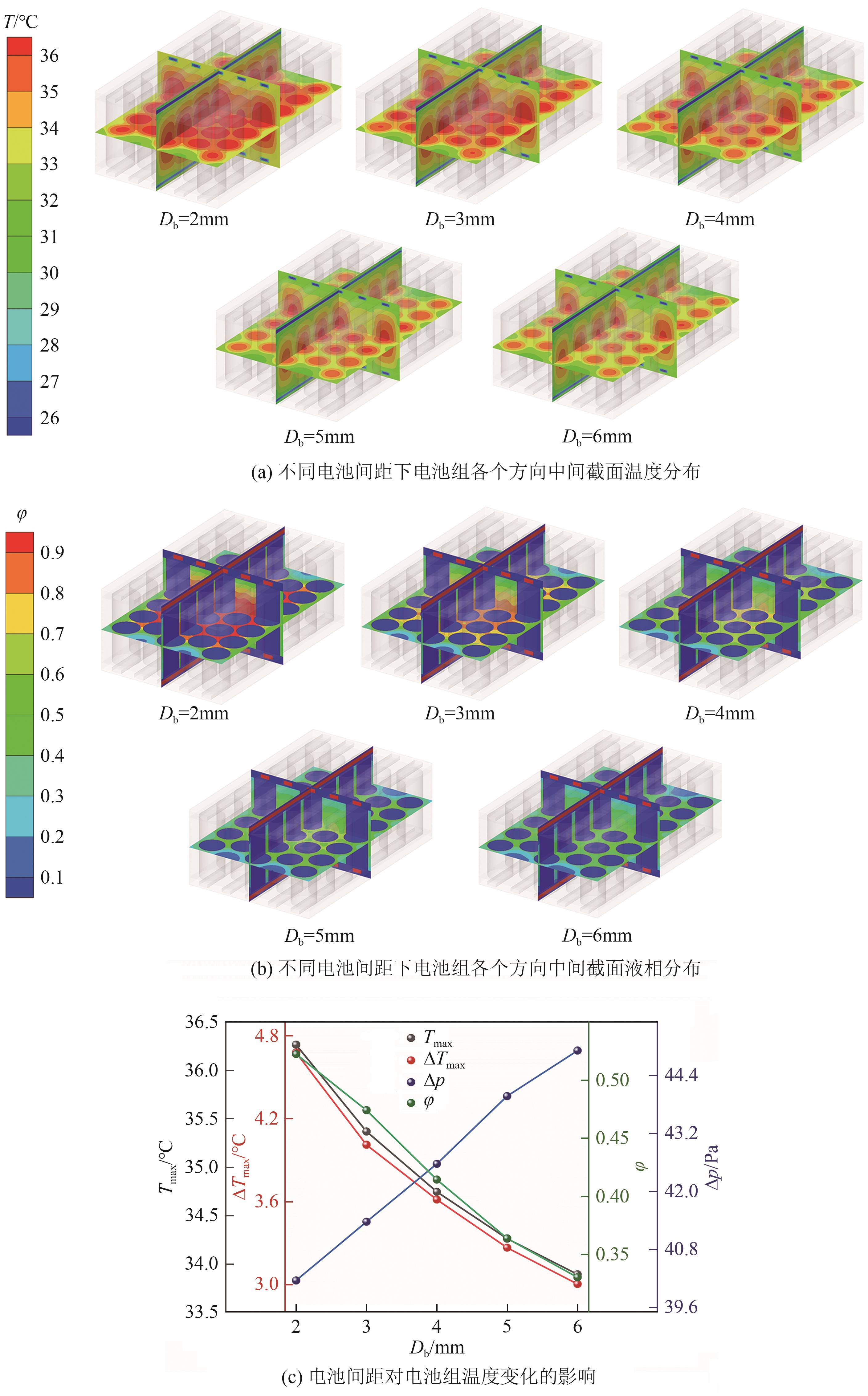
图4 不同电池间距下锂电池组散热性能变化
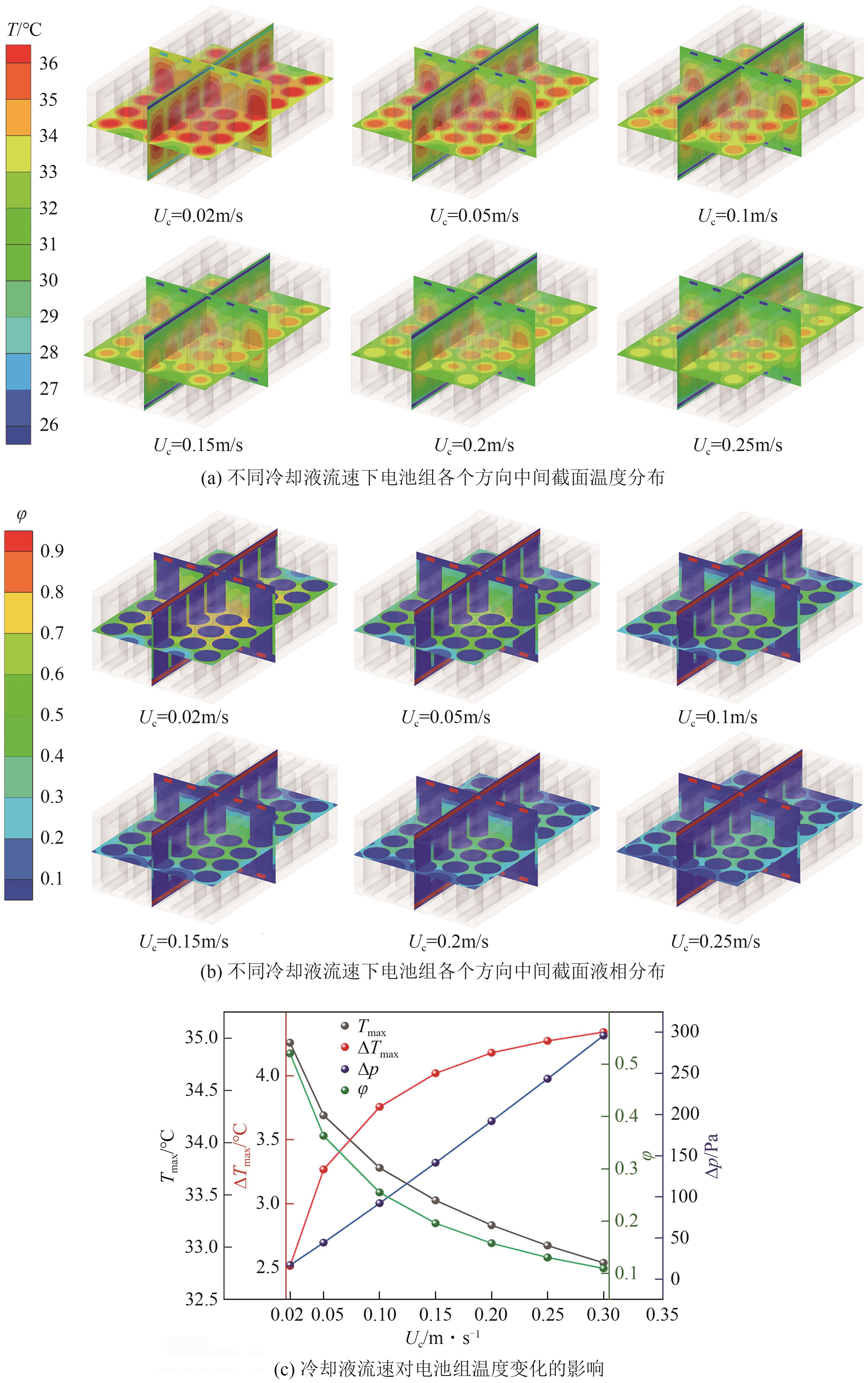
图5 不同冷却液流速下锂电池组散热性能变化
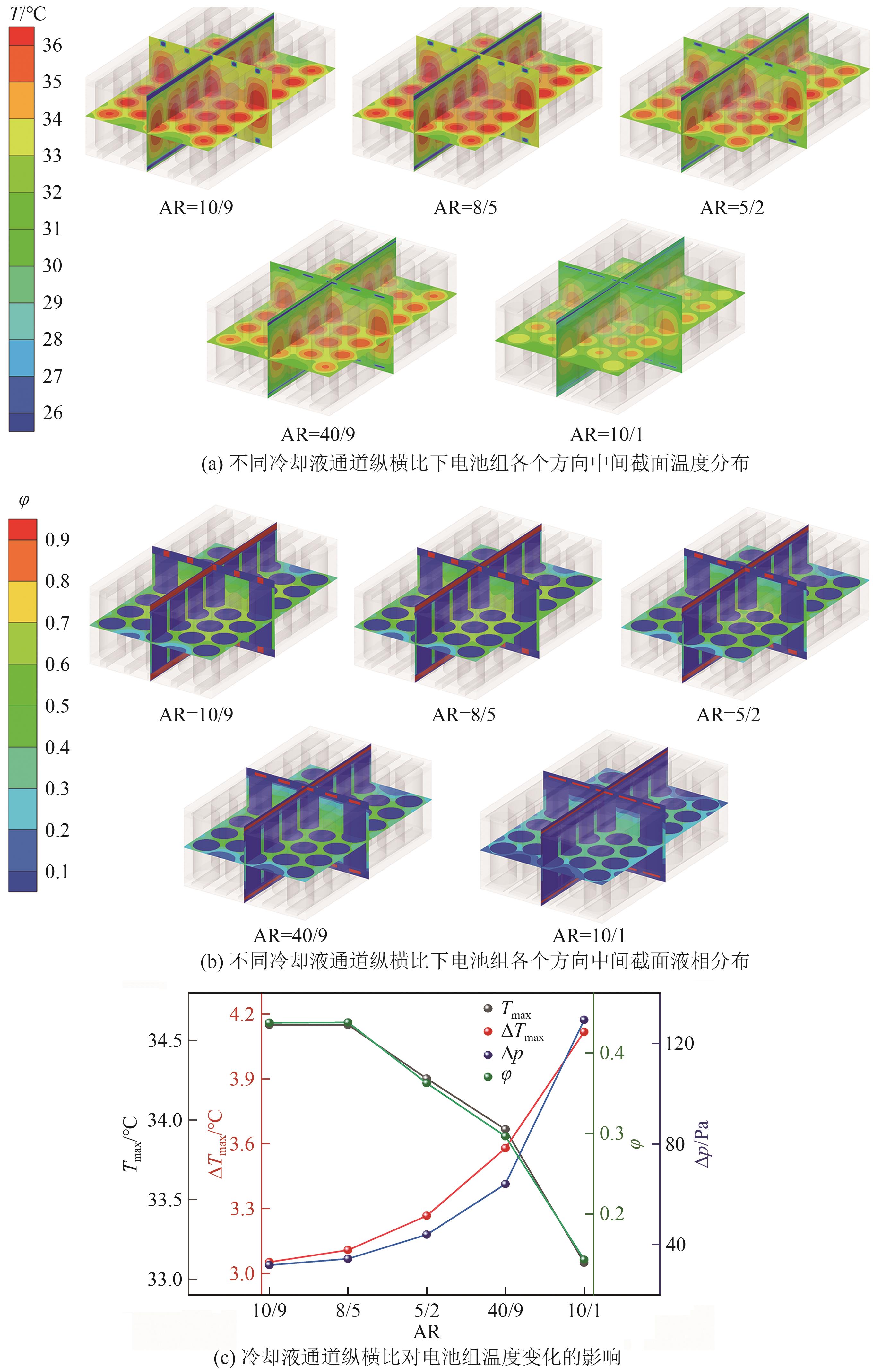
图6 不同冷却液通道纵横比下锂电池组散热性能变化
| 变量 | 下限 | 上限 |
|---|---|---|
| 电池间距Db/m | 2 | 5 |
| 冷却液流速Uc/m·s-1 | 0.01 | 0.25 |
| 冷却通道宽度i/mm | 6.67 | 20 |
表4 多目标优化问题的设计变量范围
| 变量 | 下限 | 上限 |
|---|---|---|
| 电池间距Db/m | 2 | 5 |
| 冷却液流速Uc/m·s-1 | 0.01 | 0.25 |
| 冷却通道宽度i/mm | 6.67 | 20 |
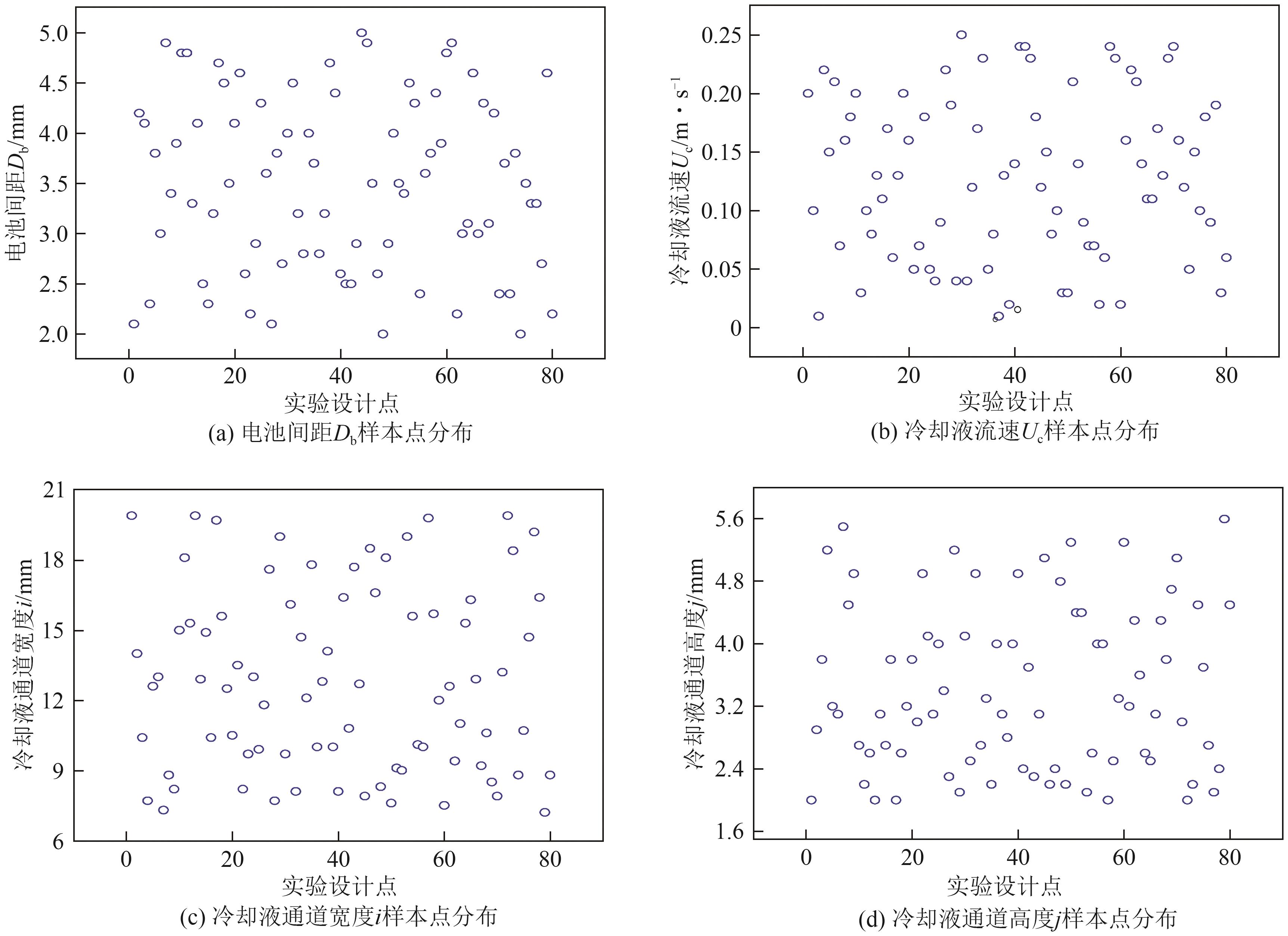
图7 设计变量样本分布点
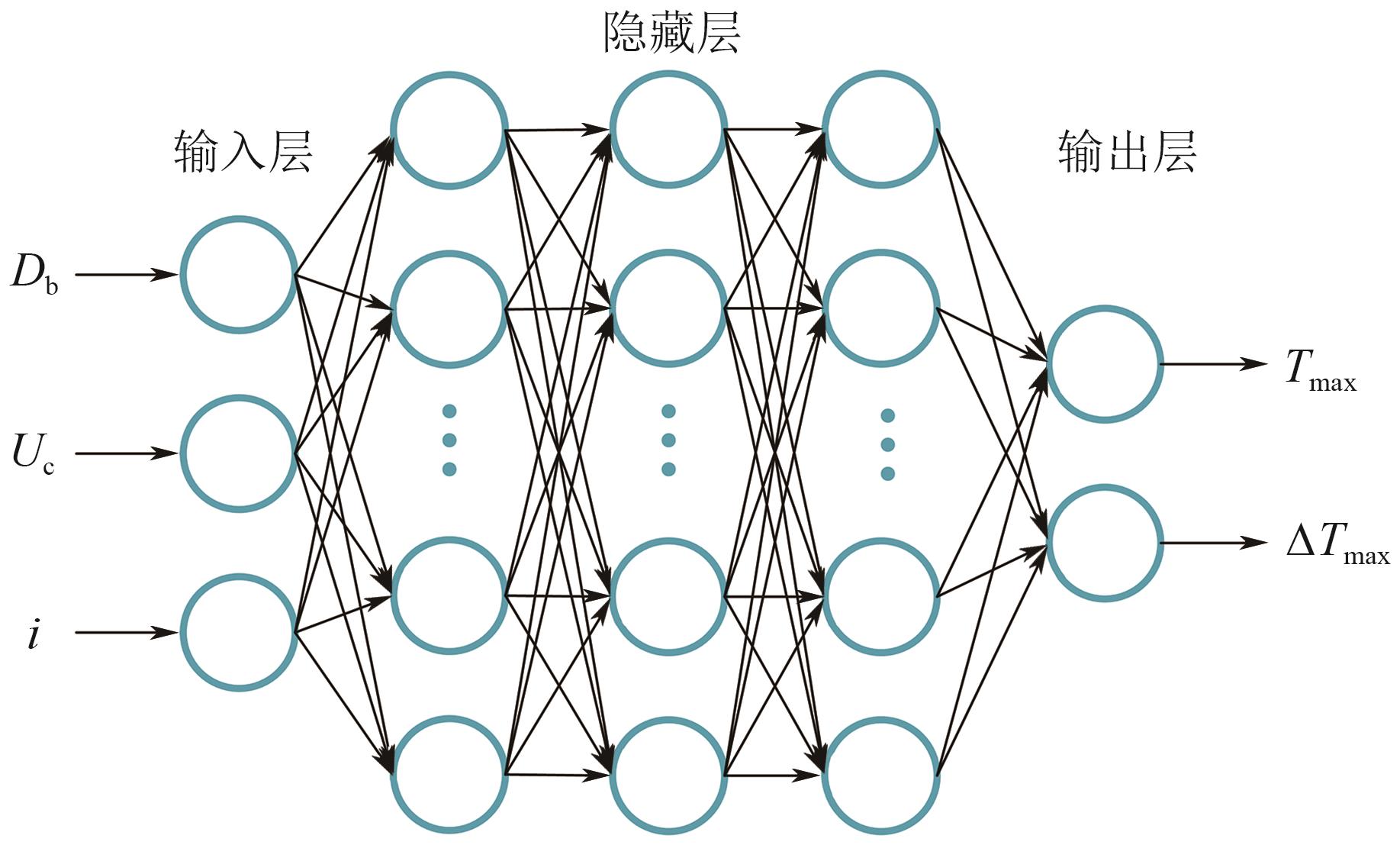
图8 人工神经网络
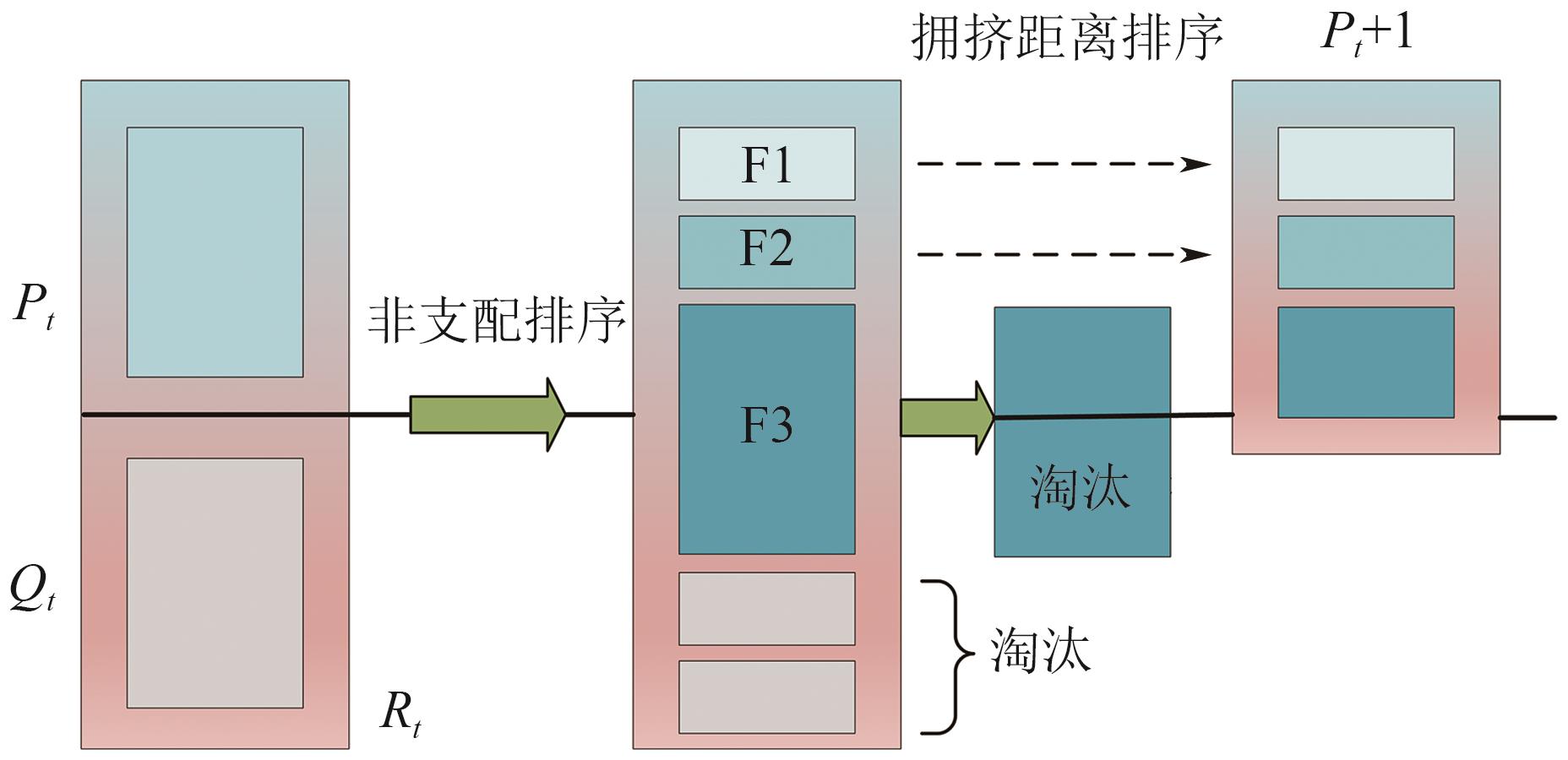
图9 每次迭代的NSGA-Ⅱ流程
| 参数 | 值 |
|---|---|
| 种群大小 | 125 |
| 最大进化代数 | 400 |
| 交叉比 | 0.8 |
| 变异率 | 0.2 |
| 变异比 | 0.1 |
表5 NSGA-Ⅱ算法参数
| 参数 | 值 |
|---|---|
| 种群大小 | 125 |
| 最大进化代数 | 400 |
| 交叉比 | 0.8 |
| 变异率 | 0.2 |
| 变异比 | 0.1 |
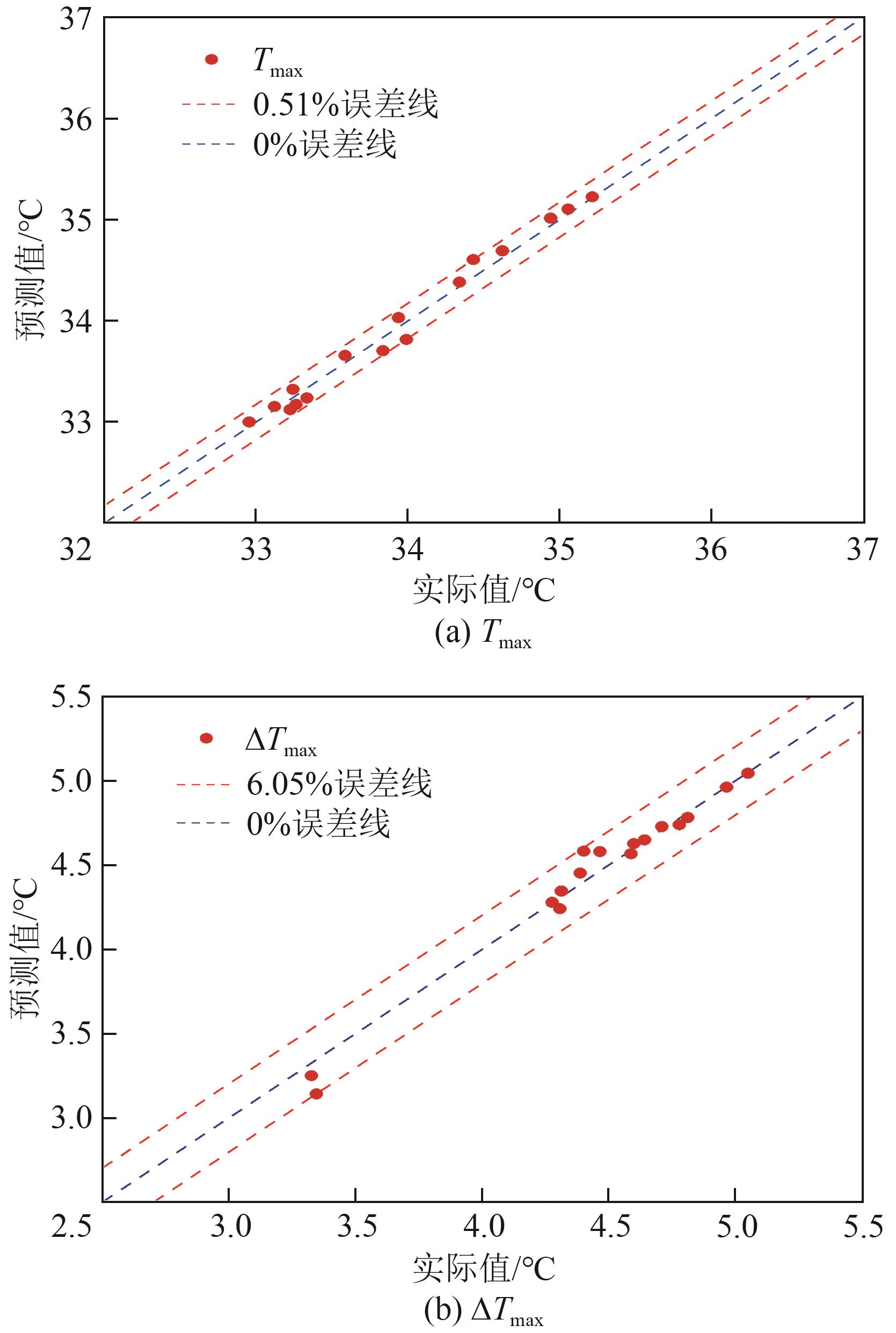
图10 CFD模拟结果与神经网络预测值的误差
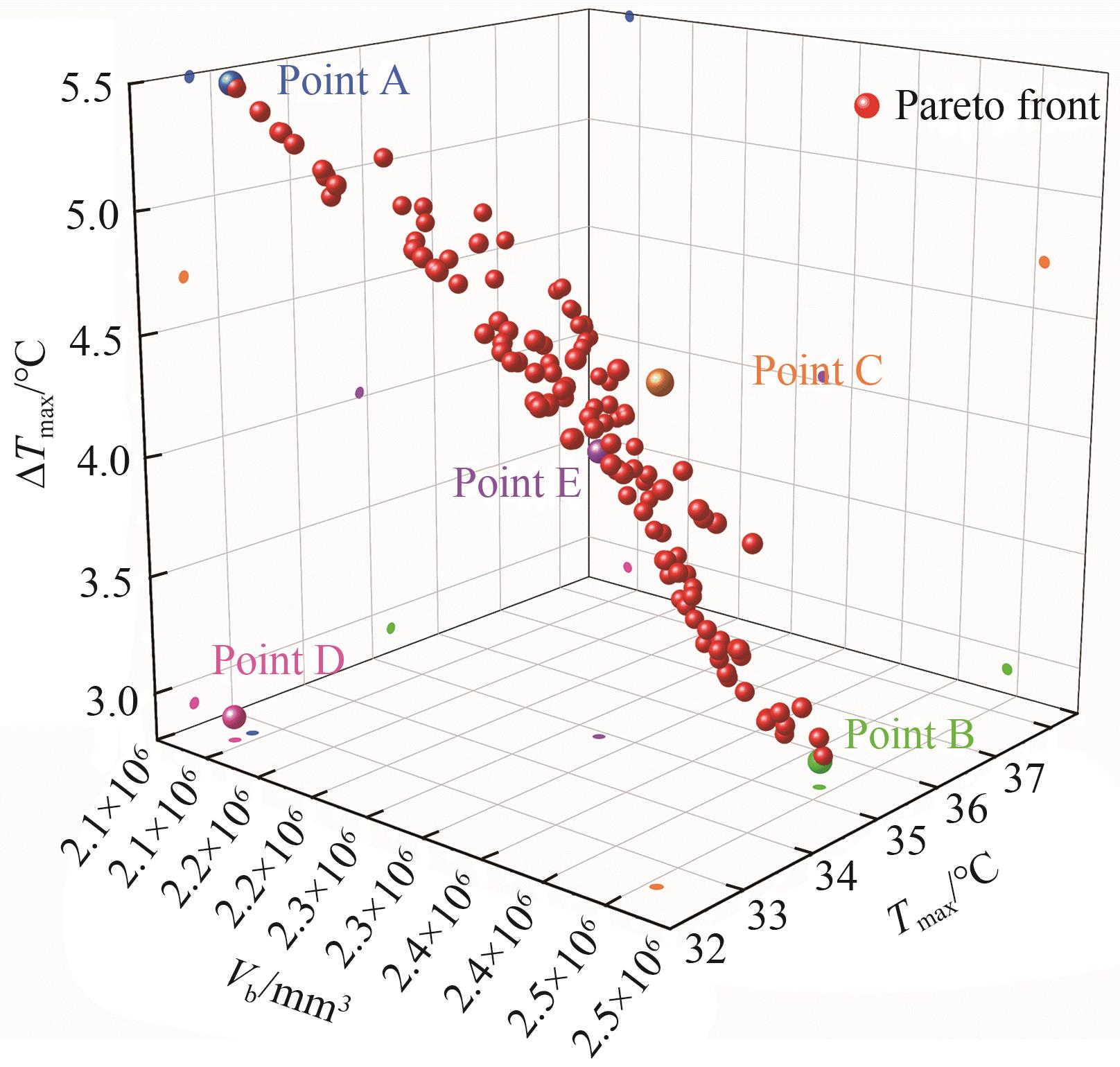
图11 Pareto最优解前沿
| 项目 | 参数 | 初始设计 | 优化设计 |
|---|---|---|---|
| 设计变量 | Db/mm | 5 | 3.52 |
| Uc/m·s-1 | 0.05 | 0.0214 | |
| i/mm | 10 | 18.9 | |
| 优化目标 | Vb/mm3 | 2461297 | 2274196 |
| Tmax/℃ | 34.26 | 34.89 | |
| ∆Tmax/℃ | 3.26 | 4.02 | |
| 其他参数 | j/mm | 4 | 2.12 |
| ∆p/Pa | 43.96 | 47.49 | |
| Wpump/W | 8.79×10⁻⁴ | 4.065×10⁻⁴ | |
| φ/% | 36 | 43 |
表6 初始设计与优化设计比较
| 项目 | 参数 | 初始设计 | 优化设计 |
|---|---|---|---|
| 设计变量 | Db/mm | 5 | 3.52 |
| Uc/m·s-1 | 0.05 | 0.0214 | |
| i/mm | 10 | 18.9 | |
| 优化目标 | Vb/mm3 | 2461297 | 2274196 |
| Tmax/℃ | 34.26 | 34.89 | |
| ∆Tmax/℃ | 3.26 | 4.02 | |
| 其他参数 | j/mm | 4 | 2.12 |
| ∆p/Pa | 43.96 | 47.49 | |
| Wpump/W | 8.79×10⁻⁴ | 4.065×10⁻⁴ | |
| φ/% | 36 | 43 |
| [1] | JIANG Guiwen, HUANG Juhua, LIU Mingchun, et al. Experiment and simulation of thermal management for a tube-shell Li-ion battery pack with composite phase change material[J]. Applied Thermal Engineering, 2017, 120: 1-9. |
| [2] | PUTRA Nandy, ARIANTARA Bambang, PAMUNGKAS Rangga Aji. Experimental investigation on performance of lithium-ion battery thermal management system using flat plate loop heat pipe for electric vehicle application[J]. Applied Thermal Engineering, 2016, 99: 784-789. |
| [3] | MOTLOCH Chester G, CHRISTOPHERSEN Jon P, BELT Jeffrey R, et al. High-power battery testing procedures and analytical methodologies for HEV’s[C]// SAE Technical Paper Series. SAE International, 2002: 797-802. |
| [4] | ZHAO Ding, CHEN Mingbiao, Jie LYU, et al. Multi-objective optimization of battery thermal management system combining response surface analysis and NSGA-II algorithm[J]. Energy Conversion and Management, 2023, 292: 117374. |
| [5] | LI Rui, GAN Yunhua, LUO Qiliang, et al. Research progress on efficient thermal management system for electric vehicle batteries based on two-phase transformation[J]. Applied Thermal Engineering, 2023, 234: 121270. |
| [6] | A A Hakeem AKINLABI, SOLYALI Davut. Configuration, design, and optimization of air-cooled battery thermal management system for electric vehicles: A review[J]. Renewable and Sustainable Energy Reviews, 2020, 125: 109815. |
| [7] | SMITH Joshua, SINGH Randeep, HINTERBERGER Michael, et al. Battery thermal management system for electric vehicle using heat pipes[J]. International Journal of Thermal Sciences, 2018, 134: 517-529. |
| [8] | XIN Qianqian, XIAO Jinsheng, YANG Tianqi, et al. Thermal management of lithium-ion batteries under high ambient temperature and rapid discharging using composite PCM and liquid cooling[J]. Applied Thermal Engineering, 2022, 210: 118230. |
| [9] | SHI Hong, LIU Meinan, LI Yonghao, et al. Multi-objective optimization of integrated lithium-ion battery thermal management system[J]. Applied Thermal Engineering, 2023, 223: 119991. |
| [10] | YANG Wen, ZHOU Fei, ZHOU Haobing, et al. Thermal performance of axial air cooling system with bionic surface structure for cylindrical lithium-ion battery module[J]. International Journal of Heat and Mass Transfer, 2020, 161: 120307. |
| [11] | XU Jun, GUO Zhechen, XU Ziming, et al. A systematic review and comparison of liquid-based cooling system for lithium-ion batteries[J]. eTransportation, 2023, 17: 100242. |
| [12] | RAO Zhonghao, ZHANG Xuan. Investigation on thermal management performance of wedge-shaped microchannels for rectangular Li-ion batteries[J]. International Journal of Energy Research, 2019, 43(8): 3876-3890. |
| [13] | 何瑞强, 方敏, 周健夺, 等. 锂电池热管理用TPE基柔性复合相变材料的研究进展[J]. 化工进展, 2024, 43(6): 3159-3173. |
| HE Ruiqiang, FANG Min, ZHOU Jianduo, et al. Research progress of TPE-based flexible composite phase change materials for thermal management of lithium batteries[J]. Chemical Industry and Engineering Progress, 2024, 43(6): 3159-3173. | |
| [14] | GAN Yunhua, WANG Jianqin, LIANG Jialin, et al. Development of thermal equivalent circuit model of heat pipe-based thermal management system for a battery module with cylindrical cells[J]. Applied Thermal Engineering, 2020, 164: 114523. |
| [15] | WANG Jianqin, GAN Yunhua, LIANG Jialin, et al. Sensitivity analysis of factors influencing a heat pipe-based thermal management system for a battery module with cylindrical cells[J]. Applied Thermal Engineering, 2019, 151: 475-485. |
| [16] | LIANG Jialin, GAN Yunhua, LI Yong. Investigation on the thermal performance of a battery thermal management system using heat pipe under different ambient temperatures[J]. Energy Conversion and Management, 2018, 155: 1-9. |
| [17] | GAN Yunhua, HE Linfeng, LIANG Jialin, et al. A numerical study on the performance of a thermal management system for a battery pack with cylindrical cells based on heat pipes[J]. Applied Thermal Engineering, 2020, 179: 115740. |
| [18] | 赵佳腾, 饶中浩, 李意民. 基于相变材料的动力电池热管理数值模拟[J]. 工程热物理学报, 2016, 37(6): 1275-1280. |
| ZHAO Jiateng, RAO Zhonghao, LI Yimin. Numerical simulation of power battery thermal management based on phase change materials[J]. Journal of Engineering Thermophysics, 2016, 37(6): 1275-1280. | |
| [19] | YI Feng, Jiaqiang E, ZHANG Bin, et al. Effects analysis on heat dissipation characteristics of lithium-ion battery thermal management system under the synergism of phase change material and liquid cooling method[J]. Renewable Energy, 2022, 181: 472-489. |
| [20] | 陈志峰, 陈江英, 李翔晟, 等. 相变材料强化传热的动力电池散热性能研究[J]. 电源技术, 2021, 45(10): 1283-1286. |
| CHEN Zhifeng, CHEN Jiangying, LI Xiangsheng, et al. Research on heat dissipation performance of power battery with enhanced heat transfer by phase change material[J]. Chinese Journal of Power Sources, 2021, 45(10): 1283-1286. | |
| [21] | 黄钦, 余凌峰, 陈凯. 相变材料耦合冷板电池热管理系统的优化设计[J]. 应用数学和力学, 2022, 43(11): 1195-1202. |
| HUANG Qin, YU Lingfeng, CHEN Kai. Design of the battery thermal management system with phase change material coupled cold plates[J]. Applied Mathematics and Mechanics, 2022, 43(11): 1195-1202. | |
| [22] | KONG Depeng, PENG Rongqi, PING Ping, et al. A novel battery thermal management system coupling with PCM and optimized controllable liquid cooling for different ambient temperatures[J]. Energy Conversion and Management, 2020, 204: 112280. |
| [23] | DING Yuzhang, JI Haocheng, WEI Minxiang, et al. Effect of liquid cooling system structure on lithium-ion battery pack temperature fields[J]. International Journal of Heat and Mass Transfer, 2022, 183: 122178. |
| [24] | LI Ao, YUEN Anthony Chun Yin, WANG Wei, et al. Numerical investigation on the thermal management of lithium-ion battery system and cooling effect optimization[J]. Applied Thermal Engineering, 2022, 215: 118966. |
| [25] | MANSOUR Saba, JALALI Alireza, ASHJAEE Mehdi, et al. Multi-objective optimization of a sandwich rectangular-channel liquid cooling plate battery thermal management system: A deep-learning approach[J]. Energy Conversion and Management, 2023, 290: 117200. |
| [26] | MOKHTARI MEHMANDOOSTI Mohammad, KOWSARY Farshad. Artificial neural network-based multi-objective optimization of cooling of lithium-ion batteries used in electric vehicles utilizing pulsating coolant flow[J]. Applied Thermal Engineering, 2023, 219: 119385. |
| [27] | LENG Ziyu, YUAN Yanping, CAO Xiaoling, et al. Heat pipe/phase change material thermal management of Li-ion power battery packs: A numerical study on coupled heat transfer performance[J]. Energy, 2022, 240: 122754. |
| [28] | KHAN Shahid Ali, Chika EZE, DONG Kejian, et al. Design of a new optimized U-shaped lightweight liquid-cooled battery thermal management system for electric vehicles: A machine learning approach[J]. International Communications in Heat and Mass Transfer, 2022, 136: 106209. |
| [29] | HE Linfeng, TANG Xianwen, LUO Qiliang, et al. Structure optimization of a heat pipe-cooling battery thermal management system based on fuzzy grey relational analysis[J]. International Journal of Heat and Mass Transfer, 2022, 182: 121924. |
| [30] | LIU Feifei, CHEN Yangyang, QIN Wu, et al. Optimal design of liquid cooling structure with bionic leaf vein branch channel for power battery[J]. Applied Thermal Engineering, 2023, 218: 119283. |
| [31] | DRAKE S J, WETZ D A, OSTANEK J K, et al. Measurement of anisotropic thermophysical properties of cylindrical Li-ion cells[J]. Journal of Power Sources, 2014, 252: 298-304. |
| [32] | LI Li, LING Lei, XIE Yajun, et al. Comparative study of thermal management systems with different cooling structures for cylindrical battery modules: Side-cooling vs. terminal-cooling[J]. Energy, 2023, 274: 127414. |
| [33] | 黄菊花, 陈强, 曹铭, 等. 相变材料与水套式液冷结构耦合的圆柱型锂离子电池组热管理仿真分析[J]. 储能科学与技术, 2021, 10(4): 1423-1431. |
| HUANG Juhua, CHEN Qiang, CAO Ming, et al. Thermal management simulation analysis of cylindrical lithium-ion battery pack coupled with phase change material and water-jacketed liquid-cooled structures[J]. Energy Storage Science and Technology, 2021, 10(4): 1423-1431. | |
| [34] | LEBROUHI B E, LAMRANI B, OUASSAID M, et al. Low-cost numerical lumped modelling of lithium-ion battery pack with phase change material and liquid cooling thermal management system[J]. Journal of Energy Storage, 2022, 54: 105293. |
| [35] | 刘欣悦. 电动汽车动力电池热分析及液冷控制研究[D]. 重庆: 重庆邮电大学, 2022. |
| LIU Xinyue. Research on thermal analysis and liquid cooling control of electric vehicle power battery[D]. Chongqing: Chongqing University of Posts and Telecommunications, 2022. | |
| [36] | CHOI Hongseok, LEE Hyoseong, KIM Jeebeom, et al. Hybrid single-phase immersion cooling structure for battery thermal management under fast-charging conditions[J]. Energy Conversion and Management, 2023, 287: 117053. |
| [37] | BERNARDI D, PAWLIKOWSKI E, NEWMAN J. A general energy balance for battery systems[J]. Journal of the Electrochemical Society, 1985, 132(1): 5-12. |
| [38] | JIANG Guiwen, HUANG Juhua, FU Yanshu, et al. Thermal optimization of composite phase change material/expanded graphite for Li-ion battery thermal management[J]. Applied Thermal Engineering, 2016, 108: 1119-1125. |
| [39] | IORDANIS Ioannis, KOUKOUVINOS Christos, SILOU Iliana. On the efficacy of conditioned and progressive Latin hypercube sampling in supervised machine learning[J]. Applied Numerical Mathematics, 2025, 208: 256-270. |
| [40] | AASI Harpreet Kaur, MISHRA Manish. Experimental investigation and ANN modelling on thermo-hydraulic efficacy of cross-flow three-fluid plate-fin heat exchanger[J]. International Journal of Thermal Sciences, 2021, 164: 106870. |
| [1] | 鹿兰停, 康胜, 许文轲, 蒋子强, 王德民, 刘东阳, 赵亮, 徐春明. 化工领域中的人工智能:人工神经网络技术的应用与前景[J]. 化工进展, 2025, 44(8): 4808-4820. |
| [2] | 李卡, 夏宇轩, 吴晓琴, 易兰, 罗浩. 双层多孔介质燃烧反应器的孔隙尺度计算流体动力学模拟[J]. 化工进展, 2025, 44(8): 4381-4393. |
| [3] | 沈宪琨, 贾志勇, 蓝晓程, 王铁峰. CFD-PBM耦合模型用于浆态床反应器的研究进展[J]. 化工进展, 2025, 44(8): 4408-4418. |
| [4] | 朱孝忠, 房韡, 赵毅. 基于深度VGG模型在乙烯裂解炉装置的预测应用[J]. 化工进展, 2025, 44(8): 4419-4429. |
| [5] | 续文钧, 张建波, 郭彦霞, 李会泉, 李少鹏, 任艺凌. 锚框式桨结构参数对煤气化渣活化过程流场特性的影响[J]. 化工进展, 2025, 44(8): 4463-4477. |
| [6] | 王雅彬, 赵碧丹, 徐繁, 兰斌, 王军武. 基于结构双流体模型的循环流化床全回路模拟[J]. 化工进展, 2025, 44(8): 4500-4512. |
| [7] | 安澍, 马永丽, 丰雷, 张紫浩, 刘明言. 网式水基泡沫发泡过程CFD模拟[J]. 化工进展, 2025, 44(8): 4545-4555. |
| [8] | 卢玉成, 黄涛, 罗亚军, 刘佳辉, 巩飞艳, 严超宇, 刘晓星. 水悬浮造粒搅拌釜内气液固三相混合特性CFD模拟[J]. 化工进展, 2025, 44(8): 4556-4566. |
| [9] | 刘廷廷, 孟子程, 穆丽静, 陈锡忠, 刘岑凡. 基于图卷积神经网络的乙烯氧化反应器的三维物理场快速预测[J]. 化工进展, 2025, 44(8): 4571-4581. |
| [10] | 史天乐, 李飞, 陈昇, 卢春喜, 王维. 基于CFD模拟的人工神经网络动态溯源模型[J]. 化工进展, 2025, 44(8): 4772-4784. |
| [11] | 周鹏辉, 曾琳, 代黎, 冯小波, 倪笛. 响应面法和熵权法对离心风机的多目标性能优化[J]. 化工进展, 2025, 44(6): 3271-3279. |
| [12] | 周鹏辉, 曾琳, 代黎, 李嘉乐, 陈建琦, 李剑平, 汪华林. 微旋流混合器的混合特性数值计算[J]. 化工进展, 2025, 44(6): 3280-3287. |
| [13] | 李凌涵, 张淑美, 董峰. 少样本场景下的气液两相流动状态识别[J]. 化工进展, 2025, 44(4): 1794-1805. |
| [14] | 李金霞, 茹浩然, 刘文凯, 孙宏军, 丁红兵. 基于三流体模型物理引导神经网络的扰动波速预测[J]. 化工进展, 2025, 44(4): 1815-1824. |
| [15] | 任世鹏, 安元, 娄春, 梅晟东, 刘凯, 陈新建. 融合深度学习算法的炉内燃烧温度场分布在线重建[J]. 化工进展, 2025, 44(4): 1923-1933. |
| 阅读次数 | ||||||
|
全文 |
|
|||||
|
摘要 |
|
|||||