化工进展 ›› 2025, Vol. 44 ›› Issue (11): 6674-6687.DOI: 10.16085/j.issn.1000-6613.2024-1509
• 资源与环境化工 • 上一篇
基于铝掺杂碳点的荧光探针用于环烷酸的定量检测
王平1( ), 宋卫余1, 任红威2, 段二红2, 陈春茂1()
- 1.中国石油大学(北京)化学工程与环境学院,重质油全国重点实验室,北京 102249
2.河北科技大学环境科学与工程学院,河北 石家庄 050018
-
收稿日期:2024-09-14修回日期:2024-10-14出版日期:2025-11-25发布日期:2025-12-08 -
通讯作者:陈春茂 -
作者简介:王平(1987—),女,博士研究生,研究方向为环境化工、催化化学。E-mail:2023310805@student.cup.edu.cn。 -
基金资助:国家自然科学基金(52004080);河北省自然科学基金(E2022208046)
A fluorescence probe based on aluminum-doped carbon dots for the quantitative detection of naphthenic acid
WANG Ping1(), SONG Weiyu1, REN Hongwei2, DUAN Erhong2, CHEN Chunmao1()
- 1.State Key Laboratory of Heavy Oil Processing, College of Chemical Engineering and Environment, China University of Petroleum, Beijing 102249, China
2.School of Environmental Science and Engineering, Hebei University of Science and Technology, Shijiazhuang 050018, Hebei, China
-
Received:2024-09-14Revised:2024-10-14Online:2025-11-25Published:2025-12-08 -
Contact:CHEN Chunmao

摘要:
开发了一种基于铝掺杂碳点(Al-CDs)的荧光探针,用于1-金刚烷羧酸作为模型环烷酸的定量检测方法。首先以L-精氨酸为碳源和氢键受体、乙二醇为氢键供体形成二元低共熔溶剂(B-DES),再添加AlCl3‧6H2O为铝源,合成三元低共熔溶剂(T-DES),最后T-DES经过水热法合成了Al-CDs。结果表明,通过低共熔溶剂(DES)合成Al-CDs,一方面可以使制备的Al-CDs尺寸分布均匀且结构稳定,另一方面可以有针对性地将目标官能团在Al-CDs表面进行修饰,同时实现了铝元素的成功掺杂。所制备的Al-CDs具有优异的荧光稳定性,对模型环烷酸具有良好的荧光响应,在0.5~20mmol/L的模型环烷酸浓度范围内呈线性关系,检出限0.163mmol/L,检测是通过Al-CDs和模型环烷酸之间发生配位作用产生的静态淬灭机制实现的,将Al-CDs应用于加标废水的检测,检测结果与气相色谱法结果一致。本工作为碳点在石化工业中的荧光检测提供了新的见解,拓宽了碳点在有机污染物检测中的应用。
中图分类号:
引用本文
王平, 宋卫余, 任红威, 段二红, 陈春茂. 基于铝掺杂碳点的荧光探针用于环烷酸的定量检测[J]. 化工进展, 2025, 44(11): 6674-6687.
WANG Ping, SONG Weiyu, REN Hongwei, DUAN Erhong, CHEN Chunmao. A fluorescence probe based on aluminum-doped carbon dots for the quantitative detection of naphthenic acid[J]. Chemical Industry and Engineering Progress, 2025, 44(11): 6674-6687.
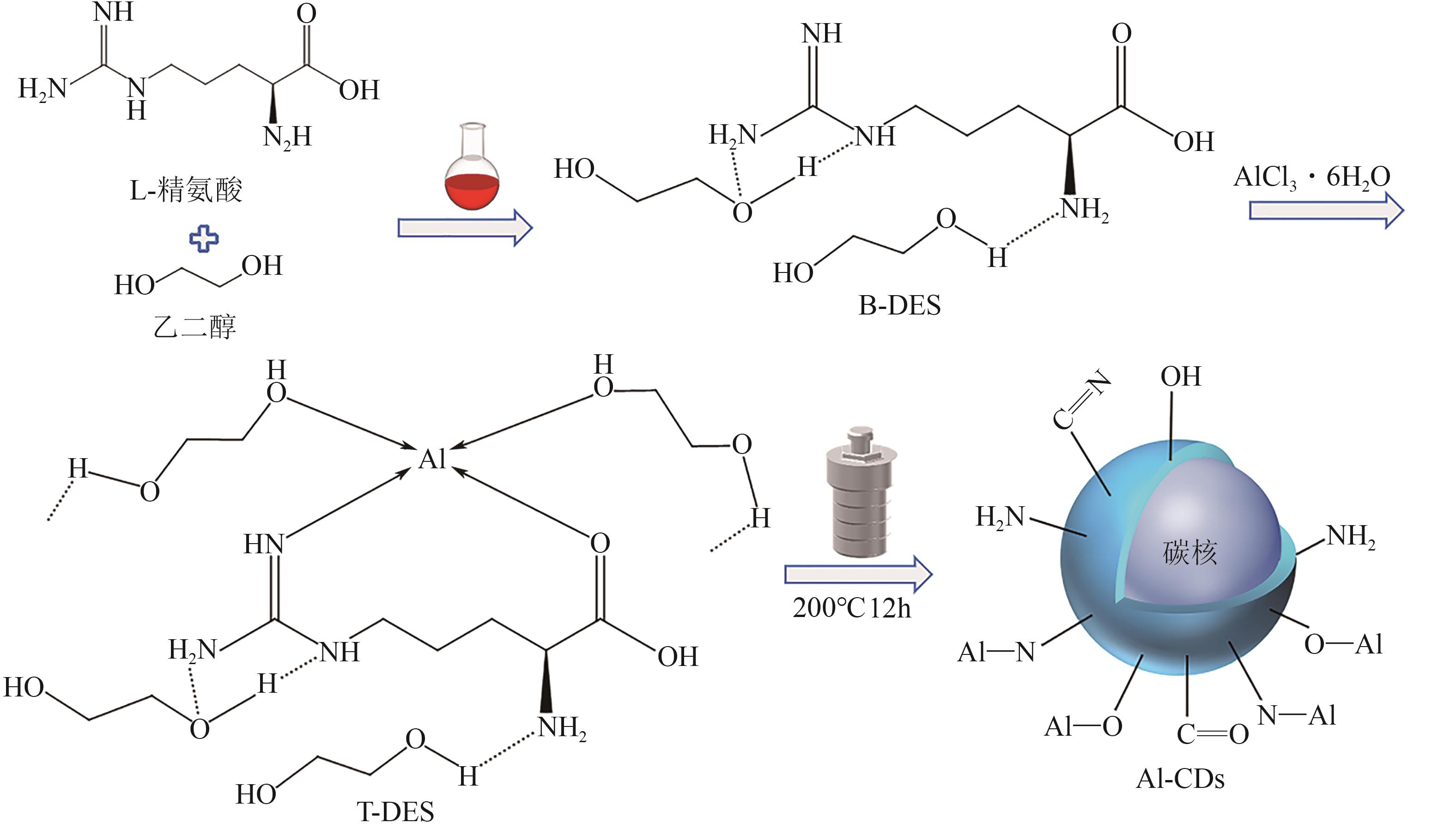
图1 Al-CDs的合成路线
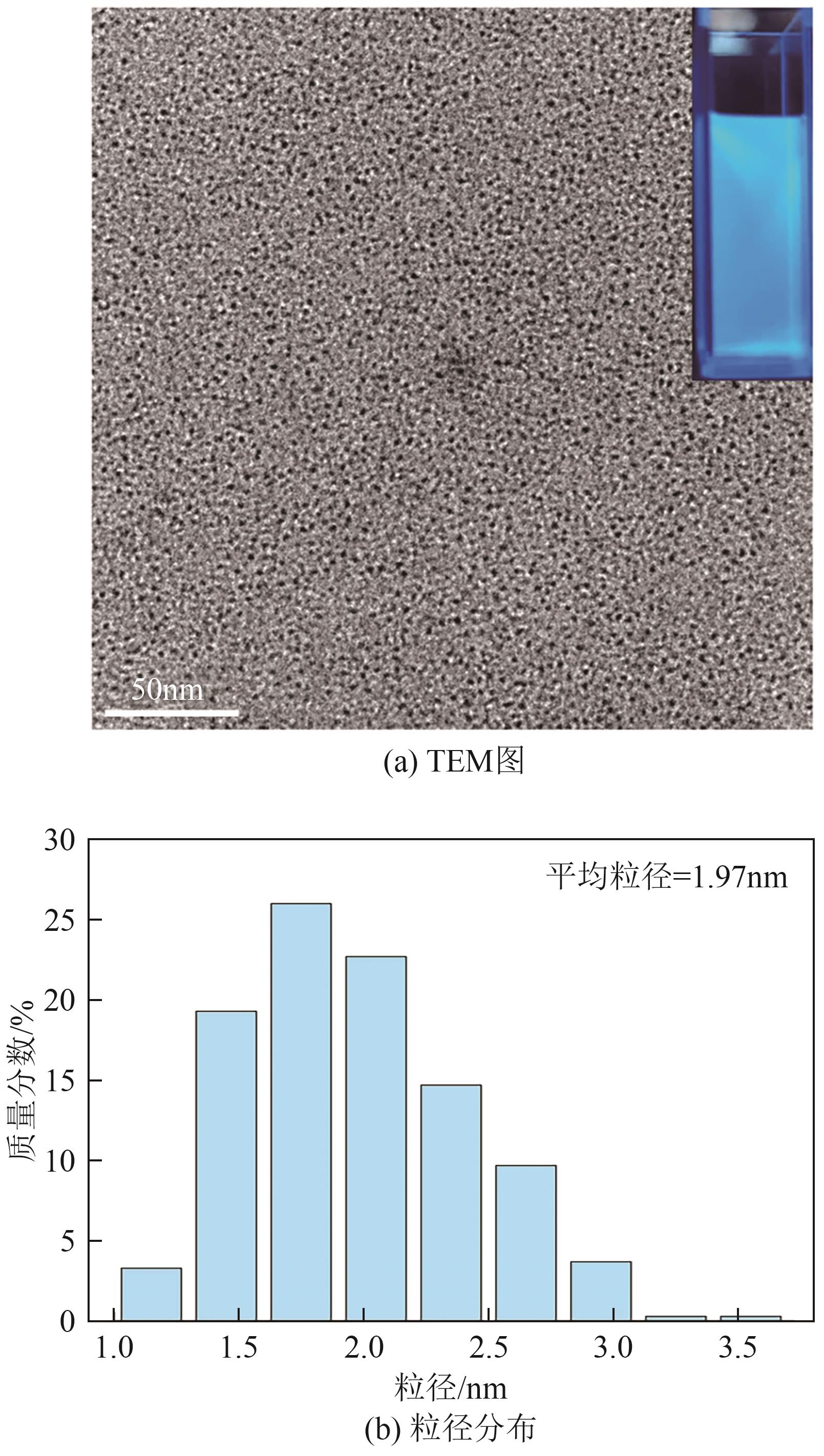
图2 Al-CDs的TEM和粒径分布
| 粒径分布/nm | 平均值/nm | 质量分数/% |
|---|---|---|
| 1~1.3 | 1.15 | 3.3 |
| 1.3~1.6 | 1.45 | 19.3 |
| 1.6~1.9 | 1.75 | 26.0 |
| 1.9~2.2 | 2.05 | 22.7 |
| 2.2~2.5 | 2.35 | 14.7 |
| 2.5~2.8 | 2.65 | 9.7 |
| 2.8~3.1 | 2.95 | 3.7 |
| 3.1~3.4 | 3.25 | 0.3 |
| 3.4~3.7 | 3.55 | 0.3 |
| 3.7~4 | 3.85 | 0 |
表1 Al-CDs的粒径分布数据
| 粒径分布/nm | 平均值/nm | 质量分数/% |
|---|---|---|
| 1~1.3 | 1.15 | 3.3 |
| 1.3~1.6 | 1.45 | 19.3 |
| 1.6~1.9 | 1.75 | 26.0 |
| 1.9~2.2 | 2.05 | 22.7 |
| 2.2~2.5 | 2.35 | 14.7 |
| 2.5~2.8 | 2.65 | 9.7 |
| 2.8~3.1 | 2.95 | 3.7 |
| 3.1~3.4 | 3.25 | 0.3 |
| 3.4~3.7 | 3.55 | 0.3 |
| 3.7~4 | 3.85 | 0 |
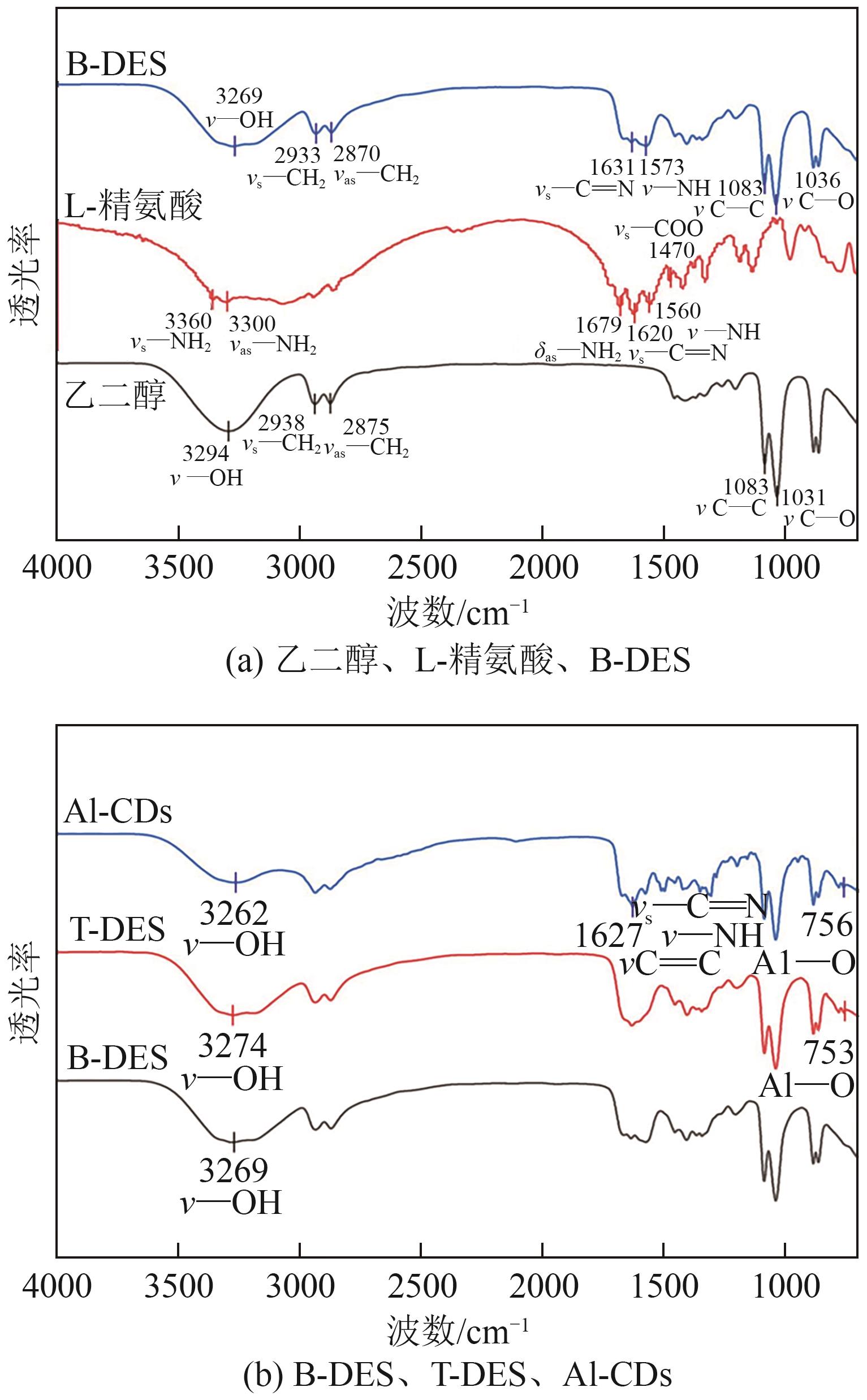
图3 Al-CDs形成过程的FT-IR谱图
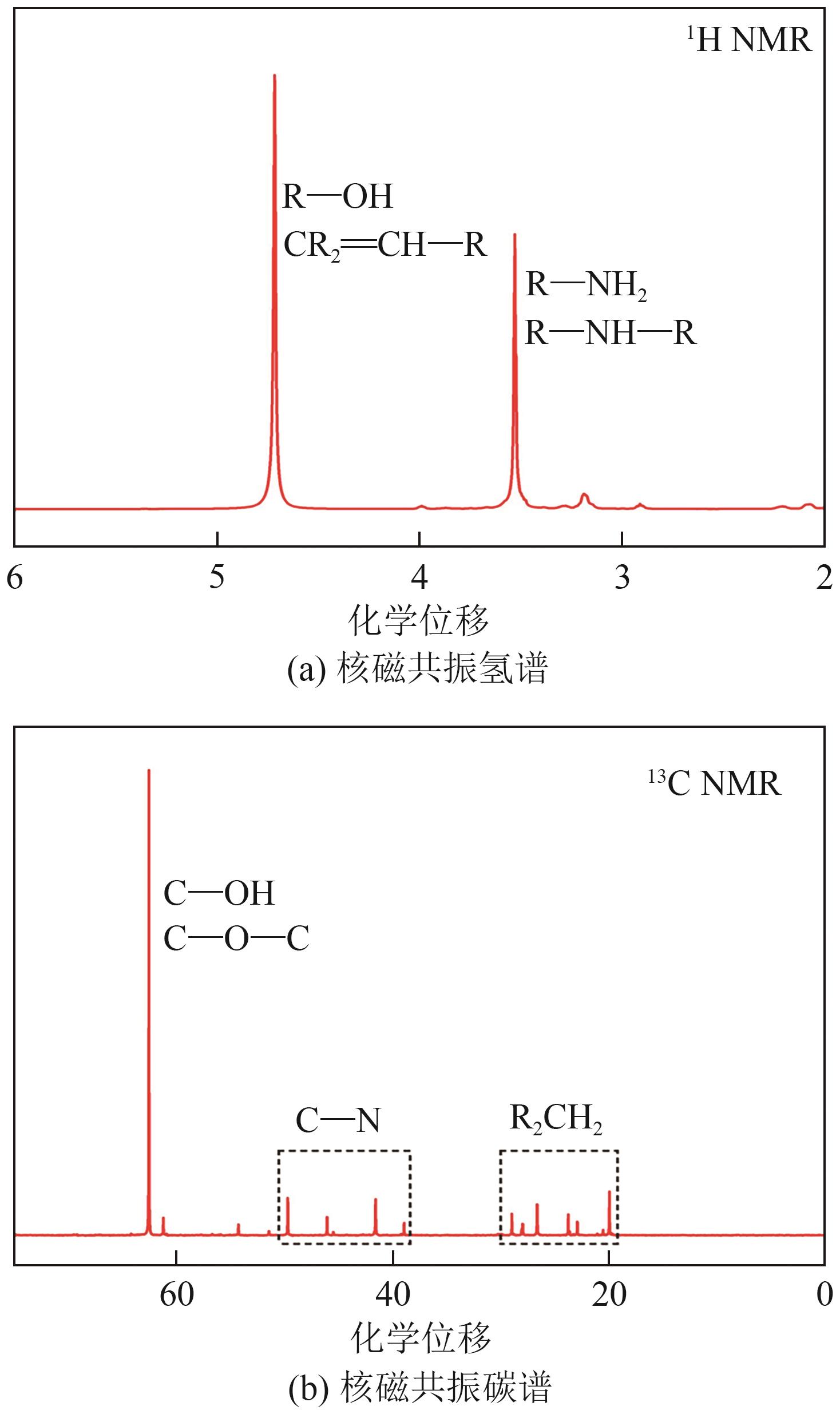
图4 Al-CDs的核磁共振氢谱和碳谱
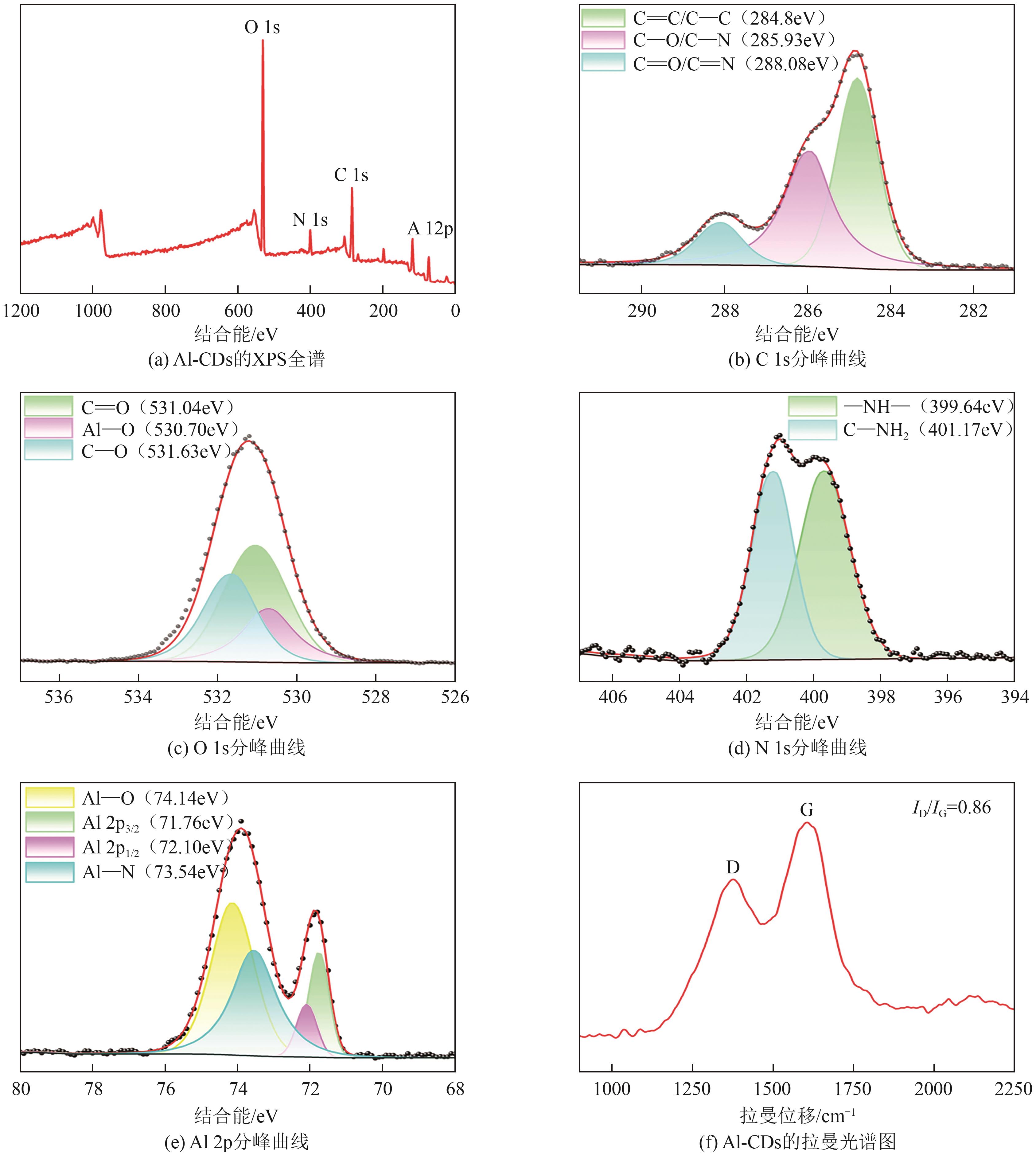
图5 Al-CDs的XPS谱图和拉曼光谱图
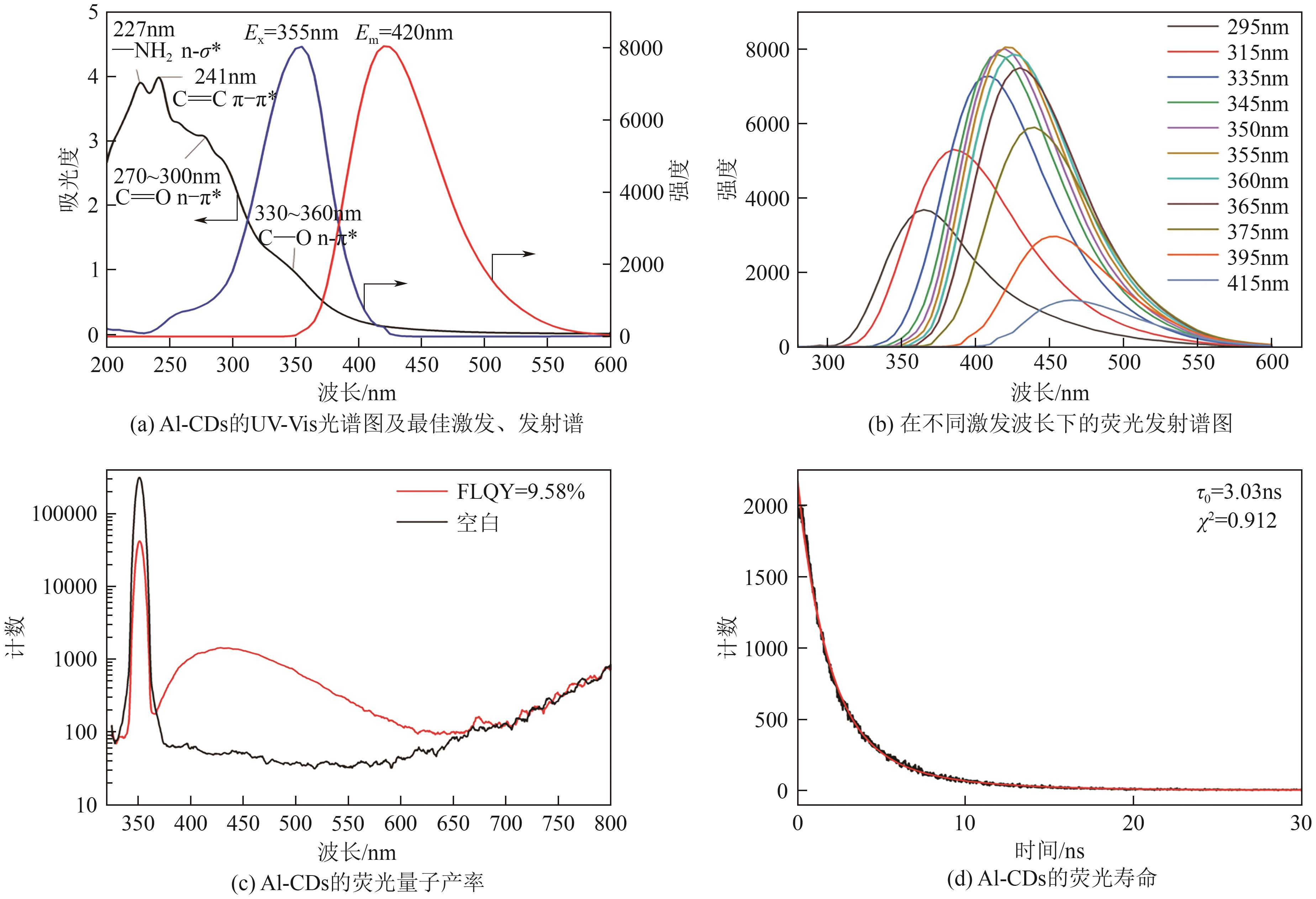
图6 Al-CDs的光学性质
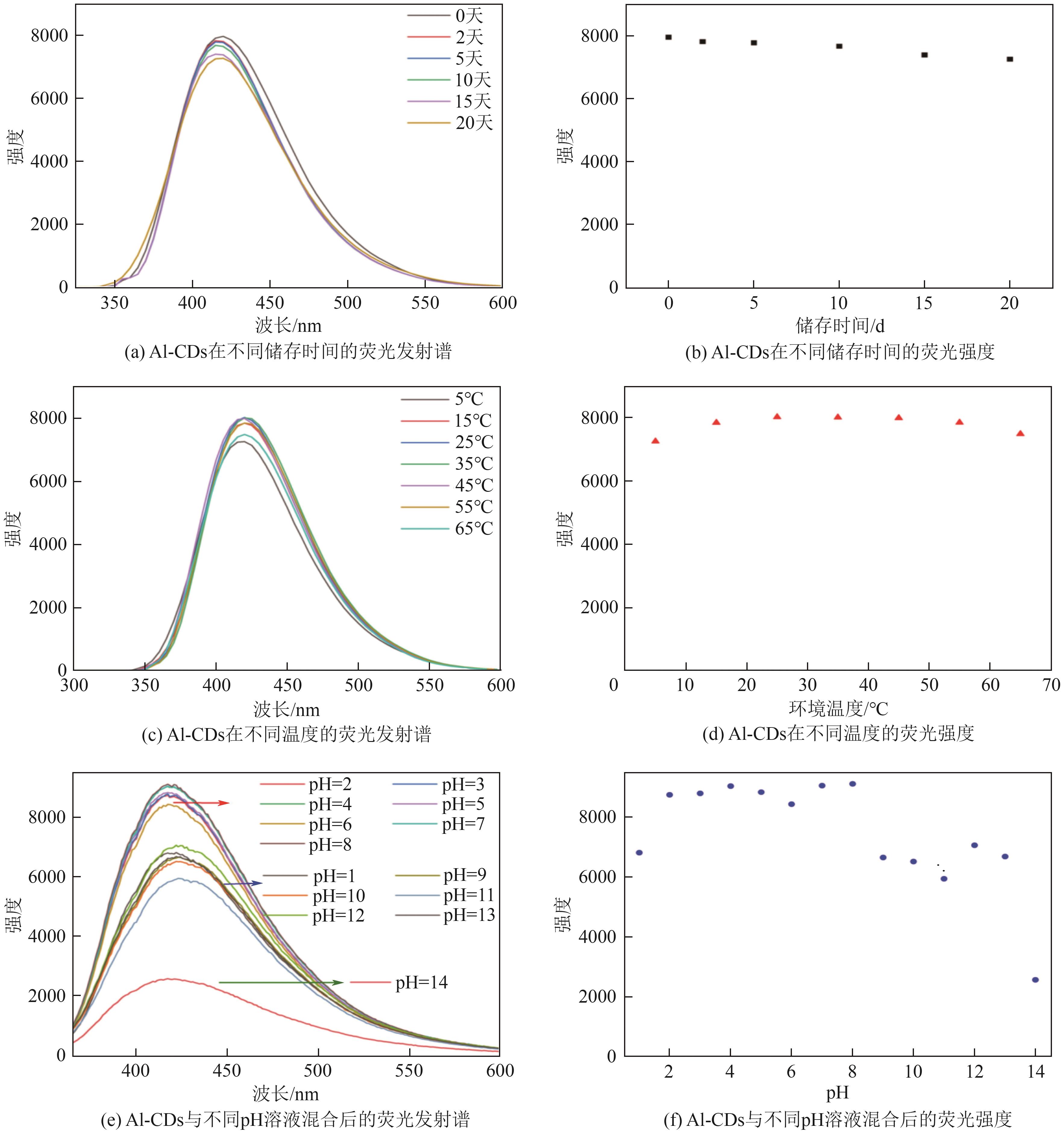
图7 不同因素对Al-CDs荧光稳定性的影响
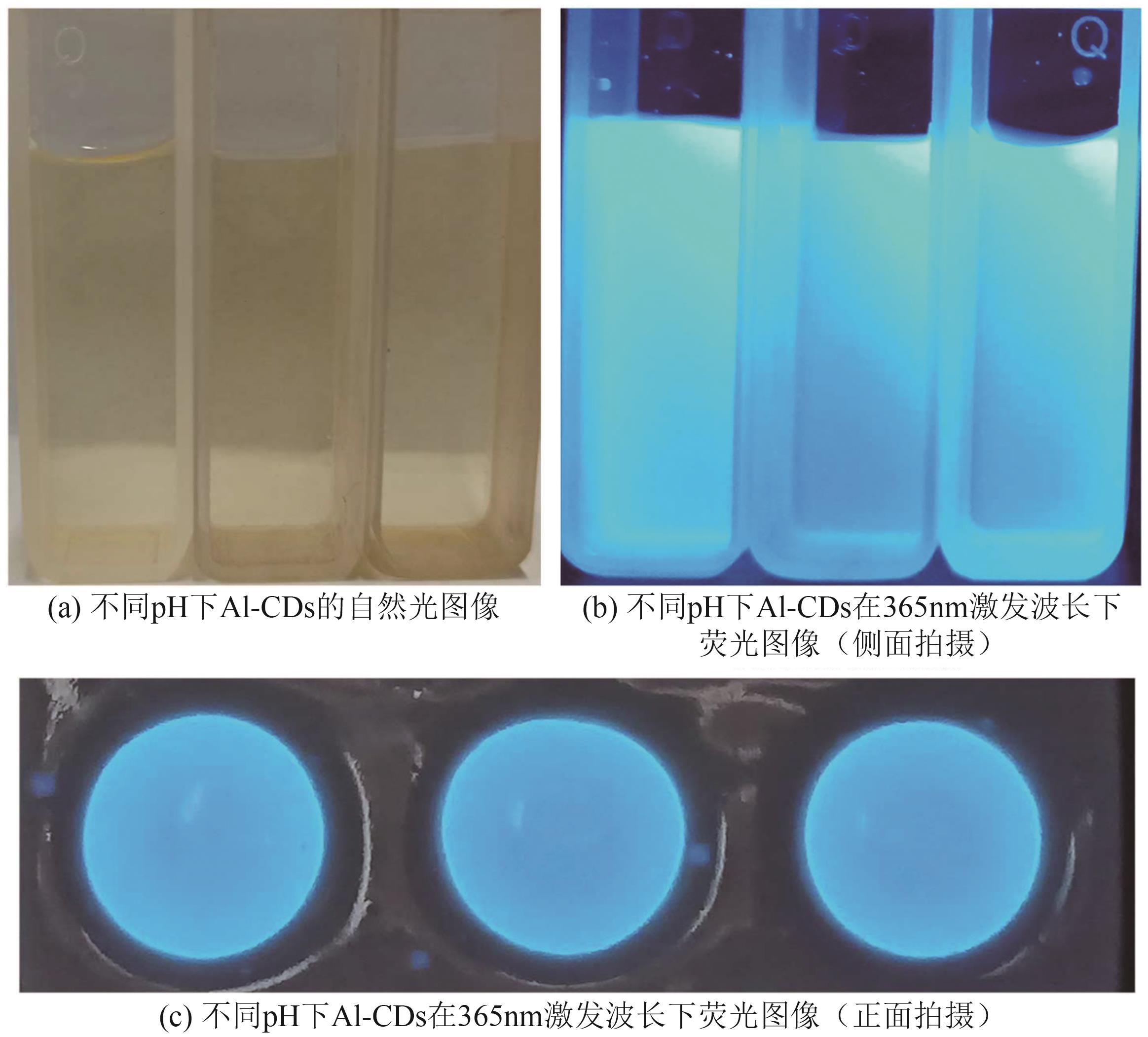
图8 Al-CDs在酸性条件下的稳定性
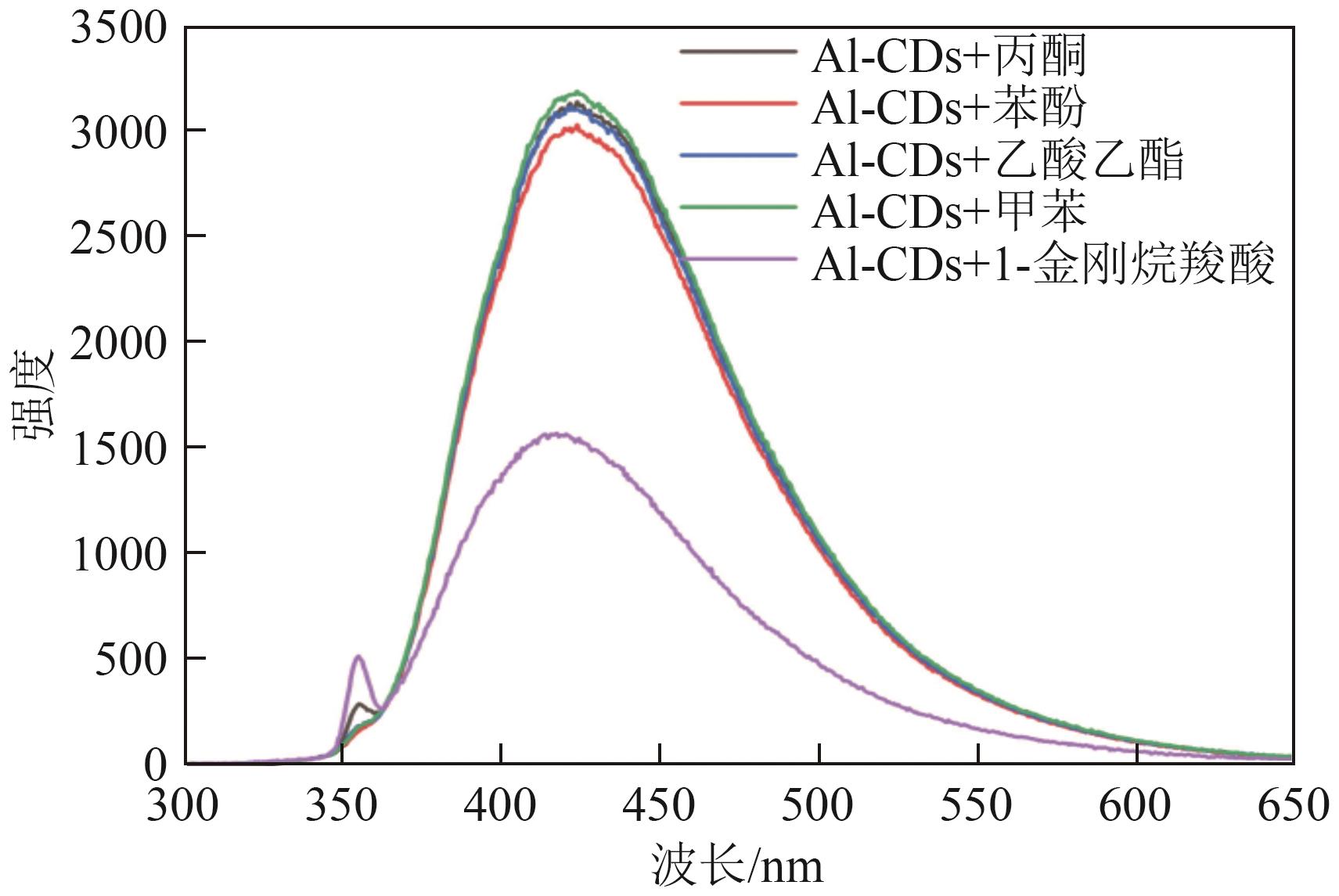
图9 不同干扰物对Al-CDs荧光淬灭程度
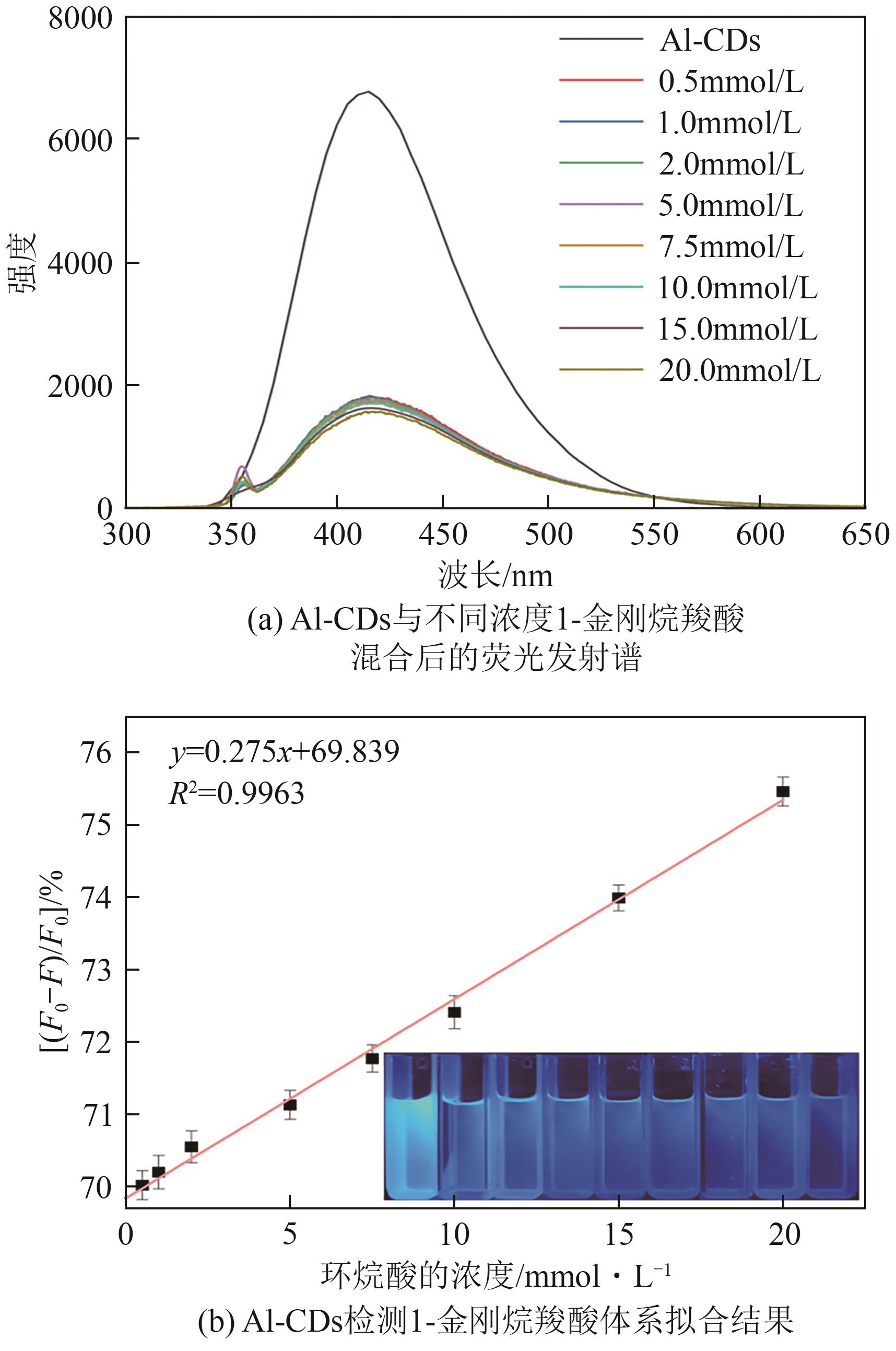
图10 Al-CDs对1-金刚烷羧酸的荧光检测
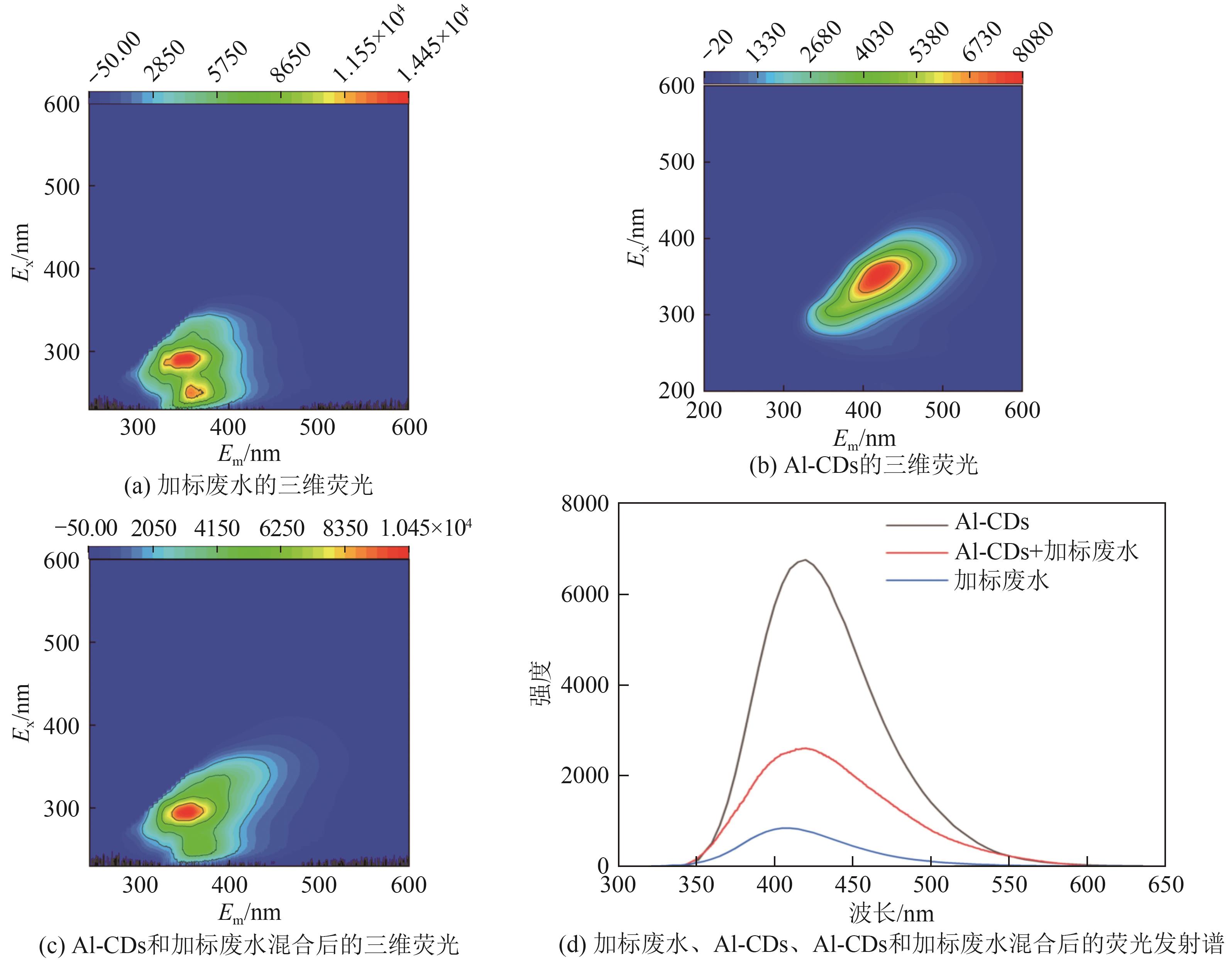
图11 Al-CDs检测真实废水中的环烷酸
| 项目 | n | ||||
|---|---|---|---|---|---|
| 1 | 2 | 3 | 4 | 5 | |
| 环烷酸的浓度/mmol·L-1 | 5.58 | 5.56 | 5.58 | 5.55 | 5.57 |
| 平均浓度/mmol·L-1 | 5.57 | ||||
| 气相色谱法平均浓度/mmol·L-1 | 5.52 | ||||
表2 加标废水检测结果(n=1~5)
| 项目 | n | ||||
|---|---|---|---|---|---|
| 1 | 2 | 3 | 4 | 5 | |
| 环烷酸的浓度/mmol·L-1 | 5.58 | 5.56 | 5.58 | 5.55 | 5.57 |
| 平均浓度/mmol·L-1 | 5.57 | ||||
| 气相色谱法平均浓度/mmol·L-1 | 5.52 | ||||
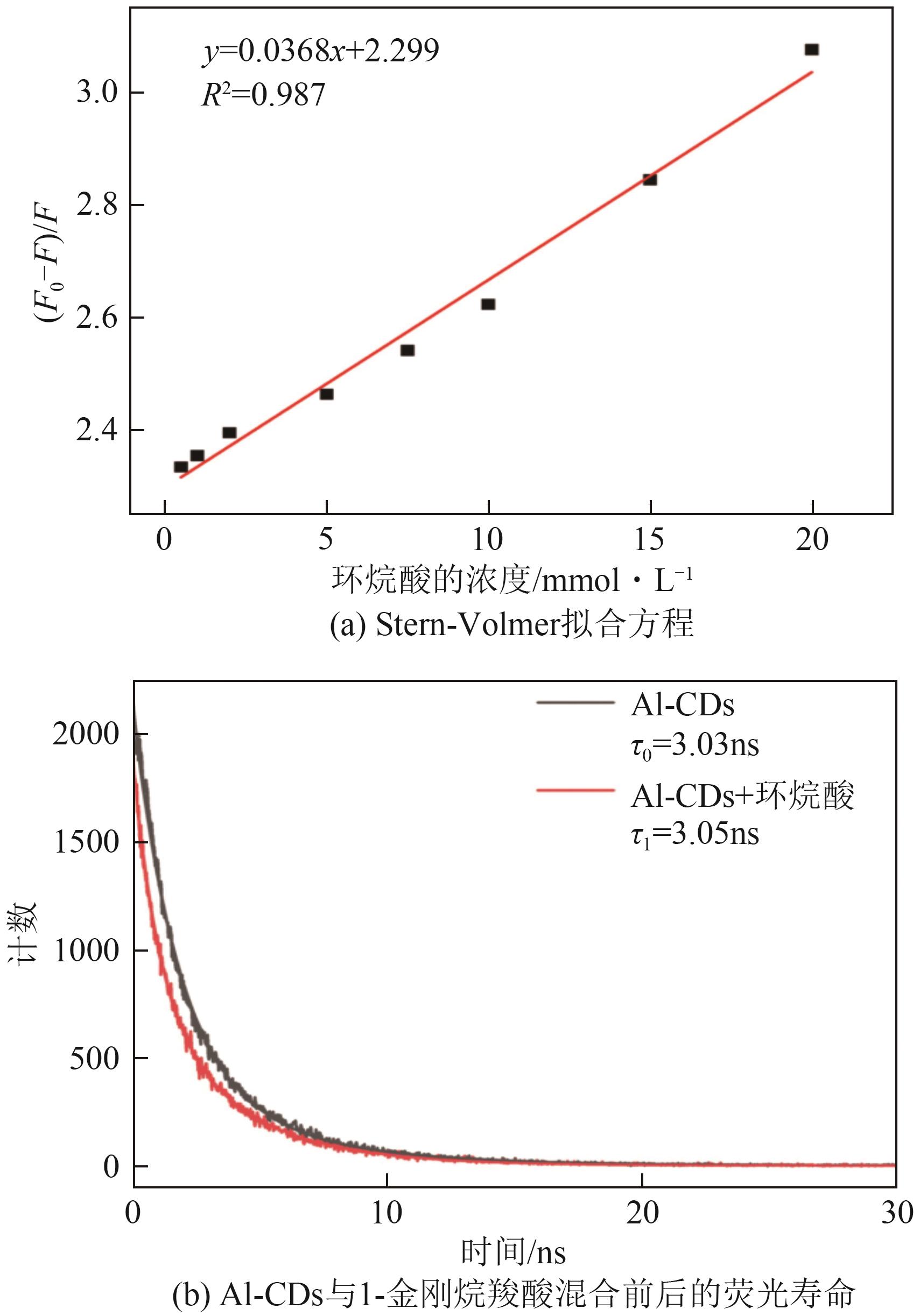
图12 Stern-Volmer拟合方程和检测前后的荧光寿命
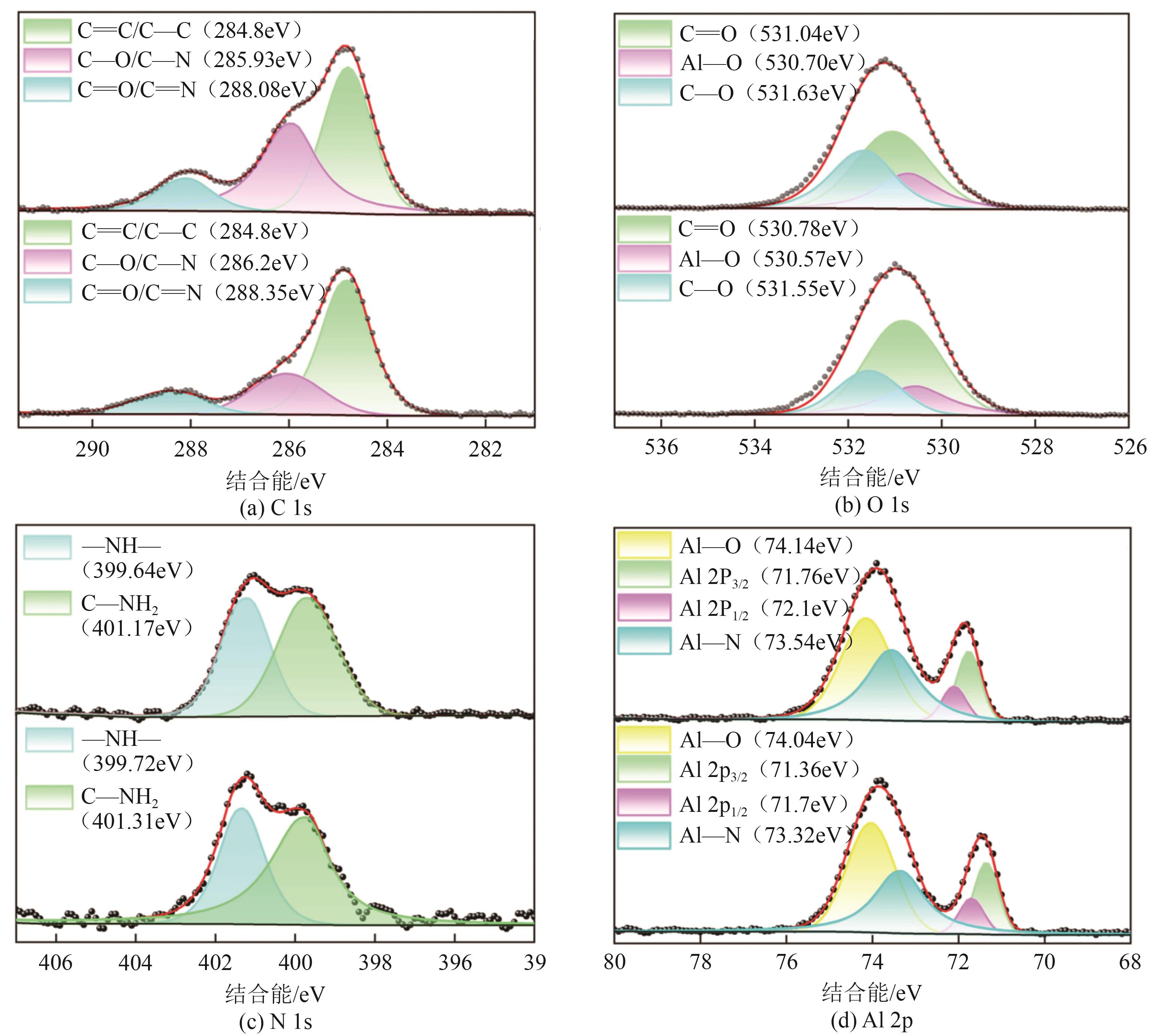
图13 Al-CDs与1-金刚烷羧酸溶液混合前后XPS高分辨光谱
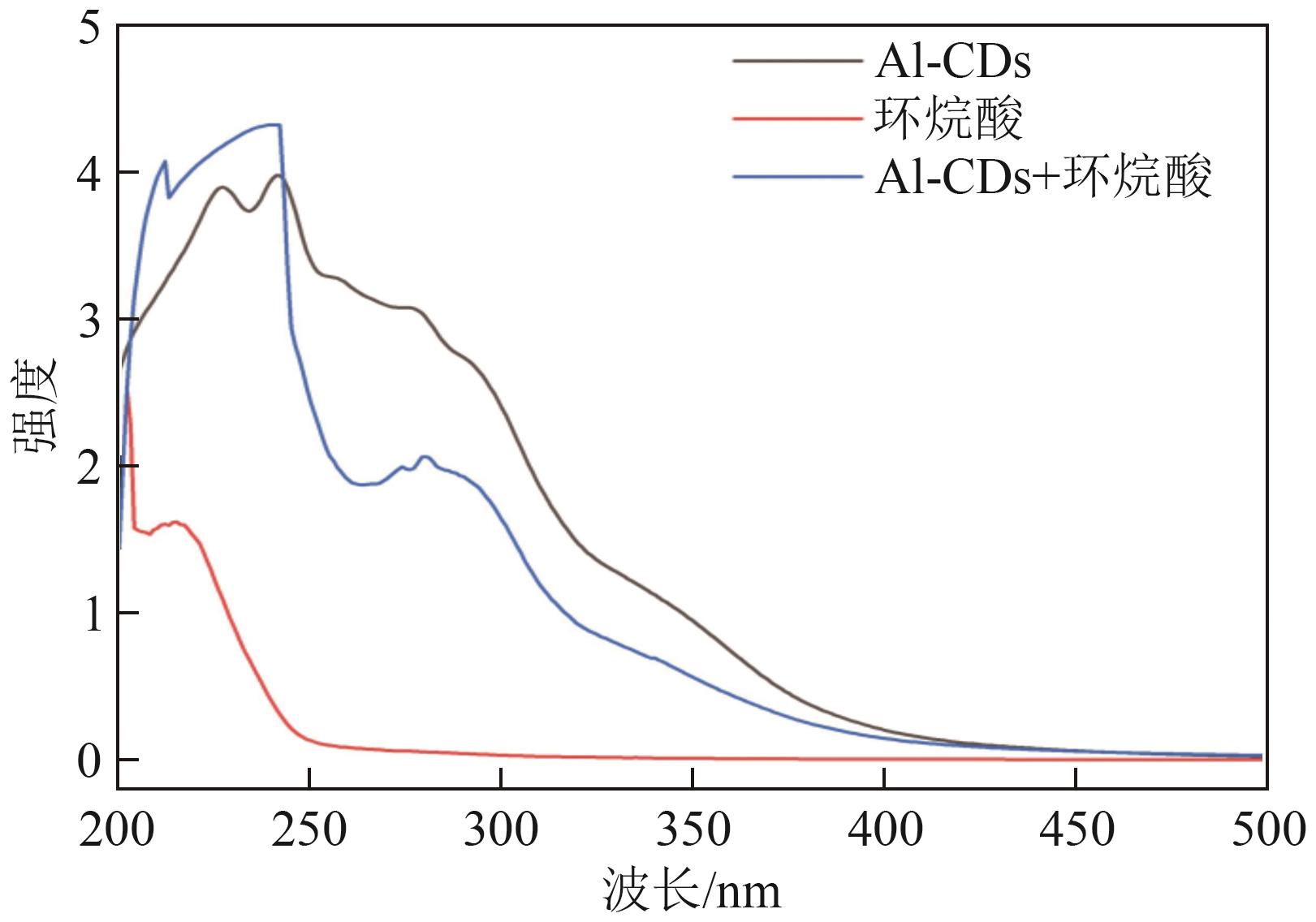
图14 Al-CDs与1-金刚烷羧酸混合前后UV-vis吸收光谱
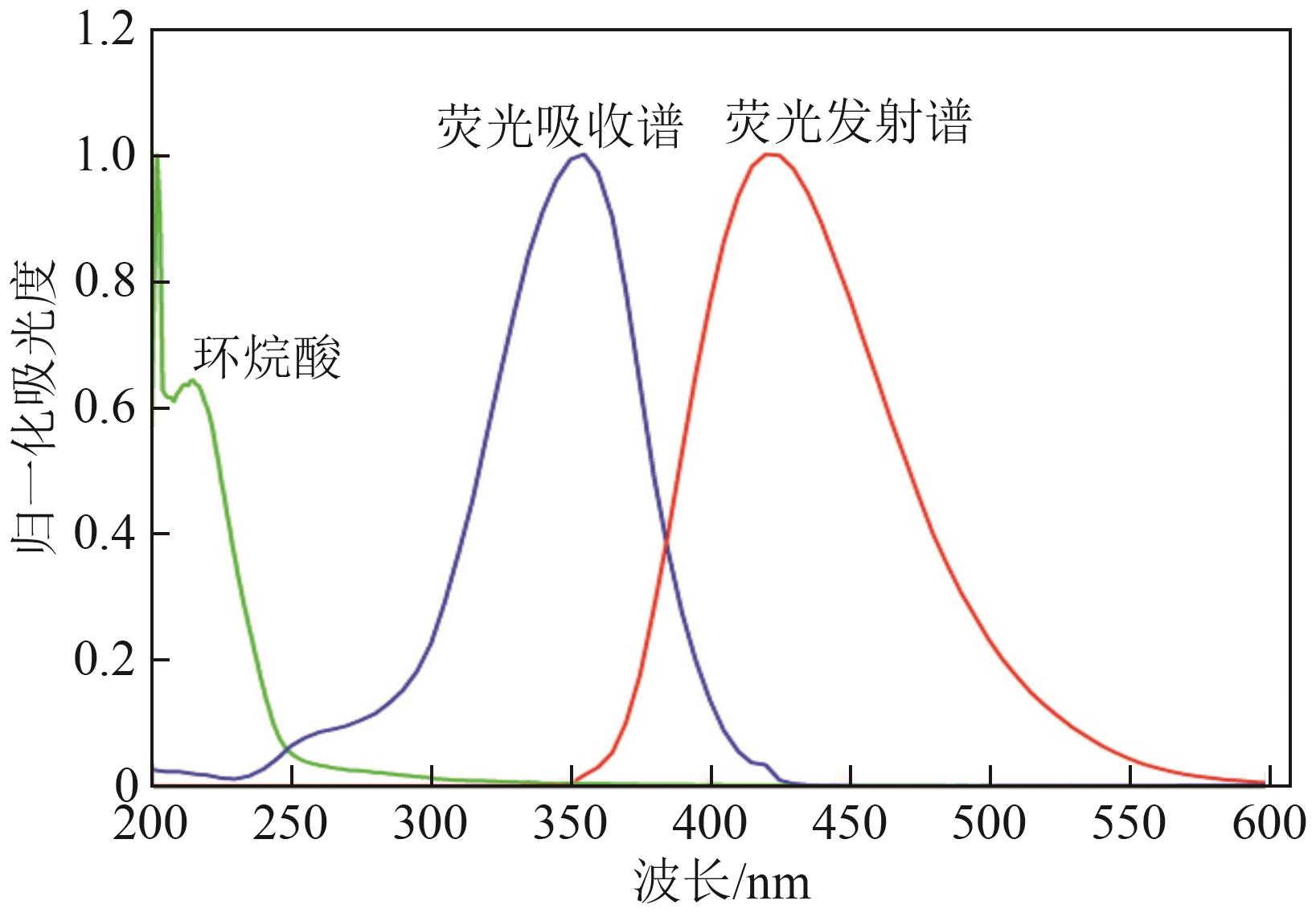
图15 Al-CDs的荧光吸收谱、荧光发射谱和1-金刚烷羧酸的UV-vis吸收光谱
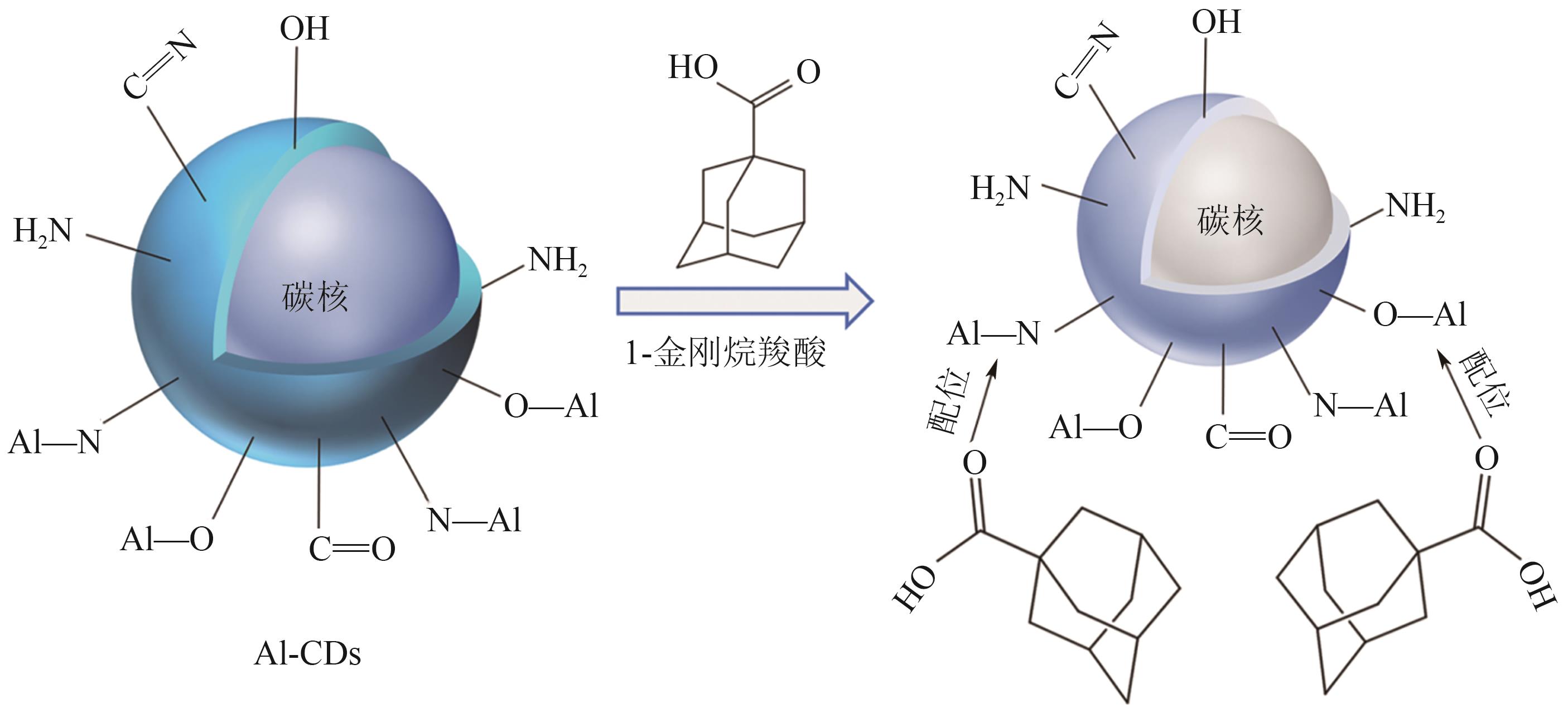
图16 Al-CDs检测环烷酸的机制
| [1] | ZHANG Huanxin, CUI Lihua, SI Panpan, et al. Environmentally relevant concentrations of naphthenic acids initiate intestinal injury and gut microbiota dysbiosis in marine medaka (Oryzias melastigma)[J]. Aquatic Toxicology, 2024, 273: 106996. |
| [2] | HUGHES Sarah A, HUANG Rongfu, MAHAFFEY Ashley, et al. Comparison of methods for determination of total oil sands-derived naphthenic acids in water samples[J]. Chemosphere, 2017, 187: 376-384. |
| [3] | MESHREF Mohamed N A, IBRAHIM Mohamed D, HUANG Rongfu, et al. Fourier transform infrared spectroscopy as a surrogate tool for the quantification of naphthenic acids in oil sands process water and groundwater[J]. Science of the Total Environment, 2020, 734: 139191. |
| [4] | KLEMZ Ana Caroline, DAMAS Mayra Stéphanie Pascoal, GONZÁLEZ Sergio Yesid Gómez, et al. The use of oilfield gaseous byproducts as extractants of recalcitrant naphthenic acids from synthetic produced water[J]. Separation and Purification Technology, 2020, 248: 117123. |
| [5] | YEN Tin-Wing, MARSH William P, MACKINNON Michael D, et al. Measuring naphthenic acids concentrations in aqueous environmental samples by liquid chromatography[J]. Journal of Chromatography A, 2004, 1033(1): 83-90. |
| [6] | LU Weibing, EWANCHUK Andrea, Leonidas PEREZ-ESTRADA, et al. Limitation of fluorescence spectrophotometry in the measurement of naphthenic acids in oil sands process water[J]. Journal of Environmental Science and Health Part A, Toxic/Hazardous Substances & Environmental Engineering, 2013, 48(4): 429-436. |
| [7] | WANG Chengjin, HUANG Rongfu, KLAMERTH Nikolaus, et al. Positive and negative electrospray ionization analyses of the organic fractions in raw and oxidized oil sands process-affected water[J]. Chemosphere, 2016, 165: 239-247. |
| [8] | SCOTT Angela C, YOUNG Rozlyn F, FEDORAK Phillip M. Comparison of GC-MS and FTIR methods for quantifying naphthenic acids in water samples[J]. Chemosphere, 2008, 73(8): 1258-1264. |
| [9] | MERLIN Mireya, GUIGARD Selma E, FEDORAK Phillip M. Detecting naphthenic acids in waters by gas chromatography-mass spectrometry[J]. Journal of Chromatography A, 2007, 1140(1/2): 225-229. |
| [10] | GUTIERREZ-VILLAGOMEZ Juan Manuel, Juan VÁZQUEZ-MARTÍNEZ, Enrique RAMÍREZ-CHÁVEZ, et al. Profiling low molecular weight organic compounds from naphthenic acids, acid extractable organic mixtures, and oil sands process-affected water by SPME-GC-EIMS[J]. Journal of Hazardous Materials, 2020, 390: 122186. |
| [11] | MOHAMED Mohamed H, WILSON Lee D, HEADLEY John V, et al. Screening of oil sands naphthenic acids by UV-vis absorption and fluorescence emission spectrophotometry[J]. Journal of Environmental Science and Health Part A, Toxic/Hazardous Substances & Environmental Engineering, 2008, 43(14): 1700-1705. |
| [12] | DUNCAN Kyle D, HAWKES Jeffrey A, BERG Mykelti, et al. Membrane sampling separates naphthenic acids from biogenic dissolved organic matter for direct analysis by mass spectrometry[J]. Environmental Science & Technology, 2022, 56(5): 3096-3105. |
| [13] | COLATI Keroly A P, DALMASCHIO Guilherme P, DE CASTRO Eustáquio V R, et al. Monitoring the liquid/liquid extraction of naphthenic acids in Brazilian crude oil using electrospray ionization FT-ICR mass spectrometry (ESI FT-ICR MS)[J]. Fuel, 2013, 108: 647-655. |
| [14] | HUANG Rongfu, CHEN Yuan, MESHREF Mohamed N A, et al. Characterization and determination of naphthenic acids species in oil sands process-affected water and groundwater from oil sands development area of Alberta, Canada[J]. Water Research, 2018, 128: 129-137. |
| [15] | HUANG Rongfu, MCPHEDRAN Kerry N, EL-DIN Mohamed Gamal. Ultra performance liquid chromatography ion mobility time-of-flight mass spectrometry characterization of naphthenic acids species from oil sands process-affected water[J]. Environmental Science & Technology, 2015, 49(19): 11737-11745. |
| [16] | BI Yanxia, XING Baolin, ZENG Huihui, et al. Eco-friendly sustainable fluorescent coal-based carbon dots as a highly selective probe for Cu2+ detection[J]. Fuel, 2024, 378: 132933. |
| [17] | WANG Yao, PAN Gengping, MIAO Chenfang, et al. Effective synthesis of fluorescent carbon dots and their application in controllable detection of deferasirox[J]. Microchemical Journal, 2024, 206: 111536. |
| [18] | LIANG Le, LIU Yongqing, HUANG Chan, et al. Fluorescent carbon dots based on nitrogen doped dialdehyde starch for highly selective Fe3+/glyphosate detection and its applications[J]. Microchemical Journal, 2024, 204: 111084. |
| [19] | WANG Fei, LI Chen, LI Yaqian, et al. Green synthesis of soybean residue-based nitrogen-chlorine co-doped carbon dots based on deep eutectic solvents: Construction of a PNP fluorescence detection system under the IFE mechanism[J]. Materials Research Bulletin, 2024, 180: 113041. |
| [20] | ZHANG Daohan, YANG Liang, LI Nan, et al. Detection of ciprofloxacin and pH by carbon dots and rapid, visual sensing analysis[J]. Food Chemistry, 2024, 459: 140313. |
| [21] | LIU Yize, LI Meiyu, ZHANG Ruoyao, et al. Quantitative detection of naphthenic acids in wastewater based on superior fluorescence performance of nitrogen-rich carbon quantum dots[J]. Science of the Total Environment, 2023, 885: 163773. |
| [22] | AYAZ Furkan, ALAŞ Melis Özge, Melike OĞUZ, et al. Aluminum doped carbon nanodots as potent adjuvants on the mammalian macrophages[J]. Molecular Biology Reports, 2019, 46(2): 2405-2415. |
| [23] | GAO Xiao, YU Hongquan, CONG Shanshan, et al. LED application and temperature-sensitive properties of white carbon dots doped with aluminum triacetylacetone without the N element[J]. Journal of Alloys and Compounds, 2024, 1002: 175405. |
| [24] | JAYAWEERA Supuli, YIN Ke, HU Xiao, et al. Fluorescent N/Al co-doped carbon dots from cellulose biomass for sensitive detection of manganese (Ⅶ)[J]. Journal of Fluorescence, 2019, 29(6): 1291-1300. |
| [25] | YU Chaojie, SUN Qinxing, WANG Zongzhen, et al. Aluminium-doped carbon dots for the simultaneous selective detection of five tetracycline antibiotics[J]. Journal of Fluorescence, 2024. |
| [26] | SHEIKHI Mehdi, RAFIEMANZELAT Fatemeh, SADEGHPOUR Narges, et al. Deep eutectic solvents based on L-arginine and glutamic acid as green catalysts and conductive agents for epoxy resins[J]. Journal of Molecular Liquids, 2021, 343: 117568. |
| [27] | DING Wei, WANG Tao, ZENG Peng, et al. Amino acids assisted to improve the voltage window of deep eutectic electrolyte formed by ethylene glycol and tetra methyl ammonium chloride[J]. Chemical Engineering Journal, 2023, 457: 141143. |
| [28] | IBRAHIM Rusul Khaleel, HAYYAN Maan, ALSAADI Mohammed Abdulhakim, et al. Physical properties of ethylene glycol-based deep eutectic solvents[J]. Journal of Molecular Liquids, 2019, 276: 794-800. |
| [29] | REN Hongwei, LI Meiyu, LIU Yize, et al. Nitrogen-rich carbon quantum dots (N-CQDs) based on natural deep eutectic solvents: Simultaneous detection and treatment of trace Co2+ under saline conditions[J]. Science of the Total Environment, 2022, 811: 152389. |
| [30] | REN Hongwei, LIU Yize, ZHANG Ruoyao, et al. Near-infrared carbon quantum dots from PEG-based deep eutectic solvents for high-accuracy quantitative analysis of naphthenic acids in wastewater[J]. Journal of Environmental Chemical Engineering, 2023, 11(3): 109988. |
| [31] | ZHANG Ruoyao, ZHENG Yi, ZHANG Qiuya, et al. Nitrogen-doped carbon quantum dots based on deep eutectic solvents precursors to detect Cr6+ in environmental water[J]. Journal of Environmental Chemical Engineering, 2024, 12(3): 112391. |
| [32] | LIU Jinkun, LUO Yimeng, RAN Zhun, et al. Calcination temperature tuning of RTP and TADF with wide range of emission color from carbon dots confined in Al2O3 [J]. Chemical Engineering Journal, 2023, 474: 145597. |
| [33] | HE Pinyi, BAI Jianliang, QIN Fu, et al. Catalyst regulation of o-phenylenediamine-based carbon dots to achieve single red emission[J]. Applied Surface Science, 2024, 652: 159367. |
| [34] | YUAN Kang, ZHANG Xinghua, LI Xiang, et al. Great enhancement of red emitting carbon dots with B/Al/Ga doping for dual mode anti-counterfeiting[J]. Chemical Engineering Journal, 2020, 397: 125487. |
| [35] | IATSUNSKYI Igor, Mateusz KEMPIŃSKI, JANCELEWICZ Mariusz, et al. Structural and XPS characterization of ALD Al2O3 coated porous silicon[J]. Vacuum, 2015, 113: 52-58. |
| [36] | ARKIN Kamile, ZHENG Yuxin, BEI Yuyang, et al. Construction of dual-channel ratio sensing platform and molecular logic gate for visual detection of oxytetracycline based on biomass carbon dots prepared from cherry tomatoes stalk[J]. Chemical Engineering Journal, 2023, 464: 142552. |
| [37] | LIU Yongli, ZHOU Penghui, WU Yalin, et al. Fast and efficient “on-off-on” fluorescent sensor from N-doped carbon dots for detection of mercury and iodine ions in environmental water[J]. Science of the Total Environment, 2022, 827: 154357. |
| [38] | LIN Xiaofeng, XIONG Mogao, ZHANG Jingwen, et al. Carbon dots based on natural resources: Synthesis and applications in sensors[J]. Microchemical Journal, 2021, 160: 105604. |
| [39] | TANG Siyuan, CHEN Da, GUO Guoqiang, et al. A smartphone-integrated optical sensing platform based on Lycium ruthenicum derived carbon dots for real-time detection of Ag+ [J]. Science of the Total Environment, 2022, 825: 153913. |
| [40] | ZHOU Yan, CHEN Guoqing, MA Chaoqun, et al. A fluorescent probe based on carbon quantum dots with spectral selectivity for sensitive detection of Cr(Ⅵ) and Hg(Ⅱ) in environmental waters[J]. Dyes and Pigments, 2024, 222: 111845. |
| [41] | CHEN Xueqi, SONG Zihui, YUAN Bingnan, et al. Fluorescent carbon dots crosslinked cellulose nanofibril/chitosan interpenetrating hydrogel system for sensitive detection and efficient adsorption of Cu(Ⅱ) and Cr(Ⅵ)[J]. Chemical Engineering Journal, 2022, 430: 133154. |
| [42] | XU Ouwen, YANG Jing, SONG Hanyang, et al. Novel Zn/Co-N co-doped carbon quantum dot-based “on-off-on” fluorescent sensor for Fe(Ⅲ) and ascorbic acid[J]. Talanta Open, 2023, 7: 100162. |
| [43] | CHEN Yihong, WANG Zihan, LIANG Meiqi, et al. High-efficient nickel-doped lignin carbon dots as a fluorescent and smartphone-assisted sensing platform for sequential detection of Cr(Ⅵ) and ascorbic acid[J]. International Journal of Biological Macromolecules, 2024, 274: 133790. |
| [44] | LIN Min, ZOU Hongyan, YANG Tong, et al. An inner filter effect based sensor of tetracycline hydrochloride as developed by loading photoluminescent carbon nanodots in the electrospun nanofibers[J]. Nanoscale, 2016, 8(5): 2999-3007. |
| [45] | YUAN Yusheng, JIANG Junze, LIU Shaopu, et al. Fluorescent carbon dots for glyphosate determination based on fluorescence resonance energy transfer and logic gate operation[J]. Sensors and Actuators B: Chemical, 2017, 242: 545-553. |
| [1] | 刘颖, 包成, 张欣欣. 用于氢气提纯的改性载铜活性炭[J]. 化工进展, 2025, 44(S1): 413-421. |
| [2] | 秦菲, 张志, 宋光春, 王武昌, 李玉星, 王世鑫, 何思成, 王江妍. 水合物储氢分子动力学行为研究进展[J]. 化工进展, 2025, 44(S1): 112-123. |
| [3] | 马晓彪, 刘晗, 王伟欢, 苗培培, 季莹辉, 陈博阳, 彭晓伟, 许强, 靳凤英, 马明超, 王银斌, 郭春垒. 酸和磷复合改性对ZSM-5分子筛催化裂解性能的影响[J]. 化工进展, 2025, 44(S1): 197-204. |
| [4] | 赵思阳, 李陈冉, 刘洋. 副产C4预积炭调控MTO再生催化剂双烯选择性的工艺优化[J]. 化工进展, 2025, 44(S1): 205-212. |
| [5] | 李军良, 李悦, 孙道来. Cu/SiO2-Al2O3催化1,2-丁二醇加氢脱氧制备1-丁醇[J]. 化工进展, 2025, 44(S1): 222-231. |
| [6] | 王振, 张耀远, 吴芹, 史大昕, 陈康成, 黎汉生. 甲烷干重整用Ni/Al2O3基催化剂研究进展[J]. 化工进展, 2025, 44(9): 4979-4998. |
| [7] | 李志福, 杨晓东, 汪保财, 胡长流, 裴继凯, 阎龙芳, 武瑞芳, 张昌生, 王永钊. 耐高温缓凝剂HJ-1的合成及性能[J]. 化工进展, 2025, 44(9): 5092-5100. |
| [8] | 陈思铭, 刘景超, 钟志轩, 张新柱, 祝天浩, 彭毅勍, 游赛, 王一凯, 袁嘉骏, 张永春. 低共熔溶剂在二氧化碳捕集中的发展与应用[J]. 化工进展, 2025, 44(9): 5377-5390. |
| [9] | 陈子朝, 何方书, 胡强, 杨扬, 陈汉平, 杨海平. 甲烷干重整抗积炭Ni基催化剂研究进展[J]. 化工进展, 2025, 44(9): 4968-4978. |
| [10] | 吴博, 马琳萱, 张明峰, 曹丽娟, 周蕾, 王学重. 基于机器学习的超声衰减预测水滑石粒度分布[J]. 化工进展, 2025, 44(8): 4365-4374. |
| [11] | 张巍, 梁垚城, 伍乔, 付业昊, 尹艳山, 成珊, 阮敏, 刘涛, 周昭仪, 张凯凯, 李丹聪. 基于金属离子改性的Cu-SSZ-13催化剂在NH3-SCR脱硝中的应用[J]. 化工进展, 2025, 44(7): 3879-3891. |
| [12] | 王惠, 刘家旭. SSZ-39分子筛的合成及其NH3-SCR应用研究进展[J]. 化工进展, 2025, 44(7): 3892-3906. |
| [13] | 卢朋, 张迪, 刘瑶瑶, 于万金, 刘武灿, 张建君. 气相脱氟化氢合成C2氢氟烯烃催化剂的研究进展[J]. 化工进展, 2025, 44(7): 3907-3916. |
| [14] | 李翔, 吴张永, 蒋佳骏, 朱启晨, 龚湫. 海水基MoS2/SiC二元纳米流体摩擦学特性[J]. 化工进展, 2025, 44(7): 4050-4060. |
| [15] | 王恒, 卢春喜. 3.6Mt/a催化裂化旋风分离装置结构优选及运行效果分析[J]. 化工进展, 2025, 44(6): 3238-3246. |
| 阅读次数 | ||||||
|
全文 |
|
|||||
|
摘要 |
|
|||||