Chemical Industry and Engineering Progress ›› 2025, Vol. 44 ›› Issue (11): 6552-6562.DOI: 10.16085/j.issn.1000-6613.2024-1660
• Materials science and technology • Previous Articles
Effect and mechanism of rubber-modified bio-resin on the rheological properties of asphalt
LI Yiming( ), HUANG Kai, CHEN Xiule, CHENG Peifeng
- School of Civil Engineering and Transportation, Northeast Forestry University, Harbin 150040, Heilongjiang, China
-
Received:2024-10-15Revised:2024-11-05Online:2025-12-08Published:2025-11-25 -
Contact:LI Yiming
橡胶改性生物树脂对沥青流变性能的影响及作用机理
李艺铭(), 黄凯, 陈修乐, 程培峰
- 东北林业大学土木与交通学院,黑龙江 哈尔滨 150040
-
通讯作者:李艺铭 -
作者简介:李艺铭(1993—),男,副教授,研究方向为生物质材料在道路工程中的高效化利用。E-mail:liyiming@nefu.edu.cn。 -
基金资助:黑龙江省重点研发项目(GZ20220062);龙建路桥股份有限公司博士后自主研发项目(230000100004258240011)

CLC Number:
Cite this article
LI Yiming, HUANG Kai, CHEN Xiule, CHENG Peifeng. Effect and mechanism of rubber-modified bio-resin on the rheological properties of asphalt[J]. Chemical Industry and Engineering Progress, 2025, 44(11): 6552-6562.
李艺铭, 黄凯, 陈修乐, 程培峰. 橡胶改性生物树脂对沥青流变性能的影响及作用机理[J]. 化工进展, 2025, 44(11): 6552-6562.
share this article
Add to citation manager EndNote|Ris|BibTeX
URL: https://hgjz.cip.com.cn/EN/10.16085/j.issn.1000-6613.2024-1660
| 技术指标 | 实验结果 | 标准值 |
|---|---|---|
| 88.5 | 80~100 | |
| 45.6 | ≥45 | |
| 6.1 | ≥3 | |
| 31 | ≥30 |
| 技术指标 | 实验结果 | 标准值 |
|---|---|---|
| 88.5 | 80~100 | |
| 45.6 | ≥45 | |
| 6.1 | ≥3 | |
| 31 | ≥30 |
| 水平 | 因素 | ||
|---|---|---|---|
| 酚醛摩尔比 | 木质素替代率/% | NaOH质量分数/% | |
| 1 | 1∶1.6 | 40 | 20 |
| 2 | 1∶1.7 | 50 | 25 |
| 3 | 1∶1.8 | 60 | 30 |
| 水平 | 因素 | ||
|---|---|---|---|
| 酚醛摩尔比 | 木质素替代率/% | NaOH质量分数/% | |
| 1 | 1∶1.6 | 40 | 20 |
| 2 | 1∶1.7 | 50 | 25 |
| 3 | 1∶1.8 | 60 | 30 |
| 编号 | 酚醛摩尔比 | 木质素替代率/% | NaOH质量分数/% |
|---|---|---|---|
| 1 | 1∶1.6 | 40 | 20 |
| 2 | 1∶1.6 | 50 | 25 |
| 3 | 1∶1.6 | 60 | 30 |
| 4 | 1∶1.7 | 40 | 20 |
| 5 | 1∶1.7 | 50 | 25 |
| 6 | 1∶1.7 | 60 | 30 |
| 7 | 1∶1.8 | 40 | 30 |
| 8 | 1∶1.8 | 50 | 20 |
| 9 | 1∶1.8 | 60 | 25 |
| 编号 | 酚醛摩尔比 | 木质素替代率/% | NaOH质量分数/% |
|---|---|---|---|
| 1 | 1∶1.6 | 40 | 20 |
| 2 | 1∶1.6 | 50 | 25 |
| 3 | 1∶1.6 | 60 | 30 |
| 4 | 1∶1.7 | 40 | 20 |
| 5 | 1∶1.7 | 50 | 25 |
| 6 | 1∶1.7 | 60 | 30 |
| 7 | 1∶1.8 | 40 | 30 |
| 8 | 1∶1.8 | 50 | 20 |
| 9 | 1∶1.8 | 60 | 25 |
| 编号 | 酚醛摩尔比 | 木质素替代率/% | NaOH质量分数/% | 针入度/0.1mm | 软化点/℃ | 5℃延度/cm | 评分 |
|---|---|---|---|---|---|---|---|
| 1 | 1∶1.6 | 40 | 20 | 88.6 | 50.7 | 7.1 | 43.24 |
| 2 | 1∶1.6 | 50 | 25 | 86.1 | 50.4 | 8.8 | 46.03 |
| 3 | 1∶1.6 | 60 | 30 | 86.9 | 50.9 | 7.5 | 42.93 |
| 4 | 1∶1.7 | 40 | 20 | 91.1 | 45.6 | 9.1 | 46.05 |
| 5 | 1∶1.7 | 50 | 25 | 82.1 | 53.3 | 8.9 | 46.72 |
| 6 | 1∶1.7 | 60 | 30 | 87.2 | 50.9 | 7.4 | 46.02 |
| 7 | 1∶1.8 | 40 | 30 | 88.9 | 54.1 | 3.1 | 39.97 |
| 8 | 1∶1.8 | 50 | 20 | 88.1 | 50.5 | 6.8 | 43.21 |
| 9 | 1∶1.8 | 60 | 25 | 91.2 | 52.9 | 5.1 | 41.00 |
| 编号 | 酚醛摩尔比 | 木质素替代率/% | NaOH质量分数/% | 针入度/0.1mm | 软化点/℃ | 5℃延度/cm | 评分 |
|---|---|---|---|---|---|---|---|
| 1 | 1∶1.6 | 40 | 20 | 88.6 | 50.7 | 7.1 | 43.24 |
| 2 | 1∶1.6 | 50 | 25 | 86.1 | 50.4 | 8.8 | 46.03 |
| 3 | 1∶1.6 | 60 | 30 | 86.9 | 50.9 | 7.5 | 42.93 |
| 4 | 1∶1.7 | 40 | 20 | 91.1 | 45.6 | 9.1 | 46.05 |
| 5 | 1∶1.7 | 50 | 25 | 82.1 | 53.3 | 8.9 | 46.72 |
| 6 | 1∶1.7 | 60 | 30 | 87.2 | 50.9 | 7.4 | 46.02 |
| 7 | 1∶1.8 | 40 | 30 | 88.9 | 54.1 | 3.1 | 39.97 |
| 8 | 1∶1.8 | 50 | 20 | 88.1 | 50.5 | 6.8 | 43.21 |
| 9 | 1∶1.8 | 60 | 25 | 91.2 | 52.9 | 5.1 | 41.00 |
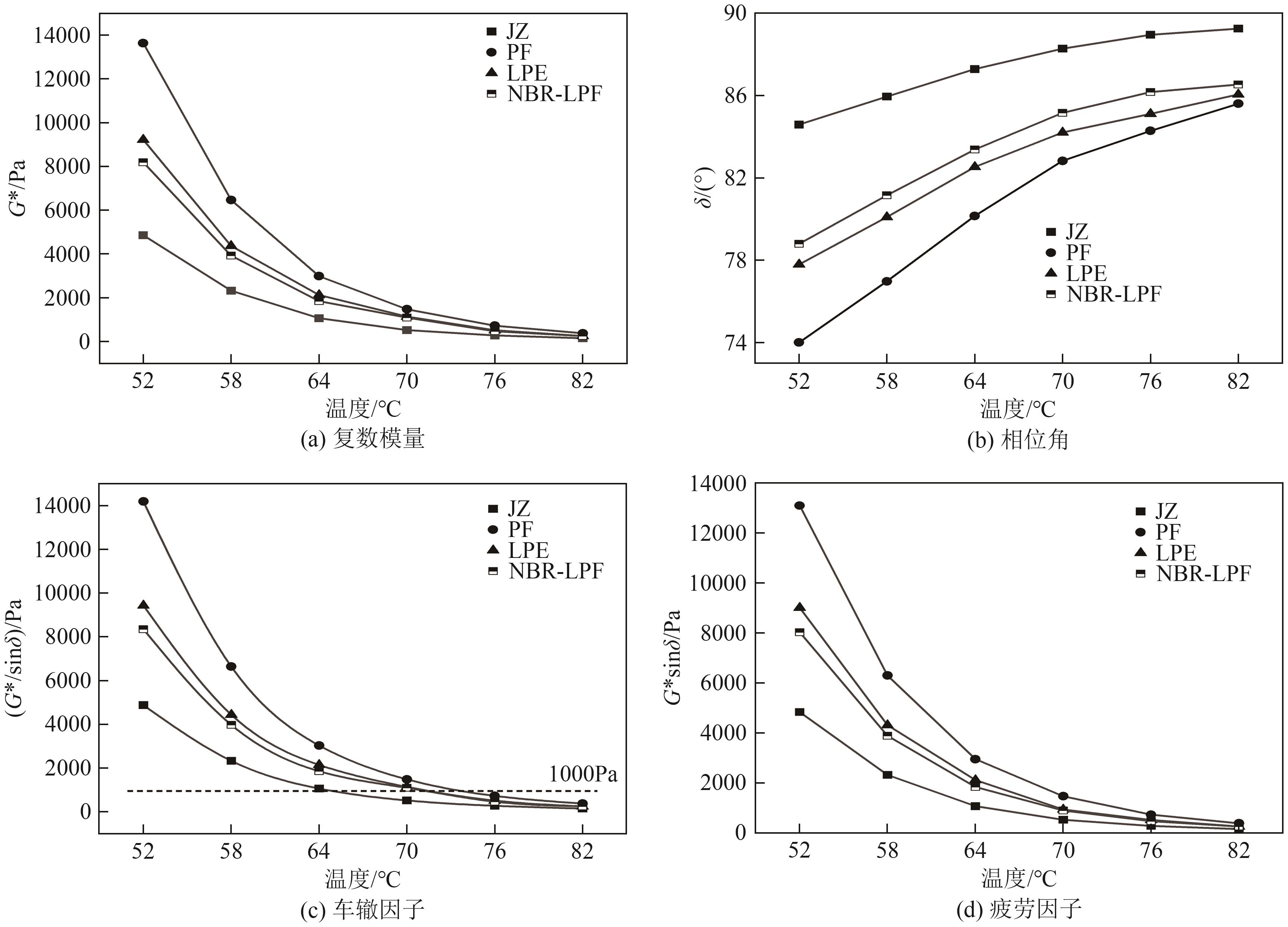
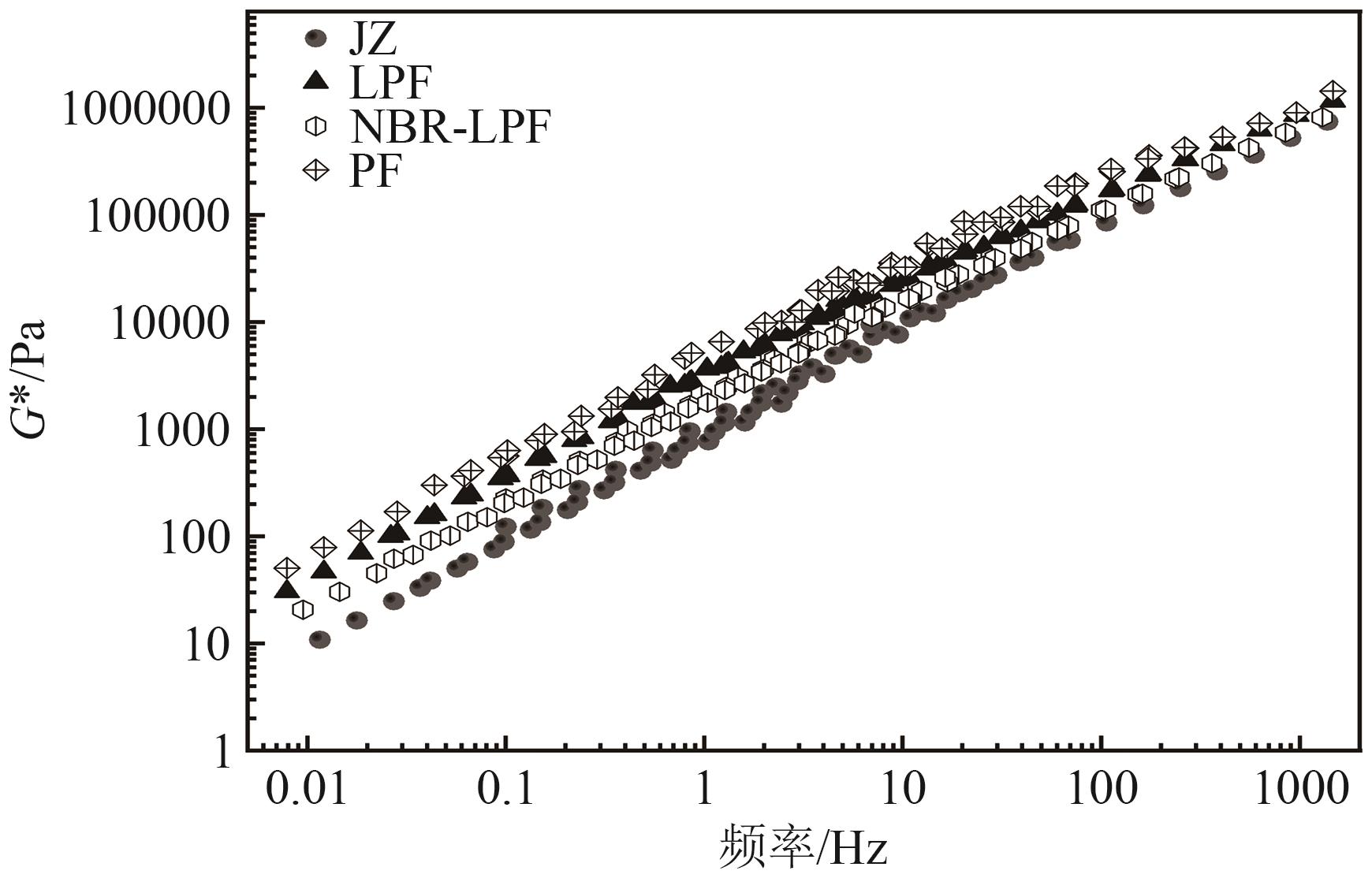
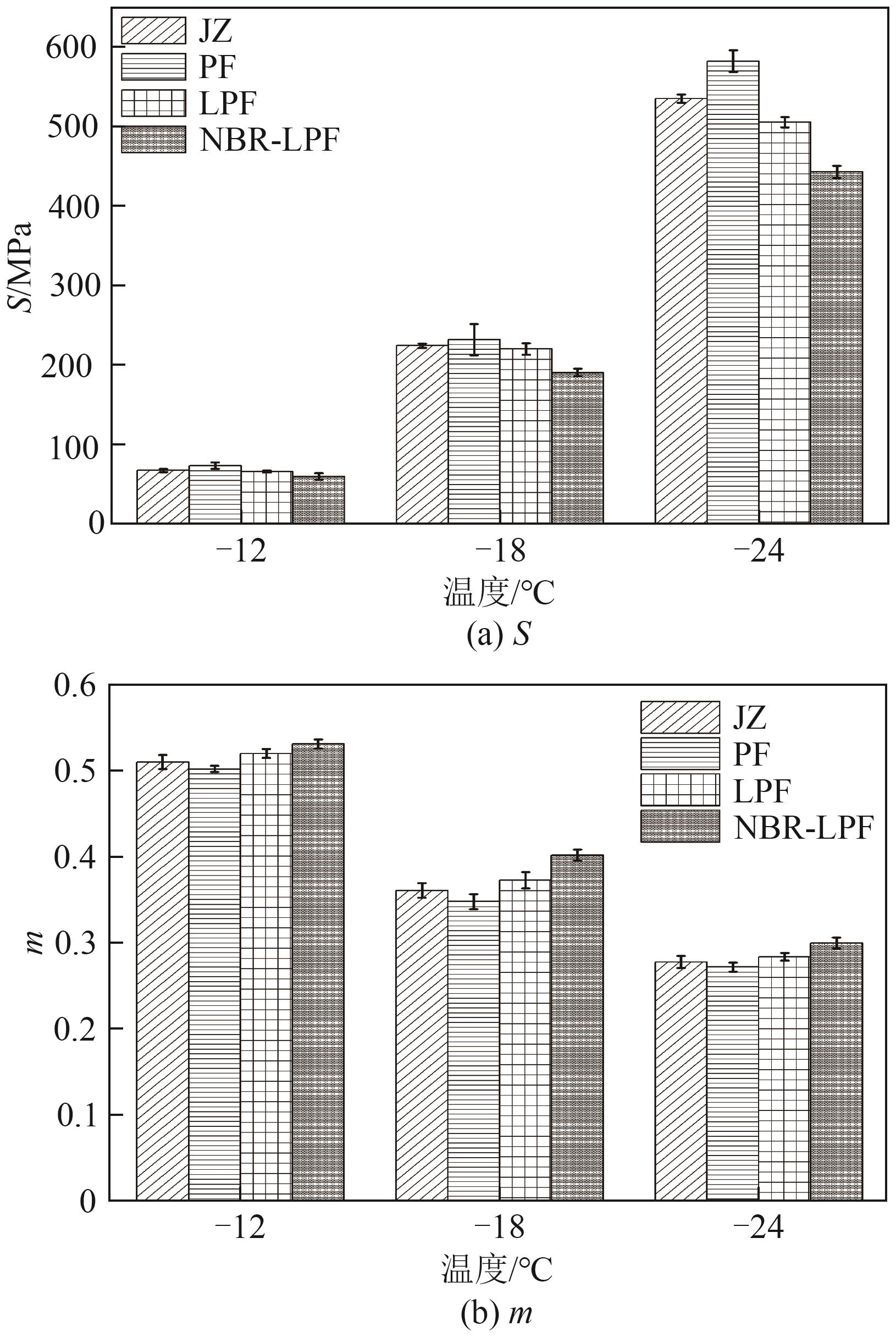
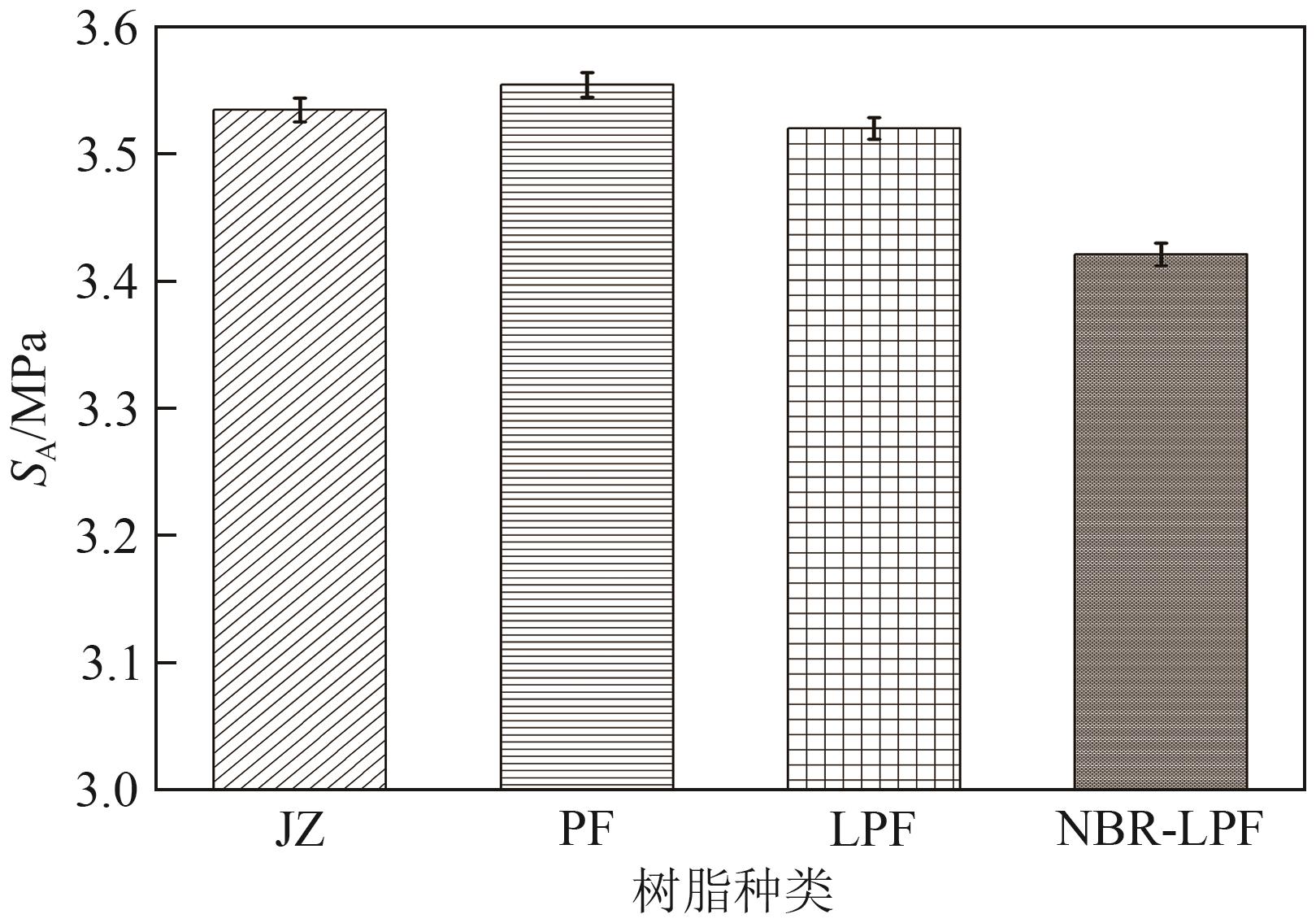
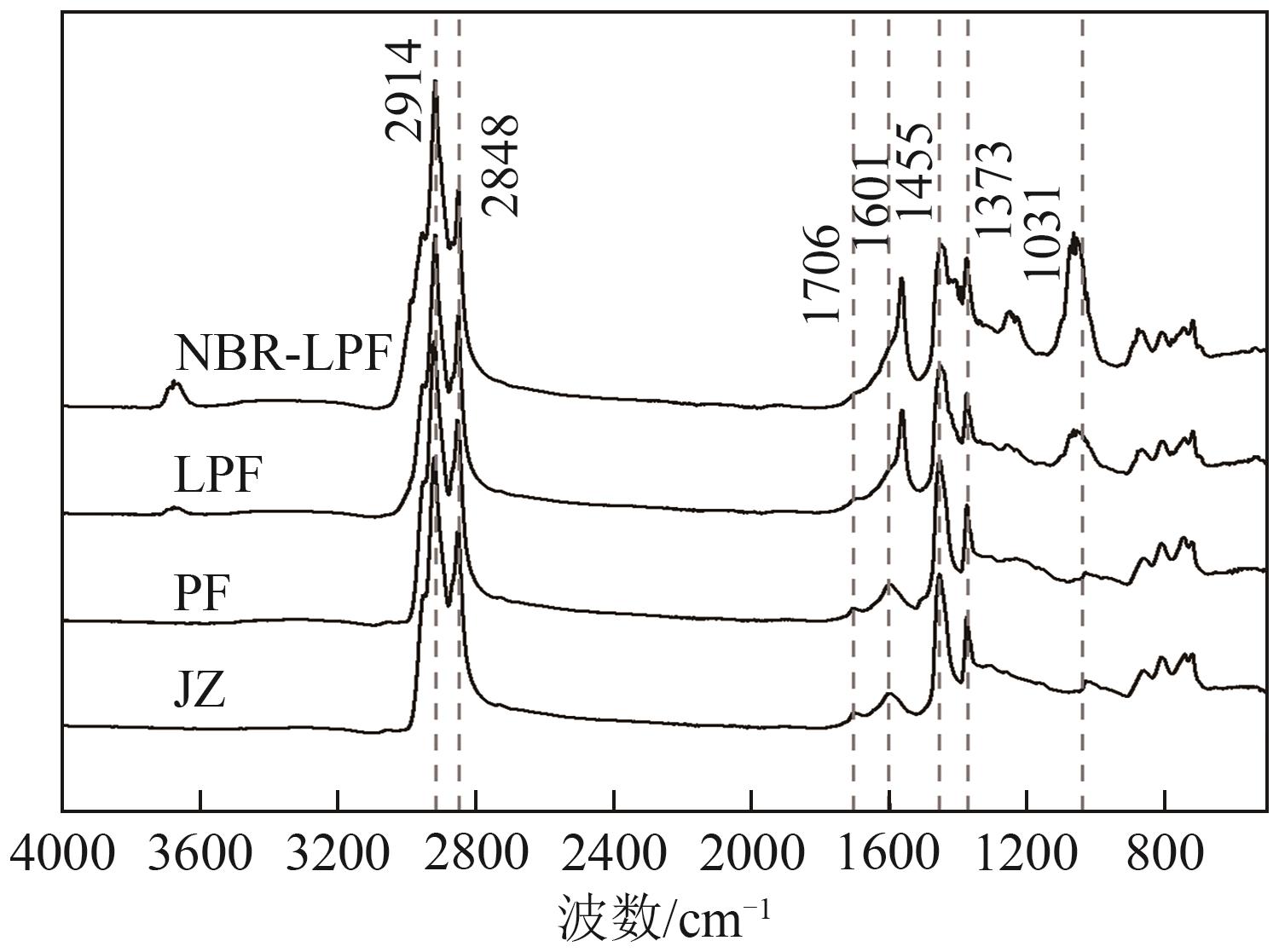
| 种类 | IC—O | IC=C |
|---|---|---|
| JZ | 0.012 | 0.013 |
| PF | 0.012 | 0.013 |
| LPF | 0.014 | 0.014 |
| NBR-LPF | 0.017 | 0.015 |
| 种类 | IC—O | IC=C |
|---|---|---|
| JZ | 0.012 | 0.013 |
| PF | 0.012 | 0.013 |
| LPF | 0.014 | 0.014 |
| NBR-LPF | 0.017 | 0.015 |
| [1] | SUN Zhuohua, Bálint FRIDRICH, DE SANTI Alessandra, et al. Bright side of lignin depolymerization: Toward new platform chemicals[J]. Chemical Reviews, 2018, 118(2): 614-678. |
| [2] | SU Ningyi, XIAO Feipeng, WANG Jingang, et al. Productions and applications of bio-asphalts—A review[J]. Construction and Building Materials, 2018, 183: 578-591. |
| [3] | ZHANG Xiang, WANG Hainian, HASAN Mohd Rosli Mohd, et al. Traffic open time prediction of fog seal with sand using image processing technology[J]. Construction and Building Materials, 2019, 209: 9-19. |
| [4] | MOHAJERANI Abbas, KURMUS Halenur, RAHMAN Md Tareq, et al. Bitumen and paraffin wax encapsulated cigarette butts: Physical properties and leachate analysis[J]. International Journal of Pavement Research and Technology, 2022, 15(4): 931-947. |
| [5] | 冯飞飞, 田斌, 马鹏飞, 等. 木质素分离原理与方法研究进展[J]. 化工进展, 2024, 43(5): 2512-2525. |
| FENG Feifei, TIAN Bin, MA Pengfei, et al. Research progress on mechanism and methods of lignin separation[J]. Chemical Industry and Engineering Progress, 2024, 43(5): 2512-2525. | |
| [6] | MIMINI Vebi, KABRELIAN Vasken, FACKLER Karin, et al. Lignin-based foams as insulation materials: A review[J]. Holzforschung, 2018, 73(1): 117-130. |
| [7] | 李长庚, 靳汇奇, 杨晨峰, 等. 木质素绿色有机溶剂分级研究进展[J]. 中国造纸学报, 2023, 38(2): 19-27. |
| LI Changgeng, JIN Huiqi, YANG Chenfeng, et al. Research progress on lignin fractionation by green organic solvent[J]. Transactions of China Pulp and Paper, 2023, 38(2): 19-27. | |
| [8] | 朱梦妮, 田维珍, 王兴, 等. 不同来源木质素抗氧化活性研究[J]. 中国造纸学报, 2019, 34(4): 14-20. |
| ZHU Mengni, TIAN Weizhen, WANG Xing, et al. Chemical structure and antioxidant activity of different sources of lignin[J]. Transactions of China Pulp and Paper, 2019, 34(4): 14-20. | |
| [9] | 孙蒙崖, 刘娜, 傅英娟. 木质素在材料中的应用研究进展[J]. 现代化工, 2019, 39(2): 31-35. |
| SUN Mengya, LIU Na, FU Yingjuan. Research progress in application of lignin in materials[J]. Modern Chemical Industry, 2019, 39(2): 31-35. | |
| [10] | 王汉敏, 韩忠伟, 王萍, 等. 木质素基紫外阻隔膜材料的研究进展[J]. 中国造纸学报, 2024, 39(2): 92-103. |
| WANG Hanmin, HAN Zhongwei, WANG Ping, et al. Research advance of lignin-based UV blocking film materials[J]. Transactions of China Pulp and Paper, 2024, 39(2): 92-103. | |
| [11] | GAUDENZI Elena, CARDONE Fabrizio, LU Xiaohu, et al. The use of lignin for sustainable asphalt pavements: A literature review[J]. Construction and Building Materials, 2023, 362: 129773. |
| [12] | ARAFAT Shams, KUMAR Narendra, WASIUDDIN Nazimuddin M, et al. Sustainable lignin to enhance asphalt binder oxidative aging properties and mix properties[J]. Journal of Cleaner Production, 2019, 217: 456-468. |
| [13] | GAO Junfeng, WANG Hainian, LIU Chaochao, et al. High-temperature rheological behavior and fatigue performance of lignin modified asphalt binder[J]. Construction and Building Materials, 2020, 230: 117063. |
| [14] | 纪拓, 张跃宏, 马菲, 等. 可循环利用的生物质基环氧树脂类玻璃高分子材料的研究进展[J]. 高分子材料科学与工程, 2023, 39(8): 165-174. |
| JI Tuo, ZHANG Yuehong, MA Fei, et al. Progress of recyclable bio-based epoxy vitrimer materials[J]. Polymer Materials Science & Engineering, 2023, 39(8): 165-174. | |
| [15] | 丁湛, 赵浚凯, 蒋修明, 等. 木屑液化产物合成的生物沥青性能及机理分析[J]. 广西大学学报(自然科学版), 2018, 43(4): 1632-1639. |
| DING Zhan, ZHAO Junkai, JIANG Xiuming, et al. Performance and mechanism of bio-asphalt synthesized from wood liquefied products[J]. Journal of Guangxi University (Natural Science Edition), 2018, 43(4): 1632-1639. | |
| [16] | 蒋修明, 丁湛, 孙超, 等. 生物基树脂改性沥青流变特性评价及体系融合行为[J]. 材料导报, 2024, 38(2): 273-279. |
| JIANG Xiuming, DING Zhan, SUN Chao, et al. Rheological properties evaluation and system fusion behavior of bio-based resin modified asphalt binders[J]. Materials Reports, 2024, 38(2): 273-279. | |
| [17] | LI Yiming, Chenyang LYU, CHENG Peifeng, et al. Application of bio-resin in road materials: Rheological and chemical properties of asphalt binder modified by lignin-phenolic resin[J]. Case Studies in Construction Materials, 2023, 18: e01989. |
| [18] | 丁湛, 安琳玉, 栗慧峰, 等. 秸秆液化树脂化产物制备生物沥青及性能分析[J]. 郑州大学学报(工学版), 2024, 45(6): 25-31, 39. |
| DING Zhan, AN Linyu, LI Huifeng, et al. Preparation and performance analysis of bio-asphalt from liquefaction and resinification of straw[J]. Journal of Zhengzhou University (Engineering Science), 2024, 45(6): 25-31, 39. | |
| [19] | Meltem ÇUBUK, Metin GÜRÜ, ÇUBUK Mustafa Kürşat, et al. Rheological properties and performance evaluation of phenol formaldehyde modified bitumen[J]. Journal of Materials in Civil Engineering, 2014, 26(6): 04014015. |
| [20] | YANG Weisheng, JIAO Liang, WANG Xiu, et al. Formaldehyde-free self-polymerization of lignin-derived monomers for synthesis of renewable phenolic resin[J]. International Journal of Biological Macromolecules, 2021, 166: 1312-1319. |
| [21] | 张红颖, 夏绍灵, 刘聪, 等. 酚醛树脂增韧改性研究进展[J]. 工程塑料应用, 2023, 51(6): 151-156. |
| ZHANG Hongying, XIA Shaoling, LIU Cong, et al. Research progress on toughening modification of phenolic resin[J]. Engineering Plastics Application, 2023, 51(6): 151-156. | |
| [22] | 许国娟, 贾晨辉, 刘晶, 等. 酚醛树脂增韧改性研究进展及应用现状概述[J]. 复合材料科学与工程, 2021(9): 118-128. |
| XU Guojuan, JIA Chenhui, LIU Jing, et al. Toughing modification dopment and the application status of phenolic resin[J]. Composites Science and Engineering, 2021(9): 118-128. | |
| [23] | 许国娟, 贾晨辉, 陈敬菊, 等. 酚醛树脂的耐冲击增韧改性及其固化动力学研究[J]. 复合材料科学与工程, 2022(4): 104-110. |
| XU Guojuan, JIA Chenhui, CHEN Jingju, et al. Study on impact resistance and toughening modification of phenolic resin and its curing kinetics[J]. Composites Science and Engineering, 2022(4): 104-110. | |
| [24] | 况栋梁, 马小军, 马晓燕, 等. 废机油残留物再生剂对老化沥青动态力学性能和组分迁移的影响[J]. 材料导报, 2024, 38(2): 280-287. |
| KUANG Dongliang, MA Xiaojun, MA Xiaoyan, et al. Effect of waste oil residue regenerators on dynamic mechanical properties and component migration of aged asphalt[J]. Materials Reports, 2024, 38(2): 280-287. | |
| [25] | 谭忆秋, 符永康, 纪伦, 等. 橡胶沥青低温评价指标[J]. 哈尔滨工业大学学报, 2016, 48(3): 66-70. |
| TAN Yiqiu, FU Yongkang, JI Lun, et al. Low-temperature evaluation index of rubber asphalt[J]. Journal of Harbin Institute of Technology, 2016, 48(3): 66-70. | |
| [26] | 朱春锋, 田飞宇, 吴玉涛, 等. 端羧基丁腈橡胶增韧改性酚醛树脂的化学结构及胶合性能[J]. 林业工程学报, 2024, 9(5): 36-43. |
| ZHU Chunfeng, TIAN Feiyu, WU Yutao, et al. Chemical structure and bonding performance of CTBN-toughened phenol formaldehyde resin[J]. Journal of Forestry Engineering, 2024, 9(5): 36-43. |
| [1] | LI Junliang, LI Yue, SUN Daolai. Hydrodeoxygenation of 1,2-butanediol to 1-butanol over Cu/SiO2-Al2O3 catalyst [J]. Chemical Industry and Engineering Progress, 2025, 44(S1): 222-231. |
| [2] | LI Ruiying, ZHOU Ying, ZHOU Hongjun, XU Chunming. Biomass-derived nano-carbon-based materials: Opportunities and challenges in electrochemical applications [J]. Chemical Industry and Engineering Progress, 2025, 44(S1): 288-306. |
| [3] | HONG Kang, ZHANG Chong, MA Hongli, SUN Yongrong, JIANG Liqun, BAO Guirong. Research progress of biomass hard charcoal as an anode material for sodium-ion batteries [J]. Chemical Industry and Engineering Progress, 2025, 44(S1): 340-349. |
| [4] | JIANG Chunxi, LIN Dingbiao, BIAN Yao, ZHOU Wei, LU Haifeng, GUO Xiaolei, LIU Haifeng. Characteristics of rice husk as entrained-flow bed gasification feedstock and their impact on the process [J]. Chemical Industry and Engineering Progress, 2025, 44(9): 4937-4944. |
| [5] | LU Ling, YU Lei, GU Xia, LAI Minming, ZHOU Kai, WANG Yapeng, LI Xiang. Efficient thermocatalytic and resource utilization of pharmaceutical waste salt [J]. Chemical Industry and Engineering Progress, 2025, 44(9): 5432-5441. |
| [6] | ZHANG Wenjing, HUANG Zhixin, LI Shiteng, DENG Shuai, LI Shuangjun. Biomass carbon aerogels for CO2 adsorbents [J]. Chemical Industry and Engineering Progress, 2025, 44(9): 5018-5032. |
| [7] | LUO Pei, LI Ping, YANG Wenfeng, LI Wei. Evaluation of the degree of aging of asphalt based on grey relation analysis and factor analysis [J]. Chemical Industry and Engineering Progress, 2025, 44(9): 5108-5119. |
| [8] | TIAN Xiaoge, LI Guangyao, GAO Kai, WU Qinghao, HUANG Sidan, XIE Zhen. Interaction behavior between waste rubber powder and asphalt-aggregate interface in dry process [J]. Chemical Industry and Engineering Progress, 2025, 44(9): 5174-5183. |
| [9] | ZHOU Muyan, LI Kai, XIE Zhengyun, SUN Yanlin. Application and performance evaluation of novel polysaccharide-based binary rheological modifier in the suspension of perfume oil microcapsules [J]. Chemical Industry and Engineering Progress, 2025, 44(9): 5265-5276. |
| [10] | ZHANG Jian, LIN Rihui, YIN Jianglin, LI Yanzi, FU Yulu, LIU Xiaoxia. Dry pretreatment of sugarcane trash and preparation and characterization of its acetylated products [J]. Chemical Industry and Engineering Progress, 2025, 44(7): 3997-4005. |
| [11] | FENG Sanzhe, KUANG Tangqing, LIU Hesheng, YANG Fan, CHEN Hao. Effect of projectile diameter on the quality of water projectile assisted co-injection molding fittings of short glass fiber reinforced polypropylene [J]. Chemical Industry and Engineering Progress, 2025, 44(7): 4061-4069. |
| [12] | MI Yifang, WANG Baoguo, WANG Wenqiang, SUN Guojin, CAO Zhihai. Preparation of nitrogen self-doped cyanobacterial biomass-based activated carbon for CO2 adsorption [J]. Chemical Industry and Engineering Progress, 2025, 44(7): 4223-4232. |
| [13] | XU Zhicheng, GAO Ningbo, QUAN Cui, SONG Qingbin. Research progress on synergistic catalytic conversion of biomass gasification tar by non-thermal plasma [J]. Chemical Industry and Engineering Progress, 2025, 44(6): 3432-3442. |
| [14] | WU Yali, ZHANG Xiaolin, GAO Limin, HUANG Maocai, CAI Bin, ZHANG Jibing. Technical progress in resource utilization of straw powder/fiber [J]. Chemical Industry and Engineering Progress, 2025, 44(6): 3509-3523. |
| [15] | CAO Xianghong, ZHOU Feng, JIANG Rui, LIU Shizhe, FANG Xiangchen, KANG Wanzhong, QIAO Jinliang, NIE Hong. Strategies to accelerate the development of China's bio-based materials industry [J]. Chemical Industry and Engineering Progress, 2025, 44(5): 2385-2393. |
| Viewed | ||||||
|
Full text |
|
|||||
|
Abstract |
|
|||||