Chemical Industry and Engineering Progress ›› 2025, Vol. 44 ›› Issue (10): 5848-5858.DOI: 10.16085/j.issn.1000-6613.2024-1506
• Materials science and technology • Previous Articles
Interfacial properties of embedded damping film carbon fiber reinforced polymethyl methacrylate composites
CHEN Zhaosheng1( ), LIANG Sen1,2(), WANG Fengquan1, WU Long2
- 1.School of Mechanical and Automotive Engineering, Qingdao University of Technology, Qingdao 266520, Shandong, China
2.School of Mechanical and Electrical Engineering, Sanming University, Sanming 365004, Fujian, China
-
Received:2024-09-14Revised:2024-12-02Online:2025-11-10Published:2025-10-25 -
Contact:LIANG Sen
嵌入式羧基化聚甲基丙烯酸甲酯阻尼复合材料界面性能
陈兆胜1(), 梁森1,2(), 王风全1, 吴龙2
- 1.青岛理工大学机械与汽车工程学院,山东 青岛 266520
2.三明学院机电工程学院,福建 三明 365004
-
通讯作者:梁森 -
作者简介:陈兆胜(2001—),男,硕士研究生,研究方向为结构与多功能复合材料。E-mail:2190313420@qq.com。 -
基金资助:国家自然科学基金(52075280);山东省自然科学基金(ZR2019MEE088)

CLC Number:
Cite this article
CHEN Zhaosheng, LIANG Sen, WANG Fengquan, WU Long. Interfacial properties of embedded damping film carbon fiber reinforced polymethyl methacrylate composites[J]. Chemical Industry and Engineering Progress, 2025, 44(10): 5848-5858.
陈兆胜, 梁森, 王风全, 吴龙. 嵌入式羧基化聚甲基丙烯酸甲酯阻尼复合材料界面性能[J]. 化工进展, 2025, 44(10): 5848-5858.
share this article
Add to citation manager EndNote|Ris|BibTeX
URL: https://hgjz.cip.com.cn/EN/10.16085/j.issn.1000-6613.2024-1506

| 仪器名称 | 生产公司 |
|---|---|
| 超声波清洗器(SCQG1020B型) | 上海松研超声仪器有限公司 |
| 高低温交变湿热实验箱 | 上海林品仪器有限公司 |
| 傅里叶变换红外光谱仪(FTIR,INVENIO-R) | 德国Bruker公司 |
| 压力成型机(XLB-D 400X400X2H) | 中国浙江湖州东方机械有限公司 |
| 电子万能拉力实验机(GT-TCS-2000) | 上海松墩仪器制造有限公司 |
| 电涡流传感器(OD9000) | 上海欧丹仪器 |
| 仪器名称 | 生产公司 |
|---|---|
| 超声波清洗器(SCQG1020B型) | 上海松研超声仪器有限公司 |
| 高低温交变湿热实验箱 | 上海林品仪器有限公司 |
| 傅里叶变换红外光谱仪(FTIR,INVENIO-R) | 德国Bruker公司 |
| 压力成型机(XLB-D 400X400X2H) | 中国浙江湖州东方机械有限公司 |
| 电子万能拉力实验机(GT-TCS-2000) | 上海松墩仪器制造有限公司 |
| 电涡流传感器(OD9000) | 上海欧丹仪器 |
| 材料名称 | 生产公司 |
|---|---|
| 碳纤维编织布(CF,T300型) | 威海光威复合材料有限公司 |
| 聚甲基丙烯酸甲酯树脂薄片(PMMA,片厚0.2mm) | 万虹塑胶实业有限公司 |
| 羧基氢化丁腈橡胶(HXNBR,牌号TherbanXTVPKA8889) | 德国Lanxess公司 |
| 高锰酸钾溶液(KMnO4,质量分数10%) | 上海商玺伟康医药用品有限公司 |
| 盐酸溶液(HCl,1mol/L) | 国药集团化学试剂有限公司 |
| 六亚甲基二异氰酸酯(C8H12N2O2,HDI,100%) | 科斯创聚合物有限公司 |
| 四氢呋喃溶液(THF) | 上海德诺公司 |
| 材料名称 | 生产公司 |
|---|---|
| 碳纤维编织布(CF,T300型) | 威海光威复合材料有限公司 |
| 聚甲基丙烯酸甲酯树脂薄片(PMMA,片厚0.2mm) | 万虹塑胶实业有限公司 |
| 羧基氢化丁腈橡胶(HXNBR,牌号TherbanXTVPKA8889) | 德国Lanxess公司 |
| 高锰酸钾溶液(KMnO4,质量分数10%) | 上海商玺伟康医药用品有限公司 |
| 盐酸溶液(HCl,1mol/L) | 国药集团化学试剂有限公司 |
| 六亚甲基二异氰酸酯(C8H12N2O2,HDI,100%) | 科斯创聚合物有限公司 |
| 四氢呋喃溶液(THF) | 上海德诺公司 |
| 组分 | 1# | 2# | 3# | 4# | 5# |
|---|---|---|---|---|---|
| 原胶HXNBR | 100 | 100 | 100 | 100 | 100 |
| 防老剂N445 | 1.5 | 1.5 | 1.5 | 1.5 | 1.5 |
| 偶联剂KH550 | 1 | 1 | 1 | 1 | 1 |
| 黏合剂RS | 4 | 4 | 4 | 4 | 4 |
| 炭黑N330 | 55 | 60 | 65 | 70 | 75 |
| 气相法白炭黑WCB | 5 | 5 | 5 | 5 | 5 |
| 二丙烯酸锌ZDA | 3 | 3 | 3 | 3 | 3 |
| 过氧化锌ZnO2 | 6 | 6 | 6 | 6 | 6 |
| 交联剂BIBP | 2 | 2 | 2 | 2 | 2 |
| 黏合剂A | 2 | 2 | 2 | 2 | 2 |
| 抗氧化剂1010 | 5 | 5 | 5 | 5 | 5 |
| 组分 | 1# | 2# | 3# | 4# | 5# |
|---|---|---|---|---|---|
| 原胶HXNBR | 100 | 100 | 100 | 100 | 100 |
| 防老剂N445 | 1.5 | 1.5 | 1.5 | 1.5 | 1.5 |
| 偶联剂KH550 | 1 | 1 | 1 | 1 | 1 |
| 黏合剂RS | 4 | 4 | 4 | 4 | 4 |
| 炭黑N330 | 55 | 60 | 65 | 70 | 75 |
| 气相法白炭黑WCB | 5 | 5 | 5 | 5 | 5 |
| 二丙烯酸锌ZDA | 3 | 3 | 3 | 3 | 3 |
| 过氧化锌ZnO2 | 6 | 6 | 6 | 6 | 6 |
| 交联剂BIBP | 2 | 2 | 2 | 2 | 2 |
| 黏合剂A | 2 | 2 | 2 | 2 | 2 |
| 抗氧化剂1010 | 5 | 5 | 5 | 5 | 5 |
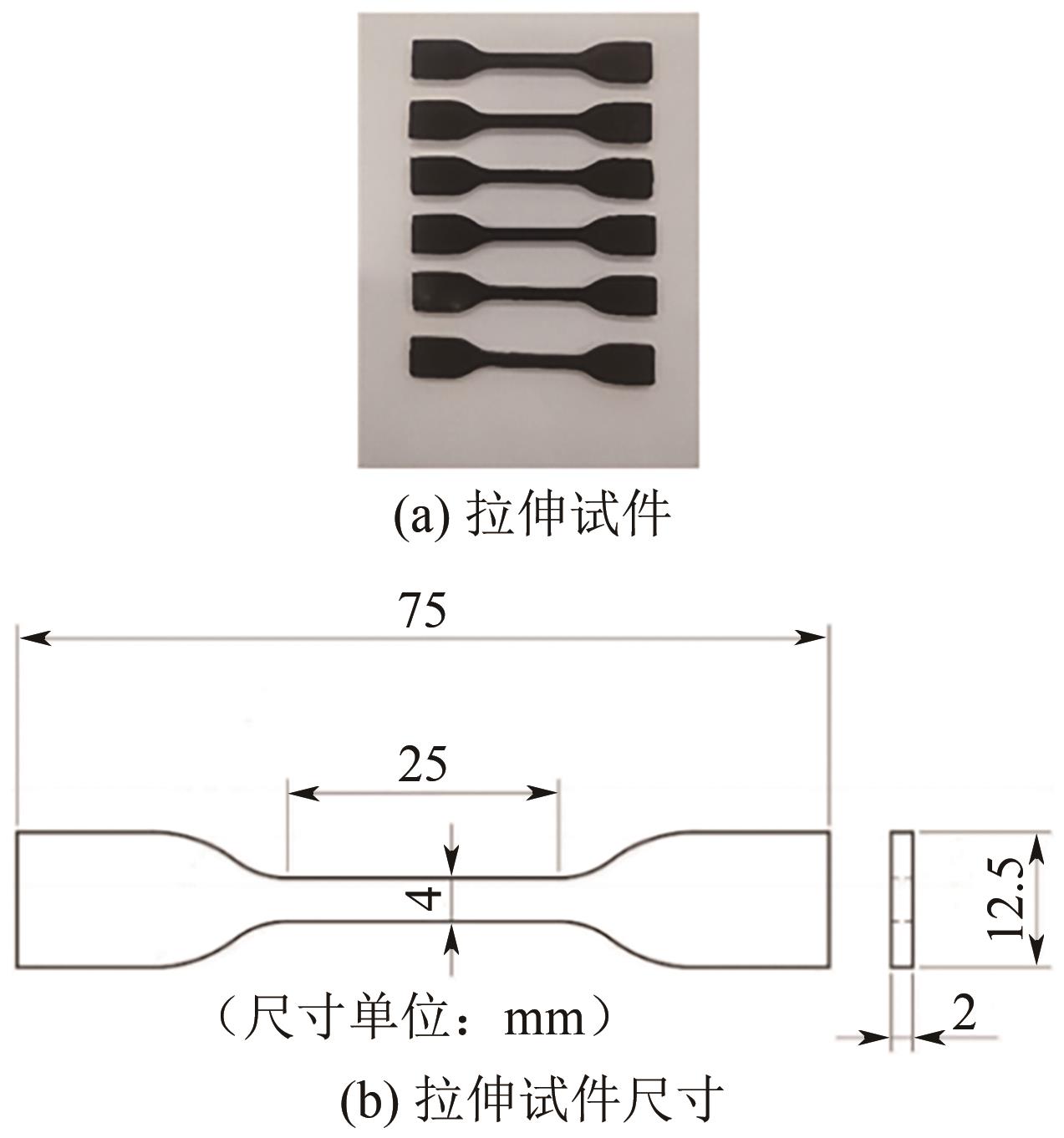
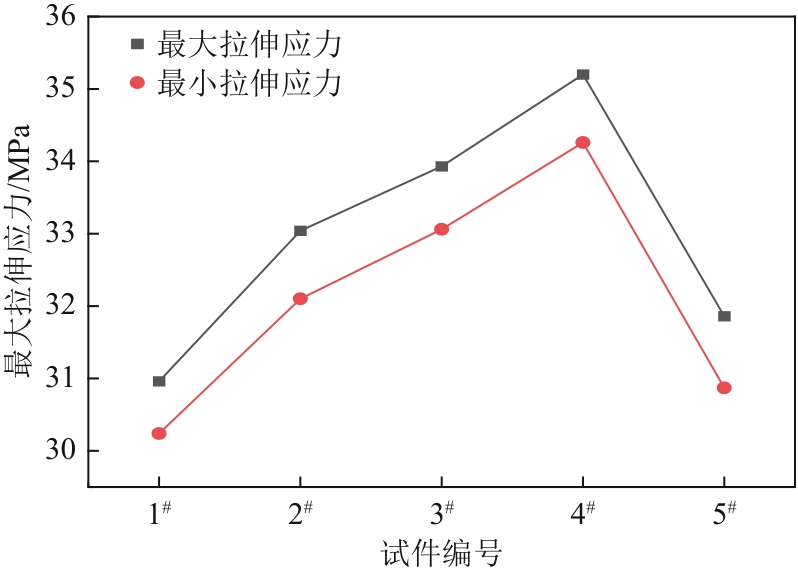
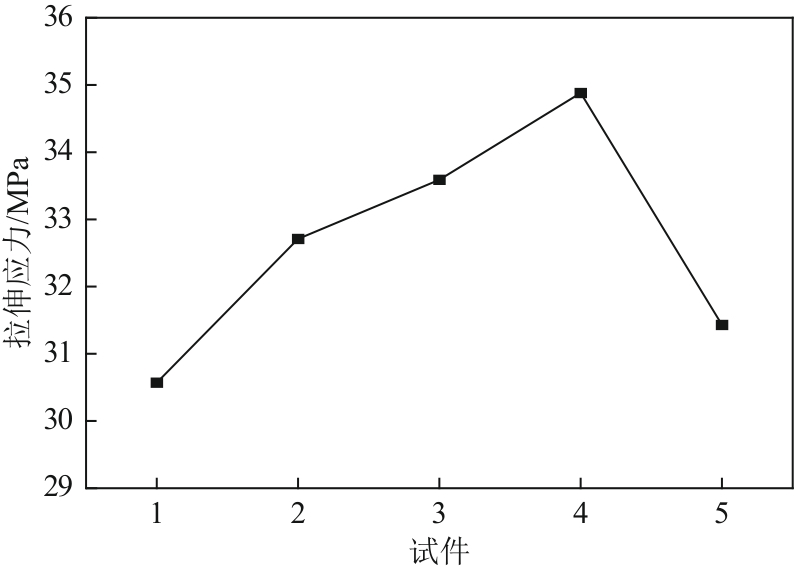
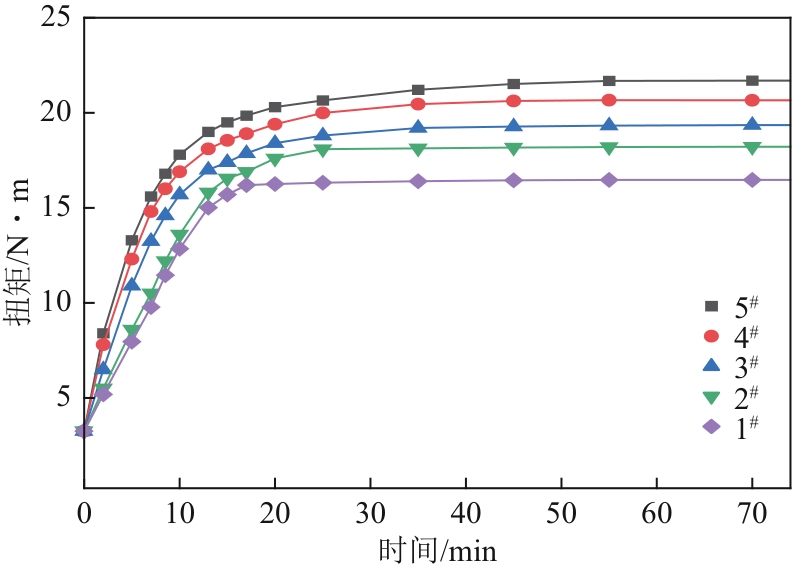
| 项目 | 1# | 2# | 3# | 4# | 5# |
|---|---|---|---|---|---|
| 最大邵氏硬度 | 82 | 85 | 90 | 93 | 95 |
| 最小邵氏硬度 | 78 | 81 | 85 | 88 | 89 |
| 项目 | 1# | 2# | 3# | 4# | 5# |
|---|---|---|---|---|---|
| 最大邵氏硬度 | 82 | 85 | 90 | 93 | 95 |
| 最小邵氏硬度 | 78 | 81 | 85 | 88 | 89 |
| 项目 | 1# | 2# | 3# | 4# | 5# |
|---|---|---|---|---|---|
| 邵氏硬度 | 80 | 83 | 87 | 90 | 92 |
| 项目 | 1# | 2# | 3# | 4# | 5# |
|---|---|---|---|---|---|
| 邵氏硬度 | 80 | 83 | 87 | 90 | 92 |
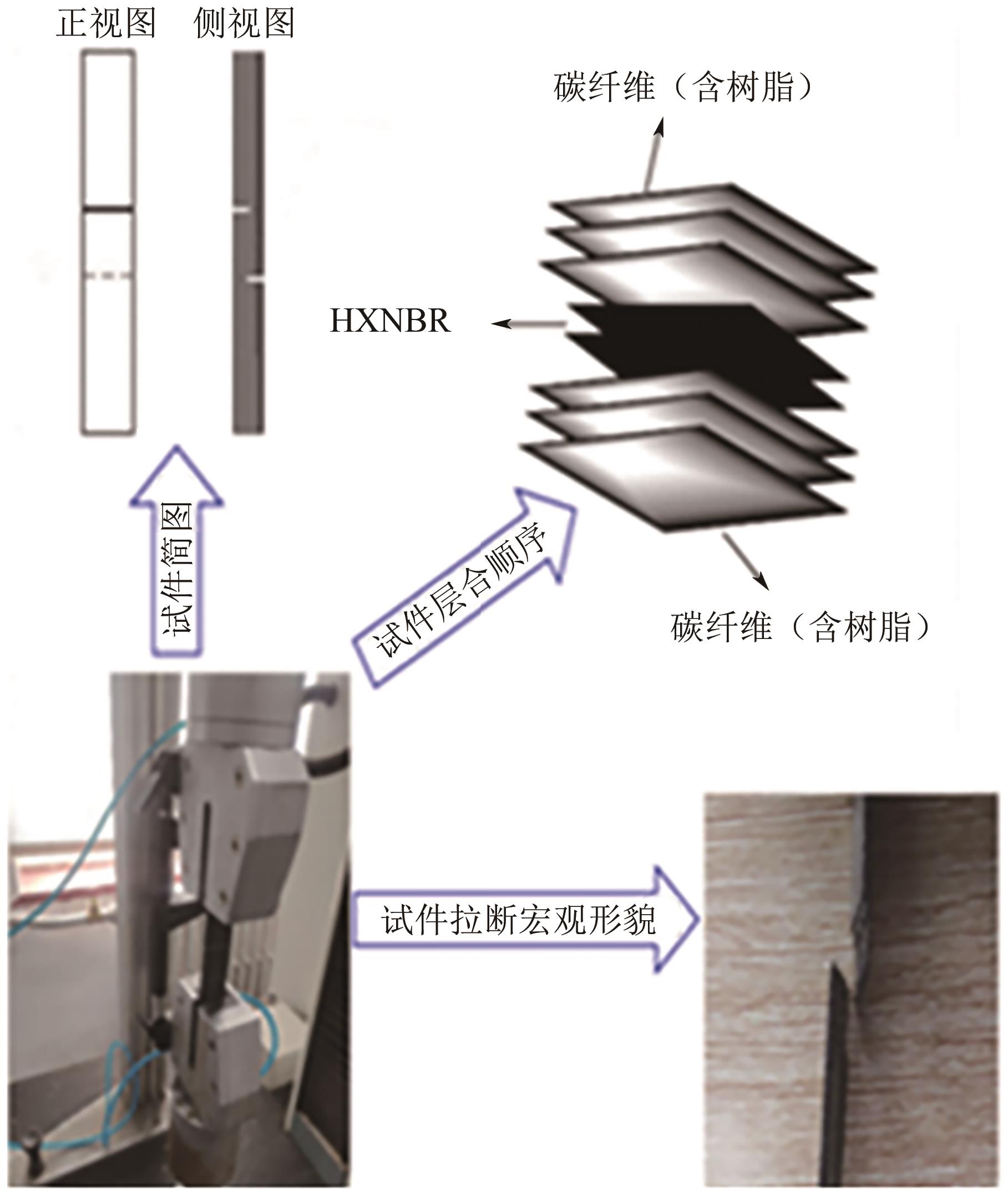
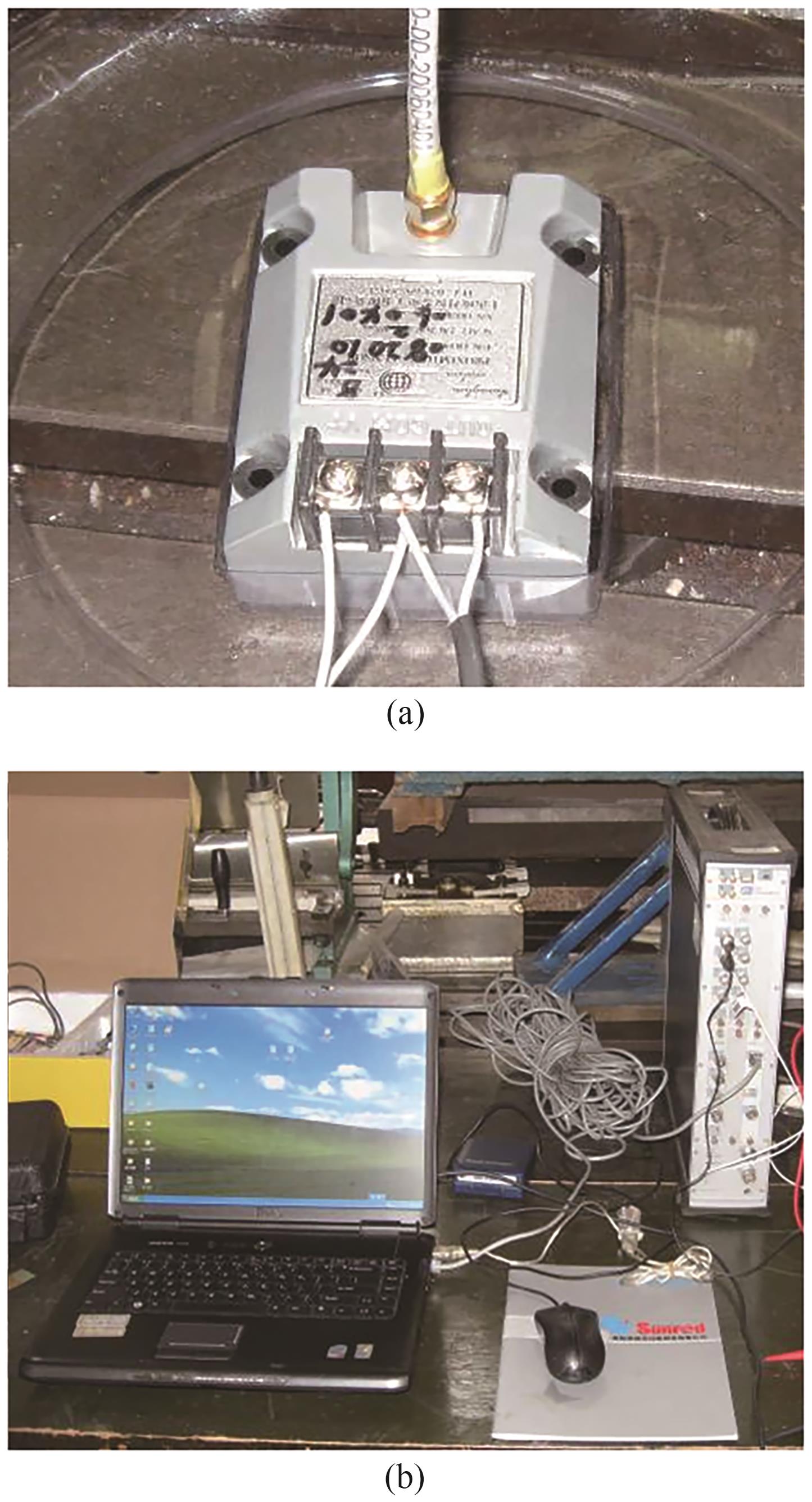
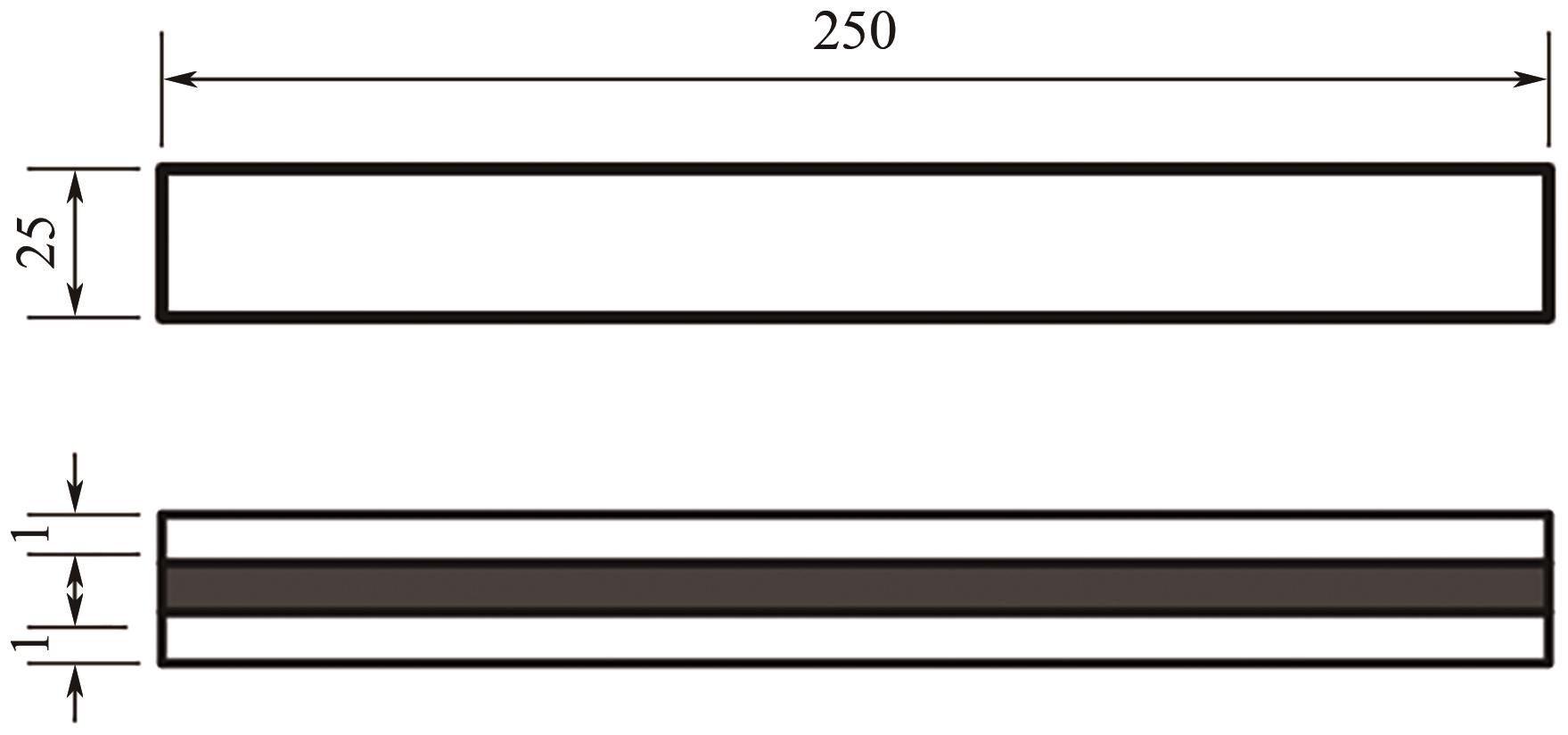
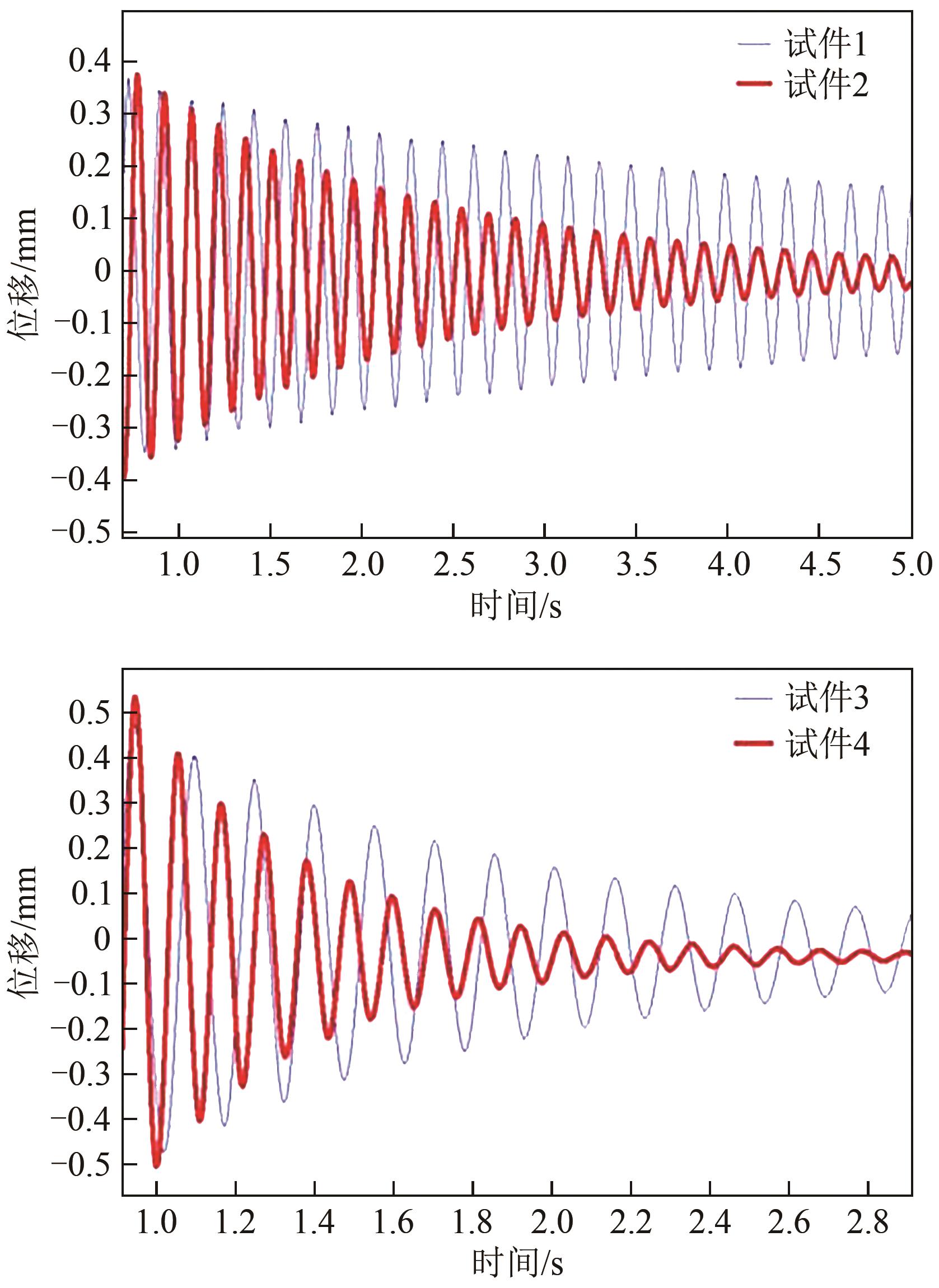
| 试件编号 | Fmax/N | τj/MPa |
|---|---|---|
| 1# | 2587 | 4.13 |
| 2# | 2613 | 4.21 |
| 3# | 2563 | 3.96 |
| 4# | 2531 | 3.84 |
| 5# | 2579 | 4.05 |
| 6# | 4136 | 6.58 |
| 7# | 4125 | 6.47 |
| 8# | 4232 | 6.84 |
| 9# | 4115 | 6.42 |
| 10# | 4227 | 6.75 |
| 试件编号 | Fmax/N | τj/MPa |
|---|---|---|
| 1# | 2587 | 4.13 |
| 2# | 2613 | 4.21 |
| 3# | 2563 | 3.96 |
| 4# | 2531 | 3.84 |
| 5# | 2579 | 4.05 |
| 6# | 4136 | 6.58 |
| 7# | 4125 | 6.47 |
| 8# | 4232 | 6.84 |
| 9# | 4115 | 6.42 |
| 10# | 4227 | 6.75 |
| 项目 | 1# | 2# | 3# | 4# |
|---|---|---|---|---|
| 阻尼层厚度/mm | 0 | 0.1 | 0.3 | 0.4 |
| 损耗因子ζ/% | 0.46 | 1.35 | 2.43 | 3.46 |
| 项目 | 1# | 2# | 3# | 4# |
|---|---|---|---|---|
| 阻尼层厚度/mm | 0 | 0.1 | 0.3 | 0.4 |
| 损耗因子ζ/% | 0.46 | 1.35 | 2.43 | 3.46 |
| [1] | 王东升. 聚甲基丙烯酸甲酯纳米复合材料阻燃性能研究[D]. 长春: 长春理工大学, 2018. |
| WANG Dongsheng. Study on flame retardant properties of polymethyl methacrylate nanocomposites[D]. Changchun: Changchun University of Science and Technology, 2018. | |
| [2] | YAMAMOTO Masashi, MORI Youichiro, KUMAGAI Takuya, et al. Microstructure formation on poly(methyl methacrylate) film using atmospheric pressure low-temperature plasma[J]. Journal of Photopolymer Science and Technology, 2021, 34(4): 385-392. |
| [3] | PHILIP Princy, JOSE Tomlal, PRAKASH Jithin, et al. Surface plasmon resonance-enhanced bathochromic-shifted photoluminescent properties of pure and structurally modified electrospun poly(methyl methacrylate) (PMMA) nanofibers incorporated with green-synthesized silver nanoparticles[J]. Journal of Electronic Materials, 2021, 50(8): 4834-4849. |
| [4] | AMJAD Saima, SWARGIARY Kankan, SOMARAPALLI Manjunath, et al. Enhancement of side-coupled surface plasmon resonance sensitivity by application of polymethylmethacrylate thin polymer films[J]. Micro & Nano Letters, 2020, 15(5): 327-332. |
| [5] | Chiaki TSUTSUMI-ARAI, Kazuhiro AKUTSU-SUYAMA, IWAMIYA Yoko, et al. Antimicrobial surface processing of polymethyl methacrylate denture base resin using a novel silica-based coating technology[J]. Clinical Oral Investigations, 2023, 27(3): 1043-1053. |
| [6] | 郭永刚, 耿铁, 吴海宏, 等. 聚合物/疏水性SiO2超疏水复合涂层的制备及表征[J]. 材料研究学报, 2013, 27(4): 439-443. |
| GUO Yonggang, GENG Tie, WU Haihong, et al. Fabrication and characteration of superhydrophobic polymer/hydrophobic SiO2 composite coatings[J]. Chinese Journal of Materials Research, 2013, 27(4): 439-443. | |
| [7] | HUANG Yijun. Mechanical characterization of polymethyl methacrylate composites reinforced with surface-coated carbon fibers[J]. Surface and Interface Analysis, 2019, 51(4): 383-388. |
| [8] | SUN Yinan, LIU Xiangchi, LIU Tingting, et al. Novel high-efficiency poly(butyl acrylate-co-2-ethylhexyl acrylate) grafting of poly(methyl methacrylate) impact modifier: Synthesis and application[J]. Journal of Thermoplastic Composite Materials, 2023, 36(7): 2883-2897. |
| [9] | ZOLRIASATEIN Ali A. Improving dyeing properties of jute yarn to metal complex dyes via grafting with methyl methacrylate and using nano silver[J]. Nanoscience & Nanotechnology-Asia, 2020, 10(5): 664-672. |
| [10] | SHITANDA Isao, KATO Takanao, SUZUKI Ryo, et al. Stable immobilization of enzyme on pendant glycidyl group-modified mesoporous carbon by graft polymerization of poly(glycidyl methacrylate)[J]. Bulletin of the Chemical Society of Japan, 2020, 93(1): 32-36. |
| [11] | 夏艳平, 郑康, 纪波印, 等. 聚甲基丙烯酸甲酯/聚乙二醇单甲醚接枝共聚物的制备及对聚偏氟乙烯微孔膜的亲水改性[J]. 高分子材料科学与工程, 2019, 35(7): 49-55. |
| XIA Yanping, ZHENG Kang, JI Boyin, et al. Preparation of methyl methacrylate/polyethylene glycol monomethyl ether copolymer and effect on hydrophilic modification of polyvinylidene fluoride microporous membrane[J]. Polymer Materials Science & Engineering, 2019, 35(7): 49-55. | |
| [12] | 顾晓英, 胡灵敏, 傅志昂, 等. 功能性TiO2纳米粒子的合成及对聚甲基丙烯酸甲酯物理性能的影响[J]. 高分子材料科学与工程, 2021, 37(1): 1-7. |
| GU Xiaoying, HU Lingmin, FU Zhiang, et al. Synthesis of functional TiO2 nanoparticles and its effects on physical properties of polymethyl methacrylate[J]. Polymer Materials Science & Engineering, 2021, 37(1): 1-7. | |
| [13] | 叶雄英, 李子尚, 冯金扬, 等. 基于二氧化硅溅射的PMMA和PDMS亲水改性[J]. 光学精密工程, 2014, 22(8): 2096-2102. |
| YE Xiongying, LI Zishang, FENG Jinyang, et al. Hydrophilic modification of PMMA and PDMS based on silicon dioxide sputtering[J]. Optics and Precision Engineering, 2014, 22(8): 2096-2102. | |
| [14] | 刘超, 曹晓雪, 许洪珠, 等. 过氧化氢水热改性PMMA及其对界面黏附性的影响[J]. 表面技术, 2022, 51(3): 208-216. |
| LIU Chao, CAO Xiaoxue, XU Hongzhu, et al. Hydrothermal modification of PMMA with hydrogen peroxide and its effect on interfacial adhesion[J]. Surface Technology, 2022, 51(3): 208-216. | |
| [15] | MOHARANA Srikanta, CHOPKAR Manoj Kumar, MAHALING Ram Naresh. Influence of surface modification and dispersive additives on dielectric and electrical properties of BiFeO3/poly(methyl methacrylate) composite films[J]. Journal of Electronic Materials, 2019, 48(3): 1714-1723. |
| [16] | SUI Siyuan, LI Lin, SHEN Jie, et al. Plasma treatment of polymethyl methacrylate to improve surface hydrophilicity and antifouling performance[J]. Polymer Engineering & Science, 2021, 61(2): 506-513. |
| [17] | HUANG Luoluo, WANG Hui, WANG Chongqing, et al. Microwave-assisted surface modification for the separation of polycarbonate from polymethylmethacrylate and polyvinyl chloride waste plastics by flotation[J]. Waste Management & Research: the Journal for a Sustainable Circular Economy, 2017, 35(3): 294-300. |
| [18] | 梁森, 袁丽华, 梁克垚. 基于最小二乘法计算振动系统相对阻尼系数软件[SR]. 中国软件著作权, 2018SR923476, 2018-11-19. |
| LIANG Sen, YUAN Lihua, LIANG Kegui. Software for calculati-ng the relative damping coefficient of vibration systems based on the least squares method[SR]. Chinese Software copyright, 2018SR923476, 2018-11-19. |
| [1] | WU Yali, ZHANG Xiaolin, GAO Limin, HUANG Maocai, CAI Bin, ZHANG Jibing. Technical progress in resource utilization of straw powder/fiber [J]. Chemical Industry and Engineering Progress, 2025, 44(6): 3509-3523. |
| [2] | DU Jingjing, JIANG Jun, XU Xinwu, SHAO Lupeng, XU Zhaoyang, MEI Changtong. Effects of different polymerization degrees on the formation, structure and property of polyvinyl alcohol films [J]. Chemical Industry and Engineering Progress, 2025, 44(3): 1588-1598. |
| [3] | WAN Kai, YANG Weimin, DING Qisheng, YIN Rongzheng, LI Haoyi, TAN Jing. Graphitization uniformity and mechanical properties of laser irradiated carbon fiber [J]. Chemical Industry and Engineering Progress, 2025, 44(2): 1025-1032. |
| [4] | LIU Wei, ZHANG Min, ZHU Zhaoqi, WANG Yi, LIANG Weidong, SUN Hanxue. Preparation and current applications of black titanium dioxide nanomaterials [J]. Chemical Industry and Engineering Progress, 2025, 44(1): 341-353. |
| [5] | GUO Jianchao, QIN Zhongyao, ZHANG Gang. Phase-field simulation of microstructure evolution in asymmetric binary polymer blends [J]. Chemical Industry and Engineering Progress, 2024, 43(11): 6327-6335. |
| [6] | XIONG Wenting, LUO Qiji, YAN Chungen. Silica-based aerogel materials and their preparation technology from a patent analysis [J]. Chemical Industry and Engineering Progress, 2024, 43(4): 1912-1922. |
| [7] | JIANG Shuai, WANG Shan, HAN Xuhui, ZHANG Qi, CHAI Chunpeng. Research progress of polyimide-based solid lubricating composites [J]. Chemical Industry and Engineering Progress, 2023, 42(11): 5811-5830. |
| [8] | CHANG Juan, CHENG Aihua. Preparation and Cr(Ⅵ) adsorption properties of FeS/chitosan-based carbon aerogel composites [J]. Chemical Industry and Engineering Progress, 2023, 42(11): 6042-6052. |
| [9] | JU Mengcan, YAN Lili, JIAN Ling, JIANG Siyu, RAO Pinhua, LI Guanghui. Preparation of nitrogen-doped biochar and its environmental applications [J]. Chemical Industry and Engineering Progress, 2022, 41(10): 5588-5598. |
| [10] | HUANG Ming, ZU Yunqiu, GAO Kang, WEI Wei, ZHANG Na, ZHU Huaping, LIU Chuntai. VARTM simulation and high temperature mechanical properties of large tow CF/EP automobile floor [J]. Chemical Industry and Engineering Progress, 2022, 41(5): 2546-2554. |
| [11] | DUAN Manhua, CHENG Dan, XIAO Wei, YANG Zhanxu. Preparation and performance of polyacrylonitrile/polyester nowoven microporous composite separator for lithium-ion batteries [J]. Chemical Industry and Engineering Progress, 2022, 41(5): 2615-2622. |
| [12] | LIU Jing, ZHENG Xinguo, LI Tiejun, WANG Caiping, ZHAO Yanxu, LI Ying, LOU Liangwei, SHEN Wei. Mechanical properties and micromorphology of redispersible emulsified asphalt powder modified cement mortar [J]. Chemical Industry and Engineering Progress, 2022, 41(4): 2015-2021. |
| [13] | KUAI Zihan, YAN Ting, WU Shaofei, ZHOU Yuxiang, PAN Weiguo. Fabrication and heat storage properties of stearyl alcohol/expanded graphite composite phase change materials [J]. Chemical Industry and Engineering Progress, 2021, 40(S1): 301-310. |
| [14] | QU Keqi, YOU Yue, SUN Zhe, HUANG Zhanhua. N, B-doped carbon from fungus bran: honeycomb structure as electrode material [J]. Chemical Industry and Engineering Progress, 2021, 40(3): 1527-1536. |
| [15] | Lu ZHANG, Jinpeng SUN, Qingyuan YU, Ruyan LI, Yunhao ZHANG, Wenjun WANG. Effect of hydrophobic modification of wood flour on properties of HDPE based wood plastic composites [J]. Chemical Industry and Engineering Progress, 2020, 39(9): 3487-3493. |
| Viewed | ||||||
|
Full text |
|
|||||
|
Abstract |
|
|||||