|
||
|
Numerical simulation of tank thermal response under dike-divided pool fire conditions
Chemical Industry and Engineering Progress
2025, 44 (12):
7349-7358.
DOI: 10.16085/j.issn.1000-6613.2024-2040
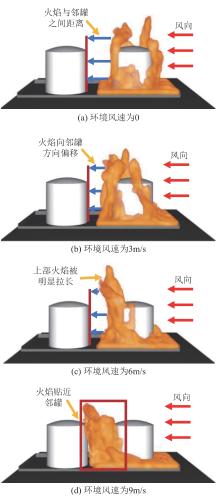
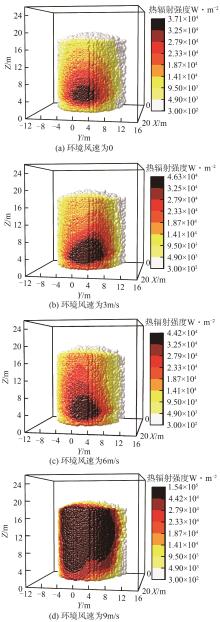
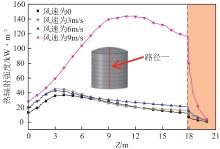
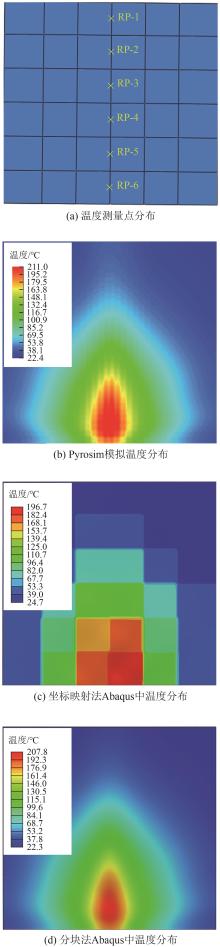
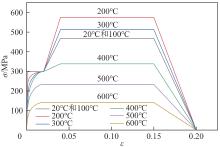
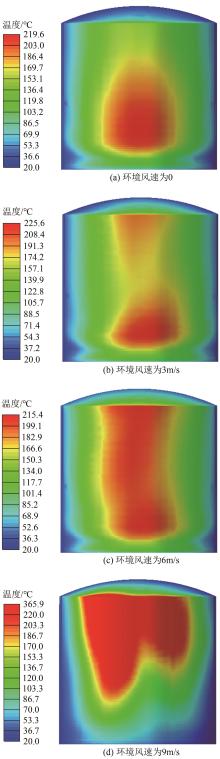
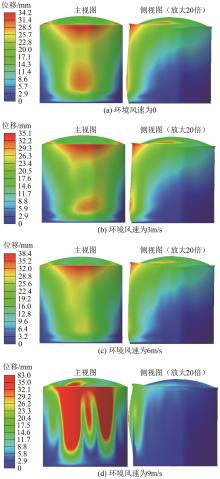
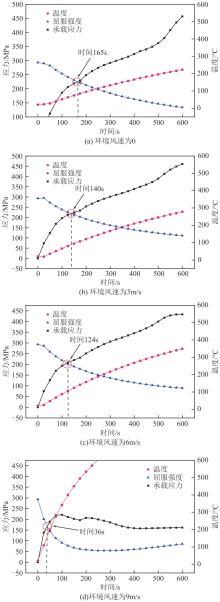
This study investigated the flame morphology of dike-divided pool fires under varying wind speeds and systematically analyzed the thermal radiation intensity distribution and failure time of adjacent tanks through Pyrosim-based fire modeling and Abaqus thermal-stress coupling analyses, while validating the high accuracy and feasibility of the coordinate mapping method in thermo-mechanical coupling simulations. Numerical simulations revealed that the flame behavior transitioned from vertical ascent to lateral inclination toward adjacent tanks with increasing wind speed. Under wind speeds of 0 and 3m/s, the flame maintained slight overall tilt, and the thermal radiation intensity distribution focused predominantly on the middle-lower sections of storage tanks. At wind speed of 6m/s, the upper flame portion became stretched and tilted, resulting in gradually intensified thermal radiation exposure on the middle-upper tank regions. When wind speed reached 9m/s, significant flame inclination and wall proximity occurred, concentrating thermal radiation intensity in the middle-upper tank sections, where maximum radiation intensity reached 3.5 times that observed under 6m/s conditions. Thermo-mechanical coupling analysis demonstrated that the high-temperature zone shifted from middle-lower to middle-upper tank regions with increasing wind speed, establishing the middle-upper sections as the primary risk area for tank failure. 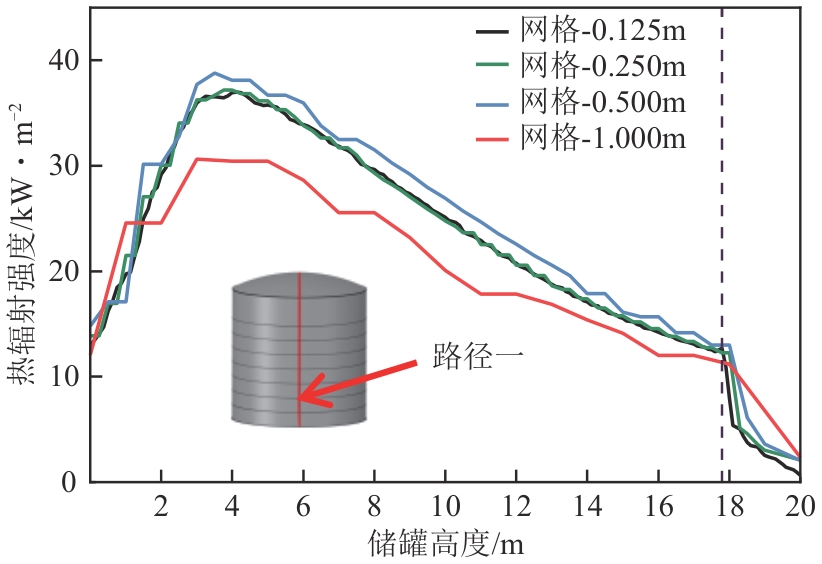
图3
Pyrosim罐区隔堤池火网格验证结果
Other Images/Table from this Article
|